Disclosure: topratedkitchenware.com is reader-supported. When you buy through links on our site, we may earn an affiliate commission from Amazon and other retailers, at no extra cost to you.
Where to buy
The best tested instant read meat thermometers are the ones whose listings state checkable claims — a read-time class, a tolerance figure, a certification — rather than adjectives, and the six picks below are ordered by how completely each one lets a buyer verify it before purchase. Two carry stated accuracy figures with named references, one carries NSF certification, and every one is a genuine instant read design.
- TempPro TempSwift 1 Sec Instant Read Meat Thermometer with 180° Rotating Display — Best Overall
- ThermoMonster 0.5 Sec Instant Read Meat Thermometer, Red — Best for Stated Accuracy
- ONFIKY Meat Thermometer Digital, 1-2 Sec Instant Read, Red — Best Backlit Display
- TempPro TempSwift TP19H 1 Sec Instant Read Meat Thermometer — Most Convenient
- ThermoMonster 0.5 Sec Instant Read Meat Thermometer, Black — Best Low-Profile Precision Pick
- TempPro TempSwift 1 Sec Digital Meat Thermometer, NSF Certified — Best Certified Pick
Read the full guide ↓ for how each pick performs, where each one compromises, and which households each one actually suits.
Anyone shopping for the best tested instant read meat thermometers is really asking a verification question: which of these tools has been checked, by somebody, against something? That is the right instinct, because a meat thermometer is a measuring instrument before it is a kitchen gadget, and its whole job is to tell the truth quickly. This guide reads the pool the way a test editor would, screening first for stated, checkable claims and only then for convenience. Readers whose cooking centres on whole cuts may also want Best Thermometers For Checking Internal Temperature Of Meat, which approaches the same instruments from the doneness question itself.
The word tested deserves a moment of honesty. It can mean a standards-referenced accuracy figure printed in the listing, a certification a buyer can look up, or it can mean nothing at all beyond marketing. The picks below separate those cases openly. Where a listing states a tolerance or a credential, the review names it and treats it as the pick’s headline. Where a listing is silent, the review says so and judges the pick on its stated design instead, because borrowing a sibling model’s numbers would be exactly the habit this keyword exists to catch.
What survives that screening is a genuinely useful spread: half-second designs with stated tolerances, one-second designs with rotating and motion-activated displays, a backlit model built for evening grilling, and an NSF certified generalist. Speed differences of half a second sound trivial until you are temping eight chicken thighs on a hot grill, and display differences sound cosmetic until you are reading numbers upside down with tongs in your other hand. The reviews below keep both scales in view.
Key Takeaways
- Stated claims first: two picks print a ±0.5°F accuracy figure with a NIST reference, and one prints NSF certification — those are the verifiable headlines.
- Speed classes here run from 0.5 second to 1-2 seconds; the gap matters when temping many pieces, not for a single roast.
- Rotating and auto-rotating displays are real ergonomics for grill work, where the probe angle is never your choice.
- IP67 and waterproof bodies allow a proper wash under the tap, which is a food-safety feature, not a luxury.
- No listing in this pool states everything; each review names exactly what its listing does and does not claim.
In this guide
Quick Picks
The table below is the short version of the guide. Badges follow the verification logic of the keyword: stated accuracy and certification outrank convenience, and convenience outranks colour. Every pick is linked, because every pick is a true instant read meat thermometer whose listing supports its review.
| Pick | Badge | Best for | Amazon |
|---|---|---|---|
| TempPro TempSwift 1 Sec Instant Read Meat Thermometer with 180° Rotating Display | Best Overall | Frequent grillers who temp from both hands and rinse tools under the tap | Check on Amazon |
| ThermoMonster 0.5 Sec Instant Read Meat Thermometer, Red | Best for Stated Accuracy | Accuracy-focused cooks who want the tolerance stated in the listing | Check on Amazon |
| ONFIKY Meat Thermometer Digital, 1-2 Sec Instant Read, Red | Best Backlit Display | Evening grillers and air fryer cooks who value a bright display | Check on Amazon |
| TempPro TempSwift TP19H 1 Sec Instant Read Meat Thermometer | Most Convenient | Regular grill cooks who want wake-on-pickup and an always-upright display | Check on Amazon |
| ThermoMonster 0.5 Sec Instant Read Meat Thermometer, Black | Best Low-Profile Precision Pick | Cooks who prefer the stated-accuracy design in a low-key black finish | Check on Amazon |
| TempPro TempSwift 1 Sec Digital Meat Thermometer, NSF Certified | Best Certified Pick | Certification-led buyers wanting one thermometer for grill and kitchen | Check on Amazon |
How These Picks Were Chosen
This guide was built from a verified pool: every linked product name, ASIN and image traces to a live Amazon listing checked through the Creators API, so nothing here rests on a copied roundup or a remembered model number. Picks were then read against the keyword’s own brief first, because a fast thermometer that answers the wrong question is still the wrong thermometer.
Within that brief, the ordering weighed the things that decide whether a reading can be trusted: the speed class stated in the listing, any accuracy figure the manufacturer is willing to print, certifications named outright, and the display and washability details that decide whether the tool gets used on every cook. Where a listing states a figure, the review uses it; where it does not, the review says so instead of borrowing numbers from a sibling model.
One honesty note applies to every pick: this is research-led guidance, not a laboratory test programme. No ice-bath bench results are invented and no hands-on claims are made. What the guide does is read specifications closely, separate what a listing actually promises from what it merely implies, and flag the trade-offs manufacturers prefer to leave unspoken. Readers who want the connected alternative can also compare Best Wifi Meat Thermometers, which covers a different monitoring style entirely.
The 6 Best Tested Instant Read Meat Thermometers
TempPro TempSwift 1 Sec Instant Read Meat Thermometer with 180° Rotating Display
Badge: Best Overall
Strengths
- The 180° rotating display reads upright from either hand and from awkward grill angles, a real ergonomic detail rather than a decoration
- IP67 waterproofing means the whole unit can be rinsed under the tap after a messy cook instead of wiped around the probe joint
- One-second positioning puts it in the fastest class this pool offers
Trade-offs
- A rotating display is one more moving interface than a fixed-screen model carries
- The listing names no accuracy figure or certification, so this review claims neither
- Several TempPro siblings in these guides overlap heavily; the rotating screen is this one’s distinction
| Type | Instant read digital meat thermometer |
| Read time | 1 second per listing |
| Display | 180° rotating display |
| Water resistance | IP67 waterproof |
| Named uses | Deep fry, smoker, grill, BBQ |
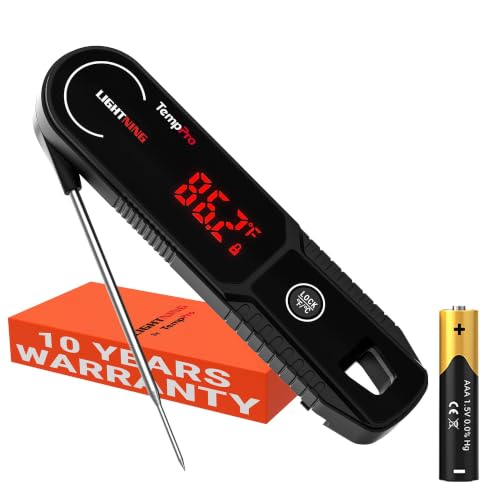
The TempPro TempSwift is a one-second instant read thermometer built around a display that rotates 180 degrees, in an IP67 waterproof body positioned for deep frying, smokers, grills and barbecue. The rotating screen solves the small daily annoyance of instant reads: probes go in at whatever angle the meat dictates, and a fixed display is upside down half the time. Combined with genuine washability, it is a design aimed at cooks who temp often and rinse immediately, rather than at occasional users who will never notice the difference.
For a tested brief, the TempSwift’s case is balance under scrutiny: a one-second read is in the fast class, the IP67 rating is a stated standard rather than a vague splash claim, and the rotating display is a verifiable mechanical feature. It does not print a tolerance figure, and this review does not invent one; what it offers is the most complete everyday package among the picks whose claims can all be checked in the listing itself.
In use, that package suits the cook who temps constantly: chicken pieces on the grill, a pork loin in the oven, a quick check of reheated leftovers. The rotating screen earns its keep in exactly those moments, because the probe enters at the meat’s angle, not the reader’s.
Best for: Frequent grillers who temp from both hands and rinse tools under the tap / Not suited for: Buyers who want a stated accuracy certification in the listing

ThermoMonster 0.5 Sec Instant Read Meat Thermometer, Red
Badge: Best for Stated Accuracy
Strengths
- The listing states both a half-second read and a ±0.5°F accuracy figure referenced to NIST, the two numbers that define this category
- Half-second response changes behaviour at the grill: cooks check more spots instead of trusting one poke
- The red body is easy to spot in a drawer or on a crowded grill side table
Trade-offs
- A newer brand name with less long-term owner history than the established makers in this guide
- Accuracy claims are the manufacturer’s; the listing summary gives no certificate detail beyond the NIST reference
- The black sibling listing in this pool is the same design in another colour, so choose on colour alone
| Type | Instant read digital meat thermometer |
| Read time | 0.5 second per listing |
| Accuracy | ±0.5°F, NIST referenced per listing |
| Colour | Red |
| Named uses | Oven, grill, candy, BBQ |
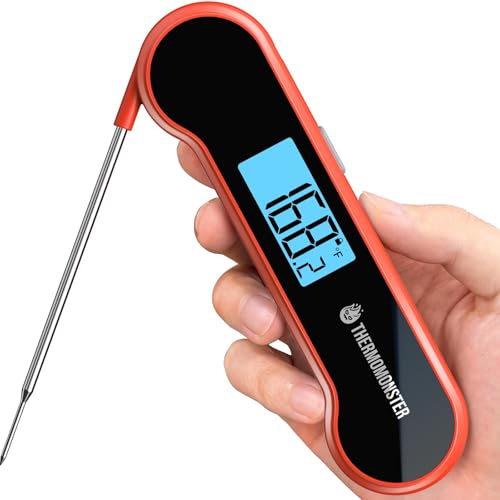
The ThermoMonster in red is a half-second instant read thermometer whose listing leads with metrology: a ±0.5°F accuracy figure referenced to NIST. That pairing, speed with a stated tolerance, is what separates a thermometer you trust for a final pull temperature from one you use as a rough guide. Its named uses run from oven and grill to candy and barbecue, a breadth the fast probe supports, because a sensor that settles in half a second is as useful in hot sugar as it is in a chicken thigh.
The ThermoMonster in red is the pick for buyers who read listings the way this keyword demands. Its two headline numbers are printed, not implied: a half-second response and a ±0.5°F accuracy figure referenced to NIST. A test-minded shopper can weigh those claims directly against every other listing in the pool, most of which state neither figure.
The practical consequence of the half-second class shows up on crowded grills. When each check settles almost immediately, cooks take three readings across a thick steak instead of trusting one, and that habit does more for real-world accuracy than any specification can.
Best for: Accuracy-focused cooks who want the tolerance stated in the listing / Not suited for: Brand-history-first buyers

ONFIKY Meat Thermometer Digital, 1-2 Sec Instant Read, Red
Badge: Best Backlit Display
Strengths
- The bright backlit display is the night-grilling feature: readings stay legible after dark without a phone torch
- The listing’s named uses are the widest in this pool, running from air fryer baskets to smokers to candy
- A waterproof body suits a tool that lives beside sinks and marinade bowls
Trade-offs
- A 1-2 second read is a step behind the half-second and one-second designs here, noticeable when temping many pieces
- The listing states no accuracy figure, so none is claimed in this review
- A lesser-known brand name; the display and washability carry the case
| Type | Instant read digital meat thermometer |
| Read time | 1-2 seconds per listing |
| Display | Bright backlit display |
| Water resistance | Waterproof per listing |
| Named uses | Food, cooking, grilling, air fryer, smoker, candy |
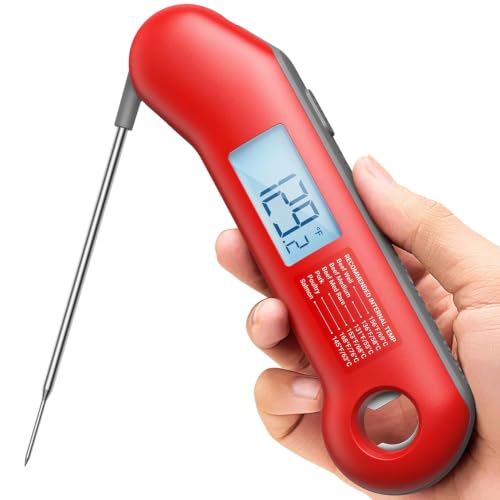
The ONFIKY is a red instant read thermometer with a one-to-two-second response, a bright backlit display and a waterproof body, and its listing names the broadest workload in this pool: food, cooking, grilling, air fryers, smokers and candy. The backlight is the feature to weigh. Most home temping happens in decent kitchen light, but grill cooks work at dusk, and a bright display is the difference between reading the number and guessing at it. Its response time sits a class behind the fastest picks, which matters only if you temp piece after piece in quick succession.
Tested can also mean tested by conditions, and the ONFIKY is built for the hardest reading condition in home cooking: dusk at the grill. Its bright backlit display is its headline, backed by a waterproof body and the widest list of named uses in the pool, from air fryer baskets to candy. Its one-to-two-second read is the honest trade; it is the slowest settling pick here.
That trade suits evening and indoor cooks better than high-volume grill sessions. If your temping happens a few times per cook in poor light, a display you can always read beats a faster number you have to squint at, and this is the pick that understands its owner.
Best for: Evening grillers and air fryer cooks who value a bright display / Not suited for: High-volume cooks who need the fastest settling time

TempPro TempSwift TP19H 1 Sec Instant Read Meat Thermometer
Badge: Most Convenient
Strengths
- Motion activation plus an auto-rotating backlit display is the most complete convenience package in this pool: pick it up and it wakes, tilt it and the numbers follow
- One-second reads keep multi-piece checks brisk
- Waterproof construction matches the rinse-and-go habits of regular grill cooks
Trade-offs
- Motion activation and auto-rotation are electronics that simpler models do not carry; they are conveniences, not accuracy
- The listing states no accuracy tolerance or certification
- Feature-rich designs reward owners who read the manual’s sleep and wake behaviour once
| Type | Instant read digital meat thermometer |
| Read time | 1 second per listing |
| Display | Auto-rotating backlit display |
| Activation | Motion-activated per listing |
| Water resistance | Waterproof per listing |
| Named uses | BBQ, grill, candy |
The TempPro TempSwift TP19H pairs a one-second instant read with the pool’s richest convenience set: a motion-activated wake, an auto-rotating backlit display and waterproof construction, aimed at barbecue, grill and candy work. Each feature answers a real moment. Motion activation means no button hunt with greasy fingers. Auto-rotation means the display is upright from either hand. A backlight means dusk readings stay honest. None of that changes the underlying measurement, and this review does not pretend otherwise, but convenience is what decides whether a thermometer gets used on every cook or only on big ones.
The TP19H is where this pool’s convenience engineering concentrates: motion activation, an auto-rotating backlit display, waterproof construction and a one-second read. None of those features changes the measurement, and a strict test brief should note that its listing states no tolerance figure. What they change is compliance — a thermometer that wakes when picked up and reads upright from either hand is a thermometer that actually gets used on every cook.
That matters more than it sounds. The most accurate thermometer in the drawer is worthless if checking feels like a chore and gets skipped on weeknight chicken. The TP19H’s design removes the small frictions, one by one, that cause skipped checks.
Best for: Regular grill cooks who want wake-on-pickup and an always-upright display / Not suited for: Minimalists who prefer the fewest possible electronics

ThermoMonster 0.5 Sec Instant Read Meat Thermometer, Black
Badge: Best Low-Profile Precision Pick
Strengths
- The same half-second, ±0.5°F NIST-referenced specification as the red model, in a black body that disappears into a knife roll
- Black shows less staining from smoke, marinade and grill residue over years of use
- The stated accuracy figure gives buyers a concrete claim to judge, which many listings in this category avoid
Trade-offs
- Functionally identical to the red sibling in this pool; there is no performance reason to own both
- A newer brand name, so the specification carries the trust argument
- Dark bodies are easier to lose in a dark grill area at night than bright colours
| Type | Instant read digital meat thermometer |
| Read time | 0.5 second per listing |
| Accuracy | ±0.5°F, NIST referenced per listing |
| Colour | Black |
| Named uses | Oven, grill, candy, BBQ |
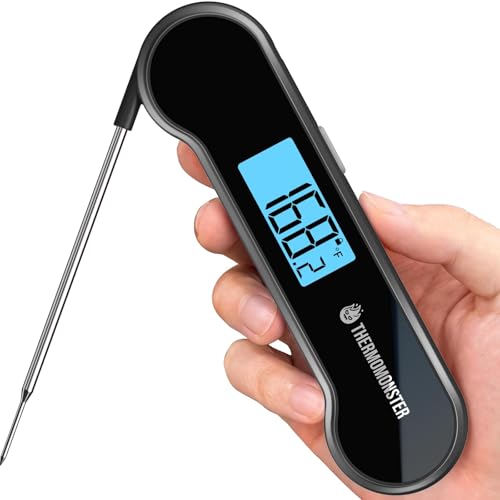
This ThermoMonster is the black version of the pool’s half-second design: a 0.5-second instant read with a ±0.5°F accuracy figure referenced to NIST, positioned for oven, grill, candy and barbecue work. Colour is its only honest distinction from the red model, and colour is not trivial in a tool you reach for with greasy hands in poor light. Black hides the cosmetic staining that smoke and marinade leave behind, at the cost of being harder to spot in a dark drawer or beside a night-time grill.
The black ThermoMonster carries the identical stated specification to the red model — half-second response, ±0.5°F figure, NIST reference — so its review is deliberately short on repetition: the verified claims are the same, and only the ownership experience differs. Black hides smoke and marinade staining and disappears into a knife roll; it is also easier to misplace in a dark drawer.
Choose between the two colours the way you would choose a knife handle: by the kitchen you actually work in. A bright grill station favours red for visibility; a professional-style kit favours black for discretion. The measurement case for both is the listing’s printed tolerance, and that is the part this keyword cares about.
Best for: Cooks who prefer the stated-accuracy design in a low-key black finish / Not suited for: Anyone expecting a functional difference from the red model
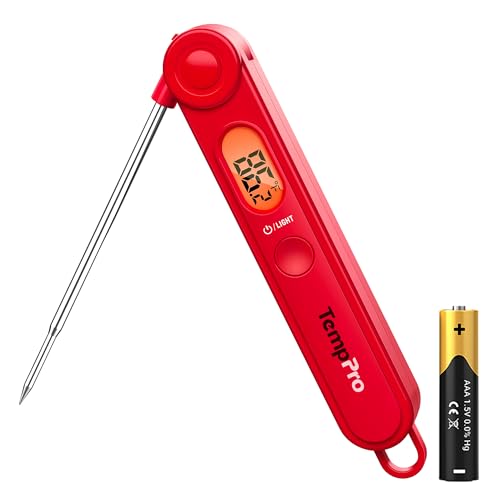
TempPro TempSwift 1 Sec Digital Meat Thermometer, NSF Certified
Badge: Best Certified Pick
Strengths
- NSF certification is named outright in the listing, the only certification claim among the TempPro picks here
- The named uses are unusually practical, including oil frying and milk alongside the usual grill work
- A one-second backlit design keeps it level with the pool on everyday usability
Trade-offs
- The listing does not state a numeric accuracy tolerance alongside the certification
- Certification speaks to standards compliance, not to display or speed advantages over its siblings
- Its breadth of named uses means it is a generalist rather than a grill-only specialist
| Type | Instant read digital meat thermometer |
| Read time | 1 second per listing |
| Display | Backlit |
| Certification | NSF certified per listing |
| Named uses | Grill, smoker, BBQ, oil fry, candy, turkey, milk |
This TempPro TempSwift is a one-second, backlit instant read whose listing carries the credential the others in its family do not state: NSF certification. Its named uses are also the most kitchen-wide in the pool, running from grills, smokers and barbecue to oil frying, candy, turkey and milk, which describes a thermometer bought for the whole kitchen rather than for the patio alone. For buyers who use certification as a first filter, this is the TempPro to shortlist, with the understanding that the listing pairs the credential with no separate numeric tolerance claim.
Certification is the strongest form of the word tested that a listing can offer, because it means an outside body checked the product against a published standard. This TempSwift is the pool’s NSF certified pick, with a one-second backlit design and the widest kitchen workload in the guide, from smokers to milk. Its listing pairs the credential with no separate numeric tolerance, and the review keeps that distinction visible.
For buyers in shared or semi-professional kitchens — a church hall, a food truck, a busy family kitchen feeding a crowd — the certified pick is the defensible one. For a home griller, it is simply the TempPro whose paperwork is in order, and there is real value in that.
Best for: Certification-led buyers wanting one thermometer for grill and kitchen / Not suited for: Shoppers who want a stated numeric accuracy tolerance
Comparison Table
Read this table as a verification map: the standout column names what each listing actually states, and the watch-out column names what it does not. That honesty is the point of a tested brief.
| Pick | Badge | Standout trait | Watch out for | Amazon |
|---|---|---|---|---|
| TempPro TempSwift 1 Sec Instant Read Meat Thermometer with 180° Rotating Display | Best Overall | 180° rotating display, IP67 waterproof, 1-second class | No accuracy or certification figure stated in listing | Check on Amazon |
| ThermoMonster 0.5 Sec Instant Read Meat Thermometer, Red | Best for Stated Accuracy | 0.5-second read, ±0.5°F NIST-referenced accuracy, red | Newer brand; claim is manufacturer’s | Check on Amazon |
| ONFIKY Meat Thermometer Digital, 1-2 Sec Instant Read, Red | Best Backlit Display | Bright backlit display, waterproof, wide named uses | 1-2 second read; no accuracy figure stated | Check on Amazon |
| TempPro TempSwift TP19H 1 Sec Instant Read Meat Thermometer | Most Convenient | Motion-activated, auto-rotating backlit display, 1-second | No accuracy figure stated in listing | Check on Amazon |
| ThermoMonster 0.5 Sec Instant Read Meat Thermometer, Black | Best Low-Profile Precision Pick | 0.5-second read, ±0.5°F NIST-referenced accuracy, black | Same design as red sibling; colour is the difference | Check on Amazon |
| TempPro TempSwift 1 Sec Digital Meat Thermometer, NSF Certified | Best Certified Pick | NSF certified per listing, 1-second, backlit, widest kitchen uses | No numeric tolerance stated | Check on Amazon |
How to Choose the Best Tested Instant Read Meat Thermometers
Start with the claims hierarchy. A stated accuracy tolerance is the most useful single figure, because it tells you the band within which the reading can be trusted; a named certification is next, because an outside body stands behind it; a stated read time is third, because speed is easy to claim and its benefit caps out quickly. Listings that offer none of the three are asking to be bought on design and brand, which is sometimes reasonable and should always be a conscious choice. Shoppers who also need to monitor a long cook from another room are comparing a different instrument class in Best Wireless Meat Thermometers 4 Probes, and the distinction between spotting and monitoring is worth understanding before money moves.
Then weigh speed honestly. The difference between half a second and one second is invisible on a roast and noticeable across a dozen wings; the difference between one second and two is where high-volume cooks start to feel it. Match the class to your cooking rather than to a league table. A household that temps a Sunday joint needs any of these; a household that grills for a crowd every weekend will feel the faster classes paying rent.
Displays and bodies decide the second year of ownership. Rotating screens suit cooks who work from both sides of the grill; backlights suit evening cooking; waterproof ratings suit anyone who washes tools properly, which should be everyone who temps raw chicken. None of these features appears in an accuracy figure, and all of them decide whether the instrument is in your hand or in the drawer when it matters.
Finally, adopt the one verification habit that costs nothing: the ice-point check described later in this guide. Whatever a listing claims, a glass of ice slurry at home tells you what your individual unit does, and a two-minute check when the thermometer arrives is the closest thing to a personal test report any home cook can produce.
How to Use an Instant Read Thermometer Properly
Technique decides more readings than hardware does, so this section is the working core of the guide. An instant read thermometer measures at its probe tip, and everything below follows from that single fact.
- Bring the meat’s thickest part to the probe, not the other way round: choose the centre of the thickest section, away from bone, fat seams and the pan.
- Insert the probe tip slightly past the centre, then ease it back slowly while watching the display; the lowest stable reading is the coldest point, which is the number that matters.
- Wait for the reading to settle fully. A number still climbing is a direction, not a result, and pulling early is the most common home temping error.
- For thin pieces, come in from the side so the tip travels through the middle of the piece rather than down through its thin dimension.
- Temp more than one spot on large or uneven items — both ends of a loin, the thick end and the middle of a brisket flat — and cook to the lowest reading.
- Wash the probe with hot soapy water between raw proteins and anything ready to eat, and dry the unit before storing it.
Resting is part of the method, not an afterthought. Temperatures equalise and rise slightly as meat rests, so pull large items a few degrees early and let the rest finish the work, checking once more before carving if the cut is expensive. For cooks comparing monitoring styles, Best Wireless Meat Thermometers For Oven covers the leave-in approach that suits oven roasts, while this guide’s picks remain the spot-check instruments.
Troubleshooting
Problem: Readings jump around and never settle → the probe tip is probably straddling a fat seam or touching bone; reposition into the centre of a solid muscle section and hold still for the full settling time.
Problem: The reading looks far too low for how the meat looks → the tip may have passed through the centre into a hotter or cooler zone, or the meat is thinner than the sensing length; come in from the side and take the lowest stable reading.
Problem: The display seems dim or slow to wake → treat it as a battery message first; replace or recharge per the manual before doubting the sensor, and run an ice-point check afterwards to confirm the unit still reads truly.
What Tested Should Mean When You Buy a Thermometer
The word tested is doing heavy lifting in this keyword, so it is worth being precise about the forms of evidence available to a buyer. The strongest is a certification named in the listing, because it can be looked up and because an outside body maintains it. Next is a stated accuracy tolerance with a reference, which gives you a number to hold the product to. After that come stated performance classes like read time and waterproof ratings, which describe behaviour rather than truthfulness. Weakest is the bare adjective, tested with nothing behind it, which this guide treats as decoration.
That hierarchy explains this guide’s ordering better than any single feature can. The picks with printed tolerances and the certified pick lead the verification argument; the convenience-led picks earn their places on stated design features that are equally checkable in their own way. A rotating display either rotates or it does not. A motion wake either wakes or it does not. The discipline is the same throughout: believe what the listing states, price what it omits, and verify your own unit with ice water when it arrives.
Building a Two-Thermometer Kitchen
Serious home cooks often end up owning two instruments, and this pool quietly supports that logic. A fast, stated-accuracy instant read handles the moment of decision at the grill and the stove. A second, simpler unit covers the second cook, the second protein or the household member who is helping. Several households also keep a leave-in or connected monitor for long smoker sessions; Best Wifi Meat Thermometers is the neighbouring guide for that style, and it complements rather than replaces anything reviewed here.
If budget forces one purchase, buy the instant read first. It answers the food-safety question on every protein you cook, in every pan and oven you own, while a monitor only watches the cooks it is set up for. The instant read is the thermometer of record; everything else is a convenience layered on top of it.
Probe placement deserves a plain word in any thermometer guide, because it decides more readings than the instrument does. The sensor sits near the tip, so the tip belongs in the thermal centre of the thickest part of the meat, away from bone, gristle and the pan. A reading taken against bone can be far from the temperature of the meat around it, and a reading taken too shallow measures the surface the heat reached first. Every pick in this guide rewards the same technique: insert past the centre slightly, then ease back, and watch for the lowest stable number.
Carryover cooking is the second half of every temperature decision. Meat continues to rise in temperature after it leaves the heat while the hotter outer layers equalise with the centre, which is why experienced cooks pull roasts and thick steaks a few degrees before the target and let resting do the rest. A fast thermometer makes that judgement possible, because it reads the centre quickly enough to decide in the moment rather than after another minute on the grill has already moved the number.
The ice-point check is the one calibration habit worth adopting. A glass of crushed ice topped with cold water, stirred and left for a minute, sits at freezing point, and a thermometer that reads close to that figure in the slurry is telling the truth closely enough for kitchen work. It takes two minutes, needs no special equipment, and settles arguments about whether a suspicious reading is the meat or the instrument. Do it when a thermometer is new, after a drop, and whenever a result surprises you.
Thin foods are the honest weakness of every probe thermometer. A burger patty, a fish fillet or a chicken cutlet can be thinner than the probe’s sensing zone is long, so the reading blends meat temperature with pan and air. The workaround is technique: come in from the side so the tip travels through the middle of the thin piece, or stack two patties for the check. No pick in this guide escapes that physics, and any review that claims otherwise is selling something.
Battery habits decide whether a thermometer works on the day it matters. Models that wake on motion or on unfolding get used constantly and drained steadily; models with a deliberate switch get forgotten in the on position in a drawer. Either way, the practical routine is the same: keep the unit somewhere visible rather than buried, and treat a dimming or flickering display as a battery message rather than a reading. A thermometer that is dead at the moment the roast is ready is worse than a slower one that works.
Cleaning is food safety, not housekeeping. A probe that has been in raw chicken goes into cooked beef next in many kitchens, and the washable bodies in this pool exist precisely so the whole unit can be rinsed and washed rather than wiped around the joint. Whatever model you choose, wash the probe between raw proteins and anything ready to eat, and dry the unit before it goes back in the drawer so the probe joint does not sit damp.
A word on temperature ranges, since listings mention candy, frying and milk alongside meat. A probe that settles quickly in a steak also has to survive brief contact with hot oil and sugar syrups that run far hotter than any roast. The honest discipline is to respect the range printed in the product manual, keep the plastic body and display away from direct heat while the tip is in hot liquid, and never leave an instant read unit sitting in a pan the way a leave-in probe is designed to sit. Used within its range, one instrument genuinely can cover the whole kitchen, which several listings in this guide claim and which technique makes true.
Grip and balance sound like knife concerns, but they decide thermometer confidence too. You are often reaching across a hot grill or into a deep roasting tin with tongs in the other hand, and a unit that sits securely in a greasy grip gets placed precisely, while one that twists gets placed approximately. None of the listings in this pool publishes grip dimensions, so this guide makes no claims about them; the practical advice is simply to notice, in the first week of ownership, whether the unit feels secure at full reach, and to store it where that reach starts, near the cooker rather than across the kitchen.
Left-handed cooks have a quiet stake in display design. A fixed display that reads upright for a right-handed probe angle reads inverted from the left, which is why the rotating and auto-rotating screens in this pool are more than novelties. If you cook left-handed, or you routinely approach the grill from its other side, weight those picks more heavily than this guide’s ordering does. The best thermometer is partly a property of the hand that holds it, and no ranking that ignores the reader’s own hand can be complete.
Storage is the unglamorous half of accuracy. A probe tip knocked loose in a crowded utensil drawer, or a unit stored damp beside the sink, drifts from the instrument that arrived in the box. The habits that protect it are dull and effective: dry before storing, keep the tip guarded or the unit in its own spot, and keep it out of the dishwasher unless the listing’s rating genuinely covers that treatment. Instruments reward boring care with long, truthful service.
One more habit separates confident cooks from hopeful ones: temping early. The first check should come before you expect doneness, not at it, because a reading taken early tells you the rate of travel and lets you plan the pull, the rest and the serving time around evidence. A single check at the expected moment can only deliver a verdict, and by then the options have narrowed. Fast-settling picks make early checks nearly free, which is the deepest reason speed matters in this category at all.
Common Buying Mistakes
Most disappointing thermometer purchases are not bad instruments; they are mismatched expectations. These are the errors this guide sees repeated.
- Buying on the word tested without asking what was tested, by whom, and against what standard.
- Paying for the fastest speed class when your cooking temps one item at a time, where it saves nothing.
- Ignoring the display until the first dusk cook, then discovering the numbers cannot be read at the grill.
- Skipping the ice-point check on a new unit, and therefore never knowing whether your individual thermometer reads truly.
- Temping against bone or through a fat seam and blaming the instrument for the strange number.
- Storing the thermometer loose in a utensil drawer, where the probe tip takes the knocks that eventually matter.
Every one of those errors is avoidable at the reading stage, which is why this guide spends so much of its length on claims and technique rather than on ranking theatre. The instrument is simple; using it well is the skill.
Final Recommendation
Start with the ThermoMonster in red if a printed tolerance is what you came for, or the NSF certified TempPro if certification is your filter; both make their case with checkable claims. Choose the TempSwift with the rotating display if grill ergonomics decide your cooking, the TP19H if convenience features are what will keep you temping every time, and the ONFIKY if your cooking happens after dark. Whichever you choose, run the ice-point check the day it arrives — that is the moment a tested claim becomes your own verified fact.
Start your shortlist with TempPro TempSwift 1 Sec Instant Read Meat Thermometer with 180° Rotating Display, ThermoMonster 0.5 Sec Instant Read Meat Thermometer, Red and ONFIKY Meat Thermometer Digital, 1-2 Sec Instant Read, Red — the linked picks that cover the widest range of readers in this guide — then use the detailed reviews above to narrow to the one that fits your cooking, your counter and your daily routine.
Frequently Asked Questions
What does tested mean for an instant read meat thermometer?
At its best it means the listing states checkable evidence: an accuracy tolerance, a reference standard or a certification. At its worst it is an adjective with nothing behind it. This guide separates the two by naming exactly what each listing claims and what it leaves unstated.
How accurate does a meat thermometer need to be?
For home cooking, a stated tolerance around half a degree to a degree is plenty, because technique — probe placement and full settling time — moves real readings more than that. The honest answer is that a verified, well-used thermometer beats a tighter specification used carelessly.
Is a faster thermometer a better thermometer?
Only where volume makes it one. Across a grill full of chicken pieces, half-second readings change how many spots you check. On a single roast, any pick in this guide settles long before the meat changes. Match the speed class to your cooking.
How do I check my thermometer at home?
Fill a glass with crushed ice, top it with cold water, stir and wait a minute. Insert the probe without touching the glass. The slurry sits at freezing point, so a reading close to that figure confirms your unit is telling the truth closely enough for kitchen work.
Can these thermometers be used for candy and frying?
Several listings here name candy and deep frying among their uses, and a fast probe is genuinely useful in both. Respect the temperature range in the product manual, keep the body away from direct flame, and remember that sugar work punishes slow readings because the temperature keeps moving.
Instant read or leave-in thermometer: which should I buy first?
The instant read, almost always. It checks any food in any cooker at the moment of decision. Leave-in and connected models watch long cooks continuously, and many cooks add one later; the neighbouring guide at Best Wireless Meat Thermometers For Oven explains that style. The instant read remains the instrument of record either way.