Disclosure: topratedkitchenware.com is reader-supported. When you buy through links on our site, we may earn an affiliate commission from Amazon and other retailers, at no extra cost to you.
Where to buy
The best tiny bathroom sinks are a measurement in this guide, not a compliment. Only two of the six basins below earn purchase links, because only two are genuinely tiny: a 13 x 11 inch undermount and a 16 x 13 inch vessel. The other four are clearly labelled prose-only comparisons — good sinks at standard sizes that would overwhelm the rooms this keyword is about.
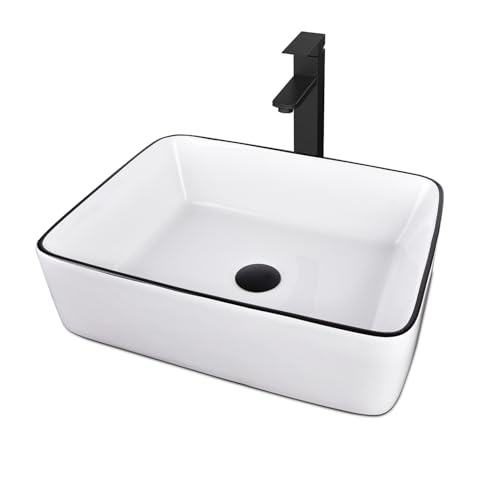
- Lordear Rectangular Vessel Sink, 19 x 15 Inch — prose-only comparison: a fine full-size rectangle that is not a tiny sink
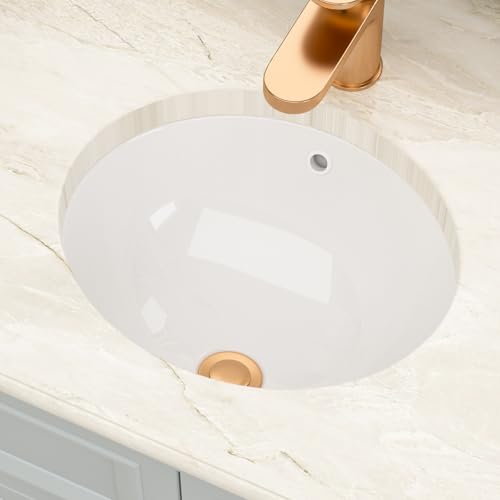
- CHIKESI Oval Undermount Bathroom Sink, 13 x 11 Inch — linked pick: the genuinely tiny 13 x 11 in undermount with overflow and a standard drain opening
- Hugsleek Oval Undermount Bathroom Sink, Exterior 18 x 15 Inch — prose-only comparison: a compact-interior undermount whose 18 x 15 in exterior is standard size
- CHIKESI Oval Undermount Bathroom Sink, 19 x 15 Inch — prose-only comparison: the 19 x 15 in sibling of the linked tiny CHIKESI — same line, standard size
- DeerValley Oval Undermount Bathroom Sink, 18 x 15 Inch, DV-1U303 — prose-only comparison: a durable standard-size undermount with overflow — not tiny
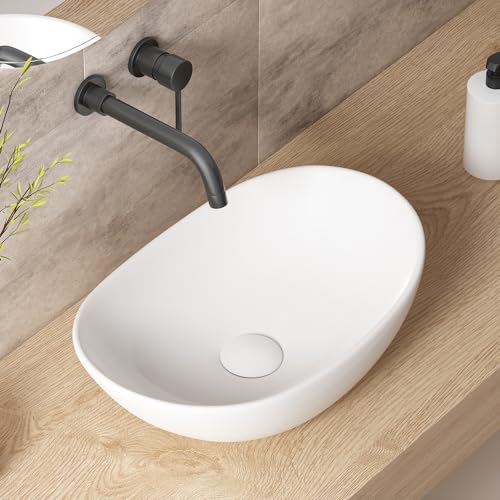
- KES Oval Vessel Sink, 16 x 13 Inch, BVS124 — linked pick: the 16 x 13 in egg-shaped vessel for tiny vanities with uncut tops
Read the full guide ↓
The best tiny bathroom sinks are found with a tape measure, not with adjectives. A tiny bathroom — the under-stairs cloakroom, the converted closet, the en-suite carved from a bedroom corner — might offer a vanity top twenty inches wide, or a wall run where every fixture negotiates for the same few feet. Into that negotiation, sellers routinely introduce basins of eighteen, nineteen and twenty inches described as compact, space-saving and ideal for small bathrooms. Some of those claims survive measurement. Most do not, and this guide is built to separate the two.
Two basins pass a strict tiny test. The CHIKESI undermount, at thirteen by eleven inches, is a true tiny sink that disappears under the counter and returns every inch of surface to use. The KES vessel, at sixteen by thirteen, is the tiny answer for an uncut top, standing on the counter with a footprint a small vanity can honestly carry. Both are linked and fully reviewed. Around them stand four prose-only comparisons at standard sizes — basins you will meet while shopping this keyword, shown with the measurements that disqualify them, so the size line becomes something you can see rather than something you are told.
The rest of the guide covers what tiny actually demands: the difference between a small sink and a tiny one, the height and splash arithmetic of compact bowls, faucet pairing at miniature scale, and the measuring routine that keeps a tiny bathroom functional instead of merely fitted. If your project extends to the room’s other fixtures, Best Round Front One Piece Toilets applies the same footprint honesty to the other space-critical choice.
Key Takeaways
- Only two picks are linked, because only two are genuinely tiny: the CHIKESI 13 x 11 in undermount and the KES 16 x 13 in vessel.
- Tiny means a footprint a sub-24-inch vanity or a narrow wall run can carry with room to spare — in practice, about 16 inches wide or less.
- An 18 x 15 or 19 x 15 inch basin is a standard sink, whatever the listing calls it; in a tiny room it will consume the counter.
- Undermounts are the tiny room’s best friend where the counter can be cut: the bowl vanishes and the surface stays whole.
- Compact bowls splash and crowd faucets; an aerated, correctly-reached faucet is half of a tiny sink’s success.
- Measure the room’s door swing and standing space as well as the vanity — a tiny bathroom fails in three dimensions, not one.
In this guide
Quick Picks
The badge column records this guide’s size verdict for every pick. Two linked basins form the shortlist; the four prose-only rows show the standard-size basins that shopping this keyword will put in front of you, and why they were not linked.
| Pick | Badge | Format | Size | Link |
|---|---|---|---|---|
| Lordear Rectangular Vessel Sink, 19 x 15 Inch | Comparison Only — Standard Size | Vessel (above counter), rectangular | 19 x 15 in | Prose-only in this guide |
| CHIKESI Oval Undermount Bathroom Sink, 13 x 11 Inch | Best Tiny Undermount | Undermount | 13 x 11 in | Check on Amazon |
| Hugsleek Oval Undermount Bathroom Sink, Exterior 18 x 15 Inch | Comparison Only — Standard Exterior | Undermount | Exterior 18 x 15 in; interior bowl 16 x 13 in | Prose-only in this guide |
| CHIKESI Oval Undermount Bathroom Sink, 19 x 15 Inch | Comparison Only — The Standard Sibling | Undermount | 19 x 15 in | Prose-only in this guide |
| DeerValley Oval Undermount Bathroom Sink, 18 x 15 Inch, DV-1U303 | Comparison Only — Standard Size | Undermount | 18 x 15 in | Prose-only in this guide |
| KES Oval Vessel Sink, 16 x 13 Inch, BVS124 | Best Tiny Vessel | Vessel (above counter), oval | 16 x 13 in | Check on Amazon |
How These Picks Were Chosen
The six basins come from a verified pool cross-checked on 2026-11-22 for model identity, dimensions and format. For a keyword with a size at its heart, verification meant one thing above all: trusting the dimension line and nothing else. Every basin in the pool was measured against a stated tiny standard — a footprint that fits the vanities and wall runs of genuinely tiny bathrooms with working room left over — and only two met it.
That standard deserves its reasoning in the open. A tiny bathroom’s vanity is commonly 18 to 24 inches wide; a basin earns ‘tiny’ if it occupies no more than roughly two-thirds of such a top, or mounts beneath it without dictating the counter’s size. By that test the 13 x 11 inch undermount and the 16 x 13 inch vessel qualify, and the four standard footprints — 18 x 15, 19 x 15 — do not, however excellent the basins themselves may be. The four are reviewed prose-only, without links or images, with the reasoning stated in each review and in the sources file.
This is a research-led guide, not a hands-on test report. The reviews reason from verified dimensions and format to fit and daily-use conclusions, and each names its honest limitation — including, for the prose-only picks, the fundamental one that they are the wrong size for the question being asked.
The Best Tiny Bathroom Sinks — Two That Qualify, Four That Do Not
Two reviews below carry links and images; four are prose-only comparisons. Read the linked two as the answer to the keyword and the other four as measurement training — each is a real basin, presented at its real size, with the consequence for a tiny room spelled out.
Lordear Rectangular Vessel Sink, 19 x 15 Inch
Badge: Comparison Only — Standard Size
Strengths
- Crisp modern rectangular profile in glazed porcelain
- Generous washing area for a standard bathroom
- White finish pairs with any faucet
Trade-offs
- 19 x 15 in is a standard footprint — it fills or overhangs a tiny vanity top
- Its depth front-to-back crowds the user space in a narrow room
- Not linked in this guide: it fails the keyword’s size requirement
| Format | Above-counter vessel |
|---|---|
| Shape and size | Rectangle, 19 x 15 in |
| Material | Porcelain ceramic |
| Finish | White |
| Style | Modern art basin |
The Lordear opens the comparisons because it is the basin this keyword’s shoppers are most often sold instead: a handsome, well-made rectangular vessel at nineteen by fifteen inches. In a standard bathroom it is a pleasure. In a tiny one, the arithmetic is brutal — on a 24-inch vanity it leaves five inches of total counter, split between the faucet zone and the front edge, and its fifteen inches of depth push the user’s standing space backward into whatever the room has behind them, which in a tiny bathroom is usually the door.
None of that is a defect in the basin; it is a defect in the match. The Lordear is presented prose-only so that its dimensions can do the teaching: when a listing under a tiny or small heading shows a footprint of this class, the heading is marketing and the footprint is the fact. A buyer who internalizes that single reflex will never order the wrong sink size again, from any guide, including this one.
If your bathroom turns out to be small rather than tiny — a 36-inch vanity, a real counter — the Lordear deserves its place on a standard shortlist through its ordinary listings. Under this keyword it remains unlinked, because nineteen inches is not tiny and this guide will not pretend otherwise.
Best for: standard bathrooms wanting a modern rectangle — outside this keyword’s brief / Not suited for: tiny bathrooms; the footprint overwhelms them

CHIKESI Oval Undermount Bathroom Sink, 13 x 11 Inch
Badge: Best Tiny Undermount
Strengths
- Truly tiny 13 x 11 in bowl — fits counters and vanities no standard basin can
- Undermount format returns the entire counter surface to use
- Built-in overflow and a standard 1.75 in drain opening simplify the rest of the order
Trade-offs
- A 13 in bowl is for hand washing and teeth, not enthusiastic face washing
- Requires a cut countertop and undermount installation
- Splash discipline and a modest faucet are part of the deal
| Format | Undermount (under counter) |
|---|---|
| Shape and size | Oval, 13 x 11 in |
| Material | Glossy porcelain |
| Overflow | Yes |
| Drain opening | Standard 1.75 in |
This is the real thing: a thirteen-by-eleven-inch oval that can serve bathrooms where a standard basin is not a compromise but an impossibility. The CHIKESI mounts beneath the counter, so its smallness costs the room nothing in surface — the counter above it remains whole, available for the soap, the glass and the small pile of things a tiny bathroom has nowhere else to put. In the smallest rooms, that reclaimed surface is worth more than bowl volume.
The specification details make it an unusually grown-up tiny sink. The overflow is built in — a protection many compact basins omit, and one that matters in a cloakroom where a guest’s forgotten tap would otherwise meet a tiny cabinet. The drain opening is the standard 1.75 inches, so the drain assembly is an ordinary purchase rather than a hunt for a miniature fitting. Tiny in size, standard in connections: that is exactly the combination a small-space buyer should look for.
Its limitation is honest physics. Thirteen inches of bowl under a full face-wash will splash, and two people cannot share it in any sense. Judge it as what it is — a hand-washing and tooth-brushing station for cloakrooms, en-suites and tiny second bathrooms — and it is the strongest pick in this guide. Ask it to be a family bathroom’s only sink and no basin this size could satisfy you.
Best for: cloakrooms, tiny en-suites and narrow counters that can take an undermount / Not suited for: a busy family bathroom’s only basin, or uncut tops
Hugsleek Oval Undermount Bathroom Sink, Exterior 18 x 15 Inch
Badge: Comparison Only — Standard Exterior
Strengths
- Interior bowl of 16 x 13 in is compact in use
- Fireclay-style body is a durable, heavy-duty construction
- Undermount format keeps counter surface whole
Trade-offs
- The counter must accommodate the full 18 x 15 in exterior — standard size, not tiny
- Listings that lead with interior size can mislead a hurried buyer
- Not linked in this guide: its installed footprint fails the tiny test
| Format | Undermount (under counter) |
|---|---|
| Exterior size | 18 x 15 in |
| Interior bowl | 16 x 13 in |
| Material | Porcelain ceramic / fireclay per listing |
| Finish | White |
The Hugsleek teaches the subtlest measurement lesson in this guide: for an undermount, the number that decides fit is the exterior, not the bowl. Its interior bowl measures a compact sixteen by thirteen inches, which is the figure a hurried shopper reads. But the countertop must be cut for, and the cabinet must contain, the full eighteen-by-fifteen exterior — a standard footprint that dictates a standard-size counter. In a tiny room, the exterior is the truth and the interior is the experience, and confusing them is how a ‘compact’ sink ends up demanding a vanity the room cannot house.
As a basin, it has real virtues: a fireclay-style body with the durability that construction implies, an undermount format that preserves counter surface, and a bowl size that is pleasant to use. In a small bathroom — the next size class up from tiny — it is a sensible product, and its presence here is respectful rather than dismissive.
But this keyword’s standard is the installed footprint, and by that standard the Hugsleek is a standard sink wearing a compact interior. It remains prose-only, unlinked, as the guide’s standing example of why undermount shoppers must always ask which of the two sizes a listing is advertising.
Best for: small (not tiny) bathrooms wanting a durable undermount with a compact-feeling bowl / Not suited for: genuinely tiny rooms; the installed footprint is standard size
CHIKESI Oval Undermount Bathroom Sink, 19 x 15 Inch
Badge: Comparison Only — The Standard Sibling
Strengths
- Same thoughtful specification as its tiny sibling: overflow and standard drain opening
- Full-size oval bowl for standard counters
- Glossy porcelain surface wipes clean easily
Trade-offs
- 19 x 15 in is a standard footprint requiring a standard counter
- In a tiny room it dictates a vanity the space cannot spare
- Not linked in this guide: it fails the keyword’s size requirement
| Format | Undermount (under counter) |
|---|---|
| Shape and size | Oval, 19 x 15 in |
| Material | Glossy porcelain |
| Overflow | Yes |
| Drain opening | Standard 1.75 in |
Placing the two CHIKESI undermounts side by side is the cleanest illustration in this guide of what ‘tiny’ means, because everything except size is held constant. Same maker, same glossy porcelain, same overflow, same standard drain opening — and one basin measures thirteen by eleven inches while this one measures nineteen by fifteen. The first transforms what a tiny room can have; the second requires the counter of an ordinary bathroom. Size is not a detail of the tiny keyword. It is the keyword.
This larger sibling is, on its own terms, a well-specified undermount for standard vanities, and a buyer whose room turns out to be merely small could do worse than consider its class. The guide’s objection is purely jurisdictional: it does not belong in an answer to a tiny-bathroom search, and linking it here would repeat the exact maneuver — standard product, small-space heading — that this guide exists to correct.
Let the pair calibrate your eye. Six inches of width and four of depth separate a tiny sink from a standard one, and in a room where the whole vanity may be twenty inches wide, those six inches are the difference between a bathroom that works and one that merely contains a sink.
Best for: standard counters wanting a well-specified oval undermount — a different brief / Not suited for: tiny bathrooms; it is the standard-size sibling
DeerValley Oval Undermount Bathroom Sink, 18 x 15 Inch, DV-1U303
Badge: Comparison Only — Standard Size
Strengths
- Overflow included — a specification worth having at any size
- Stated suitability for heavy-use settings like schools and restaurants signals durable intent
- Classic oval undermount format wipes clean from the counter
Trade-offs
- 18 x 15 in is a standard footprint, requiring a standard counter
- Its commercial-grade virtues do not shrink it
- Not linked in this guide: it fails the keyword’s size requirement
| Format | Undermount |
|---|---|
| Shape and size | Oval, 18 x 15 in |
| Material | Ceramic, porcelain |
| Model | DeerValley DV-1U303 |
| Overflow | Yes |
The DeerValley DV-1U303 is the comparison that tests whether virtues other than size can argue their way into a tiny shortlist. It has an overflow, a durable ceramic and porcelain construction, and a listing that points it at demanding settings — malls, restaurants, schools — where basins are used hard. All of that is genuinely appealing. None of it changes its measurements: eighteen by fifteen inches is a standard undermount footprint, and a tiny bathroom cannot admit it no matter how durable it is.
This is worth stating as a general rule, because it generalizes: in size-critical searches, no secondary virtue compensates for a failed primary dimension. A tiny room’s constraints are physical, not preferential. The most durable, best-specified, most fairly priced standard sink in the world is still the wrong sink for a twenty-inch counter, and a guide that links it under a tiny heading has failed its reader at the only moment that mattered.
So the DeerValley stands prose-only, with respect for its specification and a clear statement of its jurisdiction: standard bathrooms, including hard-used ones, where its durability story can actually be enjoyed. Tiny rooms should take its overflow as a specification to demand — as the linked CHIKESI demonstrates, it is available at thirteen inches too.
Best for: standard and high-traffic bathrooms wanting a durable oval undermount / Not suited for: tiny bathrooms; standard footprint

KES Oval Vessel Sink, 16 x 13 Inch, BVS124
Badge: Best Tiny Vessel
Strengths
- 16 x 13 in footprint is genuinely tiny and fits sub-24-inch vanities
- Vessel format needs only a drain hole — no counter cutting, ideal for refreshes and rentals
- Curved egg-shaped interior rinses clean and reads as a deliberate design choice
Trade-offs
- Rim height adds to the vanity’s — check the total against your users
- Compact bowl splashes more than full-size basins
- Drain and faucet are separate orders
| Format | Above-counter vessel |
|---|---|
| Shape and size | Oval (egg shape), 16 x 13 in |
| Material | Ceramic |
| Finish | Glossy white |
| Model | KES BVS124 |
The KES BVS124 is the tiny answer when the counter cannot be cut — the rental, the refresh, the vanity top you intend to keep. At sixteen by thirteen inches its egg-shaped bowl fits the small vanity class honestly, leaving working counter at the sides, and its installation asks for one drain hole rather than a fabricator. For tiny bathrooms being improved rather than rebuilt, that combination of footprint and forgiveness is exactly right.
The egg shape is more than a look. Its continuous curve rinses the way compact bowls need to — water carries residue to the drain without corner seams to strand it — and the glossy white ceramic brightens rooms that are usually short on light and long on shadow. In a tiny bathroom, where the sink is always in view and usually in frame, a bowl that reads as a designed object rather than a shrunken fixture lifts the whole room.
Mind the two honest caveats. The vessel’s rim stands on the vanity, so add its height to the vanity’s and check the total against your household, especially children. And a sixteen-inch bowl under an un-aerated, badly aimed faucet will splash; pair it with a faucet whose reach lands water at the bowl’s center. Do those two things and the KES is the tiny vessel this guide recommends without reservation. Buyers fitting out the whole compact room may also consult Best Two Piece Elongated Toilets — though in the tiniest rooms, the round-front thinking there deserves equal attention.
Best for: tiny vanities with uncut tops, rentals and refresh projects wanting a vessel / Not suited for: a family bathroom’s only high-volume basin
Comparison Table
The size column is the whole story of this table, and it is deliberately unforgiving: two tiny footprints, four standard ones. Use it as the template for judging any basin this guide does not cover.
| Pick | Format | Size | Material / finish | Drain & overflow | Link |
|---|---|---|---|---|---|
| Lordear Rectangular Vessel Sink, 19 x 15 Inch | Vessel (above counter), rectangular | 19 x 15 in | Porcelain ceramic, white | Drain not stated as included | Prose-only in this guide |
| CHIKESI Oval Undermount Bathroom Sink, 13 x 11 Inch | Undermount | 13 x 11 in | Glossy porcelain | Overflow; standard 1.75 in drain opening | Check on Amazon |
| Hugsleek Oval Undermount Bathroom Sink, Exterior 18 x 15 Inch | Undermount | Exterior 18 x 15 in; interior bowl 16 x 13 in | Porcelain ceramic / fireclay, white | Not stated in verified data | Prose-only in this guide |
| CHIKESI Oval Undermount Bathroom Sink, 19 x 15 Inch | Undermount | 19 x 15 in | Glossy porcelain | Overflow; standard 1.75 in drain opening | Prose-only in this guide |
| DeerValley Oval Undermount Bathroom Sink, 18 x 15 Inch, DV-1U303 | Undermount | 18 x 15 in | Ceramic / porcelain, white | Overflow included in design | Prose-only in this guide |
| KES Oval Vessel Sink, 16 x 13 Inch, BVS124 | Vessel (above counter), oval | 16 x 13 in | Ceramic, glossy white | Drain not stated as included | Check on Amazon |
How to Choose the Best Tiny Bathroom Sinks by Measurement, Not Marketing
Set your tiny standard before you look at a single listing, because listings will try to set it for you. A workable definition: the basin’s footprint should occupy no more than about two-thirds of your vanity top’s width, and its depth should leave the faucet zone and a front working edge intact. On the 18 to 24 inch vanities of tiny bathrooms, that arithmetic lands on basins of roughly sixteen inches wide or less — which is why this guide links a 13 x 11 and a 16 x 13, and why the 18 and 19 inch basins in the pool, fine products all, were prose-only comparisons.
For undermounts, measure the exterior, never the bowl. The Hugsleek comparison above shows why: a listing can truthfully advertise a 16 x 13 inch interior while the counter must be cut for an 18 x 15 inch exterior. The exterior decides what the room must give; the interior decides what the user gets. A tiny buyer needs both numbers and should refuse to shop without them. The linked CHIKESI’s single stated size is its whole footprint, which is part of why it earned its place.
Height is the tiny room’s second dimension. A vessel adds its rim to the vanity; in a small room the user stands closer, so an over-tall combination is felt more, not less. Sum the two numbers and test them against the shortest regular user. Undermounts avoid the question entirely by sinking the bowl below the counter — one of several reasons the format suits tiny rooms so well where the counter allows it, and why this guide’s tiny undermount is its first recommendation.
Then plan the water at miniature scale. A tiny bowl has less margin for a mis-aimed stream, so the faucet’s reach and aeration matter more than its finish. Choose a faucet that lands water near the bowl’s center at gentle, aerated flow, and treat that choice as part of the sink purchase. The same discipline applies to the drain: standard connections, like the CHIKESI’s 1.75 inch opening, keep a tiny project from becoming a search for miniature plumbing. For the room’s storage side, Best Toilets Children Commodes Adaptive is an unlikely but genuinely useful read on designing small bathrooms around their actual users.
Write the numbers down and keep them with the order. Tiny projects have a way of pausing — a counter delayed, a plumber rescheduled — and resuming weeks later into a fog of half-remembered measurements. A single note holding the room’s dimensions, the basin’s footprint, the cutout or drain position and the faucet’s reach turns the resumption into a continuation. It also protects you at delivery: the basin that arrives can be checked against written figures in thirty seconds, while it can still be refused, rather than against a memory after it has been signed for.
How to Fit a Tiny Sink: Measuring and Installation Steps
Tiny installations reward a slow measure and a fast fit. Work through these steps in order and the sink that arrives will be the sink the room can hold.
- Measure the room first: door swing, standing space in front of the vanity, and the wall run available — a tiny bathroom fails in three dimensions.
- Measure the vanity top’s width, depth and usable flat area; write down the two-thirds figure that becomes your maximum basin width.
- Decide the format by the counter: undermount if it can be cut, vessel if it must stay whole.
- Shortlist only basins at or under your maximum — in this guide, the CHIKESI 13 x 11 in and the KES 16 x 13 in.
- For undermounts, confirm the exterior footprint and cutout against the counter and cabinet interior, including drawer clearance.
- Sum vanity and vessel heights for above-counter picks and check the total against your shortest regular user.
- Choose the faucet for reach and aeration at the bowl’s scale, and confirm the drain connection is a standard size.
- Dry-fit everything, run water if possible, and watch where it lands before sealing or final tightening.
After fitting, protect the tiny room’s margins: keep the counter beside the bowl clear by habit, wipe the vessel’s base ring or the undermount’s rim seam weekly, and store cleaning supplies under the sink rather than on the surface the format worked so hard to return to you.
Troubleshooting
Problem: the fitted tiny sink splashes the counter constantly → the faucet’s stream is landing off-center or unaerated; fit an aerator, then adjust the faucet choice for a reach that targets the bowl’s center — at tiny scale, an inch of aim is the whole problem
Problem: the undermount fits the cutout but crowds the cabinet below → the bowl’s depth is meeting drawers or the trap; confirm trap-arm height and consider a shallower trap arrangement with your plumber rather than forcing the cabinet
Problem: the vessel makes the counter feel too high for a child → the vanity-plus-rim sum is the cause; a stable step is the immediate answer, and at the next change a lower-profile bowl or the undermount format removes it
Tiny Versus Small: The Size Classes Sellers Blur
Bathroom sinks come in size classes that the market finds it convenient to blur. Standard basins run eighteen to twenty inches and up; small basins cluster around sixteen to eighteen; tiny basins — the ones that serve cloakrooms, closet conversions and the smallest en-suites — are sixteen inches and under, with the genuinely tiny undermounts reaching down to thirteen. Each class exists because a class of rooms exists. The blur happens when a standard basin is photographed well and described with the vocabulary of the class below it.
The cost of the blur is paid in rooms, not in listings. A standard basin in a tiny room does not merely look large; it consumes the counter, crowds the faucet, shortens the user’s standing space and can foul the door swing — four failures from one wrong footprint. This is why this guide treated its size line as a matter of principle, linking two basins and demoting four good ones. The demoted four are not bad products. They are answers to a different question, and a tiny-bathroom reader deserves to have that said plainly.
Take the class definitions with you: measure your top, name your class honestly — tiny, small or standard — and shop only within it. The discipline sounds stern, but its fruit is a room that works every single day, which is a far better souvenir of a renovation than a beautiful basin that never fit. Our fit-first notes in Best Toilets Set For Elongated make the same class argument for the fixture across the room.
Where Tiny Sinks Earn Their Keep: Cloakrooms, En-Suites and Conversions
The tiny sink’s natural habitats share one trait: the bathroom was not in the original plan, or barely was. The under-stairs cloakroom that makes a house work for guests. The en-suite borrowed from a bedroom’s alcove. The converted closet, the basement corner, the garden-level half-bath added for an aging parent. In each, the plumbing was possible but the space was rationed, and the basin is where the rationing shows first.
In those rooms the two linked picks divide the work by counter. A cuttable counter in a conversion being built from scratch takes the CHIKESI undermount and gains a whole, usable surface — precious where the room may hold nothing else flat. An existing top, a rental’s vanity, a refresh that cannot touch the counter takes the KES vessel and gains a designed object at the cost of one drain hole. Both outcomes are successes; the failure mode is the standard basin ordered by adjective into a room measured in inches.
If you are planning such a room, let the sink decision come early rather than late. The basin’s footprint and format shape the vanity choice, the faucet position and even the mirror, and in a tiny room those decisions interlock too tightly to be sequenced casually. Measure the room, name its class, choose between the two honest formats — and the smallest room in the house can become one of its most satisfying. Planners of compact full refits may also find Best Msd Portable Toilets Domitec a reminder of how much function disciplined small-space specification can deliver.
Tiny Sinks and the Rest of the Room
A tiny sink never decides alone. The mirror should be sized to the user, not the vanity — in a tiny room a taller mirror returns light and the feeling of height that the small footprint takes away. Lighting at face level flatters and functions better than a single ceiling point, and it costs no floor space at all. The faucet, as the how-to section insists, is a functional pairing first and a finish second.
Storage is the tiny bathroom’s second sink problem: everything the counter cannot hold must go somewhere. A mirrored cabinet above a tiny basin returns storage without touching the floor plan, and under-sink space in a tiny vanity is best spent on the few things used daily, with the rest banished to another room entirely. The undermount format helps here too — a shallower intrusion into the cabinet than many expect, and no vessel base consuming the counter.
Finally, keep the room’s proportions honest in the small decisions: a compact hand towel rather than a bath towel on the ring, a small soap dispenser, a slim bin. A tiny bathroom furnished at tiny scale feels intentional; the same room furnished at standard scale feels like a mistake. The sink, chosen by measurement, is where that intentionality starts.
Guests deserve a sentence in a tiny room’s plan, because a cloakroom sink is mostly used by people who did not choose it. A tiny basin that a guest can understand instantly — where the water lands, where the soap sits, where the towel hangs — is a small act of hospitality, and it argues for the simple, standard-connected picks this guide links: no miniature quirks, no proprietary fittings, nothing that needs explaining. The CHIKESI’s overflow belongs in this thought too; guests leave taps running in unfamiliar rooms, and the tiny cabinet below is the one least able to afford the flood.
And when the tiny bathroom is a stepping stone — a first flat, a temporary arrangement — the vessel pick’s removability becomes a genuine feature rather than a footnote. A basin that can leave with you, leaving one drain hole behind, suits households whose next home is not yet known. Permanence is a virtue in a forever bathroom and a cost in a transitional one, and tiny rooms are disproportionately often transitional. Choose the format that matches the tenure as well as the tape measure.
Common Buying Mistakes
Shopping by adjective. ‘Compact’, ‘space-saving’ and ‘ideal for small bathrooms’ appear on basins of every size, including the 19-inch comparisons in this guide. The dimension line is the only testimony that counts, and for undermounts you need the exterior figure, not the bowl’s.
Forgetting the door and the user. A basin can fit the vanity and still fail the room — fouling the door swing or pushing the user into it. Measure standing space and swing alongside the top.
Choosing a vessel for a tiny room without summing heights. Vanity plus rim decides comfort, and tiny rooms put the user close enough to feel every excess inch. Sum before ordering.
Pairing a tiny bowl with a full-size faucet habit. Reach and flow must shrink with the bowl. An aerated stream aimed at the center is a specification, not a preference, at this scale.
Assuming tiny means compromised connections. It should not: the linked CHIKESI carries an overflow and a standard drain opening at thirteen inches. Demand standard connections at tiny sizes and refuse the basins that treat small as an excuse.
Final Recommendation
Order the CHIKESI undermount if your tiny bathroom’s counter can be cut. At thirteen by eleven inches it is the only basin in this pool that is tiny in the way a cloakroom is tiny, and it brings an overflow and standard connections with it — the complete tiny answer, hidden under the counter, returning its whole surface to the room.
Order the KES vessel instead when the top must stay whole: sixteen by thirteen inches of glossy, egg-shaped ceramic that fits the vanities tiny rooms actually have and lifts them visually while it does it, every single day of the year. And carry the guide’s ruler into every other listing you meet — the best tiny bathroom sinks are the ones whose measurements say so, and now you know exactly which measurements to ask for.
Start your shortlist here: CHIKESI tiny undermount sink.
Frequently Asked Questions
What size is a tiny bathroom sink?
In this guide’s terms, a basin of roughly sixteen inches wide or less — small enough to occupy no more than about two-thirds of an 18 to 24 inch vanity top, or to mount beneath a narrow counter. The linked picks measure 13 x 11 inches and 16 x 13 inches; basins of 18 x 15 and 19 x 15 inches are standard size.
Why are only two of the six picks linked?
Because only two meet the keyword’s core requirement — a genuinely tiny footprint. The other four are standard-size basins (18 x 15 in and 19 x 15 in) that appear under small-bathroom headings across the market. They are reviewed prose-only, without links or images, with the reason stated in each review.
Is an undermount or a vessel better for a tiny bathroom?
An undermount, where the counter can be cut: it returns the entire counter surface and adds no height. A vessel is the answer when the top must stay uncut — rentals, refreshes, kept vanities — and the KES in this guide is sized honestly for that role.
For an undermount, should I measure the bowl or the exterior?
The exterior — always. The counter is cut for the exterior footprint and the cabinet must contain it. A listing that advertises only the interior bowl size, like the 16 x 13 inch figure on the 18 x 15 inch Hugsleek comparison, can mislead a tiny-bathroom buyer into a standard-size installation.
Will a 13 inch sink be big enough?
For hand washing, teeth and the work of a cloakroom or en-suite, yes — that is the duty it is designed for. For a family bathroom’s only basin, no: face washing at volume will splash and queue. Match the tiny sink to a tiny room’s actual job.
Do tiny sinks need special plumbing?
They should not. Look for standard drain openings — the linked CHIKESI uses the standard 1.75 inch size — and ordinary supply connections. A tiny basin that demands miniature or proprietary fittings is adding a problem the room did not have.
Can a tiny vessel sink suit a rental bathroom?
Yes — it is often the best rental option, since it needs only a drain hole in an existing top and can be removed at the end of a tenancy. The KES vessel in this guide is the pick for that scenario, at a footprint small vanities can carry.