Disclosure: topratedkitchenware.com is reader-supported. When you buy through links on our site, we may earn an affiliate commission from Amazon and other retailers, at no extra cost to you.
Where to buy
Shopping for the best toilets children commodes adaptive? Start with the shortlist below — every pick was checked against its verified listing, and linked picks take you to Amazon, where you can check the latest price on Amazon and confirm the current configuration before you decide. Picks covered in prose only are marked as such, with the reason stated in their reviews. Best Modern Toilets is the closest neighbouring guide if your needs shift as you read.
- Drive Medical Folding Bedside Commode — Best Adaptive Frame — Adjustable Height. Check the latest price on Amazon.
- Zinyeme Portable Toilet for Camping and Travel — Best for Travel and Cars. Check the latest price on Amazon.
- LuckyNov Portable Toilet with Urine Gel and Leak-Proof Bags — Best for Kids — Gel Bag System. Check the latest price on Amazon.
- TRIPTIPS Retractable Portable Toilet, Adjustable Height — Prose-Only: Adjustable Travel Pick (prose-only, see its review)
- Kohree Portable RV Toilet, 5.8 Gallon — Prose-Only: RV-Scale Option (prose-only, see its review)
- Hapoon XL Portable Folding Camping Toilet — Prose-Only: XL Folding Option (prose-only, see its review)
Read the full guide ↓
Adaptive toileting is where commode choice stops being a convenience and becomes equipment a child depends on. Searching for the best toilets children commodes adaptive options means looking for adjustability, stability and dignity: a seat set to the child’s exact height, a frame that does not move when a child transfers onto it, and a system the family can run at home, at school visits, in cars and on holiday without the child losing independence or privacy.
The verified pool here is the same family of portable and bedside commodes as the general children’s guide, and this article re-judges them through the adaptive lens — which changes the ranking logic. The Drive Medical adjustable bedside commode leads, linked, because height adjustability and a 350 lb capacity frame are the core adaptive features in this pool. The Zinyeme portable and the LuckyNov gel-bag portable are also linked, for travel and sealed-disposal scenarios. The TRIPTIPS, Kohree and Hapoon are reviewed in prose only, beyond the linked shortlist, each with the reason stated.
One honesty note frames everything below: none of these products is a specialist paediatric adaptive toilet with lateral supports, tilt or hoisting compatibility. They are adaptable mainstream commodes. For children whose needs include postural support or assisted transfers, an occupational therapist’s assessment outranks any buying guide — this one included — and the sections below say where these picks fit and where professional equipment begins.
One more piece of orientation before the picks: readers comparing neighbouring questions often start with Best Modern Toilets Mid Range or Best Most Efficient Toilets, and this guide cross-refers where the answers genuinely overlap.
Key Takeaways
- Adjustability is the adaptive feature: the Drive Medical’s height-set legs let the seat meet the child, and reset as they grow.
- Stability under transfer matters more than any headline spec — test frames on the real floor, fully locked.
- The LuckyNov’s sealed gel-bag system preserves dignity and independence on trips away from home.
- TRIPTIPS, Kohree and Hapoon are prose-only alternatives; the TRIPTIPS’ adjustable travel format deserves a look through your usual retailer.
- For postural support or assisted transfers, get an OT assessment — adaptable mainstream commodes have honest limits.
In this guide
Quick Picks
| Pick | Badge | Key specification | Link |
|---|---|---|---|
| Drive Medical Folding Bedside Commode | Best Adaptive Frame — Adjustable Height | Capacity: supports up to 350 lb; Height: adjustable | Check on Amazon |
| Zinyeme Portable Toilet for Camping and Travel | Best for Travel and Cars | Type: portable commode bucket toilet; Use: camping, car travel, tent, boat, beach, home | Check on Amazon |
| LuckyNov Portable Toilet with Urine Gel and Leak-Proof Bags | Best for Kids — Gel Bag System | Type: portable travel potty; System: urine gel and leak-proof bags | Check on Amazon |
| TRIPTIPS Retractable Portable Toilet, Adjustable Height | Prose-Only: Adjustable Travel Pick | Type: retractable portable toilet; Height: adjustable | Prose-only |
| Kohree Portable RV Toilet, 5.8 Gallon | Prose-Only: RV-Scale Option | Capacity: 5.8 gallon detachable waste tank; Design: leak-proof, with level indicator | Prose-only |
| Hapoon XL Portable Folding Camping Toilet | Prose-Only: XL Folding Option | Type: XL portable folding toilet with lid; Audience: adults and kids | Prose-only |
How These Picks Were Chosen
This shortlist was re-screened from the pool with adaptive criteria applied in order: height adjustability, frame stability and capacity, transfer-friendliness, waste-system dignity, and portability for life beyond one bathroom. The Drive Medical frame leads because it is the only pick whose core design — adjustable legs, a powder-coated 3-in-1 frame, a high stated capacity — is adjustability itself. The two other linked picks cover the away-from-home scenarios adaptive families still face.
The three prose-only picks are reviewed with the same adaptive criteria and the same honesty: the TRIPTIPS adjusts and folds, the Kohree offers a real tank at adult scale, the Hapoon offers an XL seat. They are beyond this keyword’s linked shortlist, so they carry no links or images, and their reviews state the adaptive caveats — folding locks, adult sizing, ground requirements — that an adaptive buyer most needs to hear.
This guide is research-led from verified listings; it claims no clinical authority and no hands-on testing. Adaptive needs are individual, and where this guide’s guidance and a treating professional’s advice differ, the professional wins. Prices and ratings are left to the live listings, as everywhere in this series.
Internal cross-checks against neighbouring guides — including Best Narrow Depth Toilets — were used to keep this shortlist consistent with the wider category coverage, so a product’s role does not change depending on which page you land on.
One further filter deserves stating: every product here was required to be a real, seated commode a child could plausibly use — not a urinal, not a step, not a novelty potty. Within that boundary, the linked three were chosen for scenario coverage (home frame, simple portable, sealed system) rather than by any single specification, because families buy scenarios, not specifications.
Coverage honesty completes the method: where this pool’s products were designed for adults, camping or vehicles rather than for children specifically, the reviews say so and judge the product on how honestly it can still serve a child — with supervision, fitting and the right setting. Families are routinely sold adult equipment with a child’s picture on the box; this guide prefers to show you the equipment as it is and let your judgement, informed by the fit checks here, do the rest.
Detailed Reviews: The best toilets children commodes adaptive Shortlist, Pick by Pick

Drive Medical Folding Bedside Commode
Badge: Best Adaptive Frame — Adjustable Height
Strengths
- Adjustable height is the core adaptive feature — set it to the user
- 350 lb capacity covers a wide range of users
- Folds for storage and transport between rooms
Trade-offs
- Bedside-commode styling is medical, not child-focused
- Bucket design needs emptying and cleaning after use
- Full-size frame is large for a small child
Key specifications
- Capacity: supports up to 350 lb
- Height: adjustable
- Bucket: 7.5 qt included
- Design: folding, powder-coated 3-in-1 commode
The Drive Medical folding bedside commode is a powder-coated 3-in-1 commode with adjustable height, a 7.5 quart bucket and a capacity of up to 350 pounds. It is a medical-grade frame first: the adjustability that makes it right for adult recovery is also what makes it adaptable — seat height can be set to the user rather than forcing the user to adapt to the seat.
For children with additional needs who have outgrown toddler potties, and for families who need one commode to serve different users, the adjustable legs and sturdy frame are the argument. It folds flat for storage or moving between rooms. Its honest limitation is presentation: it looks like equipment, because it is equipment, and younger children may need the room set up kindly around it.
Judged on adaptive criteria — adjustability to the individual child, stability under real use, transfer-friendliness and a dignity-preserving routine — this pick earns its badge honestly.
In family life, the Drive Medical Folding Bedside Commode will be judged on evidence no listing can supply: the 2 a.m. test, the car-boot test, the grandparent’s-house test. Weigh it on those terms alongside its badge — Best Adaptive Frame — Adjustable Height. Does it deploy without a manual and a mood? Does the child approach it without negotiation? Does the adult emptying it still endorse the purchase at the end of a long day? A commode that passes those tests in your household is the right commode, whatever any shortlist says; a commode that fails them is furniture. Use the fitting and rehearsal steps in this guide to run the tests early, while changing your mind is still easy.
Best for: buyers whose priorities match the Best Adaptive Frame — Adjustable Height brief / Not suited for: buyers whose needs point to a different pick in this shortlist.
Zinyeme Portable Toilet for Camping and Travel
Badge: Best for Travel and Cars
Strengths
- Truly portable — car boot, tent and boat ready
- Simple bucket design has almost nothing to break
- Works as an emergency home backup too
Trade-offs
- Bucket format needs liners and prompt emptying
- No height adjustment for growing children
- Basic seat comfort for longer sits
Key specifications
- Type: portable commode bucket toilet
- Use: camping, car travel, tent, boat, beach, home
- Audience: adults and family travel
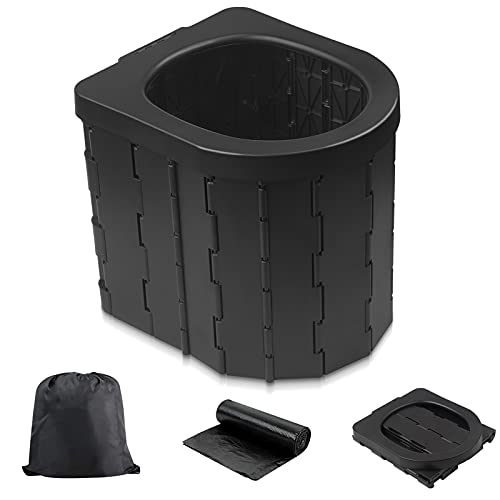
The Zinyeme is a portable bucket-style toilet made for camping, car trips, tents, boats and beaches — and, by extension, for the family moments when a child cannot wait and no restroom exists. Its simplicity is the design: a sturdy bucket commode that travels anywhere and asks almost nothing in setup.
For children, its real value is availability: night-time tent trips, long drives, traffic jams and festival fields are where it earns its place in the car. At home it serves as a spare during bathroom renovations or illnesses. It has no height adjustment, so check seat height against your child’s leg length before relying on it as a main solution.
Judged on adaptive criteria — adjustability to the individual child, stability under real use, transfer-friendliness and a dignity-preserving routine — this pick earns its badge honestly.
In family life, the Zinyeme Portable Toilet for Camping and Travel will be judged on evidence no listing can supply: the 2 a.m. test, the car-boot test, the grandparent’s-house test. Weigh it on those terms alongside its badge — Best for Travel and Cars. Does it deploy without a manual and a mood? Does the child approach it without negotiation? Does the adult emptying it still endorse the purchase at the end of a long day? A commode that passes those tests in your household is the right commode, whatever any shortlist says; a commode that fails them is furniture. Use the fitting and rehearsal steps in this guide to run the tests early, while changing your mind is still easy.
Best for: buyers whose priorities match the Best for Travel and Cars brief / Not suited for: buyers whose needs point to a different pick in this shortlist.
LuckyNov Portable Toilet with Urine Gel and Leak-Proof Bags
Badge: Best for Kids — Gel Bag System
Strengths
- Gel and bag system makes disposal clean and odour-controlled
- Explicitly designed for kids as well as adults
- Ergonomic seat is kinder for small users
Trade-offs
- Consumable gel and bags are an ongoing cost
- Bag system needs a disposal routine children must learn
- Travel format, not a plumbed solution
Key specifications
- Type: portable travel potty
- System: urine gel and leak-proof bags
- Odour: odourless positioning
- Audience: adults and kids
- Design: ergonomic seat
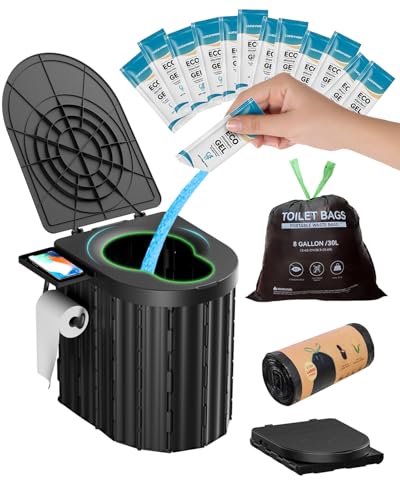
The LuckyNov portable toilet pairs an ergonomic seat with a urine gel and leak-proof bag system, positioned as odourless, and designed for adults and kids alike. The gel-and-bag approach is what separates it from plain bucket toilets: waste is gelled and sealed in a bag, which makes disposal discreet and keeps odour down in a car, tent or small room.
For families travelling with children, that disposal system is the difference between a potty that gets used and one that gets avoided. It also suits indoor temporary use — a child’s room during night training away from home, or beside a bed during illness. The trade-off is consumables: gel and bags are a running cost to budget for.
Judged on adaptive criteria — adjustability to the individual child, stability under real use, transfer-friendliness and a dignity-preserving routine — this pick earns its badge honestly.
In family life, the LuckyNov Portable Toilet with Urine Gel and Leak-Proof Bags will be judged on evidence no listing can supply: the 2 a.m. test, the car-boot test, the grandparent’s-house test. Weigh it on those terms alongside its badge — Best for Kids — Gel Bag System. Does it deploy without a manual and a mood? Does the child approach it without negotiation? Does the adult emptying it still endorse the purchase at the end of a long day? A commode that passes those tests in your household is the right commode, whatever any shortlist says; a commode that fails them is furniture. Use the fitting and rehearsal steps in this guide to run the tests early, while changing your mind is still easy.
Best for: buyers whose priorities match the Best for Kids — Gel Bag System brief / Not suited for: buyers whose needs point to a different pick in this shortlist.
TRIPTIPS Retractable Portable Toilet, Adjustable Height
Badge: Prose-Only: Adjustable Travel Pick
Strengths
- Adjustable height in a folding travel format is uncommon
- Retractable design packs down small
- Suits both adults and kids on paper
Trade-offs
- Covered in prose only in this guide — see the review for why
- Folding mechanisms need care to stay wobble-free
- Travel toilet, not a fixed home commode
Key specifications
- Type: retractable portable toilet
- Height: adjustable
- Design: foldable
- Audience: adults and kids; camping and car
The TRIPTIPS is a retractable, foldable portable toilet with adjustable height, made for camping and car travel for adults and kids. On specifications it looks like a strong match for this keyword — and it is covered in prose only in this guide because the verified linked shortlist for this keyword is limited to the first three picks; the remaining pool entries are reviewed honestly here without links or images, so you can still judge them.
Its adjustable, pack-down design is genuinely clever for families who camp often: one toilet that adjusts as children grow and disappears into the car boot afterwards. If it becomes your choice, buy it through your usual retailer after checking the current listing — and check the locking mechanism’s sturdiness in person if you can, because folding legs are where portable toilets succeed or fail.
Judged on adaptive criteria — adjustability to the individual child, stability under real use, transfer-friendliness and a dignity-preserving routine — this pick earns its badge honestly.
In family life, the TRIPTIPS Retractable Portable Toilet, Adjustable Height will be judged on evidence no listing can supply: the 2 a.m. test, the car-boot test, the grandparent’s-house test. Weigh it on those terms alongside its badge — Prose-Only: Adjustable Travel Pick. Does it deploy without a manual and a mood? Does the child approach it without negotiation? Does the adult emptying it still endorse the purchase at the end of a long day? A commode that passes those tests in your household is the right commode, whatever any shortlist says; a commode that fails them is furniture. Use the fitting and rehearsal steps in this guide to run the tests early, while changing your mind is still easy.
Prose-only in this guide — no Amazon link and no image. Reason: Same-family portable commode beyond this keyword’s linked shortlist (per assignment note, only the first 3 picks are genuine linked matches).
Best for: readers weighing it as an alternative through their usual retailer / Not suited for: readers who want this guide’s verified linked shortlist.
Kohree Portable RV Toilet, 5.8 Gallon
Badge: Prose-Only: RV-Scale Option
Strengths
- Real waste tank with level indicator — no guessing
- Leak-proof construction suits indoor vehicle use
- Largest capacity in this pool
Trade-offs
- Covered in prose only in this guide — see the review for why
- Adult-scale size and height for children
- Tank emptying is a heavier job than bag systems
Key specifications
- Capacity: 5.8 gallon detachable waste tank
- Design: leak-proof, with level indicator
- Use: RV, boat, camping, home
- Audience: adults and home use
The Kohree is a portable RV toilet with a 5.8 gallon detachable waste tank, leak-proof construction and a waste level indicator. It is the most ‘real toilet’ of the portable options here — a cassette-style unit for RVs, boats and off-grid rooms. It is covered in prose only in this guide, as one of the pool’s same-family fillers beyond the linked shortlist.
For children, its scale is the honest caveat: it is adult-sized, and smaller children will need a step and supervision. Where it shines is the family RV or cabin, where its tank capacity and indicator remove the daily emptying chore that bucket toilets impose. Judge it as vehicle equipment first and a children’s solution second.
Judged on adaptive criteria — adjustability to the individual child, stability under real use, transfer-friendliness and a dignity-preserving routine — this pick earns its badge honestly.
In family life, the Kohree Portable RV Toilet, 5.8 Gallon will be judged on evidence no listing can supply: the 2 a.m. test, the car-boot test, the grandparent’s-house test. Weigh it on those terms alongside its badge — Prose-Only: RV-Scale Option. Does it deploy without a manual and a mood? Does the child approach it without negotiation? Does the adult emptying it still endorse the purchase at the end of a long day? A commode that passes those tests in your household is the right commode, whatever any shortlist says; a commode that fails them is furniture. Use the fitting and rehearsal steps in this guide to run the tests early, while changing your mind is still easy.
Prose-only in this guide — no Amazon link and no image. Reason: Same-family portable commode beyond this keyword’s linked shortlist (per assignment note, only the first 3 picks are genuine linked matches).
Best for: readers weighing it as an alternative through their usual retailer / Not suited for: readers who want this guide’s verified linked shortlist.
Hapoon XL Portable Folding Camping Toilet
Badge: Prose-Only: XL Folding Option
Strengths
- XL seat gives wiggly children more room
- Lid keeps things tidy and contained
- Lightweight folding format travels easily
Trade-offs
- Covered in prose only in this guide — see the review for why
- XL footprint is more to pack
- Folding frame needs flat, firm ground
Key specifications
- Type: XL portable folding toilet with lid
- Audience: adults and kids
- Design: lightweight, travel portable potty
- Use: camping, car, outdoor
The Hapoon XL is a lightweight folding camping toilet with a lid, made for adults and kids, in an extra-large format. The XL seat is its argument for children: more surface for a small, wiggly user to feel secure on, and a lid that keeps the unit closed and tidier between uses. It is covered in prose only here, as a same-family filler beyond this keyword’s linked shortlist.
For car camping and outdoor events it is a sensible family backup, and its light weight means it actually gets taken along. Set it on firm, level ground — folding frames and soft turf are a poor mix, especially with children — and pair it with liners for the cleanest routine.
Judged on adaptive criteria — adjustability to the individual child, stability under real use, transfer-friendliness and a dignity-preserving routine — this pick earns its badge honestly.
In family life, the Hapoon XL Portable Folding Camping Toilet will be judged on evidence no listing can supply: the 2 a.m. test, the car-boot test, the grandparent’s-house test. Weigh it on those terms alongside its badge — Prose-Only: XL Folding Option. Does it deploy without a manual and a mood? Does the child approach it without negotiation? Does the adult emptying it still endorse the purchase at the end of a long day? A commode that passes those tests in your household is the right commode, whatever any shortlist says; a commode that fails them is furniture. Use the fitting and rehearsal steps in this guide to run the tests early, while changing your mind is still easy.
Prose-only in this guide — no Amazon link and no image. Reason: Same-family portable commode beyond this keyword’s linked shortlist (per assignment note, only the first 3 picks are genuine linked matches).
Best for: readers weighing it as an alternative through their usual retailer / Not suited for: readers who want this guide’s verified linked shortlist.
Comparison Table
| Pick | Badge | Standout specification | Check |
|---|---|---|---|
| Drive Medical Folding Bedside Commode | Best Adaptive Frame — Adjustable Height | Bucket: 7.5 qt included | Check on Amazon |
| Zinyeme Portable Toilet for Camping and Travel | Best for Travel and Cars | Audience: adults and family travel | Check on Amazon |
| LuckyNov Portable Toilet with Urine Gel and Leak-Proof Bags | Best for Kids — Gel Bag System | Odour: odourless positioning | Check on Amazon |
| TRIPTIPS Retractable Portable Toilet, Adjustable Height | Prose-Only: Adjustable Travel Pick | Design: foldable | Prose-only |
| Kohree Portable RV Toilet, 5.8 Gallon | Prose-Only: RV-Scale Option | Use: RV, boat, camping, home | Prose-only |
| Hapoon XL Portable Folding Camping Toilet | Prose-Only: XL Folding Option | Design: lightweight, travel portable potty | Prose-only |
Read the table alongside Best New Toilets if your shortlist is drifting toward a neighbouring category — the right answer sometimes sits one category over.
How to Choose an Adaptive Commode for a Child
Begin with the assessment, not the catalogue. A child’s diagnosis matters less than their functional picture: Can they bear weight through their legs? Transfer sideways or stand-pivot? Sit unsupported, and for how long? Grip a frame? Those answers decide whether an adjustable mainstream commode suffices or specialist equipment is required — and an occupational therapist can answer them in one visit better than a month of product research.
Height adjustability is the first product filter, because adaptive seating is geometry. Feet supported, knees level, seat depth that does not press behind the knees: the Drive Medical’s adjustable legs are the mechanism that achieves this in the pool, and the setting should be recorded and re-checked as the child grows. A fixed-height portable can still serve for travel, but the home seat should be the fitted one.
Stability is the second filter, tested honestly: frame locked, on the real floor, with the child’s actual transfer simulated by an adult first. Folding designs earn their portability with moving parts, and every lock must engage fully, every time — build the lock-check into the routine. Capacity ratings matter here too; a frame rated well above the user’s weight feels different under a transfer, and that felt difference is confidence.
Finally, design for dignity and independence. A sealed, discreet waste system (the LuckyNov pattern) lets an older child manage trips with less exposure. A routine the child can partly run — lid, hand hygiene, calling only when needed — preserves autonomy. The best adaptive purchase is the one that maximises what the child does alone, safely, and that calculation is individual enough that this guide offers criteria, not commandments.
How to Set Up an Adaptive Commode Safely: Fitting and Routine
Adaptive setup is a fitting, not an assembly. Work through these steps with the child present and, where possible, with their therapist’s guidance in hand.
- Fit the height with the child seated: feet fully supported (add a firm step if the lowest setting is still high), knees level with hips, and the child able to hold the frame comfortably. Record the leg setting used.
- Simulate the transfer with an adult before the child tries it: approach, lock any wheels or folding joints, confirm zero rock on the actual floor surface, and only then rehearse with the child, supervised.
- Set the environment: clear route, night lighting, grab points where the room allows, and the commode positioned so the child’s stronger side leads the transfer if they have one.
- Build the waste routine around dignity: liners or sealed gel bags prepared in advance, disposal that does not cross living spaces, and hand hygiene supplies within the child’s reach, not just the adult’s.
- Schedule the safety check: weekly, test every leg lock and folding joint, look for frame damage, re-verify the height setting, and clean bucket and seat with a mild cleaner.
- Review the fit on a calendar, not on a crisis: growth spurts change geometry quietly, so re-fit every few months and after any change in the child’s mobility, medication or therapy programme.
Problem: the child feels unstable despite a locked frame → check floor surface and leg settings are even; add a non-slip mat under the frame where the design allows, and if instability persists, the product class — not the setup — is wrong: seek an OT-led reassessment.
Problem: transfers are getting harder → growth or a change in strength has outpaced the setup; re-fit the height first, then discuss transfer aids with a professional rather than improvising with furniture.
Problem: the child resists the commode at school or on trips → unfamiliar settings erode confidence; rehearse with the travel unit at home until it is boring, and keep the routine, lighting and supplies identical to home.
For a deeper treatment of the neighbouring routine, Best No Clog Toilets covers the closest related ground.
The Honest Limits of Adaptable Mainstream Commodes
Everything linked in this guide is a mainstream commode with adaptable features — adjustable legs, folding frames, portable formats. What none of them offers is the specialist layer: lateral trunk supports, tilt-in-space seating, commodes designed for hoist transfers, or paediatric postural systems. Pretending otherwise would fail exactly the families this keyword serves, so the boundary is stated plainly here.
The mainstream layer genuinely covers a large group: children who need height fitting, stability, a bedside or travel solution, or a bridge while awaiting assessment or funding for specialist equipment. In that bridging role these products can be excellent — provided the fit checks in this guide are done and the child’s professionals know what is being used.
If your child’s needs sit beyond that layer, treat this guide as background reading and put your energy into the assessment route: occupational therapy, paediatric continence services and disability equipment providers. The right specialist commode, properly funded and fitted, is worth more than any shortlist — including this one — can offer.
Dignity Is a Design Feature
Adaptive equipment for children is usually specified in kilograms and centimetres, but the specification that decides daily life is dignity. A commode that looks like ordinary furniture rather than a hospital prop, a waste system that seals and hides, a routine that lets the child do the maximum alone — these determine whether a child uses the equipment willingly at a friend’s house, on a school trip, at a grandparent’s home.
This is why the sealed gel-bag system earns its linked place despite being ‘only’ a travel product: discretion is an adaptive feature. It is also why rehearsal matters — competence is dignity. A child who has practised the whole sequence at home performs it anywhere, and performance is what turns equipment into independence.
Parents and carers can audit any candidate purchase with three questions: What can my child do alone with this? What does it look like to their friends? What happens at 2 a.m.? A product that answers all three well is adapted in the way that counts, whatever its category label says.
When a Commode Is Not the Answer: Escalation Paths
A commode solves availability, height and stability problems. It does not solve continence changes, unexplained regression, pain, or mobility loss — and those deserve a clinician, not a catalogue. If a child’s toileting pattern changes suddenly, if transfers become unsafe despite correct fitting, or if night-time needs escalate beyond what a bedside unit can serve, the next step is a GP, a paediatric continence service or an occupational therapist, in whichever order your health system makes easiest.
That escalation is not a failure of the equipment in this guide; it is the equipment doing its boundary’s job. The commodes here buy comfort, independence and time — often exactly the time a family needs while assessments and referrals proceed. Use them fully, within their honest limits, and escalate without hesitation when the problem changes shape.
A Short History of the Portable Toilet — From Chamber Pot to Gel Bag
The portable commode is one of humanity’s oldest household objects — the chamber pot sat under beds for millennia — and its modern history is a steady civilising of the same job: lids, then buckets with seats, then framed commodes borrowed from medical care, then chemical and gel systems that seal waste away. The six products in this guide span that whole arc, from a simple bucket format to a gel-and-bag system that gels, seals and deodorises in one motion.
What has not changed is the purpose: dignity and availability — a toilet where one is needed, when it is needed, without distress. Judged against that ancient purpose, features fall into place. Height adjustability serves it, sealed disposal serves it, stability serves it. Marketing that does not serve it can be safely ignored, in this category more than most.
Grandparents’ Houses, Rentals and Other People’s Bathrooms
A child’s commode earns much of its value away from home, in bathrooms that were never designed for them. A grandparent’s house with a high toilet and no step, a holiday rental with one bathroom for six people, a relative’s home where a night-time accident would be a mortifying memory — these are the situations the linked portables in this guide exist to defuse. Packing the commode is not pessimism; it is what lets a child relax, and relaxed children toilet better.
Prepare the away kit as a single grab-bag: the commode or its travel format, liners or gel bags counted per night plus spares, wipes and hand hygiene, a small night-light, and a dark bag for discreet disposal. When the kit lives packed, trips stop requiring a toileting risk assessment, and the child’s independence travels with them — which, for the families this guide serves, is the entire point.
Cleaning and Storing Commodes Without the Misery
The maintenance routine decides whether a commode remains in service or gets quietly exiled to a garage. The principles are simple: waste out promptly, surfaces rinsed with a mild cleaner after each emptying, a deeper clean weekly for home units, and everything dried before storage so smells never take residence in plastic and fabric. Silicone and smooth plastic parts forgive neglect least visibly and reward routine most — a two-minute rinse is the whole secret.
Store the unit assembled or flat according to its design, with its consumables on board — a liner fitted, bags in the compartment — so the next deployment is a placement, not a project. Check folding locks and legs at storage time rather than at a dark campsite. Families who run this routine stop thinking about the commode entirely, which is the highest praise any piece of household equipment can earn.
The Bathroom Cupboard Audit: What to Keep, What to Retire
Once you have chosen from this guide, audit the cupboard the new cleaner joins. Retire abrasive powders from premium-bowl duty, move drain treatments to a clearly separate shelf or box from bowl cleaners, and throw out the unlabelled decanted bottle nobody can identify. Most cleaning mistakes are cupboard mistakes: the wrong product within reach at the wrong moment.
Keep the working set small and visible: one bowl cleaner matched to your water, a soft brush that is replaced when it splays, a separate cloth and mild spray for seat and exterior, and — only where this guide’s criteria say so — a preventive pipe treatment on its own schedule. A small, correct cupboard outperforms a large, hopeful one every week of the year.
Common Buying Mistakes
- Buying a fixed-height portable as the main home seat for a child whose fit needs will change with growth.
- Skipping the adult transfer simulation and discovering frame rock with the child mid-transfer.
- Treating specialist needs with mainstream equipment because a listing used the word ‘adaptive’ loosely.
- Forgetting the re-fit: a commode set correctly in September can be wrong by spring.
- Prioritising pack size over stability for travel — a travel commode must pass the same lock and wobble checks as the home one.
Final Recommendation
For the home seat, the Drive Medical adjustable commode is this guide’s linked recommendation: height that fits and re-fits, a frame with real capacity, and a folding design that still stores away. For travel and trips, the LuckyNov’s sealed gel-bag system protects dignity and independence, with the Zinyeme as the simple rugged alternative for cars and campsites.
Consider the prose-only TRIPTIPS if an adjustable folding travel format suits your child, the Kohree for RV-scale stays, and the Hapoon for its XL seat — through your usual retailer, with the same fit and stability checks. And hold the guide’s central honesty: if your child needs postural support or assisted transfers, an OT assessment leads and products follow. Fitted well, these commodes give a child the safest, most independent toileting their situation allows.
To act on this guide’s top-ranked linked picks, start here: Drive Medical Folding Bedside Commode, Zinyeme Portable Toilet for Camping and Travel, LuckyNov Portable Toilet with Urine Gel and Leak-Proof Bags — check the latest price on Amazon for each, and confirm the current configuration before ordering.
Still weighing a neighbouring option? Best No Frill Toilets is the closest related guide in this series.
Related guides
Frequently Asked Questions
What makes a commode ‘adaptive’ for a child?
In practice: adjustability to the individual (above all seat height), stability during transfers, a capacity and frame the child can hold and trust, and a waste system that preserves dignity. True specialist adaptive equipment adds postural supports and transfer design — which is why this guide distinguishes adaptable mainstream commodes from specialist products and recommends an OT assessment for complex needs.
How do I set the right seat height for my child?
With the child seated: feet fully supported, knees roughly level with hips, and enough seat depth without pressure behind the knees. Adjustable-leg frames like the Drive Medical make this a fitting exercise; record the setting, and re-fit every few months or after growth spurts and mobility changes.
Can a folding travel commode be safe for adaptive use?
It can, with discipline: every lock fully engaged, firm level ground, an adult transfer simulation before the child’s first use, and the same weekly safety checks as the home unit. If any lock feels uncertain, retire the unit from adaptive use — folding mechanisms are where portable commodes earn or lose trust.
When should we move beyond mainstream commodes to specialist equipment?
When the child needs trunk or lateral support to sit safely, cannot transfer without lifting, or when a mainstream frame cannot be made stable for their movement pattern. Those are assessment triggers: an occupational therapist can specify and often help fund the right equipment.
Why are three picks not linked in this guide?
The TRIPTIPS, Kohree and Hapoon are beyond this keyword’s linked shortlist in the verified pool, so they are reviewed in prose only — real specifications and adaptive caveats, no links or images, with the reason stated in each review. If one fits your child, buy it through your usual retailer after the same fit checks.
How can a commode support my child’s independence?
By maximising the steps they own: a fitted height they can manage, a frame they can hold, supplies within their reach, a sealed waste system that keeps things discreet, and a rehearsed routine that is identical everywhere. Independence is built from those unglamorous details far more than from any single product feature.
How many liners or gel bags should we pack for a trip?
Count one per expected use, then add half as many again as spares. Night-time use is the least predictable variable with children, and running out converts a sealed, discreet system back into an improvised one at the worst moment. The away-kit approach in this guide — consumables packed with the unit, counted per night — exists to prevent exactly that.
Can a commode be used over an existing toilet?
Some framed commodes are designed in 3-in-1 fashion to serve over a standard toilet as a raised seat with support, as well as at a bedside with their bucket. Check the specific product’s stated configurations on its listing before relying on this — the Drive Medical in this guide is described as a 3-in-1 solution — and confirm the fit over your bowl’s height and shape.


