Disclosure: topratedkitchenware.com is reader-supported. When you buy through links on our site, we may earn an affiliate commission from Amazon and other retailers, at no extra cost to you.
Where to buy
Shopping for the best toilet cleaner for low flow toilets? Start with the shortlist below — every pick was checked against its verified listing, and linked picks take you to Amazon, where you can check the latest price on Amazon and confirm the current configuration before you decide. Picks covered in prose only are marked as such, with the reason stated in their reviews. Best Low Flush Toilets Canada is the closest neighbouring guide if your needs shift as you read.
- Green Gobbler Toilet Clog Defense — Best for Low-Flow Prevention. Check the latest price on Amazon.
- Method Antibacterial Toilet Bowl Cleaner, Spearmint, 24 fl oz — Best Overall Bowl Cleaner. Check the latest price on Amazon.
- Better Life Toilet Bowl Cleaner, Pack of 2 — Best Gentle Formula. Check the latest price on Amazon.
- Mrs. Meyer’s Clean Day Liquid Toilet Bowl Cleaner, Lemon Verbena — Best for Protecting Glaze. Check the latest price on Amazon.
- Method Antibacterial Toilet Bowl Cleaner, Pack of 3 — Best Stock-Up Pack. Check the latest price on Amazon.
- Seventh Generation Toilet Bowl Cleaner, Fresh Mint, Pack of 4 — Best for Hard Water. Check the latest price on Amazon.
Read the full guide ↓
Low-flow toilets save water on every flush, and in exchange they ask more of your cleaning routine: with less water moving through the bowl, minerals deposit faster at the waterline, biofilm establishes sooner, and waste clearance depends on keeping pipes and rim jets in good condition. Finding the best toilet cleaner for low flow toilets is therefore a two-part problem — a bowl cleaner that works with dwell time rather than dilution, and, for many homes, a preventive pipe treatment that keeps reduced water volumes moving freely.
Uniquely among this guide’s sibling topics, all six verified picks are linked here, because the pool’s preventive entry genuinely belongs: Green Gobbler Clog Defense is explicitly made for low and slow flow toilets, coating pipes to prevent clogs and improve flush performance. It still is not a bowl cleaner — the guide keeps that distinction sharp — but for this keyword its job is a real part of the answer, alongside five true bowl cleaners spanning antibacterial, plant-based and hard-water formulas.
The ranking below balances both halves: cleaners judged on cling and dwell performance (a gel that stays where you put it matters when the next flush is small), and prevention judged on septic safety and suitability for older plumbing. Get both halves right and a low-flow toilet stays as clean as any conventional bowl, on a fraction of the water.
One more piece of orientation before the picks: readers comparing neighbouring questions often start with Best Low Height Toilets or Best Low Profile Toilets, and this guide cross-refers where the answers genuinely overlap.
Key Takeaways
- Green Gobbler Clog Defense earns a linked place for this keyword: it is made for low and slow flow toilets and prevents the clogs reduced water invites.
- Method’s antibacterial cleaner is the best overall bowl cleaner here — clinging gel, one-step sanitising, under-rim reach.
- Better Life and Mrs. Meyer’s are the gentle, septic-safe formulas for routine low-flow bowl care.
- Seventh Generation leads on hard water rings, which low-flow bowls form faster than conventional ones.
- Technique is half the product: lower the waterline, dwell ten minutes, brush softly — small flushes punish shortcuts.
In this guide
Quick Picks
| Pick | Badge | Key specification | Link |
|---|---|---|---|
| Green Gobbler Toilet Clog Defense | Best for Low-Flow Prevention | Purpose: coats pipes to help prevent toilet clogs; Also: improves flush performance | Check on Amazon |
| Method Antibacterial Toilet Bowl Cleaner, Spearmint, 24 fl oz | Best Overall Bowl Cleaner | Size: 24 fl oz; Action: kills 99.9% of household germs (per maker) | Check on Amazon |
| Better Life Toilet Bowl Cleaner, Pack of 2 | Best Gentle Formula | Pack: 2 x 24 oz; Formula: plant-based, non-toxic positioning | Check on Amazon |
| Mrs. Meyer’s Clean Day Liquid Toilet Bowl Cleaner, Lemon Verbena | Best for Protecting Glaze | Size: 24 fl oz; Action: stain removing | Check on Amazon |
| Method Antibacterial Toilet Bowl Cleaner, Pack of 3 | Best Stock-Up Pack | Pack: 3 x 24 fl oz; Action: kills 99.9% of household germs (per maker) | Check on Amazon |
| Seventh Generation Toilet Bowl Cleaner, Fresh Mint, Pack of 4 | Best for Hard Water | Pack: 4 x 24 oz; Formula: biobased; 0% chlorine bleach | Check on Amazon |
How These Picks Were Chosen
Selection for this keyword began from the low-flow reality rather than the product shelf: what fails first on a low-flow toilet? The answers — waterline mineral rings, under-rim buildup that distorts an already economical flush, and pipe buildup that reduced water cannot scour — defined the shortlist. Five bowl cleaners cover the bowl half of the problem; the Green Gobbler covers the pipe half, and for this keyword it is linked because its listing names low and slow flow toilets as its purpose.
Among the cleaners, cling and dwell were weighted heavily: a low-flow flush rinses less, so a gel that stays in place during its working time and then clears cleanly is worth more than raw chemical aggression. Gentle, septic-safe formulas rank well because low-flow homes are often water-conscious households overall, and because frequent light cleaning — the low-flow way — should not mean frequent harsh chemistry.
Claims here come from the verified listings and are attributed to their makers; no prices or fixed ratings are printed, and no hands-on testing is claimed. Check the latest price on Amazon via the links, and treat the how-to section as part of the product: on a low-flow toilet, method is genuinely half of what you are buying.
Internal cross-checks against neighbouring guides — including Best Low Volume Toilets — were used to keep this shortlist consistent with the wider category coverage, so a product’s role does not change depending on which page you land on.
One further filter deserves stating: suitability claims in this guide — septic safety, hard-water action, antibacterial effect — are the makers’ own listing claims, attributed as such, and they were used to assign badges rather than treated as laboratory findings. That distinction is why the guide’s confidence rests on matching product type to job, which listings state unambiguously, rather than on performance margins no listing can prove.
Coverage honesty completes the method: where this pool contained products from outside the keyword’s core — drain and pipe treatments in a bowl-cleaner guide — they were neither hidden nor disguised, but reclassified in the open and judged on their real merits. A shortlist that shows its working lets you disagree with it productively, and lets you trust the parts you do not check. That transparency, more than any single badge above, is the thing this guide most wants to be believed about.
Detailed Reviews: The best toilet cleaner for low flow toilets Shortlist, Pick by Pick

Green Gobbler Toilet Clog Defense
Badge: Best for Low-Flow Prevention
Strengths
- Prevention focus: treats the pipe, not just the bowl surface
- Made for low and slow flow toilets and older plumbing
- Septic-safe formula
Trade-offs
- It is a clog-prevention treatment, not a bowl cleaner — it does not scrub stains
- Five treatments per bottle means planned re-ordering for regular use
- Does not replace a brush for visible bowl grime
Key specifications
- Purpose: coats pipes to help prevent toilet clogs
- Also: improves flush performance
- Safety: safe for septic
- Suited to: old plumbing, low and slow flow toilets
- Treatments: 5 treatments, 60 oz
Green Gobbler Toilet Clog Defense is not a bowl cleaner in the scrub-and-shine sense, and this guide will not pretend otherwise. It is a preventive treatment that coats pipes to help stop clogs forming and to improve flush performance, made for old plumbing and low, slow-flow toilets, and safe for septic systems. Five treatments come in the 60 oz bottle.
Its value is upstream of cleaning: toilets that clog repeatedly, especially low-flow models in older homes, often have a pipe-condition problem rather than a bowl problem. A coating treatment addresses that. Visible rings, stains and germs on the bowl itself still need a true bowl cleaner and a brush — which is why this pick’s role in each guide below is stated so carefully.
Judged for a low-flow toilet — where less water per flush means deposits form faster and every product must earn its place without wasting flushes — this pick earns its badge honestly.
In practice, the Green Gobbler Toilet Clog Defense earns or loses its place in the first month of the routine described in this guide. Judge it on behaviour, not promises: whether the formula stays where you apply it, whether the weekly clean stays a two-minute job, whether the bowl’s condition at week four is visibly better than at week one, and whether the household actually keeps using it without being reminded. Its badge — Best for Low-Flow Prevention — summarises the role it was chosen for; the month-long routine is the evidence. If a product in this shortlist fails that test in your home, the honest response is to move one step along the shortlist, not to escalate to harsher chemistry.
Best for: buyers whose priorities match the Best for Low-Flow Prevention brief / Not suited for: buyers whose needs point to a different pick in this shortlist.
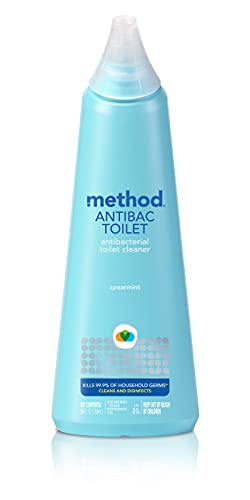
Method Antibacterial Toilet Bowl Cleaner, Spearmint, 24 fl oz
Badge: Best Overall Bowl Cleaner
Strengths
- Antibacterial action plus cleaning in one product
- Angled use under the rim where brushes miss
- Spearmint scent is fresher than classic bleach smells
Trade-offs
- Single 24 fl oz bottle runs out faster in multi-bathroom homes
- Antibacterial formulas are not the gentlest option in this group
- Scented product will not suit fragrance-free households
Key specifications
- Size: 24 fl oz
- Action: kills 99.9% of household germs (per maker)
- Use on: toilet bowls, seats, under the rim
- Scent: spearmint
- Steps: cleans and sanitises in one step
Method’s antibacterial toilet bowl cleaner is a 24 fl oz spearmint formula that cleans and sanitises in one step, for bowls, seats and under the rim, and is stated by its maker to kill 99.9% of household germs. It is the mainstream workhorse of this pool: a recognisable brand, a gel that clings long enough to work, and a scent most people prefer to traditional bathroom chemicals.
Under-rim application is where it earns its place — the rim jets and the channel above the waterline are where odour and staining start, and a bottle designed to reach up under the rim does work a brush alone cannot. For households that want one bottle that cleans and sanitises, this is the straightforward choice in the group.
Judged for a low-flow toilet — where less water per flush means deposits form faster and every product must earn its place without wasting flushes — this pick earns its badge honestly.
In practice, the Method Antibacterial Toilet Bowl Cleaner, Spearmint, 24 fl oz earns or loses its place in the first month of the routine described in this guide. Judge it on behaviour, not promises: whether the formula stays where you apply it, whether the weekly clean stays a two-minute job, whether the bowl’s condition at week four is visibly better than at week one, and whether the household actually keeps using it without being reminded. Its badge — Best Overall Bowl Cleaner — summarises the role it was chosen for; the month-long routine is the evidence. If a product in this shortlist fails that test in your home, the honest response is to move one step along the shortlist, not to escalate to harsher chemistry.
Best for: buyers whose priorities match the Best Overall Bowl Cleaner brief / Not suited for: buyers whose needs point to a different pick in this shortlist.
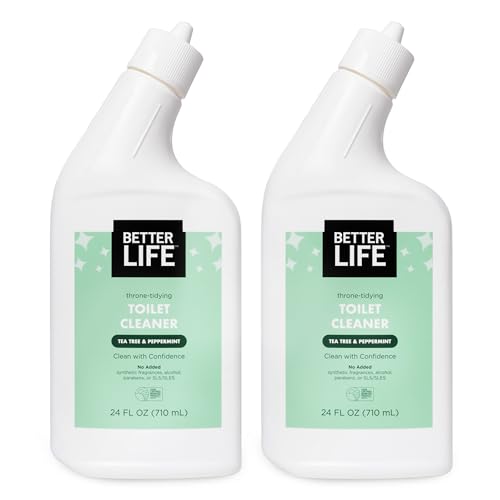
Better Life Toilet Bowl Cleaner, Pack of 2
Badge: Best Gentle Formula
Strengths
- Plant-based formula suits chemical-cautious households
- Two-bottle pack covers multi-bathroom homes
- Tea tree and peppermint scent without a bleach character
Trade-offs
- Gentler formulas can need longer dwell time on old stains
- Gel still needs brush work — it is not a no-scrub product
- Plant-based positioning is a premium tier in this category
Key specifications
- Pack: 2 x 24 oz
- Formula: plant-based, non-toxic positioning
- Action: stain and odour remover
- Scent: tea tree and peppermint
- Format: cleaning gel
Better Life’s toilet bowl cleaner is a plant-based, non-toxic positioned gel sold as a pack of two 24 oz bottles, scented with tea tree and peppermint, aimed at stains and odour. It is the pick for households that read ingredient panels: no harsh bleach character, a scent from essential-oil style ingredients, and enough cleaning power for routine and moderately neglected bowls.
Gentle formulas reward technique: apply under the rim and around the bowl, give the gel real dwell time — ten minutes while you clean the rest of the bathroom — then brush. Used that way it handles weekly cleaning and light hard-water marks well. Ancient, layered mineral rings may still need a specialist treatment, and this guide says so rather than overselling it.
Judged for a low-flow toilet — where less water per flush means deposits form faster and every product must earn its place without wasting flushes — this pick earns its badge honestly.
In practice, the Better Life Toilet Bowl Cleaner, Pack of 2 earns or loses its place in the first month of the routine described in this guide. Judge it on behaviour, not promises: whether the formula stays where you apply it, whether the weekly clean stays a two-minute job, whether the bowl’s condition at week four is visibly better than at week one, and whether the household actually keeps using it without being reminded. Its badge — Best Gentle Formula — summarises the role it was chosen for; the month-long routine is the evidence. If a product in this shortlist fails that test in your home, the honest response is to move one step along the shortlist, not to escalate to harsher chemistry.
Best for: buyers whose priorities match the Best Gentle Formula brief / Not suited for: buyers whose needs point to a different pick in this shortlist.

Mrs. Meyer’s Clean Day Liquid Toilet Bowl Cleaner, Lemon Verbena
Badge: Best for Protecting Glaze
Strengths
- Septic-safe stain remover in a gentle-positioned formula
- Lemon verbena scent is light and garden-fresh
- Cruelty-free positioning with essential oils
Trade-offs
- Single bottle sizing for multi-bathroom homes
- Gentle formulas need dwell time on set stains
- Scent, while light, is still a scent
Key specifications
- Size: 24 fl oz
- Action: stain removing
- Safety: septic safe
- Formula notes: cruelty free, made with essential oils
- Scent: lemon verbena
Mrs. Meyer’s Clean Day toilet bowl cleaner is a 24 fl oz lemon verbena liquid, septic safe, cruelty free and made with essential oils, positioned as a stain remover gentle enough for regular use. It occupies the same thoughtful-formula territory as the Better Life pick, with a brighter, more herbal scent profile and a long-established brand behind it.
For new and premium toilets especially, this class of cleaner is the point: effective on the early staining that appears at the waterline, without the aggressive chemistry owners worry about on modern glazes and coatings. Weekly use with proper dwell time keeps a bowl at its best; it is maintenance excellence rather than restoration drama.
Judged for a low-flow toilet — where less water per flush means deposits form faster and every product must earn its place without wasting flushes — this pick earns its badge honestly.
In practice, the Mrs. Meyer’s Clean Day Liquid Toilet Bowl Cleaner, Lemon Verbena earns or loses its place in the first month of the routine described in this guide. Judge it on behaviour, not promises: whether the formula stays where you apply it, whether the weekly clean stays a two-minute job, whether the bowl’s condition at week four is visibly better than at week one, and whether the household actually keeps using it without being reminded. Its badge — Best for Protecting Glaze — summarises the role it was chosen for; the month-long routine is the evidence. If a product in this shortlist fails that test in your home, the honest response is to move one step along the shortlist, not to escalate to harsher chemistry.
Best for: buyers whose priorities match the Best for Protecting Glaze brief / Not suited for: buyers whose needs point to a different pick in this shortlist.

Method Antibacterial Toilet Bowl Cleaner, Pack of 3
Badge: Best Stock-Up Pack
Strengths
- Three-bottle pack ends the one-bottle-per-bathroom shuffle
- Same antibacterial one-step cleaning as the single bottle
- Stock-up format suits larger homes
Trade-offs
- Same product as the single bottle — a pack size, not a different formula
- Antibacterial positioning is not the gentlest in this group
- Up-front commitment to one scent and formula
Key specifications
- Pack: 3 x 24 fl oz
- Action: kills 99.9% of household germs (per maker)
- Scent: spearmint
- Use on: bowls, seats, under the rim
This is Method’s antibacterial toilet bowl cleaner in a pack of three 24 fl oz spearmint bottles — the same one-step clean-and-sanitise formula as the single bottle listed earlier in this guide, in stock-up format. It is listed separately because households genuinely buy it this way: one bottle lives in each bathroom instead of travelling around the house in a caddy.
The pack changes logistics, not chemistry. Multi-bathroom homes clean more often when supplies are already in the room, and that frequency matters more to bowl condition than any single product choice. If you already know the single bottle suits your toilets, the three-pack is the sensible restock; if you are still choosing a formula, start with one bottle.
Judged for a low-flow toilet — where less water per flush means deposits form faster and every product must earn its place without wasting flushes — this pick earns its badge honestly.
In practice, the Method Antibacterial Toilet Bowl Cleaner, Pack of 3 earns or loses its place in the first month of the routine described in this guide. Judge it on behaviour, not promises: whether the formula stays where you apply it, whether the weekly clean stays a two-minute job, whether the bowl’s condition at week four is visibly better than at week one, and whether the household actually keeps using it without being reminded. Its badge — Best Stock-Up Pack — summarises the role it was chosen for; the month-long routine is the evidence. If a product in this shortlist fails that test in your home, the honest response is to move one step along the shortlist, not to escalate to harsher chemistry.
Best for: buyers whose priorities match the Best Stock-Up Pack brief / Not suited for: buyers whose needs point to a different pick in this shortlist.

Seventh Generation Toilet Bowl Cleaner, Fresh Mint, Pack of 4
Badge: Best for Hard Water
Strengths
- Biobased formula with no chlorine bleach
- Specifically positioned against hard water rings
- Four-pack suits stock-up and multi-bathroom homes
Trade-offs
- Hard-water claims still need dwell time and brushing
- Bulk pack is a commitment if you dislike the scent
- Premium-tier positioning
Key specifications
- Pack: 4 x 24 oz
- Formula: biobased; 0% chlorine bleach
- Action: fights stubborn grime; tough on hard water rings
- Safety: septic safe
- Scent: fresh mint
Seventh Generation’s toilet bowl cleaner comes as a pack of four 24 oz bottles in fresh mint: a biobased formula with 0% chlorine bleach, septic safe, positioned to fight stubborn grime and specifically tough on hard water rings. Of the gentle-positioned cleaners in this pool, it makes the strongest claim against mineral staining, which is the hardest problem in bowl care.
Hard water rings form at the waterline where minerals deposit as water evaporates; a biobased acid-style cleaner, given dwell time, loosens them without bleach. In hard-water regions this is often the best weekly cleaner in the group. In soft-water homes its advantages narrow, and the simpler picks above compete on equal terms.
Judged for a low-flow toilet — where less water per flush means deposits form faster and every product must earn its place without wasting flushes — this pick earns its badge honestly.
In practice, the Seventh Generation Toilet Bowl Cleaner, Fresh Mint, Pack of 4 earns or loses its place in the first month of the routine described in this guide. Judge it on behaviour, not promises: whether the formula stays where you apply it, whether the weekly clean stays a two-minute job, whether the bowl’s condition at week four is visibly better than at week one, and whether the household actually keeps using it without being reminded. Its badge — Best for Hard Water — summarises the role it was chosen for; the month-long routine is the evidence. If a product in this shortlist fails that test in your home, the honest response is to move one step along the shortlist, not to escalate to harsher chemistry.
Best for: buyers whose priorities match the Best for Hard Water brief / Not suited for: buyers whose needs point to a different pick in this shortlist.
Comparison Table
| Pick | Badge | Standout specification | Check |
|---|---|---|---|
| Green Gobbler Toilet Clog Defense | Best for Low-Flow Prevention | Safety: safe for septic | Check on Amazon |
| Method Antibacterial Toilet Bowl Cleaner, Spearmint, 24 fl oz | Best Overall Bowl Cleaner | Use on: toilet bowls, seats, under the rim | Check on Amazon |
| Better Life Toilet Bowl Cleaner, Pack of 2 | Best Gentle Formula | Action: stain and odour remover | Check on Amazon |
| Mrs. Meyer’s Clean Day Liquid Toilet Bowl Cleaner, Lemon Verbena | Best for Protecting Glaze | Safety: septic safe | Check on Amazon |
| Method Antibacterial Toilet Bowl Cleaner, Pack of 3 | Best Stock-Up Pack | Scent: spearmint | Check on Amazon |
| Seventh Generation Toilet Bowl Cleaner, Fresh Mint, Pack of 4 | Best for Hard Water | Action: fights stubborn grime; tough on hard water rings | Check on Amazon |
Read the table alongside Best Low Water Flush Toilets if your shortlist is drifting toward a neighbouring category — the right answer sometimes sits one category over.
How to Choose a Cleaner for a Low-Flow Toilet
Separate the two jobs and buy for both, deliberately. Job one is the bowl: stains, rings, germs. Job two is the system: pipes and rim jets that reduced water volumes cannot keep clear by force. Most ‘my low-flow toilet is always dirty’ complaints are actually job-two failures — a weakening flush smears and deposits — misdiagnosed as a cleaner problem. The Green Gobbler’s presence in this shortlist exists to fix that misdiagnosis.
For the bowl, choose a gel with real cling and give it dwell time. Thin liquids run off vertical porcelain and get one weak flush to rinse; gels stay, work, and clear. Match the formula to your water: hard-water homes should default to the Seventh Generation pick, because low-flow waterlines concentrate minerals faster. Softer-water homes can enjoy the gentler Better Life or Mrs. Meyer’s as their standard.
For the system, prevention beats rescue at low flow. An enzyme or coating treatment on a schedule — the Green Gobbler offers five treatments per bottle — keeps pipe walls slick so reduced volumes carry waste fully. It is septic safe and made for older plumbing, the exact housing stock where low-flow retrofits meet narrow, rough pipes. Skip prevention only if your home’s drainage has years of trouble-free low-flow history.
Avoid the two classic low-flow mistakes in product form: in-tank drop-ins, which degrade seals and distort the carefully metered flush, and ultra-harsh rescue chemicals used routinely, which punish glaze and septic biology alike. Low-flow ownership rewards the same philosophy as this guide’s routine — small, regular, gentle inputs, exactly like the toilet itself.
How to Clean a Low-Flow Toilet So It Stays Clean
Low-flow bowls punish the spray-and-scrub shortcut. This routine uses dwell time and waterline control to do with technique what extra flush water does on a conventional toilet.
- Reduce the bowl water first: brush water briskly over the trap bend several times to drop the level, exposing the waterline band where rings form. Cleaner on exposed porcelain works at full strength.
- Apply gel under the rim and in a band at the (lowered) waterline. On a low-flow toilet the under-rim channel is critical — its jets meter the whole flush, and buildup there weakens everything.
- Dwell for ten minutes minimum. Use the time for seat and exterior with a separate cloth and mild cleaner.
- Brush softly and thoroughly, paying the rim jets individual attention. You are maintaining a water-delivery system, not just scrubbing a surface.
- Flush once and inspect. Because the flush is small, confirm the gel has cleared; a second flush for rinsing after cleaning is a fair use of water — it is still less than one old-style flush.
- On schedule, dose the preventive pipe treatment as directed — evening application lets it work overnight at low flow’s lowest-flow hours.
Problem: the ring returns within days → mineral-heavy water meeting a low waterline; make the hard-water formula your weekly standard, and check whether the tank’s fill level is set correctly, since a low tank level shrinks the flush further.
Problem: flush seems weaker month by month → suspect rim jets and pipe buildup before the fixture; deep-clean under the rim, run a preventive treatment cycle, and only then consider a plumber.
Problem: frequent clogs on an older home’s low-flow toilet → this is the Green Gobbler’s exact case: coating prevention plus, honestly, checking that the drain line’s slope and condition suit low volumes — some very old lines need a professional opinion.
For a deeper treatment of the neighbouring routine, Best Low Water Toilets covers the closest related ground.
Why Low-Flow Toilets Get Dirty Differently
A conventional toilet hides mediocre cleaning behind water volume: a big flush scours the bowl, dilutes residue and bullies waste through the pipes. A low-flow toilet removes that subsidy. What remains is the truth of the system — glaze condition, rim jet health, pipe condition and your routine — which is why low-flow bowls seem to ‘suddenly’ get dirty when any one of those slips.
The waterline is the visible symptom. Less water per flush means the line sits where evaporation concentrates minerals between uses, and each flush rinses the band above it less thoroughly. Rings are therefore a schedule problem: weekly gentle cleaning removes in minutes what monthly cleaning must fight for an hour.
The invisible symptom is flush decay. Rim jets narrow with mineral and biofilm, the swirl weakens, waste clears less completely, and the bowl soils faster — a feedback loop owners often blame on the toilet. The routine in this guide, plus pipe prevention where plumbing is old, breaks the loop at its cheapest point.
Prevention Products: When the Pipe Half of the Answer Matters
The Green Gobbler Clog Defense is the pool’s prevention specialist: it coats pipes to help prevent clogs and improve flush performance, is safe for septic, and names low and slow flow toilets and old plumbing as its home ground. For this keyword — unlike its sibling topics — that makes it a genuine, linked part of the answer rather than a prose-only footnote, and the distinction shows why context, not product category, should drive these decisions.
Prevention matters most where low-flow toilets meet older drainage: narrow or rough-walled pipes, long horizontal runs, and homes with a clog history since the low-flow retrofit. In a new build with modern, well-sloped lines, prevention is optional insurance; in a 1960s house on its first low-flow toilet, it is close to a necessity.
What prevention never does is clean the bowl — the guide keeps the Green Gobbler’s review explicit on that point. Buy it as the system half of a two-part programme, alongside a true bowl cleaner, and judge it by clogs that stop happening over months, not by anything you can see in the bowl tomorrow.
When Cleaning Is Not the Answer: Escalation Paths
This guide has argued for gentle, regular cleaning throughout, and it should close by naming gentle cleaning’s limits honestly. A bowl with years of mineral scale fused at the waterline, a toilet whose glaze is already roughened by past abrasion, or plumbing with a mechanical obstruction will not be rescued by any product in this shortlist, and pretending otherwise wastes money and delays the fix. Those cases belong to a plumber, a descaling specialist, or — for a fixture at the end of its surface life — a replacement conversation.
The escalation rule is sequence: give the routine in this guide a fair month first, with dwell time and the right formula for your water. If deposits are retreating, continue; if nothing has moved in a month of correct use, escalate with the evidence in hand. Professionals solve diagnosed problems faster and cheaper than mysterious ones — and a month of documented gentle cleaning is exactly the diagnosis they need.
A Short History of the Clean Bowl — From Ash and Vinegar to Gels
Bowl cleaning has travelled from scouring ash and vinegar through the bleach century to today’s gels and enzyme systems, and each era’s method matched its fixtures. Harsh abrasion suited vitreous workhorses with nothing to lose; it suits modern glazed, coated, water-efficient bowls badly, which is why this guide’s shortlist looks the way it does — liquids and gels, dwell time, soft brushes, and chemistry aimed at specific deposits rather than general warfare.
The direction of travel is worth trusting: every fixture maker, water authority and septic specialist now points the same way, toward targeted, gentle, regular cleaning. The products in this guide are that consensus in bottled form. Choosing among them is a matter of water, household and fixture — the judgements this guide has tried to make explicit — but choosing the philosophy is already done, and it was done by the fixtures themselves.
Dwell Time: The Free Upgrade in Every Bottle
If this guide could give your bathroom one habit, it would be dwell time. Every linked cleaner here — antibacterial, plant-based, biobased — is formulated to work while it sits: surfactants lifting film, acids loosening mineral, antibacterial agents doing their slow work. Brushing immediately throws that chemistry away and replaces it with elbow grease, which is why gentle cleaners acquire an unfair reputation among impatient users. Ten minutes costs nothing and upgrades every bottle you own.
Build the dwell into the bathroom routine rather than bolting it on: apply the bowl cleaner first, then clean the mirror, the sink and the surfaces with their own cloth, then return to brush and flush. The bowl gets its ten minutes, the room gets cleaned in the same visit, and no one stands watching a toilet — the small choreography that makes weekly cleaning sustainable for years.
Septic Systems, Wells and the Country Bathroom
Many of the homes that care most about cleaner choice run on septic systems, where the tank’s bacterial colony is the treatment plant and harsh chemical shocks are a genuine harm. The septic-safe positioning of several picks in this guide is therefore a functional specification, not a lifestyle badge: Better Life, Mrs. Meyer’s, Seventh Generation and the Green Gobbler treatment all speak to it, and the antibacterial Method should be used in septic homes as directed, in normal quantities, rather than in anxious excess.
The country-bathroom rule is rhythm over force: small regular doses of septic-safe products, no bulk pouring of anything, and no in-tank chemical blocks quietly dosing every flush. A septic system rewards the same philosophy as a premium glaze and a low-flow flush — little, often, gentle — which is why this guide’s recommendations converge across three apparently different keywords.
The Bathroom Cupboard Audit: What to Keep, What to Retire
Once you have chosen from this guide, audit the cupboard the new cleaner joins. Retire abrasive powders from premium-bowl duty, move drain treatments to a clearly separate shelf or box from bowl cleaners, and throw out the unlabelled decanted bottle nobody can identify. Most cleaning mistakes are cupboard mistakes: the wrong product within reach at the wrong moment.
Keep the working set small and visible: one bowl cleaner matched to your water, a soft brush that is replaced when it splays, a separate cloth and mild spray for seat and exterior, and — only where this guide’s criteria say so — a preventive pipe treatment on its own schedule. A small, correct cupboard outperforms a large, hopeful one every week of the year.
Common Buying Mistakes
- Blaming the toilet for a dirty bowl when rim jets and pipes are the real failure — clean the system, not just the surface.
- Using in-tank drop-ins that warp the metered flush and eat seals.
- Scrubbing with no dwell time, then escalating to harsh chemicals the glaze and septic system did not need.
- Skipping prevention in an older home and paying for emergency clog callouts instead.
- Judging a preventive treatment after one week — prevention is measured in clogs that never happen, over months.
Final Recommendation
Build the low-flow programme in two parts. For the bowl, start with Method’s antibacterial gel as the best overall cleaner, or Better Life or Mrs. Meyer’s if gentle and septic-safe leads your values; in hard-water homes, Seventh Generation should be the weekly standard, with the Method three-pack solving multi-bathroom logistics. Each is linked above with its listing details.
For the system, add the Green Gobbler Clog Defense if your plumbing is older, your flush is weakening, or clogs have any history in your home — it is the rare prevention product actually made for low and slow flow toilets. Bowl cleaner plus pipe prevention plus the dwell-time routine is the complete answer this keyword deserves.
To act on this guide’s top-ranked linked picks, start here: Green Gobbler Toilet Clog Defense, Method Antibacterial Toilet Bowl Cleaner, Spearmint, 24 fl oz, Better Life Toilet Bowl Cleaner, Pack of 2 — check the latest price on Amazon for each, and confirm the current configuration before ordering.
Still weighing a neighbouring option? Best Low Water Usage Toilets is the closest related guide in this series.
Frequently Asked Questions
Why does my low-flow toilet get a ring so fast?
Less water per flush means the waterline band is rinsed less and minerals concentrate there between uses, especially with hard water. The fix is schedule, not strength: a weekly gel clean with dwell time, using a hard-water-positioned formula like the Seventh Generation pick if rings form within the week.
Is Green Gobbler Clog Defense a bowl cleaner?
No. It is a preventive treatment that coats pipes to reduce clogs and improve flush performance, made for low and slow flow toilets and septic safe. It is linked in this guide because pipe health is half of low-flow cleanliness — but your bowl still needs a true bowl cleaner from the other picks.
Can I use in-tank drop-in cleaners in a low-flow toilet?
This guide advises against them everywhere, and doubly so at low flow: drop-ins degrade flappers and seals, and anything that distorts the tank’s metered delivery undermines a flush that has no water to spare. Bowl-applied gels do the cleaning job without touching the mechanism.
How often should a low-flow toilet be cleaned?
Weekly for the bowl — low-flow ownership trades water savings for cleaning frequency, and the weekly clean is genuinely two minutes when rings never establish. Add the under-rim channel monthly, and preventive pipe treatment on the schedule its label sets if your plumbing needs it.
Are these cleaners safe for septic systems?
Better Life, Mrs. Meyer’s and Seventh Generation are positioned as septic safe, and the Green Gobbler states septic safety as well. Method’s antibacterial formula is widely used in septic homes; check the current listing wording, and avoid dosing any septic system with several antibacterial products in a single day.
My low-flow toilet clogs often. Cleaner or plumber?
Start with the programme in this guide: rim-jet cleaning plus a preventive treatment cycle covers the common causes — jet buildup and pipe friction. If clogs persist after a month of that, call the plumber: very old drain lines, poor slope or a partial obstruction are mechanical problems no product in this guide can fix.
Can I use two products from this guide together?
Use them in sequence, never mixed: bowl cleaners and pipe treatments do different jobs at different times, and no cleaning product should ever be combined with another in the bowl. Run the bowl routine on cleaning day; dose pipe prevention separately, as its label directs, typically in the evening.
What if nobody in my home will wait ten minutes of dwell time?
Then choose the strongest-fit formula for your water and accept a little more brushing — but know that dwell time is doing measurable work you are choosing to replace with effort. Many households find that applying cleaner before a shower or before cleaning the rest of the bathroom makes the wait invisible.


