Disclosure: topratedkitchenware.com is reader-supported. When you buy through links on our site, we may earn an affiliate commission from Amazon and other retailers, at no extra cost to you.
Where to buy
If you are shopping for the best toilets for basements, this guide takes the whole below-grade level as its brief — not one bathroom but every role a basement asks a toilet to play: the finished suite, the rec-room half-bath grown full, the rental unit, the workshop’s corner convenience, the guest overflow on holidays. All six pool models are linked, because all six are standard floor-outlet toilets and basements, taken as a class, are standard-toilet territory wherever they are plumbed at all. The one condition is stated where it belongs, up front: a basement with no below-grade drain or ejector arrangement needs an upflush conversation with a plumber before it needs a model number, and this guide’s pre-check explains how to tell which basement yours is.
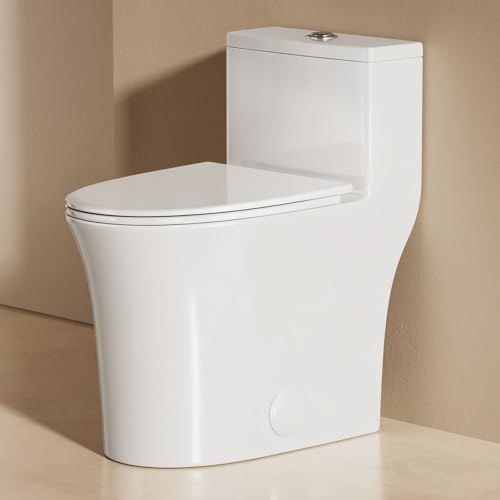
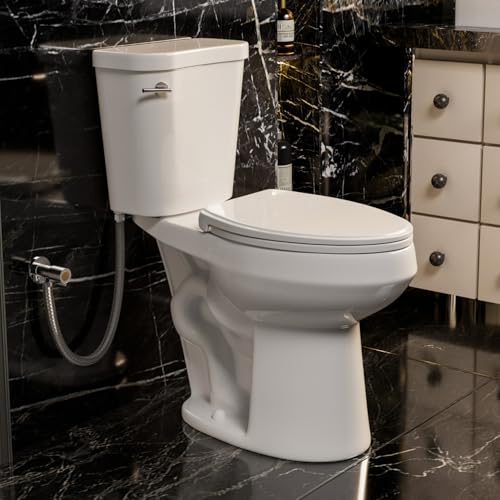
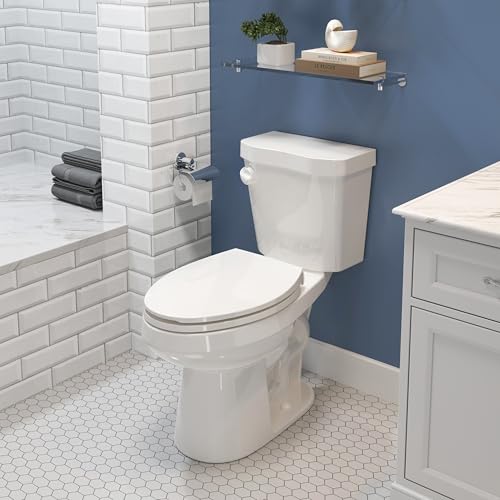
- IDEALHOUSE ADA Compliant 17 Inch Elongated Toilet
- HOROW T0338W One Piece Toilet
- Garvee Two Piece Elongated Toilet
- American Standard Cadet PRO Right Height Toilet
- DeerValley Compact One Piece Toilet
- HOROW 17 Inch High Elongated Toilet
Read the full guide ↓
Basements are where houses keep their second lives. The same square footage that stores the furnace in one home holds a rental apartment in another, a parent’s suite in a third, and the family’s loudest pleasures — the gym, the band practice, the film nights, the workshop — in most of the rest. A toilet installed below grade therefore inherits whichever of those lives its basement is living, and the best toilets for basements are the ones chosen with that inheritance in view: standard enough to be serviced by anyone, tough enough for the burst traffic of a rec room, calm enough for a suite resident’s every day, and honest about the two below-grade facts that govern everything — waste leaves uphill, and nobody checks on this room as often as they should.
The uphill fact first, because it is the only one that can veto a purchase. Where a basement’s drain was roughed in below the slab — falling to the main line or running to an ejector pit that lifts waste to it — a conventional toilet is the correct and economical fixture, full stop. That is the overwhelming majority of plumbed basements, and it is the territory of this guide’s six picks. Where the level was never plumbed and the sewer exits above the basement floor, the project changes category into upflush systems or slab work; the pre-check section walks through the tell-tales so you can classify your own basement in minutes. Everything after that is the familiar toilet decision — flush, height, format, evidence — re-weighted by below-grade life: cooler air, damper corners, longer idles, burstier use, and a user population that can change completely between Tuesday and the holidays.
The six picks map the territory between them. A conventional siphonic all-rounder leads for sheer basement-proof ordinariness. A skirted one-piece brings finished-suite polish and the pool’s strongest dual-flush résumé. A certified value pick serves the rental and the second bathroom. A pro-channel fuller-flush model answers the elderly drain systems that older basements hide. A compact standard-height one-piece fits the low-ceilinged, small-footprint basement baths that ducts and bulkheads create. And a certified-clearing single-flush model stands by for the rec room’s heaviest nights. Read the pre-check first if your basement’s plumbing is a rumour; read the reviews first if it is a fact.
Key Takeaways
- Classify the basement first: roughed-in below-grade drain or ejector pit means standard toilets — this guide. No drain below the sewer line means an upflush category this pool does not contain, flagged plainly in the pre-check.
- All six picks are linked; the set spans two-piece serviceability and skirted one-piece polish, chair and standard heights, efficient and fuller flushes.
- The IDEALHOUSE is the level’s default: conventional siphonic internals, chair height, soft-close seat — the specification that survives every basement role.
- Finished suites and guest-polished basements get the HOROW T0338W: stated compact skirted design, dual flush, stated MaP 1000g.
- Elderly below-grade drains are the one case for spending water: the Cadet PRO’s 1.6 gpf exists for their record, not for habit.
- Basement toilets age by calendar as much as by cycles — the monthly flush-and-inspect rhythm is part of owning any pick on this list.
In this guide
Quick Picks
| Pick | Badge | Flush | Format | Link |
|---|---|---|---|---|
| IDEALHOUSE ADA Compliant 17 Inch Elongated Toilet | Best Overall for Basements | 1.28 GPF siphonic jet | Two-piece, 17 inch | Check on Amazon |
| HOROW T0338W One Piece Toilet | Best for Finished Basement Suites | Dual flush 1.1/1.6 GPF, stated MaP 1000g | One-piece compact skirted, 17.3 inch | Check on Amazon |
| Garvee Two Piece Elongated Toilet | Best Certified Value | 1.28 GPF side push flush, cUPC certified | Two-piece, 15 inch | Check on Amazon |
| American Standard Cadet PRO Right Height Toilet | Best for Older Basement Drains | 1.6 gpf | Two-piece, Right Height | Check on Amazon |
| DeerValley Compact One Piece Toilet | Best for Low, Small Basement Baths | Dual flush 1.1/1.6 GPF, quiet flush | One-piece compact skirted, standard height | Check on Amazon |
| HOROW 17 Inch High Elongated Toilet | Best Clearing Power for Rec Rooms | 1.28 GPF single flush, stated MaP 1000g | Two-piece, 17 inch | Check on Amazon |
How These Picks Were Chosen
All six models come from a verified product pool checked against listing data on 2026-11-20. Specifications are quoted from that verified data only; where a listing omits a figure, the review says so. This is a research-led guide and claims no hands-on testing. The basement-wide lens ranked the pool on five axes: drain compatibility with the standard below-grade arrangements; clearing confidence, weighted by the burst traffic basements specialise in; serviceability by non-specialists, because below-grade rooms are serviced last; idle tolerance, judged by conventionality of seals and valves; and role coverage, so that the set as a whole — rather than any single pick — answers the suite, the rental, the rec room and the workshop between them. The single-bathroom version of this brief, with its project sequencing, is treated in the companion guide to the Best Toilets For Basement Bathroom project; this guide is the level-wide map that project sits inside.
The 6 Best Toilets for Basements

IDEALHOUSE ADA Compliant 17 Inch Elongated Toilet
Badge: Best Overall for Basements
Strengths
- Fully conventional siphonic-jet mechanism at 1.28 GPF — the internals every plumber and handyman already knows, in the level serviced last.
- 17-inch ADA comfort height plus soft-close seat covers the basement’s entire rotating population.
- Standard 12-inch rough-in and easy-clean porcelain keep installation and upkeep ordinary in an unordinary room.
Trade-offs
- No published clearing score; confidence is mechanism-class.
- Single flush only, no light setting.
- Exposed trapway, the standard two-piece cleaning compromise.
Key specs
- Format: Two-piece ceramic commode, white porcelain
- Bowl: Elongated, 17 inch ADA comfort height
- Flush: 1.28 GPF water-saving siphonic jet
- Seat: Soft-close seat included
- Rough-in: 12 inch
Every level of a house deserves a default, and below grade the default should be the toilet that asks the least of the future. The IDEALHOUSE is that toilet. Its siphonic-jet flush is the modern industry’s most ordinary good mechanism — jet-primed, decisive, built from parts that exist in every supply channel — running at the efficient 1.28 gallons. Its chair height and soft-close seat fit the basement’s whole cast, from the suite’s resident to the rec room’s guests. Its rough-in is the standard its name implies. Nothing about it requires a specialist, a special order, or a second thought, which is exactly the profile of a fixture installed in the room a household visits least and needs most predictably.
Role by role, it holds up. In the rental basement, it is the landlord’s quiet life: conventional failures, cheap parts, no tenant-proofing gaps. In the family basement, it absorbs the den’s traffic and the holiday surge without ceremony. In the suite, it is the calm mainstream choice where the resident’s needs are ordinary. Its evidence limits are the honest ones repeated across this series: no published MaP figure, so a basement with a documented drain problem should escalate to the certified or fuller-flush picks below; and no light flush, so a very high-traffic basement spends its full efficient volume on every visit. Defaults are not maxima; they are the choice that is never wrong, and below grade that is the highest praise available.
Best for: Any plumbed basement role wanting the conventional, serviceable default / Not suited for: Basements whose drain record demands certified clearing or a fuller flush
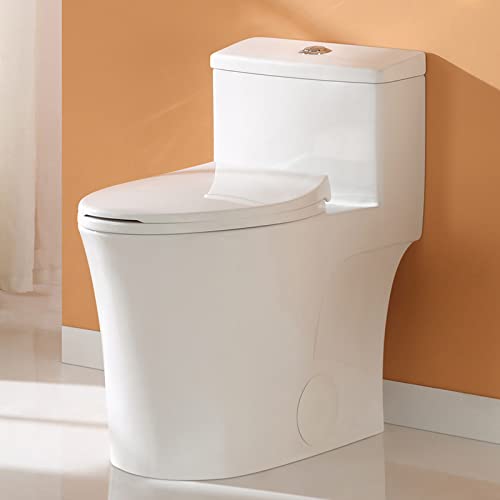
HOROW T0338W One Piece Toilet
Badge: Best for Finished Basement Suites
Strengths
- Stated compact skirted design: smooth one-piece flanks that suit finished, guest-facing basement rooms and wipe clean in one pass.
- Dual flush 1.1/1.6 GPF with a stated MaP 1000g — the strongest combined water-and-clearing résumé in this guide.
- 17.3-inch chair height, the most guest-generous seat here.
Trade-offs
- One-piece weight and carry, down a basement stair, is the installation’s main event.
- Full flush at 1.6 gallons is the set’s thirstiest efficient-class setting.
- Elongated front needs the template check in the smallest basement baths.
Key specs
- Format: One-piece, compact skirted design, white
- Bowl: Elongated, ADA chair height 17.3 inch
- Flush: Dual flush 1.1/1.6 GPF, stated MaP 1000g
- Rough-in: 12 inch
A finished basement makes a promise — this is a real floor of the house — and the T0338W is the toilet that keeps it visually. The skirted one-piece body has no tank seam and no trapway sculpture; in a suite or a polished guest level, it reads as furniture rather than plumbing, and it returns to presentable after a guest weekend with a single wipe of its flanks. Below-grade rooms collect a particular film of dust and damp that settles exactly where two-piece trapways curve; the skirt is the engineering answer to the basement’s own dirt.
The working specification is the guide’s most complete. Dual flush splits the basement’s traffic intelligently — the light 1.1 for the resident’s ordinary day, the full 1.6, certified at the standardized maximum MaP score, for everything else — and the 17.3-inch chair height is the most welcoming seat in the set for the guests and grandparents finished basements are built to host. In a suite with a full-time resident, that combination of economy, certified clearing and comfort is the closest thing here to an upstairs specification at a below-grade address.
Plan the installation as the project it is: a one-piece unit, carried down a stair that may turn, into a room whose door may be narrow. Two people, a cleared route, a dry-fit before wax. Households whose basement is utilitarian rather than finished will find the premium misplaced and the two-piece picks above and below more their register; households that built the basement as a floor of the home should furnish its bathroom like one.
Best for: Finished basement suites, guest levels and in-law floors / Not suited for: Utilitarian basements, or stairs and doors that defeat a one-piece carry

Garvee Two Piece Elongated Toilet
Badge: Best Certified Value
Strengths
- cUPC certification in the listing — third-party assurance at the value end of the range.
- Locking soft-close seat, built for the idle-then-burst cycle basement seats endure.
- 15-inch height keeps proportions under low ceilings and serves shorter users and children.
Trade-offs
- Below chair height — tall users and suite elders should look up the list.
- Single side-push flush; no light option.
- No published clearing score.
Key specs
- Format: Two-piece, ceramic
- Bowl: Elongated, 15 inch comfort height
- Flush: 1.28 GPF water-saving side push flush
- Seat: Locking PP soft-close seat included
- Certification: cUPC certified
- Rough-in: 12 inch
Basements multiply fixtures: the suite gets one, the rec room another, the rental a third, and the budget notices. The Garvee is the pick that lets a level be finished properly more than once — certified where it counts, simple where it can be, and priced by its position in the range’s qualitative tiers as the value standard rather than the compromise. The cUPC mark does the assurance work; the side-push 1.28 flush does the daily work with a mechanism a child or a tenant cannot misoperate; the locking soft-close seat does the durability work against the basement’s signature pattern of long rests and sudden crowds.
Its 15-inch height finds below-grade friends the chair-height era forgets: the low-ceilinged bath under the duct run, where a taller fixture crowds the room’s proportions, and the younger population of the family basement, for whom 15 inches is simply the fit — the same reasoning that makes it a children’s-bathroom pick in our Best Toilets For Children research. In a rental basement it standardises beautifully: one certified model, universal parts, a height that suits the widest band of smaller tenancies.
The limits are stature and evidence. Tall households and suite elders should take their height from the chair-height picks; heavy-load households should take their clearing evidence from the HOROWs. Within the broad middle of basement life — second bathrooms, rentals, dens, workshops — the Garvee is the finished level’s economy pick, and economy at this depth of the house is a virtue with compound interest.
Best for: Rental basements, second basement bathrooms, low-ceilinged rooms / Not suited for: Tall users and suite residents needing chair height

American Standard Cadet PRO Right Height Toilet
Badge: Best for Older Basement Drains
Strengths
- 1.6 gpf: the fullest flush in the set, prescribed by the record of elderly below-grade drain lines.
- Pro-channel Cadet platform — the deepest parts and service base a basement could ask for.
- Right Height elongated format, the installed base’s own default.
Trade-offs
- Thirstiest pick here on every cycle.
- No soft-close seat or clearing score stated.
- Check local efficiency rules before specifying it in new work.
Key specs
- Format: Two-piece, white
- Bowl: Elongated, Right Height
- Flush: 1.6 gpf
- Model: 215AA004.020
Old houses keep their oldest plumbing at the bottom. The basement drain of a pre-war or early-postwar home was laid for fixtures that flushed with abundance, on slopes surveyed by eye, and it has been narrowing politely ever since. Against that line, the modern efficient flush can be too polite — clearing the bowl, under-carrying the run — and the Cadet PRO’s full 1.6 gallons is the set’s deliberate counter-prescription: maximum water delivery in a professional platform whose parts will outlive the argument. Plumbers standardise on this logic in old basements because the alternative — the recurring line blockage, the below-grade backup — is the most expensive sentence in domestic plumbing.
The platform is the second half of the case. A basement toilet’s service events are rare, unwitnessed and urgent; a Cadet’s are also universally understood, with its wear parts stocked wherever plumbing is sold. Right Height keeps the seat mainstream for the level’s mixed users. Nothing about the model asks the basement to adapt to it, which in an old house is the correct direction of adaptation.
Buy it on evidence, not on era romance. A modern basement drain with a clean record gains nothing from the extra water and pays for it on every flush; some jurisdictions bar 1.6 gpf in new installations outright. The house’s own blockage history — asked of the owner, the plumber, the neighbours in a semi-detached — is the specification sheet that matters. Where that history speaks, this is the set’s answer, and the Best Toilets For California efficiency-rules research shows the regulatory counterweight in the states that have legislated the other way.
Best for: Older homes with long, gentle or doubtful below-grade drains / Not suited for: Modern drains with clean records, or water-billed households

DeerValley Compact One Piece Toilet
Badge: Best for Low, Small Basement Baths
Strengths
- Stated compact design for small bathrooms at standard height — the fit for the bath tucked under ducts, stairs and bulkheads.
- Dual flush described as powerful and quiet: quiet matters in the room directly beneath the living room’s floor.
- Skirted one-piece body wipes down fast in the basement’s dust-and-damp film.
Trade-offs
- No published clearing score.
- Standard height is low for tall and older users.
- Bowl shape not stated; verify the front profile for your template.
Key specs
- Format: One-piece, compact skirted
- Bowl: Standard seat height (shape not stated in listing)
- Flush: Dual flush 1.1/1.6 GPF, described as powerful and quiet
- Rough-in: 12 inch
Basement bathrooms are frequently the house’s most improvised rooms — fitted into the space the ductwork declined, under the stair’s slope, beside the furnace’s clearance — and the DeerValley is the set’s improvisation specialist. Its listing states a compact design for small bathrooms at standard seat height: a lower, smaller claim on the room that suits the bath whose ceiling is a bulkhead and whose door was hung where it could be. The skirted one-piece body keeps that small room’s cleaning to a single pass, and its smooth flanks collect none of the basement film that trapway curves farm.
The stated quiet flush earns a below-grade point of its own: the basement bathroom’s ceiling is the living room’s floor, and its flush is heard by everyone the room was built to entertain. A flush described as powerful and quiet, in dual volumes that let the light setting handle the level’s liquid majority, is the acoustic specification of a good host. Standard height, meanwhile, is the proportion that low rooms and shorter users share — the fixture recedes, the room breathes.
Its evidence file is the set’s thinnest — no clearing score, no stated bowl shape — so households whose basement traffic is heavy should weigh the certified picks, and templating buyers should confirm the front profile on the product page. For the small, low, quiet basement bath it was described for, the DeerValley is the considered fit, at a value-leaning tier among the set’s one-piece designs.
Best for: Small, low-ceilinged basement bathrooms; noise-sensitive levels / Not suited for: Tall or older users needing chair height, or heavy-load traffic wanting certified clearing

HOROW 17 Inch High Elongated Toilet
Badge: Best Clearing Power for Rec Rooms
Strengths
- Stated MaP 1000g at 1.28 GPF — certified maximum clearing for the basement’s burst traffic.
- Single flush: no interface for guests, teenagers or party traffic to mis-select.
- 17-inch chair height serves the level’s adult majority.
Trade-offs
- Soft-close seat not stated in the listing — verify for a room where lids echo off low ceilings.
- No light flush for the den’s liquid majority.
- Two-piece trapway, the set’s standard cleaning compromise.
Key specs
- Format: Two-piece
- Bowl: Elongated, 17 inch ADA chair height
- Flush: Single flush 1.28 GPF, stated MaP 1000g
The rec room is the basement’s stress test: a roomful of people, one bathroom, an interval in the game. The HOROW single-flush is the set’s answer to that quarter-hour — a stated MaP score of 1000 grams, the standardized maximum, delivered at an efficient 1.28 gallons through one lever that every guest operates correctly the first time. Certified clearing is the difference between a bathroom that keeps up with the house’s biggest nights and one that becomes the story of them; in the level where a failure also means a floor, the certificate is worth its place at the top of the spec sheet. The heavy-load households of our Best Toilets For Big Guys research will recognise the same evidence-first logic applied to a room instead of a user.
Around the headline, the specification is basement-sound: chair height for adults, a two-piece format with universal parts for the level serviced last, an elongated bowl for the den’s long sessions. The one verification is the seat — the listing does not state soft-close, and in a low-ceilinged room the lid’s report carries, so confirm on the product page or plan the swap. Households whose basements are quiet suites should take the T0338W’s dual-flush polish instead; households whose basements host the holidays should start here.
Best for: Rec-room, den and entertaining basements with burst traffic / Not suited for: Quiet suite basements wanting dual-flush economy and a confirmed soft-close seat
Comparison Table
| Model | Flush | Height | Format | Basement role | Link |
|---|---|---|---|---|---|
| IDEALHOUSE | 1.28 GPF siphonic jet | 17 inch | Two-piece | The level’s default | Check on Amazon |
| HOROW T0338W | Dual 1.1/1.6 GPF, MaP 1000g stated | 17.3 inch | One-piece compact skirted | Finished suites and guest levels | Check on Amazon |
| Garvee | 1.28 GPF side push, cUPC certified | 15 inch | Two-piece | Rentals and second bathrooms | Check on Amazon |
| American Standard Cadet PRO | 1.6 gpf | Right Height | Two-piece | Elderly drain systems | Check on Amazon |
| DeerValley Compact | Dual 1.1/1.6 GPF, quiet | Standard | One-piece compact skirted | Low, small basement baths | Check on Amazon |
| HOROW High Elongated | 1.28 GPF single, MaP 1000g stated | 17 inch | Two-piece | Rec-room burst traffic | Check on Amazon |
The Basement Pre-Check: Which Kind of Below-Grade Do You Have?
Three basement plumbing patterns cover nearly every house, and the toilet decision differs by pattern. Pattern one: the drain was roughed in with the house — a flange or capped stub-out below the slab, falling by gravity to the main line where the lot allows, or the slab sits high enough that the run works. Every pick in this guide serves pattern one directly. Pattern two: the ejector basement — waste collects in a sealed pit below the floor and a pump lifts it to the main line. Standard toilets serve pattern two equally, with two confirmations: the pit and pump are rated for toilet solids, and the venting is complete, because a pit’s vent is the difference between a system and a smell. Pattern three: the unplumbed basement, where the sewer exits above the basement floor and no drain or pit exists. No gravity toilet serves pattern three; the honest options are an upflush or macerating installation, or the capital project of opening the slab for a drain and pit. This pool contains no upflush systems, and the guide’s usefulness begins by saying so: classify your basement by looking for the flange, the pit lid, or their absence — a five-minute inspection — and spend the model money only in patterns one and two, where it belongs.
How to Choose a Toilet for a Basement, Role by Role
Start from the role, because basements are the one level where the same house can need three different toilets. The suite and the guest level buy comfort and appearance: chair height, quiet or dual flush, the skirted one-piece silhouette — the T0338W’s brief, with the IDEALHOUSE as its two-piece understudy. The rental buys indifference to tenants: certification, conventional parts, a height in the population’s broad middle — the Garvee’s brief, with the Cadet PRO where the drains are old. The rec room and den buy clearing under bursts and forgiveness under strangers: certified scores and single-action flushes — the single-flush HOROW’s brief. The workshop and utility bath buy the default and nothing else: the IDEALHOUSE again, or the Garvee where the ceiling is low. Cutting across all roles, the drain’s record outranks preference — a doubtful line promotes the fuller flush or the certified clearer in any room — and the rough-in measurement vetoes silently: most basement flanges are the standard twelve inches, and any that are not announce a specialist conversation before a model one. Choose per role, verify per floor, and the level will run itself for a decade.
How to Keep Basement Toilets Honest: The Monthly Rhythm
- Flush every basement toilet monthly, used or not. The cycle refreshes the trap’s water barrier, exercises the fill valve, and keeps seals from taking a dry set — the three failure modes of idle below-grade fixtures, prevented by thirty seconds.
- Look at the base and the connections while you are there. A torch, a dry tissue around the supply and the base line, a glance at the ejector pit’s lid seal if there is one. Below-grade leaks are cheap exactly once: when they are small.
- Test for silent running twice a year. Colouring in the tank, twenty minutes, a look at the bowl. A running toilet in an unvisited basement can out-waste the rest of the house combined before anyone hears it.
- Work the shut-off valve annually. A valve that has not moved in five years will not move during the one emergency that needs it. A quarter-turn each way, once a year, keeps it a valve.
- Log it. Model, install date, parts replaced — on paper, in the basement, where the next owner or the plumber will actually find it. Below-grade rooms outlast memories by design.
Troubleshooting. Problem: sewer smell somewhere in the basement, source unclear → work the fixtures in order: flush every toilet, run every tap and shower, because every trap on the level dries on the same schedule; if the smell survives a full wetting, the ejector pit’s seal or vent is the suspect and a plumber is the answer. Problem: one basement toilet flushes weakly while the other is fine → the fixture, not the level: check its tank level, clear its rim jets of scale, and confirm its stop valve is fully open before suspecting the shared drain. Problem: the ejector pump cycles at odd hours with no use → something is feeding the pit: a running toilet is the usual donor, and the colouring test on each basement toilet finds it in one visit. The vessel-adjacent version of this discipline — systems checked because the environment is unforgiving — is the same one our Best Toilets For Boats research applies afloat.
Basements as Housing: Rentals, Suites and the Rules That Follow
Where a basement toilet serves a dwelling — a rental unit, a suite, an accessory apartment — the fixture decision acquires a paper dimension. Egress, ceiling height and ventilation rules govern whether the unit may exist at all in many jurisdictions, and within them the toilet is inspected like any other fixture: it must flush, seal and vent correctly, on a permitted drain. Landlords should read the rental rows of this guide with that frame: certified models, conventional parts, documented installation, and a maintenance rhythm that survives tenant turnover — the Garvee and IDEALHOUSE pattern — are worth more than any amenity, because the inspector and the deposit both reward the ordinary done properly. Suite builders housing family should weight the resident’s body over the rulebook’s minimums where the two differ: the chair heights here are mainstream, and the extra-tall end of this series’ wider range exists in its own guides for the residents who need it. And every basement conversion should end with the folder: permits, the drain’s story, the models and their dates — the document set that turns a below-grade bathroom from a rumour into an asset when the house is sold.
Cold Floors and Cool Air: Comfort Details Below Grade
The basement’s microclimate writes two comfort footnotes that upstairs bathrooms never meet. The first is the cold seat in an unheated or lightly heated level: porcelain and plastic seats alike take the room’s temperature, and a basement that sits in the fifties through winter makes its toilet the coldest seat in the house. The remedies are environmental rather than fixture-shaped — keep the finished level at a sane minimum temperature, which the plumbing itself appreciates, and let a full-time suite resident’s routine, rather than a guest’s surprise, set the thermostat’s floor. The second footnote is the cold floor around the base: bare feet on slab-chilled tile make the whole fixture feel colder than it is, and a washable bath mat at the toilet’s front — sized to the room, kept on the monthly rhythm’s laundry list — is the difference between a basement bathroom that feels finished and one that feels like a cellar with plumbing. Neither footnote changes the model ranking; both change whether the chosen model’s virtues are ever felt, which is why a guide to a whole level, rather than a single room, is the right place to record them.
Planning the Rough-In You Will Thank Yourself For
For the unfinished basement — the level whose bathroom exists so far only as a line in a five-year plan — this guide’s most valuable paragraph is about a flange that does not exist yet. When the slab is eventually opened or the new home is still on paper, rough the basement bathroom to the standard the whole industry serves: a 12-inch rough-in, a drain run with honest fall to the main line or a properly sized, vented, solids-rated ejector pit, a supply line with its own accessible shut-off, and — the detail every future owner blesses — a floor drain in the room, because below-grade water events are a when, not an if, and the room with the toilet should be the room that can be hosed of its own accident. Record the rough-in’s measurement and the pit’s specification in the house folder before the concrete closes over them. Every pick in this guide, and nearly every toilet your successors will ever shop for, fits the standard you are about to pour; the five minutes of documentation are what turn that standard from an assumption into a fact the next renovation can build on. Unfinished basements are the only readers who can still choose their pattern — the guide’s pre-check exists for everyone who inherited theirs.
Common Buying Mistakes
- Classifying the basement by hope. Flange, pit, or nothing — look, then buy. The upflush fork discovered after flooring is the most expensive sentence in this guide’s territory.
- One toilet buying for three roles. The suite, the rental and the rec room want different things from this list. Choose per role; standardise parts, not compromises.
- Ignoring the drain’s blockage history. The line has a record and it is the specification. Fuller flush or certified clearer where it speaks; efficiency where it is silent.
- Letting the idle months win. Unflushed basement toilets dry their traps, set their seals and hide their leaks. The monthly rhythm is not housekeeping; it is the warranty you write yourself.
- Furnishing a finished suite like a utility room — or the reverse. A skirted one-piece in a furnace-adjacent closet bath and a bargain two-piece in a polished in-law suite are the same mistake in opposite directions. Match the fixture to the finish.
- Skipping the folder. Permits, models, dates, the drain’s story. Basements are sold on documents as much as on finishes, and the next owner’s plumber prices the rumours you leave behind.
Final Recommendation
Classify the basement, then cast the roles: the IDEALHOUSE ADA Compliant Toilet is the level’s default wherever a conventional, serviceable fixture is the brief. Finished suites and guest-polished floors should take the HOROW T0338W One Piece Toilet for its skirted polish and certified dual flush. Rentals and second bathrooms standardise on the Garvee Two Piece Elongated Toilet. Elderly drains get the Cadet PRO’s fuller flush, low small baths get the DeerValley’s compact quiet, and rec rooms get the single-flush HOROW’s certified clearing — six answers, each traceable to a basement fact you can verify before the order is placed.
Frequently Asked Questions
Do basements need special toilets?
Not special models — special verification. Any standard floor-outlet toilet in this guide serves a basement whose drain is roughed in below the slab or served by an ejector pit, which covers most plumbed basements. The special cases are categorical, not premium: a basement with no drain below the sewer line needs an upflush system or slab work, and no model choice converts a gravity toilet into one. Verify the pattern, then shop normally with below-grade priorities — serviceability, idle tolerance, drain history — in the ranking, and with the level’s long, quiet future in mind.
What is the difference between this guide and a single basement bathroom guide?
Scope. This guide treats the whole level: multiple roles, multiple fixtures, standardisation and the rental and suite paperwork. The companion project guide treats one bathroom’s renovation sequence in detail — flange correction, installation order, commissioning. Most households need the map first and the project second, which is the order the two guides were written in.
Can one model serve every bathroom in a finished basement?
It can, and standardising on one model is a legitimate landlord and homeowner strategy — one parts shelf, one learning curve. Choose the standard-bearer by the level’s hardest role rather than its easiest: a model that satisfies the suite will not embarrass the rec room, while a utility pick promoted to the suite disappoints daily. From this set, the IDEALHOUSE is the natural fleet choice, with the Garvee as the value fleet alternative where heights allow.
How do ejector pits change toilet choice?
Barely, once the pit is right. Any standard toilet here discharges into a correctly sized, solids-rated, vented pit; the pump does the lifting. Fuller-flush models cycle the pump marginally more; efficient models marginally less — a rounding difference against the pit’s own sizing. What changes the choice is a pit that is not right: undersized, unvented or grey-water-rated pits are a plumbing correction, not a toilet selection, and should be fixed before any fixture is judged by their behaviour. One ownership note: the pit’s pump is itself a wear item with a finite life measured in cycles and years, so a basement that depends on one should know its age and keep its replacement a planned event rather than a flooded surprise — the toilet above it will be blamed for the pit’s failure otherwise, unfairly and at the worst possible moment.
Why do basement toilets so often smell musty?
Because the room is cool, damp and under-visited: trap water evaporates across idle weeks, dust and moisture film the fixtures, and small seeps go unnoticed longest at the bottom of the house. The monthly rhythm in this guide — flush, inspect, test — addresses all three causes mechanically. A smell that survives a full wetting of every fixture on the level is a seal or vent problem and belongs to a plumber, not to a stronger air freshener. Note, too, that a finished basement’s bathroom fan is part of the smell system: a fan that vents into a joist bay rather than outside merely relocates the room’s moisture and odour into the structure, so a commissioning check that the fan’s duct actually reaches daylight is worth the ladder climb once a decade.
What should I do about a basement toilet before selling the house?
Make it boring and documented. Run the monthly rhythm early for a few months so traps, valves and seals are all demonstrably alive; fix the runner, reseat the rocker, replace the seat that tells a story; and assemble the folder — permits where they exist, the drain and pit’s story, each toilet’s model and install date. Buyers and their inspectors price uncertainty, and a below-grade bathroom with a paper trail and three quiet flushes is the cheapest value a seller can add to a finished level. If a toilet genuinely needs replacing before the sale, replace it from this guide’s default tier — the IDEALHOUSE pattern of conventional and certified — rather than with anything the next owner must research.
Are one-piece or two-piece toilets better for basements?
Each owns a role. Two-piece designs win on serviceability, sectional carrying down the stair, and parts universality — the rental and utility virtues. One-piece skirted designs win on cleaning speed, finished appearance and the absence of a tank joint — the suite virtues. This set includes both deliberately; choose by the room’s role and the stair’s geometry, and let the drain and the rough-in veto before either preference is consulted. In a level with several bathrooms, mixing the two formats by role — two-piece for the utility rooms, one-piece for the suite — is not inconsistency; it is the level’s budget spent where each format’s virtues are actually enjoyed.