Disclosure: topratedkitchenware.com is reader-supported. When you buy through links on our site, we may earn an affiliate commission from Amazon and other retailers, at no extra cost to you.
Where to buy
Every plumbed model in this guide is sold through Amazon, where you can check the live listing and full specifications before buying. Five picks carry links; the sixth, a portable camping toilet, is covered prose-only — it cannot sweat, but only because it has no water supply at all.
- Simple Project 750W PRO Macerating Toilet System — Check on Amazon
- SUPERFLO 750W Macerating Toilet System
- Simple Project Upgrade Macerating Toilet System (600W)
- Simple Project 600W Macerating Toilet System
- TDH Luxury Smart Toilet with Bidet
- Ann Katy Upgrade XL Portable Toilet (covered in full below; no Amazon link for this one — see the review for why)
Read the full guide ↓ for the condensation physics that decide whether a tank drips, how each design in this pool avoids the classic sweating setup, and the room-side fixes that matter as much as the toilet.
A sweating toilet is not leaking — that is the first thing to understand when you search for the best toilets that don t sweat, usually with a phone in one hand and a towel in the other, mopping a puddle that keeps returning under the tank. What is happening is condensation: the tank fills with cold supply water, its porcelain surface drops below the dew point of a warm, humid bathroom, and the room’s moisture condenses on the tank exactly as it does on a cold drink in summer. The drips run down, pool at the base, and quietly rot floors, loosen tiles, and feed mould — a slow water damage story with no broken part to blame.
This guide approaches the problem the way the physics dictates. A tank sweats when three conditions meet: a large exposed tank of cold water, humid room air, and a temperature gap between them. Break any one condition and the sweating stops. The five linked picks here all break the first one, because none of them is a conventional exposed-tank toilet: four are macerating systems — the Simple Project 750W PRO, the SUPERFLO 750W, the Simple Project Upgrade 600W, and the Simple Project 600W one-piece — whose water sits in compact, enclosed pump reservoirs rather than a big porcelain tank, and the fifth is the TDH smart toilet, whose one-piece integrated design buries its waterworks inside the body instead of hanging a cold tank on the wall of your bathroom. The sixth pick, an Ann Katy portable, is prose-only: no plumbing, no tank, no sweat, and no use as a bathroom fixture.
Honesty requires one clear statement before the rankings: none of these manufacturers markets its product as an anti-sweat toilet, and this guide does not claim otherwise. What it claims is narrower and defensible — the classic sweating geometry, a large cold porcelain tank exposed to humid air, is absent from all five linked designs, and that absence is the most reliable product-side protection against tank condensation. The room-side half of the cure — ventilation, humidity, and supply temperature — gets equal space in the how-to section, because in a steamy bathroom with no fan, even the best-designed toilet is fighting the weather indoors. Readers whose tanks also misbehave in other ways will find overlap with Best Toilets That Don T Stop Up, where tank and flush behaviour are diagnosed together.
Key Takeaways
- Tank sweat is condensation, not a leak: cold supply water chills the tank below the bathroom’s dew point and humid air does the rest.
- The classic sweating geometry is a large, exposed porcelain tank. All five linked picks eliminate it — four macerating systems with enclosed reservoirs, one integrated smart toilet.
- The Simple Project 750W PRO leads: the strongest pump here in a fully enclosed macerating system with no exposed cold tank surface.
- No pick is marketed as an anti-sweat model — the protection is architectural, and this guide says so rather than inventing a feature.
- Room conditions are half the cure: a working exhaust fan and lower indoor humidity stop sweating even on conventional tanks.
- The Ann Katy portable is prose-only — zero sweat, because zero plumbing, which is not a bathroom solution.
In this guide
Quick Picks
Ranked by how completely each design removes the exposed cold tank from the bathroom, with pump power and format as the tie-breakers inside the macerating class.
| Pick | Badge | Why it stands out | Link |
|---|---|---|---|
| Simple Project 750W PRO Macerating Toilet System | Best Overall — Fully Enclosed System | 750W PRO macerating system with four inlets and dual flush: water lives in an enclosed pump unit, not an exposed porcelain tank. | Check on Amazon |
| SUPERFLO 750W Macerating Toilet System | Best for Garages and Basements | 750W macerator with four water inlets, pitched at basements and garages — unheated, humidity-prone spaces where exposed tanks sweat hardest. | Check on Amazon |
| Simple Project Upgrade Macerating Toilet System (600W) | Best Mid-Power Enclosed Pick | 600W enclosed macerating system with three inlets and an AC vent — the right-sized version for a single added bathroom. | Check on Amazon |
| Simple Project 600W Macerating Toilet System | Best One-Piece Enclosed Design | One-piece 600W system flushing a full 1.6 gallons per flush — the tidiest presentation in the enclosed class. | Check on Amazon |
| TDH Luxury Smart Toilet with Bidet | Best Integrated Smart Design | One-piece smart toilet with the waterworks integrated into the body — no separate exposed tank — plus bidet, heated seat and auto flush. | Check on Amazon |
| Ann Katy Upgrade XL Portable Toilet | Best Portable Option | XL lidded camping potty: the only product in the world guaranteed never to sweat, because it contains no plumbing whatsoever. | Prose-only — see review |
How These Picks Were Chosen
Selection scored every pool model on condensation geometry, using only verified listing data. The questions were physical: how much cold-water surface does this design expose to room air, is that surface porcelain at supply temperature or an enclosed reservoir inside a housing, and does the format keep the waterworks against a cold wall or inside the fixture? Conventional two-piece toilets — the sweating champions of the housing stock — score worst by construction. The pool, usefully, contained none: its plumbed picks are four enclosed macerating systems and one integrated smart toilet, all of which minimise exposed cold surface by design.
Within that result, ranking fell to the qualities each system would be bought for anyway: pump power for the lift and run, inlet count for the size of bathroom served, and format for the tidiness of the install. That is why the 750W systems lead the 600W ones and why the TDH, whose anti-sweat case is real but secondary to its smart features, closes the linked five. The portable was classified prose-only on sight: a product with no water connection cannot be ranked on water behaviour, and pretending otherwise would corrupt the guide. Context on how owners describe condensation season was cross-checked against the discussions in Best Toilets Reddit, where summer sweating threads are a genre of their own.
This is a research-led guide built on published specifications and established condensation physics; no humidity chamber was involved, and no manufacturer claim of anti-sweat performance is quoted, because none of these listings makes one. No prices are printed, as they change — the links lead to current figures on Amazon.
The 6 best toilets that don t sweat, ranked by design
Every linked pick below solves sweating the architectural way — by not presenting a big cold tank to humid air. The reviews are candid about what each machine is actually for, because you should buy the drainage and features you need and take the dry floor as the bonus it is.
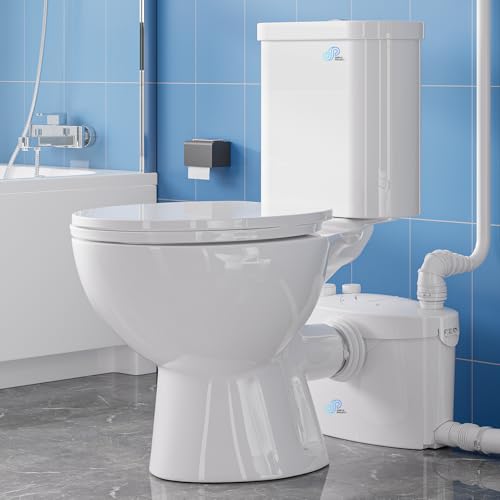
Simple Project 750W PRO Macerating Toilet System
Badge: Best Overall — Fully Enclosed System
Strengths
- Enclosed macerating design removes the large exposed cold tank — the entire sweating surface — from the bathroom
- 750W pump is the joint-strongest transport power in this pool, for real lifts and runs
- Four inlets and dual flush serve a complete added bathroom, attics and basements included
Trade-offs
- It is a powered machine that needs electricity and eventual pump service
- Bought for drainage first — if your bathroom drains by gravity, this is more machine than the sweat problem requires
- Strict paper-only rule, as with all macerators
Key specs from the listing
- Format: Macerating upflush system
- Pump: 750W macerator
- Inlets: 4 water inlets
- Flush: Dual flush
- Use: Basements, attics, additions
- Design: Space saving
Start with why this machine cannot sweat the way your current toilet does. A conventional toilet hangs several gallons of cold water in a porcelain box whose outer surface sits in your bathroom’s humid air for the hour it takes the water to warm — that box is a condensation machine by design. A macerating system like the 750W PRO keeps its working water in a compact reservoir inside an enclosed pump housing, filled and emptied in short cycles as the pump runs. The large, cold, exposed surface simply does not exist, and condensation needs a surface the way fire needs oxygen.
The PRO specification earns the top ranking on the merits beyond dryness. Its 750W macerator is built for the serious version of the upflush job — a full storey of lift, a longer run to the stack — and its four inlets let one enclosed unit serve a toilet, basin, shower, and a fourth fixture in a complete basement or attic bathroom. The listing pitches it at exactly those spaces, including attics, which are the most condensation-prone rooms in a house: hot, humid in summer, and exactly where an exposed cold tank would sweat worst. The design and the address match.
The terms of ownership are the macerating terms, stated once for the whole class: power is mandatory, the pump is a wear item across the years, access for service must be designed in, and nothing but waste and paper may be flushed. If your sweating problem lives in a conventional bathroom with a healthy gravity drain, read the buying guide before buying a machine to fix it — ventilation may be your whole cure. But if the bathroom is an addition, a basement, or an attic conversion, this is the pick that solves the drainage and the dripping with the same purchase.
Best for: Basement, attic and addition bathrooms where drainage and condensation arrive together / Not suited for: Conventional bathrooms with healthy gravity drains and a merely humid room

SUPERFLO 750W Macerating Toilet System
Badge: Best for Garages and Basements
Strengths
- Same enclosed-reservoir architecture: no large cold tank surface for humid air to condense on
- 750W pump with four inlets covers a full utility bathroom
- Described as powerful and quiet — relevant when the unit sits under a living space
Trade-offs
- Power dependence and pump service are part of the deal
- Garage and basement installs must still manage room humidity for the rest of the plumbing
- Installation quality — discharge routing and venting — decides long-term happiness
Key specs from the listing
- Format: Macerating upflush system
- Pump: 750W macerator
- Inlets: 4 water inlets
- Use: Basements and garages
- Operation: Described as powerful and quiet
The SUPERFLO makes the same architectural promise as the PRO above — water held in an enclosed pump unit rather than an exposed porcelain tank — and aims it at the two roughest rooms in the house: basements and garages. Those spaces are condensation traps. They are cool-surfaced, often unheated, and in summer they hold the house’s most humid air against its coldest plumbing, which is why a conventional toilet installed in a garage bathroom can sweat dramatically enough to mimic a leak and send owners hunting for cracks that do not exist.
Against that setting, an enclosed macerating system is doubly appropriate. It solves the drainage those rooms usually lack — below-grade or remote from the stack — and it removes the fixture most prone to dripping in them. The 750W pump and four inlets are sized for a real utility bathroom rather than a token water closet: toilet, basin, shower, and a laundry sink can all report to the one unit, and the listing’s emphasis on quiet operation matters when the bathroom sits under a bedroom.
Choose between the SUPERFLO and the PRO on the details of your project — inlet layout, discharge route, and which kit your installer prefers — rather than on the anti-sweat question, where they are equals. And keep the room-side lesson from the how-to section in view: enclosing the toilet’s water does not dry the room, and the same humidity that would have sweated a tank will find the cold supply pipe instead if the space is never ventilated. The fixture is the biggest surface, not the only one.
Best for: Garage and basement bathrooms in cool, humid, unheated spaces / Not suited for: Main bathrooms with gravity drainage, where a machine is unnecessary

Simple Project Upgrade Macerating Toilet System (600W)
Badge: Best Mid-Power Enclosed Pick
Strengths
- Enclosed pump reservoir removes the exposed cold tank from the condensation equation
- Three inlets fit the standard added bathroom: toilet, sink, shower
- AC vent included, simplifying the venting side of the install
Trade-offs
- 600W suits typical runs; long or high lifts belong to the 750W pair
- Power and pump-service terms apply as with the whole class
- Rear-outlet layout needs the discharge planned before finishes
Key specs from the listing
- Format: Macerating upflush system
- Pump: 600W macerator
- Inlets: 3 water inlets
- Vent: AC vent
- Outlet: Rear outlet bowl
The Upgrade is the sensibly sized member of the enclosed family: a 600W macerator, three inlets, and an AC vent in the package, aimed at the most common upflush project — one added bathroom with a toilet, a small sink, and a shower. Its anti-sweat architecture is identical to its stronger siblings’: the water that a conventional toilet would park in a cold porcelain tank lives instead inside the enclosed unit, in small working volumes that cycle with use, presenting no broad cold face to the room’s humidity.
Sizing is where this model should be chosen or passed over. A 600W pump is well matched to short, mostly horizontal discharge runs and modest lifts; it is the wrong economy for a full-storey climb, where the 750W systems earn their price in headroom and longevity. The listing describes the operation as powerful and quiet, and in the small bathrooms these systems usually serve — under stairs, in a converted closet, off a basement den — quiet is not a luxury but the difference between a bathroom the household uses and one it avoids at night.
For the sweating brief specifically, this is the pick when the problem bathroom is an addition rather than a conversion of an existing plumbed room. You are not buying it to fix condensation in a bathroom that already drains well; you are buying a bathroom that could not exist otherwise, in the kind of marginal space where a conventional tank would have dripped from its first summer. The dry floor comes built into the only architecture that fits the room.
Best for: Single added bathrooms — under-stair, closet conversions, small basement suites / Not suited for: Full-storey lifts or long discharge runs that want the 750W class

Simple Project 600W Macerating Toilet System
Badge: Best One-Piece Enclosed Design
Strengths
- One-piece format integrates bowl and system into the cleanest profile here
- Enclosed waterworks: no exposed tank to chill and drip
- Full 1.6 gallons per flush feeds the pump generously, with three inlets for a complete small bathroom
Trade-offs
- One-piece units are heavier to manoeuvre during installation
- 600W class limits apply to ambitious discharge runs
- Macerator ownership terms — power, access, paper-only — apply in full
Key specs from the listing
- Format: One-piece macerating system
- Pump: 600W macerator
- Flush volume: 1.6 gallons per flush
- Inlets: 3 water inlets
- Vent: AC vent
- Outlet: Rear outlet
This variant is the presentation pick of the enclosed class: a one-piece bowl integrated with the 600W macerating system, flushing a stated 1.6 gallons per flush, with three inlets covering the small bathroom around it. Where some upflush installs look assembled, this one reads as a designed fixture — which matters in a finished basement suite or a guest addition, the rooms where these systems most often live and where a sweating, dripping conventional tank would be most out of place even if the drainage allowed one.
The condensation logic is the family logic: enclosed water, small working volumes, no porcelain tank breathing cold against humid air. There is a secondary benefit worth naming in humid rooms — fewer exterior seams and junctions than a two-piece gravity toilet presents, which means fewer cold crevices for moisture to gather in and fewer places for the mould that follows condensation to start. In the damp-prone spaces these systems serve, that detailing is not cosmetic; it is hygiene.
Between this and the Upgrade above, the choice is format and stated detail: this one-piece publishes its full flush volume and presents the tidier object; the Upgrade is the flexible kit. Both ask the standard macerating commitments in return. And both share the class honesty this guide maintains — they are drainage machines whose architecture happens to delete the sweating problem, which is a better reason to trust the result than any anti-sweat badge a marketer could print. The households in Best Toilets Ranked discussions who installed upflush systems for drainage reasons report the dry tank-that-isn’t as the benefit they never thought to ask for.
Best for: Finished basement suites wanting an integrated look and a dry, enclosed system / Not suited for: Ambitious lifts, or buyers who want a gravity toilet’s zero machinery

TDH Luxury Smart Toilet with Bidet
Badge: Best Integrated Smart Design
Strengths
- Integrated one-piece design keeps the water system inside the body rather than in an exposed wall-side tank
- Built-in bidet with instant warm water, heated seat and warm-air drying
- Auto flush, foot sensor, night light and LED display complete the hands-free routine
Trade-offs
- Not marketed or rated as an anti-sweat product — the benefit is a by-product of its architecture
- A conventional bathroom with good drainage may solve sweating more cheaply with ventilation alone
- Electronics need power at the fixture and carry long-term service questions
Key specs from the listing
- Format: One-piece smart toilet
- Bidet: Built in, instant warm water
- Seat: Heated, with warm-air dryer
- Controls: LED display, foot sensor
- Extras: Auto flush, night light, multiple cleaning modes
The TDH is the one linked pick that serves a conventional, gravity-drained bathroom, and its anti-sweat case is architectural in a different way from the macerators. A smart toilet integrates its water system into a one-piece body: there is no separate porcelain tank mounted behind the bowl presenting its broad cold face to the room. The water the system holds is inside the fixture’s insulated-by-design mass, cycled by its own controls, and the classic sweating surface — that big tank wall — is simply not part of the object.
Around that architecture sits the most complete comfort package in this guide: bidet washing with instant warm water, a heated seat, warm-air drying, auto flushing, a foot sensor, a night light, and an LED display to run it all. None of that is condensation technology, and this review will not pretend otherwise — a buyer whose only problem is a dripping tank in a well-drained bathroom should price a fan and a humidity fix before pricing a smart toilet. But a buyer already planning a smart upgrade in a humid bathroom gets the anti-sweat geometry as part of the purchase, and in steamy, fan-less older bathrooms that is a genuinely valuable accident of design.
The ownership terms are the smart terms: power at the fixture, electronics with a service horizon shorter than porcelain’s, and a premium price paid for comfort features. Judge it as this guide judges the macerators — buy the machine for its main job, verify the architecture removes your condensation surface, and let the dry floor be the dividend. Readers comparing the wider field will find the TDH’s comfort-first profile reflected in Best Toilets Ratings, while its tankless silhouette is what earns it this particular page.
Best for: Conventional bathrooms planning a smart upgrade in a humid, condensation-prone room / Not suited for: Buyers whose only problem is a dripping tank and whose budget points at a fan first
Ann Katy Upgrade XL Portable Toilet
Badge: Best Portable Option
Strengths
- Zero water, zero condensation, zero exceptions
- XL format is roomier than basic camp potties, with a lid for transport
- Lightweight and compact for tents, boats and RVs
Trade-offs
- It does not flush, drain, or belong in a bathroom
- Waste is emptied and cleaned by hand
- Comfort and stability are camping-grade
Key specs from the listing
- Format: Portable camping toilet
- Size: XL, lightweight and compact
- Lid: Included
- Users: Adults and kids
- Use cases: Hiking, beach, boat, emergency, RV
Completeness demands its paragraph, and humour demands it be short. The Ann Katy XL portable cannot sweat, because sweating requires a cold water surface and this product has no water in it at all until someone makes a decision they will regret. It is a camping potty — extra-large, lidded, light enough to carry to a tent or a boat — and on those terms it is a decent product that many campers will be glad of.
It is prose-only and unlinked in this guide because ranking it as a bathroom solution would be a lie of exactly the kind this page exists to avoid. A household mopping condensation from under a tank needs physics and plumbing, not a bucket with a seat. The five linked designs above address the problem in a home; this addresses a campsite.
Its one domestic moment is the emergency: when a bathroom is offline for a repair or a renovation, a portable in the garage keeps a household civilised for a weekend. For that drawer, the XL is the right size. For the bathroom wall, your answer is an enclosed system, an integrated smart toilet, or — as the next sections insist — a fan, a drier room, and a conventional toilet given a fair chance.
Best for: Camping, boating, RV trips and renovation backup / Not suited for: Any bathroom, and any condensation problem
Comparison Table
Every linked row shares the decisive trait — no exposed porcelain tank — and differs in everything else: pump power, inlets, format, and the job the machine was actually built for. Choose on the job; the dryness follows the architecture.
| Pick | Format | Flush and water | Seat and fit | Best for | Link |
|---|---|---|---|---|---|
| Simple Project 750W PRO Macerating Toilet System | Macerating upflush | Dual flush, 750W pump | Enclosed reservoir fit | No exposed tank, hardest runs | Check on Amazon |
| SUPERFLO 750W Macerating Toilet System | Macerating upflush | 750W pump, 4 inlets | Enclosed reservoir fit | Unheated utility bathrooms | Check on Amazon |
| Simple Project Upgrade Macerating Toilet System (600W) | Macerating upflush | 600W pump, 3 inlets | Enclosed reservoir fit | Compact added bathrooms | Check on Amazon |
| Simple Project 600W Macerating Toilet System | One-piece macerating | 1.6 gallons per flush, 600W pump | Enclosed reservoir fit | Tidy finished additions | Check on Amazon |
| TDH Luxury Smart Toilet with Bidet | One-piece smart | Auto flush (volume not stated) | Integrated body, power required | Conventional rooms, smart route | Check on Amazon |
| Ann Katy Upgrade XL Portable Toilet | Portable, non-flush | No water use | Portable class fit | Outdoor and emergency only | Prose-only |
How to Choose a Toilet That Won’t Sweat — and Dry the Room Around It
Anti-sweat shopping fails when it treats a physics problem as a product feature. This section gives you the physics first, then the product logic, then the room fixes that decide half the outcome.
Understand the dew point in your own bathroom
Condensation forms when a surface falls below the dew point of the air touching it — the temperature at which that air’s moisture turns liquid. Your tank sweats in summer because three facts align: the supply water is at its coldest relative to the room, the bathroom air is at its most humid after showers, and the tank holds that cold water against the room for the long hour between flushes. This is why sweating is seasonal, why it is worst after long showers, and why the puddle appears under the tank rather than at the supply valve. It is also why the first diagnostic matters: wipe the tank completely dry, then watch where moisture first appears. Beading across the tank’s broad faces is condensation. A drip that starts at a fitting, a bolt, or the supply line is a leak wearing a costume, and no toilet in this guide fixes a leak.
The same physics explains the standard cures. Raise the tank surface temperature, lower the room’s humidity, or remove the exposed surface — every real solution is one of those three, and any product or trick that claims a fourth mechanism should be asked hard questions.
Choose the architecture before the accessories
On the product side, the hierarchy follows the geometry. Enclosed macerating systems remove the surface entirely and suit rooms that need them for drainage anyway. Integrated smart toilets bury the waterworks in the body and suit conventional rooms already planning that upgrade. If you keep a conventional exposed tank — a legitimate choice in a well-drained bathroom — the anti-sweat burden shifts to the room and to tank-side measures, and you should go in knowing the toilet alone has not solved it.
What not to do is buy a conventional two-piece on a promise. No glaze, brand, or flush platform changes the temperature of the water sitting in an exposed tank, and the buying patterns in Best Toilets That Don T Conserve Water show how easily a single-issue search can be sold the opposite of its intent when listings are read by headline instead of by specification. Read for architecture: where does the water live, and what air touches it?
Fix the room like you mean it
The room half of the cure is unglamorous and decisive. An exhaust fan that actually moves air — run during showers and for a good while after — drops bathroom humidity below the point where any tank can sweat in most homes. A door undercut or louvre that lets the fan draw replacement air matters more than the fan’s price. In chronically humid houses and basement bathrooms, a small dehumidifier changes the dew point of the whole space, protecting not just the toilet but the pipes, the mirror, and the paint. Households that do the room work often find their existing toilet stops sweating entirely — which is why this guide ranks the machines honestly as drainage and comfort purchases whose architecture adds insurance, rather than as the only road to a dry floor.
How to Stop Tank Sweat: A Step-by-Step Room and Fixture Routine
Whether you replace the toilet or keep it, this routine attacks condensation from every side the physics allows. Work it in order — the early steps are free and diagnose as they go.
- Prove it is condensation, not a leak. Dry the tank, bowl exterior, supply line and floor completely. Wait an hour without using the bathroom. Broad beading on the tank faces means condensation; moisture returning at one fitting, bolt or line means a leak — fix that first and specifically.
- Ventilate like it is the appliance it is. Run the exhaust fan during every shower and for at least half an hour after. If there is no fan, that installation outranks every product in this guide for a conventional bathroom — it lowers the room’s dew point for every surface at once.
- Give the fan air to move. Check the door gap: a fan starved of replacement air barely ventilates. A modest undercut or a louvred door transforms a decorative fan into a working one.
- Reduce the flush chill cycle. In the worst weeks, a partially closed supply valve will not help and may harm the flush — instead, accept the physics and manage the water: keep the bathroom door open after showers so humid air disperses into the house rather than condensing on the tank.
- Protect the floor while you solve it. A washable absorbent mat under and behind the tank catches the interim drips and keeps water off the subfloor. Treat it as a diagnostic tool too — a mat that stays dry after your fixes is the proof they worked.
- Reassess at the season change. Sweating is seasonal. Judge your fixes in the worst month, not the kindest one, and if an exposed tank still drips through a ventilated, drier room, that is the evidence that an enclosed or integrated replacement — the linked picks above — is the remaining cure.
While the routine runs, inspect what the dripping has already done: press the floor around the base for softness, check the baseboard and the wall behind the tank for paint bubbling or mould, and look at the tank bolts and supply fitting for corrosion. Condensation damage is slow and repairable early; the expensive version is the one discovered at the next renovation. A toilet that rocks on a softened floor will also be destroying its wax seal, which converts a humidity problem into a sewer-gas and leak problem — the overlap cases are covered in Best Toilets Resist Main Line Clogs troubleshooting for the drainage side.
Troubleshooting
Problem: the tank sweats only after long showers → what to do: that is textbook dew-point behaviour — extend the fan run after showers and disperse the humid air; the toilet is reporting the room, not failing
Problem: water pools at the base but the tank looks dry → what to do: suspect the supply fitting, a tank bolt, or the wax seal rather than condensation — dry everything and watch for the single point where moisture returns first
Problem: the whole bathroom’s cold surfaces drip in summer → what to do: the room’s humidity is beyond fixture-level fixes — a dehumidifier and real ventilation are the cure, and they will protect pipes and paint as well as the toilet
The Damage a Sweating Tank Does While Nobody Watches
Condensation earns its place in a buying guide because of what it does in the dark. A sweating tank can produce a surprising volume of water across a humid season, delivered drip by drip to exactly the places a bathroom can least afford it: the subfloor around the flange, the bottom edge of the wall behind the tank, the grout lines that wick it sideways. The results arrive on a delay — a floor that feels soft near the base, baseboards swelling, a musty smell that cleaning never quite reaches, and eventually a toilet that rocks because the floor under it has softened, breaking the wax seal and adding a real leak to the condensation that started everything.
That cascade is why this guide treats sweating as more than a cosmetic annoyance and why the architectural fix — removing the cold surface — has value beyond dryness. It is also why the diagnostic step matters so much: homeowners routinely chase a “leak” for months, replacing seals and fittings, while the tank quietly beads every humid afternoon. Dry it, watch it, and let the pattern name the problem; the cure for condensation is physics, and the cure for a leak is a wrench, and confusing them wastes both.
Why Additions, Basements and Attics Sweat Worst
Notice where this guide’s linked picks live: they are machines for the rooms a house adds later — the basement suite, the attic conversion, the garage bathroom. Those rooms share a climate signature. They sit against the house’s coldest surfaces, they are the last to be heated and the first to be humid, and their plumbing often runs through unconditioned space that keeps supply water cold deep into summer. A conventional exposed tank in such a room is a condensation certainty, which is one more reason the drainage architecture of those rooms and the anti-sweat architecture turned out, in this pool, to be the same architecture.
The TDH’s presence on the list is the counterpoint: in the conventional bathroom, where an integrated smart toilet is a plausible upgrade, burying the waterworks in the body achieves a version of the same removal. The pattern to carry away is that “doesn’t sweat” is not a feature to be listed but a geometry to be verified — where the water sits, what touches it, and what the room’s air is doing. Verify those three things, in any listing, and you will never buy a sweating toilet by accident again. The summer threads under Best Toilets Round show the same lesson learned the wet way, one bathroom at a time.
Common Buying Mistakes
The mistakes that keep floors wet and owners frustrated:
- Treating condensation as a leak. Months of seal and fitting replacements will not dry a tank that is beading honestly. Diagnose first: dry it, wait, watch where the water is born.
- Buying a conventional tank toilet “for” the sweating problem. A new exposed tank of cold water sweats exactly like the old one. Architecture changes outcomes; replacements do not.
- Installing a fan and never running it long enough. A fan switched off with the shower has moved almost no moisture. The half-hour after is where the dew point is won.
- Ignoring the floor while fixing the air. By the time sweating is a search term, the subfloor may already be soft. Check it, dry it, and protect it during the fix.
- Sealing the bathroom tighter. A fan with no air inlet, in a sealed room, ventilates nothing. Airflow needs a path in as well as out.
- Assuming an anti-sweat claim without asking where the water lives. If the answer is “in a big porcelain tank”, the claim is weather, not engineering.
Final Recommendation
If your sweating bathroom is an addition, a basement, or an attic — the rooms where drainage and condensation arrive together — buy the Simple Project 750W PRO and remove the problem’s geometry entirely: an enclosed system, the strongest pump in the guide, and no exposed cold tank for humid air to find. Check on Amazon
If your bathroom is conventional and a smart upgrade was already on the table, the TDH buries its waterworks in an integrated body and adds the best comfort package here. Check on Amazon And if neither machine fits your house, take the guide’s other half seriously: ventilate the room, lower its humidity, protect the floor, and prove whether your existing tank still sweats in a dried room before you replace it. The dry floor is the goal — by architecture where architecture is needed, and by physics everywhere else.
Frequently Asked Questions
Why does my toilet tank sweat?
Because of condensation. The tank fills with cold supply water, which chills the porcelain below the dew point of the warm, humid bathroom air — worst after showers and in summer. Moisture from the air condenses on the tank’s outer surface, runs down, and pools at the base. It is not a leak, which is why it is seasonal, appears across the tank’s broad faces, and stops in dry weather. A simple test: dry the tank fully, wait an hour, and watch whether beading forms everywhere or water returns at one fitting — the first is sweat, the second is a leak.
What kind of toilet does not sweat?
Designs without a large exposed cold-water tank. In this guide that means enclosed macerating systems, whose water sits in a compact internal reservoir, and integrated smart toilets, whose waterworks are inside the body. A conventional two-piece toilet holds gallons of cold water in an exposed porcelain tank, which is the exact geometry condensation needs. No toilet defeats a saturated room on its own, though — ventilation and humidity control remain half the cure for any design.
Will a new toilet fix my sweating problem?
Only if the new toilet changes the geometry. Replacing an exposed-tank toilet with another exposed-tank toilet changes nothing — the new tank will sweat on the same humid afternoons. Replacing it with an enclosed or integrated design removes the condensing surface. And in many homes, fixing the room — a working exhaust fan run long enough, lower indoor humidity — stops the existing toilet sweating without any replacement at all, which is why this guide insists on the diagnosis before the purchase.
Can tank sweat damage my home?
Yes, slowly and quietly. A season of dripping delivers water to the subfloor around the flange, the wall base behind the tank, and nearby grout. Over time that softens flooring, swells baseboards, feeds mould, and can make the toilet rock — which breaks its wax seal and adds a genuine leak to the original condensation. Catching it early costs a fan and a mat; catching it late can cost a floor. Check the floor’s firmness around the base whenever sweating has been a recurring season.
Does insulating or lining the tank work?
Tank-side insulation is a real approach for conventional toilets — it aims to keep the porcelain’s outer surface from reaching the water’s cold temperature. It is outside the product pool this guide was given, so no specific product is recommended here, but the principle is sound and worth discussing with a plumber if you are keeping a conventional toilet. It works best combined with the room fixes: lower humidity shrinks the temperature gap the insulation has to defend.
Why do basement and garage toilets sweat the worst?
Because those rooms maximise every ingredient: cold supply water running through unconditioned space, cool room surfaces, high summer humidity, and often no exhaust fan at all. It is also why the enclosed macerating systems in this guide — built for below-grade and utility bathrooms — pair so naturally with the anti-sweat brief: the rooms that need their drainage are the same rooms where an exposed tank would drip the most.


