Disclosure: topratedkitchenware.com is reader-supported. When you buy through links on our site, we may earn an affiliate commission from Amazon and other retailers, at no extra cost to you.
Where to buy
The fastest way to use this guide to the best toilets with septic system is to start with the shortlist below, then read the detailed reviews for the two or three models that match your room. Linked picks lead to their Amazon listing, where you can check the latest price on Amazon and confirm the current specification. Prose-only picks are reviewed in full further down but carry no link and no image, for a stated reason explained in their review and in the sources file that accompanies this article. Read the full guide ↓
- Simple Project Upgrade Macerating Toilet System — Best Overall for Below-Grade Rooms.
- Simple Project 600W Macerating Toilet System — Best One-Piece Kit.
- VEVOR Macerating Toilet System — Strongest Pump.
- Simple Project 750W PRO Macerating Toilet System — Best Four-Inlet Pro.
- SUPERFLO 600W Macerating Toilet System — Best for Laundry Rooms.
- Simple Project 600W Macerating Toilet System 2-Piece Kit — Best Assembly Kit.
Choosing the best toilets with septic system sounds like a narrow search, and in one sense it is: a single feature or circumstance has sent you here, and every toilet that cannot deliver it is irrelevant however good it is otherwise. But a toilet is also a ten-to-twenty-year fixture that your household will use several times a day, in the dark, half asleep, with guests, with children, and on the morning the water valve decides to weep. The narrow feature gets a toilet onto this shortlist; the ordinary virtues — height, cleaning, water use, installation sanity — decide whether it deserves to stay in your home. This guide holds both tests at once.
The six picks below were drawn from a verified pool for this exact search, and each one is assessed against the best toilets with septic system brief first and the everyday brief second. Where a pick only partly fits — and in a pool this specialised, honest partial fits exist — the review says so plainly, marks the pick prose-only when the core feature is absent, and explains what kind of buyer might still want it. You will also find the related shortlists worth a look as you narrow things down, including Best Toilets Ranked and Best Toilets Ratings, which approach neighbouring problems from slightly different angles.
Key Takeaways
- The best toilets with septic system brief is a filter, not a full specification: apply it first, then choose on height, bowl shape and cleaning.
- Every linked pick below was verified against its listing; prose-only picks are labelled, with the reason stated.
- Rough-in, drain position and venting decide what can be installed at all — measure before you fall for a design.
- Water pattern matters as much as headline volume: one complete flush beats a weak flush repeated.
- Keep receipts, specification evidence and model details together from installation day; future repairs and claims depend on them.
In this guide
Quick Picks
| Pick | Badge | Best for | Link |
|---|---|---|---|
| Simple Project Upgrade Macerating Toilet System | Best Overall for Below-Grade Rooms | Balanced pump power for a basement or addition | Check on Amazon |
| Simple Project 600W Macerating Toilet System | Best One-Piece Kit | One-piece bowl with a rear outlet keeps the room tidy | Check on Amazon |
| VEVOR Macerating Toilet System | Strongest Pump | Pump allows a bathroom where gravity drainage is impractical | Check on Amazon |
| Simple Project 750W PRO Macerating Toilet System | Best Four-Inlet Pro | Strongest pump class in this pool alongside the SUPERFLO | Check on Amazon |
| SUPERFLO 600W Macerating Toilet System | Best for Laundry Rooms | One-piece upflush body with a rear outlet | Check on Amazon |
| Simple Project 600W Macerating Toilet System 2-Piece Kit | Best Assembly Kit | Four inlets give the widest fixture flexibility here | Check on Amazon |
How These Picks Were Chosen
This is a research-led guide. The picks come from a verified product pool assembled for this keyword, and each listing was read for the features its title and specification actually state: flush pattern and volume where given, bowl height and shape, seat type, rough-in, pump power and inlet count on macerating systems, and the design details this keyword turns on. Spec boxes below contain only what the listing states; where a figure is absent, the box leaves it out rather than guessing, and the review notes the gap when it matters.
No hands-on testing is claimed. Instead, the method is comparison and cross-checking: claims were weighed for specificity, partial fits were demoted to prose-only rather than dressed up, and each pick was tested against the same questions a careful buyer would ask in a showroom — who is it for, what does it do well, where does it compromise, and what will ownership actually involve. Readers comparing across guides may also find Best Toilets Reddit useful for the neighbouring case.
The 6 Best Options for toilets with septic system

Simple Project Upgrade Macerating Toilet System
Badge: Best Overall for Below-Grade Rooms
Strengths
- Balanced pump power for a basement or addition
- Three inlets cover a sink and more
- Upflush route avoids major floor work
Trade-offs
- Needs electrical power for the pump
- Pump noise, while described as quiet, is not silent
- More maintenance points than a gravity model
Specifications stated in the listing: Macerating upflush system; 600W macerator pump; 3 water inlets; AC vent stated in listing; Powerful and quiet operation stated in listing.
In daily use, the Simple Project Upgrade Macerating Toilet System makes its case through the first strength above: balanced pump power for a basement or addition. That is the experience you are actually buying — not the badge, not the brand, but the morning-after-morning behaviour of the fixture in your room. Picture it in your bathroom honestly: the height against your household’s legs, the base against your cleaning habits, the flush pattern against your water bill and your patience. Models in this pool earn their place by surviving that visualisation for a specific kind of home, and this one’s home is the reader who recognised themselves in its strengths list.
The honest limitation is equally specific: needs electrical power for the pump. That is not a defect so much as a boundary, and every pick here has one. Where this boundary sits inside your tolerance, the Simple Project Upgrade Macerating Toilet System is a straightforward recommendation; where it sits outside, another pick in this same shortlist was chosen with your case in mind, and the comparison table below exists to move you between them quickly. Installation follows the pattern of its type — a pump system, with electrical supply, venting and discharge routing to plan — and none of it rewards rushing.
Best for: buyers who put this pick’s headline strength first / Not suited for: buyers for whom its first trade-off is a deal-breaker

Simple Project 600W Macerating Toilet System
Badge: Best One-Piece Kit
Strengths
- One-piece bowl with a rear outlet keeps the room tidy
- Three inlets can serve sink and shower in the listing description
- Upflush route suits below-grade rooms
Trade-offs
- Needs electrical power for the pump
- Pump maintenance is part of ownership
- Flush volume figure is higher than the low-flow gravity picks
Specifications stated in the listing: Macerating upflush system; 600W macerator pump; One-piece design; 1.6 GPF stated in listing (shown as 1.6gbf); 3 water inlets; AC vent stated in listing; Rear outlet bowl.
In daily use, the Simple Project 600W Macerating Toilet System makes its case through the first strength above: one-piece bowl with a rear outlet keeps the room tidy. That is the experience you are actually buying — not the badge, not the brand, but the morning-after-morning behaviour of the fixture in your room. Picture it in your bathroom honestly: the height against your household’s legs, the base against your cleaning habits, the flush pattern against your water bill and your patience. Models in this pool earn their place by surviving that visualisation for a specific kind of home, and this one’s home is the reader who recognised themselves in its strengths list.
The honest limitation is equally specific: needs electrical power for the pump. That is not a defect so much as a boundary, and every pick here has one. Where this boundary sits inside your tolerance, the Simple Project 600W Macerating Toilet System is a straightforward recommendation; where it sits outside, another pick in this same shortlist was chosen with your case in mind, and the comparison table below exists to move you between them quickly. Installation follows the pattern of its type — a pump system, with electrical supply, venting and discharge routing to plan — and none of it rewards rushing.
Best for: buyers who put this pick’s headline strength first / Not suited for: buyers for whom its first trade-off is a deal-breaker

VEVOR Macerating Toilet System
Badge: Strongest Pump
Strengths
- Pump allows a bathroom where gravity drainage is impractical
- Rear discharge keeps the outlet hidden
- Multiple inlets can serve other fixtures in the room
Trade-offs
- Needs electrical power for the pump
- Pump systems need more maintenance than gravity toilets
- Installation is more involved than a standard swap
Specifications stated in the listing: Macerating upflush system; 700W macerator pump; Rear discharge; Dual flush; 3 water inlets; Described as space saving.
In daily use, the VEVOR Macerating Toilet System makes its case through the first strength above: pump allows a bathroom where gravity drainage is impractical. That is the experience you are actually buying — not the badge, not the brand, but the morning-after-morning behaviour of the fixture in your room. Picture it in your bathroom honestly: the height against your household’s legs, the base against your cleaning habits, the flush pattern against your water bill and your patience. Models in this pool earn their place by surviving that visualisation for a specific kind of home, and this one’s home is the reader who recognised themselves in its strengths list.
The honest limitation is equally specific: needs electrical power for the pump. That is not a defect so much as a boundary, and every pick here has one. Where this boundary sits inside your tolerance, the VEVOR Macerating Toilet System is a straightforward recommendation; where it sits outside, another pick in this same shortlist was chosen with your case in mind, and the comparison table below exists to move you between them quickly. Installation follows the pattern of its type — a pump system, with electrical supply, venting and discharge routing to plan — and none of it rewards rushing.
Best for: buyers who put this pick’s headline strength first / Not suited for: buyers for whom its first trade-off is a deal-breaker
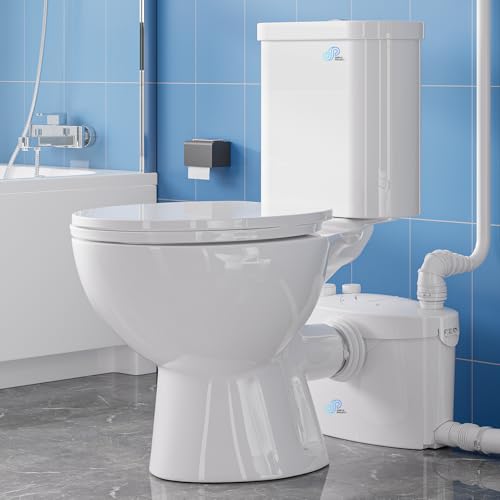
Simple Project 750W PRO Macerating Toilet System
Badge: Best Four-Inlet Pro
Strengths
- Strongest pump class in this pool alongside the SUPERFLO
- Four inlets support a fuller basement bathroom
- Dual flush tempers water use
Trade-offs
- Needs electrical power and pump servicing
- Most complex install in this group
- Over-specified for a room with an existing gravity drain
Specifications stated in the listing: Macerating upflush system; 750W macerator pump; 4 water inlets; Dual flush; Described as space saving; Quiet operation stated in listing.
In daily use, the Simple Project 750W PRO Macerating Toilet System makes its case through the first strength above: strongest pump class in this pool alongside the SUPERFLO. That is the experience you are actually buying — not the badge, not the brand, but the morning-after-morning behaviour of the fixture in your room. Picture it in your bathroom honestly: the height against your household’s legs, the base against your cleaning habits, the flush pattern against your water bill and your patience. Models in this pool earn their place by surviving that visualisation for a specific kind of home, and this one’s home is the reader who recognised themselves in its strengths list.
The honest limitation is equally specific: needs electrical power and pump servicing. That is not a defect so much as a boundary, and every pick here has one. Where this boundary sits inside your tolerance, the Simple Project 750W PRO Macerating Toilet System is a straightforward recommendation; where it sits outside, another pick in this same shortlist was chosen with your case in mind, and the comparison table below exists to move you between them quickly. Installation follows the pattern of its type — a pump system, with electrical supply, venting and discharge routing to plan — and none of it rewards rushing.
Best for: buyers who put this pick’s headline strength first / Not suited for: buyers for whom its first trade-off is a deal-breaker

SUPERFLO 600W Macerating Toilet System
Badge: Best for Laundry Rooms
Strengths
- One-piece upflush body with a rear outlet
- Inlets described for sink, shower and laundry
- Avoids cutting a concrete slab for drainage
Trade-offs
- Needs electrical power for the pump
- Pump systems need periodic attention
- Rear-outlet layout must match the room plan
Specifications stated in the listing: Macerating upflush system; 600W macerator pump; One-piece design; Rear outlet; 3 water inlets for sink, shower and laundry stated in listing.
In daily use, the SUPERFLO 600W Macerating Toilet System makes its case through the first strength above: one-piece upflush body with a rear outlet. That is the experience you are actually buying — not the badge, not the brand, but the morning-after-morning behaviour of the fixture in your room. Picture it in your bathroom honestly: the height against your household’s legs, the base against your cleaning habits, the flush pattern against your water bill and your patience. Models in this pool earn their place by surviving that visualisation for a specific kind of home, and this one’s home is the reader who recognised themselves in its strengths list.
The honest limitation is equally specific: needs electrical power for the pump. That is not a defect so much as a boundary, and every pick here has one. Where this boundary sits inside your tolerance, the SUPERFLO 600W Macerating Toilet System is a straightforward recommendation; where it sits outside, another pick in this same shortlist was chosen with your case in mind, and the comparison table below exists to move you between them quickly. Installation follows the pattern of its type — a pump system, with electrical supply, venting and discharge routing to plan — and none of it rewards rushing.
Best for: buyers who put this pick’s headline strength first / Not suited for: buyers for whom its first trade-off is a deal-breaker

Simple Project 600W Macerating Toilet System 2-Piece Kit
Badge: Best Assembly Kit
Strengths
- Four inlets give the widest fixture flexibility here
- Kit format is described as easy to assemble
- Upflush design opens up basement and attic rooms
Trade-offs
- Needs electrical power for the pump
- More components to assemble than a gravity toilet
- Pump ownership means filters and seals to watch
Specifications stated in the listing: Macerating upflush system; 600W macerator pump; 4 water inlets; AC vent stated in listing; 2-piece kit, easy assembly stated in listing; Silent and powerful operation stated in listing.
In daily use, the Simple Project 600W Macerating Toilet System 2-Piece Kit makes its case through the first strength above: four inlets give the widest fixture flexibility here. That is the experience you are actually buying — not the badge, not the brand, but the morning-after-morning behaviour of the fixture in your room. Picture it in your bathroom honestly: the height against your household’s legs, the base against your cleaning habits, the flush pattern against your water bill and your patience. Models in this pool earn their place by surviving that visualisation for a specific kind of home, and this one’s home is the reader who recognised themselves in its strengths list.
The honest limitation is equally specific: needs electrical power for the pump. That is not a defect so much as a boundary, and every pick here has one. Where this boundary sits inside your tolerance, the Simple Project 600W Macerating Toilet System 2-Piece Kit is a straightforward recommendation; where it sits outside, another pick in this same shortlist was chosen with your case in mind, and the comparison table below exists to move you between them quickly. Installation follows the pattern of its type — a pump system, with electrical supply, venting and discharge routing to plan — and none of it rewards rushing.
Best for: buyers who put this pick’s headline strength first / Not suited for: buyers for whom its first trade-off is a deal-breaker
Comparison Table
| Pick | Badge | Key stated attributes | Link |
|---|---|---|---|
| Simple Project Upgrade Macerating Toilet System | Best Overall for Below-Grade Rooms | Macerating upflush system; 600W macerator pump; 3 water inlets; AC vent stated in listing | Check on Amazon |
| Simple Project 600W Macerating Toilet System | Best One-Piece Kit | Macerating upflush system; 600W macerator pump; One-piece design; 1.6 GPF stated in listing (shown as 1.6gbf) | Check on Amazon |
| VEVOR Macerating Toilet System | Strongest Pump | Macerating upflush system; 700W macerator pump; Rear discharge; Dual flush | Check on Amazon |
| Simple Project 750W PRO Macerating Toilet System | Best Four-Inlet Pro | Macerating upflush system; 750W macerator pump; 4 water inlets; Dual flush | Check on Amazon |
| SUPERFLO 600W Macerating Toilet System | Best for Laundry Rooms | Macerating upflush system; 600W macerator pump; One-piece design; Rear outlet | Check on Amazon |
| Simple Project 600W Macerating Toilet System 2-Piece Kit | Best Assembly Kit | Macerating upflush system; 600W macerator pump; 4 water inlets; AC vent stated in listing | Check on Amazon |
Read the table by columns, not rows: fix the attribute your room cannot compromise on — height, flush pattern, base style or pump arrangement — and let it eliminate picks before preference ranks the survivors. Readers whose shortlist is still wide after that pass may find Best Toilets Resist Main Line Clogs a useful adjacent cut.
How to Choose the Right Toilet for This Brief
Start with the fixture’s non-negotiables. Measure the rough-in from the finished wall, confirm whether the drain is in the floor or the wall, check the venting situation, and note the water valve’s side and condition. Any pick that fails these checks is out regardless of its score on the best toilets with septic system brief, and eliminating it early is a favour to yourself.
Next, rank the human factors. Bowl height is the most physical decision in the purchase: sit-height that suits the tallest regular user can strand the shortest, and the right compromise is the height the whole household can use safely at 2 a.m. Elongated bowls suit most adults; compact and round designs suit small rooms. Seat behaviour — soft-close included or not, removable or fixed — shapes daily satisfaction more than most buyers expect.
Then read water figures as a pattern, not a number. A dual-flush pattern spends its saving on liquid waste, which is most flushes; a single efficient flush spends nothing extra anywhere; a higher-volume flush buys decisiveness at a yearly cost. Match the pattern to your household size, your water charges and, where relevant, the capacity of any septic system the toilet discharges to.
Finally, price the whole job in effort as well as money — qualitatively, the tiers separate clearly. Conventional two-piece gravity models are the simplest install and the easiest future repair. One-piece and skirted designs cost more effort to fit and reward it in cleaning. Macerating systems cost the most planning and give back a bathroom that could not otherwise exist. Choose the tier whose ownership story you actually want.
How to Install, Use and Maintain Your Toilet
Installation, in outline, rewards sequence. Turn off and drain the old unit, protect the floor, and inspect the flange and floor before anything new is lifted in. Set the new seal exactly as the maker directs, lower the bowl straight onto it without rocking it into place, and tighten fixings evenly and gently — ceramic forgives many things but not point force. Connect the water, fill, check every joint dry-eyed with a tissue, and only then fit the seat and walk away.
Daily use needs no manual, but two habits protect any toilet: flush only what the system was designed for, and treat a change in sound, fill time or clearing as information rather than background. A toilet that begins running on, gurgling or clearing lazily is reporting a small, cheap problem; the same report ignored for a season becomes a large, wet one.
Cleaning is a glaze-preservation exercise. Soft cloths and mild cleaners keep the surface’s shine and, on glazed trapways and bowls, its resistance to build-up. Abrasive powders and pads trade a minute saved today for a surface that holds grime faster forever. Work the base line and hinge area monthly, keep a soft brush for the rim, and let the design you chose — skirted, one-piece or two-piece — set the routine it was bought to enable.
Problem: the flush has weakened over months → check the tank water level against its mark, inspect the flapper for warping, and clean the rim jets gently; restore those three before suspecting the toilet itself. Problem: the toilet runs on intermittently → the flapper or fill valve is passing water; replace the worn part rather than turning the valve down. Problem: a pump system sounds different or cycles oddly → stop flushing non-essentials, check the manual’s first steps, and call the installer if the change persists; pumps report problems early and reward early attention.
Ownership Costs and Long-Term Care in Plain Terms
No prices are quoted in this guide, by design, but ownership cost can still be compared honestly in tiers and effort. A conventional gravity toilet is the cheapest design to own over decades in every sense that matters: its wear parts are inexpensive, universally stocked and replaceable with basic tools, and its water use is printed in its flush figure for anyone to project against a local bill. A dual-flush design trims the water side of that ledger further in a busy household. A one-piece or skirted design adds nothing to running cost and subtracts cleaning time weekly, which is a real if unpriced saving.
Macerating systems sit in a different tier, and buyers should enter it with open eyes. The pump uses electricity on every flush, its seals and components have a service life, and a eventual pump repair or replacement is part of the honest long-term picture. Against that stands the alternative those buyers actually face: not a cheaper toilet, but major drainage construction, or no bathroom in that room at all. Judged against construction, the pump tier is the economical route; judged against a gravity toilet in a room that already has a drain, it is not, and this guide has kept the two judgements separate throughout.
Smart and feature-rich models add a third pattern: negligible running cost, real convenience, and a longer list of components that can age — sensors, heated elements, electronic flush mechanisms. The practical response is not avoidance but documentation: keep the manual, note the model and serial details, and learn which functions can be bypassed manually if a sensor ever sulks, because a toilet must remain a toilet even when its extras are offline.
Water is the quiet line item in every case. Multiply the stated flush volume by the household’s honest daily flush count and the shape of a year’s use appears without any price being named. A household of four flushing five times each per day passes twenty flushes through the bowl daily; at that rate, the difference between flush patterns is measured in thousands of gallons a year, which is why this guide treats flush pattern as a first-order decision rather than a footnote, and why fixing a running toilet — which can waste more than every saving on this page combined — outranks every other maintenance task.
What to Check on Delivery and Installation Day
Ceramic fixtures should be inspected before the installer is booked, not during the appointment. Open the packaging in good light, check every surface for hairline cracks and chips — especially around bolt holes and the base — confirm the seat, fittings and any pump components listed are present, and photograph anything doubtful before it is carried into the bathroom. A flaw found at this stage is a straightforward exchange; the same flaw found with the old toilet already removed becomes a household emergency.
On the day itself, keep the old toilet usable until the new one has passed inspection, work through the water shut-off test before dismantling anything, and agree with whoever is fitting it how the room will be left: old unit removed or staged, floor sealed or left for tiling, valve renewed or retained. These are five-minute conversations that prevent the only arguments toilet installations ever cause, and they cost nothing but the decision to have them early.
Toilets and Septic Systems: What Actually Matters
A septic system is a living treatment system, and a toilet choice reaches it in three ways: how much water each flush sends to the tank, what comes with that water, and how the waste arrives. Water volume matters because a tank needs retention time to separate solids and let bacteria work; a household that dramatically increases its daily flush volume can push solids toward the drain field. That is why steady, moderate flush volumes and fixing running toilets promptly matter more to a septic system than any single product claim. A toilet that runs on silently overnight can send more extra water to a tank in a week than a family’s flush choices send in a month.
Every pick in this pool is a macerating upflush system, and that fact needs honest framing. These systems exist to put a working bathroom where a gravity drain cannot go — a basement, an addition, a room below the main sewer or septic line — by grinding waste and pumping it to the discharge point. Where that discharge point is a septic tank inlet, the arrangement must be confirmed with both the pump manufacturer and, ideally, your septic service company before installation: inlet position, pumping rate and local code all matter, and no listing title here states a septic certification. Treat these picks as the route to a below-grade bathroom whose discharge can be designed correctly, not as a drop-in septic upgrade for a standard room, where a simple low-volume gravity toilet is usually the kinder choice for the tank.
What you put through any toilet matters as much as the toilet. Only human waste and toilet paper should be flushed on a septic system: wipes marketed as flushable, paper towels, cotton products and hygiene items do not break down the way toilet paper does, and in a macerating system they also threaten the pump itself. Bleach-heavy and antibacterial cleaners used in large quantities can disturb the bacteria the tank depends on, so clean the bowl with septic-conscious products and modest amounts. The toilet is the doorway; household habits decide what the system has to digest.
Cross-checking helps here too: the neighbouring shortlist at Best Toilets Round applies a related filter, and the overlap between the two shortlists is a reasonable definition of the safe-buying zone for this whole corner of the market.
Planning a Below-Grade Bathroom That Discharges to Septic
Draw the discharge route before you order anything. The pump must lift waste to the chosen entry point with the lift and distance your room actually involves, and the entry into a septic line should be made where your septic professional advises, with the venting the system requires — several listings here state an AC vent, which is part of that picture. Electrical supply for the pump needs proper protection in a bathroom environment, and the pump needs physical access for the servicing it will eventually require; burying it behind a sealed wall is a decision future-you will regret.
Then think about load. A basement bathroom used by guests a few times a month is a gentle addition to a septic system. A basement apartment used daily is a real increase in the household’s wastewater, and the tank and drain field should be assessed for it before the bathroom is built, not after problems appear. Keep the pump and septic paperwork together, note the pump model and install date, and add the macerator to the same maintenance diary as your septic inspections and pumping schedule.
Measure the rough-in before anything else: the distance from the finished wall to the centre of the floor drain decides which models can physically fit, and it is the one measurement that cannot be negotiated after delivery. Most of the gravity picks here state a 12 inch rough-in, which is the common modern standard, but older homes hold surprises, and a toilet that arrives two inches wrong is an expensive ornament until it goes back.
Think about the room’s users as honestly as its plumbing. Bowl height is a daily, physical experience: a height that helps one household member can hinder another, and the right answer in a shared bathroom is often the middle height plus a seat everyone can manage. Elongated bowls give seating room that most adults prefer, while round fronts still earn their place in genuinely small rooms where door swing and knee space are tight.
Water supply details rarely make headlines and often decide installation day. Check the shut-off valve’s condition and position, the supply line length, and whether the valve will need replacing while the old toilet is out — the cheapest moment to renew it. A new toilet installed on a corroded valve inherits a leak risk that has nothing to do with its own quality.
Floor condition matters more with modern bases. Skirted and one-piece designs show an uneven floor as a visible rocking or a broken seal line, so check the flange height and floor flatness while the old unit is out, and shim and seal exactly as the instructions direct rather than overtightening bolts into ceramic, which cracks under enthusiasm.
Keep the paperwork habit from the first day: model number, install date, seat and flapper or pump part details, and the programme or warranty documents that apply. Toilets live long enough that the person repairing yours in a decade may not be you, and a folder — paper or digital — turns a guessing job into a parts order.
Noise is a legitimate selection factor in real homes. Siphonic gravity flushes are comparatively quiet, pressure and pump systems make their working audible, and a bathroom beside a bedroom argues for the quieter mechanism even when the louder one scores marginally better on paper. Choose for the house you sleep in, not the showroom you visited.
Cleaning access should be designed, not discovered. Leave the water valve reachable, keep pump service points unboxed on macerating installs, and choose the base style your household will actually wipe weekly. The cleanest toilet is the one whose cleaning takes five unresented minutes.
Finally, plan the old toilet’s exit before the new one’s entrance: water off, tank drained, a tray or old towels for the residual water, and a disposal route that does not involve carrying a dripping ceramic bowl across a finished floor. Fifteen minutes of staging prevents the only genuinely miserable part of an otherwise satisfying job.
A note on guests and second bathrooms: a toilet chosen for a main family bathroom faces different scrutiny from one chosen for a guest room or a basement addition. Guest rooms forgive a learning curve — a dual-flush button a visitor must decode, a pump’s unfamiliar sound — that a family bathroom used in the dark by children does not. Match the mechanism’s intuitiveness to the room’s least experienced regular user.
Seat shape deserves a tape measure, not an assumption. Elongated and round bowls differ enough in front-to-back length that a seat or a bowl ordered on the wrong assumption will not merely look wrong, it will not fit. The listing’s stated bowl shape is the authority; where a household member has a strong preference, let them sit on a similar shape in a showroom before the order, because returns of ceramic fixtures are nobody’s idea of a light errand.
Consider the floor-to-ceiling picture once more before ordering: door swing over the bowl, the position of a bath mat, where the toilet brush and spare rolls will live, and whether a taller or deeper unit crowds any of them. Bathrooms are small stages, and a fixture that performs perfectly while making the room awkward has only solved half its job.
If two picks remain tied after every stated check, decide on the ownership tiebreakers: whose seat is easiest to replace, whose parts a local merchant stocks, whose manual is clearest, and whose design your household will clean without resentment. Ties in specification are common; ties in lived experience are not, and the second kind is the one you will notice.
A final pre-order ritual worth adopting: read the chosen listing once more, top to bottom, the evening before you buy, and list anything in it you do not understand. Every unanswered question at that stage is cheap; the same question asked of a delivered ceramic fixture on your hallway floor is not. This guide has tried to answer the common ones in the sections above, and the remainder belong to the manufacturer’s manual, which deserves the same careful read before installation day.
Common Buying Mistakes
Buying the headline feature and forgetting the room: a toilet that fits the keyword but not the rough-in, the drain position or the household’s legs is a return waiting to happen. The feature earns a place on the shortlist; the room and the people make the final call.
Trusting a single word in a title over the specification and photographs. Titles compress; specs and side profiles tell the truth about bases, heights and mechanisms. Where the two disagree in spirit, believe the detailed evidence and demote the pick, exactly as this guide demotes its prose-only entries.
Ignoring the exit plan and the paperwork. Old-toilet disposal, valve renewal while the water is off, and keeping receipts and model evidence are unglamorous steps that decide whether ownership feels smooth or cursed in year three.
Final Recommendation
Start with the Simple Project Upgrade Macerating Toilet System, this guide’s first choice for the best toilets with septic system: it states the clearest fit to the brief in its verified listing, and its strengths are the ones most buyers in this search are actually shopping for. Check on Amazon
Choose the Simple Project 600W Macerating Toilet System instead if its particular balance — set out in its review above — matches your room better; many readers will, and the guide is built so that this is a preference, not a compromise. Check on Amazon And keep the VEVOR Macerating Toilet System firmly in view as the third route, especially where its stated attributes answer a constraint the first two do not. Check on Amazon
Whichever you choose, run the final checks before ordering: rough-in measured, drain and vent confirmed, height sanity-checked against the household, and the specification evidence saved. Readers still torn between neighbouring briefs can compare against Best Toilets Round Bowl That Do Not Clog before deciding.
Frequently Asked Questions
Are macerating toilets safe for septic systems?
They can discharge to a septic system when the installation is designed for it, but no listing here states a septic certification. Confirm the arrangement with the manufacturer and your septic service company before installing.
What flush volume suits a septic home?
Moderate, consistent volume. Very high daily water use reduces the tank’s settling time, so efficient models and promptly fixing a running toilet both help the system.
What should never be flushed on septic?
Wipes of any kind, paper towels, cotton products and hygiene items. Only human waste and toilet paper break down appropriately, and non-paper items can also damage a macerator pump.
Why would I choose an upflush toilet for a septic home?
To add a bathroom below the septic or sewer line, where gravity cannot carry waste up to it. In a standard room with a working gravity drain, a simple gravity toilet is usually the better septic choice.
Do cleaners matter for septic systems?
Yes. Heavy bleach and antibacterial use can disturb tank bacteria. Use septic-conscious cleaners in modest amounts, and never use the toilet to dispose of chemicals, paint or solvents.
How often does the system need attention?
Follow your local guidance for tank inspection and pumping, and add the macerator pump to the same schedule: check it, keep access to it, and service it at the first change in sound or performance.


