Disclosure: topratedkitchenware.com is reader-supported. When you buy through links on our site, we may earn an affiliate commission from Amazon and other retailers, at no extra cost to you.
Where to buy
Every product below was shortlisted specifically for this guide to the best types of kitchen sinks, using only verified listings.
A types guide lives or dies on contrast, so this shortlist spans the mainstream undermount, the workstation variant, two sizes of a classic steel bowl, the largest steel format in the pool, and a fireclay farmhouse alternative. Readers already settled on top-mount formats can compare against Best Top Mount Kitchen Sinks before deciding.
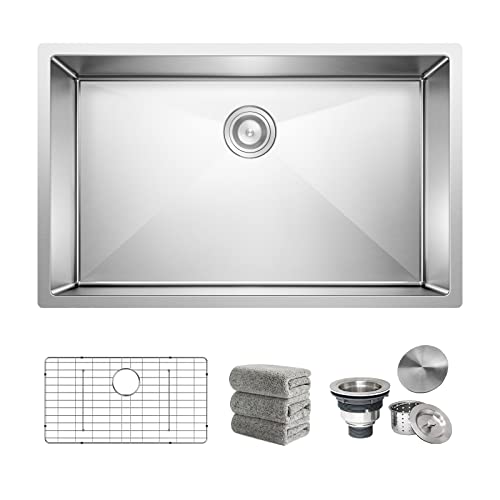
- Oxwiser 32 x 18-Inch 16-Gauge Stainless Steel Undermount Sink Set — Check on Amazon
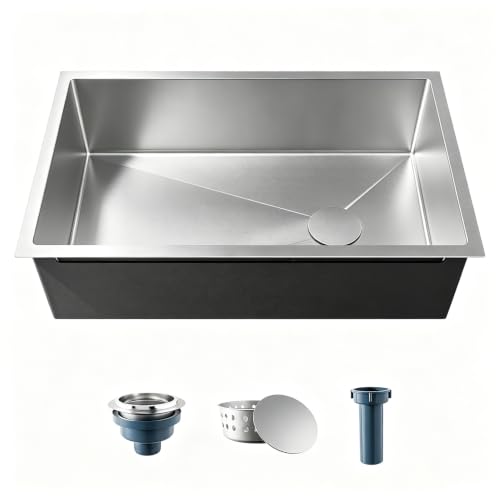
- Kraus KHU100-30 30-Inch 16-Gauge Stainless Steel Undermount Sink — Check on Amazon
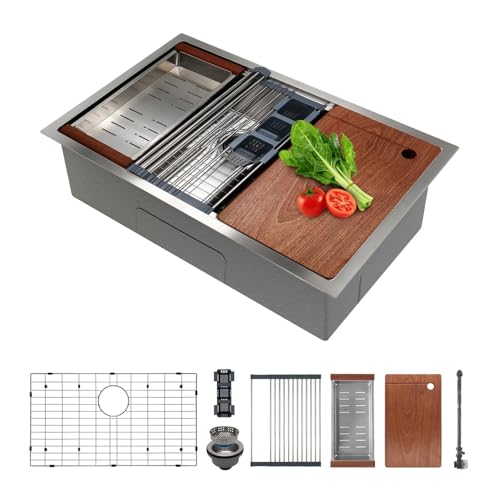
- Kraus KWU110-32 32-Inch 16-Gauge Workstation Undermount Sink — Check on Amazon
- Kraus KHU100-32 32-Inch 16-Gauge Stainless Steel Undermount Sink — Check on Amazon
- Kraus KHU640-33 33-Inch 18-Gauge Stainless Steel Undermount Sink — Check on Amazon
- Miuara 30 x 18-Inch White Fireclay Farmhouse Sink — Check on Amazon
Read the full guide ↓
Understanding the best types of kitchen sinks means separating four decisions that listings love to blur: how the sink mounts, how many bowls it has, what it is made of, and what arrives in the box. This guide makes those four decisions explicit, then shortlists six verified sinks that embody the main types a modern buyer will actually meet, from the mainstream stainless undermount to a white fireclay farmhouse.
Five of the six picks are stainless undermounts, and that proportion is honest about the market: the undermount single bowl is the dominant type of the current remodel era, and its variants, standard, workstation, bundled, oversized, are where most choosing actually happens. The sixth pick, the fireclay farmhouse, represents the traditional-material branch of the family tree, the type chosen for presence and feel rather than for specification sheets.
Read the guide in that order: first the type framework, then the picks as specimens. A reader who knows they need a workstation ledge, or who has fallen for a farmhouse front, can go straight to the relevant review; a reader still forming the picture should start with the framework at Best Top Mount Stainless Steel Kitchen Sinks and the size discussion woven through the reviews, because type mistakes are the expensive ones to undo.
Key Takeaways
- Type is four decisions: mount, bowl count, material, and what is in the box.
- The stainless undermount single bowl is the mainstream type; five of six picks are its variants.
- A workstation sink is a genuinely different type: the ledge changes how the counter is used.
- Fireclay farmhouse is the traditional alternative: glossy, dense, quiet, and heavy enough to plan a cabinet around.
- Size is a type decision: 30, 32 and 33 inches are different tools, not just different numbers.
- Bundles are a type too: a sink sold with grid and drain is a different purchase from a bare bowl.
In this guide
Quick Picks
Six linked picks covering the main types in the verified pool. Badges name the type each pick represents.
| Pick | Badge | Best for | Link |
|---|---|---|---|
| Oxwiser 32 x 18-Inch 16-Gauge Stainless Steel Undermount Sink Set | Best Mainstream Type | The standard remodel: complete, mainstream, one box | Linked pick — see Where to Buy |
| Kraus KHU100-30 30-Inch 16-Gauge Stainless Steel Undermount Sink | Best Classic Undermount | Buyers who want a fully specified heritage undermount | Linked pick — see Where to Buy |
| Kraus KWU110-32 32-Inch 16-Gauge Workstation Undermount Sink | Best Workstation Type | Prep-heavy cooks who will live on the ledge | Linked pick — see Where to Buy |
| Kraus KHU100-32 32-Inch 16-Gauge Stainless Steel Undermount Sink | Best Larger Classic | Sheet-pan households at the classic specification | Linked pick — see Where to Buy |
| Kraus KHU640-33 33-Inch 18-Gauge Stainless Steel Undermount Sink | Best Large-Format Steel | The widest steel bowl in the pool | Linked pick — see Where to Buy |
| Miuara 30 x 18-Inch White Fireclay Farmhouse Sink | Best Farmhouse Type | Farmhouse kitchens wanting fireclay’s look and feel | Linked pick — see Where to Buy |
How These Picks Were Chosen
Selection aimed at coverage of types rather than duplication of one type. We verified the listings, then kept a pool that spans mounting styles, a workstation variant, a three-step size range in steel, and a second material entirely. Where the wider market offers types this pool does not, granite composite top-mounts for example, the guide discusses them in the framework and points to Best Top Mount Granite Composite Kitchen Sinks rather than inventing picks it cannot verify.
This is a research-led guide. Specifications are quoted only where listings state them, and the reviews are explicit about which type each pick is, including when a pick’s type is its limitation: the farmhouse sink is a cabinet commitment, the workstation is wasted on non-prep cooks, and the 33-inch bowl is a cabinet measurement before it is a feature.
Two patterns emerged. First, the mainstream type has quietly become a system purchase: grids, drains and pads now differentiate sinks as much as bowls do. Second, material loyalty is the strongest preference in this category; steel people and fireclay people rarely convert, so the guide argues each type on its own terms and lets the final recommendation sort readers by kitchen rather than by rank. The unclogging and care side of ownership, which every type shares, is covered at Best To Unclog Kitchen Sinks.
Best types of kitchen sinks: The Six Detailed Reviews

Oxwiser 32 x 18-Inch 16-Gauge Stainless Steel Undermount Sink Set
Badge: Best Mainstream Type
Strengths
- 32 inches of 16-gauge bowl: room for sheet pans laid flat, with the grid and drain in the box
- The included bottom grid protects the finish from day one
- A single wide bowl suits batch cooking and big-wash households
Trade-offs
- A 32-inch sink needs a cabinet that fits it; measure the interior, not the label on the door
- Single bowl means no separate soak side
- The bundle towel and cap are minor extras; the grid and drain carry the value
Key specs from the listing: 32 x 18 inches, undermount, single bowl; 16 gauge stainless steel; 5-item bundle per the listing: sink, bottom grid, drain assembly, drain cap, towel.
The Oxwiser 32-inch set represents the type most American remodels actually buy: a stainless undermount single bowl, sold complete. Its five-item bundle, grid and drain included, makes it the reference specimen of the mainstream type, the sink against which the more specialized types below define themselves. Mounting type is the decision everything else hangs on, because it is decided by the countertop and the cabinet, not by taste alone. An undermount sink hangs below the counter and needs a solid-surface or stone top that can carry it and seal against it; a drop-in sits in a cutout with a rim on top and forgives almost any counter material; a farmhouse sink replaces part of the cabinet front itself. Choose the mount your kitchen can actually host before you fall for a bowl.
Material is the third axis of type. Stainless steel is the flexible default: light for its strength, tolerant of heat and impact, and available at every size. Fireclay brings a glossy, traditional farmhouse presence and a dense, quiet bowl, at the cost of serious weight and a cabinet built to hold it. Composite, cast iron and copper all exist beyond this pool, each with its own care contract, and the buying guide below explains how to weigh them even though this shortlist concentrates on the two materials its verified listings cover.
Size is a type decision disguised as a measurement. The 30-inch sink is the American standard because it fits the standard 36-inch base cabinet with room for mounting; 32 and 33 inches buy flat-laying sheet pans and easier big-pot work for kitchens whose cabinets allow them; 28 inches serves smaller kitchens without surrendering depth. Measure the cabinet interior and the counter cutout, in that order, because the sink lives in the cabinet, not in the catalog dimensions. In daily use, the details that decide whether a sink earns its place are unglamorous: how completely it drains, how its corners clean, and whether its size still makes sense on a tired weeknight rather than a showroom afternoon. The Oxwiser 32 x 18-Inch 16-Gauge Stainless Steel Undermount Sink Set handles that everyday test in line with what its listing promises, and nothing in its specification suggests a hidden catch for the jobs described in this guide.
The honest limitation to weigh is in the trade-offs above. No single sink wins on size, material and included parts at once, and this model leans toward its format’s strengths rather than covering every kitchen equally well. Buyers whose kitchens match that lean will feel the trade as a benefit; buyers on the other side of it should weigh the alternatives in this list first.
Ownership of a kitchen sink is mostly a story about water behavior. A bowl that drains fully, through grooves that lead to the drain, dries faster, smells fresher and needs less scrubbing than a bowl that puddles in its corners. Watch the first week’s drainage the way you would test a new pan’s heat, and set your expectations by what the bowl actually does, because drainage is the daily experience everything else decorates.
Best for: The standard remodel: complete, mainstream, one box / Not suited for: Anyone whose counter cannot host an undermount

Kraus KHU100-30 30-Inch 16-Gauge Stainless Steel Undermount Sink
Badge: Best Classic Undermount
Strengths
- TRU16 is Kraus’s name for true 16-gauge material, a direct answer to gauge games elsewhere
- NoiseDefend padding addresses the classic steel-sink complaint: drumming and disposal rumble
- Rounded corners and drainage grooves are the everyday details owners actually notice
Trade-offs
- Accessories such as a grid are not the headline here; check what is in the box before ordering
- 30 inches is the standard size, not the generous one; big-pan households may want the 32
- A heritage-brand pick positioned in a higher tier than the bundle brands
Key specs from the listing: 30 inches, undermount; 16-gauge TRU16 steel per the listing; Model KHU100-30; Rounded corners per the listing; Channel grooves for draining per the listing; NoiseDefend pads per the listing.
The Kraus KHU100-30 is the branded-classic version of that same undermount type: 30 inches, true 16-gauge TRU16 steel, rounded corners, drainage grooves and NoiseDefend pads. It shows what the type looks like when a heritage maker specifies it fully, and it is the natural pick for buyers who trust documented systems over bundle value. Bowl count is the second type decision, and it is really a workflow decision. A single wide bowl takes the largest items a home kitchen produces, roasting pans, sheet trays, stockpots, and asks you to manage soaking with a tub or a pause. A double bowl divides the work into soak and rinse sides and then refuses to fit the sheet pan at all. Most households that cook seriously land on the single bowl; most that wash by hand in volume defend the double. There is no universal answer, only an honest description of your own sink habits.
Within steel, type continues to subdivide. A workstation sink adds an integrated ledge at the rim so boards and racks slide over the bowl, converting the sink from a basin into a prep station. A handmade sink is formed with squarer corners and a flatter floor than a pressed one. A bundle sink competes on what is in the box. These are not marketing adjectives; each describes a different daily experience at the same counter, and the reviews below name which type each pick really is.
The last type variable is the one nobody photographs: what is in the box. A sink sold bare, a sink sold with its drain, and a sink sold as a set with grid and drain are three different purchases wearing similar listings. The grid in particular changes daily life, protecting the bowl floor and lifting glasses out of puddles. Read every pick below partly as a parts list, because on install day the parts list is the product. In daily use, the details that decide whether a sink earns its place are unglamorous: how completely it drains, how its corners clean, and whether its size still makes sense on a tired weeknight rather than a showroom afternoon. The Kraus KHU100-30 30-Inch 16-Gauge Stainless Steel Undermount Sink handles that everyday test in line with what its listing promises, and nothing in its specification suggests a hidden catch for the jobs described in this guide.
The honest limitation to weigh is in the trade-offs above. No single sink wins on size, material and included parts at once, and this model leans toward its format’s strengths rather than covering every kitchen equally well. Buyers whose kitchens match that lean will feel the trade as a benefit; buyers on the other side of it should weigh the alternatives in this list first.
The grid question resolves itself within a month. Households that use the bottom grid stop thinking about it, which is the point: dishes sit above the wet floor, glasses stop chipping against steel, and the bowl’s finish stays unmarked. Households that remove it for a big soak and never replace it have voted with their hands. Either outcome is fine; what matters is that the choice was available, which is why included grids feature so prominently in the reviews above.
Best for: Buyers who want a fully specified heritage undermount / Not suited for: Buyers counting on a grid in the box

Kraus KWU110-32 32-Inch 16-Gauge Workstation Undermount Sink
Badge: Best Workstation Type
Strengths
- A real workstation: the ledge, board and roll-up rack are named in the listing, not implied
- True 16-gauge TRU16 steel with soundproofing pads
- The ledge moves prep over the bowl, so scraps and drips land in the sink
Trade-offs
- Workstation value depends on cooking at the sink; pure wash-up households use the ledge less
- 32 inches needs the cabinet width to match
- Included accessories are sized to this sink; replacements should come from the same line
Key specs from the listing: 32 inches, undermount; 16-gauge TRU16 steel per the listing; Model KWU110-32; Integrated ledge for accessories per the listing; Cutting board and roll-up rack included per the listing; NoiseDefend soundproofing per the listing.
The KWU110-32 is the workstation type, and the distinction is functional, not cosmetic: an integrated ledge at the rim carries the included cutting board and roll-up rack, so prep happens over the bowl. If your cooking style is board-heavy, this type changes how the whole counter works. Material is the third axis of type. Stainless steel is the flexible default: light for its strength, tolerant of heat and impact, and available at every size. Fireclay brings a glossy, traditional farmhouse presence and a dense, quiet bowl, at the cost of serious weight and a cabinet built to hold it. Composite, cast iron and copper all exist beyond this pool, each with its own care contract, and the buying guide below explains how to weigh them even though this shortlist concentrates on the two materials its verified listings cover.
Size is a type decision disguised as a measurement. The 30-inch sink is the American standard because it fits the standard 36-inch base cabinet with room for mounting; 32 and 33 inches buy flat-laying sheet pans and easier big-pot work for kitchens whose cabinets allow them; 28 inches serves smaller kitchens without surrendering depth. Measure the cabinet interior and the counter cutout, in that order, because the sink lives in the cabinet, not in the catalog dimensions.
Mounting type is the decision everything else hangs on, because it is decided by the countertop and the cabinet, not by taste alone. An undermount sink hangs below the counter and needs a solid-surface or stone top that can carry it and seal against it; a drop-in sits in a cutout with a rim on top and forgives almost any counter material; a farmhouse sink replaces part of the cabinet front itself. Choose the mount your kitchen can actually host before you fall for a bowl. In daily use, the details that decide whether a sink earns its place are unglamorous: how completely it drains, how its corners clean, and whether its size still makes sense on a tired weeknight rather than a showroom afternoon. The Kraus KWU110-32 32-Inch 16-Gauge Workstation Undermount Sink handles that everyday test in line with what its listing promises, and nothing in its specification suggests a hidden catch for the jobs described in this guide.
The honest limitation to weigh is in the trade-offs above. No single sink wins on size, material and included parts at once, and this model leans toward its format’s strengths rather than covering every kitchen equally well. Buyers whose kitchens match that lean will feel the trade as a benefit; buyers on the other side of it should weigh the alternatives in this list first.
Cleaning steel is a technique, not a product. Wipe with the grain of the brush, rinse detergent away fully, and dry the bowl when you remember, especially in hard-water homes where mineral spots are the main cosmetic enemy. A paste of baking soda handles the dull film that builds over months. Abrasive powders and steel wool are the two shortcuts that permanently cost a steel sink its finish, at any gauge and any price tier.
Best for: Prep-heavy cooks who will live on the ledge / Not suited for: Pure wash-up households who will not use the ledge

Kraus KHU100-32 32-Inch 16-Gauge Stainless Steel Undermount Sink
Badge: Best Larger Classic
Strengths
- The 32-inch version of the KHU100 formula: true 16-gauge steel, pads, grooves, rounded corners
- Extra width over the 30 lays sheet pans flatter and eases big-pot washing
- NoiseDefend pads keep a big steel bowl from sounding like one
Trade-offs
- Needs a cabinet that genuinely fits a 32-inch undermount
- Grid and accessories are separate decisions; check the box contents
- Single bowl: no divided soak-and-rinse workflow
Key specs from the listing: 32 inches, undermount; 16-gauge TRU16 steel per the listing; Model KHU100-32; Rounded corners per the listing; Channel grooves for draining per the listing; NoiseDefend pads per the listing.
The KHU100-32 stretches the classic undermount type to 32 inches: same TRU16 steel, pads and grooves as its 30-inch sibling, with the extra width that lays sheet pans flat. It exists in this guide to show that size is a type decision too, because the bigger bowl changes what the sink can swallow, not just how it measures. Within steel, type continues to subdivide. A workstation sink adds an integrated ledge at the rim so boards and racks slide over the bowl, converting the sink from a basin into a prep station. A handmade sink is formed with squarer corners and a flatter floor than a pressed one. A bundle sink competes on what is in the box. These are not marketing adjectives; each describes a different daily experience at the same counter, and the reviews below name which type each pick really is.
The last type variable is the one nobody photographs: what is in the box. A sink sold bare, a sink sold with its drain, and a sink sold as a set with grid and drain are three different purchases wearing similar listings. The grid in particular changes daily life, protecting the bowl floor and lifting glasses out of puddles. Read every pick below partly as a parts list, because on install day the parts list is the product.
Bowl count is the second type decision, and it is really a workflow decision. A single wide bowl takes the largest items a home kitchen produces, roasting pans, sheet trays, stockpots, and asks you to manage soaking with a tub or a pause. A double bowl divides the work into soak and rinse sides and then refuses to fit the sheet pan at all. Most households that cook seriously land on the single bowl; most that wash by hand in volume defend the double. There is no universal answer, only an honest description of your own sink habits. In daily use, the details that decide whether a sink earns its place are unglamorous: how completely it drains, how its corners clean, and whether its size still makes sense on a tired weeknight rather than a showroom afternoon. The Kraus KHU100-32 32-Inch 16-Gauge Stainless Steel Undermount Sink handles that everyday test in line with what its listing promises, and nothing in its specification suggests a hidden catch for the jobs described in this guide.
The honest limitation to weigh is in the trade-offs above. No single sink wins on size, material and included parts at once, and this model leans toward its format’s strengths rather than covering every kitchen equally well. Buyers whose kitchens match that lean will feel the trade as a benefit; buyers on the other side of it should weigh the alternatives in this list first.
The undermount seam and the drain are the two inspection points worth a calendar habit. Run a finger along the seam each season and look for gaps or soft sealant; check under the sink for the slow drip that announces itself on the cabinet floor rather than at the tap. Both checks take a minute, and both catch the only failures that can actually damage a kitchen, which is a fair trade for a fixture expected to serve for decades.
Best for: Sheet-pan households at the classic specification / Not suited for: Cabinets under the required width

Kraus KHU640-33 33-Inch 18-Gauge Stainless Steel Undermount Sink
Badge: Best Large-Format Steel
Strengths
- The widest bowl in this pool at 33 inches, from an established maker
- NoiseDefend pads compensate for the livelier sound of 18-gauge steel
- Rounded corners and drainage grooves keep the big bowl easy to live with
Trade-offs
- 18 gauge is the lighter tier; the pads help noise, not dent resistance
- 33 inches is a large-sink commitment; verify cabinet and counter cutout carefully
- Single bowl, so all tasks share the space
Key specs from the listing: 33 inches, undermount; 18-gauge stainless steel per the listing; Model KHU640-33; Rounded corners resist buildup per the listing; Channel grooves for draining per the listing; NoiseDefend pads per the listing.
The KHU640-33 is the large-format end of the steel undermount family: 33 inches wide, 18-gauge steel, with the same rounded corners, grooves and NoiseDefend treatment. It demonstrates the trade the type offers at its biggest: maximum bowl, lighter gauge, sound managed by padding rather than by metal. Size is a type decision disguised as a measurement. The 30-inch sink is the American standard because it fits the standard 36-inch base cabinet with room for mounting; 32 and 33 inches buy flat-laying sheet pans and easier big-pot work for kitchens whose cabinets allow them; 28 inches serves smaller kitchens without surrendering depth. Measure the cabinet interior and the counter cutout, in that order, because the sink lives in the cabinet, not in the catalog dimensions.
Mounting type is the decision everything else hangs on, because it is decided by the countertop and the cabinet, not by taste alone. An undermount sink hangs below the counter and needs a solid-surface or stone top that can carry it and seal against it; a drop-in sits in a cutout with a rim on top and forgives almost any counter material; a farmhouse sink replaces part of the cabinet front itself. Choose the mount your kitchen can actually host before you fall for a bowl.
Material is the third axis of type. Stainless steel is the flexible default: light for its strength, tolerant of heat and impact, and available at every size. Fireclay brings a glossy, traditional farmhouse presence and a dense, quiet bowl, at the cost of serious weight and a cabinet built to hold it. Composite, cast iron and copper all exist beyond this pool, each with its own care contract, and the buying guide below explains how to weigh them even though this shortlist concentrates on the two materials its verified listings cover. In daily use, the details that decide whether a sink earns its place are unglamorous: how completely it drains, how its corners clean, and whether its size still makes sense on a tired weeknight rather than a showroom afternoon. The Kraus KHU640-33 33-Inch 18-Gauge Stainless Steel Undermount Sink handles that everyday test in line with what its listing promises, and nothing in its specification suggests a hidden catch for the jobs described in this guide.
The honest limitation to weigh is in the trade-offs above. No single sink wins on size, material and included parts at once, and this model leans toward its format’s strengths rather than covering every kitchen equally well. Buyers whose kitchens match that lean will feel the trade as a benefit; buyers on the other side of it should weigh the alternatives in this list first.
Think about the second faucet, not the first. Sinks outlive faucets, disposals and even countertops’ fashion cycles, so the sink decision should be the conservative one in any remodel: standard sizes, honest materials, a format your next faucet can still serve. The picks in this guide were weighted with that horizon in mind, because the cheapest sink is the one bought once.
Best for: The widest steel bowl in the pool / Not suited for: Dent-averse buyers who want 16-gauge steel
Miuara 30 x 18-Inch White Fireclay Farmhouse Sink
Badge: Best Farmhouse Type
Strengths
- Fireclay gives a glossy white farmhouse front no steel sink can imitate
- Reversible front lets you choose the apron profile at install time
- Fireclay is dense and quiet by nature; no drumming, no pads needed
Trade-offs
- Fireclay is heavy; the cabinet needs real support planning
- An apron-front farmhouse format is a style and cabinet commitment, not a drop-in swap
- White fireclay shows its care routine: it rewards gentle cleaning over abrasives
Key specs from the listing: 30 x 18 inches, single bowl; Fireclay construction; Apron front farmhouse format; listing also names drop-in (undermount) installation; Reversible front per the listing; Listing states resistance to stain, crack, heat and scratch.
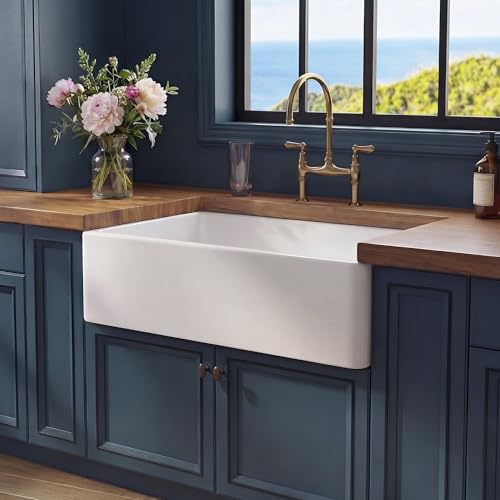
The Miuara closes the list by changing nearly every variable at once: fireclay instead of steel, an apron-front farmhouse format instead of a plain undermount, and a glossy white reversible front. It is here because a types guide that showed only steel undermounts would be lying about the category; this is the traditional-material alternative, with its own weight and cabinet commitments stated plainly. The last type variable is the one nobody photographs: what is in the box. A sink sold bare, a sink sold with its drain, and a sink sold as a set with grid and drain are three different purchases wearing similar listings. The grid in particular changes daily life, protecting the bowl floor and lifting glasses out of puddles. Read every pick below partly as a parts list, because on install day the parts list is the product.
Bowl count is the second type decision, and it is really a workflow decision. A single wide bowl takes the largest items a home kitchen produces, roasting pans, sheet trays, stockpots, and asks you to manage soaking with a tub or a pause. A double bowl divides the work into soak and rinse sides and then refuses to fit the sheet pan at all. Most households that cook seriously land on the single bowl; most that wash by hand in volume defend the double. There is no universal answer, only an honest description of your own sink habits.
Within steel, type continues to subdivide. A workstation sink adds an integrated ledge at the rim so boards and racks slide over the bowl, converting the sink from a basin into a prep station. A handmade sink is formed with squarer corners and a flatter floor than a pressed one. A bundle sink competes on what is in the box. These are not marketing adjectives; each describes a different daily experience at the same counter, and the reviews below name which type each pick really is. In daily use, the details that decide whether a sink earns its place are unglamorous: how completely it drains, how its corners clean, and whether its size still makes sense on a tired weeknight rather than a showroom afternoon. The Miuara 30 x 18-Inch White Fireclay Farmhouse Sink handles that everyday test in line with what its listing promises, and nothing in its specification suggests a hidden catch for the jobs described in this guide.
The honest limitation to weigh is in the trade-offs above. No single sink wins on size, material and included parts at once, and this model leans toward its format’s strengths rather than covering every kitchen equally well. Buyers whose kitchens match that lean will feel the trade as a benefit; buyers on the other side of it should weigh the alternatives in this list first.
Finally, judge the sink after the hundredth ordinary day, not the first impressive one. The questions that matter by then are small and total: does the bowl drain, does the finish forgive, does the size fit the pans you actually own, and does the sound of the place feel calm at the evening wash-up. A sink that passes those four has earned its place under the counter.
Best for: Farmhouse kitchens wanting fireclay’s look and feel / Not suited for: Anyone unprepared for fireclay’s weight and cabinet work
Comparison Table
| Pick | Badge | Key attribute | Format | Link |
|---|---|---|---|---|
| Oxwiser 32 x 18-Inch 16-Gauge Stainless Steel Undermount Sink Set | Best Mainstream Type | 32 x 18 inches, undermount, single bowl | Undermount single bowl set, 32 in | Check on Amazon |
| Kraus KHU100-30 30-Inch 16-Gauge Stainless Steel Undermount Sink | Best Classic Undermount | 30 inches, undermount | Undermount single bowl, 30 in | Check on Amazon |
| Kraus KWU110-32 32-Inch 16-Gauge Workstation Undermount Sink | Best Workstation Type | 32 inches, undermount | Undermount workstation, 32 in | Check on Amazon |
| Kraus KHU100-32 32-Inch 16-Gauge Stainless Steel Undermount Sink | Best Larger Classic | 32 inches, undermount | Undermount single bowl, 32 in | Check on Amazon |
| Kraus KHU640-33 33-Inch 18-Gauge Stainless Steel Undermount Sink | Best Large-Format Steel | 33 inches, undermount | Undermount single bowl, 33 in | Check on Amazon |
| Miuara 30 x 18-Inch White Fireclay Farmhouse Sink | Best Farmhouse Type | 30 x 18 inches, single bowl | Farmhouse apron front, fireclay, 30 in | Check on Amazon |
Read the format column as the type column: it is the fastest honest summary of how these six sinks differ.
How to Choose Best types of kitchen sinks
Decide the mount against your counter, not your mood. Undermounts need stone, quartz or solid surface and reward you with the sweep-clean counter edge; drop-ins forgive any counter and simplify replacement; farmhouse formats rebuild the cabinet front. Your counter’s material and your remodel’s scope answer this question before style gets a vote.
Decide bowl count against your washing reality. Single bowls fit the largest objects and suit dishwasher households; double bowls serve hand-wash-heavy kitchens that soak and rinse simultaneously. The pool here is single-bowl throughout, which reflects the current market, but the framework matters more than the pool: choose the workflow you actually repeat.
Decide material against care temperament. Steel forgives impacts and heat and asks for wiping; fireclay offers a glossy, traditional presence and asks for gentleness and serious support; composites and other materials beyond this pool each sign their own care contract, surveyed at Best Top Mounted Stainless Steel Sinks For Kitchen. There is no best material, only a best match for the household’s habits.
Finally, decide the package. A bare bowl, a bowl with a drain, and a set with grid and drain are different purchases. Price the complete, installed, usable sink in your head, including any fabrication the mount requires, and let that complete picture, not the headline, rank your finalists.
How to Install and Care for a Stainless Steel Undermount Sink
An undermount install is a half-day of careful sequencing rather than difficult work, and steel care after it is a set of small habits. The routine below follows the order professionals use.
- Dry-fit first: set the sink under the cutout, confirm the reveal you want (a small positive reveal, flush, or a slight negative reveal that hides the rim), and mark clip positions before any sealant appears.
- Confirm support: clips, rails or a frame per the maker’s instructions and your fabricator’s practice, sized for the bowl full of water, not the bowl empty.
- Run a continuous bead of the recommended sealant at the rim, lift the sink into place with help, and fix the hardware evenly, working around the rim rather than tightening one side fully first.
- Wipe the squeezed-out sealant immediately, then leave the joint undisturbed for the full curing time on the tube; this patience is the difference between a decade-long seal and a seasonal one.
- Connect drain, disposal and supply lines, fill the bowl completely, and inspect every joint from below with a dry hand before the cabinet goes back into service.
- For weekly care: rinse after use, wipe with the grain using a soft cloth and mild detergent, and dry the bowl in hard-water homes; monthly, lift the grid and clean beneath it.
Problem: Water weeps at the rim and the cabinet floor is damp → what to do: the sealant joint has failed or the sink has sagged on its hardware; dry the area fully, check clip tension and support, and reseal the rim rather than painting over the symptom.
Problem: The bowl sounds tinny and drums under the faucet → what to do: thin or unpadded steel is vibrating; adhesive sound pads on the underside, applied to a clean dry bowl, are the standard retrofit, and a bottom grid damps more than expected.
Problem: A dull grey film and water spots keep returning → what to do: mineral deposits from hard water, not damage; a baking-soda paste wiped with the grain restores the brush, and a quick dry after the last wash of the day prevents most of it.
The Workstation: A New Type or a Accessory With Ambition?
The workstation sink earns its status as a separate type because the ledge is structural: a step machined into the rim at a precise height, carrying boards and racks that slide. The KWU110-32 in this pool names its ledge and its included board and roll-up rack in the listing, which is the honest version of the type; a plain sink with a board balanced on top is not one.
Who should care? Cooks whose prep is board-centric and whose counters are small enough that moving prep over the sink returns real workspace. Who should not? Households whose sink is purely a washing station, for whom the ledge is a rim detail they will never load. Type honesty cuts both ways, and this guide’s workstation pick is recommended exactly to the first group and waved past the second.
Fireclay and the Traditional Branch of the Family
Fireclay is clay fired at high temperature with a glazed finish, and it produces the dense, glossy, quietly luxurious bowl that farmhouse kitchens are built around. The Miuara pick states the practical side in its listing: resistance to stain, crack, heat and scratch, a reversible front so the apron profile is chosen at install, and an alternative drop-in or undermount fit for kitchens not rebuilding a cabinet front.
The commitments are weight and care. Fireclay is heavy enough that support planning is part of the purchase, and its glazed surface prefers non-abrasive cleaning. In exchange it offers what steel cannot: a colored, traditional, furniture-like presence at the center of the kitchen, and a bowl that is silent by nature. Types guides exist to surface exactly this kind of trade rather than to flatten it into a ranking, and the tap pairing question that follows any sink choice is taken up at Best Taps For Kitchen Sinks.
Common Buying Mistakes
- Choosing a mount your countertop material cannot support.
- Falling for a farmhouse front before measuring the cabinet it replaces.
- Buying a workstation ledge for a kitchen that never preps at the sink.
- Treating size as a detail and discovering the cabinet is too small on install day.
- Comparing a bare bowl’s headline against a bundle’s without pricing the missing parts.
- Picking a material whose care routine you already know you will not keep.
Final Recommendation
For the typical remodel, the mainstream type is the right type: take the Oxwiser 32-inch set for a complete one-box answer, or the Kraus KHU100-30 if you prefer a heritage maker’s fully specified classic at 30 inches. Choose the KWU110-32 if prep-at-the-sink is your real workflow, the KHU640-33 if maximum bowl width leads, and the Miuara fireclay farmhouse if the kitchen’s design center is traditional and the cabinet plan can carry it. Type first, model second: that order is the whole guide in one line.
Shortlist again: Oxwiser 32 x 18-Inch 16-Gauge Stainless Steel Undermount Sink Set; Kraus KHU100-30 30-Inch 16-Gauge Stainless Steel Undermount Sink; Kraus KWU110-32 32-Inch 16-Gauge Workstation Undermount Sink.
Frequently Asked Questions
What are the main types of kitchen sinks?
By mount: undermount, drop-in (top-mount) and farmhouse apron-front. By bowl: single and double. By material: stainless steel, fireclay, granite composite, cast iron and others. By format: standard bowls and workstation sinks with integrated ledges. Most real choices combine one option from each list.
Is an undermount sink better than a drop-in?
Better at the counter edge, where crumbs sweep straight in, and more demanding everywhere else: it needs a suitable counter material, proper support and a maintained seal. A drop-in is the forgiving, widely compatible type. The right answer is the one your counter and remodel support.
What is a workstation kitchen sink?
A sink with an integrated ledge at the rim that carries accessories such as cutting boards and roll-up drying racks, turning the bowl into a prep station. The ledge is built into the sink, and the better listings name the included accessories, as the workstation pick in this guide does.
Are fireclay sinks durable?
Fireclay is dense, heat-tolerant and resistant to staining, with a glazed surface that prefers gentle, non-abrasive cleaning. Its main demands are structural: it is heavy, so the cabinet and support need planning. Treated accordingly, it is a decades-long material.
Single bowl or double bowl: which type should I choose?
Single bowls fit the largest pans and suit dishwasher households; double bowls serve hand-washing workflows that soak and rinse at once. Describe your busiest sink hour honestly and the answer usually announces itself.
Does sink type affect the faucet I can use?
Yes. Undermount and farmhouse sinks have no faucet deck, so the faucet mounts in the counter or wall and its holes are a fabrication decision. Drop-ins may offer deck holes. Decide sink type and faucet together, before any counter is cut.