Disclosure: topratedkitchenware.com is reader-supported. When you buy through links on our site, we may earn an affiliate commission from Amazon and other retailers, at no extra cost to you.
Where to buy
If you are shopping for the best under blankets, know this first: an under blanket is the layer that works from beneath — under your duvet, or under your body on a hard guest bed — and it is the cheapest warmth upgrade a bed can get. Every pick below is a verified fleece, sherpa or faux fur blanket from this guide’s product pool, assessed for that specific under-layer job. Use the links to check the latest price on Amazon, and read the full guide ↓ for the layering method.
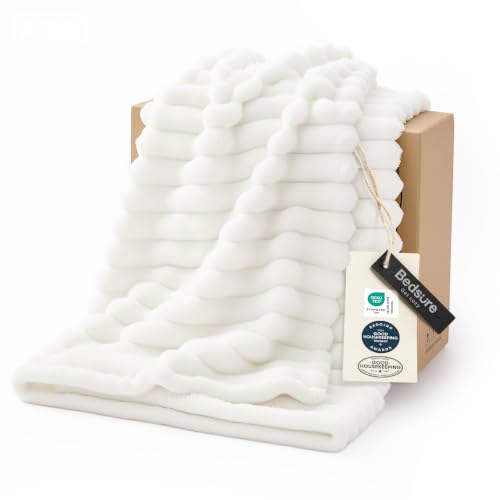
- Bedsure GentleSoft Throw Blanket (Off White) — Best Overall Under Blanket — Check on Amazon
- blunique Ultra Soft Faux Fur Throw Blanket (Cream White) — Best Plush Under Layer
- Bedsure Faux Fur Sherpa Blanket (Grey) — Best Under Layer for Cold Rooms
- BEDELITE Ribbed Fleece Throw Blanket (Cream) — Best Everyday Under Blanket
- Bedsure GentleSoft Sherpa Fleece Throw Blanket (Grey) — Best Warmth-to-Bulk Under Layer
- Bedsure Cloud Bubble Blanket (Beige) — Best Light Under Layer for Warm Sleepers
Read the full guide ↓
The best under blankets are the layers most sleepers never think to buy, and then cannot sleep without. An under blanket sits beneath your main cover — between the sheet and the duvet — or, in its second role, beneath your body, between you and a mattress that is too hard, too cold or too thin. In the first position it adds warmth exactly where warmth works best, close to the body and protected by the duvet above it. In the second it cushions and insulates against the chill that rises from below, which top blankets cannot fix at any thickness.
This guide compares six verified fleece, sherpa and faux fur blankets as under layers: which ones disappear smoothly under a duvet, which ones grip a mattress and stay put, which one a warm sleeper can tolerate in July. You will also find the full layering method — the correct order of a bed’s layers and why the order matters — plus the washing rhythm under blankets need, because a skin-side layer lives a different life from a decorative throw. Readers who also weigh where a blanket is made will find the domestic-manufacture angle covered in Best Usa Made Blankets.
A note on terminology, because the phrase is used loosely: this guide uses ‘under blanket’ in the layering sense — a blanket whose job is to be underneath something. It is not a guide to electric mattress pads or heated underblankets, which are appliances rather than blankets; where powered warmth is the goal, the honest route is a purpose-built heated product used to its maker’s instructions, not a throw repurposed for the job.
Key Takeaways
- The under layer is the highest-value layer in the bed: warmth added beneath a duvet outperforms warmth added on top of it.
- Smooth, thin fleece disappears under a duvet; textured and sherpa layers grip mattresses and suit the under-body position.
- Under blankets are skin-side layers — washability and a weekly wash rhythm matter more than decor.
- Warm sleepers need a feather-light under layer for the tucked-in feeling without the heat; cold sleepers need sherpa.
- Every pick here is non-heated and throw-sized, ideal for twin, sofa and guest beds and for layering on larger beds.
In this guide
Quick Picks
| Pick | Badge | Size | Material / build |
|---|---|---|---|
| Bedsure GentleSoft Throw Blanket (Off White) | Best Overall Under Blanket | 50″ x 60″ | GentleSoft fleece, smooth thin face |
| blunique Ultra Soft Faux Fur Throw Blanket (Cream White) | Best Plush Under Layer | 50″ x 60″ | Faux fur bubble plush, thick fluffy build |
| Bedsure Faux Fur Sherpa Blanket (Grey) | Best Under Layer for Cold Rooms | 50″ x 60″ | Faux fur fleece face with sherpa reverse |
| BEDELITE Ribbed Fleece Throw Blanket (Cream) | Best Everyday Under Blanket | 50″ x 60″ | Ribbed fleece, plush warm build, machine washable |
| Bedsure GentleSoft Sherpa Fleece Throw Blanket (Grey) | Best Warmth-to-Bulk Under Layer | 50″ x 60″ | GentleSoft sherpa fleece, non-heated, thick warm build |
| Bedsure Cloud Bubble Blanket (Beige) | Best Light Under Layer for Warm Sleepers | 50″ x 60″ | Lightweight bubble-textured fleece throw |
How These Picks Were Chosen
The six picks come from the verified product pool for this blanket programme, with every ASIN, title and image confirmed against pool data before writing; each review uses only the specs that data supports. We then assessed each blanket for under-layer duty specifically — face smoothness, grip, thickness under a duvet, warmth class and laundry practicality — because a blanket that excels on a sofa can fail inside a bed, and the badges reflect under-layer performance rather than general quality.
This is a research-led guide and says so: no invented testing, no borrowed ratings. Material behaviour — how fleece, sherpa pile and bubble textures behave when compressed inside bedding, how they wash, how they migrate — is well established, and each review separates that general knowledge from the specific product data and states the honest limitation of every pick, from pale colours in a high-wash role to sherpa that overheats a summer bed.
The 6 Best Under Blankets, Reviewed as Layers

Bedsure GentleSoft Throw Blanket (Off White)
Badge: Best Overall Under Blanket
Strengths
- Smooth face slides against skin and sheets without bunching
- Thin enough to add warmth under a duvet without bulk at the edges
- Light colour works as a neutral layer under any bedding set
Trade-offs
- Off white needs regular washing to stay fresh as a skin-side layer
- Too light to serve as a standalone blanket in a cold room
- Smooth finish can migrate inside a loose duvet cover unless tucked
| Spec | Detail |
|---|---|
| Size | 50″ x 60″ |
| Material | GentleSoft fleece (per API title) |
| Colour | Off white |
| Heating | Non-heated |
An under blanket has one job above all others: to add warmth without being noticed. This smooth GentleSoft throw does that job best in the group because its face is flat and even — no deep pile to lump under a duvet, no texture to print through a thin cover — while the fleece itself traps a quiet layer of warm air against the body. Laid between the top sheet and the duvet, it turns a summer-weight duvet into a three-season one, and laid directly over the sheet on milder nights it is the layer you pull up at 3 a.m. when the room finally cools.
Its off-white colour is a genuine asset in this role, because an under blanket is part of the bedding system rather than the decor: it matches every sheet set, never clashes through a pale duvet cover, and shows clearly when it needs a wash, which skin-side layers do more often than top blankets. The honest limits are thinness and migration. Alone in a cold room it is not enough blanket, and inside an oversized duvet cover it can wander unless the corners are tucked or clipped. As the invisible warmth layer of a well-made bed, though, it is the strongest pick here.
Best for: layering under duvets and over sheets on any bed / Not suited for: solo use in cold rooms or loose oversized duvet covers untucked

blunique Ultra Soft Faux Fur Throw Blanket (Cream White)
Badge: Best Plush Under Layer
Strengths
- Raised bubble texture keys into the sheet and stops layer drift
- Plush face feels luxurious as the skin-side layer on a sofa bed
- Thick pile adds noticeable warmth under a light cover
Trade-offs
- Thickest under layer here — can feel bulky under a fitted duvet
- Cream white needs a clean bed and regular washing
- Deep pile is slow to dry after laundry
| Spec | Detail |
|---|---|
| Size | 50″ x 60″ |
| Material | Faux fur bubble plush (per API title) |
| Colour | Cream white |
| Use noted in listing | Couch, sofa, bedroom, living room |
Most under blankets are chosen to disappear; this one is chosen to be felt. The blunique’s bubble plush makes it the comfort-first under layer — the blanket you spread over the sheet on a sofa bed or guest bed so the sleeper’s first contact is softness rather than cotton, with a light cover or duvet over the top to hold the warmth in. The raised bubbles do practical work in this position: they grip the sheet beneath, so the layer stays where you made the bed instead of migrating to the foot by morning, which is the most common failure of smooth throws used as under layers.
Warmth is real, too — the thick pile holds more still air than flat fleece, so under a light duvet this layer carries a bed noticeably deeper into autumn. The costs are bulk and upkeep. Under a snug duvet cover it can feel crowded, and cream plush in a skin-side role needs washing on a regular rhythm to stay fresh. Use it where the bed is made to be felt — guest beds, sofa beds, the nap couch — and it is the most indulgent under blanket of the six.
Best for: sofa beds, guest beds and comfort-first layering / Not suited for: snug duvet covers or low-maintenance households

Bedsure Faux Fur Sherpa Blanket (Grey)
Badge: Best Under Layer for Cold Rooms
Strengths
- Sherpa reverse anchors the layer on the mattress so it cannot skate
- Two faces let you choose grip below and plush above
- Warmest under layer here for unheated bedrooms
Trade-offs
- Too warm as an under layer in heated homes in summer
- Thick build raises the bed profile under a duvet
- Textured face is not for sleepers who want a flat sheet feel
| Spec | Detail |
|---|---|
| Size | 50″ x 60″ |
| Material | Faux fur fleece with sherpa reverse (per API title) |
| Colour | Grey |
| Heating | Non-heated |
In a cold room, the under blanket stops being an accessory and becomes the bed’s foundation, and this is the pick built for that version of the job. Spread it sherpa-side down directly over the mattress or the fitted sheet and the pile grips, ending the slow slide that ruins layered beds; the body then lies against or under a layer whose whole design is trapping warm air. In unheated bedrooms, spare rooms and cabins, that foundation layer is worth more than any top blanket, because cold rising from a mattress is the hardest chill to fix from above.
It also works in the second under-blanket position — under the sleeper rather than over — as a mattress-softening layer on hard guest beds, futons and sofa beds, where the sherpa pile cushions as well as warms. The limits are thermal and physical: in a warm, heated home it will over-insulate in summer, and its thickness is obvious under a duvet. Deploy it in the cold months and the cold rooms, and it is the under blanket that changes the bed most.
Best for: cold bedrooms, cabins, futons and hard guest beds / Not suited for: warm climates or summer layering

BEDELITE Ribbed Fleece Throw Blanket (Cream)
Badge: Best Everyday Under Blanket
Strengths
- Ribs trap air in channels, warming like a thicker blanket
- Texture resists the bunching that plagues flat under layers
- Machine washable for the frequent laundry skin-side layers need
Trade-offs
- Rib texture can be felt through very thin top sheets
- Cream shows wear and soil sooner than grey
- Mid-weight: not the coldest-room solution here
| Spec | Detail |
|---|---|
| Size | 50″ x 60″ |
| Material | Ribbed fleece (per API title) |
| Care | Machine washable |
| Colour | Cream |
The everyday under blanket has to survive a routine: on the bed every night, in the wash every week, back on the bed without ceremony. This BEDELITE ribbed fleece is built for that rhythm. The ribbed surface is its quiet engineering — long channels of trapped air that warm like a much thicker blanket, while the ribs themselves resist the rolling and bunching that flat throws develop under a duvet. It is the layer most likely to be exactly where you left it when you get into bed at night.
Machine washability matters more for under blankets than for any other blanket role, because the under layer is the skin-side or near-skin layer and it absorbs the week’s worth of body oils and lotion. A blanket that washes and dries without fuss will actually get washed; a delicate one will not, and an unwashed under layer quietly degrades the whole bed’s freshness. Cream is its one indulgence — it will show soil sooner than the grey picks — but for a main bedroom where the bed is made daily, this is the balanced, durable default.
Best for: main bedrooms and nightly layered beds / Not suited for: very thin sheets above it or the coldest unheated rooms

Bedsure GentleSoft Sherpa Fleece Throw Blanket (Grey)
Badge: Best Warmth-to-Bulk Under Layer
Strengths
- Deepest warm-air layer that still layers cleanly under bedding
- Grey is the most practical colour for a hard-working under layer
- Non-heated warmth with no cords inside the bed
Trade-offs
- Pile collects lint from sheets and needs a shake before washing
- Too warm for summer under-layer duty
- Bulkiest of the fleece-family picks to store
| Spec | Detail |
|---|---|
| Size | 50″ x 60″ |
| Material | GentleSoft sherpa fleece (per API title) |
| Heating | Non-heated |
| Colour | Grey |
Think of this grey sherpa as the winter engine of a layered bed. As an under blanket — over the sheet, under the duvet — its deep pile holds the thickest cushion of warm air in this line-up, and because the warmth sits below the duvet rather than above it, the duvet’s own loft is free to do its work on top. Beds that feel almost warm enough in January usually need exactly this: not a new duvet, but a serious under layer added to the one they have.
Grey is the right colour for the hardest-working layer in the bed, hiding the lint and faint wear that skin-side blankets accumulate between washes. It is non-heated, which inside a bed is a virtue — no cords, no controllers, nothing to unplug before laundry day. Its season is unambiguously the cold one; in summer it should be stored, because as an under layer in July it will roast all but the coldest sleepers. For winter beds, it is the highest-impact single addition in this guide.
Best for: winter beds and cold sleepers layering under a duvet / Not suited for: summer use or small storage spaces

Bedsure Cloud Bubble Blanket (Beige)
Badge: Best Light Under Layer for Warm Sleepers
Strengths
- Lightest under layer here — coverage without insulation overload
- Bubble texture keeps fabric off the skin so air can move
- Easy to wash and quick to dry in a weekly rotation
Trade-offs
- Minimal warmth — a summer and warm-sleeper layer only
- Light fabric can shift inside the bed unless tucked at the foot
- Beige shows soil faster than the grey picks
| Spec | Detail |
|---|---|
| Size | 50″ x 60″ |
| Material | Fleece with bubble texture (per API title) |
| Weight class | Lightweight (per API title) |
| Colour | Beige |
Warm sleepers have an under-blanket problem the rest of the market ignores: they want the settled, tucked feeling of a layered bed without the heat that layering usually adds. The Cloud Bubble is the answer in this line-up. Its bubbled fleece is feather-light, and the raised texture holds most of the fabric just off the skin, so the layer reads as coverage and light pressure rather than insulation. Under a sheet or a light summer duvet, it gives a made-bed feeling that stays comfortable in rooms where a sherpa under layer would be unbearable.
It is also the easiest under blanket to live with in laundry terms — light, quick to wash, quick to dry — which suits the frequent rotation warm sleepers prefer in summer. Its limits are the mirror of its virtues: it adds almost no warmth, so it is not a winter layer in any position, and its light fabric needs a tuck at the foot of the bed to stay placed. For hot sleepers and warm climates, it completes a category the heavier picks cannot serve.
Best for: warm sleepers, summer layering and warm climates / Not suited for: winter warmth or cold rooms
Comparison Table
| Pick | Badge | Size | Standout trait | Shop |
|---|---|---|---|---|
| Bedsure GentleSoft Throw Blanket (Off White) | Best Overall Under Blanket | 50″ x 60″ | Smooth, even layer that disappears under a duvet | Check on Amazon |
| blunique Ultra Soft Faux Fur Throw Blanket (Cream White) | Best Plush Under Layer | 50″ x 60″ | Bubble texture grips sheets so the layer stays put | Check on Amazon |
| Bedsure Faux Fur Sherpa Blanket (Grey) | Best Under Layer for Cold Rooms | 50″ x 60″ | Sherpa side down grips the mattress; warmth side up | Check on Amazon |
| BEDELITE Ribbed Fleece Throw Blanket (Cream) | Best Everyday Under Blanket | 50″ x 60″ | Ribbed channels add warmth without deep-pile bulk | Check on Amazon |
| Bedsure GentleSoft Sherpa Fleece Throw Blanket (Grey) | Best Warmth-to-Bulk Under Layer | 50″ x 60″ | Deep sherpa warmth that still fits under a duvet | Check on Amazon |
| Bedsure Cloud Bubble Blanket (Beige) | Best Light Under Layer for Warm Sleepers | 50″ x 60″ | Feather-light layer for hot sleepers who still want coverage | Check on Amazon |
How to Choose an Under Blanket
Choose the position first, because the two under-blanket jobs want different blankets. Under the duvet and over the sheet, the layer should be smooth or finely textured, thin enough not to bulk the bed’s edges, and warm in proportion to your room: light fleece for heated homes, ribbed fleece for the shoulder seasons, sherpa for cold rooms. Under the body — over the mattress, beneath the fitted sheet or directly beneath the sleeper on a sofa bed — the priorities flip: grip and cushioning matter most, which is why sherpa and bubble textures win that position, because a smooth layer on a smooth mattress will skate all night.
Second, size the layer to the bed honestly. These are 50 x 60 inch throws, which cover the torso zone of a twin or sofa bed completely and the core sleeping zone of a larger bed — where warmth matters — without pretending to drape a king. On a double or larger bed, two throws side by side, one per sleeper, is the practical arrangement and lets each person run a different warmth level, which couples with different temperature preferences will recognise as the real luxury. Third, interrogate the laundry question before buying: an under blanket that cannot go in your machine on a normal cycle will not get washed weekly, and an unwashed skin-side layer undermines the whole bed. Every pick in this guide is a washable throw; that is not a coincidence but a selection criterion. Beds being built for warmth first can compare the top-layer counterparts in Best Warm And Comfortable Blankets.
How to Layer a Bed with an Under Blanket, Step by Step
Step 1: Start from the mattress. If the under blanket’s job is under-body, lay it now — sherpa or texture side up for grip and cushion — then the fitted sheet over it if you want the layer invisible, or leave it above the sheet on sofa beds where the sleeper lies directly on it. Step 2: Add the sheet as usual. The top sheet is the washable skin barrier that protects every layer above it. Step 3: Lay the under blanket over the sheet, aligned to the torso zone, its top edge a hand’s width below the pillows. Step 4: Add the duvet or main cover and make the bed normally; the under layer should be invisible from the doorway. Step 5: Tuck or clip the foot if you are a restless sleeper, because under layers migrate toward the feet and a thirty-second tuck prevents the 3 a.m. excavation.
Troubleshooting: Problem: the under layer ends up bunched at the foot of the bed → it is too smooth for its position; switch to a textured or sherpa pick, or tuck the foot edge under the mattress. Problem: the bed feels bulky and the duvet will not settle → the under layer is too thick for the duvet’s weight; move the sherpa to the under-body position and put a flat fleece under the duvet instead. Problem: you wake hot although the room is cool → the under layer is doing its job too well; drop one warmth class, from sherpa to ribbed fleece or from fleece to the bubble light layer. Problem: the layer smells stale within days → it is absorbing body oils without a wash rhythm; under blankets need weekly washing, and a second under blanket in rotation makes that rhythm painless. The same layering discipline applies to portable beds, as Best Van Blankets shows for van bunks.
Under Blanket vs Mattress Topper vs Electric Blanket: Clearing the Confusion
Three different products get tangled under the word ‘under’, and choosing well starts with separating them. A mattress topper is a thick, bed-sized pad whose job is to change how the mattress feels — softness, support, pressure relief. It lives permanently under the fitted sheet and is washed rarely or never. An under blanket in this guide’s sense is a normal blanket assigned to a layer: it adds warmth and light cushioning, moves between positions, and washes like any blanket. An electric underblanket is an appliance — a heated pad that ties or fits onto the mattress under the sheet — with cords, controllers and safety instructions that must be followed exactly; it pre-warms the bed and is never just folded into a cupboard with the blankets.
The practical household often needs the middle option only. Toppers are the answer when the mattress itself is the problem; heated pads are the answer when a bed must be pre-warmed in a genuinely cold house; under blankets are the answer when the bed is fine but the sleeper is cold, the guest bed is hard, or the duvet is one season too light. They are also the only one of the three that travels — to the sofa, the van, the porch — which is why a good under blanket tends to become the hardest-working textile in the house. Shoppers who arrived here looking for heritage top layers to pair with an under layer can browse Best Vintage Wool Blankets for the classic end of that pairing.
The Physics of the Under Layer: Why Position Beats Thickness
It is worth understanding why the under position works so well, because the principle will save you money across every bed in the house. A sleeping body loses heat in four directions: up into the room air, down into the mattress, sideways by radiation, and continuously by evaporation. Top blankets only address the first. Worse, the insulation above you works at full loft, while the insulation below you is crushed by your body weight — a duvet under your back would be nearly useless, which is why campers carry pads rather than second sleeping bags. The under blanket exploits the two facts top blankets cannot: it sits in the one place where a thin layer is protected from drafts by everything above it, and in its under-body position it covers the mattress surface, which otherwise acts as a cold reservoir slowly draining heat all night. A cold mattress is the hidden reason beds feel chilly for the first hour; an under layer warms within minutes and then holds that warmth because the sleeper’s own body keeps it supplied.
This is also why adding an under blanket so often outperforms buying a warmer duvet. The duvet upgrade raises insulation on the side that was already insulated; the under blanket repairs the side that was leaking. In practice, one mid-weight under layer commonly lets a household run its existing duvet a full season longer — summer duvet into autumn, autumn duvet into winter — which is why this guide treats the under blanket as the first purchase and the duvet replacement as the last resort. The same physics explains the warm-sleeper exception: if you overheat, your leak is not the problem, your insulation is, and the feather-light bubble layer exists precisely to give you the structure of a layered bed with almost none of the thermal cost.
Under Blankets Beyond the Bedroom: Sofa Beds, Futons, Cots and Floors
The under blanket’s second career happens wherever people sleep on something that was not designed as a bed. The sofa bed is the classic case: a thin mattress over a metal frame, slept on by the guests you like most. An under layer transforms it twice over — sherpa or plush under the sheet adds the cushioning the mattress lacks and blocks the cold that the frame conducts — and guests reliably rate the bed better without knowing why. Futons respond the same way, especially futons on slatted or cold floors, where the under layer interrupts the chill rising through the slats. Camp cots and folding camp beds in cabins and tents are the outdoor version of the same problem, and a grippy sherpa layer inside the cot is the standard fix, in exactly the same way.
Floor sleeping — for children’s sleepovers, for guests in small apartments, for anyone who prefers a firm surface — is where the under blanket stops being an accessory and becomes the mattress’s partner: a folded sherpa or plush layer under the sleeper provides both the thermal break from a cold floor and the modest cushioning that makes floor sleeping sustainable past the first hour. In every one of these settings the requirements are the same trio this guide selected for: grip so the layer stays assembled, washable fabric because improvised beds get washed often, and warmth matched to the room rather than to an ideal. It is no accident that the picks here are throws rather than bed-sized blankets; improvised beds are throw-sized, and a layer that fits them exactly will be used while a larger one is folded, bunched and eventually abandoned.
Building the Two-Blanket Rotation: A Practical Household System
Because the under layer needs weekly washing, the households that succeed with under blankets almost always own two and run them as a system. The pattern that works: both blankets live in the bedroom, one on the bed and one folded in a drawer or on a shelf; on laundry day the clean one goes straight onto the bed as the soiled one comes off, so the bed is never left unlayered and the habit never depends on same-day laundry finishing. Choose the pair by season strategy rather than by duplication. Many households run two identical mid-weight fleeces for spring and autumn, then swap one slot to sherpa in winter and to the bubble light layer in summer, keeping the second fleece as the constant. Others run a permanent warm/cool pair — sherpa and bubble — and deploy whichever the week’s weather demands, which suits changeable climates and unheated houses.
The rotation also extends blanket life in a way worth understanding: pile fabrics age mainly through washing and compression, and alternating two blankets halves each one’s wash count and gives the pile a week to recover its loft between uses. A single under blanket washed weekly and slept on nightly will flatten noticeably within a couple of seasons; the same blanket in a pair lasts roughly twice as long, so the system costs the same over time while performing better throughout. Label-free simplicity helps the system survive contact with real life — if both blankets are the same colour family as the bedding, nobody has to think about which is which, and the layer simply becomes part of how the bed is made. That invisibility is, in the end, the under blanket’s whole philosophy: the best layer in the bed is the one you only notice on the night it is missing.
Under Blankets for Different Sleepers: Children, Older Sleepers and Couples
Children’s beds are where under blankets quietly earn their keep first. A child’s bed gets colder at the edges than an adult’s, because a small body heats a smaller area of mattress, and children are champion layer-kickers who dismantle any bed that depends on a tucked top blanket. An under layer solves both problems at once: the warmth is built into the bed itself rather than balanced on top of the sleeper, and a textured or sherpa layer under the sheet keeps working even after the duvet has been kicked to the floor. Washability is non-negotiable in this role, and the mid-weight fleece picks here — washed weekly without ceremony — are better suited to children’s beds than any delicate blanket. For toddlers transitioning out of a crib, an under layer also softens a new, harder mattress during the adjustment weeks, though safe-sleep guidance for infants is a separate subject and blankets of any kind do not belong in a baby’s crib.
Older sleepers feel the under layer’s benefits differently. Circulation slows with age, beds take longer to feel warm, and getting up in the night to fetch another blanket is a genuine nuisance and, in the dark, a small hazard. A bed that is already warm from beneath — under blanket in place, layers pre-arranged — removes the midnight expedition entirely. The sherpa picks are the natural choice here, with one caution: very deep pile under the body can make turning over harder for sleepers with limited mobility, in which case the ribbed fleece’s lower profile is the kinder option. Couples, finally, should read the under layer as a peace treaty. Two throws, one per side, at warmth classes matched to each sleeper, end the oldest argument in bedding — and because under layers sit beneath a shared duvet, the bed still looks like one bed. It is the rare household upgrade that improves comfort and diplomacy simultaneously, for the price of a pair of throws.
Rotate two under blankets if the bed is made daily. An under blanket that is aired, shaken out and given a day off between uses keeps its loft and surface feel noticeably longer than one that stays compressed under the full weight of the bedding stack every single night. Keep the spare folded loosely on a shelf rather than sealed in a plastic box, because trapped moisture is what gives stored layers their stale smell. When you swap them, take ten seconds to check the underside for pilling or thinning patches — catching wear early, while it is still a small rough spot, is what lets a simple, inexpensive layer serve for years instead of being replaced in a hurry mid-season.
Common Buying Mistakes
Putting the thickest layer under the duvet by default. Bulk inside the bed fights the duvet; match under-layer thickness to the room, not to your coldest memory.
Never washing the under layer. It is the skin-side layer and absorbs the most; weekly washing is the role’s basic hygiene, and a rotation of two makes it easy.
Expecting an under blanket to fix a bad mattress. It cushions and warms at the margins; a mattress that hurts your back needs a topper or replacement, not a throw.
Using a smooth throw on a slick mattress and blaming the blanket. Migration is a grip problem — choose texture or sherpa for the under-body position.
Buying one under blanket for two sleepers with different temperatures. One throw per sleeper, at different warmth classes, ends the thermostat war inside the bed.
Final Recommendation
For most beds, the decision is simple: add the layer underneath before replacing anything on top. Start with the Bedsure GentleSoft Throw Blanket (Off White) if you want the safest all-round choice, and look at the Bedsure Faux Fur Sherpa Blanket (Grey) if the runner-up profile described in its review fits your situation better.
Start with the smooth GentleSoft if your duvet needs one more season of warmth, the grey sherpa if your room is genuinely cold, and the Cloud Bubble if you run warm but love a made bed. Keep a second under blanket in rotation so the weekly wash never leaves the bed bare, and the cheapest layer in the bed will quietly become the one you would least give up.
Frequently Asked Questions
What is an under blanket?
A blanket used in the under position of a layered bed: either between the sheet and the duvet, where it adds protected warmth close to the body, or between the sleeper and the mattress, where it cushions and blocks cold rising from below. It is an ordinary washable blanket doing a specific job, not a separate appliance.
Is an under blanket the same as an electric underblanket?
No. An electric underblanket is a heated pad fitted to the mattress, with cords and safety instructions. The under blankets in this guide are non-heated throws used as layers. If you want a pre-warmed bed, buy a purpose-built heated product and follow its maker’s instructions exactly; do not improvise heating with ordinary blankets.
Where exactly should an under blanket go?
For warmth: over the top sheet, under the duvet, aligned to the torso. For cushioning and cold-blocking: over the mattress, under the fitted sheet, or directly under the sleeper on a sofa bed or futon. Many cold-room sleepers use both positions at once with two different layers.
How often should an under blanket be washed?
Weekly is the right rhythm for a skin-side layer in nightly use, which is why washability is a selection criterion in this guide and why owning two in rotation helps. Wash per the care label, dry completely, and shake out lint before washing so it does not transfer to sheets.
Can an under blanket make a hard guest bed comfortable?
It can make a real difference at the margins: a sherpa or plush layer under the sleeper adds cushioning and removes the cold, hard first impression of a futon or sofa bed. It will not transform a failed mattress, but for the typical too-firm guest bed it is the cheapest meaningful upgrade.
What size under blanket do I need for a double bed?
A 50 x 60 inch throw covers one sleeper’s core zone. For a double bed, use two — one per side — which also lets each sleeper choose a different warmth class. Full-width under layers exist in bed-blanket sizes; the layering principles in this guide apply to them unchanged. For vehicle bunks, Best Van Blankets covers the same one-layer-per-sleeper approach.
Can an under blanket help if my feet are always cold in bed?
Often, yes, and the reason is the mattress rather than your feet. Feet rest at the far end of the bed where the mattress is coldest and the duvet’s warmth arrives last; an under layer that runs the length of the sleeping zone pre-warms that whole surface with your own body heat instead of leaving the foot end to catch up. Position the under blanket so its lower edge reaches the foot of the bed rather than centring it on the torso, and pair it with the unglamorous classic — socks worn to bed, put on fresh at bedtime. If feet stay cold despite a warm bed, that is a question for a doctor rather than a bedding guide, and this guide makes no medical claims; but for the common case of a cold mattress in a cold room, the under layer is the first and cheapest fix to try.
Should the under blanket be the same colour as my bedding?
It helps more than you would expect. An under layer in a colour that belongs to the bedding set — white, cream and grey cover most households — disappears visually when the bed is made, survives being glimpsed when the duvet is turned down, and never tempts anyone to promote it to a decorative throw and leave the bed unlayered. It also simplifies the rotation system described in this guide: two under blankets in the bedding’s colour family are interchangeable without thought. Choose the colour by the bed’s palette first and by soil-forgiveness second; grey wins the second contest, which is why two of this guide’s six picks wear it, but a cream layer in a cream bed that gets washed weekly will stay presentable indefinitely.
Do under blankets work on adjustable and reclining beds?
Yes, with one adjustment: choose grip. A bed that changes shape works smooth layers loose at the hinge points, so the textured, ribbed and sherpa picks hold their position through a night of raising and lowering far better than a flat smooth throw. Keep the layer’s top edge below the pillow zone so it does not bunch behind the head section when the bed is raised for reading, and re-tuck the foot after any big position change. Households using reclining beds for long reading sessions often find the under layer doubles as the comfort surface for the evening, with the duvet only joining at lights-out — one more improvised bed, like the sofa bed and the futon, where the under blanket quietly becomes the hardest-working layer in the house.