Disclosure: topratedkitchenware.com is reader-supported. When you buy through links on our site, we may earn an affiliate commission from Amazon and other retailers, at no extra cost to you.
Where to buy
Every product below was shortlisted specifically for this guide to the best undermount, using only verified listings.
Five linked steel undermounts carry this guide, from a complete 30-inch bundle to a 33-inch wide bowl, plus one farmhouse alternative covered honestly without a link. If your shortlist is really about the mount family in general, the dedicated roundup at Best Undermount Kitchen Sinks is the companion read.
- Kraus KHU100-32 32-Inch 16-Gauge Stainless Steel Undermount Sink — Check on Amazon
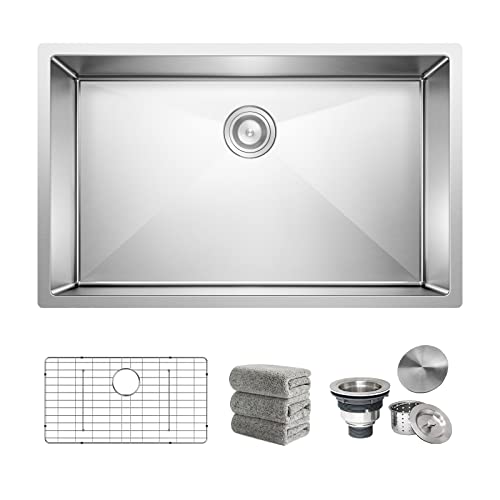
- Oxwiser 30 x 18-Inch 16-Gauge Stainless Steel Undermount Sink Set — Check on Amazon
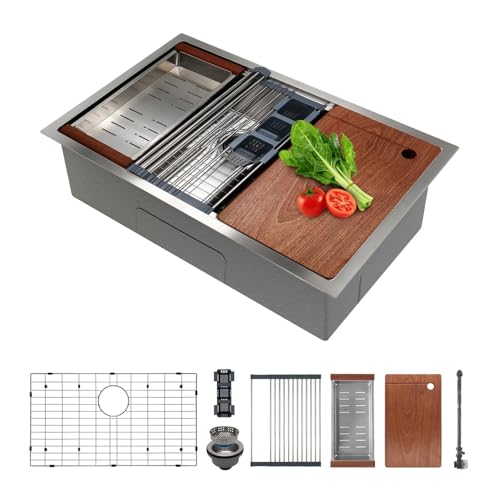
- Delironexu 30 x 18 x 9-Inch 18-Gauge Stainless Steel Undermount Sink — Check on Amazon
- Oxwiser 32 x 18-Inch 16-Gauge Stainless Steel Undermount Sink Set — Check on Amazon
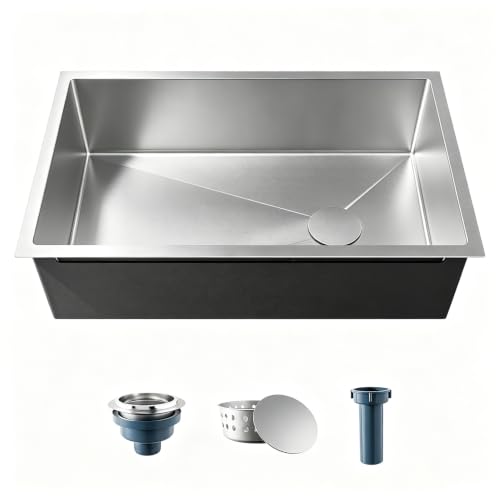
- Kraus KHU640-33 33-Inch 18-Gauge Stainless Steel Undermount Sink — Check on Amazon
- Miuara 30 x 18-Inch White Fireclay Farmhouse Sink — covered below as a prose-only pick (no link; see the review for why)
Read the full guide ↓
A search for the best undermount is really a search for the right undermount sink, and this guide treats it that way: five verified stainless steel undermount sinks, compared on the things the format makes important, plus one farmhouse alternative covered prose-only for readers whose taste is drifting that way. The undermount’s promise is a counter that sweeps clean straight into the bowl; its demands are a suitable counter, real support, and a seal you maintain.
The five linked picks divide by completeness and size. Two Oxwiser sets arrive with grid and drain in the box at 30 and 32 inches; two Kraus bowls bring true 16-gauge and 18-gauge specifications at 32 and 33 inches; and a handmade Delironexu covers the lighter, simpler route at 30 inches. Between them they cover the standard cabinet, the wide-bowl upgrade, and the value end of the format.
One boundary is worth stating at the start. An undermount is a system decision: counter material, mounting hardware and faucet placement are all part of it, and the guide’s buying sections treat them that way. Readers whose counters turn out to be unsuitable are not stuck; the alternatives surveyed at Best Undermount Composite Kitchen Sinks and Best Undermount Double Bowl Kitchen Sinks cover the neighboring formats honestly.
Key Takeaways
- Five linked picks, all stainless undermounts; the fireclay farmhouse pick is prose-only because its headline format is not an undermount.
- Undermount buying is system buying: counter material, support hardware and faucet placement are part of the product.
- Bundles (grid and drain in the box) are the quiet value story at 30 and 32 inches.
- True-gauge Kraus bowls at 32 and 33 inches cover the specified and the widest ends of the pool.
- The seam is the format’s one maintenance ritual; the sweep-clean counter is its daily reward.
- Measure the cabinet interior first; every pick here lives or dies on that number.
In this guide
Quick Picks
Five linked picks and one prose-only farmhouse alternative. Link counts follow the house pattern: 23 dp links total for the five linked picks.
| Pick | Badge | Best for | Link |
|---|---|---|---|
| Kraus KHU100-32 32-Inch 16-Gauge Stainless Steel Undermount Sink | Best Overall Undermount | The full undermount specification at 32 inches | Linked pick — see Where to Buy |
| Oxwiser 30 x 18-Inch 16-Gauge Stainless Steel Undermount Sink Set | Best Complete Set at 30 Inches | One-box remodels at the standard size | Linked pick — see Where to Buy |
| Delironexu 30 x 18 x 9-Inch 18-Gauge Stainless Steel Undermount Sink | Best Handmade Value Route | Handmade format at the lighter gauge | Linked pick — see Where to Buy |
| Oxwiser 32 x 18-Inch 16-Gauge Stainless Steel Undermount Sink Set | Best Complete Set at 32 Inches | Big-pan households wanting the bundle | Linked pick — see Where to Buy |
| Kraus KHU640-33 33-Inch 18-Gauge Stainless Steel Undermount Sink | Widest Bowl in the Pool | Maximum width with managed sound | Linked pick — see Where to Buy |
| Miuara 30 x 18-Inch White Fireclay Farmhouse Sink | Farmhouse Alternative (Prose-Only) | Readers drifting toward a farmhouse kitchen | Prose-only pick |
How These Picks Were Chosen
Selection required two things of every linked pick: a genuine undermount format stated in its listing, and specifications complete enough to compare. Five steel sinks qualified across three makers and three sizes. The sixth pool product, a fireclay farmhouse sink whose listing mentions undermount only as an alternative fit, did not meet the format core and is covered prose-only, with the reason stated in its review rather than hidden.
This is a research-led guide, not a hands-on test report. We quote dimensions, gauges and included parts only where listings state them, and we flag the places where a listing is thin, because undermount ownership is decided by exactly those unglamorous lines: what supports the bowl, what seals it, and what arrives in the box.
The pattern the research kept repeating is that undermount buyers are really buying an installation. The best-specified bowl on weak support becomes a leaking seam; a mid-pool bowl on proper rails with a maintained seal serves for decades. That is why the how-to layer of this guide is weighted toward support and sealing, and why the double-bowl question, for readers still deciding, is worth the detour at Best Undermount Double Bowl Kitchen Sinks.
Best undermount: The Six Detailed Reviews

Kraus KHU100-32 32-Inch 16-Gauge Stainless Steel Undermount Sink
Badge: Best Overall Undermount
Strengths
- The 32-inch version of the KHU100 formula: true 16-gauge steel, pads, grooves, rounded corners
- Extra width over the 30 lays sheet pans flatter and eases big-pot washing
- NoiseDefend pads keep a big steel bowl from sounding like one
Trade-offs
- Needs a cabinet that genuinely fits a 32-inch undermount
- Grid and accessories are separate decisions; check the box contents
- Single bowl: no divided soak-and-rinse workflow
Key specs from the listing: 32 inches, undermount; 16-gauge TRU16 steel per the listing; Model KHU100-32; Rounded corners per the listing; Channel grooves for draining per the listing; NoiseDefend pads per the listing.
The KHU100-32 leads because it is the complete undermount statement in this pool: 32 inches of true 16-gauge TRU16 steel, rounded corners, drainage grooves and NoiseDefend pads, from the maker whose listings specify an undermount most fully. If the keyword brought you here for the format itself, this is the format done thoroughly. The undermount’s defining pleasure is the counter itself: with no rim on top, crumbs and water sweep straight from the work surface into the bowl, and the counter line runs unbroken to the edge of the sink. That daily convenience is why undermounts dominate modern remodels, and it comes with a structural price: the sink hangs from the underside of the counter, so the counter material, the mounting hardware and the sealant joint all become part of the product you are really buying.
Support is the second homework, and it is unglamorous. A steel undermount full of water and dishes is a real load hanging under a counter. Clips, rails or a support frame, per the maker’s instructions and your counter fabricator’s practice, are what keep the rim sealed and the bowl level for decades. This is the step DIY installers most often improvise, and the one worth slowing down for, because a sagging undermount announces itself as a failed seal and a wet cabinet.
Faucet planning belongs in an undermount decision too. With no deck on the sink itself, the faucet mounts in the counter or the wall, which means hole drilling is a counter decision made once. Decide the faucet, and any dispenser or filter tap, before the counter is fabricated, and leave working room behind the bowl for the faucet’s handles and the installer’s hands. The sink is the visible half of a system whose other half is drilled stone. In daily use, the details that decide whether a sink earns its place are unglamorous: how completely it drains, how its corners clean, and whether its size still makes sense on a tired weeknight rather than a showroom afternoon. The Kraus KHU100-32 32-Inch 16-Gauge Stainless Steel Undermount Sink handles that everyday test in line with what its listing promises, and nothing in its specification suggests a hidden catch for the jobs described in this guide.
The honest limitation to weigh is in the trade-offs above. No single sink wins on size, material and included parts at once, and this model leans toward its format’s strengths rather than covering every kitchen equally well. Buyers whose kitchens match that lean will feel the trade as a benefit; buyers on the other side of it should weigh the alternatives in this list first.
Ownership of a kitchen sink is mostly a story about water behavior. A bowl that drains fully, through grooves that lead to the drain, dries faster, smells fresher and needs less scrubbing than a bowl that puddles in its corners. Watch the first week’s drainage the way you would test a new pan’s heat, and set your expectations by what the bowl actually does, because drainage is the daily experience everything else decorates.
Best for: The full undermount specification at 32 inches / Not suited for: Cabinets too small for a 32-inch bowl

Oxwiser 30 x 18-Inch 16-Gauge Stainless Steel Undermount Sink Set
Badge: Best Complete Set at 30 Inches
Strengths
- The bundle is the story: bottom grid and drain assembly are in the box, not a second order
- 16-gauge steel at the most popular 30-inch size
- A bottom grid protects the bowl floor and lifts dishes out of standing water
Trade-offs
- Bundle value depends on using the extras; a grid you never use is storage, not a feature
- Confirm the grid size matches the bowl if you ever replace it
- Single bowl, so washing and prep share one space
Key specs from the listing: 30 x 18 inches, undermount, single bowl; 16 gauge stainless steel; 5-item bundle per the listing: sink, bottom grid, drain assembly, drain cap, towel.
The Oxwiser 30-inch set is the undermount as a complete purchase: 16-gauge steel with the bottom grid, drain assembly, cap and towel in the box. For a remodel already juggling trades and deliveries, a sink that arrives whole is a genuine feature, and its standard 30-inch size fits the standard cabinet. Counter compatibility is the first homework. Stone, quartz and solid-surface tops are the natural partners for an undermount; laminate tops with exposed substrate at the cutout are the risky ones, because water at the seam attacks the core. If your counter is laminate, read the sink and counter guidance together before ordering, and treat the seal at the rim as a maintenance item you will inspect, not a one-time event you will forget.
Bowl geometry matters more in an undermount because you will see the whole interior every day. Drainage grooves that lead water to the drain, corners you can actually wipe, and a floor flat enough for a grid are the working details. A beautiful bowl that puddles is a daily annoyance in a format chosen for cleanliness, so the reviews below pay as much attention to grooves, corners and included grids as to headline dimensions.
Cleaning an undermount has one extra ritual: the seam. The joint where bowl meets counter underside collects what gravity delivers, and a periodic wipe and an occasional look at the sealant keep it fresh. In exchange, the top of the counter, the surface you touch a hundred times a day, stays effortless. Owners consistently judge that trade worth it, which is why the format keeps winning remodels, and why this guide treats seam care as routine rather than as a warning. In daily use, the details that decide whether a sink earns its place are unglamorous: how completely it drains, how its corners clean, and whether its size still makes sense on a tired weeknight rather than a showroom afternoon. The Oxwiser 30 x 18-Inch 16-Gauge Stainless Steel Undermount Sink Set handles that everyday test in line with what its listing promises, and nothing in its specification suggests a hidden catch for the jobs described in this guide.
The honest limitation to weigh is in the trade-offs above. No single sink wins on size, material and included parts at once, and this model leans toward its format’s strengths rather than covering every kitchen equally well. Buyers whose kitchens match that lean will feel the trade as a benefit; buyers on the other side of it should weigh the alternatives in this list first.
The grid question resolves itself within a month. Households that use the bottom grid stop thinking about it, which is the point: dishes sit above the wet floor, glasses stop chipping against steel, and the bowl’s finish stays unmarked. Households that remove it for a big soak and never replace it have voted with their hands. Either outcome is fine; what matters is that the choice was available, which is why included grids feature so prominently in the reviews above.
Best for: One-box remodels at the standard size / Not suited for: Buyers who prefer to spec grid and drain separately

Delironexu 30 x 18 x 9-Inch 18-Gauge Stainless Steel Undermount Sink
Badge: Best Handmade Value Route
Strengths
- Honest parts list: the listing states plainly that the drain kit is included and additional accessories are not
- Handmade format with a full 9-inch depth for soaking and stacking
- 18-gauge steel keeps the unit lighter to handle during a one-person install
Trade-offs
- 18 gauge is the lighter mainstream tier; expect more flex and noise than 16 gauge without good padding
- No grid or accessories in the box; budget them separately if you want them
- A newer brand with thinner long-term documentation
Key specs from the listing: 30 x 18 x 9 inches, undermount, single bowl; 18 gauge stainless steel; Handmade design per the listing; Brushed finish; Drain kit included; listing states no additional accessories.
The Delironexu is the handmade, lighter-gauge route into the format: 18-gauge steel, 30 by 18 by 9 inches, brushed, with its drain kit included and its lack of further accessories stated openly. It suits buyers who want the undermount look and sweep-clean edge at the lighter tier, eyes open about the steel. Support is the second homework, and it is unglamorous. A steel undermount full of water and dishes is a real load hanging under a counter. Clips, rails or a support frame, per the maker’s instructions and your counter fabricator’s practice, are what keep the rim sealed and the bowl level for decades. This is the step DIY installers most often improvise, and the one worth slowing down for, because a sagging undermount announces itself as a failed seal and a wet cabinet.
Faucet planning belongs in an undermount decision too. With no deck on the sink itself, the faucet mounts in the counter or the wall, which means hole drilling is a counter decision made once. Decide the faucet, and any dispenser or filter tap, before the counter is fabricated, and leave working room behind the bowl for the faucet’s handles and the installer’s hands. The sink is the visible half of a system whose other half is drilled stone.
The undermount’s defining pleasure is the counter itself: with no rim on top, crumbs and water sweep straight from the work surface into the bowl, and the counter line runs unbroken to the edge of the sink. That daily convenience is why undermounts dominate modern remodels, and it comes with a structural price: the sink hangs from the underside of the counter, so the counter material, the mounting hardware and the sealant joint all become part of the product you are really buying. In daily use, the details that decide whether a sink earns its place are unglamorous: how completely it drains, how its corners clean, and whether its size still makes sense on a tired weeknight rather than a showroom afternoon. The Delironexu 30 x 18 x 9-Inch 18-Gauge Stainless Steel Undermount Sink handles that everyday test in line with what its listing promises, and nothing in its specification suggests a hidden catch for the jobs described in this guide.
The honest limitation to weigh is in the trade-offs above. No single sink wins on size, material and included parts at once, and this model leans toward its format’s strengths rather than covering every kitchen equally well. Buyers whose kitchens match that lean will feel the trade as a benefit; buyers on the other side of it should weigh the alternatives in this list first.
Cleaning steel is a technique, not a product. Wipe with the grain of the brush, rinse detergent away fully, and dry the bowl when you remember, especially in hard-water homes where mineral spots are the main cosmetic enemy. A paste of baking soda handles the dull film that builds over months. Abrasive powders and steel wool are the two shortcuts that permanently cost a steel sink its finish, at any gauge and any price tier.
Best for: Handmade format at the lighter gauge / Not suited for: Dent-averse heavy users

Oxwiser 32 x 18-Inch 16-Gauge Stainless Steel Undermount Sink Set
Badge: Best Complete Set at 32 Inches
Strengths
- 32 inches of 16-gauge bowl: room for sheet pans laid flat, with the grid and drain in the box
- The included bottom grid protects the finish from day one
- A single wide bowl suits batch cooking and big-wash households
Trade-offs
- A 32-inch sink needs a cabinet that fits it; measure the interior, not the label on the door
- Single bowl means no separate soak side
- The bundle towel and cap are minor extras; the grid and drain carry the value
Key specs from the listing: 32 x 18 inches, undermount, single bowl; 16 gauge stainless steel; 5-item bundle per the listing: sink, bottom grid, drain assembly, drain cap, towel.
The Oxwiser 32-inch set scales the bundle formula: same 16-gauge steel and five-item completeness, across a wider bowl. It is the pick for big-pan households who liked the 30-inch set’s logic and simply need the sink to swallow more. Bowl geometry matters more in an undermount because you will see the whole interior every day. Drainage grooves that lead water to the drain, corners you can actually wipe, and a floor flat enough for a grid are the working details. A beautiful bowl that puddles is a daily annoyance in a format chosen for cleanliness, so the reviews below pay as much attention to grooves, corners and included grids as to headline dimensions.
Cleaning an undermount has one extra ritual: the seam. The joint where bowl meets counter underside collects what gravity delivers, and a periodic wipe and an occasional look at the sealant keep it fresh. In exchange, the top of the counter, the surface you touch a hundred times a day, stays effortless. Owners consistently judge that trade worth it, which is why the format keeps winning remodels, and why this guide treats seam care as routine rather than as a warning.
Counter compatibility is the first homework. Stone, quartz and solid-surface tops are the natural partners for an undermount; laminate tops with exposed substrate at the cutout are the risky ones, because water at the seam attacks the core. If your counter is laminate, read the sink and counter guidance together before ordering, and treat the seal at the rim as a maintenance item you will inspect, not a one-time event you will forget. In daily use, the details that decide whether a sink earns its place are unglamorous: how completely it drains, how its corners clean, and whether its size still makes sense on a tired weeknight rather than a showroom afternoon. The Oxwiser 32 x 18-Inch 16-Gauge Stainless Steel Undermount Sink Set handles that everyday test in line with what its listing promises, and nothing in its specification suggests a hidden catch for the jobs described in this guide.
The honest limitation to weigh is in the trade-offs above. No single sink wins on size, material and included parts at once, and this model leans toward its format’s strengths rather than covering every kitchen equally well. Buyers whose kitchens match that lean will feel the trade as a benefit; buyers on the other side of it should weigh the alternatives in this list first.
The undermount seam and the drain are the two inspection points worth a calendar habit. Run a finger along the seam each season and look for gaps or soft sealant; check under the sink for the slow drip that announces itself on the cabinet floor rather than at the tap. Both checks take a minute, and both catch the only failures that can actually damage a kitchen, which is a fair trade for a fixture expected to serve for decades.
Best for: Big-pan households wanting the bundle / Not suited for: Small cabinets

Kraus KHU640-33 33-Inch 18-Gauge Stainless Steel Undermount Sink
Badge: Widest Bowl in the Pool
Strengths
- The widest bowl in this pool at 33 inches, from an established maker
- NoiseDefend pads compensate for the livelier sound of 18-gauge steel
- Rounded corners and drainage grooves keep the big bowl easy to live with
Trade-offs
- 18 gauge is the lighter tier; the pads help noise, not dent resistance
- 33 inches is a large-sink commitment; verify cabinet and counter cutout carefully
- Single bowl, so all tasks share the space
Key specs from the listing: 33 inches, undermount; 18-gauge stainless steel per the listing; Model KHU640-33; Rounded corners resist buildup per the listing; Channel grooves for draining per the listing; NoiseDefend pads per the listing.
The KHU640-33 is the format at its widest here: 33 inches, 18-gauge steel, with Kraus’s rounded corners, channel grooves and NoiseDefend pads managing the big bowl’s manners. Width is its argument; the pads are how it answers the lighter gauge’s noise. Faucet planning belongs in an undermount decision too. With no deck on the sink itself, the faucet mounts in the counter or the wall, which means hole drilling is a counter decision made once. Decide the faucet, and any dispenser or filter tap, before the counter is fabricated, and leave working room behind the bowl for the faucet’s handles and the installer’s hands. The sink is the visible half of a system whose other half is drilled stone.
The undermount’s defining pleasure is the counter itself: with no rim on top, crumbs and water sweep straight from the work surface into the bowl, and the counter line runs unbroken to the edge of the sink. That daily convenience is why undermounts dominate modern remodels, and it comes with a structural price: the sink hangs from the underside of the counter, so the counter material, the mounting hardware and the sealant joint all become part of the product you are really buying.
Support is the second homework, and it is unglamorous. A steel undermount full of water and dishes is a real load hanging under a counter. Clips, rails or a support frame, per the maker’s instructions and your counter fabricator’s practice, are what keep the rim sealed and the bowl level for decades. This is the step DIY installers most often improvise, and the one worth slowing down for, because a sagging undermount announces itself as a failed seal and a wet cabinet. In daily use, the details that decide whether a sink earns its place are unglamorous: how completely it drains, how its corners clean, and whether its size still makes sense on a tired weeknight rather than a showroom afternoon. The Kraus KHU640-33 33-Inch 18-Gauge Stainless Steel Undermount Sink handles that everyday test in line with what its listing promises, and nothing in its specification suggests a hidden catch for the jobs described in this guide.
The honest limitation to weigh is in the trade-offs above. No single sink wins on size, material and included parts at once, and this model leans toward its format’s strengths rather than covering every kitchen equally well. Buyers whose kitchens match that lean will feel the trade as a benefit; buyers on the other side of it should weigh the alternatives in this list first.
Think about the second faucet, not the first. Sinks outlive faucets, disposals and even countertops’ fashion cycles, so the sink decision should be the conservative one in any remodel: standard sizes, honest materials, a format your next faucet can still serve. The picks in this guide were weighted with that horizon in mind, because the cheapest sink is the one bought once.
Best for: Maximum width with managed sound / Not suited for: Buyers who want 16-gauge steel
Miuara 30 x 18-Inch White Fireclay Farmhouse Sink
Badge: Farmhouse Alternative (Prose-Only)
Prose-only pick: this pick’s headline format is an apron-front farmhouse sink in fireclay, not an undermount sink: the undermount option appears only as a parenthetical alternative in its listing, and its material and mount both sit outside this keyword’s core. It is covered in full as a prose-only alternative for readers who prefer the farmhouse direction, with no Amazon link and no image.
Strengths
- Fireclay gives a glossy white farmhouse front no steel sink can imitate
- Reversible front lets you choose the apron profile at install time
- Fireclay is dense and quiet by nature; no drumming, no pads needed
Trade-offs
- Fireclay is heavy; the cabinet needs real support planning
- An apron-front farmhouse format is a style and cabinet commitment, not a drop-in swap
- White fireclay shows its care routine: it rewards gentle cleaning over abrasives
Key specs from the listing: 30 x 18 inches, single bowl; Fireclay construction; Apron front farmhouse format; listing also names drop-in (undermount) installation; Reversible front per the listing; Listing states resistance to stain, crack, heat and scratch.
The Miuara is this guide’s honest detour. Its headline format is an apron-front farmhouse sink in white fireclay, and although its listing mentions a drop-in or undermount alternative, its heart is the farmhouse front. It is covered prose-only, without a link, for readers whose undermount research has quietly become a farmhouse daydream; everyone else should take the five linked steel picks as the true answer to the keyword. Cleaning an undermount has one extra ritual: the seam. The joint where bowl meets counter underside collects what gravity delivers, and a periodic wipe and an occasional look at the sealant keep it fresh. In exchange, the top of the counter, the surface you touch a hundred times a day, stays effortless. Owners consistently judge that trade worth it, which is why the format keeps winning remodels, and why this guide treats seam care as routine rather than as a warning.
Counter compatibility is the first homework. Stone, quartz and solid-surface tops are the natural partners for an undermount; laminate tops with exposed substrate at the cutout are the risky ones, because water at the seam attacks the core. If your counter is laminate, read the sink and counter guidance together before ordering, and treat the seal at the rim as a maintenance item you will inspect, not a one-time event you will forget.
Bowl geometry matters more in an undermount because you will see the whole interior every day. Drainage grooves that lead water to the drain, corners you can actually wipe, and a floor flat enough for a grid are the working details. A beautiful bowl that puddles is a daily annoyance in a format chosen for cleanliness, so the reviews below pay as much attention to grooves, corners and included grids as to headline dimensions. In daily use, the details that decide whether a sink earns its place are unglamorous: how completely it drains, how its corners clean, and whether its size still makes sense on a tired weeknight rather than a showroom afternoon. The Miuara 30 x 18-Inch White Fireclay Farmhouse Sink handles that everyday test in line with what its listing promises, and nothing in its specification suggests a hidden catch for the jobs described in this guide.
The honest limitation to weigh is in the trade-offs above. No single sink wins on size, material and included parts at once, and this model leans toward its format’s strengths rather than covering every kitchen equally well. Buyers whose kitchens match that lean will feel the trade as a benefit; buyers on the other side of it should weigh the alternatives in this list first.
Finally, judge the sink after the hundredth ordinary day, not the first impressive one. The questions that matter by then are small and total: does the bowl drain, does the finish forgive, does the size fit the pans you actually own, and does the sound of the place feel calm at the evening wash-up. A sink that passes those four has earned its place under the counter.
Best for: Readers drifting toward a farmhouse kitchen / Not suited for: Anyone committed to a true undermount steel sink
Comparison Table
| Pick | Badge | Key attribute | Format | Link |
|---|---|---|---|---|
| Kraus KHU100-32 32-Inch 16-Gauge Stainless Steel Undermount Sink | Best Overall Undermount | 32 inches, undermount | Undermount, 16 gauge, 32 in | Check on Amazon |
| Oxwiser 30 x 18-Inch 16-Gauge Stainless Steel Undermount Sink Set | Best Complete Set at 30 Inches | 30 x 18 inches, undermount, single bowl | Undermount set, 16 gauge, 30 in | Check on Amazon |
| Delironexu 30 x 18 x 9-Inch 18-Gauge Stainless Steel Undermount Sink | Best Handmade Value Route | 30 x 18 x 9 inches, undermount, single bowl | Undermount handmade, 18 gauge, 30 in | Check on Amazon |
| Oxwiser 32 x 18-Inch 16-Gauge Stainless Steel Undermount Sink Set | Best Complete Set at 32 Inches | 32 x 18 inches, undermount, single bowl | Undermount set, 16 gauge, 32 in | Check on Amazon |
| Kraus KHU640-33 33-Inch 18-Gauge Stainless Steel Undermount Sink | Widest Bowl in the Pool | 33 inches, undermount | Undermount, 18 gauge, 33 in | Check on Amazon |
| Miuara 30 x 18-Inch White Fireclay Farmhouse Sink | Farmhouse Alternative (Prose-Only) | 30 x 18 inches, single bowl | Farmhouse apron front, fireclay, 30 in | — |
The format column separates the five true undermounts from the farmhouse alternative at a glance; the key-attribute column carries each pick’s headline specification.
How to Choose Best undermount
Start under the counter. Confirm your counter material can host an undermount and that a fabricator or your own plan provides real support: clips plus rails or a frame, rated for the filled bowl. Laminate counters with vulnerable cutout cores deserve special caution and a serious conversation about sealing, or a different mount entirely.
Size from the cabinet outward. The interior width of the base cabinet sets the maximum bowl; 30 inches is the standard pairing, 32 and 33 inches are upgrades that must be measured, not assumed. Bowl depth then trades against disposal clearance and under-sink storage, and both deserve a tape measure before the order.
Choose the steel specification with the gauge scale the right way round: 16 gauge is the sturdy mainstream, 18 the lighter tier, and pads matter at either. The dedicated gauge discussions at Best Undermount Kitchen Sinks 16 Gauge and Best Undermount Kitchen Sinks 18 Gauge go deeper for readers who want the full comparison before choosing between the Kraus and handmade ends of this pool.
Finally, plan the faucet before fabrication. An undermount has no deck, so faucet and accessory holes are drilled in the counter once. Decide the faucet, any dispenser and any filter tap as one drawing, leave working room behind the bowl, and the install becomes assembly rather than improvisation.
How to Install and Care for a Stainless Steel Undermount Sink
An undermount install is a half-day of careful sequencing rather than difficult work, and steel care after it is a set of small habits. The routine below follows the order professionals use.
- Dry-fit first: set the sink under the cutout, confirm the reveal you want (a small positive reveal, flush, or a slight negative reveal that hides the rim), and mark clip positions before any sealant appears.
- Confirm support: clips, rails or a frame per the maker’s instructions and your fabricator’s practice, sized for the bowl full of water, not the bowl empty.
- Run a continuous bead of the recommended sealant at the rim, lift the sink into place with help, and fix the hardware evenly, working around the rim rather than tightening one side fully first.
- Wipe the squeezed-out sealant immediately, then leave the joint undisturbed for the full curing time on the tube; this patience is the difference between a decade-long seal and a seasonal one.
- Connect drain, disposal and supply lines, fill the bowl completely, and inspect every joint from below with a dry hand before the cabinet goes back into service.
- For weekly care: rinse after use, wipe with the grain using a soft cloth and mild detergent, and dry the bowl in hard-water homes; monthly, lift the grid and clean beneath it.
Problem: Water weeps at the rim and the cabinet floor is damp → what to do: the sealant joint has failed or the sink has sagged on its hardware; dry the area fully, check clip tension and support, and reseal the rim rather than painting over the symptom.
Problem: The bowl sounds tinny and drums under the faucet → what to do: thin or unpadded steel is vibrating; adhesive sound pads on the underside, applied to a clean dry bowl, are the standard retrofit, and a bottom grid damps more than expected.
Problem: A dull grey film and water spots keep returning → what to do: mineral deposits from hard water, not damage; a baking-soda paste wiped with the grain restores the brush, and a quick dry after the last wash of the day prevents most of it.
Reveal Choices: The Small Decision That Dates a Kitchen
An undermount can be installed with a positive reveal, where a sliver of the sink’s rim ledge shows inside the cutout; a flush reveal, where counter edge and bowl wall align; or a negative reveal, where the counter overhangs slightly and hides the rim. Each is legitimate, and each ages differently: positive reveals show a ledge that collects crumbs, negative reveals hide the seam but can chip-prone the counter edge, and flush is the unforgiving middle that demands a precise cut.
Choose with your fabricator, with your cleaning habits in the room. Households that wipe the seam weekly can enjoy any reveal; households that will not should favor the negative reveal’s hidden joint and accept its demand for a sound, well-finished counter edge. It is a five-minute conversation that shapes a decade of wash-ups.
When the Answer Is Not an Undermount
Honesty requires a section for the kitchens this format does not fit: laminate counters with vulnerable cores, rental kitchens where fabrication is not yours to authorize, and cabinets too small or too obstructed to support a hanging bowl. For those kitchens the drop-in and top-mount families are not a defeat; they are the correct engineering answer, and the fireclay pick reviewed above shows how much character the alternatives can carry.
The Miuara’s presence in this guide, prose-only and clearly labeled, is deliberate. Research journeys bend: many readers who start by searching undermounts end by choosing a farmhouse front, and a guide serves them better by showing the detour honestly than by pretending the pool contained six undermounts when it contained five. The formica-counter question, a common version of this fork, is covered at Best Undermount Kitchen Sinks Fireclay.
Common Buying Mistakes
- Ordering the sink before confirming the counter can host an undermount.
- Supporting a filled bowl’s weight on clips alone when the plan called for rails.
- Drilling faucet holes before the faucet itself was chosen.
- Skipping the sealant cure time to get the kitchen back a day early.
- Measuring the cabinet door instead of the cabinet interior.
- Ignoring the seam until the first damp cabinet floor announces it.
Final Recommendation
Start with the Kraus KHU100-32 for the most completely specified undermount in this pool, or the Oxwiser set at your size, 30 or 32 inches, if a grid and drain in the box matter more. Take the KHU640-33 for maximum width, the Delironexu for the handmade lighter-gauge route, and consider the prose-only Miuara only if this research has honestly turned into a farmhouse project. Whatever you choose, spend as much care on support and sealing as on the bowl itself.
Shortlist again: Kraus KHU100-32 32-Inch 16-Gauge Stainless Steel Undermount Sink; Oxwiser 30 x 18-Inch 16-Gauge Stainless Steel Undermount Sink Set; Delironexu 30 x 18 x 9-Inch 18-Gauge Stainless Steel Undermount Sink.
Frequently Asked Questions
What is an undermount sink?
A sink installed beneath the countertop, so the counter surface runs unbroken to the bowl’s edge and crumbs sweep straight in. It requires a suitable counter material, mounting hardware or support rails, and a sealed rim joint.
Can any countertop take an undermount sink?
Stone, quartz and solid-surface tops are the natural partners. Laminate tops are the caution case because the cutout exposes the core to water; they demand meticulous sealing or a different mount. Ask your fabricator before ordering the sink.
How is an undermount sink supported?
By mounting clips, rails or a support frame under the counter, sized for the weight of the filled bowl, combined with a continuous sealant bead at the rim. The maker’s instructions and the fabricator’s practice govern the exact hardware.
Where does the faucet go with an undermount sink?
In the countertop behind the bowl, or in the wall, since the sink has no faucet deck. The holes are a fabrication decision, so the faucet and any accessories should be chosen before the counter is cut.
How do I maintain the undermount seam?
Wipe the joint as part of regular cleaning and inspect the sealant seasonally for gaps or softness. Resealing a tired joint is a small job; ignoring it until the cabinet floor is damp is the expensive version.
Is a farmhouse sink an undermount?
Not in its headline form: a farmhouse or apron-front sink replaces part of the cabinet front and shows its front panel. Some models, including the prose-only pick in this guide, list alternative installations, but the format’s identity is the apron front.