Disclosure: topratedkitchenware.com is reader-supported. When you buy through links on our site, we may earn an affiliate commission from Amazon and other retailers, at no extra cost to you.
Where to buy
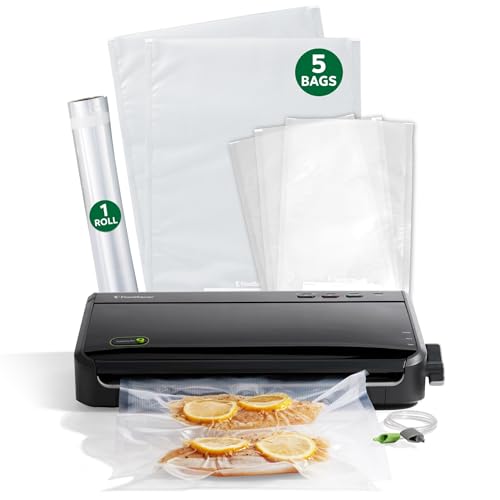
All six of the best vacuum sealers for clothes below are sold through Amazon, where the listing confirms what is in the box — for clothing storage, the accessory hose is the detail to check first. Our top recommendation is the FoodSaver FM2100 Vacuum Sealer Machine with Accessory Port and Hose — Check on Amazon — with the full shortlist here:
- FoodSaver V4400 2-in-1 Vacuum Sealer Machine
- FoodSaver Compact Vacuum Sealer Machine, White
- FoodSaver PowerVac Compact VS0150, Vertical Storage
- ROUUO Vacuum Sealer, 95kpa with Pulse Mode and Drip Tray
- Bonsenkitchen Vacuum Sealer Machine, Silver
Read the full guide ↓ for the two bag systems explained — valve bags and direct heat-sealed bags work differently, and which one you plan to use decides which machine belongs in your home. Bring a tape measure and an honest look at your bulkiest bedding; those two data points settle most of the decision before the first review is even read.
The best vacuum sealers for clothes solve a storage problem, not a food problem: a winter wardrobe, a set of guest duvets, a child’s outgrown clothes awaiting a sibling, all of it bulky, all of it mostly air. Vacuum storage removes that air and compresses soft goods to a fraction of their loft, while the sealed barrier shuts out the dust, damp, and moths that ruin textiles in attics and closets. The best vacuum sealers for clothes are kitchen machines moonlighting — standard external sealers whose vacuum can be put to work on clothing in two distinct ways. The first uses vacuum storage bags with a one-way valve: you pack the bag, and a hose or handheld unit on the valve draws the air out. The second skips the valve entirely: folded clothes go into a large bag, and the sealer vacuums and heat-seals it exactly as it would a side of salmon. Both methods work; they suit different wardrobes, and this guide ranks six verified machines by how well each serves both.
One clarification before the rankings: clothing compression is gentler work than it looks. Natural fibers spring back from months of compression when aired; most synthetics and down alternatives do as well, with a shake and a little time. Delicate structures — a tailored blazer’s shoulders, a leather garment, a wedding dress with boning — should never be compressed at all, and this guide will say where the line falls. The households that benefit most are the ones with seasonal rotation, small closets, stored bedding, or travel needs — the same households, often, that already seal food and want one machine earning its keep twice. If your interest is the reverse crossover, Best Vacuum Sealers For Home Use covers the food-first case for the same class of machines.
Key Takeaways
- Two methods exist: valve-type vacuum storage bags (evacuated by hose or handheld unit) and direct sealing, where clothes are vacuumed and heat-sealed in a large bag like food.
- The FoodSaver FM2100 is our top pick for clothes: its accessory port and hose are included, so valve bags work from day one, and its roll storage cuts oversized bags to size.
- The V4400’s integrated handheld function is the other natural valve-bag tool — no hose juggling, just place and draw.
- Strong vacuum matters for bulky bedding: the ROUUO’s stated 95kpa pull compresses duvets and winter coats hardest.
- Never compress structured or delicate garments — tailored shoulders, leather, and boned dresses store flat and uncompressed, always.
- Leave a little air in long-term storage bags for natural fibers: near-full compression for space, not a hard vacuum that holds fibers crushed for a year.
- The wash-dry-fold-label sequence is the whole craft: every failure story in clothing storage — mildew, mystery bags, set stains — traces to one skipped step in those four.
In this guide
Quick Picks
| Pick | Badge | Standout detail from the listing | Link |
|---|---|---|---|
| FoodSaver FM2100 | Best Overall for Clothes | Accessory port and hose included; roll storage and cutter for oversized custom bags; dry and moist modes | Check on Amazon |
| FoodSaver V4400 2-in-1 | Best for Valve Bags | Integrated handheld function for valve and zipper bags; automatic bag detection; starter kit | Check on Amazon |
| FoodSaver Compact | Best for Apartments | Compact white body; bags and roll included for direct-sealing clothes | Check on Amazon |
| FoodSaver PowerVac VS0150 | Best Storage-Friendly | Vertical storage design; dry and wet food modes; reduced bag waste design | Check on Amazon |
| ROUUO Vacuum Sealer 95kpa | Best for Bulky Bedding | 95kpa stated vacuum, 230W, built-in bag storage and cutter for the largest custom bags | Check on Amazon |
| Bonsenkitchen Vacuum Sealer | Best Value | Multiple modes, external vacuum system, compact silver body, 5 bags included | Check on Amazon |
How These Picks Were Chosen
This is a research-led guide, and for this keyword the research had to answer a compatibility question first: how, mechanically, does each machine move air out of a clothing bag? We verified every pick against its current listing data. The FM2100 states an accessory port and hose — the valve-bag route, confirmed. The V4400 states a 2-in-1 design with an integrated handheld function — the valve-bag route by its second half, confirmed. The remaining four are external countertop sealers, and their route is the direct one: any external sealer can vacuum and heat-seal a large bag containing folded clothes, because the machine neither knows nor cares whether the bag holds sweaters or salmon. We rank them for that job on vacuum strength, bag-size handling (roll storage and cutters matter when bags must fit duvets), and footprint.
We also considered, and set aside, the household-vacuum method many storage-bag brands advertise — holding a vacuum cleaner hose to the valve. It works in a pinch, and it is worth knowing in a move or a rental, but it is imprecise, two-handed in the worst way, and rough on both the valve and the cleaner’s motor over a full wardrobe. A sealer’s controlled draw exists precisely to replace that improvisation, and households doing this twice a year for years will feel the difference in their wrists and their valves alike.
What we did not do is claim hose compatibility where no hose or port is stated. If your wardrobe plan centers on the valve-bag systems sold for closets — the kind with a round valve cap — the honest shortlist is the FM2100 and the V4400, and the rest of this guide says so at every relevant point. If your plan is direct sealing, or a mix, all six are in play. Seasonal households will recognize the same machines from the food side of the closet; hunters, whose off-season clothing and gear storage mirrors the wardrobe problem, are covered in Best Vacuum Sealers For Hunters.
The 6 Best Vacuum Sealers for Clothes

FoodSaver FM2100 Vacuum Sealer Machine
Badge: Best Overall for Clothes
Strengths
- Accessory port and hose included — the valve-bag method works out of the box, no separate purchase, no compatibility guessing.
- Roll storage and cutter cut direct-seal bags to duvet and coat sizes that pre-cut bags cannot match.
- A proven one-touch food machine the rest of the year, so the purchase is never single-purpose.
Trade-offs
- Full countertop footprint for a job some households do twice a year.
- Valve-bag work via hose is a two-handed, slightly slower process than a dedicated handheld unit.
- No pulse mode for feathering — irrelevant for clothes, noted for food shoppers cross-reading.
Mini spec box
- Type: external countertop vacuum sealer
- Modes: dry and moist food settings, one-touch sealing
- Storage: built-in roll storage with cutter
- Included: accessory port and hose, starter bags and roll
The FM2100 is the only machine in this guide that covers both clothing methods with its stated, included equipment, and that completeness earns it the top spot. On valve bags, the included hose connects the accessory port to the bag’s valve and the machine does the drawing — the standard, reliable way to compress the big closet bags sold everywhere. On direct sealing, the roll storage is the quiet star: clothing bags need to be sized to a folded duvet or a stack of sweaters, and a machine that cuts its own bags to length from a roll turns an awkward wrestling match into a measured process. One-touch operation keeps both methods simple enough that the seasonal wardrobe rotation actually gets done.
Its food credentials — dry and moist modes, a mature design from the category’s benchmark brand — mean the machine earns its counter space in every month, not just the two changeover weekends. The honest limits are size and specialization: it is a full countertop appliance bought, for some households, primarily for a twice-yearly job, and a household certain it will only ever use valve bags might prefer the V4400’s handheld convenience. For everyone else — mixed methods, mixed kitchen-and-closet duty — the FM2100 is the complete answer in one box.
Best for: households using both valve bags and direct sealing, seasonal wardrobe rotation / Not suited for: valve-bag-only users who prize handheld speed
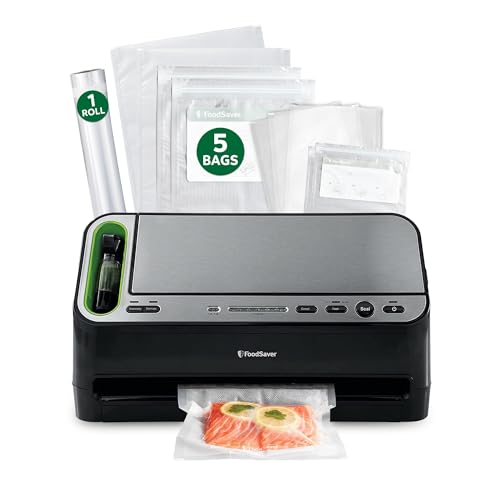
FoodSaver V4400 2-in-1 Vacuum Sealer Machine
Badge: Best for Valve Bags
Strengths
- Integrated handheld function draws valve bags directly — the fastest, least fiddly way to compress closet storage bags.
- Full countertop heat sealer in the same appliance for direct-sealed clothing and all food duty.
- Automatic bag detection keeps the heat-seal side consistent across big seasonal sessions.
Trade-offs
- Premium tier — the dual system costs more than either single method requires.
- Most complex machine in the list to learn and maintain.
- Substantial footprint for small closets-and-kitchens homes.
Mini spec box
- Type: 2-in-1 external sealer with integrated handheld function
- Automation: automatic vacuum sealer bag detection
- Included: starter kit
If your clothing storage is built on valve bags — and most dedicated closet systems are — the V4400’s integrated handheld is the most convenient evacuator in this guide. There is no hose to connect or coil: the handheld unit goes to the valve, draws the bag down, and moves to the next, which across a dozen bags of winter clothes is the difference between a system you use and a system you postpone. When a garment is better direct-sealed — moth protection for woolens is the classic case — the same appliance’s countertop side welds the bag shut, with automatic detection keeping seals consistent through the session.
The premium logic is the familiar one: you are paying for two systems, and the purchase sings only when both are used — weekly food sealing plus seasonal clothing work is the profile that justifies it. Households doing clothing twice a year and food rarely should buy down this list and spend the difference on the storage bags themselves. Households doing both constantly will find the V4400 less an appliance than a household utility, which is precisely what its designers intended.
Best for: valve-bag wardrobes plus weekly food sealing, busy households / Not suited for: occasional users or single-method storage
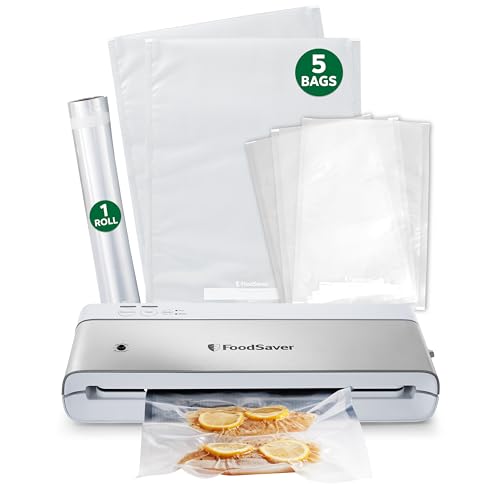
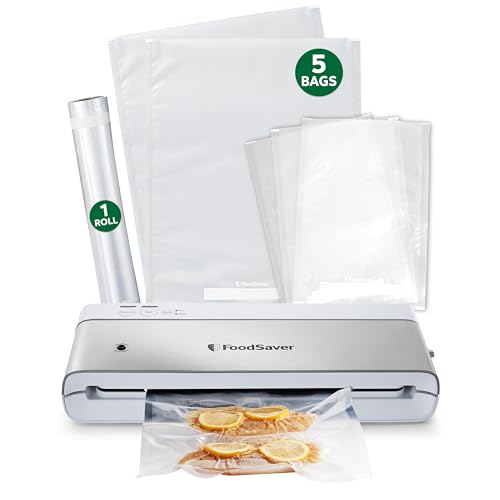
FoodSaver Compact Vacuum Sealer Machine
Badge: Best for Apartments
Strengths
- Compact body for the small-space homes that need clothing compression most.
- Bags and a roll included — direct-seal clothing storage can start immediately, cut to size.
- A genuine welded seal: the moth-and-damp barrier for stored woolens and keepsakes.
Trade-offs
- No hose or port in the listed kit — valve bags are not its route; direct sealing is.
- Compact width means the largest duvets need folding strategy or a valve-bag partner.
- Simpler mode set than the flagship machines.
Mini spec box
- Type: external countertop vacuum sealer, compact format
- Color: white
- Included: airtight bags and roll
- Uses: sous vide and airtight food storage
Apartment logic governs this pick: the homes with the least closet space gain the most from compressing clothes, and they also have the least room for the machine that does it. The FoodSaver Compact resolves the paradox — a real heat-sealing machine in a small body. Its clothing method is direct sealing: sweaters, T-shirts, linens, and kids’ clothes folded into bags cut from the included roll, vacuumed down, and welded shut. For moth-prone woolens and long attic storage, that welded barrier is arguably better than a valve bag, whose valve is a moving part asked to hold for a year.
Be clear about its boundary: with no hose in the listed kit, the round-valve closet bags are not its game, and a household committed to that system should choose the FM2100 or V4400. Within direct sealing, its compact width asks for folding discipline on the bulkiest duvets — fold to the bag’s width, not the duvet’s pride — and its pace suits a wardrobe, not a warehouse. For the apartment dweller rotating a season’s clothes twice a year and sealing food weekly, it is sized exactly right.
Best for: apartments and small homes, direct-seal storage, woolens protection / Not suited for: valve-bag system owners
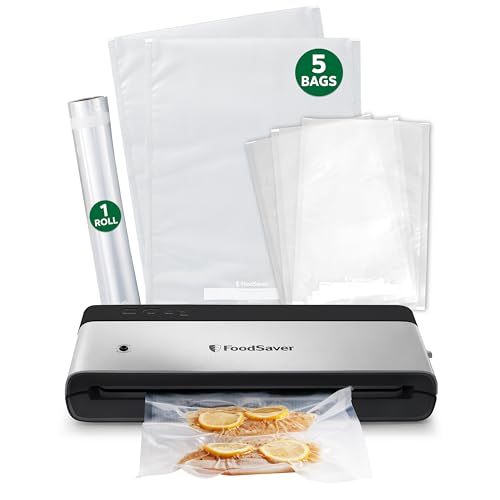
FoodSaver PowerVac Compact Vacuum Sealing Machine VS0150
Badge: Best Storage-Friendly
Strengths
- Vertical storage — the machine itself models the space-saving it provides, standing in a narrow gap.
- Designed to reduce bag waste: right-sized bags for odd clothing shapes, less film spent per garment.
- Dry and wet food coverage keeps it a full kitchen citizen between wardrobe sessions.
Trade-offs
- Direct sealing is its clothing route; no hose is named in the listing.
- Compact class width and pace for the biggest bedding.
- Fewer bundled extras named than the FM2100.
Mini spec box
- Type: external countertop vacuum sealer, compact format
- Storage: vertical / upright storage
- Finish: stainless steel and black
- Food types: dry and wet food
There is a pleasing symmetry to the PowerVac in this role: a machine designed to store vertically, bought to make everything else store smaller. Its clothing work is direct sealing, and its bag-waste-reducing design philosophy suits garments, which arrive in more shapes than any food — a bag cut close to a folded coat spends less film and leaves less slack to fold into the seal. Upright storage means the machine can live in the same tight closet economy it serves, appearing for the seasonal rotation without a furniture rearrangement.
Its boundaries match the Compact’s: no stated hose, so valve bags belong to the top two picks, and compact dimensions ask for folding strategy on king-size bedding. What it adds is the storage geometry and a tidy, visible-counter-friendly finish. For a household whose constraint is space in every dimension — closet, counter, and cupboard at once — the PowerVac is the most self-consistent choice in the guide.
Best for: space-constrained homes doing direct-seal clothing storage / Not suited for: valve-bag users or the bulkiest bedding in one piece

ROUUO Vacuum Sealer 95kpa with Pulse Mode
Badge: Best for Bulky Bedding
Strengths
- Stated 95kpa vacuum and 230W power — the strongest stated pull here, and compression is a pulling contest.
- Built-in bag storage and cutter for the oversized bags duvets and coat stacks require.
- Pulse mode lets you stop at firm compression without holding natural fibers at maximum crush.
Trade-offs
- No hose stated in the listing — its clothing method is direct sealing, not valve bags.
- Power and size exceed what light clothing storage needs.
- Manual pulse control requires the operator’s judgment on compression level.
Mini spec box
- Type: external countertop vacuum sealer
- Vacuum: 95kpa (as stated in listing)
- Power: 230W (as stated in listing)
- Modes: dry/moist, pulse mode
- Features: built-in bag storage and cutter, removable drip tray
- Included: 3 bag rolls and 10 bags
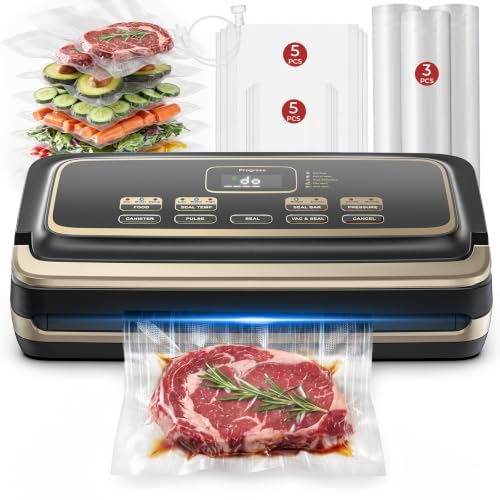
Compression is where stated vacuum strength stops being a food specification and becomes the whole point. A winter duvet is a bag of trapped air wearing a cover; the machine that pulls hardest, pulls it flattest. The ROUUO’s stated 95kpa and 230W make it this guide’s compression champion for direct sealing, and its built-in roll storage and cutter supply the oversized bags the job needs — three rolls included, so the first bedding rotation is already paid for in film. The pulse mode, a delicate-food feature in the kitchen, becomes a fiber-care feature here: draw the bag down firmly, then stop, rather than holding wool and down at the machine’s maximum for the full cycle.
The boundary is the same honesty as the other direct-seal picks: no hose is stated, so valve-bag systems are not its route, and a household invested in those should look to the top two. Nor does its power excuse compressing the incompressible — structure is structure, and the never-compress list later in this guide applies at 95kpa exactly as elsewhere. For bulky, soft, honest compressibles — duvets, blankets, winter coats, sweater stacks — sealed directly in cut-to-size bags, the ROUUO is the strongest tool here. Travelers compressing a suitcase wardrobe will find the same logic, miniaturized, in the food-and-travel crossover of Best Vacuum Sealers For Marinades — different bags, same air, same enemy.
Best for: duvets, blankets, and winter coats direct-sealed at maximum compression / Not suited for: valve-bag systems or delicate structured garments
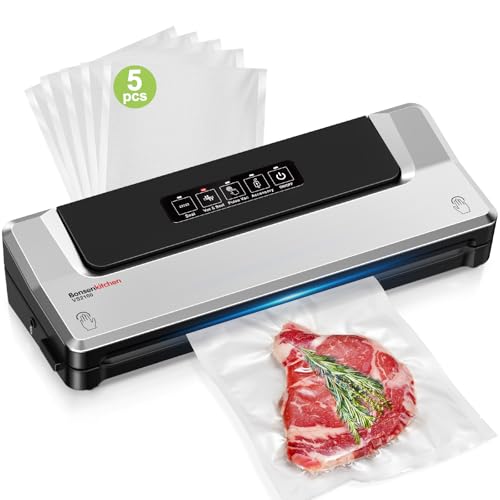
Bonsenkitchen Vacuum Sealer Machine
Badge: Best Value
Strengths
- A real external vacuum system at the value tier — direct-seal clothing storage without flagship money.
- Compact silver body stores easily between seasonal uses.
- Multiple modes cover its food day-job for meal prep and storage.
Trade-offs
- Only 5 bags included — clothing work needs rolls ordered alongside.
- No hose stated; valve bags are not its method.
- Compact width asks for folding strategy on large bedding.
Mini spec box
- Type: external vacuum system, compact countertop
- Modes: multiple modes for meal prep
- Finish: silver
- Included: 5 vacuum bags
- Uses: kitchen food storage and sous-vide
The Bonsenkitchen is the budget door into direct-seal clothing storage. A household that rotates clothes twice a year and seals food modestly does not need the category’s flagships; it needs a competent external vacuum system that welds a bag shut around a stack of sweaters and then goes back in the cupboard. That is this machine’s exact profile — compact, mode-equipped, value-tiered — and its meal-prep food credentials keep it from being a twice-yearly appliance. Order rolls with it, because five included bags will not survive the first wardrobe rotation, and its film appetite is the one place the value math needs help.
Set expectations by the tier: no hose for valve systems, no flagship vacuum figures stated, compact dimensions that ask bulky items to be folded with intent. In exchange, the seasonal job gets done properly — welded seals, real compression, protected textiles — at the lowest commitment in this guide. For renters, students, and first homes building the storage habit, that is not a compromise pick. It is the pick that makes the habit affordable to start. The sous-vide side of its life, for households that also cook that way across the Atlantic, is explored in Best Vacuum Sealers For Europe Sous Vide.
Best for: value buyers, twice-yearly rotation plus modest food sealing / Not suited for: valve-bag owners or maximum-compression bedding work
Comparison Table
| Pick | Clothing method | Key features | Included extras | Link |
|---|---|---|---|---|
| FoodSaver FM2100 | Valve bags (hose) + direct seal | Accessory port & hose, roll storage + cutter | Hose, starter bags & roll | Check on Amazon |
| FoodSaver V4400 | Valve bags (handheld) + direct seal | 2-in-1, automatic bag detection | Starter kit | Check on Amazon |
| FoodSaver Compact | Direct seal | Compact body, welded seals | Bags and roll | Check on Amazon |
| FoodSaver PowerVac VS0150 | Direct seal | Vertical storage, reduced bag waste | — | Check on Amazon |
| ROUUO 95kpa | Direct seal, max compression | 95kpa, 230W, pulse, bag storage + cutter | 3 rolls & 10 bags | Check on Amazon |
| Bonsenkitchen | Direct seal | Multiple modes, compact | 5 bags | Check on Amazon |
How to Choose a Vacuum Sealer for Clothing Storage
Choose your bag system first. Valve bags are reusable, purpose-sized for closets, and need a hose or handheld evacuator — in this guide, the FM2100 or V4400. Direct sealing uses any external sealer and standard film, welds the strongest barrier, and treats each bag as single-use. Households often end with both: valve bags for the big seasonal pieces, direct seals for woolens and keepsakes. Let the dominant system pick the machine.
Size the vacuum to your bulkiest item. T-shirts compress under any machine; a winter duvet is a genuine load. If bedding is the mission, stated vacuum strength and roll-fed oversized bags — the ROUUO’s profile — matter more than any other specification in this guide.
Protect fibers with judgment, not just force. Compress soft goods firmly but not brutally for long storage; pulse control or a stopped-early cycle leaves fibers a little air and a faster recovery. And keep the never-compress list sacred: tailored and structured garments, leather, fur, and anything with boning or delicate embellishment stores flat, hanging, or boxed — never vacuumed.
Think in bag inventory, not machine features. Clothing storage consumes bags in seasonal bursts — a dozen in a weekend, none for months. Before choosing the machine, price the bags your rotation will actually spend in a year under each system: reusable valve bags bought once and cycled for years, versus direct-seal film spent per season. For many households the valve system’s reusable bags quietly repay a more expensive machine, while for woolens-heavy storage the welded seal’s absoluteness is worth its film. The machine decision and the bag decision are one decision; making them separately is how budgets leak.
Count the machine’s second job. A clothes-only sealer is used twice a year; a food-and-clothes sealer is used weekly. Every pick here is a food machine first, which is the economic argument for the whole category crossover — buy the kitchen tool whose spare capacity runs your closet, not a closet tool that idles in the kitchen’s way.
How to Vacuum-Pack Clothes, Step by Step
- Wash and dry everything completely. Sealing traps whatever is in the fabric — moisture invites mildew, and stains set over a season. Clean, bone-dry, or do not seal.
- Sort into compress and never-compress. Sweaters, tees, linens, duvets, and coats in one pile; tailored, structured, leather, and embellished pieces stored conventionally.
- Fold to the bag. Fold each item to just inside the bag’s width, smooth and flat. Folded edges compress evenly; wadded clothes compress into lumps that stress the seal.
- Choose the method per bag. Valve bag: pack, zip fully, place the hose or handheld on the valve, draw down to firm — not violent — compression, cap the valve. Direct seal: place the open end in the sealer, vacuum, and weld, leaving honest headspace above the clothes.
- Inspect and label. Check the weld or the valve cap, then label the bag with contents and season. A compressed bag of anonymous clothes is a riddle you set your future self.
- Store flat, cool, and dark. Stack compressed bags flat so seals are not stressed by point loads, away from heat sources that age both textile and film.
Troubleshooting. Problem: the bag re-inflates over days → the valve cap is not fully closed, the zipper track on a valve bag was not fully run, or a direct seal has a channel; re-draw the bag and inspect the closure line by line. Problem: clothes emerge deeply creased → they were over-compressed or folded wadded; air them, steam lightly, and next season fold smooth and stop the draw earlier. Problem: a musty smell on opening → moisture was sealed in; rewash, dry far longer than feels necessary, and never seal a garment that is even slightly damp.
What Never Goes in a Vacuum Bag
Some garments should meet a vacuum bag never. Tailored jackets and coats owe their shape to structured shoulders and canvassing that compression crushes and time sets; hang them in breathable garment bags instead. Leather and fur need air circulation and natural conditioning; vacuum storage dries and cracks them. Wedding dresses and boned or heavily embellished pieces combine structure, delicacy, and irreplaceability — archival boxes exist for them. Down is the nuanced case: it compresses beautifully for a move or a trip, but months at maximum compression can tire the loft, so long-term down storage deserves a large bag, a partial draw, and a mid-season fluff if the storage runs long. Everything else in a normal wardrobe — the knits, the tees, the linens, the everyday coats — is fair game, and the space it surrenders is the whole point of the exercise.
The Seasonal Rotation Playbook
Twice a year, the wardrobe changes over, and a system turns an afternoon of chaos into an hour of rhythm. Work category by category, not bag by bag: all the winter coats washed, dried, and folded first, then the sweaters, then the bedding. Keep two stations — a folding station and a sealing station — so the machine runs steadily instead of waiting on folding, and keep a marker and labels at the sealing station, because the labeling step is the one skipped when it requires a trip across the room. Store the incoming season’s compressed bags flat in the vacated closet space or under-bed zone, and bring the outgoing season down in the reverse order: open, air, shake, hang. Build in one act of mercy for your future self: a single “first week” bag on top, containing the few pieces the new season’s first cold snap will demand, so the first chilly morning does not require excavating the whole system.
Rotation is also the audit. Anything that comes out of storage unworn for the second consecutive season is telling you something; anything that goes in damaged should be repaired before it is sealed, not discovered next year. The vacuum bags make the audit easy because they force handling — every garment passes through your hands twice a year, which is more honest wardrobe management than most closets ever get. Households that adopt the rhythm find the sealer’s clothing role quietly expands: the guest bedding that lives compressed until guests arrive, the children’s outgrown clothes filed by size for the next sibling, the sports kits and ski layers that occupy three weeks a year and a closet the other forty-nine. The machine bought for food becomes the house’s general air-removal utility, and the closet becomes the second place it earns its keep.
Travel: The Suitcase Version of the Same Trick
Everything this guide says about closets applies, compressed further, to luggage. A direct-sealed or valve-bagged set of clothes occupies a fraction of its lofted volume, which is how a carry-on swallows a winter trip. Travelers should observe three adaptations. First, compress less than at home: a partial draw leaves clothes recoverable in minutes at the destination, and a suitcase is not a season — the deepest compression buys space you may not need at the price of creases you will wear. Second, pack one bag as the return-trip laundry bag; sealing worn clothes away from clean ones is the oldest traveler trick in this category, and the barrier works in both directions. Third, remember that the machine stays home: travel bags must be the valve type you can re-close by hand pressure or rolling if you open them mid-trip, or direct-sealed bags you accept will travel home unsealed and expanded. Plan the return volume accordingly — the classic rookie error is a suitcase that only closes in the departure direction.
Bringing Clothes Back: Reviving Stored Garments
Opening day deserves the same care as sealing day. Cut or unzip the bag, lift the garments out, and give them air before judgment: most soft goods recover their loft over a few hours of hanging, and a gentle shake or a few minutes of low tumble — where the care label allows — accelerates it. Steam is the crease remedy of first resort; a hanging garment in a steamy bathroom recovers from a season of compression better than an ironed one, and with none of the scorch risk. Down and lofty items benefit from a slower revival — a day of airing with occasional fluffing by hand — rather than immediate wear. Wash only if something smells of storage, which, if the garments went in clean and dry, it should not. The revival ritual is also the moment to notice what the system did well: which bags held perfectly, which valve needed a second draw, which folds creased least. Note it on the bag’s label, and next season’s rotation starts smarter than this one’s — the quiet compounding that turns a purchase into a household system.
Common Buying Mistakes
- Buying a sealer for valve bags without a hose or handheld function. Check the listing for the port, hose, or integrated handheld before assuming compatibility.
- Sealing clothes that are not perfectly dry. The single most damaging error in this category — moisture sealed in is mildew scheduled.
- Compressing structured garments. A season at full vacuum can permanently deform tailored shoulders and boning.
- Maximum-crushing natural fibers for a year. Firm compression stores well; a hard, endless crush tires loft and sets creases.
- Skipping labels. Compressed bags are anonymous by design. A marker is the entire filing system.
- Storing sealed bags against heat or sharp edges. Film and textiles both age faster warm, and one puncture quietly un-vacuums a season’s work.
Kids’ Clothes, Keepsakes, and the Long Boxes
The most emotional use of this technology is also the most practical: the outgrown-clothes archive. Children exit sizes faster than seasons turn, and the household that plans a second child — or a cousin pipeline, or a future sale — needs those clothes stored clean, compact, and findable. Vacuum sealing by size, labeled plainly, turns a chaotic attic pile into a filing system: one compressed bag per size, each holding a season’s worth, each protected from the damp and moths that ruin stored textiles. The same method serves keepsakes — the christening gown’s everyday cousins, the school uniforms, the team jerseys — with the never-compress rules applied to anything structured or irreplaceable. And when the archive’s purpose ends, the bags reopen to clothes in genuinely wearable condition, which is more than most attics can promise. It is unglamorous, it is inexpensive, and for growing families it may be the single most valuable job in this entire guide.
One last perspective for the household still deciding whether clothes justify any of this: measure your stored textiles before you shop. Stack the off-season wardrobe and the spare bedding, honestly, and look at the volume. If it is two shelves, a pair of valve bags and any hose-equipped machine will transform your storage life in an afternoon. If it is a single drawer of sweaters, the direct-seal route on a value machine covers you, and the rest of this guide’s machinery is surplus. The air in your closets is the specification that matters; everything else is just the equipment for removing it.
Final Recommendation
Buy the FoodSaver FM2100 — Check on Amazon. It is the only pick that covers both clothing methods with included equipment — hose for valve bags, roll storage for direct-sealed oversized bags — and it spends the rest of the year as a first-rate food sealer, which is how an appliance justifies itself. Choose the V4400 if valve bags are your whole system and you want handheld speed, or the ROUUO if bulky bedding at maximum compression is the mission. Whichever arrives, wash, dry, fold, label — the unglamorous four-step that decides whether vacuum clothing storage is a triumph or a musty cautionary tale.
Frequently Asked Questions
Can a food vacuum sealer really be used for clothes?
Yes, in the two ways this guide details: through an accessory hose on valve-type storage bags (models that include a port and hose, or a 2-in-1 with a handheld function), or by direct sealing, where folded clothes are vacuumed and heat-sealed in a large bag exactly like food. The machine moves air and welds film; it does not care what the bag contains.
How much space does vacuum packing clothes save?
It depends on the garment’s loft — soft, airy items like duvets, winter coats, and sweater stacks compress dramatically, while dense items like jeans barely change. Judge by your bulkiest storage problem: if that is bedding and winter wear, the saving is transformative; if it is denim, no machine will help.
Will vacuum storage damage my clothes?
Not if the rules are followed: clean and fully dry before sealing, compress soft goods firmly rather than brutally, and never vacuum structured, tailored, leather, fur, or boned garments. Natural fibers recover their loft with airing and a shake; the damage stories almost always trace back to damp items or to compressing something that should never have been compressed.
How long can clothes stay vacuum sealed?
A season is the design case, and most soft goods tolerate longer without complaint. For storage stretching toward a year, use a slightly gentler compression on natural fibers, store bags cool and dark, and consider a mid-storage check: open, air, refold on different crease lines, and reseal. Down especially appreciates the mid-season fluff.
Do vacuum bags protect against moths?
A sealed bag is a physical barrier moths cannot cross, which protects clean clothes stored in it. The discipline is in the adjective: clothes must go in clean, because sealing protects whatever is already there as faithfully as it excludes what is outside. Welded direct seals offer the most absolute barrier; valve bags should be checked for a fully closed cap and zipper.
Can I vacuum seal shoes or hats?
Shoes, no — they are rigid, barely compressible, and their structure gains nothing from a vacuum while the bag gains several puncture risks. Soft hats and beanies compress like any knitwear; structured hats belong on the never-compress list with tailored shoulders. Store shoes in their own boxes, where they also serve as small-item storage, and let the vacuum system handle the textiles it is actually for.
How do I stop stored clothes from smelling stale?
Start clean and completely dry — that is ninety percent of it. The rest is storage conditions: cool, dark, and away from heat sources, with bags intact. A garment sealed fresh will open fresh a season later; a garment sealed “probably dry enough” will open as a lesson. If your storage space itself is damp-prone, solve the room first, because no bag system outruns a wet attic forever.
Can I store clothes in the garage or attic this way?
Sealed bags help — they block damp air exchange, dust, and pests — but they do not repeal physics: attics bake in summer and garages swing with the weather, and textiles and film both prefer the cool, stable dark of an interior closet or under-bed space. If the attic or garage is the only option, choose the interior-most, most shaded spot, keep bags off the floor, and shorten the rotation so garments are checked seasonally rather than yearly.
Is vacuum sealing good for moving house?
It is one of the best moving tools there is: compressed clothing and bedding fill fewer boxes, the bags double as protection against a damp van or a dusty route, and the labels you wrote for storage become the unpacking inventory. Compress for the move without the long-storage gentleness — the bags will be opened within days, so fiber recovery is quick and the space saving is pure profit.
Should I put anything in the bag with the clothes?
Keep it minimal: the clothes, clean and dry, are the system. Some households add a label card inside the bag listing contents, which survives better than exterior writing on film. Skip scented inserts for long storage — a fragrance sealed in for a year concentrates in ways few people enjoy on opening day — and skip anything rigid or sharp that could stress the film from inside.
What size bags do I need for a duvet?
Buy or cut a bag noticeably larger than the folded duvet — the film needs slack to draw down evenly without stressing the seal. Roll-fed machines earn their keep here, since the bag can be cut to the duvet’s actual folded dimensions plus headspace. When in doubt, size up: an oversized bag wastes a little film, while an undersized one wastes the whole attempt.