Disclosure: topratedkitchenware.com is reader-supported. When you buy through links on our site, we may earn an affiliate commission from Amazon and other retailers, at no extra cost to you.
Where to buy
This guide to the best vacuum sealers for home use begins with the short version: all six picks below were verified against the manufacturer’s current listings, and each one is linked so you can check the latest price on Amazon on the day you shop. Home sealing splits into two honest formats: countertop external sealers that work from rolls and cut bags to size, and one small cordless handheld that seals reusable bags for quick, everyday jobs. Both formats earn a place in a home kitchen, but they solve different problems, so read the badges before you buy.
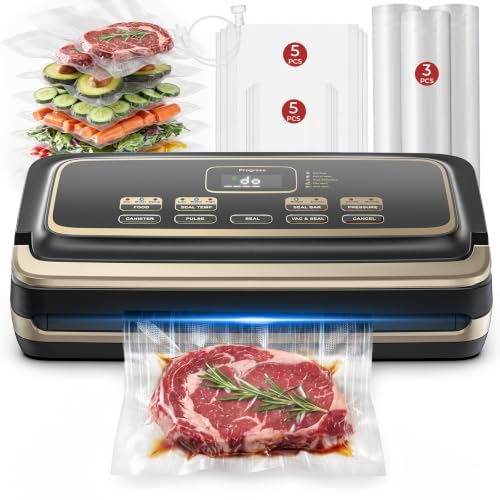
- VACLER Vacuum Sealer Machine for Food — Best Overall. A compact automatic machine with a bag cutter and smart modes for mixed home use.
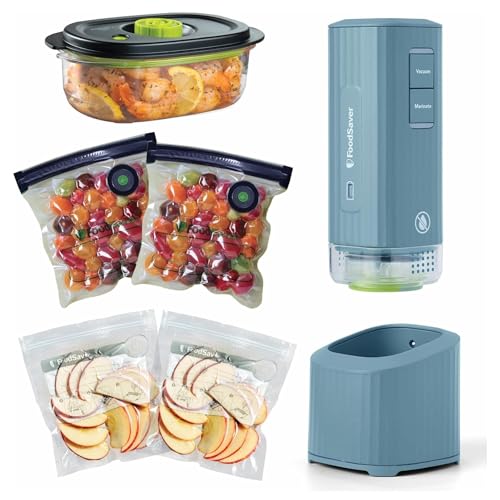
- FoodSaver Mini Handheld Vacuum Sealer — Best Handheld for Quick Jobs. A cordless handheld with a charging dock and a marinate setting.
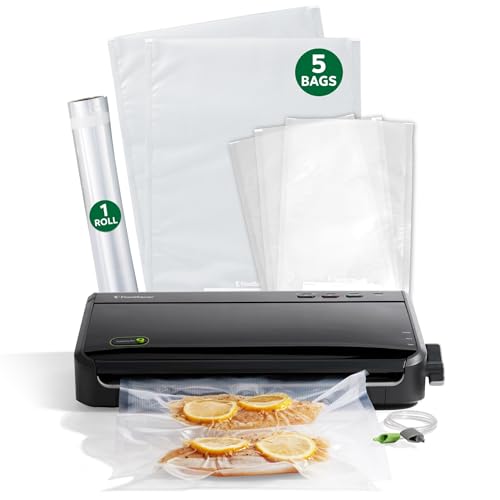
- FoodSaver FM2100 Vacuum Sealer Machine — Best for Roll Users. One-touch sealing with roll storage, a cutter and an accessory hose.
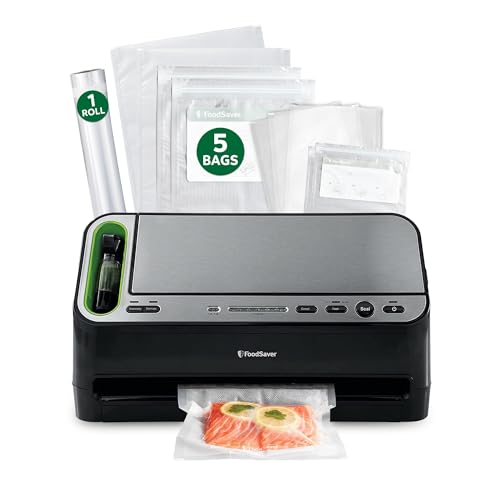
- FoodSaver V4400 2-in-1 Vacuum Sealer Machine — Best Automatic. A 2-in-1 machine with automatic bag detection.
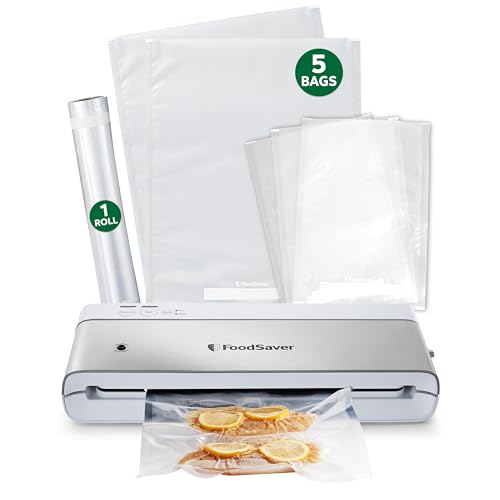
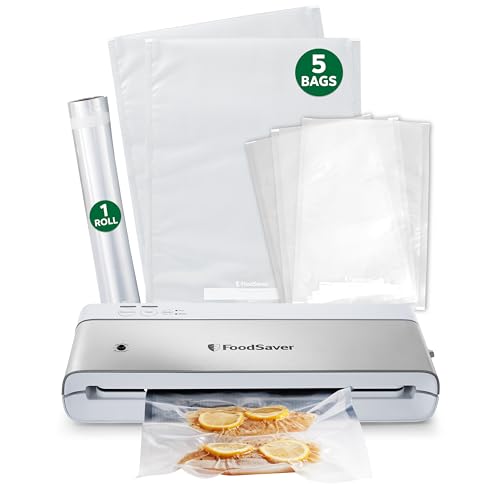
- FoodSaver Compact Vacuum Sealer Machine — Best Compact. A small white countertop machine supplied with bags and a roll.
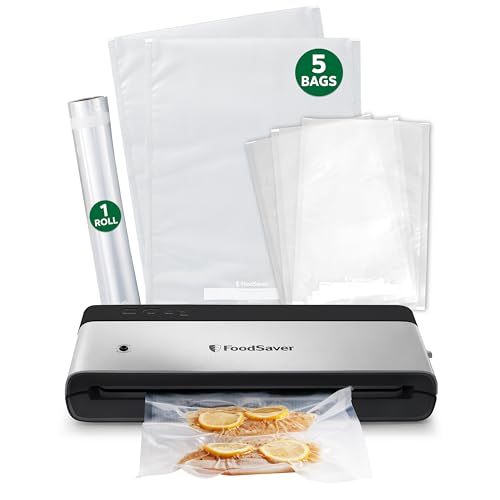
- FoodSaver PowerVac Compact Vacuum Sealing Machine VS0150 — Best for Vertical Storage. A stainless and black compact that stores upright.
Read the full guide ↓ for badges, honest trade-offs, a comparison table, a complete buying guide and step-by-step sealing instructions.
Finding the best vacuum sealers for home use starts with a simple truth: a home kitchen does not seal one kind of food. In a single week the same machine might portion raw chicken for the freezer, reseal a block of cheese for the third time, bag leftover soup portions, protect coffee beans from a humid pantry and prepare a steak for a water bath. A sealer that only shines at one of those jobs will spend the rest of the week frustrating you, which is why this guide weights versatility, footprint and day-to-day ease more heavily than raw power figures. The six machines here cover the realistic home spectrum, from a full countertop unit with roll storage to a handheld that lives in a drawer.
Home use also means home storage. A sealer that demands a permanent stretch of clear counter will quietly stop being used, and an unused sealer preserves nothing. That is why two of these picks are deliberately compact, one stores vertically, and the handheld needs no counter at all. Think about where the machine will live before you think about anything else, because the best vacuum sealers for home use are, in practice, the ones that stay within arm’s reach on an ordinary Tuesday. Readers who seal mainly after a hunt should compare our Best Vacuum Sealers For Hunters guide as well, since batch processing rewards a different set of strengths.
The second home truth is about bags. Roll-based machines let you cut exactly the bag each portion needs, which reduces waste on small items and makes long, awkward items possible. Handheld systems use reusable zip-style bags, which suit foods you open and reseal repeatedly. Neither system is better in the abstract; the right choice follows the food you seal most. This guide keeps both systems in the list and explains, pick by pick, which household each one genuinely suits.
Key Takeaways
- The VACLER is the best all-round home pick: compact, automatic, with a bag cutter, smart modes for wet and dry foods, twenty starter bags and a vacuum hose included.
- The FoodSaver FM2100 suits households that seal from rolls every week, thanks to built-in roll storage, a cutter and one-touch operation.
- The FoodSaver Mini is a cordless handheld for quick resealing and marinating, not a replacement for a countertop machine on bulk freezer days.
- The PowerVac VS0150 stores vertically, which makes it the easiest full sealer to keep in a small kitchen.
- Match the bag system to your habits first — rolls for portioning, reusable bags for reseal-as-you-go foods — and choose the machine second.
- Every pick here handles both dry and moist foods according to its listing; technique, especially with liquids, matters as much as the machine.
In this guide
Quick Picks
Six verified picks for home kitchens. The badge beside each name is used again in the detailed reviews, so you can track a recommendation from this summary to its full assessment without confusion.
| Pick | Badge | Format | Check |
|---|---|---|---|
| VACLER Vacuum Sealer Machine | Best Overall | Compact external, automatic | Check on Amazon |
| FoodSaver Mini Handheld | Best Handheld for Quick Jobs | Cordless handheld, reusable bags | Check on Amazon |
| FoodSaver FM2100 | Best for Roll Users | External, roll storage and cutter | Check on Amazon |
| FoodSaver V4400 2-in-1 | Best Automatic | External, automatic bag detection | Check on Amazon |
| FoodSaver Compact | Best Compact | Compact external, white | Check on Amazon |
| FoodSaver PowerVac VS0150 | Best for Vertical Storage | Compact external, upright storage | Check on Amazon |
How These Picks Were Chosen
This is a research-led guide, not a laboratory test. We compared the current listings for home vacuum sealers, verified each pick’s format, included accessories and stated modes against the manufacturer’s own product information, and cross-checked the details that home buyers actually depend on: whether the machine stores a roll, whether it includes a cutter, whether it offers a moist or wet setting, whether an accessory hose is supplied for jars and containers, and how the machine is stored between uses. Only products whose identity and core features could be confirmed in that process appear here, and only confirmed products carry a link.
We weighted everyday usability over headline specifications. For home use, a slightly slower machine that seals reliably, wipes clean and fits in a cupboard beats a faster machine that lives in the garage. We also separated the two bag systems honestly rather than pretending they are interchangeable: roll-based external sealers and handheld reusable-bag systems are reviewed against the jobs each system actually performs well. Where a pick has a real limitation — and every pick here has at least one — the review states it plainly, because a guide that hides trade-offs is just advertising with better formatting. Households that marinate several times a week may also want our dedicated Best Vacuum Sealers For Marinades comparison, which weights wet-food handling more heavily than this general guide does.
The 6 Best Vacuum Sealers for Home Use
Each review follows the same pattern: what the machine is, where it is strong, where it asks something of you, the specifications that could be verified from its listing, and a clear verdict about who should buy it and who should look elsewhere in the list.

VACLER Vacuum Sealer Machine for Food
Badge: Best Overall
Strengths
- Six-in-one smart modes, including settings named for rice, wet and dry foods, cover the widest range of ordinary home sealing in this list.
- Automatic operation in a compact body with a built-in bag cutter keeps the machine simple for beginners and quick for experienced users.
- Twenty bags and a vacuum hose are included, so the machine can seal bags and compatible containers from the first day.
Trade-offs
- A compact body means a smaller working area than the full-size FoodSaver machines when you seal wide items.
- Mode names help, but very wet foods still need the partial-freeze technique described later in this guide.
- Households sealing very large weekly batches may prefer a machine with built-in roll storage.
Spec box — verified from listing: Format: compact external sealer, automatic. Modes: 6-in-1 smart modes including Rice, Wet and Dry. Included: bag cutter, 20 bags, vacuum hose.
For most homes, this is the machine that asks the fewest questions. The mode set is the reason it leads the list: instead of expecting you to guess how a wet portion of stew differs from a dry tray of nuts, the VACLER gives those jobs named settings and handles the timing itself. In daily terms that means fewer failed seals, less liquid drawn toward the seal bar, and a shorter learning curve for whoever in the household picks the machine up second. The compact footprint matters just as much. It can live on a modest counter or slide into a cupboard without a negotiation, which is exactly where a home sealer needs to live if it is going to be used weekly rather than admired monthly.
The honest limitation is scale. A compact automatic machine is built for portions, leftovers and weekly shopping, not for processing a whole animal or sealing dozens of bags back to back. If your sealing happens in long sessions, the roll-storage machines below will feel calmer. For the mixed, ordinary rhythm of a home kitchen — a few bags here, a marinade there, cheese resealed twice a week — nothing else in this list balances size, modes and included accessories as well.
Best for: most households wanting one versatile, compact sealer / Not suited for: very large batch processing sessions
FoodSaver Mini Handheld Vacuum Sealer
Badge: Best Handheld for Quick Jobs
Strengths
- Cordless handheld design with a charging dock: no counter space, no cord, and it is ready in the drawer when a bag needs resealing.
- A dedicated marinate setting gives a small machine a second job that most handhelds cannot offer.
- Reusable-bag workflow suits foods opened repeatedly, such as cheese, deli meats, snacks and coffee.
Trade-offs
- It works with compatible reusable bags rather than cut-to-size rolls, so long or bulky items are outside its format.
- Vacuum strength and speed are handheld-class; bulk freezer portioning is slow work with this tool.
- It depends on its charge, so a forgotten dock means a delayed job.
Spec box — verified from listing: Format: cordless handheld. Features: marinate setting, charging dock. Colour: blue. Stated uses: freezer, storage, sous vide, meal prep.
The Mini earns its place by being the sealer you will actually use for small jobs. Resealing cheese with a countertop machine feels like overkill, so most people skip it and the cheese dries out; with a handheld in the drawer, the job takes seconds and actually happens. The marinate setting is a genuine surprise at this size and makes the Mini a reasonable second sealer for keen cooks, or a first sealer for a small household whose sealing is mostly fridge-side rather than freezer-bound. Its stated uses include meal prep and sous vide with compatible bags, which widens its week considerably.
Be clear about what it is not. It will not portion a bulk meat purchase efficiently, it cannot cut bags from a roll, and its reusable bags are a system you commit to. Bought as a complement to a countertop machine, or as the only sealer in a genuinely small kitchen, it is excellent. Bought as a cheap substitute for a full machine before a big freezer session, it will disappoint, and the disappointment will be the buyer’s mismatch rather than the product’s failure.
Best for: small kitchens, quick reseals and marinating / Not suited for: bulk freezer portioning from rolls

FoodSaver FM2100 Vacuum Sealer Machine
Badge: Best for Roll Users
Strengths
- Built-in roll storage and a cutter let you make exactly the bag each portion needs without scissors or a separate roll holder.
- One-touch sealing with dry and moist settings keeps the weekly routine fast and predictable.
- An accessory port and hose are included, extending the machine to compatible jars and containers, and starter bags and a roll come in the box.
Trade-offs
- Roll storage makes the body larger than the compact picks; measure your cupboard or counter run first.
- One-touch automation gives you less manual control than a pulse-equipped machine for very delicate foods.
- Like all roll machines, your ongoing cost and waste depend on how carefully you size each bag.
Spec box — verified from listing: Format: external sealer. Controls: one-touch. Storage: roll storage with cutter. Modes: Dry and Moist. Included: accessory port and hose, starter bags and roll.
The FM2100 is the classic home answer, refined. Roll storage sounds like a minor convenience until you have sealed twenty portions in a row; then the difference between a machine that feeds and cuts its own bags and one that sends you hunting for scissors becomes the difference between a calm half hour and a cluttered one. The dry and moist settings cover the two sealing personalities of a home week — pantry and freezer staples on one side, juicy proteins and leftovers on the other — and the listing explicitly names sous vide cooking among its uses, so bags sealed here can go straight into a water bath. If your household cooks that way, compare the fuller discussion in our Best Vacuum Sealers For Sous Vide guide before deciding.
Its limitation is footprint and finesse. It is the machine for a kitchen that seals regularly enough to justify a permanent or semi-permanent home, and its one-touch approach favours speed over the delicate, staged vacuum that soft foods sometimes need. For the household that buys family packs and portions them the same evening, it remains the most straightforward recommendation in the FoodSaver line.
Best for: weekly portioning from rolls and family-pack shopping / Not suited for: the smallest counters or very delicate foods needing staged vacuum
FoodSaver V4400 2-in-1 Vacuum Sealer Machine
Badge: Best Automatic
Strengths
- Automatic bag detection removes the fiddliest step in home sealing: positioning the bag correctly before the cycle starts.
- The 2-in-1 design broadens the machine beyond flat bags, which suits households that also seal containers and odd-shaped portions.
- A starter kit is included, so the first sessions do not wait on a separate bag order.
Trade-offs
- Automation adds complexity; there is more to learn, and more to keep clean, than on the simplest compact machines.
- It is a countertop commitment rather than a drawer tool, so small kitchens should measure first.
- Experienced users who like manual control may find automatic detection occasionally over-helpful with unusual bag placements.
Spec box — verified from listing: Format: external sealer, 2-in-1 design. Feature: automatic vacuum sealer bag detection. Included: starter kit.
Most failed home seals are not power failures; they are placement failures. The bag sits slightly short, slightly crooked or slightly damp at the edge, and the cycle seals a wrinkle instead of a seam. The V4400 attacks exactly that problem with automatic bag detection, and for households where several people use the machine — including people who will never read a manual — that automation is worth more than a longer feature list. The 2-in-1 format adds flexibility for the container-and-portion mix that real fridges contain.
The trade-off is the usual one for automation: you trade a little control and a little simplicity for consistency. If you are the only user and you seal carefully, the simpler machines in this list will feel just as reliable. If your kitchen has multiple cooks, teenagers portioning snacks, or a partner who seals in a hurry, the V4400 is the pick most likely to produce a good seal whoever is standing at the counter.
Best for: multi-user households wanting consistent, low-fuss seals / Not suited for: minimalists who prefer the simplest possible machine
FoodSaver Compact Vacuum Sealer Machine
Badge: Best Compact
Strengths
- A genuinely compact countertop format that suits apartments, small kitchens and occasional sealers.
- Supplied with airtight bags and a roll, so it can work in both pre-cut and cut-to-size styles from the start.
- The listing names sous vide and airtight food storage as its core jobs, which matches how most small households actually seal.
Trade-offs
- Compact machines generally work a smaller sealing area; very wide items belong on a full-size machine.
- It lacks the roll-storage convenience of the FM2100, so rolls live separately in a drawer.
- Frequent, heavy batch users will outgrow its pace sooner than casual users will.
Spec box — verified from listing: Format: compact external sealer. Colour: white. Included: airtight bags and roll. Stated uses: sous vide and airtight food storage.
Not every home needs a sealing station. For a couple, a small family or an apartment kitchen, sealing is a twice-a-week job: portion the chicken, protect the cheese, bag the herbs before they slump. The FoodSaver Compact is sized and supplied for exactly that rhythm. Because a roll is included alongside pre-cut bags, you can learn both workflows without another purchase, then settle into whichever suits your shopping. Its white, compact body also disappears into a light kitchen more gracefully than the larger black machines.
Its limits are honest ones of scale. Wide roasts, long fish fillets and marathon portioning sessions are happier on the FM2100 or the VACLER. But scale you never use is not value; it is cupboard volume. For the household that seals modestly and stores carefully, this is the FoodSaver that fits the life as well as the food.
Best for: small households and apartment kitchens sealing a few times a week / Not suited for: wide items or heavy batch sessions
FoodSaver PowerVac Compact Vacuum Sealing Machine VS0150
Badge: Best for Vertical Storage
Strengths
- Vertical storage is the headline: the machine stands upright, returning most of its footprint to the kitchen between uses.
- Stainless steel and black finish suits modern counters if you do leave it out.
- The listing states it preserves freshness and reduces bag waste for both dry and wet food, covering the two home sealing modes.
Trade-offs
- Upright storage helps between uses, but the working footprint while sealing is still a compact machine’s footprint.
- It does not offer the in-body roll storage of the FM2100.
- Buyers wanting automatic bag detection should step up to the V4400 instead.
Spec box — verified from listing: Model: VS0150. Format: compact external sealer with vertical storage. Finish: stainless steel and black. Stated foods: dry and wet.
Storage is the silent deal-breaker in home sealing, and the PowerVac is the only pick here designed around it. Standing the machine upright turns a countertop appliance into something closer to a cookbook in volume, which means it can live in the kitchen permanently instead of migrating to a hallway cupboard — and machines that live in the kitchen get used. The wet-and-dry coverage keeps it a true generalist: pantry staples one day, marinated or juicy portions the next, with bag waste reduced by sealing portions at the size you actually cook.
Choose it for its storage logic, not for extra automation. It is a compact machine with a compact machine’s working limits, and it asks you to store rolls elsewhere. For a small kitchen that has rejected bigger sealers on sight, that is the right exchange, and it is why the PowerVac closes this list as the small-space specialist rather than as an also-ran.
Best for: small kitchens where storage decides what gets used / Not suited for: buyers wanting built-in roll storage or automatic detection
Comparison Table
| Pick | Badge | Format | Standout verified feature | Check |
|---|---|---|---|---|
| VACLER Vacuum Sealer Machine | Best Overall | Compact external | 6-in-1 modes, cutter, 20 bags and hose included | Check on Amazon |
| FoodSaver Mini Handheld | Best Handheld for Quick Jobs | Cordless handheld | Marinate setting and charging dock | Check on Amazon |
| FoodSaver FM2100 | Best for Roll Users | External | Roll storage, cutter, accessory hose | Check on Amazon |
| FoodSaver V4400 2-in-1 | Best Automatic | External, 2-in-1 | Automatic bag detection | Check on Amazon |
| FoodSaver Compact | Best Compact | Compact external | Bags and roll included, white finish | Check on Amazon |
| FoodSaver PowerVac VS0150 | Best for Vertical Storage | Compact external | Stores vertically, stainless and black | Check on Amazon |
How to Choose the Right Vacuum Sealer for Home Use
Start with frequency, because frequency decides format. If you seal two or three times a week in small amounts — leftovers, cheese, a couple of chicken breasts — a compact external machine or even the handheld will cover your life, and the money and space you save are real. If you seal a full shopping trip in one session every week, roll storage and a cutter stop being luxuries and become the features that keep the session orderly, which points to the FM2100. If several people seal, automation that forgives imperfect bag placement, like the V4400’s detection, quietly prevents the failed seals that make households abandon the habit.
Next, match the bag system to your food. Rolls reward portioning: you buy in bulk, divide into the amounts you actually cook, and cut each bag to fit, leaving little wasted plastic and no half-empty bags. Reusable handheld bags reward repetition: the same cheese, coffee or snack bag opens and reseals all week without consuming a new bag each time. Many settled home kitchens end up using both — a countertop machine for the freezer and a handheld for the fridge — and there is no rule that says your first purchase must be your only one. Readers whose sealing centres on raw proteins can go deeper with our Best Vacuum Sealers For Meat guide, which treats moist sealing and portion sizing in more detail.
Wet-food handling deserves its own decision. Every countertop pick here states a moist, wet or dry-and-wet capability in its listing, but the setting is only half the job; the other half is technique. Chill juicy foods until their surfaces firm up, leave generous headroom between the food and the seal line, and keep the seal area dry. A machine with named wet modes, like the VACLER, manages the vacuum timing for you, while simpler machines ask you to manage the food instead. Neither approach is wrong, but honest self-knowledge helps: if you will not pre-chill a tray of marinated chicken, buy the machine that compensates.
Storage, finally, is a specification even though it never appears in a spec box. Measure the cupboard, the counter run and the drawer before you fall for a feature list. A vertical-storage machine like the PowerVac exists because its designers understood that a sealer stored badly is a sealer used rarely. Choose the largest machine your kitchen can house comfortably and no larger; in home sealing, the usable machine beats the impressive one every week of the year.
How to Vacuum Seal at Home, Step by Step
Good home sealing is a routine, and routines can be learned. Follow this sequence and most early failures disappear. First, portion before you seal: divide food into the amounts a meal actually uses, because a vacuum bag you must thaw entirely to use a third of is a portioning failure wearing a good seal. Second, prepare the food surface — pat proteins dry, chill juicy items until just firm, and freeze very wet foods briefly on a tray until they hold their shape. Third, size the bag generously, leaving several inches between the food and the open edge so the seal zone stays clean and flat. Fourth, load the bag squarely, smoothing wrinkles from the seal area. Fifth, select the dry or moist setting that matches the food and run the full cycle without lifting the lid early. Sixth, inspect the seal: it should be a continuous, even band with no channels, folds or moisture lines crossing it. Seventh, label every bag with contents and date before it goes into the freezer, because vacuum bags all look alike at month three. Eighth, lay bags flat to freeze; flat bags stack like files, thaw faster and use freezer space far better than frozen lumps.
One refinement separates tidy freezers from chaotic ones: seal proteins with their cooking in mind. Chicken destined for a water bath can be sealed with its seasoning already in the bag, so the bag moves from freezer to thaw to bath without being opened. Meat destined for the grill seals better plain, with marinade added after thawing, because a long frozen rest in marinade can soften texture. Vegetables for roasting should be sealed raw and unseasoned, since salt draws moisture during storage. None of this requires a special machine; it requires deciding, at the cheerful moment of sealing, how the food will actually be cooked on the tired evening it is used. Write that intention on the label too — “for stir-fry”, “for Sunday roast” — and the freezer starts to read like a menu instead of an archive.
Cleaning keeps the routine working. Wipe the seal area and any drip zone after moist foods, let the machine dry fully before storing it, and keep the sealing strip free of crumbs and bag fragments. Store rolls away from heat, keep reusable handheld bags washed, dried and stored flat, and charge the handheld on its dock rather than in a drawer so it is ready when a quick reseal appears. A machine cared for this way seals consistently for years; a neglected one fails in small, annoying ways that get blamed on the bags.
Troubleshooting at home
Problem: the bag loses vacuum in the freezer after a few days → check the seal band for a tiny channel, often caused by a wrinkle or a speck of food in the seal zone; reseal on a fresh, clean section of bag, and double-seal items with sharp edges such as bones, which can puncture film from inside.
Problem: liquid reaches the seal area during the cycle → the food was too wet or the bag too full; chill or briefly freeze the item, add headroom, blot the bag’s inner edge dry, and use the moist or wet setting so the machine adjusts its timing.
Problem: the machine will not start or stops early → confirm the bag edge sits fully inside the vacuum area, the lid is latched as the manual describes, and, on the handheld, that the bag valve sits flat under the nozzle and the unit is charged.
Setting Up a Home Freezer System That Actually Works
A sealer earns its keep inside a system, not on its own. Pair it with three habits. Rotate stock first-in, first-out by freezing flat bags in date order and moving older bags to the front each time you add new ones. Keep a simple freezer inventory on the door — a list you cross off as bags leave — because vacuum sealing removes the visual cues that remind you what you own, and forgotten food is wasted food no matter how well it was sealed. Finally, seal in the units your cooking uses: two chicken breasts, one meal of stew, a single session of smoothie fruit. Households that adopt those habits find the machine pays for its cupboard space in avoided waste; households that seal randomly in bulk sizes often conclude, unfairly, that sealing itself does not help. If your freezer work ever grows toward game or bulk processing, the workflow in our Best Vacuum Sealers For Small Butcher Shop guide shows how the same habits scale up.
Bags, Rolls and the Real Cost of Owning a Home Sealer
The machine is a one-time purchase; the bags are the relationship. Understanding the two supply systems before you buy prevents the most common home regret, which is owning a good sealer and the wrong bags for how you cook. Roll stock suits cooks who portion irregular things: a long fillet one week, small cheese ends the next, a double batch of chilli divided four ways. Because you cut each bag to length, odd sizes cost no extra plastic, and a single roll quietly covers weeks of varied sealing. The discipline rolls demand is measurement: cut too short and the seal zone crowds the food, cut too long and you waste the material you bought the roll to save. Most home cooks settle, within a month, into two or three habitual lengths, and the waste problem largely disappears with the habit.
Pre-cut bags suit cooks who portion the same things repeatedly. If every week produces the same chicken portions, the same coffee quantity and the same soup blocks, pre-cut bags remove the cutting step entirely and keep sessions moving. Reusable handheld bags suit a third pattern: the revolving fridge door of cheese, deli meat, opened snacks and half-used ingredients, where the same bag opens and closes many times. Their cost logic is different again — fewer bags bought, more washing done — and they reward households that will actually wash and dry them. None of these systems is cheapest for everyone. The honest calculation is bags per week in your kitchen, multiplied by the patience you honestly have, and the answer points directly at the format sections above.
Storage of supplies matters more than brochures suggest. Keep one roll or one pack of bags beside the machine, not in a separate shopping order, because a sealing session postponed for lack of a bag usually becomes food wrapped badly instead. Keep a marker with the bags as well; an unlabelled vacuum bag is a small mystery you have bought yourself for three months from now. These are humble details, but home sealing succeeds or fails on humble details far more often than on motor specifications.
Vacuum Sealing for Weekly Meal Prep
Meal prep is where a home sealer quietly changes how a kitchen feels by Thursday. Cooked grains, grilled proteins, washed greens and chopped vegetables all decline at different speeds in ordinary containers, mostly because air and moisture move freely between them. Sealing prep components separately — proteins in their cooking portions, grains flattened into fast-thawing slabs, sauces frozen first and then sealed — keeps each component at its best until the day it is combined, and turns a Sunday session into four or five genuinely quick weeknight meals rather than one good meal and several tired ones. The VACLER’s named modes and the FM2100’s roll workflow both suit this pattern well, the first for its handling of mixed wet and dry components, the second for producing many same-sized bags in one calm run.
Two prep rules protect quality. Cool cooked food fully before sealing, because sealing warm food traps steam that becomes moisture against the food and shortens its best life. And seal components, not finished mixed meals, whenever you can: a sealed tray of finished curry freezes as one compromise, while its rice, sauce and protein sealed separately thaw at their own speeds and recombine tasting far closer to fresh. Households new to prep often seal everything in sight for a fortnight and then calm down into a sustainable rhythm of proteins, grains and one or two sauces. That rhythm, not the enthusiastic first fortnight, is what the machine was bought for, and choosing a sealer you can store within reach is what keeps the rhythm alive in month six.
Common Buying Mistakes
The first mistake is buying for the biggest day of the year. A machine sized for a once-a-year bulk session will crowd the kitchen for the other fifty weeks; size for your ordinary week and borrow patience on the exceptional day. The second mistake is choosing a handheld as your only sealer before checking its bag system: reusable bags are excellent for the fridge and limiting for a freezer full of portions. The third mistake is ignoring storage — measuring the food but not the cupboard. The fourth is sealing wet food carelessly and blaming the machine for seals that technique would have saved. The fifth is forgetting the ongoing system: rolls, bags and labels are part of the purchase, so choose a format whose supplies you can keep stocked without friction. The sixth is expecting any home machine to behave like a commercial chamber unit; external home sealers are excellent at their job, and judging them by a different job’s standard only produces returns.
Final Recommendation
For most homes, buy the VACLER Vacuum Sealer Machine: its named wet and dry modes, compact automatic body, cutter and included bags and hose make it the easiest single machine to live with. If you portion from rolls every week, choose the FoodSaver FM2100 instead, and if storage space is your binding constraint, the FoodSaver PowerVac VS0150 is the pick designed around it. Add the FoodSaver Mini later if quick fridge reseals become a daily habit; it complements a countertop machine beautifully and replaces one only in genuinely small-scale kitchens.
Frequently Asked Questions
Is a handheld vacuum sealer enough for home use?
For fridge-side resealing, small portions and marinating, yes — the FoodSaver Mini in this list is built for exactly that, with a charging dock and a marinate setting. For weekly freezer portioning from rolls, a countertop external machine is faster, more flexible on bag size and cheaper in bags over time. Many homes eventually use both, each for the jobs it does best.
Can I seal liquids like soup in a home vacuum sealer?
Yes, with technique. Freeze soup first in a container or tray until solid, then seal the frozen block; or chill it thoroughly, fill the bag only partly, leave generous headroom and use the moist or wet setting. Sealing free liquid directly toward a seal bar is the most common cause of weak seals, and every method above exists to keep liquid away from the seal zone until the seam is made.
How long does vacuum-sealed food keep in a home freezer?
Considerably longer than wrapped food, because the seal removes the air that drives freezer burn and dries surfaces out. Exact times depend on the food, its condition when sealed and how steadily your freezer holds its temperature, so treat any single figure with suspicion. The reliable habits matter more: seal fresh food, label with the date, rotate stock, and use the oldest bags first.
Do I need special bags for these machines?
External sealers need textured vacuum bags or rolls made for external machines, because the texture lets air escape during the cycle; smooth ordinary bags will not vacuum properly. Handheld systems use their own compatible reusable bags with a valve. Within each system, follow the machine maker’s guidance on compatible supplies, and keep a spare roll or set of bags in stock so a sealing session never stalls.
Can these sealers be used for sous vide cooking?
Several picks here name sous vide in their listings, including the FM2100, the FoodSaver Compact and the Mini, and vacuum-sealed bags are the standard preparation for a water bath. Use bags rated by their maker for cooking, keep the seal fully above the waterline clip if your bath setup uses one, and follow safe time-and-temperature guidance for the food you cook. Our Best Vacuum Sealers For Sous Vide Cooking guide compares the picks on cooking-specific points.
Should a beginner start with a compact machine or a full roll-storage model?
Start with the machine that matches the sealing you can already picture. A beginner who portions a weekly shop and freezes leftovers will learn fastest on a compact automatic model like the VACLER or the FoodSaver Compact, because the first month is about building the portioning, chilling and labelling habits, not about mastering a large machine. A beginner who already buys family packs and cooks in batches should skip straight to a roll-storage model like the FM2100, since bag-making is part of every session they will run. What a beginner should not do is buy the largest machine as a promise to a future self; habits form around the machine that fits the kitchen today, and a compact sealer used weekly teaches more, and saves more food, than a flagship used twice. You can always add the other format later — many experienced home sealers own a countertop machine for the freezer and the little handheld for the fridge, and describe the pair, not either machine alone, as their actual system.
Where should I store a vacuum sealer in a small kitchen?
Where you will actually reach it. A vertical-storage model like the PowerVac can stand in a narrow cupboard gap, a compact can share a deep drawer with its roll stored beside it, and the handheld lives on its dock or in a cutlery drawer. If the only available home is a high shelf in another room, be honest that your sealing will become rare, and choose the smallest machine that still fits your food.