Disclosure: topratedkitchenware.com is reader-supported. When you buy through links on our site, we may earn an affiliate commission from Amazon and other retailers, at no extra cost to you.
Where to buy
The best vacuum sealers for sous vide are chosen by one demand above all others: a seal that holds, fully submerged, for the whole cook. All six picks below are verified for this guide and linked so you can check the latest price on Amazon; several name sous vide work in their own listings, and the rest are countertop machines whose bags and seals suit the bath.
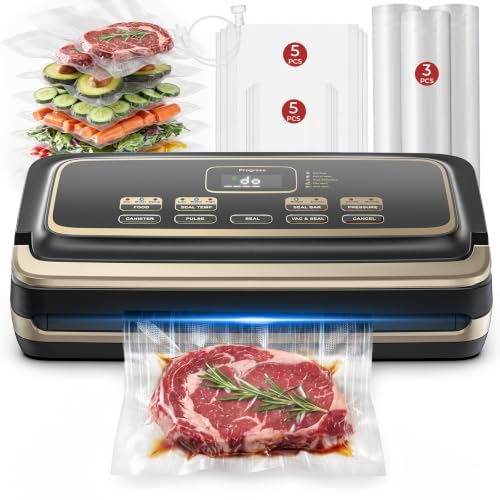
- VACLER Vacuum Sealer Machine — Best Overall for Sous Vide. Compact and automatic, with wet and dry modes for seasoned, juicy portions.
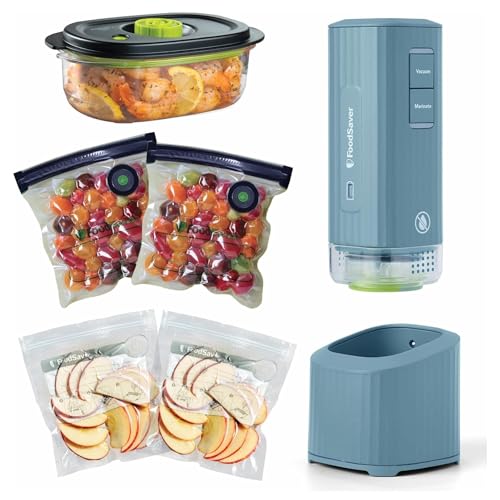
- FoodSaver Mini Handheld Vacuum Sealer — Best Handheld for Small Baths. A cordless handheld whose listing names sous vide among its uses.
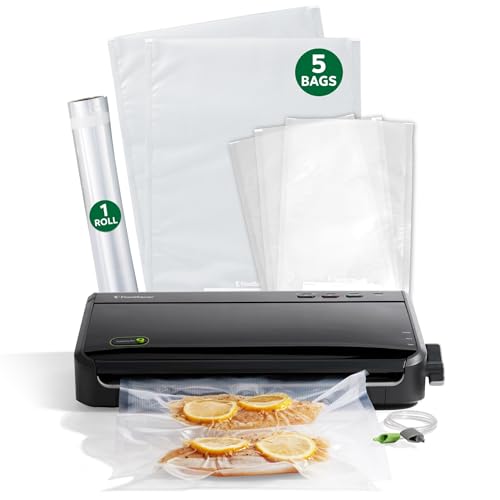
- FoodSaver FM2100 Vacuum Sealer Machine — Best for Roll Users. Its listing names sous vide cooking directly, with roll storage and a cutter.
- FoodSaver V4400 2-in-1 Vacuum Sealer Machine — Best Automatic. Automatic bag detection for consistent, bath-worthy seals.
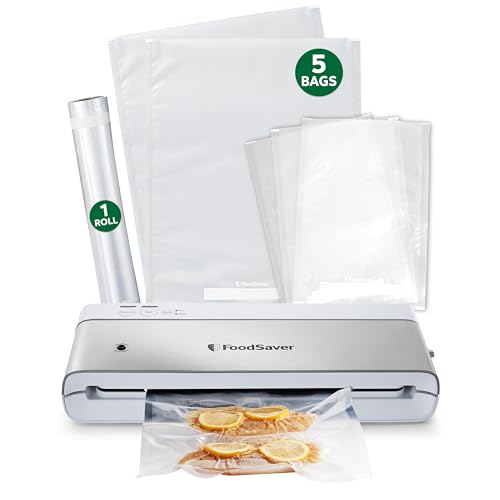
- FoodSaver Compact Vacuum Sealer Machine — Best Compact. Its listing names sous vide as a core use, in a small white body.
- FoodSaver PowerVac Compact VS0150 — Best for Vertical Storage. A wet-and-dry compact that stores upright between cooks.
Read the full guide ↓ for badges, trade-offs, a comparison table and the sealing technique that keeps bath water out and flavour in.
The best vacuum sealers for sous vide are chosen by what happens underwater. A storage seal can be merely good; a bath seal must be perfect, because it spends one, two or many hours submerged at cooking temperature, with water pressing at every channel and fold, while the food inside releases juice that tests the seam from within. Air is the other enemy: a bag with air left in it floats, cooks unevenly and insulates the food from the water that is supposed to be cooking it precisely. So this category rewards three things in order — seal integrity, evacuation around irregular shapes, and control with wet, seasoned food — and it is largely indifferent to everything else. The six machines here were picked on exactly that order.
There is also an honest alternative to name at the start: the water-displacement method, where a zip bag is lowered into water so pressure pushes air out before the zip closes. It works, and for an occasional cook it may be enough. But it leaves more air than a machine, its seals are not made for long cooks, and it cannot help with the freezer half of the sous vide life — sealing portions ahead, freezing them in the bag, and moving them from freezer to bath without ever opening them. That freezer-to-bath pipeline is where a real sealer transforms the cooking method from an event into a system, and it is the standard this guide buys to. Readers comparing the near-identical question from the cooking side will find our Best Vacuum Sealers For Sous Vide Cooking guide a useful companion; this one stays with the sealing itself.
Key Takeaways
- The VACLER leads for sous vide: named wet and dry modes handle seasoned, juicy portions, and its automatic compact body suits a cooking counter.
- The FM2100 and the FoodSaver Compact name sous vide in their own listings, and the FM2100’s roll storage makes bath-length bags to measure.
- The FoodSaver Mini is the handheld exception that belongs here: its listing names sous vide, and it suits small, short cooks in compatible bags.
- Seal integrity is the whole game — inspect every seam, double-seal long cooks, keep the seal zone dry, and clip or weight any bag that tries to float.
- Season inside the bag, freeze portions in the bag, and cook from the bag: the freezer-to-bath pipeline is sous vide’s real convenience.
- Use only bags whose maker rates them for cooking, and follow sound time-and-temperature guidance for the food you cook.
- Watch every bag for its first minute in the water; a leak confessed early costs a reseal, while a leak discovered at serving costs the cook.
In this guide
Quick Picks
| Pick | Badge | Format | Sous vide note |
|---|---|---|---|
| VACLER Vacuum Sealer Machine | Best Overall for Sous Vide | Compact external | Wet and dry smart modes |
| FoodSaver Mini Handheld | Best Handheld for Small Baths | Cordless handheld | Sous vide named in listing |
| FoodSaver FM2100 | Best for Roll Users | External | Sous vide cooking named in listing |
| FoodSaver V4400 2-in-1 | Best Automatic | External, 2-in-1 | Automatic bag detection |
| FoodSaver Compact | Best Compact | Compact external | Sous vide named in listing |
| FoodSaver PowerVac VS0150 | Best for Vertical Storage | Compact external | Dry and wet food stated |
How These Picks Were Chosen
This guide is research-led. Each pick’s format, stated modes and included supplies were verified against its current listing, and the field was weighted for bath work: whether sous vide is named by the maker, how the machine handles wet and seasoned food, how repeatable its seals are, and how its bag system handles bath-length portions. Only verified products are listed and linked. Where a pick’s listing does not name sous vide — the V4400 and the PowerVac — the review says so and rests its case on the machine’s sealing format and wet-food capability rather than on a claim the maker did not make. That distinction matters, and this programme’s guides are built to preserve it.
The 6 Best Vacuum Sealers for Sous Vide

VACLER Vacuum Sealer Machine for Food
Badge: Best Overall for Sous Vide
Strengths
- Six-in-one smart modes, including wet and dry settings, match the two sealing personalities of bath cooking: dry-seasoned cuts and juicy, marinade-ready portions.
- Automatic operation in a compact body suits a counter already shared with a water bath container.
- A bag cutter, twenty starter bags and a vacuum hose are included, covering bags and marinating containers alike.
Trade-offs
- No pulse mode is stated, so very wet portions rely on chilling and headroom for a dry seal zone.
- Its listing does not name sous vide; its case rests on its modes and format, as the review explains.
- Compact width means the largest family joints are portioned before they are bagged for the bath.
Spec box — verified from listing: Format: compact external sealer, automatic. Modes: 6-in-1 smart modes including Rice, Wet and Dry. Included: bag cutter, 20 bags, vacuum hose.
Sous vide portions are rarely dry, plain blocks. They carry salt, herbs, butter, aromatics and their own juice, and the seal has to be made in that company without letting any of it reach the seam. The VACLER’s named wet mode is the feature that earns it the lead here: a cycle timed for moist food, in a machine compact enough to live beside the bath rather than across the kitchen. Its automatic operation suits the rhythm of bath cooking, where the sealing is a five-minute prelude to a two-hour cook and nobody wants it to become the main event. Add the hose, and the same machine prepares marinade containers for the portions that will be sealed tomorrow.
Be precise about its evidence: the maker’s listing does not name sous vide, so this guide recommends it on the strength of its wet-and-dry sealing format — the same format the named picks use — and on nothing else. Cooks who want the maker’s own words on the box should take the FM2100 or the Compact. Cooks who want the most adaptable small machine for seasoned, juicy bath portions will find the VACLER the best-balanced tool in the list.
Best for: seasoned and juicy bath portions in a compact kitchen / Not suited for: buyers who want sous vide named in the maker’s listing
FoodSaver Mini Handheld Vacuum Sealer
Badge: Best Handheld for Small Baths
Strengths
- Its listing explicitly names sous vide among its uses, alongside freezer, storage and meal prep.
- Cordless and dock-charged, it seals a single portion at the counter in seconds — the scale of much weeknight bath cooking.
- A marinate setting lets a small portion season and seal in the same reusable-bag system.
Trade-offs
- Handheld evacuation is gentler than a countertop machine’s; for long cooks, a full external seal is the safer standard.
- It works in its compatible reusable bags, so bag size is fixed by the system rather than cut to the food.
- Multi-portion family cooks would be slow, one small bag at a time.
Spec box — verified from listing: Format: cordless handheld. Features: marinate setting, charging dock. Colour: blue. Stated uses: freezer, storage, sous vide, meal prep.
Most sous vide cooking, in real homes, is one or two portions on a weeknight — a steak, two chicken breasts, a piece of fish — and at that scale the Mini is a genuinely sensible bath tool. The maker names the use, the tool lives on its dock ready to work, and a portion can be seasoned, sealed and in the water in the time a countertop machine takes to be fetched from a cupboard. For small households, small baths and short-to-moderate cooks, that convenience is not a compromise; it is the reason the cooking happens at all on a Tuesday.
Its ceiling is equally clear. Long cooks, large portions and freezer-to-bath batch systems belong to the countertop machines, whose seals and cut-to-size bags were built for them. This guide links the Mini for what its own listing claims — small-scale sous vide among its uses — and scopes it to that work in every line. Within the scope, it is the most convenient pick here.
Best for: one-or-two-portion weeknight cooks / Not suited for: long cooks, large portions or batch freezer systems

FoodSaver FM2100 Vacuum Sealer Machine
Badge: Best for Roll Users
Strengths
- Its listing names sous vide cooking directly — the maker’s own statement of the use.
- Roll storage and a cutter make bath-length bags to measure, essential for long cuts and whole small joints.
- One-touch dry and moist sealing, an accessory hose, and starter bags and a roll included complete a bath-ready station.
Trade-offs
- The body is a full countertop commitment beside the bath container.
- No pulse mode, so the wettest seasoned portions need the chill-and-headroom technique.
- One-touch automation gives less staged control around very irregular shapes than a pulse machine.
Spec box — verified from listing: Format: external sealer. Controls: one-touch. Storage: roll storage with cutter. Modes: Dry and Moist. Included: accessory port and hose, starter bags and roll. Stated use includes sous vide cooking.
The FM2100 is the traditionalist’s answer, and its listing makes the case in the maker’s own words: this machine is sold for sous vide cooking, with the roll system that bath work quietly depends on. Bath bags want length — room for the food, room for the seal to sit above the waterline fold, room to reseal if you open and return a portion — and a roll-fed machine produces that length on demand, for a single chop or a whole rack, without a drawer of wrong-sized pre-cuts. The moist setting covers seasoned portions, the dry setting covers plain ones, and the hose extends the station to marinating containers for tomorrow’s cook. Households building the freezer-to-bath pipeline described in our Best Vacuum Sealers For Sous Vides notes will find this the most natural engine for it.
Its demands are space and a little technique with very wet bags. Neither is a serious tax on a household that cooks this way weekly, and for that household the FM2100 remains the most straightforward recommendation in the FoodSaver line: named for the job, equipped for the job, sized for the job.
Best for: regular bath cooking and freezer-to-bath systems / Not suited for: the smallest counters or pulse-style wet control
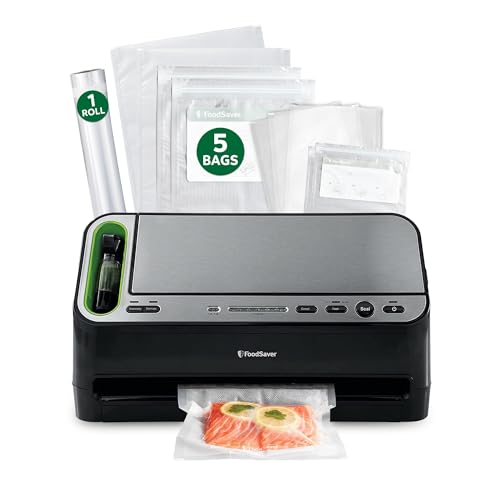
FoodSaver V4400 2-in-1 Vacuum Sealer Machine
Badge: Best Automatic
Strengths
- Automatic bag detection targets the exact failure bath cooking punishes: a bag seated slightly wrong, producing a seam with a hidden channel.
- The 2-in-1 design adds container flexibility for marinades and prep around the bath.
- A starter kit is included, so the first cooks do not wait on supplies.
Trade-offs
- Its listing does not name sous vide; the recommendation rests on its sealing format and consistency.
- No in-body roll storage is stated, so bath-length film lives beside the machine.
- Automation cannot dry a wet seal zone; seasoned portions still need a clean edge.
Spec box — verified from listing: Format: external sealer, 2-in-1 design. Feature: automatic vacuum sealer bag detection. Included: starter kit.
Ask bath cooks what ruins a cook and few will say vacuum strength; they will say the seal that looked fine and opened at hour two, or the seam with a wrinkle channel that let water creep in and air creep back. The V4400 is the pick aimed at that failure. Automatic detection confirms the bag’s placement before the cycle, which makes the tenth bag of a batch session as trustworthy as the first — and batch sessions are how sous vide households actually work, sealing a week of portions in one sitting for the freezer-to-bath pipeline. Consistency, in this category, is not a luxury feature; it is the product.
As with the VACLER, this guide is precise about evidence: the maker does not name sous vide for this model, and the recommendation is a format judgement, stated as such. Cooks who share that judgement — that a consistent external seal in a cooking-rated bag is a bath seal — will find the V4400 the most reassuring machine here for long, unattended cooks, where trust in the seam is the whole purchase.
Best for: batch sealing and long cooks where seam consistency matters most / Not suited for: buyers who want sous vide named in the listing
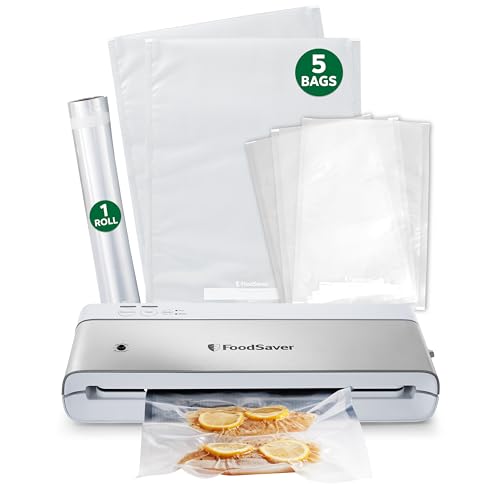
FoodSaver Compact Vacuum Sealer Machine
Badge: Best Compact
Strengths
- Its listing names sous vide as a core use, in the maker’s own words.
- A compact white body shares a small counter with a bath container without a turf war.
- Bags and a roll are included, so both pre-cut portions and cut lengths are possible from the start.
Trade-offs
- Compact working width portions the largest cuts before they can be bagged.
- No roll storage or pulse control is stated; wet portions use technique, and rolls live in a drawer.
- Heavy batch pipelines will outgrow its pace.
Spec box — verified from listing: Format: compact external sealer. Colour: white. Included: airtight bags and roll. Stated uses: sous vide and airtight food storage.
Small kitchens are where sous vide should thrive — the bath itself is compact, the cooking is quiet, the results are outsized — and the Compact is the sealer sized for that kitchen. The maker names the use, the supplies in the box cover both bag styles a bath cook needs, and the machine’s footprint respects the reality that the bath container, not the sealer, is the appliance that must live on the counter for hours. For a household cooking for two or three, sealing a few portions at a time, it covers the method completely.
Its limits are width and pace, stated plainly. Portion a large joint before bagging, and do not ask it to run a ten-bag freezer pipeline at the speed of the FM2100. Asked to do its own job — named, compact, capable bath sealing — it is one of the easiest recommendations in this guide.
Best for: small kitchens cooking sous vide for a few people / Not suited for: wide cuts or heavy batch pipelines
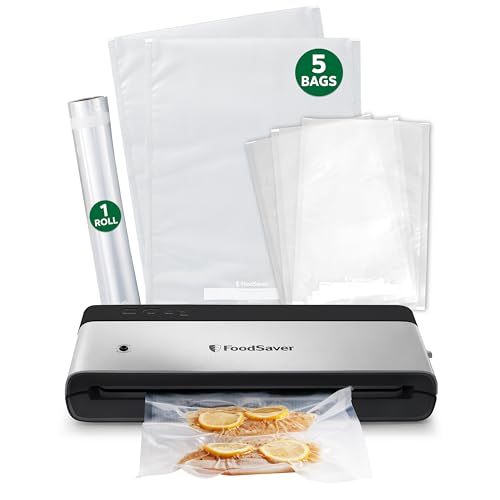
FoodSaver PowerVac Compact Vacuum Sealing Machine VS0150
Badge: Best for Vertical Storage
Strengths
- The listing states it handles both dry and wet food, which covers plain and seasoned bath portions.
- Vertical storage keeps the machine in the kitchen between cooks, standing in a narrow gap.
- Stainless and black finish suits a counter it may share with the bath setup.
Trade-offs
- Its listing does not name sous vide; the case rests on wet-and-dry sealing format.
- Compact class: portion large cuts, and expect a compact pace on batch days.
- No roll storage or detection is stated; it is the simplest machine here.
Spec box — verified from listing: Model: VS0150. Format: compact external sealer with vertical storage. Finish: stainless steel and black. Stated foods: dry and wet.
The PowerVac’s sous vide argument is a storage argument, and it is a good one. Bath cooking is episodic — a few cooks a week, each preceded by five minutes of sealing — so the sealer’s real estate problem is the other six days. A machine that stands upright in a gap stays in the kitchen, and a machine that stays in the kitchen gets used for the midweek steak as readily as for the Sunday project. Its stated dry-and-wet coverage handles the seasoned reality of bath portions without fuss.
It is the simplest tool here and makes no claim otherwise: no named sous vide use, no automation, no roll storage. Buy it because your kitchen is small and your cooks are modest in scale, and it will serve both faithfully. Buy a named, roll-fed machine instead if the pipeline, rather than the occasional cook, is your plan — the comparison our Best Vacuum Sealers For Weed guide never has to make, since dry storage is a different discipline entirely, but one this programme covers for readers with that separate need.
Best for: small kitchens with occasional, modest bath cooks / Not suited for: batch pipelines or buyers wanting a named sous vide model
Comparison Table
| Pick | Badge | Sous vide named by maker | Standout verified feature | Check |
|---|---|---|---|---|
| VACLER | Best Overall for Sous Vide | Not stated | Wet and dry smart modes, hose | Check on Amazon |
| FoodSaver Mini | Best Handheld for Small Baths | Yes | Marinate setting, cordless dock | Check on Amazon |
| FoodSaver FM2100 | Best for Roll Users | Yes | Roll storage, cutter, moist mode | Check on Amazon |
| FoodSaver V4400 2-in-1 | Best Automatic | Not stated | Automatic bag detection | Check on Amazon |
| FoodSaver Compact | Best Compact | Yes | Bags and roll included | Check on Amazon |
| FoodSaver PowerVac VS0150 | Best for Vertical Storage | Not stated | Stores vertically, dry and wet | Check on Amazon |
How to Choose a Vacuum Sealer for Sous Vide
Begin with your cook pattern. Occasional one-or-two-portion cooks need convenience and a small footprint, and the Mini, the Compact and the PowerVac divide that territory by storage style. Weekly cooks need a named, roll-fed machine — the FM2100 — because bath bags want length and the freezer pipeline wants volume. Batch cooks who seal a week at once need seam consistency above all, which is the V4400’s detection or the VACLER’s automatic modes. Notice what is not in that decision: vacuum strength headlines. In a bath, the seal and the absence of air pockets decide the result, and both are products of format, loading and inspection rather than of a pump figure.
Then consider your food. Dry-seasoned, plain portions are easy work for every machine here. Juicy, buttered, marinated portions are the test, and they argue for moist or wet modes and for the technique in the next section. Delicate fish argues for a gentler, watched draw — a reason some cooks keep a handheld for fish and a countertop machine for everything else. Finally, consider your bags as part of the machine decision: rolls for length and pipelines, pre-cuts for speed, reusable handheld bags for small fridge-to-bath loops. The machine, the film and the bath are one system, and choosing them together is the difference between a method that feels effortless and one that feels like equipment management.
How to Seal for the Bath, Step by Step
First, season in the bag: salt, herbs, aromatics and a little fat, distributed so the sealed bag holds flavour against every surface. Second, chill juicy portions until their surfaces firm, because a bath bag sealed wet is a seam at risk. Third, cut or choose a bag with generous length — the seal should be able to sit clear of the food with room to spare, and long cooks deserve room for a second seal. Fourth, load squarely, smooth the seal zone flat and dry, and keep folds out of the seam; a fold is a channel, and a channel is a leak with a schedule. Fifth, run the moist cycle for seasoned food, the dry cycle for plain, and watch the draw: the bag should settle snugly around the food without crushing it. Sixth, inspect the seam against the light — continuous, even, no moisture line, no wrinkle crossing it — and run a second seal a short distance above the first for any cook measured in hours. Seventh, if the bag floats when it meets the water, deal with it immediately: clip it to the container’s side, weight it with a rack or spoon, or reseal with the air worked out by hand, because a floating bag is an unevenly cooking bag. Eighth, after the cook, treat the bag’s contents with ordinary food-safety promptness; the bath’s precision does not extend the safe life of food left standing warm.
One more habit separates bath cooks whose bags behave from those whose bags surprise them: dry the outside of the sealed bag and check it once more as it enters the water. A bag lowered slowly, seal first watched for the first minute, will confess a leak while the confession is still cheap — a reseal, a fresh bag, a cook saved. A bag dropped in and forgotten until serving has spent its confession budget. The first-minute watch costs almost nothing, because you are standing there anyway while the bath settles, and it converts the rarest failure in this category into the most recoverable one. Build it into the ritual alongside the seam inspection and the two checks become a single, unhurried minute on which hours of cooking can safely rest.
Cleaning after bath work is quick but not optional: wipe the seal area, especially after seasoned portions, wash any part the manual allows, and dry the machine before it is stored. Bags that held raw meat are single-use in any sensible kitchen; do not let economy argue otherwise.
Troubleshooting bath seals
Problem: a bag takes on water during the cook → the seam had a channel or the film was damaged; inspect seams against light before cooking, double-seal long cooks, and keep the seal above folds and bone edges.
Problem: bags float and cook unevenly → air remained at loading; work air out by hand as the bag draws down, portion flatter, and clip or weight bags as a routine rather than a rescue.
Problem: seasoned portions weep into the seal → portions were warm or over-filled with liquid; chill first, reduce added liquid, add headroom, and use the moist cycle with a blotted seal zone.
The Freezer-to-Bath Pipeline: Sous Vide as a System
The cooks who get the most from sous vide rarely cook from fresh. They seal in batches: a market tray of chicken portions seasoned two ways, steaks salted and herbed, a salmon side portioned, vegetables blanched and bagged — each pack labelled with contents, seasoning and date, frozen flat, and filed in the freezer like a small library of future dinners. On a cooking day the bag moves from freezer to a thaw, or directly into a bath run with the extra time frozen food requires, and the meal that emerges tastes planned rather than improvised, because it was. The sealer’s role in that system is foundational: its seals must survive freezing, storage, handling and then hours in hot water, in that order, without a weak performance at any stage. That is why this guide weights seam consistency and bag-length flexibility so heavily, and why the roll-fed and detection-equipped machines earn their badges.
Run the pipeline with two disciplines. Label for the bath, not just for the freezer: include the seasoning and any cooking note the future cook will want, because a frozen bag reveals nothing through the film. And rotate without mercy, oldest first, since a pipeline that only accumulates is a freezer problem wearing a chef’s hat. Households that adopt the system find the sealer stops being a gadget and becomes infrastructure — the quiet machine that makes a precise cooking method available on tired evenings, which is the only kind of evening most households actually have. Readers equipping that system from scratch may also enjoy the trade-level perspective in our Best Professional Vacuum Sealers overview, if only to see how much of the professional method a home station already covers.
What Vacuum Sealing Does for Sous Vide — and What It Does Not
Precision about the tool’s role prevents the two classic disappointments. Vacuum sealing does three real things for the bath. It removes the air that would otherwise insulate the food and float the bag, so water touches the bag and the bag touches the food, evenly, for the whole cook. It holds seasoning against every surface for the entire process, which is why bag-seasoned food tastes marinated rather than merely salted. And it makes the cook clean and contained: no leaks, no bath contamination, no flavour escaping into the water. Those are substantial gifts, and they are the reason the method and the machine are so often bought together.
What sealing does not do is cook, protect or rescue. It does not make an undersized bath hold temperature, does not extend the safe window for food held warm, and does not improve a cut that was tired when it was sealed. It also does not require perfection of the laboratory kind: a well-loaded displacement bag can cook a steak happily, and this guide’s insistence on machine seals is about long cooks, batch systems and freezer pipelines — the places where the difference is real — not about gatekeeping a weeknight dinner. Buy the machine for the system you will actually run. The small-bath reader, in particular, may find the reusable-bag approach surveyed in our Best Reviewed Small Vacuum Sealers With Reusable Bags notes a comfortable starting point before committing to a roll-fed station.
Sealing by Food: Steak, Chicken, Fish and Vegetables
Each bath staple asks something slightly different of the seal, and learning the four adjustments turns a good machine into a reliable kitchen system. Steak is the forgiving benchmark: a flat, even cut that seals cleanly on a dry or moist cycle, takes seasoning beautifully in the bag, and rewards a double seal only when the cook is long. Portion steaks singly or in pairs as you actually serve them, and keep a premium cut’s bag flat in the freezer, because its shape at freezing is its shape at cooking. Chicken, especially bone-in pieces, is the geometry test: bones press at the film, skin folds trap air, and the cook is long enough to punish a casual seam. Pad bone tips, work air from the folds as the bag draws down, inspect with real care, and let the moist cycle handle the juices a chicken portion always brings.
Fish is the delicacy test in both senses. Its flesh compresses under a hard draw, so the gentlest effective evacuation — stopping the moment the bag settles — protects its texture, which is why watched sealing and, for small fillets, even the handheld in this list have a genuine role. Fish portions also carry little tolerance for sloppy temperature discipline afterwards, so seal, cook and serve them on the prompt schedule their quality deserves. Vegetables and eggs-in-shell style cooks sit at the system’s varied edge: firm vegetables seal straightforwardly and cook evenly, while anything soft or aerated — a stuffed pepper, a layered terrine — needs the same staged, watched draw as fish. Across all four, the principle is constant and it is this guide’s thesis in miniature: the machine supplies the seal, but the cook supplies the judgement about how much vacuum, how much length and how much inspection this particular bag, tonight, requires.
Long Cooks, Short Cooks and the Seal’s Workload
A twenty-minute fish fillet and a day-long tough cut both arrive in a sealed bag, but they ask very different things of it. Short cooks forgive: a sound single seal, a bag that mostly behaves, a small air pocket that a clip corrects. Long cooks audit: hours of warm water probing the seam, juices gathering against it from inside, the bag handled, clipped and occasionally knocked as other items join the bath. That is why this guide’s advice scales with duration — double seals for the long work, seams inspected against the light, bags given the length to keep their seals clear of folds and food — and why batch machines with consistent cycles matter more to the cook who plans a day-long brisket than to the cook who plans a Tuesday salmon. Match your buying to your longest honest cook, not your average one, because the average cook will succeed on any machine in this list, and the long cook is the one that will grade your purchase. The households that cook both ways, as most eventually do, are exactly the households the freezer-to-bath pipeline was invented for: seal once, to the long standard, and every subsequent cook — short or long, fresh or frozen — inherits the quality of that single careful moment at the counter.
Common Buying Mistakes
The first mistake is buying on vacuum headlines for a job decided by seals. The second is sealing seasoned, juicy portions warm and wet, then blaming the machine for the seam that water finds at hour two. The third is using bags the maker never rated for cooking, because they were already in the drawer. The fourth is forgetting length — bath bags need headroom, resealing room and a seal that can sit clear of the food — which is why pre-cut-only households keep running short. The fifth is skipping the seam inspection, the ten seconds on which the whole cook depends. The sixth is treating the sealer as the system, when the system is machine, film, labelling and rotation together.
Judge your shortlist, finally, by a single rehearsal: seal the portion you cook most, in the bag you will actually use, and cook it. Every machine in this list will pass that rehearsal in its own way, and the differences that matter to you — the loading feel, the seam you trust, the footprint beside your bath — will announce themselves in one evening more clearly than in any comparison table, including this one. Then buy the machine that passed your rehearsal, stock its film properly, and let the method settle into the weekly rhythm it was designed for.
Final Recommendation
That notebook, kept honestly for a season, becomes the most valuable sous vide accessory you own — more valuable than any single machine in this list, because it records your food, your bath and your seals, in your kitchen, in your hand.
And when the first long cook finishes — the bag intact, the seam dry, the food exactly as the method promised — note what you did on the label’s twin in a kitchen notebook, because bath cooking rewards cooks who keep their own records far more than cooks who collect other people’s settings.
Keep the film for your chosen machine in the same drawer as the bath’s clips and racks, and the whole method — seal, cook, serve — stays in one place, at one counter, with no scavenger hunt standing between a good piece of fish and its water. Small logistics, repeated weekly, are what turn a precise technique into an ordinary pleasure. Add a fine marker that writes on film, a pair of clips that live with the bath and a habit of noting the cook on the label, and your sealing station is complete in every way that will ever matter at serving time.
For most sous vide households, buy the VACLER Vacuum Sealer Machine for its wet-and-dry modes in a compact, automatic body. If you want the maker to name the job, buy the FoodSaver FM2100, whose listing names sous vide cooking and whose roll system feeds the freezer-to-bath pipeline. For one-or-two-portion weeknight cooks, the FoodSaver Mini Handheld is the convenient, honestly scoped choice.
Frequently Asked Questions
Do you need a vacuum sealer for sous vide cooking?
Not for a single, short cook — the water-displacement method with a zip bag can handle that. You need one for what makes sous vide a system: long cooks where a heat-made seam matters, delicate or seasoned portions where air pockets spoil contact, and the freezer-to-bath pipeline where food is sealed once and cooked from the same bag. Most regular bath cooks conclude the machine is the method’s other half.
Can any vacuum bag be used in a water bath?
No. Use bags whose maker rates them for cooking temperatures, and follow their guidance. Storage-only films may not be made or tested for sustained heat. In practice this means buying proper vacuum bags or rolls for your machine from reputable supply, keeping them for bath work, and never improvising with ordinary storage bags, however similar they look in the drawer.
Should I double-seal bags for sous vide?
For long cooks, yes, as cheap insurance: a second seal a short distance from the first means a single imperfect seam cannot end the cook. For short cooks with a perfectly inspected seam, one good seal is the standard the machines here are built to. Either way, inspect the seam against the light before the bag meets water; the inspection matters more than the count.
How do I stop a sous vide bag from floating?
Floating means air, so start at the seal: load flatter, work air out as the bag draws down, and avoid overfilling. In the bath, clip the bag to the container’s side, hold it under with a rack, or weight it with a heavy spoon laid across it. A bag that still floats after a reseal usually contains a folded pocket of air around an irregular shape; reposition the food in a fresh bag rather than fighting the same one.
Can I cook from frozen in the sealed bag?
Yes — it is one of the pipeline’s best tricks. Seal portions flat, freeze them in the bag, and cook from frozen with additional time in the bath appropriate to the food’s thickness, following sound guidance for the item. The seal must be freezer-perfect and bath-perfect at once, which is why batch sealers in this guide are judged on consistency, and why labelling the frozen pack with its contents and seasoning pays off at the bath.
Is a handheld sealer really suitable for sous vide?
Within its maker’s stated scope, yes: the FoodSaver Mini in this list names sous vide among its uses and suits small portions and shorter cooks in its compatible bags. For long cooks, large portions or freezer pipelines, a countertop machine’s seam and cut-to-size bags are the safer standard. The honest answer is scale, as it is throughout this guide: match the tool to the cook.
Should food be seasoned before sealing, or after the bath?
Both schools produce good food, and the bag supports either. Seasoning in the bag gives hours of even contact and lets a frozen portion cook without any handling at all, which suits salt, herbs, aromatics and marinade-style flavours. Seasoning after the bath gives the cook a dry surface to work with and fresher, brighter top notes, which suits finishing salts, fresh herbs and anything that would dull over a long cook. Many experienced bath cooks split the difference: salt and sturdy aromatics in the bag, delicate finishes at the plate. The sealer’s contribution is that the choice exists at all — a displacement bag seasons less evenly and cannot be frozen into the same pipeline.
What temperature safety rules apply to sealed bath cooking?
Follow established time-and-temperature guidance for each food, keep the bath at its set temperature for the whole cook, chill leftovers promptly, and do not hold cooked food warm in the bag beyond safe limits. A vacuum bag is not a preservative; it is a cooking vessel. The precision of the method is a safety asset only when its times and temperatures are respected as carefully as its seals.