Disclosure: topratedkitchenware.com is reader-supported. When you buy through links on our site, we may earn an affiliate commission from Amazon and other retailers, at no extra cost to you.
Where to buy
The best vodka mixers mildly sweet drinkers look for answer the hardest brief in the mixer aisle: sweet enough to be friendly, restrained enough to stay refreshing. The six verified products below are ranked by that balance. Five earn links — classic and premium tonics, a deliberately less-sweet ginger ale, a herbaceous Mediterranean tonic, and a low-sugar ginger ale — and one skinny margarita mix is covered prose-only, because its category is tequila even though its sweetness profile is on-brief.
- Q Ginger Ale — Best Overall. Check on Amazon for the current pack details.
- Fever-Tree Premium Indian Tonic Water — Best Balanced Tonic. Check on Amazon for the current pack details.
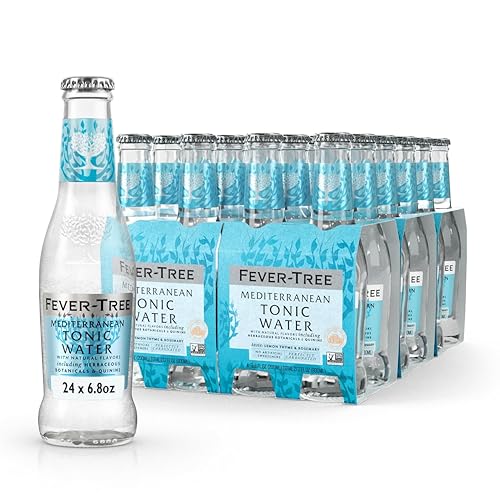
- Fever-Tree Mediterranean Tonic — Best Herbaceous Option. Check on Amazon for the current pack details.
- Schweppes Tonic Water — Best Familiar Option. Check on Amazon for the current pack details.
- Revello Ginger Ale — Best Low-Sugar Option. Check on Amazon for the current pack details.
- Mr & Mrs T Skinny Margarita Mix — Prose-Only Note (prose-only in this guide: covered in full below, with no Amazon link, for the reason explained in its review).
Read the full guide ↓ for the reasoning, the honest trade-offs, and the mixing technique behind every pick.
The best vodka mixers mildly sweet drinkers are looking for occupy a narrow and under-served band. On one side lies the dry tonic shelf, bitter enough to make newcomers wince; on the other, the soda-sweet mainstream, where a vodka drink becomes a soft drink by the second glass. Mildly sweet is the deliberate middle: enough sweetness to round the edges, never enough to coat the palate. This guide ranks the verified pool by how precisely each product holds that middle — and the pool, unusually, is rich in exactly the right candidates.
The candidates divide by strategy. The tonics achieve mildness by balance — quinine bitterness carrying a moderate sweetness so neither dominates. The ginger ales achieve it by formulation — one states ‘less sweet’ on its own listing, another is positioned as low sugar. Readers comparing strategies across spirits will find the whiskey-side treatment in Best Mixers For Rye Whiskey and the flavoured-vodka corner in Best Mixers For Cake Vodka, while the closest general relative, Best Mixers For Burnetts, works a neighbouring shelf.
Five products link here, the highest hit-rate in this series, because the pool genuinely suits the brief. The sixth — a skinny margarita mix whose lighter lime profile would otherwise fit — is documented prose-only for the standing reason: it is a margarita product, formulated for tequila, and this guide links by purpose as well as by profile. Its presence, honestly labelled, makes the five links around it mean more.
Key Takeaways
- Mildly sweet is a balance, not a sugar level: bitterness, acidity or ginger heat must be present to keep sweetness refreshing.
- Five of the six pool products are linked — this pool suits the brief unusually well; the skinny margarita mix is prose-only on category grounds.
- The ginger ale whose listing states ‘less sweet’ is the brief’s most literal answer; the tonics are its most elegant one.
- Herbaceous notes (the Mediterranean tonic’s rosemary) create perceived dryness without removing sweetness — a useful trick for this palate.
- Serve mildly sweet mixers very cold: warmth exaggerates sweetness, cold restores the balance the product was built with.
In this guide
Quick Picks
- Q Ginger Ale — Badge: Best Overall. The brief’s most literal answer: real ginger and organic agave, positioned by its own listing as less sweet, at 60 stated calories per can.
- Fever-Tree Premium Indian Tonic Water — Badge: Best Balanced Tonic. The premium tonic’s version of mild: a moderate sweetness held in perfect check by clean quinine, in 16.9 fl oz bottles.
- Fever-Tree Mediterranean Tonic — Badge: Best Herbaceous Option. Mediterranean tonic in 6.8 fl oz bottles: rosemary essential oils over African quinine, creating mildness through herbal dryness.
- Schweppes Tonic Water — Badge: Best Familiar Option. The classic tonic most drinkers grew up with: the sweetest linked pick here, included because for many palates its known balance is the definition of mild.
- Revello Ginger Ale — Badge: Best Low-Sugar Option. A ginger ale positioned by its listing as low in sugar and calories, in full-size 8 fl oz serves — the brief answered from the formulation side.
- Mr & Mrs T Skinny Margarita Mix — Badge: Prose-Only Note. A skinny margarita mix in a four-pack of litre bottles: tangy lime, cane sugar and real agave per its listing — on-brief for sweetness, off-category for spirit.
How These Picks Were Chosen
Selection began from the verified pool and scored each product against the brief’s own terms: sweetness that registers as mild in a finished vodka serve, plus a balancing element — quinine, ginger heat, herbal dryness, citrus acidity — strong enough to keep that sweetness in the background across a whole glass, not just the first sip. Products whose sweetness leads (the pool’s fruit and margarita styles in neighbouring guides) were excluded by that test. The skinny margarita mix passed the sweetness test and failed the purpose test, and the guide’s standing rule — profile cannot override category — placed it prose-only.
The method is research-led, as throughout this program: flavour and sweetness characterisations are drawn from the products’ own listings, including their explicit positioning language (‘less sweet’, ‘low sugar’), no prices are printed, and no ratings or review counts are quoted. Where this guide describes a balance as mild, that is a reasoned judgement from the product’s stated profile, offered so a reader with this specific palate can choose without buying the whole shelf to find out.
The 6 Best Options for Best vodka mixers mildly sweet

Q Ginger Ale
Badge: Best Overall
Q makes its ginger ale the way vodka drinkers secretly want it: with real ginger, sweetened with organic agave, and deliberately less sweet than the soda-aisle standard — its listing states 60 calories per can and says ‘less sweet’ out loud. In a vodka serve that restraint is everything. The ginger warmth arrives first, the agave rounds it without syruping it, and the vodka stays present instead of dissolving into a sweet ginger soda. The 7.5 fl oz cans are a touch more generous than the 5.1 fl oz mixer cans elsewhere in this guide, suiting a taller highball. It is also the rare mixer here explicitly positioned for mocktails as well as cocktails, so the same case serves everyone at the table.
Most mildly sweet recommendations require interpretation; this one requires only reading. Q built the product for this palate — ginger warmth up front, agave rounding rather than sweetening, and a finish clean enough that the second drink tastes like the first. In vodka it is the rare mixer that needs no ratio apology: pour it at the standard measure and the balance the brief asks for is simply there, which is why it leads a list full of strong tonics.
A second strength deserves naming: this is the pick whose balance is least dependent on the drinker’s technique. The tonics reward a careful hand — ratio, temperature and ice all move their balance visibly — while the Q can arrives pre-balanced and asks only to be poured cold. For a palate as specific as mildly sweet, that reliability is the difference between a preference and a habit: the drink tastes like the intention every time, including the times the person pouring is tired, distracted or new to the house’s ways. Habits are built on exactly that kind of forgiveness.
Strengths:
- Listing explicitly positions it as less sweet, with real ginger and organic agave
- Ginger heat balances sweetness structurally, sip after sip
- Positioned for mocktails too — the mild profile works at zero proof
Trade-offs:
- Ginger register is present, not neutral — ginger-averse drinkers should start with the tonics
- Case format is a commitment to the style
- Less-sweet profile can taste dry to soda-accustomed palates at first
At a glance:
- Format: 24 pack of 7.5 fl oz cans
- Listing states: real ginger and organic agave; 60 calories per can; less sweet positioning
- Listing positions it for: cocktails and mocktails
Best for: mildly sweet drinkers who want the brief answered literally / Not suited for: ginger-averse drinkers or maximum-sweetness seekers
Check on Amazon to see the current listing for the Q Ginger Ale.

Fever-Tree Premium Indian Tonic Water
Badge: Best Balanced Tonic
Fever-Tree built its reputation on the idea that the mixer is most of the drink, and the Premium Indian Tonic is the bottle that made the argument. The quinine is clean rather than medicinal, the citrus sits underneath instead of on top, and the carbonation is fine and persistent, which matters more than most buyers realise: lively bubbles keep a long vodka drink tasting structured instead of sweet and flat. The larger 16.9 fl oz bottle format suits a round of drinks poured at once rather than a single serve, and the absence of artificial sweeteners, flavourings or preservatives — stated on its own listing — keeps the finish dry and honest.
Where Q achieves mildness by formulation, Fever-Tree’s premium tonic achieves it by proportion. The sweetness is not low in any diet sense; it is governed — the quinine arrives in the same sip and the finish resolves dry, so the drink reads as balanced rather than sweet. For drinkers whose ‘mildly sweet’ really means ‘sweet, but grown-up about it’, this is the most satisfying bottle in the pool, and the one most likely to become a permanent shelf resident.
The premium tonic also teaches the category’s central lesson better than any other pick: mildness is a relationship, not a quantity. Pour it beside a glass of the classic tonic and the lesson is audible — same family, same nominal sweetness territory, entirely different experience of sweetness, because in one glass the quinine is a partner and in the other it is a chaperone. Drinkers who grasp this stop asking how much sugar a mixer contains and start asking what the sugar is doing, which is the question every subsequent purchase in this category should be built on.
Strengths:
- Sweetness and quinine in genuine equilibrium
- Fine carbonation keeps the balance lively across a long drink
- No artificial sweeteners, flavourings or preservatives per its listing
Trade-offs:
- Bottle format suits rounds, not single serves
- The balance assumes good ice — warm, it tilts sweet
- Premium positioning within the tonic category
At a glance:
- Format: 16.9 fl oz bottles, pack of 8
- Formulation: no artificial sweeteners, flavourings or preservatives, as listed
- Style: premium Indian tonic with real quinine character
Best for: drinkers who want sweetness governed by bitterness / Not suited for: solo single-serve drinkers
Check on Amazon to see the current listing for the Fever-Tree Premium Indian Tonic Water.
Fever-Tree Mediterranean Tonic
Badge: Best Herbaceous Option
Mediterranean tonic swaps the classic tonic’s citrus-bitter snap for something softer and more herbal: Fever-Tree combines essential oils of rosemary with African quinine for a subtly herbaceous, refreshing profile. With vodka — a spirit with no botanicals of its own — that herbal note becomes the drink’s personality, evoking a garden aperitif rather than a pub tonic. It is the mixer in this guide most likely to please drinkers who find standard tonic too bitter, because the quinine is present as structure rather than as a challenge. The 6.8 fl oz bottles pour one generous serve each, and a sprig of anything green from the kitchen makes it look — and taste — deliberate.
The cleverest route to mildly sweet is not touching the sweetness at all — it is adding a dry note the palate reads as restraint. Rosemary does that here, giving the tonic a garden-herb top that makes the whole drink register drier and milder than its recipe alone would suggest. With neutral vodka the herb becomes the drink’s character, and drinkers who find classic tonic too bitter often find this version’s balance exactly where they live.
The Mediterranean tonic’s herbal trick has a second application worth knowing: it is the mildly sweet pick most likely to please a dry drinker at the same table. Its rosemary top reads as sophistication to a bitter palate while its governed sweetness reads as kindness to a mild one — a rare bottle that lets two palates believe the drink was chosen for them. Hosts with mixed company should note the diplomacy. It also pairs with food more gracefully than the fruit-led styles ever could, because herbs belong at a table in a way that candy notes do not.
Strengths:
- Herbal top note creates perceived dryness and mildness
- Softer quinine delivery than classic tonic — no bitterness barrier
- Bottle-per-serve format keeps portions honest
Trade-offs:
- Rosemary register is distinctive — not for traditionalists
- Herbal profile pairs best with simple serves, not complex builds
- Case format is a commitment to a niche flavour
At a glance:
- Format: 24 pack of 6.8 fl oz bottles
- Listing notes: essential oils of rosemary with African quinine; subtly herbaceous flavour
Best for: mildly sweet drinkers who find classic tonic too bitter / Not suited for: tonic traditionalists
Check on Amazon to see the current listing for the Fever-Tree Mediterranean Tonic.

Schweppes Tonic Water
Badge: Best Familiar Option
Schweppes is the tonic most drinkers meet first, and familiarity is a genuine virtue in a mixer: you already know how sweet it runs, how assertive its quinine bite is, and how it behaves over ice. In a vodka tonic it delivers the textbook version of the drink — bright, sweet up front, bitter at the finish — with none of the botanical detours the premium brands add. That predictability makes it the easiest tonic in this guide to balance by ratio alone: pour it longer for a softer drink, shorter for a drier one, and the result is consistent from the first glass to the last because the flavour never surprises you.
An honest guide admits that ‘mildly sweet’ is partly autobiographical: for drinkers raised on the classic tonic serve, this profile is the reference point of normal, and everything drier reads as austerity. Schweppes earns its link on those terms — the fullest sweetness among the linked five, but a familiar, quinine-checked fullness that generations have experienced as balance. If your palate’s centre is here, the guide’s advice is to trust it and let the drier picks be your variations, not your corrections.
There is a calibration service this pick performs for the whole list: it is the control sample. A mildly sweet drinker who has never tasted their preference against the classic reference cannot know whether their palate sits at the category’s centre or its dry edge — and one multi-pack of the familiar profile answers the question permanently. Buy it as an instrument as much as a drink. If it tastes like home, your centre is here and the drier picks are your variations; if it tastes fuller than you remembered, your palate has already moved, and the list above it is your new home.
Strengths:
- The reference profile — predictable in every glass
- Quinine finish keeps the fuller sweetness in check
- Multi-pack format suits regular household use
Trade-offs:
- Fullest sweetness of the linked picks — the brief’s upper edge
- Less nuanced than the premium and Mediterranean tonics
- Can dominate a light pour if ratios drift
At a glance:
- Format: bottled tonic water, 10 count (pack of 6) as listed
- Style: classic quinine tonic
- Sweetness profile: full, traditional tonic sweetness
Best for: drinkers whose mild is calibrated to the classic serve / Not suited for: drinkers actively reducing sweetness
Check on Amazon to see the current listing for the Schweppes Tonic Water.

Revello Ginger Ale
Badge: Best Low-Sugar Option
Revello takes ginger ale in a functional direction: its listing describes a mixer infused with electrolytes, antioxidants, vitamins and minerals, positioned as low in sugar and calories, and aimed at crafted cocktails and mocktails. Strip away the wellness framing and the drinking proposition is sound — a lighter ginger ale in a full-size 8 fl oz serve that mixes a tall vodka highball without the sugar weight of a classic soda. The small pack of four suits trying the style before committing to a case. In the glass the ginger profile is the point: clean, modern, and deliberately restrained, for drinkers who read labels as carefully as they choose spirits.
Revello approaches mildness as a specification: low sugar by design, with the listing adding electrolytes, antioxidants, vitamins and minerals to the proposition. In the glass what matters is simpler — a ginger drink whose sweetness never accumulates, so a tall serve stays refreshing to the bottom. It ranks fifth because its ginger is cleaner and quieter than the leader’s, but for drinkers whose mild-sweet brief is really a sugar brief, it may be the most relevant pick on the page.
Revello’s quieter profile has one more virtue specific to this brief: it is the pick least likely to fatigue. Sweetness fatigue is the mildly sweet drinker’s occupational hazard — the second glass sweeter than the first, the third abandoned — and it is driven by accumulation, which a low-sugar formulation attacks at the root. In a long, tall serve over plenty of ice, this is the bottle whose last sip tastes most like its first. Drinkers whose mildly sweet preference is really a whole-evening preference, rather than a first-glass one, may find their personal ranking promotes it several places, and the guide’s criteria would support them.
Strengths:
- Listing states low sugar and low calorie positioning
- Full-size serve suits tall, slow drinks
- Sweetness never accumulates across the glass
Trade-offs:
- Quieter ginger profile than the category leader here
- Four-pack is a trial format
- Functional positioning language will not resonate with every drinker
At a glance:
- Format: 8 fl oz, pack of 4
- Listing states: infused with electrolytes, antioxidants, vitamins and minerals
- Listing states: low sugar and low calorie positioning
Best for: drinkers whose mildly sweet brief starts with sugar content / Not suited for: ginger maximalists
Check on Amazon to see the current listing for the Revello Ginger Ale.
Mr & Mrs T Skinny Margarita Mix
Badge: Prose-Only Note
The skinny margarita mix is the most vodka-adjacent of the margarita family in this pool — a tangy lime blend made with cane sugar and real agave, explicitly mocktail friendly — and it still appears prose-only, because its formulation target is a lighter margarita, not a vodka serve. That honesty cuts both ways: if you keep a bottle for skinny margaritas, a vodka, skinny-mix and soda highball is one of the better improvisations in this entire guide, tart and light rather than syrupy. But a buyer shopping specifically for vodka mixers deserves links to products made for vodka, and those are the tonics, ginger ales and lemonade ranked above it.
This is the pool’s most interesting exclusion, and the guide shows its working. The skinny profile — lighter, tangier, mocktail friendly by its own description — is genuinely adjacent to mildly sweet, and a vodka-soda serve built on it is a respectable improvisation. But it is formulated as a margarita, for tequila, and a guide that links by purpose cannot promote it into a vodka ranking on sweetness alone. It stands here so readers who already own it know it has a vodka cameo, and readers who do not own it know to buy the five linked products instead.
The exclusion deserves its second paragraph because it is the one most likely to be tested by real life: a friend will bring this bottle, a store will shelve it beside the tonics, a recipe will suggest it. The guide’s position can be carried in one sentence — right sweetness, wrong spirit — and it survives every one of those encounters. What the prose-only treatment adds is permission: permission to use the bottle’s cameo without pretending it is a strategy, and permission to admire its lighter profile while buying the five products that were actually built for the glass in your hand.
Strengths:
- Lighter, tangier profile sits near the mildly sweet brief
- Listing notes cane sugar and real agave; mocktail friendly
- Four-pack of litres suits households that host margarita nights
Trade-offs:
- A margarita mix — formulated for tequila, not vodka
- Lime-forward profile is a different flavour family from this ranking
- Prose-only by design — no link, no image
At a glance:
- Format: 1 liter plastic bottles, 4 pack
- Listing notes: tangy lime blend, cane sugar, real agave, mocktail friendly
- Style: skinny margarita mix
Best for: skinny margarita drinkers who improvise occasionally / Not suited for: vodka shoppers, who have five linked options above
Prose-only pick: no Amazon link and no product image, because this product was not a confident match for this keyword — see the review above.
Comparison Table
| Pick | Badge | Format | Flavour direction | Link |
|---|---|---|---|---|
| Q Ginger Ale | Best Overall | 24 pack, 7.5 fl oz cans | Ginger warmth, deliberately restrained sweetness | Check on Amazon |
| Fever-Tree Premium Indian Tonic Water | Best Balanced Tonic | 16.9 fl oz bottles, pack of 8 | Balanced tonic, dry finish | Check on Amazon |
| Fever-Tree Mediterranean Tonic | Best Herbaceous Option | 24 pack, 6.8 fl oz bottles | Herbaceous tonic, subtly mild | Check on Amazon |
| Schweppes Tonic Water | Best Familiar Option | 10 count, pack of 6 as listed | Classic tonic, familiar sweet-bitter balance | Check on Amazon |
| Revello Ginger Ale | Best Low-Sugar Option | 8 fl oz, pack of 4 | Clean ginger, low-sugar restraint | Check on Amazon |
| Mr & Mrs T Skinny Margarita Mix | Prose-Only Note | 1 liter plastic bottles, 4 pack | Tangy lime, lighter skinny profile | Prose-only — no link |
How to Choose a Mildly Sweet Vodka Mixer
Choose by your balancing element, because that — not the sugar figure — is what you will actually taste. If you want heat to do the balancing, the ginger ales lead: Q for warmth with presence, Revello for a quieter, lower-sugar take. If you want bitterness to do it, the tonics lead: premium for equilibrium, Mediterranean for a softer herbal route, classic for the familiar calibration. Drinkers who cannot name their preference should start with the leader here, because its less-sweet positioning is the brief in its purest form, then explore in the direction their palate reports back.
Mind the serve temperature more than any other variable in this category. Sweetness perception rises as drinks warm and falls as they chill, so a mildly sweet mixer served merely cool will taste sweeter than its maker intended, and the same mixer served properly cold will taste exactly as designed. Full glasses of fresh ice and fridge-cold cans are not presentation fussiness here; they are how the mildly sweet balance physically exists. A reader who fixes temperature first will find several products in this guide suddenly taste ‘right’.
Finally, buy in the order of your certainty. The trial-size and smaller formats in this list exist so a specific palate can be tested cheaply in commitment terms: start with the format that lets you pour three or four drinks across a week, because mildness is a whole-glass judgement and a first sip will lie to you in both directions. When a product survives the week at the same rating it earned on day one, it has earned case space — that, and not any list, is the real definition of your best mildly sweet mixer.
How to Mix Vodka in the Mildly Sweet Zone
The standard build serves this category well with one adjustment: pour the mixer at the full three-to-one ratio, because mildly sweet products are balanced at their intended dilution and shortening the pour concentrates sweetness exactly where you do not want it. Fill the glass completely with ice, add the vodka, pour the mixer gently, stir once, and taste before touching anything. Most mildly sweet drinks that disappoint were adjusted — sweetened, shortened, garnished — before they were tasted.
Garnish with restraint and intent. A citrus twist adds aroma that the palate reads as freshness, effectively drying the drink without changing its recipe; a wedge squeezed in adds acidity that trims sweetness honestly. What this category should avoid is the sweet garnish — candied, syruped or fruited additions that smuggle the drink back across the line it was chosen to sit under. Fresh and aromatic, yes; sweet, no.
Troubleshooting for the middle zone. Problem: the drink tastes sweeter than the description promised → it is too warm or the ice is spent; rebuild colder before changing products. Problem: the drink tastes thin rather than mild → the pour went long on a lighter product; return to the standard ratio, or step up to the fuller balanced tonic. Problem: the second glass tastes sweeter than the first → palate fatigue is real; a salt-free savoury bite or a glass of water between serves resets the balance better than any recipe change.
Why Mildly Sweet Is a Skill, Not a Compromise
Drinkers sometimes apologise for preferring mildly sweet, as if the dry end of the shelf held the moral high ground. It does not. The middle zone is where balance lives, and balance is the hardest property in drinks to manufacture — which is why so few products hold it and why this pool’s five linked options, each holding it by a different mechanism, constitute a genuinely useful shelf. A palate that knows it wants sweetness governed rather than absent is a palate that knows itself, and that self-knowledge predicts satisfaction better than any fashion in dryness.
There is a hospitality dividend too. Mildly sweet is the zone where the widest range of guests can meet: dry drinkers find it acceptable, sweet drinkers find it refreshing, and nobody finds it extreme. A host stocking for a mixed table could do worse than to build the whole evening on this page’s top two picks and let the extremes visit other houses.
Reading Sweetness Language on Mixer Listings
Listings speak about sweetness in code, and this category rewards learning it. ‘Less sweet’ is a comparative claim against the category norm — the strongest signal a mildly sweet shopper can get, and the leader here makes it explicitly. ‘Low sugar’ is a formulation claim, narrower and more measurable in spirit. ‘Balanced’ and ‘crisp’ are balance claims — sweetness governed by something else — which is the tonic family’s dialect. None of these phrases is a guarantee, but together they let a reader triage a shelf before spending anything.
The negative signals are equally learnable. Flavour-first language with no balancing element mentioned, fruit names in the headline position, and ‘sweet’ used as an unqualified compliment all predict a product that will blow through the mildly sweet ceiling by the second glass. The prose-only style in this pool is instructive precisely because its language is mixed — ‘skinny’ pulling one way, its margarita category pulling the other — and reading it correctly requires weighing both, which is the whole skill in miniature.
Sweetness Across the Evening: Palate Fatigue and How to Beat It
Palates do not hold still, and mildly sweet drinkers feel the drift first because their target zone is narrow. The mechanism is simple: sweetness perception adapts downward with exposure, so each successive glass tastes relatively sweeter as the evening’s baseline shifts — the drink has not changed, the instrument has. Countermeasures are equally simple and mostly free. Alternate with water, which resets the baseline honestly; introduce a savoury bite between serves, because salt re-sensitises the palate to balance; and consider stepping the second glass toward the drier end of your own shelf, using the tonic picks here as the evening’s second gear.
Format helps too, in a way this list is quietly built around. Single-serve cans enforce a pause between drinks — a small, physical punctuation in which the palate recovers — while a continuously topped-up glass denies it any punctuation at all. The mildly sweet zone is, in the end, an evening-length achievement rather than a first-sip property, and the households that hold it longest are the ones that treat pacing and temperature as ingredients, exactly as the how-to section of this guide prescribes. Readers whose shopping started in an entirely different aisle — the cement and construction meanings of the word live in guides such as Best Portable Cement Mixers — will find the drinks shelf a gentler discipline, but a discipline all the same.
Pairing Mildly Sweet Vodka Serves With Food
Mildly sweet is the most food-friendly zone in the vodka repertoire, and the pairing logic follows the balancing elements rather than the spirit. Ginger-led serves belong beside spiced and roasted food, where warmth answers warmth; the herbaceous tonic belongs beside anything green, grilled or Mediterranean in spirit; the balanced premium tonic is the aperitif-table all-rounder, as comfortable before a meal as during it. What the zone avoids is dessert: a mildly sweet drink beside a sweet course doubles the register and flattens both, the one pairing error this palate will reliably regret.
There is also a sequencing pleasure available to hosts: begin the evening at the zone’s fuller end, with the classic or premium tonic while palates are fresh, and migrate toward the restrained ginger ales as food and fatigue accumulate. The evening acquires a shape — a gentle descent from round to crisp — that guests experience as care without ever seeing the mechanism. It costs nothing but the order of opening, and it is available only to a shelf stocked across the zone, which is the practical argument for owning more than one of this guide’s linked picks.
The Mildly Sweet Pantry: Keeping the Zone Stocked
A zone this narrow needs a stocking system, because the cost of running out is not a missing drink — it is a substitute bought in haste at the wrong sweetness, which then occupies the shelf and the palate for weeks. The system that works is a two-deep rotation: the current leader format in use, its replacement already cold behind it, and a standing note — mental or literal — of which balancing family comes next in the rotation. Ginger, then tonic, then herbaceous, then back: rotation by mechanism keeps the zone from narrowing into a single product, because a palate fed one balance exclusively will eventually stop tasting the balance at all.
Storage within the zone has one rule beyond cold: protect the trial pipeline. Mildly sweet drinkers are perpetual triallists, because the zone rewards exploration — every new balanced product is a candidate citizen. Keep the trials small, as this guide’s formats allow, and judge them across a week of evenings rather than a single glass, because mildness is the property most sensitive to context: the same can reads differently before food, after food, and at the end of a long day. A product that holds its rating across those contexts has earned promotion to the rotation; one that shines only in the first context is a situational bottle, and situational bottles are how zones quietly collapse.
The pantry’s last element is a guest protocol, because mildly sweet households host like everyone else. Keep one fuller-calibrated option — here, the classic tonic — for the guest whose mild sits above yours, and one drier-leaning serve for the guest below, and the zone becomes a range you can offer rather than a preference you impose. Hospitality inside a narrow palate is a solved problem the moment the shelf spans the zone instead of sitting at a single point in it, and this guide’s five linked picks, bought gradually and rotated honestly, span it completely.
The zone, finally, is worth defending as a destination in itself. Drinks culture tends to treat sweetness as a dial to be minimised on the road to sophistication, and this guide has argued the opposite throughout: that governed sweetness, held in balance by heat, bitterness or herbs, is one of the most pleasurable and hospitable registers a drink can occupy. The five linked products are five proofs of that argument, each holding the zone by a different mechanism, and the mildly sweet drinker who stocks two or three of them owns something rarer than a fashionable shelf — a shelf calibrated to a palate that knows itself. Keep it cold, keep it rotating, and let the extremes visit.
Hold the zone, rotate the mechanisms, and trust the palate that brought you here: it was never asking for less. It was asking for balance, and balance, once stocked, is the easiest preference in the world to keep.
Balance, stocked and cold, keeps its promises.
Chosen carefully, mild is mighty.
Common Buying Mistakes
The first mistake is shopping by sweetness words alone and ignoring the balancing element. A mixer can be low in sugar and still taste sweet if nothing opposes the sugar it has; conversely the fullest product in this guide tastes balanced because quinine opposes it in every sip. Judge the pair — sweetness plus its governor — never the sweetness alone.
The second mistake is serving this category warm-ish and concluding the products are too sweet. Temperature is a sweetness dial the drinker controls for free, and mildly sweet products are calibrated for proper cold. Half the returns and bad reviews in this category are refrigeration failures wearing a flavour costume.
The third mistake is crossing categories for a profile. The skinny margarita mix in this pool fits the sweetness brief and fails the spirit brief, and buying it for vodka repeats the oldest error in this series: a product can match your palate and still be the wrong product. The five linked picks exist so that mildly sweet vodka drinkers never need to make that trade.
Final Recommendation
Buy the brief’s literal answer first: the Q Ginger Ale, whose own listing promises less sweet and delivers it with real ginger warmth. Take the Fever-Tree Premium Indian Tonic Water as the balanced-tonic expression of the same idea, and the Fever-Tree Mediterranean Tonic when you want mildness with a herbal accent.
Keep the classic tonic as your familiar calibration and the low-sugar ginger ale as your formulation-first option, and let the skinny margarita mix stay in its own category. Five linked products, five mechanisms, one narrow and honourable zone: mildly sweet is not the middle of the road — chosen this carefully, it is the destination.
Frequently Asked Questions
What does mildly sweet actually mean in a mixer?
Sweetness you can register without it becoming the drink’s main event — present in the first sip, governed by bitterness, heat, herbs or acidity by the finish. Every linked pick here achieves it by a different mechanism, which is why the guide names the mechanism for each.
Which pick is least sweet overall?
By positioning, the low-sugar ginger ale and the less-sweet ginger ale lead — both state their restraint on their own listings. The tonics are not low-sweetness products; they are balanced ones, which is a different and equally valid route to the same glass.
Why is the skinny margarita mix not linked if its profile fits?
Because links follow purpose as well as profile. It is formulated as a margarita for tequila; its sweetness may fit this brief, but its category does not, so it is documented honestly without a link.
My mildly sweet drink tasted too sweet. What went wrong?
Almost always temperature or dilution: a warm mixer or spent ice raises perceived sweetness sharply. Rebuild with fridge-cold mixer over a full glass of fresh ice before judging the product.
Can I make a linked pick milder still?
Yes — a squeeze of citrus or a twist expressed over the glass trims perceived sweetness honestly, and a splash of soda lengthens any of these serves toward dry without breaking their balance.
Are these mixers good without vodka?
The ginger ales in particular are positioned for mocktails as well as cocktails, and a mildly sweet profile is arguably even more valuable at zero proof, where sweetness has no spirit to hide behind.


