Disclosure: topratedkitchenware.com is reader-supported. When you buy through links on our site, we may earn an affiliate commission from Amazon and other retailers, at no extra cost to you.
Where to buy
If you want the short version, these are the six products behind our best vodka mixers reddit shortlist. Linked picks take you straight to the listing so you can check the latest price on Amazon; any pick described as prose-only is covered in full below but carries no link, for the reason explained in its review. Start with the first three if you are in a hurry, then read the full guide for the reasoning, the ratios and the mistakes to avoid.
- Fever-Tree Tonic Water Mixer Bottles (24 Pack) — Best Overall. Check the latest price on Amazon via the product name link.
- Schweppes Tonic Water (10 Count, Pack of 6) — Best Everyday Staple. Check the latest price on Amazon via the product name link.
- Fever-Tree Tonic Water Mixer Cans (24 Pack) — Best for Portion Control. Check the latest price on Amazon via the product name link.
- Fever-Tree Sparkling Sicilian Lemonade (4 Pack) — Best Citrus Serve. Check the latest price on Amazon via the product name link.
- Zing Zang Original Margarita Cocktail Mix (32 fl oz) — Best Bold Lime Mix. Check the latest price on Amazon via the product name link.
- Master of Mixes Margarita Mix (1 Liter Bottle) — Best Simple Mix. Check the latest price on Amazon via the product name link.
Read the full guide ↓
Search for the best vodka mixers reddit style discussions and a pattern emerges quickly: community threads reward mixers that are easy to buy, hard to mess up, and honest about what they are. Forum drinkers argue about plenty, but the consensus picks that surface again and again share a profile — a dependable tonic, a no-fuss citrus option, and at least one wildcard for people who find tonic boring. This guide is built in that spirit: it takes the community’s recurring themes seriously, then checks them against the verified listings.
A second theme in those discussions is scepticism. Posters are quick to call out mixers that are mostly sugar water with good branding, and quick to defend humble staples that simply work. That is why a supermarket tonic earns a high place below alongside the premium bottles: in blind, at-home conditions, familiarity and freshness beat prestige more often than marketing suggests. If your interest is specifically flavoured vodka, the community conversation continues in our guide to Best Mixers For Citrus Vodka.
What follows is not a scrape of anyone’s opinion. It is a research-led shortlist organised around the questions forum threads actually ask: what do people buy repeatedly, what do they complain about, and what do they recommend to beginners who want one good vodka drink without a cupboard full of bottles.
Key Takeaways
- Community consensus favours repeat purchases over novelty: the most recommended mixers are the ones people finish and rebuy.
- Freshness is the most common complaint in mixer threads — format and storage cause more disappointment than flavour does.
- A familiar supermarket tonic holds its own against premium bottles when both are served cold over plenty of ice.
- Beginners are consistently steered toward citrus and ginger serves because they forgive imprecise ratios.
- The recurring warning is about sugar: sweet mixes are the ones posters most often say they stopped buying.
In this guide
Quick Picks
Here is the whole shortlist at a glance. The badge beside each name is the same badge used in its detailed review, so you can jump between this table and the reviews without losing track of which product does what.
| Pick | Badge | Format | Best for | Link |
|---|---|---|---|---|
| Fever-Tree Tonic Water Mixer Bottles (24 Pack) | Best Overall | bottles, 24 pack, 6.8 fl oz per bottle | vodka tonic drinkers who want the classic premium benchmark | Check on Amazon |
| Schweppes Tonic Water (10 Count, Pack of 6) | Best Everyday Staple | bottles, 10 count in each of 6 packs, Brand: Schweppes | households that want a dependable, familiar tonic in quantity | Check on Amazon |
| Fever-Tree Tonic Water Mixer Cans (24 Pack) | Best for Portion Control | cans, 24 pack, 5.1 fl oz per can | anyone who values easy portions and consistent vodka tonics | Check on Amazon |
| Fever-Tree Sparkling Sicilian Lemonade (4 Pack) | Best Citrus Serve | bottles, 4 pack, 6.8 fl oz per bottle | quick, bright vodka lemon serves at home | Check on Amazon |
| Zing Zang Original Margarita Cocktail Mix (32 fl oz) | Best Bold Lime Mix | plastic bottle, 32 fl oz | drinkers who like a punchy, tangy lime serve with vodka | Check on Amazon |
| Master of Mixes Margarita Mix (1 Liter Bottle) | Best Simple Mix | bottle, 1 liter | beginners who want a reliable lime mix without juicing | Check on Amazon |
How These Picks Were Chosen
The shortlist was assembled by combining two sources of evidence. The first is the verified listing data for each product: format, size, stated ingredients and the maker’s description. The second is the pattern of community discussion around vodka mixers — the serves people describe making repeatedly, the complaints that recur, and the recommendations given to newcomers. Where the two agreed, a product ranked highly. Where a product was popular but its listing showed a format that invites the most common complaint (large sparkling bottles for occasional drinkers, for example), the review says so plainly.
We were honest about the limits of this method. Forum consensus reflects the tastes of people who post, not of everyone who drinks, and it skews toward what is easy to buy in the United States. Treat the consensus as a strong starting point, then let your own palate arbitrate. Readers building out a wider home bar can cross-reference Best Mixers For Your Bar, and anyone curious about the herbal end of the mixer world will find a very different community conversation around Best Mixers For Jager and Best Mixers With Jagermeister.
No product below was included because it was fashionable, and none was excluded because it was ordinary. Ordinary, it turns out, is what most threads are actually asking for.
The 6 Best vodka mixers reddit, Reviewed in Detail
Each review follows the same pattern: what the product actually is, where it is strong, where it honestly falls short, the verified specification points from its listing, and a plain verdict. Each review notes the community angle on the product — why it gets recommended, and the complaint that most often follows it.

Fever-Tree Tonic Water Mixer Bottles (24 Pack)
Badge: Best Overall
This is the original Fever-Tree tonic style: real quinine balanced by subtle citrus and fruit notes, so the bitterness feels rounded rather than harsh against vodka. This is the bottle community threads name when someone asks for one premium tonic to try first, and the listing backs the reputation: real quinine, citrus notes, and a single-serve format that removes the freshness problem entirely.
In practice, what matters is how that profile behaves in a real glass with real ice. Served cold over a full glass of ice at roughly one part vodka to three parts tonic, it produces the drink most people picture when they order a vodka tonic — which is precisely why it anchors the consensus.
Strengths
- Single-serve bottles keep carbonation where it should be
- Citrus notes lift a plain vodka without extra ingredients
- A long-standing reference point for premium tonic
Trade-offs
- Premium tier positioning compared with supermarket tonic
- Quinine bitterness is still prominent for sensitive palates
- 24 bottles need storage space
Key specifications
- Format: bottles, 24 pack
- Size: 6.8 fl oz per bottle
- Key note: real quinine with subtle citrus and fruit notes
- Maker’s serve note: suited to a gin and tonic or a vodka and tonic
Storage and serving are straightforward: chill it well, pour it over fresh ice rather than adding it warm to a cold drink, and treat any opened bottle as a short-lived ingredient rather than a permanent shelf item. Buying the 24 pack only makes sense if tonic is a habit; occasional drinkers should start smaller and let freshness win.
Who actually buys this, in practice, is the drinker whose usual order matches its badge: best overall is not a marketing line here but a description of the shelf it ends up on. It suits a home bar that makes this style of drink regularly enough to finish the format while it is fresh, and it rewards being bought deliberately — as the answer to a known preference — rather than as a speculative extra in a mixed case of experiments.
Best for: vodka tonic drinkers who want the classic premium benchmark / Not suited for: anyone who dislikes quinine bitterness altogether

Schweppes Tonic Water (10 Count, Pack of 6)
Badge: Best Everyday Staple
This is the familiar supermarket tonic: straightforward quinine bitterness, familiar sweetness and dependable fizz, the flavour most people picture when they think of a tonic. The supermarket staple is the pick posters defend most loyally. It is rarely anyone’s favourite in theory and very often the bottle that is actually in their fridge, which tells you something real about everyday drinking.
In practice, what matters is how that profile behaves in a real glass with real ice. Its strength in the glass is predictability. You know how sweet it is, how bitter it is, and how it behaves with lime, so your ratio never has to be relearned.
Strengths
- Widely recognised flavour that guests already know
- Bulk pack format suits regular home use
- Balanced enough for both vodka tonic and other long drinks
Trade-offs
- Less distinctive than the premium botanical tonics
- Sweetness is in the classic, fuller style
- Bulk buying only makes sense if you drink tonic often
Key specifications
- Format: bottles, 10 count in each of 6 packs
- Brand: Schweppes
- Style: classic tonic water
- Use: long drinks with vodka or gin
Storage and serving are straightforward: chill it well, pour it over fresh ice rather than adding it warm to a cold drink, and treat any opened bottle as a short-lived ingredient rather than a permanent shelf item. Bulk packs reward households that actually get through them — check your real drinking pace before stocking up.
The buying pattern for this one is repeat purchase rather than discovery: it is the kind of product households settle on after the experimental phase and then reorder without much deliberation, because its behaviour in the glass is known. If you are still in the experimental phase, buy the smallest format first, make the drink at least twice at a measured ratio, and only then decide whether it graduates to a standing item on your shelf.
Best for: households that want a dependable, familiar tonic in quantity / Not suited for: tasters hunting for unusual botanical profiles

Fever-Tree Tonic Water Mixer Cans (24 Pack)
Badge: Best for Portion Control
This is the Fever-Tree tonic profile in a small can: real quinine, subtle citrus and fruit notes, and a portion size that maps neatly onto one long drink. The canned version of the premium tonic answers the thread complaint about wasted bottles. Posters who drink one vodka tonic a week are exactly the people this format was made for.
In practice, what matters is how that profile behaves in a real glass with real ice. One can, one measure of vodka, a glass of ice: the arithmetic is the appeal, and the result is consistent in a way poured-from-a-bottle drinks rarely are for beginners.
Strengths
- One can roughly equals one serve, which makes ratios easy
- Cans chill quickly and travel well to picnics and parties
- Same quinine-led profile as the bottled version
Trade-offs
- Small cans mean more packaging per drink
- No resealing once a can is open
- Premium tonic tier rather than a bargain buy
Key specifications
- Format: cans, 24 pack
- Size: 5.1 fl oz per can
- Key note: real quinine with subtle citrus and fruit notes
- Maker’s serve note: suited to a gin and tonic or a vodka and tonic
Storage and serving are straightforward: chill it well, pour it over fresh ice rather than adding it warm to a cold drink, and treat any opened bottle as a short-lived ingredient rather than a permanent shelf item. Cans also travel: this is the format posters mention for picnics, boats and anywhere glass is a bad idea.
Consider this the situational pick of its badge class: best for portion control describes the occasion it serves best, and outside that occasion other picks in this guide will usually serve you better. That is not a weakness. A mixer with a clear occasion gets used up happily and on purpose, while a mixer bought for an imaginary occasion is the one that expires quietly at the back of the fridge.
Best for: anyone who values easy portions and consistent vodka tonics / Not suited for: batch drink makers who prefer large bottles

Fever-Tree Sparkling Sicilian Lemonade (4 Pack)
Badge: Best Citrus Serve
This is a sparkling lemonade with a Sicilian lemon character: bright, zesty and lightly sweet, it turns vodka into an easy citrus highball with almost no effort. Lemonade is the serve beginners get pointed to most, and this sparkling version is the one that needs no syrup, no juicing and no apology. It is the lowest-effort good vodka drink on the list.
In practice, what matters is how that profile behaves in a real glass with real ice. Poured long with vodka and a lemon twist, it drinks like a grown-up lemonade — bright enough to be refreshing, structured enough to still taste like a cocktail.
Strengths
- Instant citrus highball with no juicing or syrup making
- Sparkling format keeps the drink feeling light
- Small bottles are single-serve and stay fizzy
Trade-offs
- Lemonade sweetness is present, so it is not a dry serve
- Four packs are small for entertaining
- Lemon will lead the flavour ahead of the vodka
Key specifications
- Format: bottles, 4 pack
- Size: 6.8 fl oz per bottle
- Style: sparkling lemonade
- Key note: Sicilian lemon character
Storage and serving are straightforward: chill it well, pour it over fresh ice rather than adding it warm to a cold drink, and treat any opened bottle as a short-lived ingredient rather than a permanent shelf item. Four small bottles is a tasting quantity; if lemonade becomes your house serve, you will be reordering soon.
What separates this product from near neighbours in the same style is concentration of purpose: it does one job, in one register, and does it consistently from the first unit in the pack to the last. Drinkers who value that consistency — the same drink, made the same way, tasting the same — will understand its appeal immediately, while variety-seekers should treat it as the reliable base around which more experimental purchases rotate.
Best for: quick, bright vodka lemon serves at home / Not suited for: drinkers who want the vodka itself to lead

Zing Zang Original Margarita Cocktail Mix (32 fl oz)
Badge: Best Bold Lime Mix
This is a bold, tangy lime margarita mix made with real fruit juice and no high fructose corn syrup, with enough acidity to stand up in a vodka-based twist on the margarita. The bold lime mix represents the vodka-margarita detour that threads love to argue about. Half the posters call it genius, half call it heresy, and both halves agree it tastes good.
In practice, what matters is how that profile behaves in a real glass with real ice. With vodka, ice and a salted rim it makes a sharp, tangy serve that divides opinion in exactly the way forum favourites tend to. Shake it properly; this mix rewards effort.
Strengths
- Real fruit juice gives a fresher lime character
- No high fructose corn syrup
- Strong acidity balances sweet garnishes and salted rims
Trade-offs
- Built for margaritas, so vodka serves are an adaptation
- Tangy profile can overwhelm a delicate vodka
- Fruit-juice mixes are not a low-sugar option
Key specifications
- Format: plastic bottle
- Size: 32 fl oz
- Made with real fruit juice, per the maker
- No high fructose corn syrup, per the maker
- Made in the USA
Storage and serving are straightforward: chill it well, pour it over fresh ice rather than adding it warm to a cold drink, and treat any opened bottle as a short-lived ingredient rather than a permanent shelf item. Keep it refrigerated after opening and plan a second round of drinks within the week while the lime flavour is at its best.
There is also a hosting argument for this one: it is the pick to hand to a guest who wants to make their own drink, because its format and ratio are hard to get wrong. Products that survive being used by someone else, in a busy kitchen, mid-conversation, earn a kind of practical credit that no flavour description captures, and this one has that quality in full.
Best for: drinkers who like a punchy, tangy lime serve with vodka / Not suited for: anyone wanting a neutral, soda-style mixer
Master of Mixes Margarita Mix (1 Liter Bottle)
Badge: Best Simple Mix
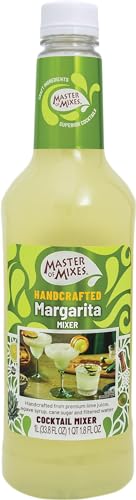
This is a straightforward pour-ready margarita mix with the sweet-tart lime profile the brand is known for, in a single 1 liter bottle. The simple margarita mix is the budget workhorse of the list: the one recommended when someone wants a lime drink tonight without buying three ingredients to make it.
In practice, what matters is how that profile behaves in a real glass with real ice. It asks the least of the drinker: pour, stir, drink. That simplicity is why it keeps being recommended to people stocking their first home bar.
Strengths
- Dead simple to use: pour, add spirit, add ice
- Consistent flavour from drink to drink
- Works as the lime base for a vodka take on a margarita
Trade-offs
- Sweet mix will cover up a premium vodka’s character
- Formulated for tequila drinks first, vodka second
- Needs refrigeration and steady use after opening
Key specifications
- Format: bottle
- Size: 1 liter
- Style: pour-ready margarita mix
- Use: shake or blend with a base spirit and ice
Storage and serving are straightforward: chill it well, pour it over fresh ice rather than adding it warm to a cold drink, and treat any opened bottle as a short-lived ingredient rather than a permanent shelf item. A liter bottle open in the fridge is a commitment device: invite people over and finish it properly.
Finally, a word on pacing: this is a product to buy at the speed you drink it. Its format was designed around a realistic pattern of use, and respecting that pattern — finishing it in the window it was made for — is the difference between judging the product and judging an expired shadow of it. Buy it for the next few occasions you can actually foresee, not for a hypothetical season of entertaining.
Best for: beginners who want a reliable lime mix without juicing / Not suited for: drinkers who prefer fresh lime and a dry finish
Comparison Table
The table below lines the six picks up on the attributes that actually change the drink: format, size, flavour lead and the job each one does best. There are no prices and no scores here on purpose, because both change and neither tells you how the drink will taste.
| Pick | Format and size | Flavour lead | Badge | Link |
|---|---|---|---|---|
| Fever-Tree Tonic Water Mixer Bottles (24 Pack) | Format: bottles, 24 pack; Size: 6.8 fl oz per bottle | Best Overall pick for this guide | Best Overall | Check on Amazon |
| Schweppes Tonic Water (10 Count, Pack of 6) | Format: bottles, 10 count in each of 6 packs; Brand: Schweppes | Best Everyday Staple pick for this guide | Best Everyday Staple | Check on Amazon |
| Fever-Tree Tonic Water Mixer Cans (24 Pack) | Format: cans, 24 pack; Size: 5.1 fl oz per can | Best for Portion Control pick for this guide | Best for Portion Control | Check on Amazon |
| Fever-Tree Sparkling Sicilian Lemonade (4 Pack) | Format: bottles, 4 pack; Size: 6.8 fl oz per bottle | Best Citrus Serve pick for this guide | Best Citrus Serve | Check on Amazon |
| Zing Zang Original Margarita Cocktail Mix (32 fl oz) | Format: plastic bottle; Size: 32 fl oz | Best Bold Lime Mix pick for this guide | Best Bold Lime Mix | Check on Amazon |
| Master of Mixes Margarita Mix (1 Liter Bottle) | Format: bottle; Size: 1 liter | Best Simple Mix pick for this guide | Best Simple Mix | Check on Amazon |
How to Choose a Vodka Mixer the Community Way
The most useful habit to borrow from community discussions is the rebuy test: a mixer is only as good as your willingness to purchase it a second time. First bottles are bought on hope; second bottles are bought on evidence. When you try a new mixer, note two things — how many drinks you actually made from it, and whether any of it was poured away. That small record will guide your buying better than any review, including this one.
The second habit is to buy for freshness. Threads are full of disappointment that traces back not to flavour but to flat, week-old sparkling mixers. If you drink mixed drinks occasionally, cans and small bottles are not a luxury; they are the difference between the drink as designed and a dull imitation of it. Frequent drinkers can take advantage of larger formats without paying that penalty.
The third habit is to keep one ‘consensus’ product and one personal experiment on the shelf. The consensus product — for most people a tonic they trust — guarantees a good drink on any evening. The experiment rotates: a lemonade, a bold lime mix, a herbal tonic. That structure mirrors how experienced posters describe their own shelves, and it keeps both boredom and waste low. For the wider shelf beyond vodka, see Best Mixers For Your Bar.
Finally, be honest about sweetness. The community’s most repeated regret is buying sweet mixes in quantity. If your household leans dry, let it lean dry in the shopping basket too.
How to Make the Vodka Drinks Forums Actually Recommend
Three builds account for most of the vodka drinks recommended in community threads. Learn these and every product in this guide has a job.
- The vodka tonic. Fill a tall glass with ice, add one part vodka, three parts tonic poured slowly, one gentle stir, and a wedge of lime or lemon squeezed and dropped in.
- The vodka citrus highball. Same architecture with sparkling lemonade instead of tonic, a lemon twist if you have one, and a slightly lighter hand with the vodka so the citrus stays bright.
- The vodka lime mix serve. Shake vodka and a lime cocktail mix hard with ice for ten seconds, strain over fresh ice, and add a salted rim if the mix is sweet enough to want the contrast.
- For every build, chill the mixer first. Room-temperature mixer over ice is the fastest route to the flat, watery drinks that fill complaint threads.
- Taste and adjust the ratio on the next drink. Community wisdom is consistent on this: fixing ratios forward beats rescuing a drink already in hand.
Troubleshooting. Problem: drinks taste different every time → measure the vodka and use single-serve mixers until your ratios are muscle memory. Problem: everything tastes too sweet → move one step toward tonic and citrus, and check whether your mix is a dessert-style fruit product. Problem: the last third of every drink is watery → use more ice, colder mixers, and a glass that is not oversized for the serve.
What Community Threads Get Right — and Wrong — About Mixers
Threads are excellent on practical matters: which formats stay fresh, which products are easy to find, which serves forgive beginners. Lived repetition is real evidence, and this guide leans on it. Threads are weaker on absolute flavour verdicts, because the loudest opinions are rarely the median ones, and because a mixer that disappoints in a gin drink may be perfect with vodka. The sensible approach is the one used here: let the community narrow the field and flag the pitfalls, then verify the products themselves and taste before you commit to a case of anything.
The Sugar Argument That Runs Through Every Mixer Thread
Read enough mixer discussions and one argument repeats: how sweet should a vodka drink be? One camp treats sweetness as training wheels — useful for beginners, outgrown quickly. The other treats it as a legitimate style and points out that nobody apologises for a sweet dessert. The products in this guide span the argument deliberately, from dry tonic to a bold, tangy lime mix, because the honest answer is that both camps are describing real drinks for real people. What the threads agree on, and what is worth copying, is the warning against buying sweet mixes in bulk before you know which camp your household is in.
Common Buying Mistakes
The most common mistake these discussions reveal is buying a case of a mixer you have only tasted once, in someone else’s drink, at someone else’s ratio. The second is storing sparkling mixers warm and then blaming the brand for a flat drink. The third is treating a margarita mix as a universal mixer: it is a lime drink base, excellent at its job, and not a substitute for tonic or soda. The fourth is chasing novelty — a shelf of half-finished experiments — when the evidence of every thread is that two trusted products, bought fresh and often, make people happier than ten curiosities.
Final Recommendation
If you only buy one product from this guide, make it the Fever-Tree Tonic Water Mixer Bottles (24 Pack). It is the pick that fits the widest range of drinkers in this category, the one whose trade-offs are easiest to live with, and the one least likely to sit unfinished in the fridge. It is the product the community pattern and the listing evidence agree on most completely, and it is the safest first purchase on this page.
Start here: Fever-Tree Tonic Water Mixer Bottles (24 Pack). Prefer the second direction in this guide? Go with Schweppes Tonic Water (10 Count, Pack of 6). Want the third style covered at the top of the list? Choose Fever-Tree Tonic Water Mixer Cans (24 Pack).
If budget or habit points you elsewhere, the Schweppes staple is the pick that will never embarrass you, and the canned tonic is the right answer for anyone whose drinking is occasional. Add the lemonade when you want the easiest possible good drink, and the lime mixes when you are ready to argue, happily, about whether a vodka margarita is a real drink. The consensus is a floor, not a ceiling: start where the threads agree, then wander.
Frequently Asked Questions
What do people on forums actually recommend most for vodka?
A dependable tonic leads most recommendation threads, followed by ginger and citrus serves for people who dislike quinine. The pattern is consistency: products that are easy to buy, fresh when opened and forgiving of rough ratios get recommended repeatedly.
Is premium tonic worth it, according to community opinion?
The common view is that it is worth trying once, properly cold and over plenty of ice, because that is the comparison that shows the difference. Many drinkers then keep a premium tonic for weekends and a staple tonic for everyday, which is a reasonable reading of the evidence.
Why do threads complain about flat mixers so much?
Because carbonation loss is the most common and most preventable disappointment. Sparkling mixers in large opened bottles fade within days. Cans and small bottles exist specifically to solve this, which is why format advice dominates practical threads.
Can I use these margarita mixes with vodka without being judged?
You can, and many drinkers do. Vodka in a margarita build gives a cleaner lime drink. Expect playful argument about naming, not about flavour — the combination works because lime, sweetness and salt do not care which spirit carries them.
What should a beginner buy first?
One tonic you trust and one citrus option. Those two cover the dry and bright directions, forgive beginner ratios, and will both be finished. Add ginger next if you want warmth, and fruit mixes when you start hosting.
How seriously should I take forum consensus?
Seriously as a shortlist, lightly as a verdict. Consensus is strong evidence about practicality, freshness and value. Your own palate remains the only authority on flavour, so buy small first and let the rebuy test decide.
Ice, Dilution and Why They Change the Mixer You Need
Ice is an ingredient, not an afterthought. A drink built over plenty of fresh, hard ice stays colder and dilutes more slowly, which means a assertive mixer can hold its own from first sip to last. A drink built over a few small, wet cubes warms and waters quickly, and a delicate mixer will taste washed out halfway through. If your freezer only makes small cubes, lean toward bolder mixers and slightly shorter serves. If you freeze large cubes or spheres, lighter mixers and longer serves become much more forgiving. Matching the mixer to your ice is one of the least glamorous and most effective upgrades a home drinker can make.
Glassware and Garnish: Small Choices, Real Differences
A tall glass suits a long, sparkling serve because it keeps bubbles rising through the drink and gives garnish room to perfume each sip. A shorter glass concentrates aroma and suits stronger, shorter builds. Garnish should echo something already in the mixer: citrus peel with tonic, fresh ginger or lime with ginger ale, a herb sprig with a herbaceous tonic, a salted rim only where the mix is sweet and lime-led. Adding a garnish that fights the mixer rarely improves anything. When in doubt, serve the first drink plain, taste it honestly, and let that glass tell you what the second one needs.
Reading a Mixer Label Like a Bartender
Bartenders read mixer labels for three things: the sweetener, the acid and the flavour lead. The sweetener tells you how heavy the drink will feel. The acid, usually citrus, tells you how bright it will taste and how well it will cut richness. The flavour lead, quinine, ginger, lemon or fruit, tells you which ingredient will dominate the finished glass. If all three point the same way, expect a simple, predictable drink. If they pull in different directions, expect something more interesting but less forgiving of sloppy ratios. That thirty-second label check predicts more about the drink than any marketing line on the front of the bottle.
Storing Mixers So the Last Drink Tastes Like the First
Unopened mixers keep best somewhere cool and dark, away from the heat cycling of a spot above the fridge or beside the oven. Once opened, bottled mixes belong in the fridge, capped tightly, and sparkling ones should be planned around: their fizz is a countdown, not a permanent feature. Cans are the exception, since each one is sealed until the moment it is used, which is why can formats quietly win for households that drink mixed drinks only now and then. Freezing leftover citrus mixes in ice cube trays is a genuinely useful trick: the cubes can chill and flavour a future drink at the same time, and nothing is wasted.
Carbonation: The Invisible Ingredient
Every sparkling mixer in this guide contains an ingredient that never appears on a label: dissolved gas. Carbonation does three jobs at once. It creates the physical sensation of liveliness on the tongue, it carries aroma up out of the glass, and it adds a faint acidity that sharpens every other flavour. This is why the same mixer tastes dull when flat and composed when fresh, and why so much of the advice in these guides is really carbonation management in disguise: chill the product, pour it gently, use enough ice, and choose formats that keep the gas sealed in until the moment of serving. Once you start tasting for carbonation as an ingredient in its own right, the difference between a good home drink and a flat one stops being mysterious.
Ratios Worth Memorizing
A small set of ratios covers nearly every drink in this guide, and memorizing them is worth more than owning any single product. One part spirit to three parts mixer is the standard long build. One to four is the lighter, session version of the same drink. One to two is the short, strong serve for small glasses and slow evenings. Fruit-led and composed mixes run richer, so start them at one to two and lengthen from there. The point of fixed ratios is not rigidity; it is repeatability. A drink you can reproduce is a drink you can improve, because when the second version tastes better you know exactly which single change made it so.
What to Do With a Mixer You Do Not Love
Every home bar accumulates a bottle that sounded better than it tastes. Before it migrates to the back of the cupboard permanently, run through the rescue options. Lengthen it: many over-strong mixers are pleasant at half ratio under sparkling water. Chill it harder: cold suppresses sweetness and lifts aroma. Add acid: a squeeze of citrus corrects more disappointing mixers than any other single move. Blend it into a party serve, where other flavours share the load. And if it survives none of those tests, let it go without guilt — a small, current shelf of products you enjoy beats a museum of mistakes, and the lesson about your own taste was the real purchase.
Seasonal Drinking: Matching Mixers to the Weather
Mixer preferences move with the seasons more than most drinkers admit. Cold months favour warmth and weight: ginger, spice, richer citrus and drinks served long but strong, or actually hot. Warm months favour bitterness, fizz and dilution: tonic at longer ratios, citrus serves, and glasses built around ice as much as around ingredients. Planning purchases seasonally — a ginger-leaning restock in autumn, a tonic-leaning one in spring — keeps the shelf aligned with what you will actually drink, and quietly prevents the common waste of summer products expiring through winter and winter products through summer.
Tasting a New Mixer Properly Before You Judge It
A new mixer deserves a fair trial, and most never get one. The fair trial has four rules. Taste it first in the drink it was designed for, at the ratio on the label if one is given. Taste it properly cold and over fresh ice, because warm and diluted is not its native state. Taste it on its own only second, and remember that mixers are formulated to be diluted, so intensity in the sip is expected. And taste it twice, on different days, before deciding: palates are moody instruments, and a product condemned on one tired evening is often a product misjudged. Keep a two-line note — what you made, what you would change — and your future buying becomes strikingly accurate.
The Two-Bottle Rule for Small Households
Small households face a specific arithmetic problem: variety fights freshness. Every open sparkling product is declining, so the household that opens four mixers owns four countdowns. The two-bottle rule answers it: at most two sparkling mixers open or in active rotation at once — typically one tonic-family product and one alternative — plus whatever still products keep patiently. When one finishes, the next experiment begins. The rule sounds restrictive and behaves like freedom, because every drink is made from a product at its best, and the shelf turns over fast enough that buying decisions stay interesting rather than becoming storage management.
Mixers and Food: Pairing the Drink With the Meal
Mixed drinks are usually planned in isolation from food, which is a missed opportunity and an occasional problem. Bitter, sparkling drinks — tonic serves above all — are natural partners for rich and fried food, because carbonation and bitterness reset the palate between bites. Ginger serves sit comfortably beside spiced food, echoing its warmth without competing with it. Sweet, fruit-led drinks behave more like part of dessert and can overwhelm a delicate main course, so they are best kept for after the meal or alongside equally bold flavours. None of this requires ceremony: it only asks that when you choose the evening’s mixer, you spare one thought for what is actually on the plates.
Reading Expiry and Freshness Signs in Mixers
Still mixers announce their decline honestly: colours dull, fruit flavours flatten, and a faint cooked note appears in products that once tasted bright. Sparkling mixers decline silently — the flavour is intact but the life is gone — which is why the pour test matters: a sparkling mixer should foam and bead energetically in the glass, and a lazy pour means the drink will be lazy too. Storage writes most of this story. Heat, light and time are the three enemies, in that order, and a cool dark cupboard plus a fridge for opened products defeats most of all three. When in doubt, trust the comparison: open a fresh unit beside the suspect one and let your palate, not the calendar, arbitrate.


