Disclosure: topratedkitchenware.com is reader-supported. When you buy through links on our site, we may earn an affiliate commission from Amazon and other retailers, at no extra cost to you.
Where to buy
Here is the short list from our guide to the best warm winter bed blankets. Winter bed warmth is a layering problem, and every pick below is a washable fleece or sherpa layer from the verified pool for this guide — the kind of blanket that goes over a duvet, across the foot of the bed, or, in the twin size, across a whole single bed. The short list is here; the detailed reviews explain which layer each blanket plays best, and the buying guide further down shows how to stack them for genuinely cold rooms without turning the bed into a wrestling match.
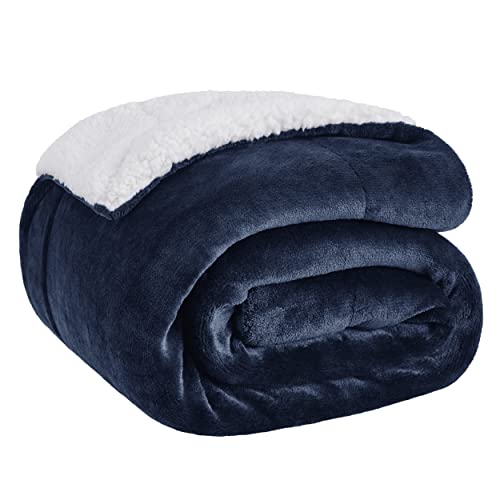
- Bedsure GentleSoft Sherpa Fleece Throw (Navy, 50×60) — Best Foot-of-the-Bed Layer. the deep sherpa throw for the foot of the bed and the coldest sleeper.
- Bedsure GentleSoft Sherpa Fleece Blanket (Twin, Grey, 60×80) — Best Overall. our first choice — the only pick that covers a whole single bed.
- Bedsure Soft Throw Blanket (Beige, 50×60) — Best Guest-Room Layer. the bright, easy-wash layer that makes a guest bed look winter-ready.
- Bedsure Soft Fleece Throw Blanket (Grey, 50×60) — Best Under-Duvet Layer. the flat, fast-washing fleece for between sheet and duvet.
- Bedsure GentleSoft Sherpa Throw Blanket (Beige, 50×60) — Best Looking Warm Layer. thick sherpa warmth that also dresses the bed.
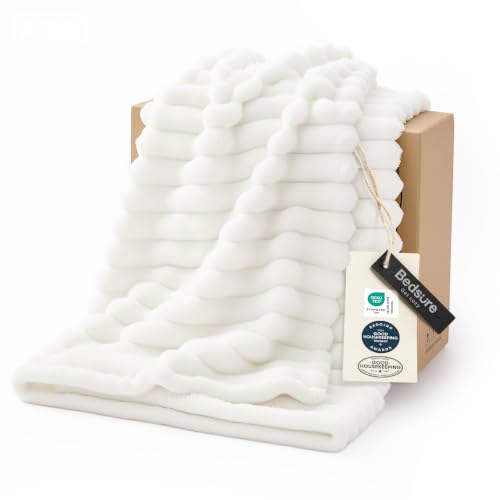
- Bedsure GentleSoft Throw Blanket (Off White, 50×60) — Best Light-Touch Layer. the soft off-white layer for heated bedrooms and bright bedding schemes.
Read the full guide ↓ for the detailed reviews, the comparison table, and the care advice that keeps a hard-working blanket in service for years.
The search for the best warm winter bed blankets usually starts on the first night the bedroom drops to the temperature where a summer duvet stops being enough. The fix is rarely a single heroic blanket. Real winter warmth comes from layers: a base that insulates, a middle that traps air, and a top layer that stops draughts moving across the bed. Fleece and sherpa blankets are the classic top and middle layers of that system — light for their warmth, washable without ceremony, and soft enough that nobody fights them at 3 a.m. This guide ranks six of them for winter bed duty specifically.
A note on sizes, because it shapes the whole list. Most of these picks are 50×60 inch throws, with one 60×80 inch twin. Used as a throw is used — draped over a duvet, folded across the foot of the bed, or wrapped around one cold sleeper — that is exactly the right size, and it is how fleece blankets have warmed winter beds for decades. The twin pick is the one that covers a single bed outright, and it is also the extra layer of choice for a double bed’s colder half. If you are comparing against traditional natural-fibre layers, our guide to Best Wool Blankets For Winter covers that material in depth; this guide is about the synthetic fleece and sherpa layers that most households actually wash and use weekly.
What separates the six is pile and purpose. The sherpa picks trap the most air and feel warmest on contact — the blanket you reach for when the room itself is cold. The smooth fleece picks are lighter, better as the layer between sheet and duvet, and quicker through the laundry. All six are non-heated and machine washable, which matters more than it sounds: a winter blanket that needs special care gets used less, and the warmest blanket is always the one that is actually on the bed.
Key Takeaways
- Winter warmth is a system: fleece and sherpa blankets work best as the air-trapping middle or top layer over a duvet, not as the only layer in a cold room.
- Sherpa piles feel warmest on contact and suit cold rooms and cold sleepers; smooth fleece layers better under a duvet and washes faster.
- Size by job: 50×60 inch throws drape a duvet, warm the foot of the bed, or wrap one sleeper; the 60×80 inch twin covers a single bed or half a double.
- Every pick here is non-heated and machine washable — no cords, no controllers, nothing to fail in the coldest week of the year.
- Two mid-weight layers beat one extreme layer for most sleepers, because each person can keep or shed a layer without disturbing the other.
- If a pet shares the bed, pair your layer choice with the hair routines in Best Sheets And Blankets For Dog Hair and winter laundry stays civilised.
In this guide
Quick Picks: best warm winter bed blankets at a Glance
Six fleece and sherpa layers ranked for winter beds. The badges name the layer each blanket plays best — read them together with the size column, because in this category size is a role, not just a measurement.
| Pick | Badge | Size | Material | Check |
|---|---|---|---|---|
| Bedsure GentleSoft Sherpa Fleece Throw (Navy, 50×60) | Best Foot-of-the-Bed Layer | 50×60 inches | Sherpa fleece | Check on Amazon |
| Bedsure GentleSoft Sherpa Fleece Blanket (Twin, Grey, 60×80) | Best Overall | 60×80 inches (Twin) | Sherpa fleece | Check on Amazon |
| Bedsure Soft Throw Blanket (Beige, 50×60) | Best Guest-Room Layer | 50×60 inches | Fleece | Check on Amazon |
| Bedsure Soft Fleece Throw Blanket (Grey, 50×60) | Best Under-Duvet Layer | 50×60 inches | Fleece | Check on Amazon |
| Bedsure GentleSoft Sherpa Throw Blanket (Beige, 50×60) | Best Looking Warm Layer | 50×60 inches | Sherpa fleece | Check on Amazon |
| Bedsure GentleSoft Throw Blanket (Off White, 50×60) | Best Light-Touch Layer | 50×60 inches | Fleece | Check on Amazon |
How These Picks Were Chosen
The picks were selected from the verified pool for this blanket group and then re-examined specifically for winter bed use. The first filter was warmth mechanism: a winter bed blanket must trap air, so pile depth and fabric density were weighed ahead of appearance. Sherpa constructions scored highest on contact warmth; brushed and standard fleeces scored on layering behaviour — how flat they lie, how little bulk they add under a duvet, and how they behave at the foot of the bed where a folded layer does concentrated work.
The second filter was practical winter ownership. Every pick is machine washable and non-heated, because a blanket that warms a bed nightly from November to March will be washed often, and a layer that depends on a cord and controller is a layer that can fail, tangle, or complicate a bed shared with children or pets. Size honesty was the third filter: the guide states plainly which picks are throws and what throws are for, rather than pretending a 50×60 inch blanket covers a queen bed. It does not; it warms the person on it, which is usually the actual job.
On method: this is a research-led comparison built from manufacturer-stated sizes, fabrics, and construction, not from invented hands-on testing. No temperature claims appear in this guide beyond what pile type and layering physics support, and where a pick’s size limits its role, the review says so. Warmth advice in the buying guide follows the same rule — it explains how layers trap air and how to arrange them, without promising numbers no blanket listing can back up.
The 6 Best Options: best warm winter bed blankets Compared One by One
Each review covers the blanket’s construction, its best winter-bed role, its limits, and the sleeper it suits. Sizes are the manufacturer-stated sizes from the verified listing data.
Bedsure GentleSoft Sherpa Fleece Throw (Navy, 50×60)
Badge: Best Foot-of-the-Bed Layer
This navy sherpa throw is the warmth specialist of the list. The GentleSoft sherpa pile is deep and dense, and on a winter bed it does the two jobs that matter most: folded across the foot of the bed it doubles insulation over the feet, and draped over a duvet it gives a cold sleeper an extra air-trapping layer that feels warm immediately, not after ten minutes of body heat. The navy colour is a practical winter choice — it looks right in a dim bedroom and conceals the everyday evidence of nightly use between washes.
Its limits are size and laundry. At 50×60 inches it is a person’s layer, not a bed’s covering, and pretending otherwise leads to the classic complaint about throws. And sherpa takes its time drying, so it belongs in a rotation rather than as the only layer a household owns. Used as intended — the concentrated warmth layer in a layered bed — it is the pick most likely to end an argument about a cold bed.
Strengths
- Deep sherpa pile traps the most still air of any pick here — the fastest route to a bed that feels warm on contact
- Throw size folds into a concentrated double layer across the foot of the bed, where warmth is needed most
- Navy hides between-wash wear better than the pale options
Trade-offs
- Throw size covers a sleeper or a zone, not a whole double bed
- Sherpa is the slowest fabric here to dry after washing
- Pile flattens gradually where feet rest on it nightly
Key specs
- Size: 50 x 60 inches
- Fabric: sherpa fleece (GentleSoft)
- Colour: Navy
- Heating: none (non-heated)
Best for: cold sleepers, foot-of-the-bed layering, pre-sleep sofa-to-bed routines in cold rooms / Not suited for: full-bed coverage, or households needing the fastest laundry turnaround

Bedsure GentleSoft Sherpa Fleece Blanket (Twin, Grey, 60×80)
Badge: Best Overall
The twin Bedsure sherpa is Best Overall because it is the only pick that changes a whole bed rather than a zone of one. At 60×80 inches it covers a single bed outright — the complete answer for a child’s room, a guest bed, or a dorm — and on a double bed it gives the colder sleeper a full personal layer from pillow to foot, which settles the thermostat war more completely than any compromise setting. The sherpa pile means that coverage is also the warmest-feeling in the guide, across the entire surface.
The costs are bulk and drying time. This is a substantial blanket in the machine and on the line, and its pile does its best work uncompressed, as the top layer over a duvet rather than sandwiched beneath one. Households that wash little and often may prefer to build their system from the throws instead. But for the buyer who wants one purchase to make one bed properly warm for winter, this is the most complete answer in the pool.
Strengths
- 60×80 inch twin footprint covers a single bed completely, or one half of a double — the only pick here that can be a bed’s sole extra layer
- Deep sherpa pile delivers the guide’s best contact warmth across the whole sleeping surface, not just a zone
- Grey is the most forgiving everyday colour in the list
Trade-offs
- Largest and slowest-drying pick here; it wants a proper wash day, not a quick cycle
- Sherpa pile compresses under body weight, so its loft works best as a top layer
- Too much blanket for a chair or a travel bag
Key specs
- Size: 60 x 80 inches (Twin)
- Fabric: sherpa fleece (GentleSoft)
- Colour: Grey
- Heating: none (non-heated)
Best for: single beds, the cold half of a double bed, guest rooms, anyone buying one winter layer only / Not suited for: layering between sheet and duvet (too lofty), or quick-rotation laundry systems

Bedsure Soft Throw Blanket (Beige, 50×60)
Badge: Best Guest-Room Layer
Every winter-bed system needs one layer that is easy: easy to wash, easy to dry, easy to fold across the foot of a made bed so the room looks ready for the season. The beige Bedsure throw is that layer. Its fleece is light rather than lofty, so it adds a genuine increment of warmth over a duvet without turning the bed heavy, and its listing states machine washability plainly — with a quick dry, it is the blanket that goes from guest departure to folded readiness fastest.
Do not ask it to do the sherpa’s job. In a cold room it is the garnish on a warm bed, not the warmth itself, and the beige colour keeps a honest record of use. But as the flexible layer — guest room, foot of the bed, the extra wrap for reading in bed on a January night — it is the most convenient square of warmth in the list, and convenience is what keeps a layer in service all winter.
Strengths
- Light fleece layer that adds visible and real warmth without remaking the bed’s whole weight
- Beige brightens a winter bedroom and makes a guest bed look deliberately prepared
- Explicitly machine washable and quick to dry — the easiest pick to turn around between guests
Trade-offs
- Lightest insulation here; in a cold room it is a supplement to a duvet, never a substitute
- Beige shows marks and hair readily
- Throw size only — a zone layer, not coverage
Key specs
- Size: 50 x 60 inches
- Fabric: fleece
- Colour: Beige
- Care: machine washable (stated)
Best for: guest beds, milder winter bedrooms, the visible folded layer at the foot of the bed / Not suited for: unheated rooms as the main warmth strategy, or pet-shared beds washed rarely

Bedsure Soft Fleece Throw Blanket (Grey, 50×60)
Badge: Best Under-Duvet Layer
The grey Bedsure fleece is the layer that stays on the bed all winter while others rotate around it. Its flat, lightweight fleece slides between the top sheet and the duvet without bunching, adding a quiet increment of trapped air exactly where the body lies, and it comes out of the wash-and-dry cycle faster than anything else here. In a system built on layers, that reliability is a feature of the first rank: the middle layer is the one that gets washed most and missed most when it is in the laundry.
Alone, it is modest — the least warm pick in this guide on its own, and no one should buy it as a sole answer to a freezing bedroom. That is not its job. Its job is to make a duvet noticeably warmer, to give a hot sleeper a layer they can tolerate, and to be back on the bed the same day it was washed. Judged on those terms, it is the hardest-working lightweight in the pool.
Strengths
- Lightweight, flat-lying fleece — the best pick here for the between-sheet-and-duvet position, where loft would bunch
- Fastest wash-and-dry behaviour in the list, ideal as the always-on layer in a rotation
- Grey hides wear, and the throw size travels from bed to sofa to car without fuss
Trade-offs
- Least contact warmth of the six — it is a system layer, not a cold-room hero
- Throw size covers one sleeper’s core, not a bed
- Light fabric offers little foot-of-the-bed concentration compared with the sherpa
Key specs
- Size: 50 x 60 inches
- Fabric: fleece
- Colour: Grey
- Stated uses: sofa, couch, travel, camping
Best for: the permanent middle layer in a layered bed, hot sleepers who want a light increment, frequent washers / Not suited for: anyone expecting a single throw to transform an unheated room

Bedsure GentleSoft Sherpa Throw Blanket (Beige, 50×60)
Badge: Best Looking Warm Layer
This is the navy sherpa’s warmth in a colour that changes the room. The GentleSoft pile is thick and genuinely warm — the same air-trapping construction that makes sherpa the contact-warmth winner of this guide — but in beige it reads as part of the bedding rather than a utility layer, which matters in a main bedroom where the blanket is visible all day. Folded across the foot of a made bed it does double duty: decoration in the morning, the extra layer over cold feet at night.
The colour is the compromise. Beige records use — hair, marks, the faint shadow of a winter’s evenings — more honestly than navy or grey, and sherpa’s slow drying means its wash needs planning. Households with a dog on the bed should pick the darker sherpa and accept the moodier look. For everyone else, this is the warm layer that earns its place on the bed around the clock.
Strengths
- Thick sherpa pile with real contact warmth, in a beige that brightens a winter bedroom instead of darkening it
- Doubles as the visible bed-dressing layer — folded at the foot it makes a made bed look finished
- Same GentleSoft construction as the navy pick, so households can match performance across rooms by colour
Trade-offs
- Beige shows hair and marks more than the navy or grey sherpas
- Sherpa drying time is slow; plan the wash day
- Throw size remains a one-sleeper layer
Key specs
- Size: 50 x 60 inches
- Fabric: sherpa fleece (GentleSoft)
- Colour: Beige
- Heating: none (non-heated)
Best for: main bedrooms where the blanket is on display, cold sleepers who want sherpa warmth in a lighter colour / Not suited for: pet-shared beds or anyone who washes infrequently

Bedsure GentleSoft Throw Blanket (Off White, 50×60)
Badge: Best Light-Touch Layer
The off-white GentleSoft throw is the mildest pick in this guide, and it is included because many winter bedrooms are mild: heated homes where the temperature dips a few degrees overnight and the bed needs one soft increment, not a fortress. This fleece provides exactly that — a light, soft layer that takes the edge off, folds away invisibly small when a warm spell arrives, and in off-white sits happily over almost any bedding a household already owns.
Its honesty box is short: it will not rescue an unheated room, it has no sherpa loft to offer a truly cold sleeper, and off-white demands a household at peace with frequent washing. Within its brief — the light-touch layer for civilised winters and bright bedrooms — it does its job gracefully, and it is the pick most likely to be given as a gift, because it asks nothing of the recipient’s laundry routine beyond the ordinary.
Strengths
- Soft, light fleece that adds a gentle warmth increment suited to heated bedrooms that only dip at night
- Off-white layers cleanly over most bedding colours and suits bright, minimal winter schemes
- Throw size folds small for storage between cold snaps
Trade-offs
- The gentlest warmth here alongside the grey fleece — not a cold-room solution on its own
- Off-white is the least forgiving colour for marks and hair
- No sherpa loft, so contact warmth is modest
Key specs
- Size: 50 x 60 inches
- Fabric: fleece (GentleSoft)
- Colour: Off White
- Size detail: 50 x 60 in
Best for: heated bedrooms, layering over patterned bedding, occasional cold-snap use / Not suited for: unheated rooms, pet-shared beds, or anyone buying a single do-everything layer
Comparison Table
Use the size column to assign each blanket its job first; the trait column then tells you which of the same-size options fits your room and laundry habits.
| Pick | Size | Material | Standout trait | Check |
|---|---|---|---|---|
| Bedsure GentleSoft Sherpa Fleece Throw (Navy, 50×60) | 50×60 inches | Sherpa fleece | Deepest pile here, in the classic throw size | Check on Amazon |
| Bedsure GentleSoft Sherpa Fleece Blanket (Twin, Grey, 60×80) | 60×80 inches (Twin) | Sherpa fleece | Only full single-bed coverage in the list, with sherpa warmth | Check on Amazon |
| Bedsure Soft Throw Blanket (Beige, 50×60) | 50×60 inches | Fleece | Light, bright, explicitly machine-washable throw | Check on Amazon |
| Bedsure Soft Fleece Throw Blanket (Grey, 50×60) | 50×60 inches | Fleece | Lightweight flat fleece that layers without bulk | Check on Amazon |
| Bedsure GentleSoft Sherpa Throw Blanket (Beige, 50×60) | 50×60 inches | Sherpa fleece | Thick sherpa warmth in a room-brightening beige | Check on Amazon |
| Bedsure GentleSoft Throw Blanket (Off White, 50×60) | 50×60 inches | Fleece | Soft off-white fleece for milder rooms and layered looks | Check on Amazon |
How to Choose: Building a Winter Bed That Stays Warm All Night
Understand what a blanket layer actually does. A sleeping body warms the air immediately around it; a good blanket’s job is to keep that warmed air from escaping and to stop cold room air from reaching the skin. Loft — trapped, still air inside a pile or between layers — is the whole mechanism. This is why two fleece layers usually outperform one layer of twice the price, and why the order matters: smooth fleece closest to the body, loftier sherpa or a duvet above it, and the whole stack works better than any element alone. Traditionalists comparing materials will find the same physics in Best Wool Bed Blankets; the fibre differs, the air-trapping principle does not.
Assign sizes to jobs. A 50×60 inch throw covers one sleeper’s torso and legs when draped over a duvet, folds into a concentrated double layer across the foot of the bed (where feet, the first things to go cold, benefit most), or wraps a single person in a chair before bed. A 60×80 inch twin covers a single bed completely or gives one half of a double bed a full extra layer — the classic solution when one partner runs cold and the other does not. Buying a throw to do a twin’s job, or a twin to do a queen blanket’s job, is the most common disappointment in this category, and it is a sizing error, not a quality error.
Match pile to room temperature and sleeper. In a heated bedroom that merely dips at night, one smooth fleece layer over the duvet is usually enough, and its easy washing is a bonus. In a genuinely cold room — an old house, a basement bedroom, a cabin — sherpa’s deep pile earns its slower drying time, because contact warmth is what gets a cold sleeper to sleep. Hot sleepers in cold rooms are the subtle case: they want a cold room and a warm bed, so a breathable-feeling fleece layer they can push down beats a maximum-loft layer they will kick off entirely by midnight.
Plan the laundry before the winter. A winter blanket used nightly wants washing every few weeks at minimum, and more often if a pet shares the bed. Sherpa dries slowly; smooth fleece dries fast. Households with limited drying space often run a rotation — one fleece on the bed, one in the wash — which is another reason the lighter picks in this guide are not lesser picks. Weight and bulk in the machine matter too: a throw-size blanket washes in a normal load, while a full-bed blanket can dominate one.
Know when a blanket is not the problem. If the bed feels cold despite layers, check the draughts and the mattress before buying more loft: a cold window beside the bed, a gap at the door, or a memory-foam mattress that starts the night cold will defeat reasonable blankets. And if one person’s warmth needs are radically different from the other’s, separate single layers per person — the arrangement our Best Weighted Blankets For Couples coverage also favours for shared beds — beat any single compromise blanket.
How to Layer Fleece and Sherpa Blankets for a Winter Bed
Layering order is the difference between a pile of blankets and a warm bed. The routine below takes five minutes on the first night and seconds a night afterwards.
- Start with your usual sheet and duvet made up normally; the fleece layers add to a working bed rather than replacing its structure.
- For the coldest sleepers, place a smooth fleece blanket between the top sheet and the duvet — this is the layer that warms fastest against the body.
- Add the sherpa layer over the duvet, plush side up for looks or down for maximum contact warmth if it is used without a duvet.
- Fold a second throw across the foot third of the bed; feet lose heat first and a doubled layer there changes the whole night’s comfort.
- Leave each person’s side independently adjustable: layers should be addable or push-down-able on one side without stripping the other.
- Air the bed in the morning — pull the layers back for half an hour — so overnight moisture leaves the pile instead of accumulating in it.
- Wash layers on rotation through the season, and dry sherpa completely before it returns to the bed; a damp pile feels colder than no pile.
Problem: the bed is warm at bedtime but cold by 4 a.m. → the stack is losing its loft or a layer is slipping off; add the foot-of-bed folded layer, tuck the top layer’s foot end under the mattress, and check for a window draught that strengthens overnight. Problem: one partner is too hot while the other is cold → split the layers by side rather than averaging them; the twin pick exists for exactly this, giving one sleeper a full extra layer while the other keeps the base setup. Problem: the fleece crackles with static and clings → wash it separately from other synthetics, skip the softener, and dry it slightly less than bone-dry; static is a dryness and friction issue, not a defect.
Storage matters at the season’s end: wash every layer, dry thoroughly, and store loosely rather than vacuum-compressed for months, since pile that spends a summer crushed takes time to recover its air-trapping loft. A breathable storage bag in a dry cupboard keeps winter blankets fresh enough that the first cold night needs no emergency laundry.
Sherpa vs Smooth Fleece: Which Layer Warms a Bed Better?
Sherpa’s deep, curled pile is the warmest-feeling surface in this guide, and the reason is contact physics: the pile holds a thick layer of still air right against the sleeper, so the blanket feels warm within moments rather than after the body has warmed a flat fabric. That is why sherpa throws are the pick for cold rooms, for the top of the bed, and for the pre-sleep hour on the sofa. Three of the six picks here use Bedsure’s GentleSoft sherpa construction, in two sizes and three colours, which makes them easy to compare directly.
Smooth fleece wins the other half of the argument. It lies flat, so it works between sheet and duvet without bunching; it adds warmth without the bulk that makes a bed feel like a wrestling match; and it washes and dries at roughly twice the practical speed, which decides real-world use in households without a tumble dryer running daily. The honest summary: sherpa is the better warmer, fleece is the better layer, and most well-run winter beds use one of each — which is precisely the combination this list is built to supply. Readers who like the heritage version of this debate can compare with Best Welsh Blankets, the traditional woven alternative, though for wash-and-use practicality fleece and sherpa are hard to beat.
Warm Beds for Guests, Kids, and the Spare Room
The spare room is where winter blankets quietly prove their worth. A guest bed made up with a duvet plus one of these fleece layers, and a second folded at the foot, lets a guest adjust their own warmth without a midnight conversation about the heating. The throw sizes are ideal here: they store in a drawer between visits, wash in one load after, and the same blanket can serve on the sofa during the visit itself. For children’s beds, the non-heated nature of every pick is the point — warmth with no cords, no controllers, and nothing to switch off, sized so a child can pull a layer up or push it down independently.
There is also a comfort detail hosts often miss: a bed that looks warm gets slept in more warmly. A sherpa layer folded across the foot of a made guest bed signals ‘this room is ready for winter’ in a way a bare duvet does not. The pale picks in this list — the beige and off-white Bedsure options — do that visual job best in a guest room, while the navy and grey picks hide the evidence of everyday family use. Choose per room, not per abstract ranking. If evenings as well as nights are part of the plan, a layer you can also wear around the shoulders is covered in our guide to Best Wearable Blankets For Adults.
One underused trick deserves a mention: pre-warming the bed with the layers themselves. Turn the full stack down an hour before bed in a cold room and the fabrics themselves lose their chill; the first-contact cold that makes a winter bed feel hostile is mostly the temperature of the fabric, not the sleeper.
Colour choice on a winter bed is partly thermal psychology and partly laundry realism. Dark navy and grey layers look and feel warmer in a dim bedroom and hide between-wash wear; cream and beige brighten a guest room. Match the hardest-working layer to the darker end of this list.
A word about children’s winter beds, since parents often shop this category for the whole house at once. Every pick here is a passive, non-heated layer, which removes the entire category of cord-and-controller worries from a child’s room. Size down the system rather than the warmth: one fleece layer over a child’s duvet, with the sherpa reserved for the coldest weeks, gives a child warmth they can adjust themselves — and a child who can push a layer down is a child who stays asleep instead of calling out at midnight.
Finally, consider the bed itself as part of the purchase decision. A blanket layer performs differently on a divan than on a slatted frame with cold air circulating beneath it; slatted and metal frames in cold rooms benefit most from the thicker end of this list, because the bed is losing warmth downward as well as upward. If your bed stands on a cold floor, the foot-of-the-bed folded layer plus a rug under the bed will do more than one more blanket bought in hope.
Budgeting across a household is simpler in this category than in most: because these are standard fleece and sherpa layers rather than specialty products, outfitting every bed in the house is a matter of assigning sizes and colours per room — twin for the single beds, throws for layering on the doubles, a spare in the wash rotation — rather than hunting for matched sets.
There is one more scenario worth planning for: the power cut and the boiler failure, which always choose the coldest night. Passive layers are the only bedding that works exactly as well with the heating off, which is why a household winter kit built from this list — a layer per bed plus one spare — doubles as quiet emergency insurance. Keep the spare washed and stored loosely in an accessible cupboard, not crushed in the attic, and the worst night of the year becomes merely a cold one.
And a small ritual that pays off nightly: shake each layer out before making the bed. Shaking re-lofts pile that body weight compressed overnight, restoring the still-air pockets the warmth depends on. It takes ten seconds per layer and is the closest thing this category has to free performance.
Reading care labels before the first wash is the last unglamorous step. Fleece and sherpa are forgiving fabrics, but they reward a cool-to-warm wash, a separate load from hook-and-loop fastenings and rough denim, and a complete dry. Ten seconds with the label in November saves the slow decline in softness and loft that households otherwise blame on the blanket by February.
Common Buying Mistakes
- Expecting a throw to cover a big bed. A 50×60 inch blanket warms a person or a zone of the bed. Buy the twin for full single-bed coverage and do not blame the fabric for a sizing decision.
- Stacking layers in the wrong order. Loft belongs above the smooth layer; burying sherpa under a duvet compresses the pile and wastes its air-trapping advantage.
- Washing everything at once in mid-winter. Rotate the laundry so the bed is never stripped bare on the coldest night of the week.
- Storing winter blankets crushed. Months of compression flatten pile. Wash, dry fully, and store loosely so the loft survives to next winter.
- Ignoring the room. A draught at the window defeats good blankets. Seal the obvious gaps before buying more layers.
- Using fabric softener on fleece. It coats the fibres and dulls the pile’s air-trapping and moisture behaviour; plain detergent keeps the layer warmer for longer.
Final Recommendation
Start with the twin-size Bedsure sherpa if your priority is one blanket that covers a whole single bed or one cold half of a double: it is the only full-coverage layer here, and its deep pile is the warmest surface in the guide. Build the rest of the system around it with a 50×60 sherpa throw for the foot of the bed or the second sleeper, and keep the smooth grey fleece as the fast-washing layer that rotates through the laundry. That three-layer kit, all washable and none of it heated, handles the full range of an ordinary winter in an ordinary house.
Start here: Bedsure GentleSoft Sherpa Fleece Blanket (Twin, Grey, 60×80) · Bedsure GentleSoft Sherpa Fleece Throw (Navy, 50×60) · Bedsure Soft Fleece Throw Blanket (Grey, 50×60).
If your bedroom is heated and merely chilly, reverse the emphasis: the smooth fleece layer plus one sherpa throw is plenty, and you will appreciate the easier laundry all season. Either way, buy for the job each size actually does, layer smooth-then-loft, and let each sleeper adjust their own side. A winter bed built that way stays warm at bedtime, at 4 a.m., and in the last cold week of March — which is the only test that matters.
Frequently Asked Questions
Can a 50×60 inch throw really warm a bed?
Yes — in the role it is sized for. Draped over a duvet it covers one sleeper’s body, folded across the foot of the bed it doubles the insulation exactly where feet get cold first, and wrapped around a person it warms the pre-sleep hour. What it cannot do is cover a whole double or queen bed edge to edge; for full coverage of a single bed choose the 60×80 inch twin in this guide, and treat throws as the adjustable layers they are.
Are fleece and sherpa blankets warm enough for a cold room without heating?
As part of a layered bed, they handle a cold room well: sheet, smooth fleece, duvet, and sherpa traps a great deal of still air, and the folded foot layer protects the extremities. In a truly unheated room in deep winter, blankets alone reach their limit and the room itself — draughts, a cold wall beside the bed — becomes the deciding factor. Layer as described, seal draughts, and be honest that no blanket fully substitutes for a minimally warm room.
Which is warmer, sherpa or regular fleece?
Sherpa feels warmer, especially on first contact, because its deep pile holds more still air against the body. Regular fleece is the better structural layer: it lies flat under a duvet, adds less bulk, and washes and dries faster. Most people building a winter bed from this list will end up with one of each, using the fleece as the always-on layer and the sherpa as the cold-night layer on top.
How often should winter bed blankets be washed?
Every few weeks through the season for a blanket used nightly, and sooner if a pet shares the bed or someone has been ill. Wash one layer at a time on rotation so the bed is never bare, skip fabric softener, and dry sherpa thoroughly — it is the slowest-drying fabric here, and a half-dry pile feels cold and smells stale within days.
Is it safe to sleep with an electric blanket instead?
Heated blankets are a different category with their own safety routines — timers, cord checks, and restrictions for children and pets. Every pick in this guide is deliberately non-heated: passive fleece and sherpa layers that cannot overheat, have nothing to plug in, and work in a power cut. For children’s beds, guest rooms, and pet-shared beds, that simplicity is a genuine safety advantage.
Why does my fleece blanket feel less warm than last winter?
Usually the pile has flattened or the fibres are coated. Months of compression in storage crush loft, and fabric softener coats fibres so they trap less air and hold moisture. Wash without softener, dry fully with room to tumble, shake the blanket out vigorously, and store it loosely rather than compressed. If the pile stays flat after that, the blanket has simply reached the end of its loft life and its next role is the car or the dog’s bed.