Disclosure: topratedkitchenware.com is reader-supported. When you buy through links on our site, we may earn an affiliate commission from Amazon and other retailers, at no extra cost to you.
Where to buy
If you are shopping by maker as much as by model, this shortlist covers the six names behind the best water saving toilets manufacturers in the current verified pool: three conventional two-piece brands building 1.28 GPF gravity toilets, and three macerating-system makers whose dual-flush pumps serve bathrooms that cannot reach a standard drain. Every pick below is linked to its Amazon listing so you can check the latest price and the exact configuration before you commit.
- MAXSA 15-Inch Elongated Two-Piece Toilet (Maxsa Innovations) — check the latest price on Amazon
- Garvee Two-Piece Elongated Toilet with Side Push Flush — check the latest price on Amazon
- IDEALHOUSE ADA Compliant 17-Inch Elongated Toilet — check the latest price on Amazon
- VEVOR Macerating Toilet System with 700W Macerator Pump — check the latest price on Amazon
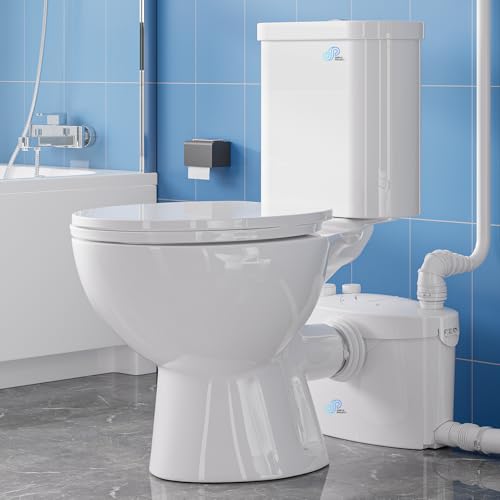
- Simple Project 750W PRO Macerating Toilet System — check the latest price on Amazon
- SUPERFLO 750W Macerating Toilet System — check the latest price on Amazon
Read the full guide ↓
Most toilet guides rank models. This one starts a step earlier, with the best water saving toilets manufacturers — because when a toilet underperforms ten years from now, what decides your experience is rarely the bowl shape you picked. It is whether the manufacturer still sells the flapper, fill valve, or pump seal your model needs, whether its flush rating was honest, and whether its warranty paperwork means anything in practice. A water saving toilet is a long-term appliance that happens to be made of porcelain, and the maker’s track record is part of the product.
The six manufacturers covered here split into two camps. MAXSA, Garvee, and IDEALHOUSE build conventional two-piece ceramic toilets rated at 1.28 gallons per flush — the flow level that has become the working definition of a water saving toilet in American bathrooms, a full step below the older 1.6 GPF generation and far below the pre-1994 models that used three gallons or more. VEVOR, Simple Project, and SUPERFLO build macerating upflush systems: toilets paired with an electric pump that grinds waste and pushes it to a drain that may sit above or behind the bathroom, and each of them uses a dual-flush arrangement so liquid waste does not spend a full flush. Both camps save water, but they save it in different buildings, for different reasons, and with very different maintenance futures.
If you are comparing maker lineups rather than individual models, it helps to read this guide alongside a model-first shortlist such as Best Water Saving Toilets, because the same brand can field a genuinely efficient flagship and a mediocre budget variant. What follows evaluates each manufacturer on the evidence in its verified listing: stated flush volume, flush mechanism, certifications actually named, seat and rough-in details, and the support burden the design creates. Where a listing is silent — on bulk-flush test scores, for example — this guide says so instead of filling the gap with a guess.
One framing note before the picks: ‘manufacturer’ in the modern toilet market covers everything from century-old sanitaryware firms to import brands that assemble components from several factories. This pool leans toward the value and specialist end of that spectrum. That is not a disqualification — several of these makers have built real reputations in their niches — but it changes what you should verify: parts availability, documentation quality, and how the company handles a cracked tank or a dead pump in year three. Those checks are built into every review below.
Key Takeaways
- Three of the six manufacturers (MAXSA, Garvee, IDEALHOUSE) build conventional 1.28 GPF two-piece toilets — the lowest-risk route to water savings in a standard bathroom with a floor drain.
- VEVOR, Simple Project, and SUPERFLO make macerating upflush systems with dual flush; they save water in basements and additions where gravity drainage is impossible, at the cost of a pump to maintain.
- Judge a manufacturer on parts support, not just flush volume: flappers, fill valves, seats, and pump seals decide the ten-year cost of ownership.
- Certifications named in a listing matter — Garvee states cUPC certification; where a maker states no certification, treat that as a question to resolve before purchase, not a detail.
- Dual-flush macerators save the most water in low-use bathrooms (guest suites, basement baths) where most flushes are liquid-only.
- Every pick here is a research-led selection from a verified pool; flush volumes and features are taken from the manufacturers’ own listing data, not invented.
In this guide
Quick Picks
| Pick | Badge | Standout trait | Check |
|---|---|---|---|
| MAXSA 15-Inch Elongated Two-Piece Toilet (Maxsa Innovations) | Best Overall Manufacturer | 1.28 GPF siphonic flush, comfort height, soft-close seat, easy-clean ceramic | Check on Amazon |
| Garvee Two-Piece Elongated Toilet with Side Push Flush | Best Documented Specifications | 1.28 GPF water-saving side push flush, cUPC certified, locking soft-close seat | Check on Amazon |
| IDEALHOUSE ADA Compliant 17-Inch Elongated Toilet | Best for Accessibility | 17-inch ADA-height bowl, 1.28 GPF siphonic jet, easy-clean porcelain | Check on Amazon |
| VEVOR Macerating Toilet System with 700W Macerator Pump | Best for Basements | 700W macerator, rear discharge upflush, dual flush, 3-inlet kit | Check on Amazon |
| Simple Project 750W PRO Macerating Toilet System | Most Powerful Pump | 750W PRO macerator, 4-inlet, dual flush, quiet-operation design | Check on Amazon |
| SUPERFLO 750W Macerating Toilet System | Best Garage and Utility Pick | 750W macerator, 4 water inlets, basement and garage focus, quiet claim | Check on Amazon |
Read the badges as manufacturer profiles, not just model rankings. ‘Best Overall Manufacturer’ means the most complete package of flush efficiency, conventional plumbing, and ownership simplicity in this pool. ‘Best for Basements’ points at the pump makers. If your bathroom has a standard 12-inch rough-in and a floor drain, the first three picks are your realistic shortlist; if it does not, the last three are the ones that make the bathroom possible at all.
Shoppers who arrived here from a factories-and-suppliers angle — the kind of research behind searches like Best Water Saving Toilets Factories — should note that this guide evaluates the retail-facing manufacturers whose products a homeowner can actually buy and get serviced, rather than OEM factories that sell only in container quantities.
How These Picks Were Chosen
The pool for this guide was verified through the Creators API before writing: each manufacturer’s listing title, brand name, and product image were confirmed, and only products whose own listing data states a water saving flush — 1.28 GPF single flush or a dual-flush arrangement — were treated as qualifying picks. That filter is why you will not find a 1.6 GPF model anywhere in the six, even as a ‘premium’ exception: a guide about water saving manufacturers has to hold the line at the specification that defines the category.
Within the pool, manufacturers were compared on five axes: stated flush volume and mechanism (siphonic gravity, siphonic jet, or macerating dual flush), the completeness of the listing’s technical detail (rough-in, seat type, bowl height, certifications), the maintenance profile the design implies, the breadth of installation situations the maker covers, and the honesty of the listing itself. Listings that state their specifications plainly scored better than listings padded with adjectives, because a manufacturer that documents its product is usually a manufacturer that supports it.
This is research-led guidance, not a laboratory test. No flow bench was run and no dye tablet was dropped for this article; flush volumes are the manufacturers’ stated figures, and where an independent benchmark such as a MaP bulk-flush score is not stated in the verified data, the review says the score is unstated rather than estimating one. That restraint matters more for a manufacturers guide than for a single-model review, because you are being asked to trust a company’s whole catalogue on the strength of one listing.
The 6 Best Water Saving Toilet Manufacturers and Their Flagship Picks
Each review below profiles the manufacturer first and its representative model second: what the company builds, how its water saving design works, what ownership looks like, and where the honest limits sit. Models are ordered by how completely they serve a mainstream water saving brief, with the macerating specialists grouped after the conventional makers.

MAXSA 15-Inch Elongated Two-Piece Toilet (Maxsa Innovations)
Badge: Best Overall Manufacturer
Strengths
- A true 1.28 GPF rating delivered by a conventional siphonic flush — no pump, no electronics, nothing exotic to service.
- Comfort height elongated bowl with a soft-close seat included, covering the two comfort features buyers most often retrofit later.
- Listing states its key dimensions plainly (15-inch class bowl height, 12-inch rough-in), which makes pre-purchase verification easy.
Trade-offs
- Single flush only — no reduced liquid flush, so a dual-flush rival saves more in a high-traffic household.
- A smaller specialist brand: confirm seat and flapper availability before buying, since long-term parts support is the open question.
- Two-piece construction means a tank-to-bowl seam to clean and a joint to check at installation, unlike a one-piece design.
At a glance: Flush: 1.28 GPF siphonic; Configuration: two-piece, elongated bowl; Seat height class: comfort height (15-inch class); Seat: soft-close, included; Rough-in: 12 inch; Finish: white ceramic, easy-clean surface.
Maxsa Innovations takes the top badge because its representative model does the water saving job with the least machinery. A siphonic flush at 1.28 GPF is the proven mainstream recipe: tank water drives a siphon jet that pulls the bowl contents through the trapway, and the whole event uses roughly twenty percent less water than the 1.6 GPF generation it replaces. Fitted across a household’s daily flushes, that gap is the difference between a toilet that merely complies with older norms and one that genuinely trims the water bill month after month, without asking the user to learn a new flushing behaviour.
As a manufacturer, MAXSA’s appeal is completeness at the point of sale. The elongated comfort-height bowl, the included soft-close seat, and the easy-clean ceramic are all present in the base product rather than sold as upgrades, which suggests a maker packaging for the replacement market — homeowners swapping an old toilet in a weekend — rather than for spec-sheet minimalism. The 12-inch rough-in matches the overwhelming majority of American bathrooms, so the model fits the standard flange position without adapters or floor work.
The honest limitation is brand scale. MAXSA is not a century-old sanitaryware house, and the listing states no third-party certification or bulk-flush score, so a careful buyer should confirm which standard flappers and fill valves the tank accepts and keep the model’s documentation with the house paperwork. None of that undermines the flush engineering, which is deliberately conventional — and conventional is exactly what most households should buy. If you want one manufacturer from this pool to bet a primary bathroom on, this is the safest bet.
Best for: households replacing a standard toilet that want proven 1.28 GPF savings with no new technology to maintain / Not suited for: buyers who want a dual-flush liquid mode, or a big legacy brand name behind the warranty

Garvee Two-Piece Elongated Toilet with Side Push Flush
Badge: Best Documented Specifications
Strengths
- The only conventional pick here whose listing explicitly states cUPC certification — a verifiable compliance signal many rivals omit.
- Side push flush placement is easy to reach and simple to service, with no top-button linkage to adjust.
- Locking soft-close seat design addresses the loose-seat wobble that is the most common long-term complaint on value toilets.
Trade-offs
- Polypropylene seat rather than a heavier seat material — functional and easy to clean, but it will not feel as premium.
- Single-flush 1.28 GPF only; no reduced-volume liquid flush for extra savings.
- Garvee sells across many home categories, so toilet-specific support depth is a fair question to ask before purchase.
At a glance: Flush: 1.28 GPF, side push; Configuration: two-piece, elongated bowl; Seat height class: comfort height (15-inch class); Seat: locking PP soft-close, included; Certification stated: cUPC; Rough-in: 12 inch; Material: ceramic bowl, white.
Garvee earns its badge on paperwork. In a pool where several manufacturers ask you to take their efficiency on faith, Garvee’s listing states cUPC certification outright — the plumbing code compliance mark that building inspectors and careful installers actually look for. For a manufacturers guide, that willingness to be checked is a meaningful signal: it tells you the company submits its products to the standard testing regime rather than marketing around it, and it protects you if a local inspector ever questions the fixture.
The toilet itself is a study in sensible choices. The 1.28 GPF flush is actuated by a side push mechanism — a lever-style arrangement with a long service history and none of the cable or rod linkages that top-button dual-flush systems need adjusted over time. The elongated comfort-height bowl suits adult users, and the locking soft-close seat attacks a mundane but real ownership annoyance: seats that gradually work loose and shift under load. A locking mount keeps the seat planted, and the polypropylene construction shrugs off the cleaning chemicals that yellow some seat materials.
The trade-offs are about tier rather than competence. A PP seat feels lighter than the seat on a premium model, and there is no dual-flush option for households chasing the lowest possible consumption. Garvee is also a broad-line home brand rather than a plumbing specialist, so ask the support question up front: which replacement flush valves and seat hinges does it stock? For buyers who value verified compliance and straightforward engineering over brand romance, Garvee is the most reassuring name in this pool.
Best for: buyers who want code-certified, plainly documented water saving performance at a value tier / Not suited for: buyers prioritising premium seat materials or a dual-flush option

IDEALHOUSE ADA Compliant 17-Inch Elongated Toilet
Badge: Best for Accessibility
Strengths
- A full 17-inch bowl height with ADA compliance stated in the listing — the tallest conventional pick here, easing sit-to-stand transfers.
- Siphonic jet flush at 1.28 GPF pairs the accessibility brief with genuine water savings rather than treating them as alternatives.
- Easy-clean white porcelain and a soft-close seat reduce the two routine burdens (scrubbing and slamming) for users with limited strength.
Trade-offs
- The 17-inch height that helps tall or mobility-limited users can leave shorter adults and children with feet dangling.
- Single flush volume — no reduced liquid flush.
- A newer specialist brand: verify replacement seat and flush component availability at purchase time.
At a glance: Flush: 1.28 GPF siphonic jet; Configuration: two-piece, elongated bowl; Bowl height: 17 inch, ADA compliant (stated); Seat: soft-close, included; Rough-in: 12 inch; Material: white porcelain, easy-clean.
IDEALHOUSE builds its identity around height. Its representative model stands 17 inches at the bowl — squarely in ADA chair-height territory — and states that compliance in its listing title rather than leaving buyers to measure and hope. For households remodelling around ageing knees, hip replacements, or a family member who transfers from a wheelchair, that stated dimension is the single most valuable line in the product data, and it is paired with a 1.28 GPF siphonic jet flush so the accessibility brief does not cost extra water on every use.
The siphonic jet mechanism deserves a note, because it is how this toilet defends its low flush volume. A directed jet at the bowl’s inlet builds siphon momentum early, which helps a 1.28-gallon flush clear an elongated bowl decisively instead of needing a second flush — the false economy that quietly erases the savings of badly engineered low-flow toilets. The easy-clean porcelain and soft-close seat extend the same thinking: every routine interaction with this toilet asks less of the user, whether that is scrubbing force or the grip strength needed to lower a seat quietly.
The limitation is the flip side of the specialisation. A 17-inch bowl is genuinely tall; in a household of shorter adults it can be less comfortable than a standard height, and young children will need a step. IDEALHOUSE is also a focused, newer name, so treat parts verification as part of the purchase: confirm the seat hinge and flush valve standards before the old toilet comes out. For the buyer whose brief starts with accessibility, though, no other manufacturer in this pool states its case as directly.
Best for: accessibility-led remodels, tall users, and multigenerational bathrooms that still want 1.28 GPF savings / Not suited for: households of shorter adults, or bathrooms used mainly by small children

VEVOR Macerating Toilet System with 700W Macerator Pump
Badge: Best for Basements
Strengths
- The strongest stated pump in this pool (700W class) with rear discharge, built for basement and below-grade installations.
- Dual flush water disposal means liquid-only visits do not spend a full flush — real savings in a guest or basement bathroom.
- A 3-inlet kit lets the same pump accept additional fixtures, so a sink can share the system instead of needing its own drainage solution.
Trade-offs
- A macerator is a machine: blades, seals, and a motor join your maintenance list, and the pump needs power at the toilet location.
- Pump noise is inherent to the category — quieter than older designs, but never silent like a gravity flush.
- VEVOR sells an enormous catalogue; buy through a channel with a clear returns path in case your drain layout fights the kit.
At a glance: System: macerating upflush, rear discharge; Pump: 700W macerator (stated); Flush: dual flush; Inlets: 3-inlet kit; Intended use: basement and below-grade bathrooms; Design: space-saving kit.
VEVOR’s water saving argument is different in kind. A macerating toilet does not primarily save water at the bowl — it makes a bathroom possible where no bathroom could exist, and then its dual flush keeps that new bathroom’s consumption honest. The 700W macerator grinds waste and pumps it through a small-diameter rear discharge line to a drain that can sit above the fixture or some distance away, which is precisely the geometry of a basement, a garage conversion, or an under-stair cloakroom where gravity drainage was never roughed in.
As a manufacturer, VEVOR is the pool’s industrial generalist: it builds everything from shop equipment to kitchen gear, and its toilet system reflects that engineering-first, brand-second character. The listing leads with the pump wattage, the discharge direction, and the inlet count — the specifications an installer actually needs — and the 3-inlet configuration means a washbasin can drain through the same unit, which often decides whether a basement bathroom project needs one pump or two. The space-saving kit format suits the tight utility-room corners these systems usually occupy.
The honest cost is complexity. A macerator adds a motor, blades, and seals to a fixture category that otherwise has almost no moving parts, and it needs an electrical outlet where a gravity toilet needs none. Pump cycling is audible, and the system should be treated as an appliance with a service life rather than a fit-and-forget fixture. None of that is a reason to avoid VEVOR — for a below-grade bathroom there may be no alternative at all — but it is a reason to install it accessibly, keep the manual, and confirm how replacement pumps are supplied before you need one.
Best for: basement, garage, and addition bathrooms with no floor drain, where dual flush still trims water use / Not suited for: standard bathrooms with a working floor drain — a gravity toilet is simpler and quieter there
Simple Project 750W PRO Macerating Toilet System
Badge: Most Powerful Pump
Strengths
- The highest stated pump power in the pool (750W class) for long or high discharge runs to a distant main drain.
- Four inlets — the most here — let a toilet, sink, and shower share one pump in a full basement bathroom build.
- Dual flush plus a stated quiet-operation focus addresses the two standard macerator complaints: water use and noise.
Trade-offs
- The most complex installation in this guide: more inlets means more plumbing joints to plan, seal, and keep accessible.
- Pump dependence is total — a power cut or pump failure takes the bathroom out of service in a way a gravity toilet never experiences.
- A specialist brand with a narrow catalogue; confirm spare pump and seal availability before committing a full bathroom to it.
At a glance: System: macerating upflush; Pump: 750W PRO macerator (stated); Flush: dual flush; Inlets: 4; Intended use: basements, attics, added bathrooms; Design: space-saving, quiet-operation focus.
Simple Project is the pool’s macerating specialist, and the 750W PRO is its flagship argument: the strongest pump here, four inlets, and a dual-flush bowl, aimed squarely at the homeowner building a complete bathroom where the main drain is in the wrong place. Four inlets is the headline for project planners — toilet, basin, and shower can all discharge through one macerating unit, which simplifies a basement suite enormously compared with breaking concrete for a conventional rough-in, and the dual flush keeps the added bathroom from becoming the household’s water hog.
The manufacturer’s specialisation shows in the problem selection. Basements and attics are named in the listing itself, and the quiet-operation claim targets the category’s known weakness — a pump that announces itself through the floor. Treat any macerator’s noise claim comparatively rather than absolutely: the pump will be audible in the room, but a specialist maker tuning for quieter operation is a better bet than a generalist’s first attempt. The space-saving format likewise suits the under-stair and utility-corner placements these systems end up in.
The limitations scale with the capability. A four-inlet system is a small plumbing project, not a toilet swap: every inlet is a joint to plan and a future place to check, the pump needs power and eventual service, and the whole bathroom depends on one machine. Simple Project’s narrow catalogue cuts both ways — focus is good, but you should verify, in writing if possible, how a replacement pump is obtained in five years. For a full added bathroom far from the stack, this is the most capable manufacturer in the pool; for anything simpler, it is more machine than you need.
Best for: full basement or attic bathroom builds where several fixtures must share one powerful pump / Not suited for: simple single-toilet swaps, or anyone unwilling to maintain a pump appliance

SUPERFLO 750W Macerating Toilet System
Badge: Best Garage and Utility Pick
Strengths
- 750W-class pump with four water inlets, matching the pool’s top specification for multi-fixture upflush projects.
- Explicitly aimed at basements and garages — the workshop and utility spaces where a toilet is a luxury a gravity system rarely reaches.
- Easy-installation positioning suits competent DIYers adding a utility bathroom without opening the floor slab.
Trade-offs
- Shares the category’s pump-maintenance and power-dependence burdens in full.
- The listing states no dual-flush volume figures, so its exact per-flush water use is less precisely documented than the gravity picks.
- A niche brand: parts and pump replacement pathways should be confirmed before installation, not after a failure.
At a glance: System: macerating upflush; Pump: 750W macerator (stated); Inlets: 4 water inlets; Intended use: basements and garages; Installation: easy-installation kit positioning; Operation: powerful and quiet (stated).
SUPERFLO occupies the same specialist territory as Simple Project — a 750W macerator and four inlets — but aims its listing at a slightly different buyer: the garage and workshop bathroom. That framing is more useful than it first appears. A garage toilet serves a mechanic, a home gym, or a mud-room routine, and it almost never has a floor drain; an upflush system with inlets to spare lets that space gain a toilet and a utility sink in one project, and the easy-installation positioning speaks to the DIYer who will do the work over two weekends rather than hiring a plumber to cut concrete.
On water, SUPERFLO’s case is structural rather than numerical. The listing does not state dual-flush volumes the way the gravity makers state their 1.28 GPF figures, so this guide will not pretend a precision the data does not support. What can be said is that a macerating system serving an occasional-use utility bathroom spends its water in a room that would otherwise have no fixture at all, and pump systems in this class are built around short, controlled flush cycles rather than the long tank refills of old high-volume toilets. If exact per-flush volume is your deciding metric, the gravity picks above document theirs better.
The ownership caveats mirror its macerating siblings: a powered pump with blades and seals, audible cycling, and a bathroom that stops when the pump stops. SUPERFLO is a niche name, so the pre-purchase checklist matters — confirm the discharge height and distance your layout needs against the pump’s stated capability, and confirm how a replacement unit is sourced. Judged as a manufacturer for utility-space projects, SUPERFLO states its purpose plainly and specs its pump at the top of the pool; judged as a primary-bathroom brand, the conventional makers above are the better fit.
Best for: garage, workshop, and basement utility bathrooms added without slab work / Not suited for: buyers who need precisely documented flush volumes, or a primary bathroom with a standard drain
Comparison Table
| Pick | Type | Flush | Pump / height | Standout | Check |
|---|---|---|---|---|---|
| MAXSA 15-Inch Elongated Two-Piece Toilet (Maxsa Innovations) | Two-piece gravity | 1.28 GPF siphonic | Comfort height | Soft-close included | Check on Amazon |
| Garvee Two-Piece Elongated Toilet with Side Push Flush | Two-piece gravity | 1.28 GPF side push | Comfort height | cUPC stated | Check on Amazon |
| IDEALHOUSE ADA Compliant 17-Inch Elongated Toilet | Two-piece gravity | 1.28 GPF siphonic jet | 17-inch ADA height | Soft-close included | Check on Amazon |
| VEVOR Macerating Toilet System with 700W Macerator Pump | Macerating upflush | Dual flush | 700W pump, 3 inlets | Rear discharge | Check on Amazon |
| Simple Project 750W PRO Macerating Toilet System | Macerating upflush | Dual flush | 750W pump, 4 inlets | Full-bath capable | Check on Amazon |
| SUPERFLO 750W Macerating Toilet System | Macerating upflush | Flush volume unstated | 750W pump, 4 inlets | Garage/basement focus | Check on Amazon |
How to Choose a Water Saving Toilet Manufacturer
Start with your drain, because it decides which manufacturers are even eligible. If the bathroom has a standard floor flange at a 12-inch rough-in, the conventional makers — MAXSA, Garvee, IDEALHOUSE — are your field, and the choice among them is about height, certification, and seat details. If there is no floor drain, or the drain sits above the fixture, only the macerating makers (VEVOR, Simple Project, SUPERFLO) can help you, and the choice becomes about pump power, inlet count, and discharge distance. No amount of brand loyalty should cross that line in either direction: a gravity toilet cannot pump, and a macerator is pointless machinery where gravity already works.
Next, interrogate the flush figure itself. A stated 1.28 GPF from a siphonic design is the mainstream benchmark; treat any water saving claim without a stated volume as a question, not a specification. Dual flush adds a second lever of savings — a reduced liquid flush — whose real-world value depends on household discipline: a dual-flush toilet only saves its extra water if people actually choose the small flush, which is why busy family bathrooms sometimes do better with a well-engineered single 1.28 GPF flush that cannot be used wrong. Do the rough maths for your household: every flush at 1.28 instead of 1.6 gallons saves about a third of a gallon, and across a family’s daily use that compounds into thousands of gallons a year.
Then evaluate the manufacturer as a supplier of your next decade. Ask what the replacement flapper, fill valve, seat, or pump seal is called, whether it is a standard part or a proprietary one, and whether the maker sells it directly. Check that the listing states dimensions you can verify against your bathroom — rough-in, bowl height, overall footprint — and that certifications relevant in your jurisdiction are named, as Garvee names cUPC. Shoppers researching the supply side, including readers comparing Best Water Efficient Toilets Manufacturers across regions, should apply the same test: the best manufacturer is the one whose documentation survives scrutiny, not the one with the longest feature list.
Finally, match the maker to the room’s role. A primary bathroom rewards the simplest machine — gravity, standard parts, quiet refill. An accessibility-led remodel rewards stated ADA dimensions, as with IDEALHOUSE. A basement or garage project rewards pump headroom and inlet count. And remember that manufacturer choice and model choice interact: if you are still deciding whether water saving is even your priority, a look at the opposite philosophy in Best Toilets That Don T Conserve Water is a useful sanity check on what high-volume flushing gives up and what it costs.
How to Install and Commission a Water Saving Toilet
Installation is where a water saving toilet either delivers its rated performance or quietly wastes water for years, so commission whichever manufacturer’s model you chose with care. For a conventional two-piece gravity toilet — the MAXSA, Garvee, and IDEALHOUSE pattern — the sequence is:
- Turn off the angle stop, flush the old toilet, sponge out the remaining tank and bowl water, and disconnect the supply line.
- Remove the old toilet, scrape the flange clean, inspect the flange height (it should sit at or slightly above floor level), and dry-fit the new bowl to confirm the 12-inch rough-in matches.
- Fit a fresh wax or silicone sealing ring — never reuse the old one — set the bowl straight down onto the flange bolts without rocking, and tighten the nuts alternately until snug, not strained.
- Assemble the tank per the maker’s instructions, connect the supply line, open the angle stop, and let the tank fill; then set the water level to the line marked inside the tank — this single adjustment decides whether the toilet truly flushes at its rated volume.
- Flush several times, checking the base, the tank-to-bowl joint, and the supply connection for weeps, and confirm the bowl clears decisively on one flush.
- Fit the soft-close seat, confirm the locking mounts or hinge bolts are fully engaged, and keep the manual and parts list with your house documents.
For a macerating system from VEVOR, Simple Project, or SUPERFLO, the bowl sets similarly, but the pump unit connects to the rear discharge, the discharge pipe runs to the main drain with the maker’s specified diameter and fall, each additional inlet is plumbed and sealed, and the pump needs a dedicated nearby outlet. Commission it by running several flush cycles while watching every joint, and confirm the pump starts and stops cleanly with no backflow into connected fixtures. Whichever system you install, the first-week habit is the same: look at the base and connections daily, because a slow weep found on day two is a five-minute fix and the same weep found in month six is a floor repair.
Troubleshooting
Problem: the new low-flow toilet needs a second flush to clear → check the tank water level first; a level set below the maker’s mark is the most common cause, followed by a flapper that closes too early. Adjust the level to the mark before blaming the flush design.
Problem: the toilet runs or refills briefly on its own → the flapper or flush seal is passing water. Clean the seal face, confirm the chain or linkage has slight slack, and replace the seal with the manufacturer’s specified part if the phantom refills continue.
Problem: a macerating pump cycles but the bowl drains slowly → stop using the fixture and check for a blockage at the pump inlet or a kinked discharge line; do not keep flushing against a struggling pump, and never put wipes or sanitary products into a macerator regardless of what their packaging claims.
Gravity Makers vs Macerating Makers: Two Different Definitions of ‘Water Saving’
It is worth pausing on the fact that one guide contains both camps, because shoppers often compare them as if they were rivals. They are not. The gravity manufacturers save water thermodynamically, so to speak: a better-shaped bowl and trapway let 1.28 gallons do the work 1.6 used to do, in the same bathroom, through the same drain. The macerating manufacturers save water situationally: they let you put a bathroom in a basement or garage at all, and their dual-flush designs keep that new bathroom’s consumption modest. Comparing a MAXSA to a SUPERFLO on flush volume alone misses that one replaces a toilet and the other replaces a concrete saw.
The practical consequence is that your shortlist should never mix the camps. Decide the drainage question first — it is a property of your house, not a preference — and then compare manufacturers within the surviving camp on parts support, documentation, and the details in the reviews above. Readers working through the wider research trail, including the supplier-focused angle in Best Water Saving Toilets Supplier searches, will find the same split on the trade side: gravity sanitaryware and macerating systems are different industries that happen to share a fixture shape.
Reading a Manufacturer’s Listing Like an Inspector
A manufacturer’s listing is a small act of self-representation, and this pool shows the full range. The strongest listings state flush volume, mechanism, rough-in, seat type, and certification in the title itself — the facts a buyer needs are the facts the maker leads with. Weaker listings lead with adjectives. When you evaluate any maker beyond this pool, apply the inspector’s rule: every unstated specification is an unknown you are accepting, and unknowns concentrate in exactly the places that matter later — parts standards, certified compliance, and real dimensions.
Two specific checks repay the effort. First, convert the flush claim into a mechanism: ‘water saving’ plus a named siphonic or jet system plus a stated GPF figure is a verifiable claim; ‘water saving’ alone is a mood. Second, look for the manufacturer’s name for its own replacement parts, or compatibility with standard tank components. A maker that expects its toilets to be serviced says so, in print, where you can find it. That is also why this guide weighted Garvee’s stated cUPC certification and IDEALHOUSE’s stated ADA dimension so heavily — not because rival toilets are necessarily non-compliant, but because stated facts are the only kind a buyer can rely on.
Common Buying Mistakes
Mistake one: choosing a manufacturer on flush volume alone. A 1.28 GPF toilet with an unobtainable flapper becomes a 1.28 GPF toilet that runs all night in year four; parts support is a water saving feature too.
Mistake two: buying a macerating system for a bathroom with a perfectly good floor drain. You would be adding a motor, noise, and a power dependency to solve a problem gravity already solved for free.
Mistake three: ignoring bowl height while chasing efficiency. A water saving toilet that shorter users find uncomfortable — or that lacks the height an accessibility need requires — is the wrong toilet at any flush volume; match the maker’s height class to the household first.
Mistake four: reusing the old wax ring or skipping the tank water-level setting to save twenty minutes. Most ‘weak flush’ and ‘leaking base’ complaints about new low-flow toilets are installation artefacts, and both are prevented by those two cheap steps.
Mistake five: assuming ‘manufacturer’ implies a service network. For the newer and specialist brands in this pool, confirm in advance how warranty claims and spare pumps or seats are handled — the time to learn the answer is before the old toilet is at the kerb.
Final Recommendation
For most households, the recommendation is MAXSA: a conventional 1.28 GPF siphonic toilet, comfort height, seat included, and nothing exotic to maintain — the water saving manufacturer’s brief executed with the least risk. Choose Garvee instead if stated cUPC certification and a locking seat matter to you, and IDEALHOUSE if the remodel is led by accessibility, where its stated 17-inch ADA height is the deciding specification in this pool.
If your project is a bathroom where no drain exists, the recommendation flips camps: Simple Project’s 750W PRO for a full added bathroom with several fixtures on one pump, VEVOR’s 700W system for a straightforward basement toilet-and-sink, and SUPERFLO for garage and utility spaces. Whichever camp you land in, buy the manufacturer as much as the model — verify the parts path, set the water level to the mark, and your water saving toilet will still be saving water a decade from now. Readers narrowing by room rather than by maker may also want the RV-specific angle in Best Water Saving Toilets For Rvs, where the constraints change again.
Start here: MAXSA 15-inch elongated two-piece toilet, Garvee two-piece elongated toilet, IDEALHOUSE 17-inch elongated toilet.
Frequently Asked Questions
What GPF rating makes a toilet ‘water saving’?
In current American practice, 1.28 gallons per flush is the working benchmark — it is the level all three gravity manufacturers in this guide state, and it represents a twenty percent reduction from the older 1.6 GPF standard. Dual-flush models go further on liquid waste by offering a reduced flush for liquid-only use. Older toilets at 3.5 gallons or more use well over twice the water of a 1.28 GPF model on every flush, which is why replacement, not adjustment, is usually the right move for them.
Is a macerating toilet a water saving toilet?
It can be, with a caveat about what is being compared. Macerating systems like the VEVOR, Simple Project, and SUPERFLO picks use controlled flush cycles and, in the VEVOR and Simple Project cases, dual flush — but their main contribution is enabling a bathroom where none could exist. Judge a macerator against the alternative for that room (often no bathroom, or an expensive pumped sewage ejector project), and judge a gravity toilet against other gravity toilets on stated GPF.
How much does the manufacturer matter versus the model?
More than most buyers expect. The model decides day-one performance; the manufacturer decides year-five serviceability — whether seals, seats, fill valves, or a replacement pump exist and can be found. That is why this guide profiles makers: a strong model from a maker with no parts pathway is a worse ten-year purchase than a slightly less glamorous model from a maker that documents and stocks its components.
What does cUPC certification on the Garvee listing actually tell me?
It tells you the product has been certified to the applicable plumbing codes and standards for the US and Canada — the compliance baseline inspectors look for. It does not by itself guarantee the best flush, but it removes a category of risk (code questions, insurance questions, resale questions) that an uncertified listing leaves open. When a manufacturer states certification in its listing, that is verifiable; when it is silent, ask before buying.
Can I install one of these toilets myself?
A conventional two-piece gravity toilet is one of the most achievable DIY plumbing jobs, provided the flange is sound and the rough-in matches — the steps in the how-to section above are the whole job. A macerating system is also DIY-possible for a confident homeowner, but it adds discharge plumbing and an electrical outlet to the task list; if either is unfamiliar, hire those parts out. In all cases, a fresh sealing ring and correct tank water level are non-negotiable.
Dual flush or single 1.28 GPF — which saves more in practice?
Dual flush saves more on paper and in disciplined households, because most flushes are liquid-only and can use the reduced volume. In households where everyone uses the full flush out of habit, a single-flush 1.28 GPF toilet saves exactly the same as its rating and cannot be ‘used wrong’. Be honest about your household’s habits when choosing between the MAXSA or Garvee single-flush pattern and a dual-flush design.


