Disclosure: topratedkitchenware.com is reader-supported. When you buy through links on our site, we may earn an affiliate commission from Amazon and other retailers, at no extra cost to you.
Where to buy
For readers working through the best ways to conserve water toilets can deliver in a real home, every linked toilet below earned its place the same way: its verified listing states a water-saving flush figure or a dual-flush system in plain terms, so the conservation claim comes from the product itself rather than from our optimism. Three conventional toilets here flush at a stated 1.28 gallons per flush, and two macerating systems state dual-flush operation, which lets a household send a smaller volume after liquid waste. One smart bidet toilet is reviewed in full as a prose-only alternative because its listing states no flush volume at all, and a guide about saving water should never guess at the one number that matters most. Here are the six models covered in full below:
- TDH Luxury Smart Toilet with Bidet Built In (prose-only in this guide — its verified listing states no flush volume and no dual-flush figure, so it cannot carry a water-saving claim in this guide)
- MAXSA 15 Inch Elongated Two-Piece Toilet — check the latest price on Amazon
- Garvee Two Piece Elongated Toilet — check the latest price on Amazon
- IDEALHOUSE ADA Compliant 17 Inch Elongated Toilet — check the latest price on Amazon
- VEVOR Macerating Toilet System with 700W Pump — check the latest price on Amazon
- Simple Project 750W PRO Macerating Toilet System — check the latest price on Amazon
Read the full guide ↓
Finding the best ways to conserve water toilets can make in a home starts with a blunt piece of arithmetic: the toilet is usually the largest single indoor water user in the house, flushing several times per person per day, every day of the year. A household does not need a renovation programme or a behavioural boot camp to cut that figure. It needs a toilet whose stated flush volume is genuinely low, a flush mechanism that matches the waste to the water, and a handful of habits and checks that stop a efficient fixture from quietly wasting water through leaks and double flushes. This guide works through all three layers, and it starts from products whose listings actually state their water-saving credentials.
The headline figure to understand is gallons per flush, written as GPF. Older toilets in American homes were commonly built around much larger flush volumes, while the current federal ceiling for new toilets is 1.6 GPF and the high-efficiency class sits at 1.28 GPF or below. Moving a busy household bathroom from an old, high-volume fixture to a stated 1.28 GPF model removes a meaningful slice from every single flush, and the saving compounds silently: nobody has to remember anything, negotiate anything, or change a routine. That is why fixture choice leads this guide, ahead of tips and gadgets. Readers who want the fixture-first view in a different frame can continue in Best Toilets To Conserve Water, while this page keeps the wider picture of habits, checks and system choices together.
The second lever is matching water to waste. A dual-flush toilet offers a reduced flush for liquid waste and a full flush for solid waste, so the many light flushes of a day stop borrowing the full volume. Two of the picks below are macerating upflush systems that state dual-flush operation, which matters for basement and attic bathrooms where adding a toilet has historically meant either major plumbing work or no toilet at all — and a conveniently placed extra bathroom can itself end wasteful workarounds. The third lever is loss prevention: a toilet that leaks from tank to bowl, or runs on after flushing, can waste more water than the difference between two flush volumes, which is why the maintenance layer of this guide deserves as much attention as the shopping layer.
One honesty note before the picks. One model below, a smart bidet toilet, appears without a purchase link and without a photo, because its verified listing states no flush volume and no dual-flush figure. A bidet wash can reduce a household’s reliance on other bathroom consumables, but that is not the claim this keyword makes, and we do not convert an unstated flush into a water-saving credential. It is reviewed in full so you can judge what it does offer — heated washing, drying and automatic flushing — against what this guide cannot verify. Everything linked below, by contrast, states its conservation mechanism in its own listing title, and the reviews quote only what those listings state.
Key Takeaways
- The single biggest saving is the fixture itself: a stated 1.28 GPF toilet cuts every flush, automatically, with no change in household behaviour.
- Dual flush is the second lever — a reduced flush for liquid waste stops light flushes borrowing the full volume, and two picks below state dual-flush operation in their listings.
- Leaks undo efficiency: a tank-to-bowl leak or a running fill valve can waste more than the gap between flush volumes, so the dye check in the how-to section belongs on a regular schedule.
- Three linked picks are conventional 1.28 GPF two-piece toilets at different heights; two are dual-flush macerating systems for bathrooms where gravity plumbing cannot go.
- One smart bidet toilet is prose-only because its listing states no flush volume — this guide never converts an unstated figure into a conservation claim.
- Behaviour still counts at the margin: no flushing of wipes or rubbish, no brick-in-the-tank tricks, and a full flush only when the waste actually needs it.
In this guide
Quick Picks
| Pick | Badge | Best for | Listing |
|---|---|---|---|
| TDH Luxury Smart Toilet with Bidet Built In | Best Premium Smart Alternative | Buyers who want bidet washing and automation, and accept an unstated flush volume | Prose-only — see review below |
| MAXSA 15 Inch Elongated Two-Piece Toilet | Best Overall | Most households replacing a standard toilet with a stated low-volume flush | Check on Amazon |
| Garvee Two Piece Elongated Toilet | Best Straightforward Replacement | A like-for-like swap that adds a stated water-saving flush and a locking seat | Check on Amazon |
| IDEALHOUSE ADA Compliant 17 Inch Elongated Toilet | Best for Accessibility | Taller users and ageing-in-place bathrooms that still want a low stated flush volume | Check on Amazon |
| VEVOR Macerating Toilet System with 700W Pump | Best for Basement Additions | Adding a bathroom below the drain line, with dual flush stated in the listing | Check on Amazon |
| Simple Project 750W PRO Macerating Toilet System | Best Dual-Flush Upflush | Larger upflush projects — attics and basements — wanting the strongest stated pump here | Check on Amazon |
How These Picks Were Chosen
These picks were chosen from a verified product pool for this site, and every model was screened against one question first: does its own listing state the mechanism by which it saves water? A stated 1.28 GPF figure passed. A stated dual-flush system passed. A powerful-sounding flush with no volume attached did not pass as a conservation claim, however good the toilet might be on other grounds, which is why the smart toilet in this guide is handled as a prose-only review with its limitation stated openly rather than quietly linked like the others.
Within the passing group we balanced the ways households actually add or replace toilets. Most readers are swapping a conventional floor-mounted toilet on a standard 12-inch rough-in, so three picks cover that job at three heights: a 15-inch comfort height, a second 15-inch model with a side-push flush, and a taller 17-inch ADA-compliant design. The remaining two linked picks serve the harder rooms — basements, attics and additions where the drain sits above or far from the fixture — through macerating upflush systems whose listings state dual-flush operation and quiet running. Readers comparing the wider efficient-fixture field can also browse Best Water Conserving Toilets alongside this page.
This is a research-led guide, not a laboratory report. We compared listing-stated flush volumes, flush mechanisms, heights, rough-ins and seat types across the pool, and we make no claim to have flushed these toilets in a test rig. Flush volumes quoted here are the manufacturers’ stated figures as they appear in the verified listings, and real-world water use always depends on water pressure, correct installation and the maintenance habits covered later in this guide. Where a listing is silent — on flush volume, on certification, on anything — the review says so instead of filling the gap.
The 6 Best Ways to Conserve Water Toilets Can Deliver, as Fixtures
TDH Luxury Smart Toilet with Bidet Built In
Badge: Best Premium Smart Alternative
Strengths
- Built-in bidet washing with instant warm water replaces a separate bidet seat purchase
- Automatic flushing when the user leaves the seat removes forgotten-flush guesswork
- Heated seat, dryer and night light in a single one-piece fixture
Trade-offs
- Listing states no flush volume, so its water use cannot be compared with the 1.28 GPF picks
- Smart features need a power supply at the toilet position, which many bathrooms lack
- The most complex fixture in this guide to install, service and troubleshoot
Key specs from the verified listing: One-piece smart toilet with built-in bidet; Instant warm water wash and warm air dryer; Heated seat; Larger LED display; Leave-seat automatic flushing and foot sensor; Night light; Multiple cleaning modes; Flush volume: not stated in the verified listing.
The TDH is the most feature-dense toilet in this guide: a one-piece smart fixture with a built-in bidet, instant warm water, a warm air dryer, a heated seat, a display, a night light and flushing that triggers when you leave the seat or tap a foot sensor. As a comfort appliance it is genuinely comprehensive. As an answer to a water-conservation search, however, it arrives with a hole exactly where the evidence should be: its verified listing never states how much water a flush uses. In a guide built on stated figures, that silence is decisive, which is why this review carries no purchase link and no photograph.
What can fairly be said in its favour is indirect. A bidet wash changes a household’s consumption pattern in the bathroom beyond water alone, and automatic flushing ends the occasional double flush that happens when a user is unsure the bowl cleared. Neither point converts into a gallons-per-flush claim, and neither is quantified by the listing. If your priority order puts hygiene features and automation first and water volume second, this is a coherent premium-tier choice — but buy it as a smart toilet, not as a verified water saver, and ask the seller for the flush specification before you commit.
The practical cautions are the usual smart-toilet ones, stated plainly. It needs electricity at the fixture, its electronics put it in a different service category from a gravity toilet a homeowner can rebuild with hand tools, and its one-piece body is a heavier, two-person lift at installation. Readers whose conservation goal is the point of the purchase should stay with the stated-figure picks below; readers who landed here wanting the smart experience at least now know exactly which number to demand before buying.
Best for: Comfort-first buyers who want an integrated bidet and automation, and who will confirm the flush volume with the seller first / Not suited for: Anyone whose purchase is driven by a verified low flush volume — this listing does not state one

MAXSA 15 Inch Elongated Two-Piece Toilet
Badge: Best Overall
Strengths
- Stated 1.28 GPF water-saving flush — the high-efficiency class figure
- Standard 12-inch rough-in suits the common replacement job
- Soft-close seat and easy-clean ceramic keep daily use simple
Trade-offs
- Single set flush volume — no reduced flush for liquid waste
- 15-inch height is lower than the ADA-height picks below
- Two-piece body has the usual tank-to-bowl joint to check at install
Key specs from the verified listing: Two-piece elongated toilet; 1.28 GPF water-saving siphonic flush, as listed; 15-inch comfort height; Soft-close seat; 12-inch rough-in; White ceramic, listed as easy-clean.
The MAXSA is the straightforward centre of this guide: a two-piece elongated toilet whose listing states a 1.28 GPF water-saving siphonic flush, a 15-inch comfort height, a soft-close seat and a standard 12-inch rough-in. That combination is exactly what most conservation-minded replacements need — the high-efficiency flush figure, the rough-in most American bathrooms already have, and no exotic parts between the homeowner and a working toilet. If a household does one thing after reading this guide, swapping an old high-volume fixture for a stated 1.28 GPF model like this one is the highest-value version of that thing.
The siphonic action matters to the conservation story in a way buyers sometimes miss. A low-volume flush only saves water if it clears the bowl in one go; a weak low-volume toilet that needs a second flush can use more than the thirsty toilet it replaced. Siphonic designs use the trapway’s siphon to pull the bowl contents through, which is the established approach for making a smaller volume do a complete job. The listing describes the bowl ceramic as easy-clean, which supports the same goal from the other side: a bowl that rinses clean needs less remedial flushing and less water spent on cleaning flushes.
Its limitations are honest ones. There is no dual-flush choice, so liquid waste gets the same 1.28 gallons as everything else — the dual-flush picks below address exactly that gap. The 15-inch height will feel low to tall users or anyone with knee trouble, who should look at the 17-inch IDEALHOUSE instead. And as a two-piece toilet it has a tank joint to seat carefully during installation. None of that dents its position here: for the standard bathroom, this is the conservation pick with the fewest asterisks.
Best for: The standard replacement job — a stated 1.28 GPF flush on a 12-inch rough-in / Not suited for: Households wanting a reduced liquid flush, or users who need a taller seat height

Garvee Two Piece Elongated Toilet
Badge: Best Straightforward Replacement
Strengths
- Stated 1.28 GPF water-saving flush with a simple side-push action
- Listing states cUPC certification — a paperwork point many listings omit
- Locking soft-close seat resists the sideways shift loose seats develop
Trade-offs
- Single flush volume, like the MAXSA — no reduced liquid setting
- Side-push flush may feel unfamiliar if your household is used to a top button
- Brand support network is thinner than the legacy toilet brands
Key specs from the verified listing: Two-piece elongated toilet; 1.28 GPF water-saving side push flush, as listed; 15-inch comfort height ceramic bowl; Locking PP soft-close seat; cUPC certified, as listed; 12-inch rough-in; White.
The Garvee covers the same conservation ground as the MAXSA — a stated 1.28 GPF water-saving flush, a 15-inch comfort height, an elongated two-piece body and a 12-inch rough-in — and then adds two distinguishing details. Its flush is a side-push design, and its listing states cUPC certification, a plumbing-product certification that many value listings leave unmentioned. For a buyer who wants the paperwork as well as the figure, that stated certification is a real, checkable point in this toilet’s favour.
The seat deserves its sentence too. The listing describes a locking PP soft-close seat, and the locking detail addresses a mundane failure mode: seats that gradually work loose and shift under the user, which leads households to replace seats early and, in the worst cases, to distrust a toilet that is otherwise fine. A seat that stays put supports the long service life a conservation purchase assumes — a water-saving toilet only delivers its lifetime saving if it stays installed and working for years, and small durability details are what make that happen.
Choose between this and the MAXSA on the details rather than the headline, because the water story is the same stated 1.28 GPF. The side-push flush suits buyers who prefer a lever-style action on the tank side; the certification line suits buyers furnishing a rental or a permitted remodel where documentation gets asked for. Its trade-offs mirror its sibling’s: no reduced flush for liquid waste, and a 15-inch height that taller households may outgrow. As a like-for-like replacement that quietly cuts every flush, it is a sound, well-specified option.
Best for: Like-for-like replacements, and buyers who value the stated cUPC certification / Not suited for: Anyone wanting dual flush, or a taller-than-15-inch seat

IDEALHOUSE ADA Compliant 17 Inch Elongated Toilet
Badge: Best for Accessibility
Strengths
- Stated 1.28 GPF water-saving siphonic jet — efficiency without giving up height
- 17-inch ADA-compliant height eases sitting and standing
- Easy-clean porcelain listing supports the one-flush-clean goal
Trade-offs
- Taller bowl can leave shorter users and children with feet dangling
- Single flush volume — no reduced liquid setting
- Two-piece installation is a heavier lift at 17-inch bowl height
Key specs from the verified listing: Two-piece elongated ceramic toilet; ADA compliant, as listed; 17-inch comfort height; 1.28 GPF water saving siphonic jet flush, as listed; Soft-close seat; 12-inch rough-in; Easy-clean white porcelain, as listed.
Accessibility and efficiency are often sold as a trade-off, and the IDEALHOUSE is the pick that refuses it: a 17-inch, ADA-compliant elongated toilet whose listing states a 1.28 GPF water-saving siphonic jet flush. For a household adapting a bathroom for ageing parents, recovering knees or simply tall frames, that matters — the conservation upgrade does not have to wait for a different project, and the accessible bathroom does not have to keep the thirstiest fixture in the house. The stated rough-in is the standard 12 inches, so the swap itself stays ordinary.
The siphonic jet wording in the listing points at bowl washing as well as waste removal: rim and jet action that scrubs the bowl surface during the flush is what keeps a low-volume toilet from needing the follow-up flush that erases its advantage. The listing also describes the porcelain as easy-clean, which belongs in the same sentence — surface finish and flush action together decide whether 1.28 gallons leaves a clean bowl. The soft-close seat rounds out a specification that is clearly aimed at users who will sit down and stand up from this fixture many times a day, for years.
The cautions are about fit, not flushing. A 17-inch bowl is genuinely tall: shorter adults may find their feet unsupported, and young children will need a step, which is why this is a deliberate per-bathroom choice rather than a whole-house default. It is also a single-volume flush, so the liquid-waste saving of a dual-flush model is not on offer here. Within its brief — an accessible height with a stated high-efficiency flush — it is the most complete pick in this guide.
Best for: Accessible bathrooms, tall users, and anyone who refuses to trade height for efficiency / Not suited for: Shorter users, small children, or households set on dual flush

VEVOR Macerating Toilet System with 700W Pump
Badge: Best for Basement Additions
Strengths
- Listing states dual flush — reduced volume for liquid waste in an upflush system
- Macerator and rear discharge allow a toilet where gravity drainage cannot reach
- 3-inlet kit can also serve a basin or shower in the same added bathroom
Trade-offs
- Pump needs power and adds a mechanical component a gravity toilet does not have
- Macerating systems run with more audible pump noise than a gravity flush
- Installation is a bigger project than a like-for-like toilet swap
Key specs from the verified listing: Macerating upflush toilet system; 700W macerator pump, as listed; Dual flush, as listed; Rear discharge; 3-inlet system kit; Space-saving design, as listed.
The VEVOR answers a different conservation question: not how to make an existing bathroom efficient, but how to add a bathroom at all without it becoming a water-wasting compromise. Its listing states a 700W macerator pump, rear discharge and — the detail that earns its place in this guide — dual flush. A basement or under-stairs bathroom built on this system can still match water to waste, using the reduced flush for liquid waste instead of sending a full volume through the pump every time.
The 3-inlet kit broadens the project usefully: the same macerating unit can accept connections from other fixtures in the added room, which is how a small added bathroom gets a basin alongside the toilet without separate drainage runs. The listing describes the design as space-saving, and in the rooms these systems serve — basements, garages, attic conversions — that footprint discipline is often the difference between a bathroom that fits and one that stays a sketch. Readers planning the wider project can cross-check the plumbing-adjacent details in Best Type Of Water Shut Off For Toilets when they reach the supply side of the install.
The honest costs are mechanical. A macerator is a pump with a motor and blades where a gravity toilet has nothing at all: it needs a power supply, it makes pump noise a gravity flush does not, and it is a component that can eventually need service. It should never be fed wipes or sanitary products, which can jam a macerator that would swallow ordinary waste without complaint. Buy it when the room genuinely cannot drain by gravity — in that situation it is not a compromise but the enabling technology, and its stated dual flush keeps the new bathroom honest on water.
Best for: Basement, garage and attic bathrooms where the drain cannot be reached by gravity / Not suited for: Ordinary bathrooms with a working floor drain — a gravity toilet is simpler and quieter
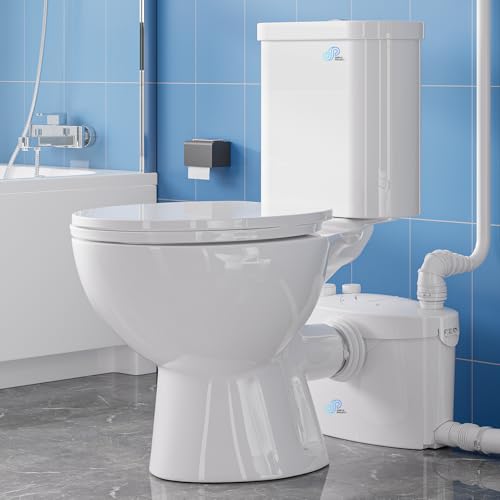
Simple Project 750W PRO Macerating Toilet System
Badge: Best Dual-Flush Upflush
Strengths
- Strongest stated pump in this guide, with dual flush stated in the listing
- 4 inlets give the most connection flexibility of the macerating picks
- Listing claims quiet operation — a live concern for attic and guest-room installs
Trade-offs
- Most complex installation in this guide
- Pump power and multiple inlets are wasted on a simple single-toilet room
- Like all macerators, it must never be fed wipes or non-flushable items
Key specs from the verified listing: Macerating upflush toilet system; 750W PRO macerator pump, as listed; Dual flush, as listed; 4-inlet configuration; Listed for basements and attics; Quiet operation, as listed; Space-saving design, as listed.
The Simple Project PRO is the heavy end of the upflush idea: a 750W macerator pump, four inlets, a stated dual flush and a listing that names attics as well as basements among its intended rooms. The conservation credential is the same dual-flush mechanism as the VEVOR — a reduced volume for liquid waste — but the system around it is built for a bigger job: a fuller added bathroom, a longer discharge run, or a household that wants the pump’s capacity in reserve rather than at its limit.
Four inlets change the planning conversation. Instead of a toilet with plumbing favours attached, this is the drainage hub for a small bathroom: toilet, basin and shower can all report to the one unit, which simplifies an attic conversion where every pipe run is negotiated with joists and roof lines. The listing’s claim of quiet operation matters most in exactly that setting — a pump cycling beneath a bedroom floor is held to a stricter standard than one in a basement utility corner, and buyers should treat the claim as a reason to read owner feedback about their specific floor construction before installing.
Nothing about this pick suits a simple job, and the review should say so plainly. If your bathroom drains by gravity, none of this machinery belongs in it. If your upflush project is a single toilet in a basement corner, the VEVOR above is the proportionate choice. The PRO earns its place for the ambitious addition — the attic suite, the basement flat — where its stated dual flush keeps a multi-fixture new bathroom from becoming the household’s water outlier.
Best for: Attic conversions and larger basement bathrooms needing a multi-inlet upflush hub / Not suited for: Single-toilet additions, or any bathroom with working gravity drainage
Comparison Table
| Pick | Type | Flush (as listed) | Height / fit | Listing |
|---|---|---|---|---|
| TDH Luxury Smart Toilet with Bidet Built In | One-piece smart, bidet built in | Not stated in listing | One-piece, seat height not stated | Prose-only |
| MAXSA 15 Inch Elongated Two-Piece Toilet | Two-piece elongated | 1.28 GPF, as listed | 15-inch comfort height | Check on Amazon |
| Garvee Two Piece Elongated Toilet | Two-piece elongated | 1.28 GPF, as listed | 15-inch comfort height | Check on Amazon |
| IDEALHOUSE ADA Compliant 17 Inch Elongated Toilet | Two-piece elongated, ADA | 1.28 GPF, as listed | 17-inch ADA height | Check on Amazon |
| VEVOR Macerating Toilet System with 700W Pump | Macerating upflush system | Dual flush, as listed | Space-saving system, height not stated | Check on Amazon |
| Simple Project 750W PRO Macerating Toilet System | Macerating upflush system | Dual flush, as listed | Space-saving system, height not stated | Check on Amazon |
How to Choose the Best Ways to Conserve Water Toilets Offer in Your Home
Start with the stated flush volume, and refuse to shop without one. The figure to look for on a conventional toilet is 1.28 GPF or below — the high-efficiency class — and it should appear in the listing itself, not in a reviewer’s paraphrase. A toilet that advertises power, silence or style but never states its volume is asking you to take its efficiency on faith, and this guide’s prose-only handling of the smart toilet above shows the standard to apply. Readers who want the labelling framework behind these figures can dig into Best Toilets Water Sense after this page, since the vocabulary of efficiency programmes is a topic of its own.
Next, decide whether dual flush earns its complexity in your household. The arithmetic is about flush mix: in most homes the large majority of flushes are for liquid waste, so a reduced liquid flush attacks the most common event rather than the largest one. A household of one in a small flat gains less in absolute terms than a family bathroom serving five people, but the mechanism pays proportionally everywhere. Against that, dual-flush mechanisms add a two-button or two-stage control that guests occasionally misuse, and a small number of households simply prefer one predictable full flush. Both positions are defensible; what is not defensible is paying for dual flush and then using the full button for everything out of habit.
Then match the fixture to the room’s plumbing reality. A standard bathroom with a 12-inch rough-in and a floor drain is gravity-toilet territory, and all three conventional picks here fit it. A room below the sewer line, or too far from the stack, is macerator territory, where the choice narrows to pump capacity, inlet count and noise. Do not let the tail wag the dog: a macerating system in a gravity bathroom is machinery without a mission, and a gravity toilet in a basement below the line is a flood with a schedule. Measure the rough-in before ordering anything — the distance from the finished wall to the centre of the floor flange decides which toilets can physically be installed, and no efficiency figure survives a toilet that has to go back.
Finally, think in systems rather than fixtures. The toilet’s stated volume is the ceiling on your saving, but the household’s actual use is set by everything around it: a fill valve that runs on, a flapper that seeps, a user who flushes rubbish, a cleaner who flushes to rinse the bowl. The buying decision and the maintenance habits in the next section are one decision, and the cheapest water in this entire guide is the water a five-minute dye test stops leaking away. Budget a few minutes a season for the checks, and the fixture’s stated figure becomes the household’s real figure.
How to Conserve Water With a Toilet Day to Day: Setup, Habits and Leak Checks
Installation and setup decide whether a low-volume toilet performs like one. Work through the setup in order, then adopt the habits, then schedule the checks.
- Shut off the water at the toilet’s supply valve and flush to empty the tank before any work; keep towels ready for the water that remains in the bowl and trap.
- Seat the new toilet on a fresh wax ring or the seal the manufacturer specifies, set it onto the flange bolts without rocking, and tighten the nuts evenly — an uneven seat cracks porcelain and a rocking toilet destroys its own seal, and both failures waste water.
- Connect the supply, open the valve slowly, and let the tank fill; then set the tank water level to the mark inside the tank or the manufacturer’s stated height — an overfilled tank sends water down the overflow tube continuously.
- Adjust the fill valve and check the flapper or flush seal seats cleanly; a seal that does not seat is a permanent slow flush you cannot hear from the next room.
- Flush several times and watch the bowl clear in one action; check around the base and the supply connection for any moisture before calling the job done.
- For dual-flush models, show every household member which control is the reduced flush — the saving only exists if the small button is the household’s default reach.
The habits are unglamorous and effective. Flush only waste and toilet paper — never wipes, cotton products or rubbish, which belong in a bin and which cause the blockages and repeat flushes that quietly inflate a household’s water use. Do not use the toilet as an ashtray or a disposal for expired medicines. And skip the folk trick of putting a brick or bottle in the tank: it can interfere with the flush mechanism, damage components, and turn a designed 1.28 GPF flush into an unreliable one that gets flushed twice. A modern low-volume toilet is already the displacement device, engineered properly. Readers working through the habit layer in more depth can continue in Best Toilets To Save Water.
Problem: The tank refills briefly every so often without anyone flushing → the flapper or flush seal is seeping water into the bowl. Add food colouring to the tank, wait without flushing, and look for colour in the bowl; colour there confirms the leak. Clean or replace the seal — it is the cheapest repair in plumbing and can save more water than the choice between two efficient toilets.
Problem: The toilet runs on or hisses after filling → the fill valve is not shutting off, often because the tank water level is set above the overflow tube or debris is caught in the valve. Lower the level to the marked line first; if the running continues, the valve itself needs cleaning or replacement.
Problem: A low-volume flush leaves the bowl needing a second flush → check the tank water level and that the rim jets are not scaled shut before blaming the toilet’s rating. If the problem began with the new toilet and the setup is correct, the honest conclusion is that this model’s flush does not suit your household’s waste load, and a stronger stated flush design is the fix — a double flush uses more than a single confident one.
What 1.28 GPF Actually Saves Over a Year
The per-flush difference between an older high-volume toilet and a stated 1.28 GPF model looks small on paper, which is why it is worth doing the household arithmetic honestly. Flushes are counted in the thousands per year in a family bathroom: several per person per day, multiplied by the people in the house, multiplied by 365. Any per-flush saving, repeated at that frequency, becomes a four-figure annual gallon count without anyone in the house changing a single habit. That is the structural appeal of the fixture-first approach — it is the rare conservation measure that asks nothing of anyone after the day it is installed.
Dual flush then trims the most frequent event. Because most flushes carry only liquid waste, a reduced flush that is genuinely smaller than 1.28 gallons pulls the household’s average flush volume below the headline figure — the average, not the rating, is what the water meter reads. This is also why the maintenance layer matters so much: a slow tank-to-bowl leak runs all day and all night, at a rate that can quietly exceed the entire saving the new fixture was bought for. Efficiency is a system: rated volume, flush mix and mechanical soundness, in that order of size but all three real. The wider efficiency landscape is surveyed in Best Water Efficiency Toilets for readers who want to compare approaches beyond this page’s picks.
When a Macerating Toilet Is the Conservation-Friendly Choice
It surprises people to find pump-driven toilets in a water guide, but the conservation case is about the alternative, not the machine. A basement or attic room that cannot have a bathroom often generates its own waste: long trips through the house at night, or — in the case of a guest room or a let room — a bathroom that never gets built and a household that stays dependent on one hard-worked fixture. An upflush bathroom with a stated dual flush is a complete, water-accountable bathroom, and its reduced liquid flush keeps its running total honest.
The discipline a macerator demands also aligns with good water practice. These systems must only ever receive waste and toilet paper, which is exactly the rule every toilet should live by; the macerator simply enforces it mechanically. Where buyers go wrong is treating the pump as a disposal unit. Treat it as a toilet that happens to pump, keep its diet strict, and a dual-flush macerating system holds its own in this guide on the same stated-figure terms as the gravity picks.
Common Buying Mistakes
Buying an unstated flush volume on trust. If the listing never says how much water the toilet uses, you are not buying a water-saving toilet — you are buying a toilet and a hope. The prose-only smart toilet in this guide is the standing example: impressive in many ways, unverifiable in the one way this keyword cares about.
Judging by the headline figure and ignoring flush mix. A household whose flushes are mostly liquid gains more from a dual flush’s reduced setting than from a small difference in full-flush ratings. Shop for your average flush, not your largest one.
Using a displacement brick or bottle in a modern tank. The trick belongs to the era of oversized tanks. In a designed low-volume toilet it undermines the flush, invites double flushing, and can foul the mechanism — a net loss dressed as a saving.
Never checking for a silent leak. A seeping flapper can waste more than the gap between an old toilet and a new one. The food-colouring test takes minutes and no tools; skipping it for years is the most expensive mistake on this list.
Putting a macerator where gravity would do, or gravity where only a macerator works. Both errors come from shopping before surveying the room. Establish the drainage reality first; the product category follows from it, not the other way round.
Flushing wipes and rubbish. Nothing with ‘flushable’ on a marketing packet belongs in any toilet in this guide, and in a macerating system it risks a jammed pump. A small bin beside the toilet is the cheapest water-and-plumbing accessory a household can buy.
Final Recommendation
Start with the MAXSA 15 Inch Elongated Two-Piece Toilet (Check on Amazon) — its stated 1.28 GPF water-saving flush, standard rough-in and soft-close seat make it the default conservation replacement for an ordinary bathroom. The Garvee (Check on Amazon) matches that figure and adds a stated cUPC certification and a locking seat, while the IDEALHOUSE (Check on Amazon) is the pick when the bathroom also needs a 17-inch ADA height. Between them, the three conventional picks cover the standard swap at the two heights households actually ask for.
If the project is an added bathroom rather than a replacement, the decision moves to the macerators: the VEVOR for a proportionate single-room job, the Simple Project PRO for the multi-fixture attic or basement build — both with dual flush stated in their listings. And keep the TDH in its honest place: a premium smart toilet to buy for its bidet and automation, after you have obtained the flush figure its listing omits. Whichever fixture you choose, pair it with the dye test and the habits in the how-to section, and the saving on paper becomes the saving on the meter.
Frequently Asked Questions
What is the best way to conserve water with a toilet: a new fixture or new habits?
The fixture, and it is not close. A stated 1.28 GPF toilet saves water on every flush without anyone remembering anything, while habits depend on every household member every day. Habits and leak checks still matter — a leaking efficient toilet can waste more than a sound thirsty one — but the order of operations is fixture first, maintenance second, behaviour third.
Is 1.28 GPF enough to clear the bowl properly?
It is when the flush is designed for it. Siphonic and siphonic-jet designs, like the conventional picks in this guide, use trapway action to make a smaller volume do complete work. The failure mode to watch is a toilet that needs a second flush, which erases the saving; correct tank water level and clear rim jets are the first checks if that happens.
How much does dual flush add over a single 1.28 GPF flush?
It lowers the household’s average flush volume, because most flushes are for liquid waste and the reduced setting handles those with less water. The exact gain depends on the reduced volume the manufacturer sets and on the household actually using the small flush as its default — which is why this guide treats dual flush as a mechanism, not a magic number.
How do I know if my toilet is silently wasting water?
Put food colouring in the tank, do not flush, and check the bowl after a while. Colour in the bowl means the flapper or flush seal is seeping tank water continuously. It is the most common hidden waste in a bathroom and one of the cheapest faults in the home to fix.
Can a smart or bidet toilet be a water-saving choice?
A bidet wash changes bathroom consumption in real ways, but a toilet can only be credited with saving flush water if its listing states the flush volume. The smart toilet reviewed here states none, so this guide presents it prose-only and advises asking the seller for the figure before buying it for conservation reasons.
Does a macerating toilet use more water than a normal toilet?
Not inherently. The macerator pumps the waste away after an ordinary flush, and both macerating picks here state dual-flush operation, so their flush volumes follow the same logic as a gravity toilet’s. What they add is electrical use and a mechanical component, which is a maintenance consideration rather than a water one.


