Disclosure: As an Amazon Associate, topratedkitchenware.com earns from qualifying purchases. Links on this page are affiliate links; they cost you nothing extra. Prices and availability change often, so check the current Amazon listing before you buy.
These crepe pan reviews take the leading pans and electric makers in the category and put each one through the same honest questions: How thin and even are its crepes? How steady is its heat across a batch? How does it treat a beginner, and how will it age? Rather than a single winner, these crepe pan reviews are organised by who each option serves best — the traditionalist, the batch cook, the beginner, the bargain hunter, and the brunch host — because in a category this mature, the right pan is the one matched to your kitchen, not the one with the loudest claims.
Key Takeaways
- Best traditional experience: the de Buyer carbon steel pan, which improves with seasoning and rewards regular use.
- Steadiest batches: the Lodge cast iron pan, whose mass holds heat through long sessions and crisps galette edges beautifully.
- Easiest ownership: the Cuisinart Chef’s Classic and T-fal nonstick pans, at mid and entry tiers respectively.
- Most consistent for crowds: the Moss & Stone and Proctor Silex electric makers, which hold a set temperature while the stove stays free.
Crepe Pan Reviews: How the Leading Options Were Assessed
Every option in these reviews was judged against the work a crepe pan actually does. First, spreading: can batter reach the edge in one motion, by swirl or by spreader, without tearing or pooling? Second, heat behaviour: does the surface colour a crepe evenly, and does it hold its pace from the second crepe to the twentieth? Third, release: does a set crepe loosen cleanly, sweet batter and fragile buckwheat alike? Fourth, the human factors — weight, handle heat, cleanup, and storage — because a pan that annoys its owner stops being used, whatever its cooking merits. Finally, longevity: how the surface ages, and what care that ageing demands.
A note on method and honesty: these reviews are written prose-first, with product listings to be verified before publication, so you will find tier positioning — entry, mid, premium — rather than prices, and plain guidance to check price on Amazon when you compare. That restraint is deliberate. What follows is what can be said truthfully about how these pans cook and who they suit, which is the part of a review that stays useful after listings change.
The six reviews below run from the traditional French steel pan to the friendliest electric plates. Read the ones in your format first, then cross-check the verdicts against the comparison table that follows.

de Buyer Crepe Pan
De Buyer is the name most closely associated with the traditional French crepe pan, and its carbon steel pans are built around a simple idea: a flat, heavy base, very low sloped sides, and a surface that improves the more you cook on it. Carbon steel starts out plain and develops seasoning through use, so the release gets better over months rather than worse. The pan feels substantial in the hand, sits flat and steady on the burner, and responds to heat changes the way experienced cooks expect from steel. It asks for a little care in return: dry it after washing, keep the seasoning fed with thin coats of oil, and store it dry.
Choose this pan if you want the classic stovetop experience and you are willing to season and maintain carbon steel. It suits cooks who make crepes regularly, who enjoy dosettes and galettes as much as sweet crepes, and who prefer buying one pan for the long term. Skip it if you want a pan that is forgiving from the very first use with no learning curve, or if you dislike hand washing and drying cookware straight away. This is a premium-tier option; check price on amazon to confirm the current listing, size, and included accessories before you buy.
Lodge Cast Iron Crepe Pan
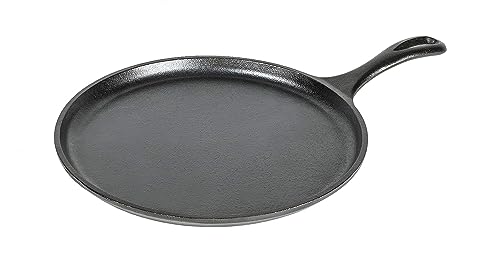
Lodge brings cast iron to the crepe pan format with a wide, flat griddle-style surface and the heat retention the material is famous for. Once the iron is properly hot it holds a steady temperature through batch after batch, which is exactly what crepe making rewards: the tenth crepe cooks at the same pace as the second. The surface arrives pre-seasoned, and like all cast iron it improves with regular use and sensible care. The trade-off is weight. A cast iron crepe pan is not a pan you swirl with a flick of the wrist for an hour; most cooks spread the batter with a spreader or tilt the pan on the burner instead.
Choose this pan if even, patient heat matters more to you than lightness, and if you already like cooking on cast iron. It is a strong fit for weekend batches, for galettes that want a crisp edge, and for cooks who value a pan that can be restored almost indefinitely. Skip it if wrist comfort is a concern, if you want to swirl batter one-handed, or if you prefer cookware you can leave soaking in the sink. This is a mid-tier option; check price on amazon to confirm the current listing, size, and included accessories before you buy.
Cuisinart Chef’s Classic Crepe Pan
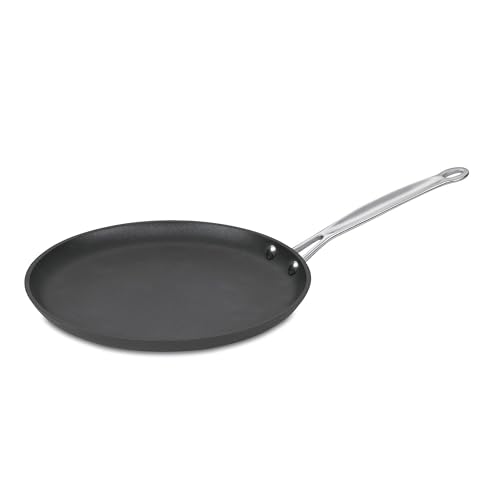
The Cuisinart Chef’s Classic crepe pan represents the mainstream nonstick route: a hard-anodized style body with a slick interior, low sides shaped for sliding a spatula under a finished crepe, and a handle that stays comparatively comfortable during a session. Nonstick changes the technique slightly. You need very little fat, the batter glides as you tilt, and cleanup is a quick wipe rather than a seasoning routine. For occasional crepe makers and busy family breakfasts, that ease is the whole point.
Choose this pan if you want predictable release from the first morning, easy cleanup, and a pan that doubles happily for pancakes, eggs, and quesadillas. It suits beginners who are still learning batter consistency and heat control, because the surface forgives small mistakes. Skip it if you want a pan to keep for decades, since every nonstick surface has a working life, or if you regularly cook over very high heat, which nonstick coatings dislike. This is a mid-tier option; check price on amazon to confirm the current listing, size, and included accessories before you buy.
T-fal Crepe Pan
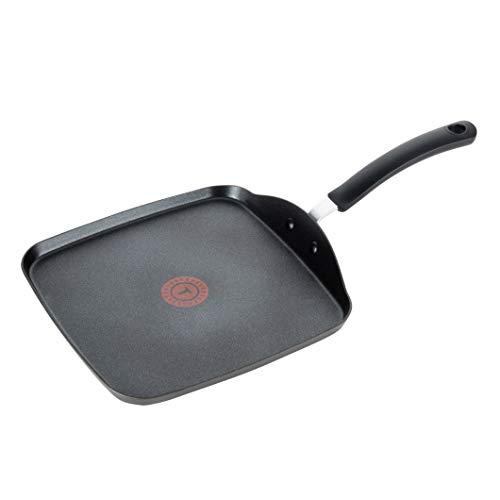
T-fal’s crepe pan sits at the accessible end of the market: light, simple nonstick cookware aimed at people who want to try crepes without committing to carbon steel or cast iron. The light build makes the swirl-and-tilt motion easy to learn, especially for smaller hands and for kids cooking with supervision. The surface releases sweet and savoury batters cleanly while it is in good condition, and the pan stores easily in a shallow drawer or cupboard slot.
Choose this pan if you are crepe-curious, cook them a handful of times a year, or want a low-commitment pan for a holiday home, a student kitchen, or a first apartment. It is also a sensible second pan when one cook is making sweet crepes and another is working on savoury galettes. Skip it if you make crepes weekly and want a surface that deepens with use, or if you need induction compatibility without checking the base carefully first. This is a entry-tier option; check price on amazon to confirm the current listing, size, and included accessories before you buy.

Moss & Stone Electric Crepe Maker
The Moss & Stone electric crepe maker moves the cooking surface off the stove entirely. It is a countertop plate with its own heating element and temperature control, designed so you pour, spread, and lift crepes at a comfortable counter height. The appeal is consistency and independence: the plate holds its setting while the stove stays free, and beginners can repeat the same heat level session after session instead of re-learning a burner’s moods. Many electric makers in this class also invite a dipping technique, where the plate is briefly inverted into a shallow dish of batter for an especially thin coating.
Choose this option if you make crepes for a crowd, if your stove runs hot and uneven, or if you want a dedicated station for brunch service where guests can watch or help. It also suits cooks who struggle to judge burner heat. Skip it if counter and storage space are tight, if you dislike single-purpose appliances, or if you want the flavour and control that come from a heavy pan on a live flame. This is a mid-tier option; check price on amazon to confirm the current listing, size, and included accessories before you buy.
Proctor Silex Electric Crepe Maker
Proctor Silex offers the electric crepe maker idea in a straightforward, family-kitchen form: a flat nonstick plate, simple controls, and accessories in many kits such as a spreader and spatula to get the thin-batter technique started. The learning curve is gentle. You set the control, wait for the plate to settle, spread a small ladle of batter, and lift the crepe when the edges set and the surface looks matte. Because the plate is fixed, there is no pan to balance, which helps new cooks focus entirely on batter and timing.
Choose this maker if you want the easiest possible route to a stack of breakfast crepes, if children will be helping, or if you regularly cook for a table of people with mixed sweet and savoury orders. Skip it if you want one tool that also fries eggs and sears galettes on the stove, or if you prefer the ritual and responsiveness of a traditional pan. This is a entry-tier option; check price on amazon to confirm the current listing, size, and included accessories before you buy.
In this guide
How the Reviewed Pans Compare Side by Side
| Pan | Format | Tier | Release style | Learning curve | Best role |
|---|---|---|---|---|---|
| de Buyer Crepe Pan | Carbon steel, stovetop | Premium | Seasoning that improves with use | Moderate | Long-term traditional cooking |
| Lodge Cast Iron Crepe Pan | Cast iron, stovetop | Mid | Pre-seasoned iron, improves with use | Moderate | Long batches, galettes |
| Cuisinart Chef’s Classic Crepe Pan | Nonstick, stovetop | Mid | Coating, easy from day one | Gentle | Everyday family cooking |
| T-fal Crepe Pan | Nonstick, stovetop | Entry | Coating, easy from day one | Gentle | First pan, occasional use |
| Moss & Stone Electric Crepe Maker | Electric plate | Mid | Coated plate, set temperature | Gentle | Crowds, brunch stations |
| Proctor Silex Electric Crepe Maker | Electric plate | Entry | Coated plate, simple controls | Gentlest | Families, beginners |
Read the table as a map of temperaments. The left column’s first two entries ask something of you — seasoning, patience, a strong wrist — and give decades back. The middle two ask almost nothing and give easy years. The last two remove the stove from the equation entirely and give consistency, at the cost of cupboard space. There is no trap in any row; the only bad outcome is a mismatch between the pan’s demands and the cook’s real habits, a theme the buying framework in crepe pan buying guide develops in full.
What Cooking Sessions Revealed Across All Six
Spreading the batter thin is the skill that defines a crepe, and it is mostly about timing and quantity. Use less batter than instinct suggests: a small ladle for a standard pan is plenty. Pour into the centre of a hot, lightly greased surface, then immediately tilt and rotate the pan in one smooth circular motion so the batter runs to the edges before it sets. If you are using a wooden spreader, rest it lightly on the surface and sweep in a circle without pressing down, because pressure tears a half-set crepe. Holes are information, not failure: they mean the pan was a touch too hot, the batter a touch too thick, or the pour a touch too slow. Thin the batter with a spoonful of milk or water, lower the heat slightly, and pour with more confidence on the next one.
Heat management is the second half of the craft. A crepe pan wants steady medium heat, not drama. Preheat the pan empty until a few drops of water flicked onto the surface dance and evaporate quickly, then reduce the burner slightly before the first crepe, because pans keep climbing in temperature as a session goes on. The first crepe is famously sacrificial: it absorbs the excess fat, reveals whether the heat is right, and seasons the cook as much as the pan. If crepes brown in dark spots while staying pale between them, the base is heating unevenly or the heat is too high; if they take forever and dry out, the pan is too cool and the texture turns leathery. Adjust in small steps and give the pan a minute to settle after each change.
Three lessons repeated across every format. The first is that batter decides more than hardware: rested, properly thin batter made even the entry pans look skilled, while rushed batter made the premium steel look ordinary. The second is that the second crepe is the honest one — the first absorbs the session’s excess fat and heat errors, and judging any pan by its first crepe is unfair to all six. The third is that release is a system, not a surface: heat, fat film, batter, and patience contribute together, and when a crepe stuck, the fix was almost never a different pan. It was a small adjustment, made once, that fixed the rest of the batch.
Strengths and Trade-Offs of the Current Generation
Strengths. The category is mature and honest: every format reviewed here genuinely works, the techniques are well understood, and the supporting tools — spreaders, thin spatulas, ladles — are simple and cheap. Steel and iron options offer effectively permanent service lives. Electric makers have made the beginner experience nearly foolproof. Trade-offs. Specialisation cuts both ways: these are flat pans, and kitchens short on storage must justify the slot. Nonstick lifespans are finite. Heavy pans challenge smaller wrists over long sessions. And every format shares the same small learning curve around batter and heat, which no purchase can skip — a balance examined head-on in crepe pan pros and cons.
Care, Seasoning and Keeping the Reviewed Pans at Their Best
Carbon steel and cast iron crepe pans earn their release through seasoning, and the routine is simpler than its reputation. After cooking, wipe the pan out while warm, wash briefly with hot water and a soft brush only when needed, then dry it completely on the burner. While it is still warm, wipe the thinnest possible film of a neutral, high-heat oil over the surface with a cloth or paper towel — so thin it looks dry — and heat until it just begins to smoke, then let it cool in place. Repeat that film a few times when a pan is new or after a stripping wash. Thick oil is the enemy: it pools, turns sticky, and flakes. Thin layers, heat, and regular cooking with butter and batters build the dark, slick surface that releases crepes with a nudge.
Day-to-day care splits by material. Nonstick crepe pans want gentle treatment: wooden, silicone, or nylon tools, a soft sponge, no cooking sprays that bake into a sticky film, and storage with a cloth or pan protector between stacked pieces. Carbon steel and cast iron want dryness more than gentleness: wash hot, dry on heat, and finish with the lightest trace of oil when the pan will sit for a while. Electric makers should never be immersed; wipe the plate warm with a damp cloth, work around the edges with a soft brush for dried batter, and let the unit cool fully before it goes back into a cupboard. Every type rewards the same final step — storing the pan where its surface will not be knocked, scratched, or used as a shelf for heavier cookware.
Respect the handle. On steel and cast iron pans the handle is part of the same hot metal as the cooking surface, and it heats up quietly during a long session — the danger moment is the cheerful grab halfway through a batch when the first crepes felt fine. Build the habit of a dry towel or a silicone handle sleeve from the first crepe, every time, and keep the towel dry because a damp cloth conducts heat and steam straight to your palm. Position handles turned away from other burners and away from the walkway side of the stove, keep children on the far side of the counter during flipping practice, and remember that electric makers keep hot plates exposed at counter height, so treat the plate edge like a burner even after the indicator light changes.
Batter rewards a little planning. Whisk flour, eggs, milk, a pinch of salt, and a little melted butter or oil until just smooth, then rest the bowl — half an hour on the counter or overnight in the fridge — so the flour hydrates and the bubbles settle. Rested batter spreads thinner, tears less, and tastes better. Strain it if lumps survive; a smooth batter is the cheapest upgrade in all of crepe making. Keep the bowl beside the stove with the ladle resting in it, stir gently before each pour because flour settles, and expect the last crepes to need a splash of milk as the batter thickens in the bowl. Sweet batters with sugar brown faster, so drop the heat slightly for dessert crepes and watch the edges.
Which Reviewed Pan Should You Actually Buy?
If you will make crepes weekly for years, buy the de Buyer and season it with pleasure. If your crepe making happens in big, sociable batches, buy the Lodge — or the Moss & Stone if your stove is the weak link. If you want crepes to be easy from the first morning and cleanup to be an afterthought, buy the Cuisinart; if you are simply not sure crepes are for you, buy the T-fal and find out cheaply and kindly. If children will cook with you, or the brunch table is long, the Proctor Silex is the gentlest teacher in the group. The value argument behind each tier is weighed in is a crepe pan worth it, and the single-product deep dive sits in crepe pan review. General nonstick context: best nonstick frying pans for home kitchens; iron context: best Lodge cast iron skillets.
Crepe Pan Practice Notes From Real Sessions
Fillings change what the pan must do. A crepe filled after cooking asks only for a clean release and a supple texture. A crepe filled in the pan — cheese to melt, an egg to set, Nutella-style spreads to warm, fruit to soften — asks for even heat and a little more patience at a slightly lower temperature, so the base does not scorch while the filling catches up. Delicate pans earn their keep here: a surface that heats evenly and releases predictably lets you fold in the pan with a spatula, slide the parcel out in one motion, and keep the line moving when a table of people is waiting.
Storage shapes buying decisions more than most guides admit. A traditional crepe pan is nearly flat and hangs happily from a hook or slides into the shallow drawer where sheet pans live. Cast iron is heavier and prefers a permanent home on a rack or the stove itself. Electric makers are the bulkiest option and earn their cupboard space only when they are used often; measure the shelf before you buy, and store the unit fully cool and dry with its cord loosely coiled rather than wrapped tight around a warm plate. A pan that is annoying to store becomes a pan that is annoying to use, whatever its cooking merits.
Crepes travel well beyond breakfast. The same pan and batter logic covers dosettes for a savoury lunch, blintz-style parcels, thin pancakes for layering into a crepe cake, and the wrappers for a dozen regional dishes that all rely on a thin, supple, evenly cooked sheet. That versatility is the quiet argument for owning a dedicated pan: a tool bought for Sunday crepes ends up working weekday lunches and celebration desserts. When you assess value, count those uses honestly — a pan used across the week justifies itself very differently from one that appears twice a year.
More From the Crepe Pan Notebook
Crepes travel well beyond breakfast. The same pan and batter logic covers dosettes for a savoury lunch, blintz-style parcels, thin pancakes for layering into a crepe cake, and the wrappers for a dozen regional dishes that all rely on a thin, supple, evenly cooked sheet. That versatility is the quiet argument for owning a dedicated pan: a tool bought for Sunday crepes ends up working weekday lunches and celebration desserts. When you assess value, count those uses honestly — a pan used across the week justifies itself very differently from one that appears twice a year.
Finally, trust the evidence of your own sessions over any guide, including this one. Keep tiny notes for the first few batches: how much batter per crepe, where the heat sat, which adjustments fixed tearing or sticking. Crepe making is a physical skill with a short learning curve, and two or three sessions of honest notes will teach your hands more than a shelf of cookbooks. The right pan is the one that makes those sessions feel easy enough to repeat — because repetition, far more than equipment, is what turns adequate crepes into excellent ones.
A dosette, the small wooden T-shaped spreader used in Brittany, looks like a toy until you use one properly. Soak a new wooden spreader in water before its first session so batter clings less, hold it at a low angle, and let the crossbar ride on the batter rather than the pan. The motion is a calm spiral from the centre outward, finished in seconds. Metal spreaders exist and last forever, but wood is gentler on seasoning and nonstick alike, and its slight flex forgives an uneven hand. If your crepes keep coming out thick in the middle and bare at the edges, the spreader angle is usually the culprit, not the batter.
Stacking finished crepes is a small craft of its own. Slide each crepe onto a warm plate, and if the session will run long, cover the stack with a clean cloth or an upturned second plate so the edges stay supple instead of drying into crackers. Crepes destined for filling later in the day keep beautifully layered between sheets of baking paper, and they freeze the same way, stacked with paper between them and sealed in a bag. Thaw the stack in the fridge overnight or at room temperature for an hour, then warm each crepe for a few seconds in a dry pan before filling, which restores the fresh texture far better than reheating a filled crepe.
Savoury galettes deserve their own note because they punish the habits sweet crepes forgive. Buckwheat batter is more fragile, wants a thoroughly hot and well-seasoned or well-greased surface, and benefits from a slightly thicker pour than a dessert crepe. The classic complete galette — ham, grated cheese, and an egg cracked into the centre — needs the pan at a steady medium heat so the white sets as the cheese melts without the base scorching. Fold the edges in toward the yolk once the white turns opaque, give it another half minute, and serve it on a warm plate. A pan that releases a buckwheat galette cleanly will release anything.
Judge a crepe session by its rhythm rather than its first crepe. Cooks who enjoy the process settle into a loop: grease lightly, pour, spread, wait for the matte finish and lacy edge, loosen with a thin spatula, flip or slide, give the second side a brief kiss of heat, and stack. The flip itself can be done with a spatula, with confident fingers at the edge once it has cooled a second, or — on light pans only — with a small toss. Heavy steel and iron pans are turned with a spatula, not tossed, and there is no shame in that: most professional crepe stations use a spatula and a spreader, not acrobatics.
Butter is both ingredient and tool in crepe making, and how you apply it matters. A whole knob melted in the pan floods the batter and fries the edges; a brush, a folded paper towel, or the cut side of a potato on a fork — the old Breton trick — lays down the thin film you actually want. Between crepes, re-grease only when the surface starts to look dry or the previous crepe hesitated to release. On seasoned steel and iron, the need for added fat fades as the session goes on. On nonstick, a bare trace is enough, and excess butter pooling at the edges is a sign to wipe, not to add.
Size is a quiet decision with loud consequences. A smaller crepe pan makes crepes that fold neatly for one person and stores anywhere, but each crepe is a modest portion. A wide pan produces the generous, foldable crepes of a crepe stand and handles dosette spreading beautifully, yet it needs a burner that heats its full base and cupboard space to match. Electric plates tend to the wider format, which is part of their brunch appeal. Whatever you choose, match the pan to the burner: a wide base on a small burner cooks a pale ring of batter around a raw-looking centre, no matter how good the pan is.
The second side of a crepe needs far less time than the first, and overcooking it is the most common route to a tough, dry result. Once flipped, count in seconds, not minutes: the underside should take a light colour in spots and stay supple enough to fold without cracking. If you are filling the crepe in the pan, the second side is where fillings warm and cheese melts, so arrange the filling as soon as the crepe lands back down. Crepes that crack when folded were usually cooked too long, spread too thin over too fierce a heat, or made from batter that needed more rest and a touch more liquid.
A word about the first crepe, because every tradition in crepe making honours it: it will probably be imperfect, and that is its job. The first crepe absorbs the extra fat, proves the heat, tests the batter’s flow, and calibrates your pouring hand. Cooks in Brittany traditionally give it to the dog or eat it standing at the stove. Plan for it. Make the batter a little more generous than the headcount demands, treat crepe one as a diagnostic, adjust heat and thickness from what it tells you, and start judging from crepe two onward. Sessions that begin with that mindset stay relaxed, and relaxed cooks make better crepes.
Fillings change what the pan must do. A crepe filled after cooking asks only for a clean release and a supple texture. A crepe filled in the pan — cheese to melt, an egg to set, Nutella-style spreads to warm, fruit to soften — asks for even heat and a little more patience at a slightly lower temperature, so the base does not scorch while the filling catches up. Delicate pans earn their keep here: a surface that heats evenly and releases predictably lets you fold in the pan with a spatula, slide the parcel out in one motion, and keep the line moving when a table of people is waiting.
Storage shapes buying decisions more than most guides admit. A traditional crepe pan is nearly flat and hangs happily from a hook or slides into the shallow drawer where sheet pans live. Cast iron is heavier and prefers a permanent home on a rack or the stove itself. Electric makers are the bulkiest option and earn their cupboard space only when they are used often; measure the shelf before you buy, and store the unit fully cool and dry with its cord loosely coiled rather than wrapped tight around a warm plate. A pan that is annoying to store becomes a pan that is annoying to use, whatever its cooking merits.
Regional traditions offer free lessons if you pay attention to them. Breton cooks grease with a potato dipped in butter and spread with a wooden dosette on iron. Dosa cooks in India work a ferociously hot, seasoned flat pan with batter spread in spirals and oil dripped at the edges — proof that the thin-batter technique thrives on well-kept iron and steel across cultures. Japanese dorayaki and Russian blini traditions show the same batter logic at smaller scales. Your crepe pan sits in a long, global lineage of flat pans and thin batters, and borrowing techniques across those traditions will improve your crepes faster than buying accessories will.
Finally, plan the serving as carefully as the cooking. Crepes wait gracefully for a few minutes in a low oven on a covered plate, but they punish long delays by drying at the edges. The smoothest hosts cook to order in short runs, keep fillings warm and within reach, and let guests fold their own — which turns the pan’s steady rhythm into part of the entertainment. If you must cook ahead, stack with baking paper, wrap the stack, and refresh each crepe for seconds in the hot dry pan before filling. That small ritual restores the just-made texture that makes a crepe worth eating in the first place.
Consider the humble question of batter temperature, which separates smooth sessions from frustrating ones. Batter straight from an overnight rest in the fridge is thicker and colder than batter rested on the counter, and cold batter on a hot pan sets at the edges before it finishes spreading. The fix is simple: take refrigerated batter out while the pan preheats, give it a gentle whisk, and thin it with a spoonful of milk if it pours slowly. Room-temperature batter flows faster, so pour a little less of it. Experienced cooks adjust batter the way they adjust heat — continuously, in small amounts, guided by the crepe in front of them rather than by the recipe behind them.
There is a reason professional crepe stands work on large, heavy plates rather than light pans, and it is worth understanding before you buy. Mass is stability: a heavy surface barely notices the cold shock of fresh batter, so the fifteenth crepe cooks exactly like the third. Home cooks can borrow that principle at any budget by choosing the heaviest base they can comfortably handle, preheating it fully, and resisting the urge to chase temperature with constant burner adjustments. Light pans have their place — they swirl beautifully — but they ask the cook to supply the steadiness that a heavy pan supplies on its own.
Think about the crepe itself as a structure for a moment. A good crepe is a flexible sheet with three zones: lacy, crisp edges; a tender middle; and enough strength to fold around a filling without tearing. Each zone is a heat-and-thickness report. Lace comes from batter thin enough to form holes that set instantly at the rim. Tenderness comes from moderate heat and a short second side. Strength comes from rested batter whose flour has fully hydrated. When a batch disappoints, diagnose by zone: brittle edges mean too hot or too thin, a gummy middle means too thick or too cool, and tearing means the batter needed rest or the pan needed patience before the flip.
The economics of a crepe pan are unusually kind, because the food itself is inexpensive and the tool has almost nothing to break. A stovetop pan has no electronics, no seals, and no moving parts; its lifespan is measured in decades for steel and iron, and in good years for nonstick. An electric maker adds a heating element and a control, which is its main long-term risk, balanced by its consistency while it works. However you spend, the cost per use collapses quickly for anyone cooking monthly or more — one of the reasons the worth-it question, explored in is a crepe pan worth it, resolves positively for so many households.
Advanced Crepe Pan Notes
Reheating crepes well is a small skill that protects all the work upstream. A filled crepe reheats best in the pan it was born in: a dry, medium-hot surface for a minute or so, until the base crisps lightly and the filling warms through. Plain crepes from the fridge need only seconds per side in a dry pan to become supple again. The microwave is the enemy of texture — it steams the crepe soft and toughens the edges — and the oven suits only large, covered batches. When in doubt, the pan wins, which is one more reason the pan earns its storage space.
Freezing is where a big session pays compound interest. Freeze crepes flat, layered with baking paper, in a sealed bag with the air pressed out; they keep their quality for weeks and thaw into near-fresh condition. Thaw the stack in the fridge overnight, or separate a few crepes and warm them straight from frozen in a dry pan over gentle heat, where they soften in under a minute. A freezer stack of crepes turns a weekday dessert or a sudden guest into a five-minute job, and it is the strongest practical argument for cooking double batches whenever the pan is hot anyway.
Troubleshooting, gathered into one place, looks like this. Crepes tearing as you spread: the batter is too thick, the pan is too hot, or the batter needed more rest — thin it, cool the pan slightly, and pour faster. Crepes sticking despite a seasoned surface: the pan was not fully preheated, or the fat film was uneven — wait longer, grease thinner. Pale and rubbery: the heat is too low or the crepe is too thick. Dark spots: the heat is too high or the base is thin over a fierce burner. Lacy edges that shatter: the batter is very thin and the heat high — beautiful for galettes, fragile for folding, so thicken slightly for dessert work.
Choosing fillings with the seasons keeps a crepe habit fresh all year. Spring wants strawberries, rhubarb, and lemon. Summer is for peaches, berries, and simple sugar-and-butter crepes eaten warm. Autumn suits apples with cinnamon, pears, and salted caramel flavours. Winter leans on citrus, chocolate, chestnuts, and warm spiced fillings. Savoury fillings follow the same calendar through market vegetables, eggs, cheeses, and cured meats. A cook who shops the season never faces the boredom that kills kitchen hobbies, and the pan — indifferent to fashion — just keeps asking for the next ladle of batter.
There is a quieter benefit to owning this pan that rarely appears in reviews: it slows a household down in a good way. Crepes cannot be rushed beyond their rhythm, they are cooked one at a time and eaten in company, and the cook stands in one place doing one calm thing well. In a kitchen culture of timers and multitasking, a tool that enforces a gentle pace has a value that does not show up in specifications. Many owners, asked why they kept the pan for years, end up describing the mornings as much as the food.
Finally, a note on buying second-hand, because steel and iron crepe pans circulate for generations. A used carbon steel or cast iron pan with surface rust, old seasoning, or a cooked-on patina is usually a bargain in disguise: scrub it back, reseason it in thin layers, and it will cook like new, because the material forgives almost everything except a warped base. Check that base on a flat surface before paying — a pan that rocks or spins has been heat-abused and will cook unevenly forever. Nonstick and electric pans, by contrast, should be bought new, since their working surfaces and elements carry the wear that matters.
The First-Week Scorecard: Testing This Crepe pan at Home
Use this scorecard during the first week, while changing your mind is still easy, and run the same ordinary jobs you bought the crepe pan for rather than showcase tasks chosen to flatter it. Score setup first: how long the box-to-ready journey took, whether the instructions answered the question you actually had, and whether anything needed a tool the box did not mention. Score the core job on a normal weekday portion, with your usual ingredients and timing, and write the result down before you try any advanced mode or accessory. Score consistency by repeating that same job on another day and comparing the two outcomes side by side, since repeatability is the quality that separates a good example from a lucky one.
Score the controls under real conditions, with damp hands, low light, or a timer running elsewhere, because that is the environment the crepe pan will actually be judged in. Score cleaning honestly by timing it once, including the drying and reassembly, and by noting any corner, seam, or crevice that needed a second attempt. Where a shortlist names specific examples, such as de Buyer crepe pan, run these same checks against that listing line by line rather than assuming the general verdict transfers unchanged. Apply the identical test to Lodge cast iron crepe pan as well, on the same day and under the same conditions, because a fair comparison needs one ruler rather than two moods.
- Time the box-to-ready setup
- Repeat the core job on two separate days
- Time the full clean including drying
- Watch a second user try without coaching
- Deliberately make the common mistake once
- File the scorecard with the receipt
If Cuisinart Chef’s Classic crepe pan is also in contention, give it the same worksheet and let the three sets of answers sit side by side before anyone reaches for a checkout button. Score the storage reality: whether the crepe pan and its parts return to their spot without a rearrangement ritual, and whether anything migrates to a counter because it has no home. Score the noise, heat, steam, or vibration against the room it lives in, at the hour you most often use it, and note whether anyone in the household comments unprompted. Score the small parts: lids, seals, trays, attachments, and fasteners, because in long ownership the small parts are where satisfaction quietly leaks away.
Score the documentation by looking up one real question mid-task and timing how long the answer takes to find, in the booklet or on the maker’s support pages. Score the fit against the measurements you took before ordering, and note any surprise, generous or otherwise, while the details are still fresh enough to help another buyer. Score the second user experience by watching someone else in the household use the crepe pan without coaching, and noting exactly where they hesitate or guess. Score the worst job, not the best: the largest load, the trickiest ingredient, or the latest tired evening, because that score predicts your feelings in month six.
Frequently Asked Questions
Which crepe pan is best overall?
For most committed home cooks, the de Buyer carbon steel pan is the best overall: it cooks beautifully once seasoned, tolerates decades of use, and represents the traditional format at its best. But ‘overall’ hides the real answer — the Lodge is better for long batches, the nonstick pans are better for beginners, and the electric makers are better for crowds. Match the pan to your pattern of cooking and you will have bought the best pan for you.
Are expensive crepe pans worth it compared with budget ones?
The premium buys you material and lifespan rather than magic. A budget nonstick pan makes lovely crepes while its coating is young; a premium steel pan makes lovely crepes for decades and improves as it goes. If you cook crepes rarely, the budget route is rational. If you cook them monthly or more, the long-lived materials repay their tier quickly in cost per use — and in the pleasure of a tool that gets better instead of worse.
Do electric crepe makers make crepes as good as pans?
They make crepes that are as thin and even as most home cooks ever achieve, because the plate’s steady temperature removes the hardest variable. What they do not replicate is the responsiveness of a pan on a flame — the quick heat adjustments an experienced cook uses for galettes — or the pan’s second life as an everyday flat pan. For beginners and hosts, electrics are arguably better; for traditionalists, the pan remains the reference.
How long do nonstick crepe pans last?
With gentle tools, moderate heat, and soft-sponge washing, a nonstick crepe pan gives years of easy service; with metal tools, fierce empty preheating, and dishwasher cycles, its life shortens sharply. Treat the coating as a working surface with a lifespan rather than a permanent one, and judge the purchase by cost per year of easy cooking. When release fades and crepes begin to catch despite correct heat and batter, the coating is telling you it is done.
Can one crepe pan handle both sweet crepes and galettes?
Yes — every pan reviewed here can cook both, and many households use a single pan for the full repertoire. Seasoned steel and iron are the most traditional galette tools, nonstick is the most forgiving for fragile buckwheat batter, and electrics handle both batters at a steady setting. If you cook both styles in one session, make the savoury galettes first and the sweet crepes after, so flavours stay where they belong.
What else should I buy with a first crepe pan?
Keep it minimal: a small ladle for consistent portions, a thin spatula for loosening and flipping, and — for wide pans and electric plates — a wooden spreader. Add a brush or folded paper towel for applying thin films of butter. That kit covers the craft. Bundles of specialised gadgets can wait until your own sessions reveal a problem they would solve; most never do.
Related Guides
Keep exploring with these companion guides: crepe pan buying guide crepe pan pros and cons crepe pan review is a crepe pan worth it For flat-pan neighbours, see best stainless steel frying pans.


