Disclosure: As an Amazon Associate, topratedkitchenware.com earns from qualifying purchases. Links on this page are affiliate links; they cost you nothing extra. Prices and availability change often, so check the current Amazon listing before you buy.
This ergonomic pillow buying guide starts with a simple observation: most pillow disappointment is a fitting problem, not a quality problem. A pillow can be beautifully made and still be wrong for your build, your sleep position, and your mattress, and no amount of premium material rescues a wrong height. So this guide works in the order that actually decides your sleep. First the types and what each one really does, then the criteria that matter, then a short list of proven designs at different tiers, and finally the care and setup habits that keep a good pillow good.
Everything here is framed around comfort and sleep quality, because that is what a pillow can honestly offer. An ergonomic pillow supports a comfortable resting position; it is not a medical device and it does not treat anything. If you live with persistent pain or a diagnosed condition, bring a healthcare professional into the decision alongside this guide. For everyone else, the goal is straightforward: stop fighting your pillow at night. If you want the balanced downside list before the detail, read ergonomic pillow pros and cons in full alongside this guide.
Key Takeaways
- Fit beats features: the right height for your position, build, and mattress matters more than any material story.
- Fixed contours offer consistency, adjustable fills offer forgiveness, and hollow-centre shapes offer the most defined resting spot.
- Every ergonomic pillow has an adjustment period of roughly one to two weeks; judge it after that window, not after night one.
- Memory foam cores must never be machine washed; washable covers and protectors carry the hygiene load.
- Buy with trial terms you have read, because a fair trial converts a risky guess into a reasonable experiment.
- A pillow is a comfort product: persistent pain belongs in a conversation with a healthcare professional, not in a shopping cart.
In this guide
What an Ergonomic Pillow Does and the Main Types
An ergonomic pillow’s job is to hold your head at a natural height and angle for the position you sleep in, filling the space between your head, neck, and the mattress so you can fully relax instead of subtly holding yourself in place. When that job is done well, the pillow disappears from your awareness, which is the highest praise bedding can earn. The types below achieve that job in different ways, and the differences matter more than any brand name.
Fixed Contour Pillows
The fixed contour is the category’s signature: a moulded shape with a raised edge and a dipped centre, holding the same geometry every night with zero maintenance. Contours suit creatures of habit, back sleepers and side sleepers who stay in one position, and anyone who wants the pillow to make the decisions. Their weakness is baked into their strength: a fixed shape cannot be corrected if the height is wrong for you, so sizing and trial terms matter enormously with this type.
Adjustable Fill Pillows
Adjustable pillows fill a zippered case with loose shredded foam, fibre, or a blend, and let you add or remove fill until the height feels right. They are the most forgiving type for uncertain buyers and mixed-position sleepers, and they double as excellent guest pillows because they can be re-tuned for a different person in minutes. Their costs are small but real: the fill shifts, the surface is less uniform than solid foam, and the pillow asks for an occasional fluff and a patient first week of tuning.
Hollow-Centre and Multi-Zone Pillows
The boldest branch of the family dips the centre of the pillow into a defined cradle and builds raised zones around it for different positions. Back sleepers who like feeling settled into one spot tend to be their fans. These shapes are the most prescriptive in the category, which makes them the most satisfying when they match and the most divisive when they do not. Treat them as a second-stage purchase: learn your preferences on a gentler design first, or buy with trial terms you have actually read.
Material Variants Worth Knowing
Across all three shapes, the fill decides the feel. Solid memory foam is dense, still, and shape-true. Shredded foam is mouldable and more breathable. Latex is springy, responsive, and cooler, with a bounce some sleepers love. The wider pillow collection on this site covers the neighbouring categories too, including best memory foam pillows and best latex pillows if you want to compare materials before committing to the ergonomic branch of the family.
Top Picks at a Glance: Ergonomic Pillow Buying Guide Shortlist
Six designs cover the realistic shortlist for most buyers: one adjustable all-rounder, two classic contours at very different tiers, one gentle mid-tier contour, and two pronounced hollow-centre shapes. Read them as archetypes as much as products, because understanding which archetype suits you is worth more than memorising model names. Each pick is presented in prose with its tier, so you can compare ideas first and check current listings second. For a single-product deep dive, see our in-depth ergonomic pillow review.

Coop Home Goods Eden Adjustable Pillow
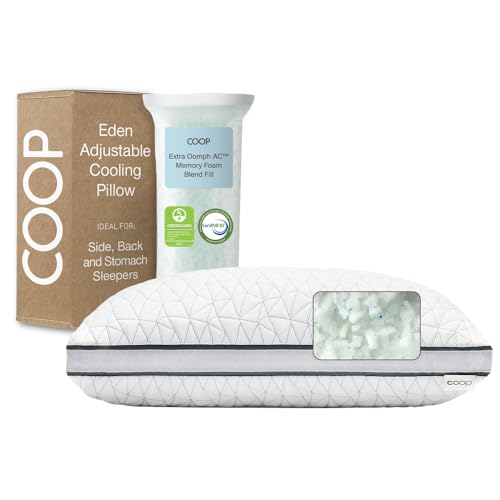
The Coop Home Goods Eden takes the opposite approach to a fixed contour: instead of moulding the foam into one set shape, it fills a zippered inner case with a blend of shredded memory foam and soft microfibre-style fill that you can add or remove by the handful. That adjustability is the whole point. If most pillows feel a touch too high or a touch too flat, being able to tune the loft in small steps at home is a genuinely practical advantage, and it makes this design one of the most forgiving starting points for someone switching to an ergonomic pillow for the first time.
In use, the feel is plush and mouldable rather than firm and sculpted. You can punch it into shape, bunch it for reading, or flatten the centre for back sleeping, which suits restless sleepers who change position through the night. The trade-off for that freedom is upkeep: shredded fill shifts and benefits from a quick fluff to redistribute it, and the surface is less uniformly supportive than a solid contour. The removable cover can be washed following the label, while the fill itself should be kept dry and aired rather than washed, which keeps care simple as long as you use a protector.
In this line-up the Eden plays the role of insurance policy. Because the height can be changed after purchase, it is the pick that punishes a wrong guess the least, and for many households it ends up as the pillow that finally stops the cycle of buying, disliking, and donating pillows. Treat the first week as calibration rather than verdict, keep the removed fill in its bag, and you will likely land on a setting that a fixed pillow would have had to guess perfectly to match.
Best for: sleepers who have never found a fixed pillow height that feels right, and anyone who likes to reshape their pillow during the night.
Not suited for: sleepers who want a firm, sculpted contour that holds exactly the same shape every night with zero adjustment.
Strengths
- Loft you can fine-tune at home by adding or removing fill
- Mouldable feel suits position changers and pillow punchers
- Forgiving first step away from a flat, unsupportive pillow
Trade-offs
- Fill shifts over time and needs regular fluffing
- Less structured support than a solid contour shape
- Tuning takes a few nights of small experiments
This is a mid-to-premium tier option; check the current listing for the latest details before you buy.

Tempur-Pedic TEMPUR-Neck Pillow
The Tempur-Pedic TEMPUR-Neck Pillow is the classic fixed-contour design: a solid piece of dense TEMPUR material shaped with a higher edge and a dipped centre, offered in more than one size so you can match the profile to your build and sleep position. Where adjustable pillows ask you to find your own setting, this one makes the decision for you, and the dense foam holds that shape consistently night after night without fluffing, shaking, or rearranging.
The feel is firm, slow to respond, and very deliberate. You settle into it rather than sinking through it, and the contour encourages you to stay in the position the shape was designed around, which back sleepers and dedicated side sleepers often appreciate once they are used to it. That same firmness is the main hurdle: the adjustment period is real, the pillow can feel unyielding for the first several nights, and stomach sleepers generally find a raised contour edge uncomfortable. The foam core should never be washed; spot clean only, air it out, and wash the removable cover instead.
The premium tier buys consistency here more than luxury. The dense material feels much the same in year three as in week three, which matters for a product whose entire value is a shape. Owners who match the sizing to their build tend to become quietly loyal to it. Owners who guess the size tend to blame the concept. If you are between sizes, the maker’s own sizing guidance based on build and sleep position is worth more than any general advice, including ours.
Best for: back and side sleepers who want a set-and-forget contour and prefer a firm, supportive feel.
Not suited for: stomach sleepers, and anyone who wants to adjust the height after buying.
Strengths
- Consistent, sculpted contour that never needs fluffing
- Dense foam holds its shape and feel for a long time
- More than one size helps match the profile to your build
Trade-offs
- Firm feel has a noticeable adjustment period
- Fixed shape cannot be tuned if the height feels wrong
- Generally a poor match for stomach sleeping
This is a premium tier option; check the current listing for the latest details before you buy.
Epabo Contour Memory Foam Pillow
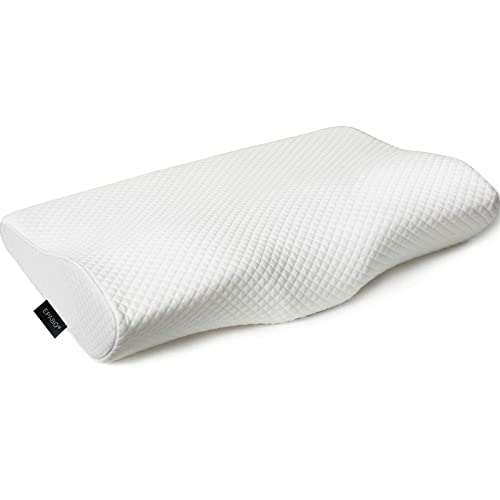
The Epabo Contour Memory Foam Pillow is a widely sold example of the classic butterfly-style contour: raised edges, a lower middle, and a shape intended to cradle the head while the edge supports a comfortable neck position through the night. It is the kind of design many people picture when they first search for an ergonomic pillow, and its accessible tier makes it a common first experiment with contoured sleep.
The memory foam has that familiar slow-response feel, softening slightly with body warmth as you settle in. A removable element in the design lets you fine-tune the height a little, which softens the all-or-nothing risk that fixed contours usually carry. As with most contoured foam, the first several nights can feel strange if you are coming from a soft hotel-style pillow, and the foam can sleep warmer than airy fibre fills. Care follows the memory foam rule: never machine wash the foam core, spot clean it, keep it dry, and wash the removable cover on its own.
Care and patience decide the Epabo experience. Keep the core dry, wash the cover, and resist judging it during the first strange nights. Owners who treat it as a two-week trial with notes tend to report a fair verdict either way. Owners who expect hotel-pillow familiarity on night one tend to return it and conclude that contours are not for them, which is a conclusion about the adjustment period rather than about the pillow.
Best for: first-time contour buyers who want to test the concept without stepping up to a premium tier.
Not suited for: very hot sleepers, and anyone who wants wide adjustability rather than small tweaks.
Strengths
- Classic contour shape at an accessible tier
- Some height fine-tuning built into the design
- Slow-response foam feels cushioning once you settle
Trade-offs
- Contour feel takes several nights to get used to
- Memory foam can sleep warm for hot sleepers
- One fixed basic shape will not suit every build
This is an entry-to-mid tier option; check the current listing for the latest details before you buy.
Milemont Memory Foam Pillow
The Milemont Memory Foam Pillow sits in the middle of the ergonomic market: a contoured memory foam design with a gently sculpted profile rather than an extreme one. That moderation is its appeal. The dip and raised edges are present, but the transitions are softer, so the pillow feels less like a piece of equipment and more like a supportive everyday pillow with better manners than a flat slab of foam.
For combination sleepers, that gentler geometry can be easier to live with, because rolling from back to side does not land you on a dramatically different height. The foam responds slowly, holds its shape well, and asks for no adjustment beyond choosing your size and giving it a fair trial across the adjustment period. Warm sleepers should note that solid memory foam generally breathes less than shredded or latex fills, and the core must be spot cleaned only, never machine washed, with the removable cover handling the regular laundry.
The Milemont is the diplomat of this line-up: enough contour to matter, not so much that it argues with you. For combination sleepers it may be the most liveable fixed design here, because the transition between its zones is gentle enough that rolling over does not feel like changing pillows mid-night. If your sleep data, or your partner, says you move a lot, weight that heavily; the best pillow for a mover is the one whose shape never punishes movement.
Best for: combination sleepers who want contour benefits in a milder, easier-going form.
Not suited for: sleepers who want to dial the height precisely, or who strongly prefer a cool, airy fill.
Strengths
- Gentle contour is easier to adapt to than aggressive shapes
- Holds its shape with no fluffing or tuning
- Balanced feel works across back and side positions
Trade-offs
- Solid foam can feel warm to hot sleepers
- No meaningful height adjustment after purchase
- Moderate contour may feel underwhelming to committed contour fans
This is a mid tier option; check the current listing for the latest details before you buy.

Qutool Cervical Pillow
The Qutool Cervical Pillow uses a pronounced hollow-centre contour: the middle dips to cradle the head while the surrounding edges are shaped to support a comfortable resting position for the neck and shoulders. Despite the clinical-sounding name, treat it as what it is, a comfort product with a distinctive shape, not a medical device. Its fans tend to be back sleepers who like the feeling of being settled into one defined spot rather than roaming across a flat pillow.
The pronounced geometry is both the draw and the risk. If the shape matches you, the pillow feels purposeful and stable; if it does not, there is little middle ground, and the adjustment period matters more here than with gentler designs. Arm-rest style contours on some versions give side sleepers a place to tuck a hand, which some people love and others ignore entirely. Memory foam care rules apply in full: keep the core dry, spot clean only, never machine wash the foam, and rely on the removable washable cover plus a protector for hygiene.
One practical note decides many Qutool experiences: the adjustment period is not a formality here. The shape is different enough from a conventional pillow that your first impression is nearly worthless, in either direction. Commit to the trial, keep notes, and judge at the end of it. Also mind the basics that surround any strongly shaped pillow: a case that fits, a protector for hygiene, and a strict no-washing rule for the foam core, which should only ever be spot cleaned and aired.
Best for: back sleepers who like a defined, cradled resting spot and want to try a stronger contour shape.
Not suited for: stomach sleepers, and anyone who prefers a soft, shapeless, hug-the-pillow feel.
Strengths
- Defined hollow-centre shape feels stable for back sleeping
- Distinct zones for different resting positions
- Accessible tier for experimenting with stronger contours
Trade-offs
- Pronounced shape is love-it-or-leave-it
- Longer adjustment period than gentle contours
- Limited use for stomach sleepers
This is an entry-to-mid tier option; check the current listing for the latest details before you buy.

DONAMA Cervical Pillow
The DONAMA Cervical Pillow is another hollow-centre contour design, shaped with a dip for the head, supportive edges, and extended zones intended to keep the pillow feeling stable as you settle. Like the other strongly shaped options in this guide, it is best understood as a comfort and sleep-quality product with a distinctive geometry, and it earns its place here because that geometry is exactly what a certain group of back and side sleepers goes looking for.
Living with it is a tale of the first fortnight. The shape can feel unfamiliar, even odd, for the first few nights, and the honest advice is to judge it after the adjustment period rather than after one sleep. Side sleepers often use the higher edges, back sleepers the centre dip, and the foam holds those zones without daily maintenance. Warmth is typical of solid memory foam, and care is the standard routine: the foam core is spot-clean only and must never go in a washing machine, while the removable cover can be laundered as the label directs.
Where the DONAMA can quietly shine is as a second, purpose-specific pillow: the one a back sleeper reaches for on the main bed while a softer, mouldable pillow handles reading and lounging. Not every pillow has to do every job. A household with a reading pillow, a sleeping pillow, and a guest pillow has not over-bought; it has simply stopped asking one rectangle of fill to be good at three different tasks, which is a reasonable definition of an ergonomic household.
Best for: back and side sleepers curious about hollow-centre contours who will give a new shape a fair trial.
Not suited for: stomach sleepers and anyone who wants a plush, mouldable pillow instead of a defined shape.
Strengths
- Stable multi-zone shape for back and side positions
- No daily fluffing or adjustment needed
- Accessible tier for a strongly contoured design
Trade-offs
- Unfamiliar feel during the first nights
- Fixed zones cannot be reshaped to taste
- Solid foam warmth may bother hot sleepers
This is an entry-to-mid tier option; check the current listing for the latest details before you buy.
How Much Height Do You Actually Need?
Height is the criterion shoppers most often guess and most often get wrong, so it gets the first and longest look.
Loft, the resting height of the pillow, is the single most consequential choice in this category, and the right loft depends mostly on the position you actually sleep in, not the position you wish you slept in. Back sleepers usually do best with a medium loft that supports the neck without pushing the head forward. Side sleepers generally need more height, because the pillow has to fill the wider gap between the mattress and the head created by the shoulder. Stomach sleepers are the exception in the ergonomic world: most do best with a low, soft pillow or none at all, and raised contours usually work against them.
Body build modifies the rule. Broader shoulders widen the gap a side sleeper needs to fill. A softer mattress lets the shoulder sink deeper, which reduces the gap and can make a high pillow feel too high. A firmer mattress keeps the shoulder up and can make the same pillow feel right. This interplay is why copying a friend’s perfect pillow so often disappoints: the pillow is only one third of a system made of body, mattress, and pillow. When you change one part of that system, expect to re-check the others, and expect your old favourite to feel different on a new bed.
Which Material Suits Your Sleep Style?
Once height is settled, material decides how the pillow feels at four in the morning rather than in the first four minutes.
Fill material decides most of how an ergonomic pillow feels. Solid memory foam moulds slowly around you, holds a sculpted shape exactly, and feels dense and deliberate; it also tends to sleep warmer and should never be soaked or machine washed. Shredded memory foam keeps some of that moulding quality while allowing air to move and fill to be adjusted, at the cost of a less uniform surface. Latex feels springier and responds instantly, breathes better than most foams, and carries a natural bounce that some sleepers love and others find too lively. Fibre fills feel familiar and plush but compress faster and offer the least structured support of the group.
Covers matter more than marketing suggests. A smooth, breathable cover fabric helps any fill feel cooler and makes the pillow easier to live with, and a removable, washable cover is close to non-negotiable for hygiene, because the foam underneath it usually cannot be washed at all. If you have sensitivities to particular materials, read the fill and fabric list before buying rather than after the box is open, and consider a protector as a barrier layer. Whatever the material, judge it by how it feels at four in the morning, not by how impressive the material story sounds on the product page.
How Does the Shape Work, Exactly?
Understanding what a contour is actually doing helps you read product pages with a colder eye.
The contour is the signature shape of this category. Instead of a flat top, a contoured pillow has a raised edge and a lower centre, sometimes with a second, lower edge on the opposite side so you can flip the pillow to change the feel. The raised edge sits under the neck, the head rests in the dip, and the result, when the sizing is right, is a feeling of being gently parked in position rather than balanced on top of a mound. People who toss and turn sometimes find a contour too prescriptive, while people who wake up in the same position they fell asleep in often love the consistency.
Contours come in strengths. A gentle contour has soft transitions and behaves almost like a normal pillow with better manners. A pronounced contour, including hollow-centre designs, commits you to specific zones for back and side sleeping. Neither is automatically better. The gentle versions are easier to adapt to and more forgiving of position changes, while the pronounced versions feel more stable if their geometry happens to match your build. This is why the adjustment period matters so much with this category: a shape that feels odd on night one can feel completely natural by night ten, once your habits catch up with the new geometry.
Will It Sleep Cool Enough for You?
Temperature quietly decides more pillow returns than shape does, so weigh it before you buy rather than after.
Temperature is the quiet deal-breaker in this category. Solid memory foam moulds by responding to warmth, and that same density can hold heat against your head and neck, which bothers light sleepers and anyone who runs hot. Makers respond with gel infusions, ventilated foam, and breathable covers, and these features help at the margins, but they do not turn a dense foam pillow into an airy one. If you are a genuinely hot sleeper, shredded fills that let air move, springy latex, or a cooling-focused design will usually serve you better than a solid contour with a cooling label.
Your bedding choices amplify or soften the effect. A breathable pillowcase fabric, a protector that is not plastic-feeling, and a bedroom that is not overheated all help any pillow sleep cooler. Judge temperature over several nights rather than one, because room conditions vary. And be honest about your priorities: a hot sleeper who buys a dense contour for its shape and then sleeps badly from warmth has optimised the wrong variable. Comfort is a system, and temperature is one of its load-bearing parts.
How Do You Prioritise by Use Case?
Different sleepers should rank the same criteria in different orders. Here is the method applied to the profiles we meet most often.
Consider three buyers. The first is a back sleeper on a medium mattress who wakes up to punch a flat fibre pillow back into shape. A gentle fixed contour or a mid-height adjustable gives this sleeper a stable resting spot and ends the nightly reshaping, with the adjustable option safer if their build is unusual. The second is a side sleeper with broad shoulders on a firm mattress, currently using two stacked pillows that slide apart. This sleeper needs genuine height in a single stable pillow: a higher contour profile or an adjustable filled generously, plus a case that keeps everything in place.
The third buyer is a combination sleeper who starts on their side and finishes on their back, sharing a bed with a partner who sleeps completely differently. For this buyer, extremes are the enemy: a gentle contour or an adjustable set to a middle height handles both positions without punishing either, and the partner should be fitted separately rather than handed a matching pillow for the sake of symmetry. Notice what all three examples share: the decision started from position, build, and mattress, and only then moved to products. That order, needs first and models second, is the whole method of this guide in miniature.
First Setup and Care Essentials
A new ergonomic pillow needs a small amount of deliberate setup: air it out, fit the protector and case, and start the adjustment period with everything else in the bed unchanged.
Memory foam care is simple but non-negotiable: the foam core itself must never go in a washing machine and should never be soaked. Machine washing breaks down the foam’s structure, and a soaked core dries so slowly that it can develop odours long before it dries out. If the core needs attention, spot clean small marks with a barely damp cloth and a little mild detergent, press moisture out with a dry towel, and let the pillow air in a ventilated spot away from direct heat until it is completely dry before the cover goes back on.
The removable cover is your hygiene workhorse, so wash it regularly following its label, and add a pillow protector underneath it for another washable barrier against sweat and spills. Air the whole pillow out when you change the bedding; foam benefits from fresh air and a chance to release the warmth and moisture of the week. New foam can carry a factory smell at first, which normally fades after a day or two of airing in a ventilated room before first use. None of this is demanding, but it is different from the wash-everything routine that works for fibre pillows, and it is worth knowing before you buy rather than after the first spill.
Mistakes to Avoid
Most buying regrets in this category are repeats of the same handful of errors, and every one of them is avoidable.
The most common buying mistake is choosing by keyword rather than by fit: picking the pillow with the most dramatic shape, the longest feature list, or the most persuasive story, without ever asking what height and firmness your own sleeping position needs. The second mistake is judging too fast, returning a contour after two strange nights when the adjustment period had barely begun. The third is ignoring the mattress: a pillow that was perfect on a firm bed can feel entirely wrong on a soft one, and people often blame the pillow for a change the mattress caused.
A fourth mistake is treating one pillow as a universal answer for two people. Partners with different builds and positions usually need different pillows, and compromising on one shared model often means both people get a mediocre fit. Finally, there is the hygiene mistake: assuming a foam pillow can be washed like a fibre one. It cannot. Buy the protector, wash the cover, spot clean the core, and the pillow will stay fresh for its whole working life instead of becoming a problem you replace early.
The Bottom Line of This Ergonomic Pillow Buying Guide
Choose in this order: position first, then height, then shape type, then material, and only then specific models. Protect the decision with adjustability or fair trial terms, give the winner a genuine two-week trial, and maintain it the way foam needs to be maintained. Do that, and an ergonomic pillow stops being a gamble and becomes what it should be: a quiet, comfortable piece of bedroom equipment that you stop thinking about entirely. When you are ready to test your shortlist against your own habits, how to choose an ergonomic pillow step by step walks the fitting process in order.
Getting the Size Right
Length, case fit, and height profile sound like fine print until one of them quietly ruins a well-chosen pillow.
Pillow size sounds trivial until a new pillow does not fit your cases or crowds a smaller bed. Most ergonomic pillows come in standard, queen, and sometimes king lengths, with contours also varying in height profile between sizes. Match the pillow to the cases you own or budget for new ones, and remember that a contoured pillow inside a case that is far too large will shift and bunch, which quietly undermines the shape you paid for. A case that fits reasonably closely keeps the contour where it belongs.
Height profiles deserve the same attention as length. Some contour designs offer more than one height, and the taller option is not the upgraded option; it is simply the option for a different build and sleep position. Bigger is not better in pillow geometry. The right size is the one that fills your personal gap between mattress and head without lifting you into an angle, and for many average builds that is the middle option, not the maximum. When a listing offers a size guide based on shoulder width or sleep position, use it; it exists because returns taught the maker where people guess wrong.
Planning for the Adjustment Period
Budget the first fortnight into the purchase decision itself, and the strange early nights stop being a surprise.
Almost every ergonomic pillow, and especially every contour, comes with an adjustment period, and planning for it will save you from returning a good pillow too early. Your muscles, habits, and expectations have been shaped by your old pillow, sometimes for years. A new shape changes where your head rests and how your neck is supported, and the first few nights can feel strange, stiff, or simply unfamiliar even when the pillow is objectively a better match. Strange is not the same as wrong. Give a new contour at least a week, and ideally closer to two, before you judge it, unless something feels clearly and persistently wrong.
Work with the adjustment period instead of enduring it blindly. Start with the new pillow for the whole night rather than swapping back at two in the morning, because the swap resets your adaptation. Keep everything else in the bed the same so the pillow is the only variable. If the design allows height tweaks, make one small change at a time and sleep several nights between changes. And keep perspective: if discomfort is sharp, worsening, or still present after a fair trial, stop forcing it. Persistent pain is a reason to talk to a healthcare professional, not a reason to push through with a different pillow shape.
Partners, Guests and Travel
Three edge cases round out the buying picture, and each one points at the adjustable end of the catalogue.
Two situations deserve a word of their own. Guest rooms are the first: a guest pillow should be the most forgiving pillow you own, not your most specialised one, because you cannot fit a pillow to a stranger’s build and position. An adjustable or a medium, gentle design adapts across visitors in a way a pronounced contour never will. The second situation is the shared bed at home. Fitting each partner separately feels unromantic and is completely correct; sleep is individual even when the bed is shared, and two different pillows on one bed is a sign the fitting was done properly.
There is also the travel question. A full-size ergonomic pillow is a bulky travel companion, and most people reasonably leave it at home and accept a few nights of hotel pillows. If you travel constantly and your sleep suffers for it, smaller travel versions of contour shapes exist and are worth a look; if you travel twice a year, your money is better spent on the pillow you use for the other fifty weeks. Prioritise the nights that dominate your life, and let the exceptions be exceptions.
Knowing When to Replace It
A buying guide should close the loop: the pillow you choose today will one day announce its own retirement, and the signs are specific.
Every pillow has a working life, and ergonomic pillows announce their retirement in specific ways. Memory foam that no longer springs back, a contour that has flattened at the edges, shredded fill that clumps and will not redistribute, or a pillow you have started folding or stacking to get comfortable are all signs the support you bought is no longer the support you are sleeping on. Waking up and rearranging the pillow repeatedly is another clue: the pillow’s job is to disappear, and a pillow that keeps asking for attention is asking to be replaced.
There is no universal calendar for replacement, because materials, body weight, and care habits all change the timeline. Judge by performance instead: do the fold test on fibre and shredded fills, watch the recovery of foam after you press it, and notice whether your sleep quality changed when nothing else did. When you do replace, treat the change as a new fitting exercise rather than an automatic repeat purchase. Your body, your mattress, and your habits may all have moved on since the last fitting, and the best replacement is sometimes a different shape than the one that served you well before.
Ergonomic Pillow: A Hands-On Fit Check Before You Commit
Start with the space, storage and everyday routine this {p} has to fit into. Most coverage of a ergonomic pillow concentrates on the first week of ownership, yet the decisions that matter most tend to surface later, once the ergonomic pillow has to earn its place in an ordinary weekday routine rather than a carefully staged first attempt. Write down the three jobs you expect it to do most often, in the order you actually do them, and judge every claim you read against that short personal list instead of against a generic ideal.
Finally, plan the first fortnight deliberately. Use the ergonomic pillow for one familiar job first, so you have a baseline you trust, then introduce the harder cases one at a time and note what changes. Small adjustments to arrangement, timing, quantity or preparation usually close most of the gap between disappointing first results and the performance the design is capable of. That short learning period is also the fairest test of measurement and fit: if the routine has not settled by the end of it, the mismatch is real, and it is better to know while returning or exchanging is still straightforward.
Maintenance decides how long the good results last. Set a simple rhythm: a quick wipe or rinse after each use, a deeper clean on a fixed day, and a periodic check of the parts that move, seal or bear weight. A ergonomic pillow that needs fiddly disassembly for basic care will be cleaned less often, and performance drifts long before anything actually breaks. Prefer designs where the parts that get dirtiest are the parts that are easiest to reach, and be honest with yourself about which cleaning steps you will genuinely keep up.
When you check listings such as Coop Home Goods Eden Adjustable Pillow, Tempur-Pedic TEMPUR-Neck Pillow and Epabo Contour Memory Foam Pillow, use them as worked examples: run through the same checks below on each one in turn, so the comparison stays honest and like for like rather than based on whichever listing happens to shout loudest.
Measure before you commit. Note the footprint, the clearance above and behind the spot where the ergonomic pillow will live, and the route you will carry it by when it is hot, full or awkward. A ergonomic pillow that technically fits but blocks a cupboard door, crowds a neighbouring appliance or has to be dragged across a worktop every time will quietly fall out of use, whatever its merits on paper. In the Health & Wellness Devices category especially, a few centimetres of clearance and a sensible storage plan separate a daily tool from a bulky regret.
Edge cases deserve a deliberate pass. Think about the odd shapes, the thicker or thinner than usual loads, the leftovers, the second helping and the guest with different preferences. A well-chosen ergonomic pillow handles the exceptions gracefully, or at least predictably, while a poor match turns every exception into a workaround. List your two or three most common exceptions in advance and check, from the manual or the listing details, that nothing about them is ruled out by size, shape, material or care requirements.
Work through a realistic scenario, not a best case. Picture the busiest version of the job: more people to serve, less time than planned, ingredients or materials that are slightly out of the ordinary, and a clean-up waiting at the end. Ask how the ergonomic pillow behaves at that upper edge, because a model that only shines on a small, simple load will disappoint precisely when you need it most. If the honest answer is that you would split the job into batches or fall back on an older method, factor that into the decision now rather than discovering it later.
Frequently Asked Questions
How long does it take to get used to an ergonomic pillow?
Plan on about one to two weeks, especially with a contoured shape. The first few nights often feel unfamiliar because your habits were built around your old pillow. Judge the pillow after the adjustment period rather than after one night, change only one thing at a time if the design is adjustable, and keep the rest of your bedding the same so the pillow is the only variable. If discomfort is sharp, worsening, or persistent, stop and talk to a healthcare professional rather than pushing through.
Is an ergonomic pillow better for back sleepers or side sleepers?
Both can do well with one, but they need different versions of it. Back sleepers usually suit a medium loft with a gentle dip, while side sleepers generally need a higher, firmer profile to fill the space created by the shoulder. Stomach sleepers are the group ergonomic contours suit least, and most do better with a low, soft pillow. The label ergonomic matters far less than matching the height and shape to the position you actually sleep in most of the night.
Can I wash an ergonomic memory foam pillow?
Not the foam itself. Memory foam cores should never go in a washing machine and should never be soaked, because washing breaks down the foam and a wet core dries extremely slowly. Spot clean marks with a barely damp cloth, let the pillow air until fully dry, and rely on the removable washable cover plus a pillow protector for regular hygiene. Fibre and shredded fills vary by maker, so follow the specific care label on anything that is not solid foam.
What is the difference between a contour pillow and an adjustable pillow?
A contour pillow has a fixed moulded shape, usually a raised edge and a dipped centre, and it holds that geometry every night with no maintenance. An adjustable pillow uses loose fill inside a zippered case, so you can add or remove fill to change the height and feel at home. Contours offer consistency and structure. Adjustables offer forgiveness when you are unsure of your size. Neither is universally better; the right choice depends on how certain you are about the fit you need.
Will an ergonomic pillow help me sleep better?
It can, in the ordinary comfort sense: a pillow that matches your position and build removes a common source of nightly fidgeting, pillow punching, and waking up to rearrange the bed. That is a sleep-quality benefit, not a medical one. An ergonomic pillow does not treat or cure any condition, and it is not a substitute for professional care. If pain, numbness, or serious sleep problems persist, the right next step is a conversation with a qualified healthcare professional, not a different pillow.
How do I know which height to choose?
Start from your sleep position and build, then factor in your mattress. Side sleepers and broader shoulders point to higher profiles; back sleepers point to medium; a softer mattress reduces the height you need because your shoulder sinks into the bed. If a design offers a sizing guide, use it. If you are genuinely between options, an adjustable design or a seller with fair trial terms removes most of the risk, because you can correct the guess at home instead of starting the search over.
Related Reading
Keep exploring this topic with the companion pieces in this series and the wider pillow guides on this site: