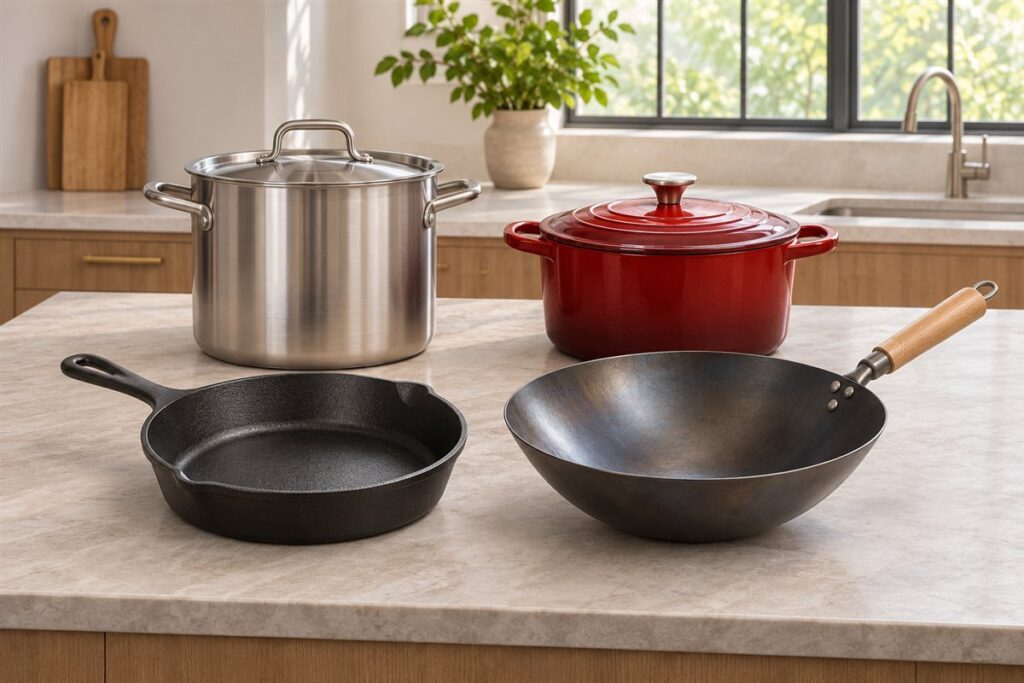
Caring for cast iron comes down to four habits: clean it soon after cooking, dry it fully, add a thin film of oil, and store it somewhere dry. Done consistently, these steps protect the seasoning and keep rust away.
After Every Meal
- Let the pan cool until it is comfortable to handle with a mitt. Plunging a very hot pan into cold water can stress the metal.
- Scrape out food with a wooden or plastic scraper.
- Rinse under warm water and scrub with a brush or non-scratch sponge. A small amount of mild soap is generally fine on a well-seasoned pan.
- Dry right away with a towel.
- Warm the pan on low heat for a minute to drive off any hidden moisture.
- Rub in a few drops of oil and wipe off the excess until the surface looks barely shiny.
Stuck-On Food
For stubborn bits, add a little water to the pan, bring it to a gentle simmer for a few minutes, then scrape. Coarse salt with a little oil also works as a gentle scrub. Avoid steel wool unless you plan to reseason the pan afterward.
Things to Avoid
- Soaking the pan in the sink or leaving it wet
- Putting it in the dishwasher
- Storing food in it for long periods
- Cooking very acidic sauces for a long time in a pan with a young seasoning layer
- Stacking pans without a cloth or paper towel between them
Storage and Rust Rescue
Keep cast iron in a dry cabinet or on a hook. If the lid is also cast iron, place a paper towel between the lid and pan so air can move and moisture does not collect.
| Sign | Meaning | Fix |
|---|---|---|
| Orange dust or spots | Surface rust | Scrub off, dry, oil and bake |
| Dull gray patches | Thin seasoning | Cook with more fat or reseason |
| Flaking black bits | Seasoning is lifting | Scrub loose pieces and reseason |
Heavy pans and hot handles can cause burns and strains, so use dry mitts and follow the maker’s manual and safety instructions.
Cooking habits matter as much as cleaning. Preheat the pan gradually instead of blasting it on high, since a slow warm-up reduces the risk of warping and sticking. Use enough fat for the food you are cooking, and let meat or fish release naturally before flipping. If you notice a metallic smell or taste, the pan may need more oil and a quick reseasoning rather than a deeper scrub.
Full Reseasoning Step by Step
Sometimes a quick wipe of oil is not enough. If the surface looks dull and patchy, food sticks, or you have scrubbed away part of the finish, a full reseasoning rebuilds the protective layer. Begin with a clean pan. Wash with warm water and a brush, dry it, and warm it briefly on a burner so no moisture remains.
Next, apply a very thin layer of oil over every surface: inside, outside, handle and underside. Then wipe it off with a clean cloth or paper towel as if you were trying to remove it all. What remains is the right amount. Too much oil pools and bakes into a sticky, uneven film.
Place the pan upside down in the oven so any excess can drip off, and put a sheet of foil or a tray on a lower rack to catch drips. Heat it according to the maker’s seasoning instructions or the oil’s guidance, hold it there for the stated time, and let it cool in the oven. Repeat the process a few times if the surface is badly worn. Each thin coat adds to the finish.
Ventilate the kitchen because hot oil produces smoke. Use mitts, and let the pan cool fully before handling. After reseasoning, cook fatty foods for a while to build the surface, and avoid long acidic simmers at first.
Rescuing a Rusty Pan
Rust looks alarming but is usually fixable. Light orange spots or a dusty film are common after damp storage. Scrub with a stiff brush, coarse salt and a little oil, or use a non-scratch scouring pad, until the metal underneath looks gray and clean. Rinse and dry at once, then warm the pan on low heat to remove hidden moisture.
For heavier rust, you may need more effort. Some cooks use steel wool or a fine abrasive pad on stubborn areas, accepting that this strips seasoning that will need rebuilding. Soaking in vinegar-based solutions is sometimes suggested, but the time should be short and watched closely, because acids can attack the metal itself. Check the maker’s guidance before trying strong treatments, and rinse thoroughly afterward.
Once the rust is gone, treat the pan as unseasoned: apply thin coats of oil and bake as described in the full reseasoning process. Do not skip this step, because bare iron rusts quickly.
If you find pitting, deep flaking or a crack, assess whether the pan is still safe to use. Surface pitting can be smoothed over by seasoning, but a crack, especially through the base or sidewall, is a reason to retire the pan. Prevent repeat problems by drying carefully, storing in a dry place and not leaving food or water in the pan.
Choosing an Oil for Seasoning and Upkeep
Cooks have strong opinions about the best oil, but the practical question is simple: use a fat that you are comfortable with, that tolerates the temperatures involved, and that you apply thinly. Neutral cooking oils with a reasonably high smoke point are common choices for seasoning, and many makers publish their own recommendation. Follow it where available, since some pre-seasoned pans are prepared with a particular type of oil.
Fats that stay liquid at room temperature are easier to apply in a thin, even film. Solid fats can work for cooking and light maintenance but are harder to wipe thinly for baked-on seasoning. Strongly flavored oils may leave a smell on the pan, which can transfer to food in the early stages.
Watch for rancidity. Some oils turn sticky or smelly when stored on a pan for long periods, which is another reason to wipe off the excess. If your pan smells off or feels tacky after oiling, wash it, dry it and apply a thinner coat.
Allergies matter too. If anyone eating from the pan has a food allergy, be mindful of the oil you use, especially in a shared household. Label the pan or choose an oil that works for everyone. Ultimately, consistent thin applications matter more than any specific brand of oil.
Cooking Habits That Build Seasoning
Everyday cooking is the best way to improve a cast iron surface. The more you use the pan, the more the seasoning builds, provided you cook in ways that favor it. Searing meats, shallow frying, sauteing vegetables in oil and baking cornbread or roasted potatoes all lay down fresh layers of polymerized fat.
Preheat the pan gradually, letting it warm for a few minutes at low to medium heat before turning it up. Rapid blasts of high heat can cause food to stick and may create hot spots. Add enough oil or fat to form a thin film across the cooking surface before adding food.
Be patient with release. Meat and fish often stick at first and then lift away naturally once a crust forms, so avoid forcing a spatula underneath. Leave eggs and delicate foods for later, until the seasoning is more reliable, or use extra fat.
Limit the foods that challenge a young finish: long simmers of tomato sauce, wine reductions and anything strongly acidic can weaken seasoning and add a metallic taste. If you do cook such foods, wash promptly, dry and oil the pan. Avoid leaving food in the pan, and do not store leftovers in it. These habits take little time and, over months, build a surface that cleans easily and performs well.
Heat, Weight and Handling Safety
Cast iron retains heat for a very long time, so the pan and especially the handle can stay dangerously hot after cooking. Use dry, thick mitts, and keep a silicone sleeve or cloth near the stove if you cook often. Mark the pan mentally as hot, even when it looks cool, and warn others in the household.
Weight is a hazard of its own. A large skillet full of food is heavy, and carrying it from oven to counter requires a firm two-handed grip when it has a helper handle. Plan your path, clear the counter and use a trivet or heat-safe board so you can set it down without hesitation. Avoid placing hot pans on glass, laminate or stone surfaces that could crack or scorch.
Thermal shock can crack a cast iron pan. Do not pour cold water into a very hot pan, and avoid placing a hot pan in a sink of cold water. Let it cool for a few minutes and use warm water.
When baking, remember that oven heat travels through the whole pan, handle included. Hot oil can spatter, so keep your face back and dry the food before it goes in. Keep children and pets away from the stove, and never leave a hot pan unattended. These precautions let you enjoy the benefits of a durable pan without injury.
FAQ
Is soap really allowed?
Modern mild soap is usually fine for quick cleaning on a seasoned pan. Harsh scrubbing and long soaks do more harm than soap does.
How often should I oil it?
A light wipe after each wash is enough for most cooks. Do a fuller reseasoning when the surface looks dry or patchy.
What do I do if my cast iron pan feels sticky?
Stickiness usually means too much oil was applied or it did not cure fully. Wash the pan, dry it and bake a very thin coat according to the maker's seasoning guidance.
Can I cook acidic food in cast iron?
Short cooking times are generally fine once the seasoning is established. Long simmers can dull the finish and add a metallic taste, so wash and oil the pan promptly afterward.
Is it safe to use a pan with some rust?
Light surface rust can be scrubbed off, then the pan dried and reseasoned. Deep pitting or cracks are another matter, and a cracked pan should be retired.
Should I season a brand new pre-seasoned pan?
Many makers say it is ready to use, but extra thin coats can improve the surface. Follow the instructions that came with the pan.
Can cast iron go in the oven or on a grill?
All-metal cast iron generally can, but check the maker's temperature limits, especially for any wooden or silicone handle parts.
Why does my pan smoke when I oil it?
Excess oil, or oil heated past its smoke point, creates smoke. Use a thin layer, wipe off the extra and ventilate the kitchen.
How long does a cast iron pan last?
With sensible care, a pan can last for many years and even be passed on. Cracks and severe warping are the main reasons to retire one.
The Short Version
Clean soon, dry fully, oil lightly and store dry. Treat the pan gently and the surface will improve with use.