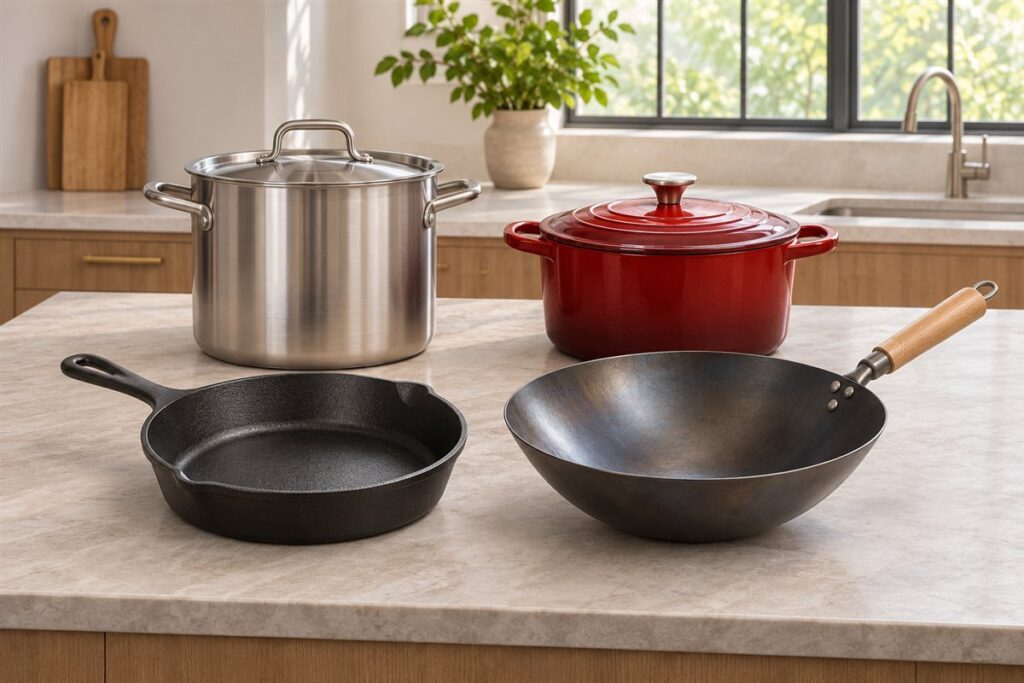
To season a cast iron skillet, wash and dry it, wipe on a very thin coat of cooking oil, and bake it upside down in the oven so the oil bonds to the metal. The goal is a thin, hard, slightly glossy layer that protects the iron and helps food release.
What Seasoning Really Is
Seasoning is not a flavor. It is a film of oil that has been heated until it changes into a hard coating on the surface of the pan. Each cooking session with a little fat adds to it, which is why a well-used skillet tends to get smoother over time.
New pans may arrive pre-seasoned, but a few extra coats at home usually improve the surface. Old or rusty pans can be restored with the same process after the rust is scrubbed off.
Step by Step Method
- Wash the skillet with warm water and a brush. A little mild soap is fine for the first cleaning, especially on a new or thrifted pan.
- Dry it completely with a towel, then warm it briefly on the stove so every trace of moisture evaporates.
- Rub a very thin layer of a plain cooking oil over the whole pan, including the handle and the outside.
- Wipe it off as if you were trying to remove all of it. A pan that looks nearly dry after wiping is correct, since thick oil turns sticky.
- Place the pan upside down on the middle oven rack with a sheet of foil or a tray on the rack below to catch drips.
- Bake at the temperature the maker recommends. Many guides suggest a moderately high oven for about an hour.
- Turn the oven off and let the pan cool inside until it is safe to handle with a mitt.
- Repeat the oiling and baking two or three times for a stronger layer.
Common Problems and Fixes
| Problem | Likely Cause | What to Do |
|---|---|---|
| Sticky surface | Oil layer was too thick | Bake again at the same setting to harden it |
| Blotchy or uneven color | Uneven wiping | Add another thin coat |
| Orange spots | Rust from moisture | Scrub the spots, dry well and reseason |
| Smoke in the kitchen | Oil heating in the oven | Open a window and run the vent fan |
Keeping the Seasoning Going
Cook with a little fat, avoid long simmers of acidic sauces while the layer is new, and dry the pan right after washing. A light wipe of oil before storing helps keep rust away.
Ovens and hot cookware can burn skin, so use dry oven mitts and follow the maker’s manual and safety instructions for your pan and your oven.
FAQ
Which oil should I use?
Many cooks use a plain, neutral cooking oil. The maker’s guide may name a preferred type, so check it first.
Can I season on the stovetop instead?
You can add light layers by cooking with fat, but oven seasoning covers the whole pan more evenly.
The Short Version
Clean, dry, oil very thinly, wipe it off, and bake the pan upside down. Repeat a few times, then keep building the surface through regular cooking.