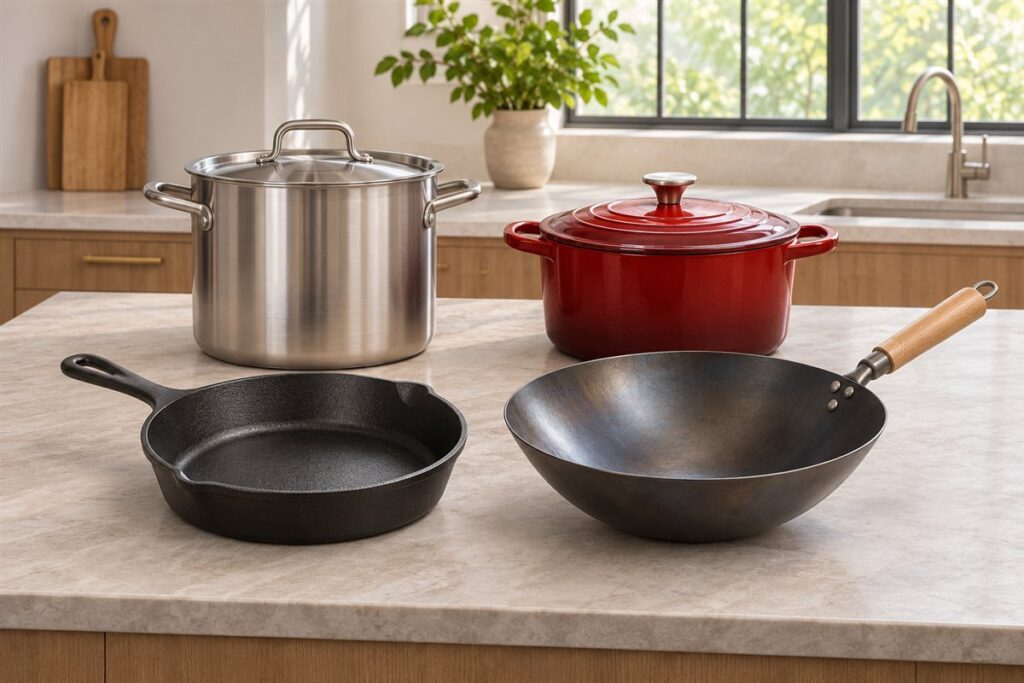
A stainless steel skillet is lighter, needs no seasoning and works well with acidic foods, while a cast iron skillet is heavier, holds heat longer and develops a natural nonstick-like surface over time. Neither is better in every case, so it helps to match the pan to the way you cook.
Where Stainless Steel Shines
Stainless steel is a clean, neutral surface. You can simmer tomato sauce, deglaze with wine or soak the pan in the sink without worrying about seasoning. Many models combine steel with an aluminum or copper core to spread heat more evenly.
- Comfortable to lift and pour from
- No seasoning needed
- Good for pan sauces and acidic dishes
- Usually dishwasher friendly, though the maker’s guide has the final word
Where Cast Iron Shines
Cast iron is thick and slow to change temperature. Once hot, it stays hot, which is helpful for searing, frying and baking cornbread or skillet desserts.
- Strong heat retention
- Builds a seasoned surface with regular use
- Works on most stovetops, in the oven and over a campfire
- Can last for generations with proper care
Practical Trade-Offs
| Question | Stainless Steel | Cast Iron |
|---|---|---|
| How heavy is it? | Moderate | Heavy |
| Does it need seasoning? | No | Yes |
| Can I leave it wet? | Briefly, yes | No, it can rust |
| Long simmers with acid? | Fine | May dull the seasoning |
| Heats up | Faster | Slower |
Choosing by Cooking Style
If you often make pan sauces, braise with tomatoes or want something easy to clean, choose stainless steel. If you love a deep crust on meat, bake in your skillet or enjoy the ritual of caring for a pan, choose cast iron.
Wrist strength and storage space matter too. A large cast iron skillet can be a lot to handle when full of food.
Consider your stove as well. Cast iron is heavy and can scratch glass cooktops if dragged, so lift it rather than sliding it. Stainless steel is gentler on the surface, though a warped or thin base can wobble on smooth tops.
Finally, think about how you like to clean. If a quick scrub and a trip through the dishwasher sounds appealing, stainless steel fits. If you do not mind a hand wash, a towel dry and a thin film of oil, cast iron will reward you with a surface that improves with use.
Both pans can go from the stovetop to the oven, but handles, lids and any coatings set the limits, so always check the maker’s guide.
How Each Pan Handles Heat in Practice
The most noticeable difference when cooking is how the pan responds to the burner. Cast iron is dense and thick, so it takes time to warm up and then holds heat steadily. When cold food hits the surface, the temperature drops less than it would in a thinner pan. This is why many cooks like it for searing steak, frying chicken pieces or browning a batch of burgers.
Stainless steel on its own is not a great conductor of heat, which is why many stainless skillets have a core or base layer of a more conductive metal. Pans built this way warm more quickly than cast iron and respond faster when you turn the heat up or down. That responsiveness suits sauces, delicate sauteing and any cooking that changes pace quickly.
Cast iron can develop hot spots if the burner is smaller than the pan, so preheat patiently and allow the heat to spread. A stainless pan with a thin base may also heat unevenly, so check the product listing to see whether the base is layered.
- Preheat cast iron on low to medium and give it several minutes.
- Preheat stainless until a drop of water skitters and rolls before you add oil.
- Avoid very high heat for both unless the recipe calls for it.
Understanding these tendencies helps you adjust your technique and expectations. Neither pan is difficult, but each rewards a slightly different rhythm at the stove.
Weight, Handling and Ergonomics
How a pan feels in your hand determines how often you reach for it. Cast iron skillets are heavy, particularly in larger sizes. A full pan lifted with one hand can strain the wrist, and many come with a short helper handle opposite the main one. Stainless steel skillets are lighter, though quality models still have some weight, and they are easier to flip, swirl and pour from.
Handles differ too. Cast iron handles are usually part of the pan and get hot on the stovetop and in the oven, so you will need a mitt or a cover. Stainless handles may be hollow or solid, and some stay cooler on the stove, though they will still become hot in an oven. Check the shape and length: a handle that is comfortable for one person may feel awkward for another.
Think about practical matters before buying:
- Can you lift the pan, filled with food, using one hand?
- Do you have a convenient place to store it, and can the shelf support the weight?
- Is the pour spout design useful for your cooking?
- Does the pan sit flat on your cooktop and not rock?
If you have limited strength or mobility, a lighter stainless skillet or a smaller cast iron one may be the better choice. If you rarely move the pan, weight is less of a concern, and the benefits of heat retention may dominate.
Maintenance Routines Compared
Daily upkeep is where the two pans diverge most. A stainless steel pan is cleaned like most cookware: let it cool slightly, wash with warm soapy water and a soft sponge, and dry. Stuck-on food can be loosened with a soak or a simmer of water and baking soda. Discoloration or mineral spots can be handled with mild cleaners recommended by the maker. Many stainless pans can go in the dishwasher, but the maker’s guide has the final word.
Cast iron needs more deliberate care. After cooking, scrape out food, rinse with hot water and use a brush or sponge. Mild soap is generally acceptable for most modern routines, but check the maker’s guide. Dry it immediately and thoroughly, ideally on a warm burner, and rub a thin film of oil over the surface. Never leave it soaking or air drying, because rust can form quickly.
Cast iron that is preseasoned still benefits from building the seasoning through use. Cook fatty foods and use oil regularly. If you see rust, scrub it off, dry well and reseason. For a pan with a sticky or flaking surface, scrub and redo with thin coats.
Consider honestly how much time and attention you want to spend. Some people enjoy the ritual of caring for cast iron, while others prefer a pan they can toss in the sink and forget. Both are valid.
Special Cooking Situations and Compatibility
Certain dishes and appliances tilt the balance. For acidic dishes such as tomato sauce or wine reductions, stainless steel is the more reliable choice, since long contact with acid can strip the seasoning on cast iron and, in some cases, give food a metallic taste. For deglazing and pan sauces, stainless steel develops browned bits that dissolve nicely into a sauce.
For baked dishes, cornbread, deep-dish items and skillet desserts, cast iron shines because it conducts and holds heat so well. It also works well over a campfire or grill, if the maker allows it. Stainless skillets can usually go in the oven too, but check handle and lid limits.
Cooktop compatibility matters:
- Induction cooktops require a magnetic base. Cast iron is magnetic, and many stainless pans are too, but verify in the listing.
- Glass and ceramic tops can be scratched by rough bases or dragged pans, so lift rather than slide.
- Gas and electric coils suit both types.
Delicate foods such as eggs and fish can stick on either pan if the heat and oil are not right. Cast iron with a well-built seasoning handles them reasonably, while stainless requires careful preheating and enough fat. Think about what you cook most and choose accordingly.
Making the Final Choice With Budget and Lifespan in Mind
Both materials can last for many years, so consider what you want to live with. A traditional cast iron skillet is often relatively affordable and can be handed down, though enameled or specialty versions cost more. Stainless steel varies widely, from basic single-layer pans to multi-layer constructions with a higher price. In general, a layered base is a sign of better heat distribution, but check the product listing for what the maker actually states.
Ask yourself a few questions:
- Do I cook acidic foods or make pan sauces often?
- Do I want something I can wash with minimal fuss?
- Do I prefer a heavy pan with strong heat retention?
- Will I use it in the oven, on a grill or over a fire?
- Can I handle the weight comfortably?
If most answers point to simplicity and versatility, stainless is a good starting point. If they point toward searing, baking and a traditional approach, choose cast iron. Many kitchens end up with both, using each for its strengths.
Signs it is time to replace a pan include warping that makes it rock on the burner, loose handles, deep pitting that stays rough, or severe rust that cannot be removed from cast iron. Otherwise, a pan that cooks well and is easy to maintain is still doing its job.
FAQ
Do I need both?
Not necessarily, but many cooks find the pair covers nearly every task between them.
Which is easier to maintain?
Stainless steel asks for less routine care. Cast iron asks for drying and an occasional light coat of oil.
Can I use metal utensils on both pans?
Generally yes, though they may scratch a polished stainless finish or wear down cast iron seasoning over time. Check the maker's guide, and use wood or silicone if you want to be gentle.
Is enameled cast iron a good middle option?
It avoids seasoning and handles acidic foods better, but it is a different product with its own care rules. Chips in the enamel can be a concern, so read the maker's guidance.
Will food stick more on stainless steel?
It can, if the pan is not preheated properly or lacks enough fat. Letting the pan heat up, adding oil, and not moving food too soon usually helps.
Can I use cast iron on a glass-top stove?
Many people do, but the weight and rough base can scratch the surface. Lift the pan instead of sliding it, and check your stove manual.
Does cast iron add iron to food?
Some iron can transfer, particularly with acidic foods and new pans. The amount varies, so if you have a health concern, ask a qualified professional.
What size skillet should I buy first?
A mid-size pan that fits your largest burner and your typical portions is a sensible starting point. Check the listing for the cooking surface diameter.
The Short Version
Choose stainless steel for sauces, acid and easy upkeep. Choose cast iron for heat retention, searing and baking. If you cook widely, owning one of each is a sensible plan.