Disclosure: As an Amazon Associate, topratedkitchenware.com earns from qualifying purchases. Links on this page are affiliate links; they cost you nothing extra. Prices and availability change often, so check the current Amazon listing before you buy.
Learning how to choose an ice maker is mostly learning how your household actually drinks. The right machine for a smoothie-every-morning family is wrong for a cocktail enthusiast, and both are wrong for a small office that just wants cold water at lunch. This guide walks through the decision in the order it should be made — ice style first, then capacity, space, noise and upkeep — and finishes with the countertop models worth your attention in each tier.
Key Takeaways
- Choose the ice style first: bullet ice for value and versatility, nugget ice for the chewable drinking experience.
- Judge capacity by basket size and your serving rhythm, not by headline daily figures.
- Measure height with the lid open and leave the vents room to breathe before you fall for any design.
- Upkeep design — drain plug, removable basket, self-cleaning cycle — decides whether the machine stays pleasant.
- Every pick below is prose-only for now: no verified listing link yet, so compare current listings carefully before buying.
In this guide
What You Need to Know Before Comparing
Every countertop ice maker does the same basic job — freeze water in small batches and drop the finished pieces into a basket — but the category splits along lines that matter more than any badge or colour option. Understanding those lines first is what turns a confusing shelf of near-identical boxes into a short, confident shortlist.
Bullet Ice Machines: The Default Choice
The large majority of countertop machines make bullet ice: smooth, hollow, rounded pieces formed on chilled metal fingers. Bullet ice chills a drink quickly because of its generous surface area, is gentle in a blender, and melts at a moderate pace. Most bullet machines offer two sizes — a smaller piece for water bottles and quick chilling, a larger one that survives a long drink a little longer. If a product page does not shout about its ice style, it almost certainly makes bullet ice, and for most households that is perfectly fine.
Nugget Ice Machines: The Premium Temptation
Nugget ice — the soft, chewable pellets made from compressed ice flakes — has a devoted following and a price tier to match. Nuggets absorb the flavour of the drink around them, are kind to teeth compared with crunching hard cubes, and chill very fast. The compromises are equally real: nugget machines cost more, occupy more counter, and their porous ice melts faster than dense styles, which makes it a poor choice for a cooler that must survive an afternoon outdoors. Buy nugget for the drinking experience, not for logistics.
Clear Ice and Crescent Ice: The Specialists
A smaller number of machines aim at clear, dense, slow-melting ice of the kind cocktail bars prize, usually by freezing in layers or in moulds and often more slowly. Crescent ice, familiar from many fridge dispensers, appears in some larger or plumbed units. Both are legitimate niches, but for a first countertop machine the practical contest is bullet versus nugget, and the rest of this cluster treats those two as the main event while noting where the specialists fit.
Reservoir-Fed and Prose-Only Practicalities
Countertop machines are reservoir-fed: you pour water in, and melted ice in the bin drains back to be refrozen. That design is why they need no plumbing and can live anywhere with a socket — and why water hygiene dominates their care. Plumbed and under-counter machines exist for kitchens being renovated around them, but they trade away portability and add installation cost, so they belong to a different conversation than the countertop class covered here.
How a Countertop Ice Maker Actually Works
Inside the box, the process is a tidy loop. Water from the reservoir is pumped over or around a set of chilled metal fingers — or, in nugget machines, into a freezing chamber where an auger scrapes and compresses the forming ice. After a short freeze, a brief warming pulse releases the finished pieces, which tumble into the basket with that familiar clatter. Sensors watch the basket level and the water level, pausing the loop when either demands it.
Two consequences of that loop shape everything else in this guide. First, the storage bin is insulated, not refrigerated: finished ice slowly melts, and the meltwater returns to the reservoir to be frozen again. That is elegant and waste-free, but it means the bin is a staging area, not a freezer. Second, the water is recycled within the machine, which is precisely why fresh water, regular rinsing and scheduled descaling are not fussy extras — the same water meets the same surfaces cycle after cycle, and whatever lives on those surfaces meets your drink.
Batch speed varies with room temperature, water temperature and how cold-soaked the machine already is. A machine started on a hot afternoon with warm water will amble through its early batches and brisk up later; the same machine on a cool morning settles quickly. Judge any countertop unit by its steady-state rhythm across an afternoon, not by its very first batch, and plan party production with that warm-up honestly in mind.
How to Choose an Ice Maker in Seven Steps
Step One: Name Your Drinks
List the drinks the machine must serve in a normal week — smoothies, iced coffee, sodas, cocktails, plain cold water — and note which texture each wants. Blended drinks forgive anything; a slow-sipped spirit wants density; a nugget lover wants pellets and nothing else will do. This list, not a showroom, is your specification sheet.
Step Two: Pick the Ice Style
With drinks named, the bullet-versus-nugget decision usually makes itself. Bullet for general duty and value; nugget when the chewable texture is itself the point; a clear-ice specialist only if slow dilution in fine drinks is a genuine weekly ritual rather than an aspiration.
Step Three: Match Capacity to Rhythm
Count servings on your busiest normal day, not your biggest party. Then check basket size against that rhythm: a household that empties the basket twice on a Saturday needs production steadiness more than storage, while a grazer who wants ice waiting all afternoon needs a basket that holds a fair reserve without melting into a single lump.
Step Four: Measure the Home It Will Live In
Tape-measure the counter, the under-cupboard height with the lid’s arc imagined, and the distance to a suitable socket — ideally a GFCI-protected kitchen outlet, as the safety section explains. Confirm the surface is level, dry and ventilated. If the only available home fails these tests, solve the placement before solving the purchase.
Step Five: Weigh Noise Honestly
If the machine will share air with conversation, work or sleep, treat its running sound as a first-order criterion. Read owner experiences for the pattern of sound — hum, fan, batch clatter — and plan placement on a solid surface away from seating. A slightly less productive machine you can live beside beats a champion you unplug.
Step Six: Audit the Upkeep
Shortlist only machines whose cleaning routine you will actually perform: removable basket, full drain, reachable interior, and a self-cleaning cycle if you know your discipline needs help. Then commit to the schedule in this guide — rinse regularly, clean on a cycle, descale periodically — because the best-chosen machine still fails in a neglected tank.
Step Seven: Set the Tier, Then Compare Within It
Entry, mid and premium tiers in this category buy finish, footprint, ice style and convenience features more than raw reliability. Fix your tier by the steps above, then compare the two or three machines inside it on warranty support, replacement-part availability and the details of their baskets and lids. Choosing within a tier is a calmer, better decision than chasing across all of them.
The Criteria That Actually Decide the Purchase
Ice Style Before Everything
Decide the ice first and the shortlist builds itself. If chewable nugget ice is the dream, the field narrows to a handful of premium machines and the only remaining questions are size and upkeep. If bullet ice serves your drinks — and for smoothies, sodas, iced tea and general duty it serves beautifully — the field widens and value improves dramatically. Choosing by ice style first prevents the classic error of buying a bargain machine that makes the wrong ice very efficiently.
Capacity, in Batches and in Baskets
Talk about capacity in two separate numbers and refuse to merge them: how fast the machine produces across a day of steady running, and how much the basket holds at once. The second number is the one that shapes your evening. A small basket emptied regularly into the freezer outperforms a large basket left to melt, every time. Match the basket to your serving pattern — solo drinks, family dinners, regular entertaining — rather than to a headline figure.
Footprint, Height and the Cupboard Test
Measure the counter honestly: width, depth, and the vertical clearance under wall cupboards, because most countertop machines open upward and need their lid’s full arc plus room for you to lift the basket out. Add clearance for the side or rear vents. A machine that fits on paper but traps its lid under a cupboard will annoy you daily; slide it forward in your imagination before you commit, and check the cord’s reach to a suitable socket at the same time.
Noise and Where the Machine Will Live
Compressors hum, fans breathe and batches land with a clatter. In a separate kitchen that soundtrack is nothing; in an open-plan living space or a bedroom-adjacent studio it is a design input. Machines differ in how noticeable their cycle is, and placement helps: a solid surface, a little distance from seating, and a door between machine and sleeper all count. If the machine will live in an office or a nursery-adjacent room, weight quiet running heavily in your choice.
Cleaning Access and Upkeep Design
Look for a removable basket, a drain plug that actually lets the machine empty fully, smooth interior surfaces your hand and cloth can reach, and — on many mid-tier models — a self-cleaning cycle that circulates water through the system. None of these replace hand-cleaning and descaling, but together they decide whether upkeep is a five-minute habit or a dreaded project. A machine that is easy to clean gets cleaned, and a machine that gets cleaned makes ice that tastes like water.
Gear for This Guide: Six Countertop Machines Worth Comparing
These six machines span the tiers a chooser actually meets. Each is presented prose-only — a PICK SLOT marker sits where its verified listing and official image will be inserted at publishing — so use the descriptions to build your shortlist, then confirm the current model details on the listing itself.

GE Profile Opal Nugget Ice Maker — Best for Nugget Ice Lovers
Tier: premium. Check price on Amazon once the verified listing link is added at publishing.
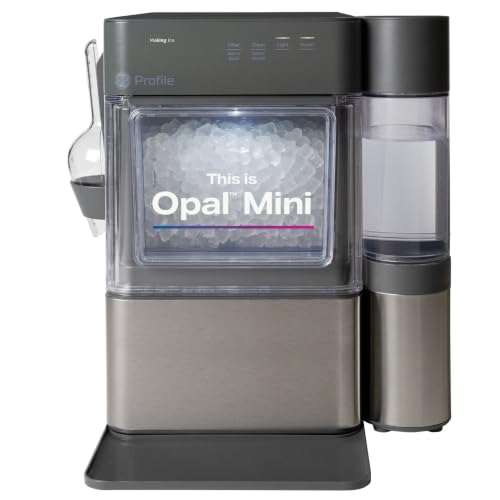
The GE Profile Opal is the machine that turned nugget ice from a restaurant curiosity into a home countertop category. It makes the soft, chewable, pellet-style ice that absorbs flavour from a drink instead of just chilling it, and that single talent is the whole reason to consider it. In the premium tier, you are paying for the ice style itself, for a more finished design that looks deliberate on a counter, and for a reservoir-fed layout that suits households where the machine runs most of the day.
Living with the Opal is a rhythm rather than an event: fill the reservoir, let it build a bin of nuggets, and top the water up as the level falls. Because nugget ice is porous and melts faster than dense cubes, it suits drinks you sip steadily rather than a cooler that must stay cold for hours outdoors. It asks for the same discipline as every machine in this guide — regular cleaning, regular descaling, and a clean scoop rather than hands in the bin.
Best for: households whose habits match the description above. Not suited for: anyone expecting freezer-style long-term storage from an insulated countertop bin.
Igloo Countertop Ice Maker — Best Simple Entry Point
Tier: entry. Check price on Amazon once the verified listing link is added at publishing.
Igloo is a familiar name in cooling, and its countertop ice maker sits squarely in the entry tier: a compact bullet-ice machine with simple controls, a lift-out basket and a window or indicator layout that tells you when the basket is full or the water is low. Bullet ice — smooth, hollow, rounded pieces — is the workhorse style of this class, kind to blender blades and quick to chill a glass.
The appeal here is the absence of ceremony. There is no plumbing, no installation and very little to learn: fill the reservoir, press start, and collect the first batch once the cycle settles. The trade-offs are the honest ones of the tier — a smaller basket that needs emptying into the freezer during a party, and ice that begins melting back into the reservoir if it sits, because the bin is insulated rather than refrigerated.
Best for: households whose habits match the description above. Not suited for: anyone expecting freezer-style long-term storage from an insulated countertop bin.

Frigidaire Countertop Ice Maker — Best Mid-Tier All-Rounder
Tier: mid. Check price on Amazon once the verified listing link is added at publishing.
Frigidaire brings a refrigeration heritage to the countertop category, and its countertop ice maker is a mid-tier bullet-ice machine aimed at households that want a step up in finish and day-to-day polish without moving into nugget-ice money. Expect the familiar formula executed cleanly: reservoir-fed freezing fingers, a removable basket, ice-size selection on many versions, and styling that sits comfortably beside other kitchen appliances.
In daily use this is the kind of machine that disappears into a routine — morning smoothies, lunch drinks, evening glasses — and only asks for attention when the water runs low or the cleaning cycle comes due. As with every reservoir machine, the ice it makes is only as clean as the water and the tank it came from, so the rinsing and descaling habits in this guide matter more than any badge on the front panel.
Best for: households whose habits match the description above. Not suited for: anyone expecting freezer-style long-term storage from an insulated countertop bin.

Silonn Countertop Ice Maker — Best Compact Footprint
Tier: entry to mid. Check price on Amazon once the verified listing link is added at publishing.
Silonn has become a common sight in the compact end of the category, and its countertop ice maker leans into small footprints and straightforward operation. It produces bullet ice in the usual two sizes on typical versions, with a self-contained reservoir, a lift-out basket and a scoop stored with the machine. For a small kitchen, a dorm-adjacent setup, an office corner or an RV galley, that compactness is the deciding feature.
The honest limits follow from the size: a modest basket, batches that reward patience during a rush, and the same melt-back behaviour as every insulated-bin machine. Treat it as a steady producer rather than a party engine — run it ahead, bag the ice into the freezer, and it will keep a small household supplied without ever asking for a water line or a drain.
Best for: households whose habits match the description above. Not suited for: anyone expecting freezer-style long-term storage from an insulated countertop bin.
Euhomy Countertop Ice Maker — Best for Easy Upkeep
Tier: mid. Check price on Amazon once the verified listing link is added at publishing.
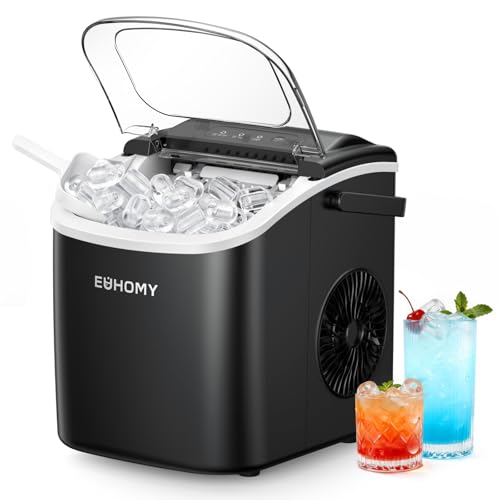
Euhomy’s countertop ice maker competes in the busy middle of the category, where machines are separated less by the ice they make — bullet ice, in the familiar style — than by how easy they are to live with. Many Euhomy versions include a self-cleaning cycle, which circulates water through the system and takes some of the tedium out of routine upkeep, though it never replaces descaling or a proper hand-clean of the bin and scoop.
For households that know their weakness is maintenance rather than enthusiasm, that emphasis matters: a machine that gets cleaned is worth more than a theoretically better machine that grows slimy in a neglected tank. Pair the self-cleaning habit with fresh water, a dry resting place between heavy-use periods, and the scoop discipline described later, and a mid-tier machine like this one delivers most of what most households actually need.
Best for: households whose habits match the description above. Not suited for: anyone expecting freezer-style long-term storage from an insulated countertop bin.
IKICH Countertop Ice Maker — Best Quiet Companion
Tier: entry to mid. Check price on Amazon once the verified listing link is added at publishing.
IKICH built its name in this category on compact bullet-ice machines that emphasise unobtrusive running — the kind of appliance an open-plan kitchen or a home office can tolerate in the background. The formula is the proven one: freezing fingers, a reservoir you fill by jug, a basket that lifts out for serving, and controls simple enough that a guest can run the machine without a briefing.
Where a machine like this earns its place is in the hours between the obvious moments — the working-from-home afternoon, the slow weekend morning — when a freezer tray is always either empty or forgotten. Its limits are the class limits: insulated rather than refrigerated storage, modest batch storage, and a firm need for the cleaning and descaling routine that keeps reservoir water tasting like water and nothing else.
Best for: households whose habits match the description above. Not suited for: anyone expecting freezer-style long-term storage from an insulated countertop bin.
Safety and Hygiene: The Non-Negotiables
An ice maker is a food appliance, and it deserves the same respect you give a chopping board or a water bottle — more, in some ways, because it holds water still, in the dark, at room temperature, which is exactly the environment where bacteria and mould like to establish themselves. None of the habits in this section are optional extras. They are the difference between ice that improves a drink and ice that quietly undermines it.
Standing Water Is the Enemy
Water that sits in a reservoir, a bin or a drain line becomes a home for bacteria and mould over time, and the slime that forms on submerged surfaces — a slippery film you can feel with a fingertip — is the visible sign of a microbial community you do not want in a glass. The defences are simple and unglamorous: empty and rinse the reservoir regularly rather than endlessly topping it up, leave the lid open to dry when the machine rests, and never let yesterday’s meltwater become tomorrow’s ice without a rinse in between.
Cleaning and Descaling on a Schedule
Clean the machine on a regular cycle — wipe the bin, wash the basket and scoop in warm soapy water, rinse the reservoir — and descale it periodically as well, because mineral scale from tap water coats the freezing surfaces, slows production, flavours the ice and shelters grime in its rough texture. Follow the maker’s instructions for the descaling solution and the rinse cycles afterwards, and run plain-water batches and discard them after any deep clean before ice goes back into drinks.
Clean Water In, Clean Ice Out
Use fresh, clean drinking water every time you fill the machine. Ice faithfully preserves whatever the water carried — chlorine notes, stale jug flavours, and anything growing in a neglected filter jug. If your tap water tastes good and is safe to drink, it makes good ice; if it tastes of the plumbing, filter it first. Never fill the reservoir from a container that has been sitting open, and wash your hands before handling ice, the basket or the scoop.
Serve Ice With a Scoop, Never With Hands
Keep the scoop clean, store it outside the ice or in its holder rather than buried in the bin, and never serve ice with your hands or with the glass itself. Hands carry whatever the day has touched, and a glass dipped into the bin can chip, crack or carry contamination straight into everyone’s drinks. This one habit — scoop, always — is the rule caterers and cafés treat as sacred, and a home bar should too.
Electricity Near Water
An ice maker is an electrical appliance that works with water, so place it sensibly: on a dry, level, ventilated surface, away from the sink’s splash zone, with the cord kept clear of standing water. As a general, common-sense recommendation, plug it into a GFCI-protected outlet — the kind with the test and reset buttons commonly fitted in kitchens — so a fault cuts power quickly. Never run the machine with a damaged cord, never immerse any part of it, and unplug it before cleaning.
Airflow and Placement
Countertop ice makers reject heat as they freeze water, and they need room to breathe. Leave clearance around the vents, keep the machine out of direct blazing sun and away from the oven’s heat plume, and set it somewhere dry and level where a small spill is a nuisance rather than a hazard. A machine suffocated in a tight corner works harder, makes ice more slowly and ages faster than one given a little air.
Common Mistakes Buyers and Owners Make
Buying for the party, not the week. The machine sized for a once-a-year barbecue will crowd the counter for the other fifty-one weeks. Size for your normal rhythm and handle peaks with early starts and freezer storage.
Treating the bin as a freezer. Insulated is not refrigerated. Ice left in the bin melts, refreezes into clumps and picks up staleness; move finished ice to the freezer in a clean bag or container.
Topping up forever. Endlessly adding fresh water to old water keeps a microbial soup at a constant level. Empty, rinse and refill on a rhythm instead.
Skipping the descale. Scale slows production, shrinks batches and flavours ice. Periodic descaling is the cheapest performance upgrade there is, and it is already in your cupboard.
Serving with hands or glasses. Hands contaminate, glasses chip. The clean scoop exists for a reason; wash it, store it properly and use it every single time.
Suffocating the vents. A machine pushed tight into a corner cannot reject heat, so it slows down and works itself harder. Give it air on every side the maker asks for.
Three Worked Examples
The smoothie household. Two adults, two children, blended drinks most mornings, iced tea at dinner. Bullet ice wins on value and blender kindness; a mid-tier machine with a decent basket and easy cleaning — the Frigidaire or Euhomy pattern — serves best, run ahead at breakfast and bagged into the freezer on weekends.
The nugget devotee. One or two people who fell for pellet ice at a favourite café and drink sodas and iced coffee all day. The GE Profile Opal is the honest answer: premium money buying exactly the texture they crave, with the melt-rate accepted because drinks are sipped steadily at home, not packed into coolers.
The small-space grazer. A compact kitchen, one or two residents, ice wanted in small amounts across the day. A compact entry machine in the Silonn or IKICH pattern fits the footprint and the rhythm; production steadiness matters more than basket size, and freezer bagging covers the occasional guest.
Going Deeper: Living With the Machine
Think of a countertop ice maker as a small, patient factory rather than a storage vault. Its real product is not the basket of ice sitting in front of you but the steady rhythm of batches behind it — freeze, release, freeze again. Households that understand this get the most from the category: they run the machine ahead of need, move finished ice into the freezer in a bag or a lidded container, and let the factory keep working. Households that treat the bin as a freezer are the ones who end up disappointed by melt-back and half-frozen clumps.
The sound of a countertop ice maker becomes part of a kitchen’s background music. There is the hum of the compressor, the fan moving air across the condenser, the soft clatter as a batch releases into the basket, and the occasional gurgle of water finding its level. None of it is loud in isolation, but in a studio flat or a quiet office the pattern matters. Placing the machine on a solid, level surface — never on a wobbling board or a hollow tray — keeps vibration honest and the soundtrack as gentle as the design allows.
Ice quality is mostly water quality wearing a disguise. Cloudy ice usually means dissolved air and minerals freezing outward from the surface, which is normal for bullet ice and harmless in a drink. Off flavours are a different story: they point back at the reservoir, at stale water, at a bin that needs washing or at scale building up on the freezing fingers. When ice starts to taste like the fridge or the cupboard, the machine is not broken — it is asking, clearly, for the cleaning routine in this guide.
There is a quiet economics to making ice at home that goes beyond the price of bags. It is measured in trips not taken, in freezer space not surrendered to a bulky bag, in the drink made properly at ten in the evening instead of settled for. Against that, honestly, stand the costs in counter space, in electricity, in cleaning time and in the discipline of descaling. The households that love these machines are the ones whose daily habits — smoothies, iced coffee, evening drinks, a house that entertains — cash the convenience cheque often enough to cover those costs.
Batch timing shapes how you should plan around the machine. The first batches after switch-on are usually the slowest, because the cabinet and water start at room temperature; once the system is cold-soaked, later batches arrive more briskly. For a party, that means the machine should start well before the first guest, and the freezer should act as the warehouse while the countertop unit acts as the factory. For daily life, it means a machine switched on with breakfast quietly covers lunch without any planning at all.
The basket-full sensor deserves a word of respect. Most countertop machines pause when the basket is full or when an ice bridge fools the sensor into thinking it is. A gentle redistribution of the ice — with the clean scoop, never with hands — restarts production and evens out the pile. If the machine pauses with an empty-looking basket, check for a clump leaning against the sensor before assuming a fault. Half of all ‘broken’ ice makers are simply machines whose ice piled up in the wrong shape.
Freezer discipline completes what the countertop starts. Ice moved into the freezer should go into a clean, food-safe bag or a lidded container, dated in your head if not on a label, and used in a sensible rotation. Ice is a sponge for its surroundings: left open beside strong-smelling foods, it will eventually taste of them. Sealed, it keeps its neutrality for a good while, ready for the evening the machine itself is resting, being cleaned, or simply outpaced by a houseful of guests.
Choosing where the machine lives is a decision about plumbing-free convenience. Because a countertop unit needs no water line and no drain, its address is decided by three things: a socket within sensible reach, a surface that can take the weight of machine plus water, and enough clearance for the vents and the lid. Kitchens are the obvious home, but a utility room, a home bar shelf or an office kitchenette can serve just as well — anywhere dry, ventilated and close enough to the drinks it supplies.
Guests change the mathematics of ice. A household of two sipping one iced drink each can be served by almost anything; a barbecue for ten multiplies demand by the hour, adds cooler duty, and punishes any machine asked to improvise. The seasoned approach is boring and effective: start early, bag ice into the freezer in waves, keep the reservoir topped up with clean water, and let a bought bag be the understudy rather than the headline act. The countertop machine then does what it is genuinely best at — endless, steady, fresh production.
Descaling is the maintenance task owners most often postpone, and the one whose absence is most visible in the glass. Scale is simply the mineral fraction of your water left behind each cycle, and in hard-water areas it accumulates with enthusiasm. The signs are gradual: batches slow, ice shrinks or turns ragged, a white film appears on submerged parts. A periodic descale, done with the maker’s recommended solution and followed by thorough rinsing and a discarded plain-water batch or two, resets the machine to its younger self.
The humble scoop deserves its own paragraph because it is the most-touched, most-neglected tool in the system. Wash it with the dishes, not once a season. Store it in its holder or on a clean hook, not buried in the ice where its handle becomes part of the serving. If the original scoop is lost, replace it with a food-safe one of similar size rather than promoting a mug or a hand to the job. Small tool, large consequences — that is the story of ice hygiene in one sentence.
Seasonal rhythms matter too. A machine that runs daily all summer and then sits forgotten from autumn will greet spring with stale water in its lines and a musty first impression. Before any long rest, empty it, clean it, descale it if the season was long, dry it thoroughly with the lid open, and store the scoop and basket clean. Before it returns to service, rinse, run a cleaning cycle, and discard the first batches. Ten minutes at each end of the season buys a machine that always tastes like nothing — which is exactly what ice should taste like.
There is an underrated pleasure in the ritual itself: the morning fill, the first clatter of a batch landing, the cold weight of a full scoop. Appliances earn their counter space in two currencies — utility and the small satisfactions of using them well. A countertop ice maker, honestly assessed, pays in both when it is matched to the household, placed with a little thought, and kept clean with the unglamorous regularity this guide keeps returning to. That match — machine to household — is what every section here is really about.
If you inherit or are given a machine of unknown history, treat its first week as a recommissioning. Wash everything removable, inspect the reservoir for film or odour, descale, rinse generously, and discard several batches before trusting the ice in a drink. Check the cord and plug for damage, confirm the vents are clear of dust, and run it somewhere you can watch the first cycles. A machine that survives that week making clean, neutral ice has told you most of what you need to know about its condition.
Finally, remember what the machine cannot do. It cannot refrigerate its own bin the way a freezer does, cannot rescue bad water, cannot clean itself out of a neglected month, and cannot multiply its output because guests arrived early. Working inside those honest limits — starting early, storing finished ice in the freezer, keeping the water fresh and the machine clean — turns a modest countertop appliance into one of the most reliable conveniences in the kitchen. Every recommendation in this guide is, in the end, a variation on that theme.
Water temperature going in quietly shapes the day’s production. A reservoir filled from the cold tap on a cool morning gives the machine a head start it keeps for hours, while warm water on a hot afternoon asks the first cycles to spend their effort chilling the supply rather than building your reserve. There is no trick here worth obsessing over — but if a big day is coming, filling with cold water and starting early is the closest thing to a free upgrade the category offers.
The lid is opened a hundred times a week and designed, on the better machines, like it matters: a hinge that holds its position, a window or a light that saves you opening it at all, and a seal of sorts against the kitchen’s dust and splashes. When you compare machines in a shop or on a listing, spend your attention there and on the basket handle. The parts your hands meet daily are the parts that decide whether ownership feels polished or merely adequate.
Ice size selection, where offered, is a smaller decision than it first appears. Smaller pieces chill faster, pour easier into bottles and blend kinder; larger pieces survive longer in a glass and dilute a slow drink more gently. Most households settle on one size within a fortnight and rarely touch the control again — which is an argument for not paying much, in money or in shortlist anxiety, for elaborate size programmes you will use exactly once.
A word about first impressions when a machine arrives: run it through its recommissioning even if it looks pristine. Warehouses are dusty, packaging sheds fibres, and a reservoir that has sat sealed can carry a stale note into the first batches. The wash, rinse and discarded batches in this guide are not ceremony; they are the difference between judging a machine on its own ice and judging it on its journey to your counter.
If two households share one machine — a house-share, a small office, a family with teenagers — the routine needs to be visible to survive. A note inside the lid with the cleaning rhythm, the scoop parked in its holder where instinct looks for it, and a shared understanding that hands never enter the bin will carry a communal machine further than any feature. Shared appliances fail socially before they fail mechanically, and the fix is communication, not engineering.
The Measurement Worksheet: Sizing the Ice maker to Your Own Space
Start this worksheet with the space, not the product page: measure the exact spot where the ice maker will live, including the clearance above it, the swing or reach you need in front of it, and the route you will take to move it for cleaning. Write down the largest item you realistically expect to use with it, because that single measurement settles more sizing arguments than any capacity figure printed in a listing headline. Check the nearest outlet and be honest about whether a cord will cross a walkway, a sink edge, or another appliance that also needs that socket on busy mornings. Count the people the ice maker must serve on an ordinary weekday, then count again for the busiest gathering you host in a typical year, and notice whether those two numbers point to the same size.
List the three jobs you will ask of it every week and the one job you will ask only a few times a year, because the weekly jobs should drive the decision and the rare job should not. Decide where the accessories, attachments, and spare parts will be stored before you order, since a ice maker whose extras live in a distant cupboard quietly becomes a ice maker with fewer features. Where a shortlist names specific examples, such as GE Profile Opal Nugget Ice Maker, run these same checks against that listing line by line rather than assuming the general verdict transfers unchanged. Apply the identical test to Igloo Countertop Ice Maker as well, on the same day and under the same conditions, because a fair comparison needs one ruler rather than two moods.
- Measure the working spot and the clearance around it
- Count weekday servings and the biggest gathering
- List the three weekly jobs in writing
- Decide storage for every accessory in advance
- Name the one compromise you accept knowingly
- Set the return deadline in your calendar
If Frigidaire Countertop Ice Maker is also in contention, give it the same worksheet and let the three sets of answers sit side by side before anyone reaches for a checkout button. Think about who else in the household will use it, including anyone shorter, anyone with less grip strength, and anyone who will clean it without reading the manual first. Note the surfaces it will touch in normal use and whether heat, moisture, weight, or vibration from the ice maker could mark, stain, or stress those surfaces over months of daily contact. Plan the cleaning position as carefully as the working position, because a ice maker that is awkward to carry to the sink or to open fully will be cleaned less often than it should be.
Write the three questions you still cannot answer from listings and guides, and treat those unanswered questions as your shortlist filter rather than as details to discover after delivery. Compare the footprint against the appliance or tool it replaces, and decide in advance what leaves the room if the new arrival is larger than the old one. Consider the noise, steam, heat, or light it produces in use and whether that output lands in a room where someone sleeps, works, or studies at the same hours. Check how it behaves at the smallest task, not only the largest, because many households abandon oversized gear that feels clumsy for the quick everyday job.
Think through the second week of ownership, when the novelty has faded, and ask which features you will still touch daily and which were only interesting in the showroom sense. Decide what good enough looks like in writing: the result you would accept without complaint, the result that would delight you, and the result that would send the box back. Look at the controls with fresh eyes and imagine using them with wet hands, greasy hands, or gloves, depending on the work, because small controls punish exactly those moments. Ask how the ice maker fails gracefully: whether a worn part, a lost attachment, or a single broken control ends its usefulness or merely removes one mode you rarely used.
Check whether replacement parts and consumables are ordinary, widely stocked items or proprietary pieces tied to one maker, since that difference compounds over years of ownership. Measure the storage shelf, drawer, or cupboard you intend to use with the door closed and other contents in place, not the optimistic empty version of that space. Think about guests and helpers who will meet the ice maker without your habits, and whether its safe, correct use is obvious to a newcomer within a minute of looking at it. Write down the one compromise you are consciously accepting, so that when it shows up in daily use it reads as a chosen trade rather than a nasty surprise.
Frequently Asked Questions
How do I choose an ice maker for a small kitchen?
Start with the tape measure: confirm the footprint, the height with the lid fully open, vent clearance and reach to a suitable socket. Then favour compact bullet-ice machines whose baskets lift out easily, because in a small kitchen the daily motions — filling, emptying, wiping — matter more than headline capacity. A compact model run ahead and paired with freezer storage will out-serve a big machine that never quite fits its home.
Is nugget ice worth choosing over bullet ice?
Only if the texture itself is what you love. Nugget ice is soft, chewable and flavour-absorbing, and its fans are genuinely devoted — but nugget machines sit in the premium tier, take more counter, and their porous ice melts faster, suiting steady sipping rather than coolers. If your drinks are smoothies, sodas and iced tea served promptly, bullet ice delivers the same chill for far less commitment.
What capacity should I look for?
Think in rhythms rather than headline numbers. Count servings on your busiest normal day, then choose a basket that holds a comfortable reserve for that pattern and a production pace that refills it between uses. Remember the bin is insulated, not refrigerated: capacity you cannot move into the freezer or into glasses is capacity that melts. Steady production plus freezer bagging beats a giant basket every time.
Do I need a water line or a drain?
No — that is the point of the countertop class. You fill the reservoir by jug and empty it by hand or through a drain plug when cleaning. The trade for that freedom is hygiene discipline: fresh clean water in, regular rinsing, periodic descaling, and a reservoir never left standing for days. Kitchens without a spare socket near a dry, ventilated surface are the only real obstacle.
How much upkeep should I expect?
Minutes, on a rhythm. Rinse and refresh the water regularly, wash the basket and scoop in warm soapy water, wipe the bin, and descale periodically — more often in hard-water areas. Many mid-tier machines add a self-cleaning cycle that helps between hand-cleans. None of it is difficult; all of it is necessary, because standing water in a reservoir is exactly where bacteria and mould establish themselves.
Where should I plug the machine in?
Into a sound socket on a dry wall, with the cord clear of water and heat. As a common-sense recommendation, a GFCI-protected outlet — standard in modern kitchens — adds a layer of protection for any appliance that works with water. Place the machine on a level, ventilated surface away from the sink’s splash zone and the oven’s heat, and unplug it before cleaning or moving it.
Related Guides and Next Steps
Keep exploring the cluster and the neighbouring cold-drinks topics on this site:
- how to use an ice maker day to day
- the complete ice maker buying guide
- ice maker pros and cons weighed honestly
- our in-depth ice maker review
- blenders that handle ice with ease
- blenders built for crushing ice
- iced coffee makers for cold drinks at home
- ice sphere molds for slow-melting drinks
- soft serve ice cream makers