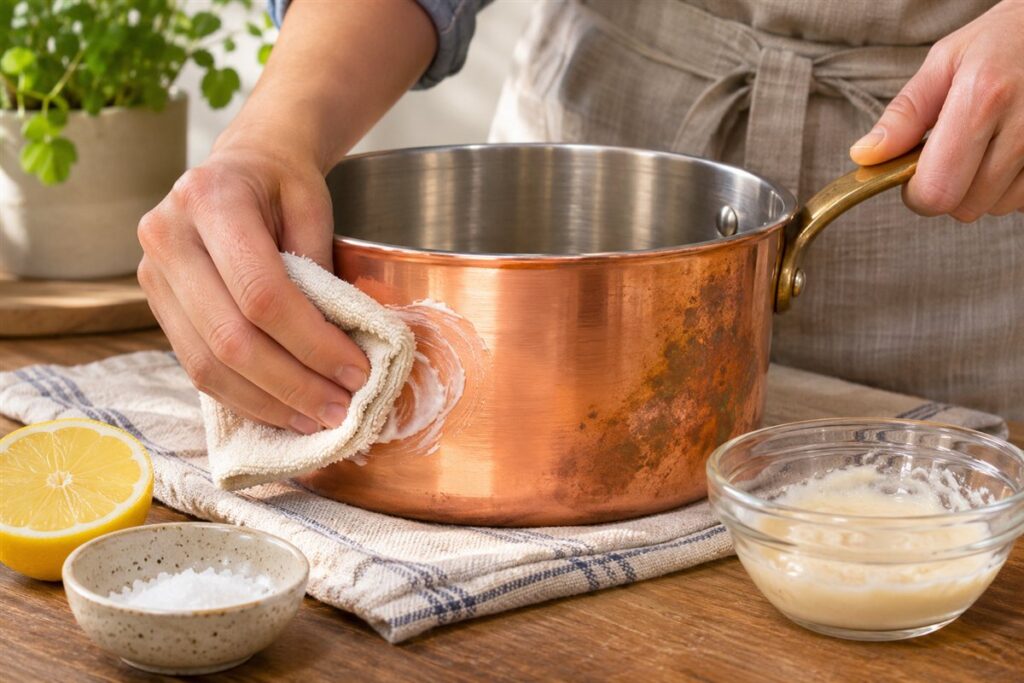
Copper cookware tarnishes naturally as the metal reacts with air and moisture, but the shine can usually be brought back at home. Wash after each use, polish when you want the glow back, and avoid anything harsh on the lining. Check the maker’s care sheet first. This guide covers how to tell what finish you have, routine washing, polishing methods, a worked example, and what to do when something goes wrong.
Know What You Have
Most copper pots have a lining, often stainless steel or tin, which touches the food. The outside is the part that tarnishes. Some pieces are lacquered, which means a clear coating protects the surface and you should not use acidic polish on them. If the finish looks glossy and never changes, ask the maker or check the care card.
Routine Washing
- Let the pot cool completely.
- Wash with warm water and mild dish soap using a soft sponge.
- Rinse and dry immediately with a soft towel to prevent water spots.
- Buff lightly with a clean, dry cloth.
Skip the dishwasher unless the maker says it is allowed, since harsh detergent dulls copper.
Polishing Tarnish
Three simple home options work well on unlacquered copper:
- Lemon and salt: Sprinkle salt on half a lemon and rub the surface gently, then rinse and dry.
- Vinegar, salt and flour paste: Mix into a paste, spread thinly, wait a few minutes, rinse well and dry.
- Ketchup or tomato paste: The mild acid lifts tarnish. Leave it for a short time and wipe off.
A purpose-made copper cleaner is another option; follow its directions and ventilate the room.
A Worked Example: Polishing a Saucepan With Dull Brown Patches
Suppose you have an unlacquered saucepan whose outside has gone dark brown with a few green-tinged spots near the handle rivets. This sequence brightens it without risking the lining.
- Wash the pan in warm soapy water first, so grease does not block the polish, and dry it.
- Keep the polish on the outside, and rinse any drips that run inside.
- Cut a lemon in half, dip the cut side in salt, and rub the outside in small circles. The salt acts as a mild abrasive and the juice lifts the tarnish.
- For the areas near rivets and handle joints, use a soft toothbrush with a little paste, taking care to keep the handle clear if it is wood.
- Rinse promptly with warm water, since acid left on the metal can leave new marks.
- Dry at once with a soft towel and buff with a clean cloth until the surface glows.
- If shade differences remain, repeat the process once, rather than rubbing harder.
Care Tips and Cautions
| Do | Avoid |
|---|---|
| Use soft cloths and sponges | Steel wool and rough scouring pads |
| Rinse acids off promptly | Leaving polish on overnight |
| Dry fully after washing | Air drying with water drops |
| Use wood or silicone tools on lined pots | Metal tools that scratch a tin lining |
Some cooks prefer to leave copper as it is, since a soft brown patina forms and many people find it attractive. Others enjoy a bright finish for display and polish before guests arrive. Neither approach affects how the pan cooks, as long as the lining is intact. If the lining is worn through, so that bare copper touches food, ask the maker or a specialist about relining before further use. Store copper away from damp spots, hang it where air circulates, and keep it away from steam from the dishwasher or kettle, which speeds up tarnish.
Common Scenarios
These short cases cover the situations that come up most often with copper in a home kitchen.
A lacquered pot that is flaking
Old lacquer can peel in patches. Do not polish over it; follow the maker’s guide, which may involve removing the coating entirely or having it refinished.
Copper with burnt-on food inside the lining
Soak in warm soapy water and use a nylon scrubber on a stainless lining. For tin linings, avoid scouring and use a soft sponge only.
Handles that blacken or loosen
Iron, brass or bronze handles can darken with polish. Keep polish off them, and if the rivets feel loose, contact the maker rather than tightening them yourself.
Hanging display pieces
Dust them with a dry cloth every week or two so grime does not bond to the surface. If the finish is dull from kitchen grease, wash with mild soap, rinse and dry before polishing.
Quick Troubleshooting
| Symptom | Likely cause | What to try |
|---|---|---|
| Streaks after polishing | Polish not fully rinsed or uneven buffing | Rinse again with warm water, dry and buff in one direction |
| Dark spots return quickly | Moisture or kitchen steam | Dry thoroughly and keep away from steam |
| Green crust near joints | Moisture reacting with the metal | Wash it off with warm soapy water and a soft brush, dry well |
| Dull patches on lacquered copper | Worn coating | Wash gently; ask the maker whether it can be refinished |
| Pink or reddish patches | Lining worn through | Stop cooking in the pot and ask the maker about relining |
Mistakes to Avoid
- Using acidic polish on lacquer. It can damage the coating and leave uneven patches.
- Cooking acidic foods in a worn lining. Bare copper should not be in direct contact with food.
- Scouring with steel wool. Scratches dull the finish and harm tin linings.
- Leaving polish to dry on the surface. It can stain and is harder to remove later.
- Heating an empty pot. A thin tin lining can melt at high temperatures, so follow the maker’s guidance.
Care and Upkeep Over Time
Handle the pot gently and use moderate heat, since copper conducts heat quickly and a hot empty pan can damage a lining. Wipe up splashes soon after cooking, because grease and water spots tarnish the metal unevenly. Check the lining each time you wash: a stainless lining should look uniform, and a tin lining should be free of bare patches. Look at the handle rivets for looseness. If you polish, a light monthly pass is enough, and a thin buffed layer from a maker-approved wax or polish may slow tarnish if the care sheet allows it.
Short Glossary
- Patina: the natural brown or darker layer that forms on copper over time.
- Tarnish: surface discoloration caused by air and moisture.
- Lacquer: a clear protective coating applied to some copper.
- Lining: the inner surface, often stainless steel or tin, that touches the food.
- Relining: having a worn lining replaced by a specialist.
- Verdigris: the green deposit that can form on copper in damp conditions.
FAQ
Is a green tint on copper a problem?
Green deposits can form from moisture and should be cleaned off, especially before cooking. Wash the pot well and follow the maker’s guidance.
How often should I polish?
Whenever you like the look. Some cooks prefer the aged appearance.
Can I use baking soda on copper?
Baking soda paste is mild and can help lift grime on some finishes, but it can dull a lacquered surface. Check the guide first, and rinse well.
How do I tell if my copper is lacquered?
Lacquered copper tends to stay glossy and does not tarnish evenly, and the care sheet usually says so. When in doubt, ask the maker before using any acid.
Can I use copper cookware on any stove?
Many copper pots work on gas and electric tops, but induction needs a magnetic base, and some pieces are decorative only. Check the guide for the surfaces and heat levels the maker recommends.
The Short Version
Wash gently, dry at once, and polish tarnish with lemon and salt or a mild paste. Protect the lining and follow the care sheet.
Related Guides
- How to Clean Stainless Steel Pans and Bring Back the Shine
- How to Clean a Blender Fast: Soap, Warm Water and a Spin
- 6 Best Copper Cookware Sets for Home Cooks (2026)
- 6 Best Copper Cookware Sets (2026)
- 6 Best Copper Cookware (2026)