Disclosure: topratedkitchenware.com is reader-supported. When you buy through links on our site, we may earn an affiliate commission from Amazon and other retailers, at no extra cost to you.
Where to buy
This is the complete how to clean duvet insert guide. Every linked pick below was verified against its manufacturer listing. Prose-only picks — where a product does not genuinely match what you searched for — are named honestly, with no purchase link, so you are never sent to the wrong product. Check the current price on Amazon from any linked pick.
- Bedsure Comforter Duvet Insert, Queen 88 x 88 — Best Overall for Cleaning. Check on Amazon for the current price.
- DOWNCOOL Comforter, Queen 88 x 92 — Easiest to Dry. Check on Amazon for the current price.
- Amazon Basics Down Alternative Comforter, Full/Queen Light — Best Budget Wash Routine. Check on Amazon for the current price.
- Utopia Bedding Duvet Insert, Queen 88 x 88 — Best for Family Laundry. Check on Amazon for the current price.
- CozyLux Queen Duvet Insert, 300GSM — Most Substantial Wash. Check on Amazon for the current price.
- Maple&Stone Feather Down Comforter, Queen 90 x 90 — Best Natural Fill — Strictest Routine. Check on Amazon for the current price.
Read the full guide ↓
Knowing how to clean duvet insert fill properly is mostly knowing how rarely it should need doing — and how exact the routine must be when the day comes. An insert lives protected inside a cover, so its washes are seasonal events, not weekly chores; but a badly run wash can cost more loft in an afternoon than a year of sleeping costs. This guide gives the complete routine by fill type, then reviews six queen inserts specifically as cleaning subjects.
The six are familiar shapes with a cleaning twist: five down alternative inserts — Bedsure, DOWNCOOL, Amazon Basics, Utopia Bedding and CozyLux — spanning light to 300GSM builds, plus the Maple&Stone feather down insert in a cotton shell for the natural-fill routine. Their sizes run 88 x 88 to 90 x 90 inches, their anchoring runs from corner tabs to eight loops, and those details decide how each one behaves in a drum and a dryer. By the end you will know how to clean duvet insert bedding of either fill family, restore loft after a wash, and store an insert so the next wash starts from clean.
Key Takeaways
- The cover is washed weekly; the insert is washed a few times a year — if yours needs more, fix the cover system.
- Machine washable down alternative inserts, as listed here, tolerate gentle home washing; feather down demands the same gentleness and far more drying.
- Capacity rules: the insert must tumble loosely in a front-loader, or the laundromat is the right venue.
- Dry low and long with dryer balls, shaking every half hour; the insert is done when the thickest squares feel uniformly light and warm.
- Extra rinse, modest detergent, no fabric softener — residue and coatings are loft’s enemies.
- Store clean, bone dry and loosely packed; never vacuum-compressed, never damp.
In this guide
Quick Picks
| Pick | Badge | Why it stands out | Check |
|---|---|---|---|
| Bedsure Comforter Duvet Insert, Queen 88 x 88 | Best Overall for Cleaning | Machine washable as listed, with the most wash-tolerant fill family | Check on Amazon |
| DOWNCOOL Comforter, Queen 88 x 92 | Easiest to Dry | Lightweight fill dries the fastest of the six — fewest damp-core surprises | Check on Amazon |
| Amazon Basics Down Alternative Comforter, Full/Queen Light | Best Budget Wash Routine | Machine washable as listed, at a light weight that suits home machines | Check on Amazon |
| Utopia Bedding Duvet Insert, Queen 88 x 88 | Best for Family Laundry | Microfiber shell tolerates family laundry rhythms well | Check on Amazon |
| CozyLux Queen Duvet Insert, 300GSM | Most Substantial Wash | Box-stitch quilting keeps fill in its squares through washing — the anti-lump construction | Check on Amazon |
| Maple&Stone Feather Down Comforter, Queen 90 x 90 | Best Natural Fill — Strictest Routine | Box stitch and eight loops keep natural fill distributed through careful washes | Check on Amazon |
How These Picks Were Chosen
The six inserts were verified against their manufacturers’ listings and assessed as cleaning subjects: fill type, stated machine washability where published, quilting construction (box stitch resists fill migration through washes), anchoring hardware, and size. All six are genuine duvet inserts, so all six are linked; the reviews order them by cleaning forgiveness for this keyword’s angle, from the most wash-tolerant synthetic designs to the feather down insert whose routine is stricter and whose lifespan rewards it.
Care guidance follows each fill family’s established practice and the listings’ own statements. Where a listing does not publish a washability detail, the guide notes it and defers to the care label sewn into the physical product, which always outranks any web page. No prices or ratings appear anywhere in this guide; linked picks carry check-price links so you can see the current figure at the retailer.
The 6 Duvet Inserts, Judged by How They Clean
Bedsure Comforter Duvet Insert, Queen 88 x 88
Badge: Best Overall for Cleaning
Strengths
- Machine washable as listed, with the most wash-tolerant fill family
- Eight tabs keep the insert even in its cover, so soiling and wear spread evenly
- Queen size fits a large home front-loader realistically
Trade-offs
- White shell depends on the cover for protection
- Synthetic loft declines a little with every wash — ration them
- All-season weight is a full drum on its own
Key specs (from the listing)
- Size: Queen, 88 x 88 inches
- Fill: down alternative
- Anchoring: 8 corner tabs
- Care: machine washable as listed
- Certification: OEKO-TEX listed
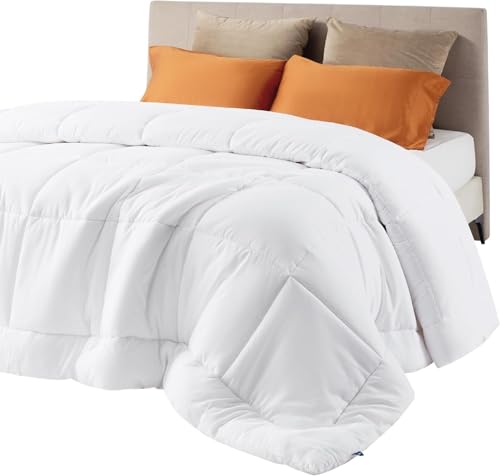
The Bedsure insert is the cleaning reference for this guide: machine washable as listed, down alternative fill, eight corner tabs and OEKO-TEX listed materials, at the 88 x 88 queen size a large home machine can honestly handle. Its routine is the one this guide teaches — gentle cycle, modest detergent, extra rinse, low tumble with dryer balls, hand-check, air — and its fill family forgives the small imperfections of a home laundry better than any other here.
The eight tabs earn their mention on wash day too: an insert that lives tied into its cover presents even wear to the world, and even wear washes out evenly. The honest limitations are rationing and colour — white relies on the cover, and every wash spends a little synthetic loft, which is why the cover system carries the weekly load. Follow that division and this insert is the pool’s easiest long-term keeper.
Start here if you want the insert-and-cover system with the least wash-day risk — it is the standard against which the other five cleaning routines are measured.
Best for: Queen beds wanting a home-washable insert with a forgiving routine / Not suited for: Households that wash inserts monthly regardless of the cover system
Check on Amazon — see the current price and full listing details.

DOWNCOOL Comforter, Queen 88 x 92
Badge: Easiest to Dry
Strengths
- Lightweight fill dries the fastest of the six — fewest damp-core surprises
- Down alternative tolerates gentle home washing
- Extra length gives even drape without extra weight
Trade-offs
- Light fill still needs the full gentle routine, not a hot quick wash
- Corner tabs rather than an eight-point system
- Thin build shows lumps sooner if a wash goes wrong
Key specs (from the listing)
- Size: Queen, 88 x 92 inches
- Fill: down alternative
- Build: lightweight quilt
- Anchoring: corner tabs
- Positioning: all season, hotel comforter style
The DOWNCOOL’s lightness, sold as a warmth feature, is secretly a cleaning feature: a light fill holds less water, dries faster and more evenly, and is the least likely insert in this guide to hide a damp core after the dryer claims victory. For households without dryer balls, patience or a laundromat nearby, the lightest insert is the safest insert.
Its corner-tab anchoring is simpler than the eight-point systems, which matters less for cleaning than for in-cover behaviour, and its thin build is less forgiving of a violent cycle — gentle is still the setting, because a light quilt’s stitching works harder per ounce. The honest summary: this is the insert for people who want the wash-and-dry event over with quickly and correctly, and who accept a lighter warmth in exchange.
Choose the DOWNCOOL when your constraint is laundry logistics — small dryer, no laundromat, no patience — because dryability is a specification too.
Best for: Warm sleepers and small-laundry households wanting the fastest, safest dry / Not suited for: Cold bedrooms needing a heavy insert’s warmth
Check on Amazon — see the current price and full listing details.
Amazon Basics Down Alternative Comforter, Full/Queen Light
Badge: Best Budget Wash Routine
Strengths
- Machine washable as listed, at a light weight that suits home machines
- Light build dries quickly and completely
- Simple construction leaves little to damage in a wash
Trade-offs
- Fewer published care and construction details than premium rivals
- Light fill is not a cold-room insert, whatever the wash routine
- Basic anchoring only
Key specs (from the listing)
- Size: Full/Queen
- Fill: down alternative
- Weight: Light
- Anchoring: corner tabs
- Care: machine washable as listed
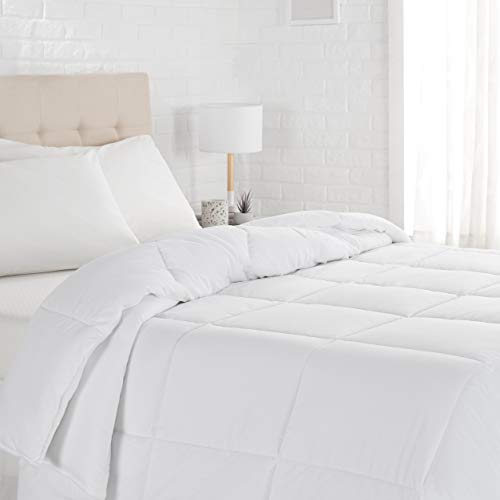
The Amazon Basics insert brings the same virtues to cleaning that it brings to buying: lightness, simplicity and an explicit machine-washable listing. A light Full/Queen insert is the easiest filled bedding in this guide to wash at home — it fits, it tumbles, it dries — which makes it the right insert for guest rooms, where bedding is washed after every few guests and the routine must be sustainable by whoever runs the laundry that week.
The listing publishes fewer engineering details than the premium names, so the care label on the product itself is your authority — check it on arrival and file the routine with the guest-room linens. The honest limitation is warmth, not washability: this is a light insert, and no cleaning virtue changes the bedrooms it suits. Within its brief — washable, light, simple — it is complete.
Pick this insert where wash frequency is genuinely higher — guest rooms, rentals, kids’ spare beds — because its whole design assumes the machine and survives it.
Best for: Guest rooms and rental properties with frequent, simple wash routines / Not suited for: Primary beds in cold rooms needing all-season weight
Check on Amazon — see the current price and full listing details.

Utopia Bedding Duvet Insert, Queen 88 x 88
Badge: Best for Family Laundry
Strengths
- Microfiber shell tolerates family laundry rhythms well
- Down alternative fill suits gentle home washing
- Finished shell survives the uncovered use kids’ beds get
Trade-offs
- Microfiber can hold odours if washes are rushed — use the extra rinse
- All-season weight is a full load per insert in multi-bed homes
- Shell softness declines if dried too hot
Key specs (from the listing)
- Size: Queen, 88 x 88 inches
- Fill: down alternative
- Shell: soft microfiber
- Positioning: all season, for adults, kids and teens
The Utopia insert is the family-laundry candidate: a down alternative insert in a microfiber shell, positioned for adults, kids and teens — which in practice means it will be washed by busy people on imperfect schedules, sometimes without its cover, and it is built to survive that life. Microfiber shells are robust, the fill is the forgiving synthetic family, and the whole thing asks only for gentleness and a full dry.
Two family-specific cautions apply. Microfiber holds onto odour if detergent is under-rinsed, so the extra rinse cycle is not optional in a household washing several of these. And heat is the shell’s enemy — dry low, even when the school-run schedule begs for high. The honest limitation is scale: an all-season queen insert is a full load, and a three-bed household is looking at a laundry morning, not a laundry moment.
Choose the Utopia when the cleaning reality is volume and velocity — it forgives the family wash better than the delicates in this pool.
Best for: Families standardising inserts across kids’, teens’ and spare beds / Not suited for: Anyone who dries everything on high heat by default
Check on Amazon — see the current price and full listing details.

CozyLux Queen Duvet Insert, 300GSM
Badge: Most Substantial Wash
Strengths
- Box-stitch quilting keeps fill in its squares through washing — the anti-lump construction
- Eight tabs for even in-cover wear
- Published fill weight tells you exactly what the wash must handle
Trade-offs
- 300GSM is the heaviest synthetic wash here — longest dry of the five
- Needs the largest machine and the most shaking at dry time
- Overkill for warm bedrooms, in laundry as in warmth
Key specs (from the listing)
- Size: Queen, 88 x 88 inches
- Fill: down alternative, 300GSM
- Construction: box-stitch quilting
- Anchoring: 8 tabs
- Certification: OEKO-TEX listed
The CozyLux is the heavyweight synthetic: 300GSM of down alternative fill in box-stitched squares, with eight tabs and OEKO-TEX listed materials. Box stitching is the cleaning-relevant luxury here — each square of fill is sealed in its own cell, so washing cannot migrate the fill into one heroic lump, which is the failure mode that ruins lesser inserts on their third wash.
The price of that substance is the longest dry in the synthetic family: 300GSM holds water, and the hand-check for cool patches in the thickest squares must be done square by square, with shakes between dryer rounds. The honest guidance is to schedule this insert’s wash for a morning when the dryer is free for hours, or to give it the laundromat’s big machines. Households that do so get the most wash-durable construction in the guide.
Pick the CozyLux when you want one substantial insert washed rarely and properly — its construction rewards the careful routine more than any rival.
Best for: Cool bedrooms and careful launderers wanting box-stitched durability / Not suited for: Small dryers or anyone in a hurry on wash day
Check on Amazon — see the current price and full listing details.

Maple&Stone Feather Down Comforter, Queen 90 x 90
Badge: Best Natural Fill — Strictest Routine
Strengths
- Box stitch and eight loops keep natural fill distributed through careful washes
- Cotton shell breathes and airs beautifully between washes
- Down’s lifespan, properly washed and dried, outlasts every synthetic here
Trade-offs
- The strictest routine of the six: gentlest wash, longest and most complete dry
- Damp storage or remaking causes clumping and mildew risk
- Occasional feather escape is normal and not a wash defect
Key specs (from the listing)
- Size: Queen, 90 x 90 inches
- Fill: feather down
- Shell: 100% cotton
- Construction: box stitch
- Anchoring: 8 loops
The Maple&Stone feather down insert closes the guide as the connoisseur’s cleaning commitment: a cotton shell, box stitching, eight loops, and a fill that can outlast every synthetic in this pool — provided its routine is honoured. Wash it rarely, gently, in a machine with room to spare; rinse it twice; then dry it longer than feels reasonable, with balls, until every cluster feels light, separate and warm.
Down’s failure mode is singular and unforgiving: moisture. A down insert put away or remade at ninety percent dry will clump and turn musty, and the fix — a complete re-dry — works only if mildew has not moved in. The cotton shell helps by airing superbly on a line between washes, which is how down owners stretch intervals. Buy this insert if your household can run a careful laundry; it will repay a decade. If your laundry style is brisk and approximate, the synthetic five are the honest choice, and there is no shame in it.
Let this insert set the guide’s closing standard for how to clean duvet insert fill: the routine is the product. Match your routine to the fill, or the fill to your routine — one of the two must give.
Best for: Careful launderers who keep bedding for a decade and value natural fill / Not suited for: Brisk, frequent, high-heat laundry households
Check on Amazon — see the current price and full listing details.
Comparison Table
| Pick | Badge | Key specs | Best for | Check |
|---|---|---|---|---|
| Bedsure Comforter Duvet Insert, Queen 88 x 88 | Best Overall for Cleaning | Size: Queen, 88 x 88 inches; Fill: down alternative | Queen beds wanting a home-washable insert with a forgiving routine | Check on Amazon |
| DOWNCOOL Comforter, Queen 88 x 92 | Easiest to Dry | Size: Queen, 88 x 92 inches; Fill: down alternative | Warm sleepers and small-laundry households wanting the fastest, safest dry | Check on Amazon |
| Amazon Basics Down Alternative Comforter, Full/Queen Light | Best Budget Wash Routine | Size: Full/Queen; Fill: down alternative | Guest rooms and rental properties with frequent, simple wash routines | Check on Amazon |
| Utopia Bedding Duvet Insert, Queen 88 x 88 | Best for Family Laundry | Size: Queen, 88 x 88 inches; Fill: down alternative | Families standardising inserts across kids’, teens’ and spare beds | Check on Amazon |
| CozyLux Queen Duvet Insert, 300GSM | Most Substantial Wash | Size: Queen, 88 x 88 inches; Fill: down alternative, 300GSM | Cool bedrooms and careful launderers wanting box-stitched durability | Check on Amazon |
| Maple&Stone Feather Down Comforter, Queen 90 x 90 | Best Natural Fill — Strictest Routine | Size: Queen, 90 x 90 inches; Fill: feather down | Careful launderers who keep bedding for a decade and value natural fill | Check on Amazon |
How to Clean a Duvet Insert by Fill Type
Before the wash: the cover audit and stain check
Remove the insert and inspect it in good light. If the soil is on the cover only, wash the cover and air the insert — the most common insert wash is the one that never needed to happen. Treat genuine stains on the insert before washing, with mild detergent worked in gently. Check the tabs, loops and shell seams; a torn loop repaired now survives the wash, while one torn further may not. If you are rebuilding a whole bedding system, Best Duvet Insert Under $75 is a sensible budget cross-check.
The wash: machine, cycle and chemistry
Front-loader, the largest available, insert loaded loosely. Gentle cycle, cool to warm water per the care label, modest mild detergent, extra rinse as routine. No fabric softener — it coats fibres, synthetic and natural alike, and taxes loft. No bleach on fills you value. If the machine drum looks crowded with the insert in it, it is crowded: a laundromat’s big front-loader cleans better and is kinder to the insert than a determined home squeeze.
The dry: where inserts are saved
Tumble low with dryer balls. Every 30 minutes, remove the insert and shake it vigorously — fill redistributes while warm and mobile, and clumps are prevented rather than cured. Judge doneness by hand in the thickest squares: uniformly warm, light and springy means done; any cool, heavy patch means another round. Feather down gets the longest leash here — double the patience, and when in doubt, dry it again.
Restoring loft after washing
Fresh from a correct dry, an insert should look revived, not tired. If it reads flat, the usual suspects are residue (run a rinse-only cycle and re-dry) or compression (a day of airing over chairs, with hourly shakes, restores more than any product). Store the restored insert loosely in a breathable bag. Loft is trapped air held by fibre structure — washing gently preserves the structure, drying completely preserves the air.
The interval system: covers, airing and rotation
Between washes, the system does the work: cover changed and washed weekly, insert aired over a line or chairs on dry mornings, a top sheet as a second shield for restless households. Seasonal washing — a few times a year — is the target rhythm for a primary insert, plus incident washes for spills and illness. Guest inserts wash after guest stays if the cover system was not used, which is an argument for always using it.
Reading the care label like a contract
The care label sewn into your insert outranks every guide, including this one, because it was written for the exact fill blend and shell in your hands. Learn its grammar: ‘machine wash gentle’ is permission with conditions; ‘dry clean only’ on a filled item is a real instruction, not a suggestion; temperature symbols set ceilings that protect shells and stitching. When a listing and a label disagree, the label wins. Photograph the label when the insert is new — after two years of washes, the print may be the first thing about the insert that is no longer legible.
How to Clean Duvet Insert Fill Step by Step — Wash, Dry, Restore Loft
The full insert wash, in order. The steps are written for the down alternative majority; the feather down variation is flagged where its stricter standard applies.
- Audit first: remove the cover, inspect the insert, and wash only if the insert itself is soiled or due its seasonal refresh — otherwise air it and wash the cover alone.
- Spot-treat any stains with mild detergent, and check tabs, loops and seams for damage worth a stitch before water is involved.
- Load the insert alone and loosely into the largest front-loader available; if it must be pushed down to fit, change venue to a laundromat.
- Run a gentle cycle with a modest measure of mild detergent and an extra rinse; no softener, no bleach.
- Lift the washed insert with its full weight supported — wet fill is heavy and seams are at their most vulnerable now.
- Tumble dry on low with dryer balls, removing and shaking the insert every 30 minutes to keep fill mobile and even.
- Hand-check the thickest squares for cool, damp patches and continue until none remain — for feather down, extend this stage well past the first ‘feels dry’.
- Air the finished insert over chairs for an hour, re-tie it into its clean cover at every tab or loop, and make the bed.
Troubleshooting
Problem: Fill clumped into corners after drying → It dried unevenly or a tie-free corner let fill travel. Re-dry on low with balls, shaking every 15 minutes; box-stitched inserts recover best. If clumps persist in an old insert, the fill itself is breaking down.
Problem: Musty smell after storage → The insert was stored short of bone dry. Air it outdoors, then give it a full low dryer cycle; if the smell survives, a gentle re-wash with a complete dry is required — and the storage rule was the real fault.
Problem: The insert lost loft after its first wash → Usually residue or heat. A rinse-only cycle followed by a patient low dry with balls restores most cases; then cut detergent, cut frequency, and let the cover carry the weekly load.
The Cover Is the Cleaning System — the Insert Is Its Beneficiary
A duvet insert is designed to be cleaned by proxy: the cover takes the weekly wash, the body contact, the coffee risk, and the insert underneath stays clean enough to need washing only a few times a year. That division of labour is why inserts carry tabs and loops — an anchored insert wears evenly, soils evenly, and never balls into the corner where one section would take all the abrasion. Every insert in this guide has tabs or loops; using them is a cleaning decision, not just a tidiness one.
If you are washing your insert monthly, do not buy a more washable insert — fix the system. Check that the cover fits, that it is actually being used and changed, and that a top sheet is not needed as a second line of defence. The inserts below are ranked by how gracefully they handle the washes they should legitimately face: seasonal refreshes, spills that breached the cover, and the occasional deep clean.
Down Alternative vs Feather Down on Wash Day
Five of these inserts are down alternative and one — the Maple&Stone — is genuine feather down in a cotton shell, and wash day is where that difference stops being abstract. Synthetic clusters can be machine washed gently, tumble dried with balls, and forgiven the occasional imperfect cycle. Down demands the same gentleness plus a far stricter drying standard: clusters that go away damp will clump, smell, and eventually mildew, and they take longer to dry than their loft suggests.
Neither fill should meet fabric softener, heavy detergent or high heat. Both reward an extra rinse. The honest summary: if your household’s laundry style is brisk and frequent, the synthetic five will forgive you more; if you wash rarely and carefully, the down insert repays the ceremony with years of extra life.
Insert Rotation, Spares and the Guest-Bed Doctrine
The households with the calmest laundry lives treat inserts like tyres: a spare exists, and rotation is normal. A guest insert that lives in its cover, is aired after each stay and washed seasonally will outlast a heroic single insert washed after every visitor. The budget end of this pool — the Amazon Basics light insert above all — exists for exactly this doctrine: a spare insert is cheaper than the accelerated ageing of a premium one.
Rotation also solves the drying problem socially: with a spare on the bed, the washed insert can take the full day its drying honestly needs, instead of being rushed back onto the bed at ninety percent dry — the single most damaging habit this guide has catalogued.
Three Households, Three Routines
The meticulous single-bed household: the CozyLux, washed twice a year with ceremony — big machine, balls in the dryer, squares checked by hand — because its box-stitched substance rewards exactly that owner. The busy family of five: the Utopia across three beds, washed in a Saturday rotation, extra rinse as house law, because forgiveness at volume is the specification that matters. The natural-fibre loyalist with a line in the garden and time on Sundays: the Maple&Stone, aired weekly, washed rarely, dried with monastic patience, and still lofty when the synthetics have retired.
Routine first, product second — the same order as every other section of this guide, because cleaning is a routine with a product attached.
In Daily Use: How the Picks Differ
Five years with these six would separate them by how they age under washing, which is the only separation this keyword cares about. The box-stitched pair — CozyLux and Maple&Stone — would hold their architecture longest, one by construction and one by construction plus lifespan. The light pair — DOWNCOOL and Amazon Basics — would win every individual wash day and lose the decade. The Bedsure and Utopia would finish where they started: in the middle, unbothered, still working. There is no loser in that table; there are only routines matched or mismatched to fills.
When to Replace an Insert Instead of Washing It Again
Every insert in this guide will one day reach the wash that does not revive it, and recognising that day is part of cleaning wisdom. The signs: loft that no longer returns after a correct dry and a day of airing; fill that clumps immediately because the clusters or feathers themselves have broken; a shell whose seams or fabric tear under gentle handling; and odour that survives a full, correct wash-and-dry cycle. Any two of those together mean the insert’s structure, not its cleanliness, is the problem — and no routine in this guide repairs structure.
Replacement is also a data point: note how long the old insert served and what shortened or lengthened its life, because your next purchase should be made with that evidence in hand. Households whose inserts die young usually discover a routine cause — over-washing, hot drying, damp storage — that is cheaper to fix than any product upgrade. The insert you replace thoughtfully is the tuition for the one that lasts a decade.
A Worked Example: Rescuing an Insert That Was Washed Wrong
Take a realistic casualty: a queen down alternative insert, washed by a well-meaning household in a too-small machine on a hot cycle, dried on high for one timed hour, and remade damp in the middle. It now presents the full syndrome — fill clumped toward two corners, a faint mustiness, and loft visibly reduced. The rescue follows the physics this guide has taught, in order, and most such inserts recover more than their owners expect. Step one is a rinse-only cycle in a machine with genuine room — the laundromat’s large front-loader — because the first suspect in any post-wash flatness is detergent residue that the crowded home wash never rinsed out, and residue responds to water alone.
Step two is the dry the insert never had: low heat, dryer balls, out every twenty minutes for a hard shake, continuing well past the point of surface dryness until the thickest areas feel uniformly warm and light. Clumps separate as they dry — that is the mechanism — so patience is not a virtue here but the active ingredient. The mustiness is audited at the end of the dry: in most cases it was dampness announcing itself, and a complete dry plus an hour outdoors ends it; if it survives, the insert goes back for one gentle wash with an extra rinse and the same ceremonial dry, and the household accepts the lesson’s tuition. Step three is prevention installed permanently: the insert goes back into a clean cover tied at every point, a seasonal wash rhythm replaces the monthly one, and a note in the linen closet records the routine for whoever runs laundry next.
The rescue’s moral is the guide in miniature. The insert was never dirty in any way that mattered; it was processed wrongly, and almost every stage of the damage was reversible because the fill itself was sound. Wash rarely, wash gently, rinse completely, dry past done — a household that keeps those four commandments will rarely need a rescue, and will know exactly how to run one when it does.
The Insert Wash-Day Checklist, in Order
The whole guide, compressed for the laundry wall. Before: audit whether the insert needs washing at all, treat stains, check tabs, loops and seams, and confirm the venue — home machine with room, or the laundromat. During: gentle cycle, modest mild detergent, extra rinse, no softener, no bleach. After: lift with the weight supported, tumble low with dryer balls, shake every half hour, hand-check the thickest squares, and — for down — dry past the point of confidence. Finally: air for an hour, re-tie into the clean cover at every point, and store any spare clean, dry and loose.
Kept routinely, that sequence is the difference between an insert that ages in years and one that ages in washes. It asks for no special products and no expertise — only for the order to be respected and the drying to be finished. Print it, and the next wash day runs itself.
The insert’s whole philosophy fits in one sentence: let the cover take the week, let air take the month, and let water — rarely, gently, and dried past done — take the season. Every failure catalogued in this guide is a departure from that rhythm, and every decade-old insert still in service is the rhythm kept. Print the checklist, keep the sentence, and your insert will do the quietest job in the house for exactly as long as it should.
And when the washed insert goes back into its cover, take the extra two minutes to tie every single tab or loop, not just the corners that are easy to reach. Even anchoring is even wear, even wear is even soiling, and even soiling is an insert that washes clean in one pass next season. Small disciplines, compounded over years, are the whole of bedding care.
Common Buying Mistakes
- Washing the insert on the cover’s weekly schedule, spending in a year the loft that should have lasted five.
- Crowding a queen insert into a small drum, where it neither washes nor rinses clean.
- Adding fabric softener for a ‘fresh’ feel and coating the fill into flatness.
- Trusting the dryer’s timer instead of your hands in the thickest squares.
- Storing an insert vacuum-compressed or faintly damp — the two reliable ways to manufacture mustiness.
- Washing feather down exactly like synthetics and stopping the dry at synthetic timing.
Keep researching: If your shortlist narrows to a specific budget tier, Best Duvet Insert For Guest Rooms Under $75 compares that tier in detail. Readers furnishing a particular room type may also want Best Duvet Insert Under $100 before they finalise a choice. For a narrower comparison built around one room and budget, see Best Duvet Insert For Apartments Under $75. And if the budget is the deciding factor from the start, Best Duvet Insert For Small Bedrooms Under $75 is the companion shortlist to work through. If your shortlist narrows to a specific budget tier, Best Duvet Insert For Apartments Under $100 compares that tier in detail.
Final Recommendation
For most households the Bedsure insert is the first choice — machine washable as listed, forgiving fill, eight-tab discipline — with the DOWNCOOL the pick when drying capacity is tight, the Amazon Basics for guest-room wash frequency, the Utopia for family volume, the CozyLux for box-stitched substance washed rarely and properly, and the Maple&Stone for careful households who will honour down’s stricter routine in exchange for its lifespan. Whichever you own, the system is the secret: cover weekly, insert seasonally, dry completely. That rhythm, more than any product, is how to clean duvet insert bedding well. Compare spares for the guest bed against Best Duvet Insert For Guest Rooms Under $75 before you buy a second.
Start your comparison with the top picks from this guide: Bedsure Comforter Duvet Insert, Queen 88 x 88, DOWNCOOL Comforter, Queen 88 x 92, Amazon Basics Down Alternative Comforter, Full/Queen Light — check the current price on Amazon for each before you decide.
Frequently Asked Questions
How often should you wash a duvet insert?
A few times a year for a primary insert protected by a cover, plus after spills or illness. The cover takes the weekly wash. If your insert seems to need monthly washing, the cover system — fit, use, changing — is what actually needs attention.
Can you wash a duvet insert at home, or is it a laundromat job?
At home if your front-loader lets it tumble loosely; at a laundromat if it must be forced in. A crowded drum cleans poorly, rinses worse, and stresses seams — the bigger machine is the kinder and more effective choice for thick or 300GSM inserts.
How do you dry a duvet insert without it going lumpy?
Low heat, dryer balls, and manual shaking every 30 minutes so fill redistributes while it dries. Lumpiness is uneven drying, not washing damage — and the dry is only finished when the thickest squares feel uniformly warm and light in your hands.
Is feather down harder to clean than down alternative?
It asks for the same gentle wash but a much stricter dry: down stored or remade damp will clump and turn musty. In exchange, properly kept down outlasts synthetic fills by years. Match the fill to your laundry temperament honestly.
Why did my insert lose loft after washing?
Most often detergent residue or too-frequent washing; occasionally heat. A rinse-only cycle and a patient, complete re-dry restore most cases. Prevention is the system: modest detergent, extra rinse, no softener, and seasonal rather than monthly washes.
How should a clean insert be stored?
Bone dry and loosely packed in a breathable bag, in a dry closet. Never vacuum-compressed for months, never stored faintly damp. If it comes out of storage smelling musty, it went in damp — re-dry it fully before use.
Can I dry-clean a duvet insert instead of washing it?
Only if its care label directs it. Solvents can strip and damage some fills and coatings, and most down alternative inserts are designed for water washing. The label is the authority — when it offers both routes, home washing with a complete dry is usually the gentler long-term choice.
How do I know my insert is completely dry inside?
By hand, not by timer: squeeze the thickest quilted squares. They should feel uniformly warm, light and springy, with no cool or heavy patches. If in doubt, give it another low dryer round — an extra half hour is cheap insurance against the mustiness that a damp core guarantees.