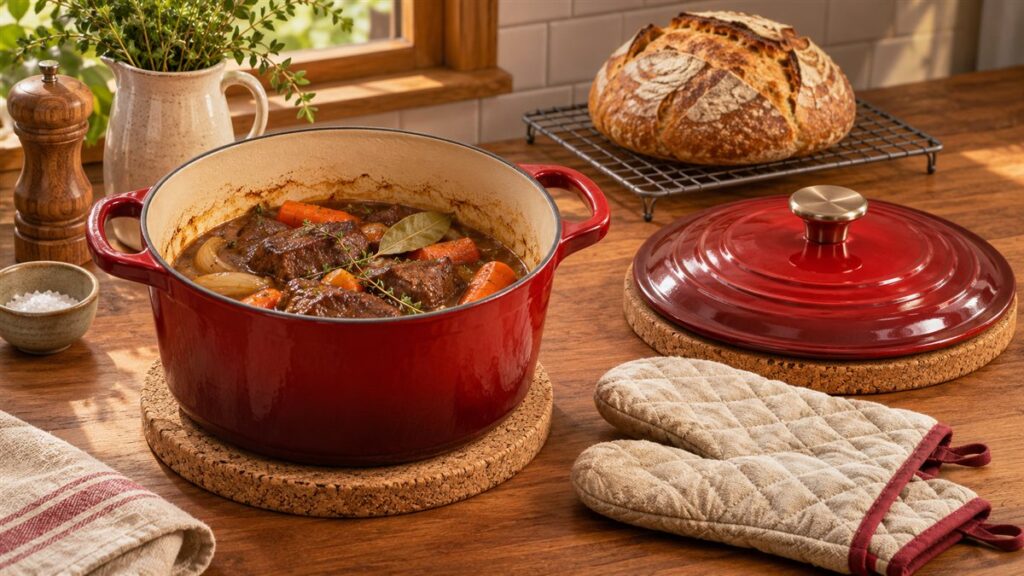
A Dutch oven is a heavy pot with a tight lid that goes from stove to oven. It excels at stews, braises, soups and even bread. The basic idea is to brown food on the stove, add liquid, cover, and let gentle heat do the rest.
Know Your Pot
Dutch ovens are made from enameled cast iron, bare cast iron and sometimes other metals. Enameled pots need non-scratch tools and no sudden temperature swings. Bare iron needs seasoning and drying. Read the maker’s guide for oven temperature limits and for the lid knob, since some knobs have lower heat limits than the pot.
A Basic Braise in Six Steps
- Warm the pot over medium heat for a few minutes. Heavy pots heat slowly.
- Add a little oil and brown the meat in batches, without crowding.
- Remove the meat, then cook onions and other vegetables in the same pot.
- Pour in a splash of stock or wine and scrape up the browned bits.
- Return the meat, add liquid until it comes partway up the food, and cover.
- Move the pot to a moderate oven and cook until tender, checking occasionally.
Other Ways to Use It
- Bread: Many bakers preheat the pot, drop in the dough and bake with the lid on, which traps steam for a crisp crust. Follow a trusted recipe and maker’s heat limits.
- Soup and chili: The thick walls hold steady heat, so there is less scorching.
- Deep frying: Some cooks do this, but hot oil is hazardous. Use plenty of headroom, a thermometer and never leave it unattended, and follow the maker’s manual.
- Rice and beans: The tight lid keeps moisture in.
Handling a Heavy, Hot Pot
Use two hands and thick mitts, including on the lid and knob. Set the pot on a trivet, not a bare counter. Open the lid away from your face to avoid steam. Let it cool before washing and avoid sliding it across glass cooktops.
Temperature control is the main skill. A Dutch oven holds heat for a long time, so lower the burner a little sooner than you expect and avoid cranking the heat to high. In the oven, most braises do well at a moderate setting for a few hours, but follow your recipe and the maker’s limits. Check the liquid level partway through and add a little stock if it has reduced too much. When the meat falls apart easily with a fork, it is ready. Let the pot rest for a few minutes before serving, and skim fat from the surface if you prefer a lighter sauce.
FAQ
What size should I buy?
A pot that holds around five to six quarts is common for a family, but choose by how much you cook.
Do I need to season enameled cast iron?
No. Follow the maker’s care guide.
The Short Version
Brown on the stove, add liquid, cover and finish in the oven. Respect the weight and heat, and follow the maker’s temperature limits.