Disclosure: As an Amazon Associate, topratedkitchenware.com earns from qualifying purchases. Links on this page are affiliate links; they cost you nothing extra. Prices and availability change often, so check the current Amazon listing before you buy.
Ask most home cooks is a roasting pan worth it and the answer depends on one honest question: how do you actually roast? This guide works through is a roasting pan worth it from every side, the meals it genuinely improves, the households it quietly fails, the substitutes that cover occasional roasts for almost nothing, and the safety and storage realities that glossy product pages never mention, so you can decide with your own habits, your own oven and your own cupboard in view.
Is a Roasting Pan Worth It? The Short Answer
Worth it if you roast whole birds or large joints at least monthly, you make pan gravy and care that it tastes like the roast itself, you cook vegetables under the meat and want them bathed in drippings rather than steamed, and you have storage for a large pan without resenting it. Not worth it if your roasting life is a holiday bird once a year, you never make gravy, your kitchen storage is already at war with itself, or lifting a heavy loaded pan is difficult for you, in which case lighter substitutes are not a compromise but the correct tool.
In this guide
Key Takeaways
A dedicated roasting pan improves three things at once: browning, because low sides let dry oven air reach the food; capacity for juices and vegetables, because real depth contains them safely; and gravy, because a hob-safe pan deglazes where the fond already is. It costs money, cupboard volume and lifting effort. Substitutes are genuinely good for occasional roasting. The decision is therefore about frequency and gravy, not about whether the pan itself works, because a well-made roaster plainly does. Safety favours the honest choice too: the pan you can lift confidently, with two dry mitts and a clear landing space planned, is the pan that belongs in your kitchen.
What You Actually Get
A roasting pan earns its place in the oven through geometry as much as through metal. The low, straight sides let hot air wash over the surface of a bird or a joint instead of steaming it, which is why vegetables tucked underneath caramelise rather than stew. A pan that is too deep behaves like a braiser and traps moisture against the skin, while a pan that is too shallow lets juices run to the corners and scorch before they can become gravy. When you judge any roaster, picture the food sitting in it with air moving freely on every side, and picture the pan moving from oven to hob without flexing, because that journey, repeated over years of Sunday roasts and holiday birds, is where cheap pans quietly fail and good pans quietly justify themselves.
Weight is the first safety fact of roasting, and it arrives before flavour ever does. A large bird, its stuffing, the vegetables underneath and the pan itself add up to a load that surprises people the first time they lift it with oven mitts on. Always use two dry mitts, because a damp mitt conducts heat almost instantly, and always clear the landing space before you open the oven door, so the pan travels a short, planned distance to a trivet or a cool hob rather than hovering while you hunt for room. Bend your knees and lift with your legs, keep the pan level so hot fat does not slosh toward one handle, and never carry a resting bird separately across the kitchen when it can rest safely in the pan where it roasted.
Hot fat changes how you move around a roasting pan. Drippings splatter during basting and again during transfer, and they land on skin, on the hob and on the floor where they become a slip hazard as well as a burn risk. Work with a long-handled baster or a spoon held low over the pan, tilt the bird inside the pan to drain its cavity juices back into the roasting juices rather than lifting it dripping over the counter, and wipe any spill on the floor straight away. If you pour juices into a jug for gravy, pour away from your body, slowly, with the pan steadied by a second mitt on the far handle, and let the pan cool on the hob before it goes anywhere near the sink.
The rack question divides roasting cooks more than almost any other. A rack lifts the bird so air circulates underneath and the bottom does not sit in its own juices, which helps the skin and keeps the underside from braising. The counterargument is just as real: vegetables roasted directly under a bird, with no rack, bathe in the drippings and become the best part of the meal for many households. Neither answer is wrong, and a good roasting pan supports both styles, with a rack that sits securely when you want it and removes cleanly when you do not. What matters is that the rack handles do not foul the oven walls and that the whole assembly still slides in and out without tipping.
The Real Costs Beyond Money
Stovetop performance is where a roasting pan stops being a tray and becomes a gravy-making tool. The moment the bird comes out to rest, the pan holds browned fond, rendered fat and roasting juices that are the entire foundation of a proper pan gravy. A pan with a thick, flat base sits steadily on the hob, heats evenly across two burners and lets you deglaze without hot spots scorching the flour. Thin bases warp under that direct heat, rock on the burner and brown the roux in patches. If you make gravy even a few times a year, judge roasters by their bases as much as by their oven manners, because the last ten minutes at the hob decide whether the meal tastes finished.
Handles decide whether a heavy pan feels manageable or frightening. Look for handles that rise enough to admit a mitt-clad hand without your knuckles brushing the pan wall, that are riveted or welded with no play, and that angle so the load hangs naturally from your wrists rather than twisting them. Upright loop handles suit most cooks because they keep hands above the rim and away from the heat radiating off the sides. On a loaded pan, test your grip mentally at the worst moment: oven door open, heat rolling out, pan at its heaviest. If the handles would force a pinched, fingertips-only hold, the pan will feel unsafe no matter how beautifully it roasts, and you will dread using it.
Sizing a roasting pan is an exercise in honest measurement. Measure your oven interior, not the door opening, and leave clearance on every side for air and for your mitts. Then measure what you actually cook: a pan that swallows your largest holiday bird with room for vegetables is the right anchor size, while a pan bought for a once-a-decade giant roast will crowd your oven and your cupboard the rest of the year. Remember that manufacturers measure pans differently, sometimes at the rim and sometimes at the base, so compare cooking-surface dimensions where you can. A pan that fits your oven, your biggest regular roast and your storage shelf beats a theoretically perfect pan that fails any one of those three tests.
Stainless steel remains the default roasting material for good reasons. It tolerates high oven heat, moves to the hob without complaint, shrugs off metal utensils, deglazes cleanly and shows fond clearly because its pale surface contrasts with browning. Its weaknesses are equally predictable: food can stick during the first minutes of searing, and a single-ply pan heats unevenly. That is why better stainless roasters bond an aluminium or copper core through the base, spreading heat so juices reduce evenly instead of burning in the middle. Stainless also cleans without ceremony, surviving soaking, scrubbing and the dishwasher, which matters on the evenings when the roast was wonderful and the washing up is not.
Who It Pays Off For
The Monthly Roaster
If a whole chicken, a leg of lamb or a pork shoulder goes into your oven most weeks, a dedicated pan stops being a luxury and becomes infrastructure. You feel the even browning, the dependable gravy and the calm, contained handling every single time, and the pan’s cost per use falls to nearly nothing within the first year. For this household the only real question is material and weight, and the detailed comparisons in our companion guides will help more than further debate about whether to own one at all.
The Holiday Host Who Cooks All Year
Some households roast modestly through the year and then produce one enormous, gravy-centred feast where everything must work at once. For them the pan earns its shelf space in a single afternoon: capacity for the big bird, depth for a mountain of vegetables, a base that turns a pint of pan juices into gravy on the hob while the bird rests in the pan beside it. The rest of the year it handles gratins, big vegetable trays and water baths, which keeps it familiar in the hand rather than a stranger dragged out under pressure.
The Gravy Devotee
For the cook who believes a roast without gravy is an unfinished sentence, the roasting pan is worth it almost regardless of frequency, because no substitute deglazes like a proper hob-safe roaster. The fond is the flavour, the pan is where the fond lives, and every transfer to another vessel leaves some of it behind. If that sentence describes your cooking, buy the pan with the best base you can comfortably lift, learn the resting and deglazing routine in this guide, and the question answers itself at the first holiday meal.
Enameled cast iron roasts with a completely different temperament. The heavy core holds heat so steadily that oven temperature swings barely register, and the enamel surface releases fond beautifully for gravy while looking handsome enough to carry the meal’s centrepiece to the table. The trade-offs are weight and care. A loaded enameled roaster is the heaviest lift in this category, enamel can chip if knocked against oven racks or dropped utensils, and the pan asks to be heated gradually rather than blasted from cold onto fierce direct heat. Cooks who roast often, serve at the table and value even heat above easy lifting tend to love these pans for decades, because nothing else browns quite so calmly.
Aluminium roasters sit at the practical end of the market. Thick-gauge aluminium heats quickly and evenly, weighs little even in large sizes and costs less than clad stainless or enameled iron, which is why so many dependable mid-range roasters use it, often with a nonstick interior. The cautions are real but manageable: bare aluminium can react with long, acidic braises, nonstick coatings have a finite life and dislike metal tools and broiler-level heat, and lighter pans flex more under a heavy bird. For cooks who roast a handful of times a year and prioritise an easy lift and easy cleaning, a well-made aluminium roaster is a rational, satisfying choice rather than a compromise to apologise for.
Who Should Skip It
The Once-a-Year Roaster
If the whole bird appears once a year and vanishes, be honest: a doubled disposable foil pan on a supporting sheet pan roasts it perfectly well, produces happy eaters and goes in the recycling afterwards. There is no gravy pan, true, but gravy from stock and a knob of the roasting juices whisked in a saucepan satisfies most tables. Storage stays free, lifting stays light, and the budget can go toward ingredients, which improve that single meal far more than metallurgy does.
The Small-Space, Small-Household Cook
Two-person households roasting small chickens and joints often find a large oven-safe skillet or a Dutch oven already in the cupboard does the entire job, with better storage manners. A full-size roaster in a small kitchen becomes the pan that lives on top of the fridge and gets used under protest. If that picture is familiar, skip the dedicated pan, roast in what you own, and revisit the question only if your household or your hosting grows into it.
Cleaning a roasting pan should be planned before the roast, not negotiated after it. The single best habit is deglazing: while the pan is still warm, the gravy-making step lifts nearly everything that would otherwise bake on. What remains yields to a soak in hot water while you eat, followed by a non-scratch scrubber for stainless and enamel, and a soft sponge for nonstick. Scorched corners respond to simmering water in the pan on the hob for a few minutes, which loosens the residue without harsh chemicals. A pan that cleans this way gets used again next week; a pan that demands an hour of penance gets quietly replaced by a sheet pan, and the whole purchase unravels.
Resting the bird in the pan is one of those small decisions that improves both safety and eating. Lifting a hot, slippery roast onto a separate board means two risky transfers, a trail of juices and a carving surface swimming in liquid. Resting in the pan keeps every drop of juice where the gravy can use it, keeps the roast stable, and gives you one controlled move at the end, ideally with the pan on a trivet beside the board so slices transfer a few inches, not across the room. Tent loosely with foil rather than wrapping tightly, which would steam the skin you worked to crisp, and use the resting window to finish the gravy in the same pan on the hob.
Strengths and Trade-Offs of Owning One
Strengths: superior browning from low sides and dry airflow; real depth for vegetables, juices and safe handling; genuine pan gravy made where the fond formed. Trade-offs: significant storage volume for a single-purpose shape; a loaded pan is heavy and full of hot fat, demanding two dry mitts, a cleared landing space and a legs-driven lift; quality examples sit in mid to premium tiers, so the purchase should match real roasting frequency.
Alternatives to Consider
Before the named pans, honour the substitutes: a rimmed sheet pan plus rack for regular modest roasts, and the doubled foil pan for the annual giant. When a dedicated pan does win, these are the models our testing of the category keeps returning to, presented prose-only here while verification is pending, each with its pick slot ready for confirmed listing details at publication.
All-Clad Stainless Steel Roaster with Rack
Best for: cooks who roast often and make pan gravy every single time
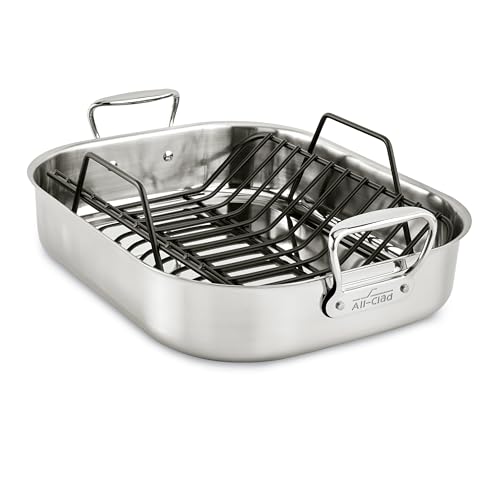
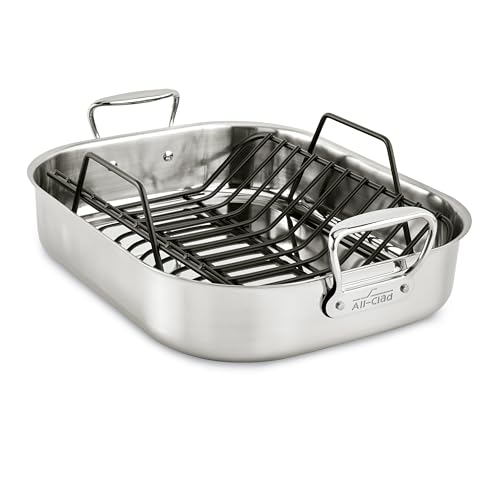
The All-Clad roaster represents the clad stainless archetype at its most complete: a bonded base that behaves calmly across two burners, upright handles that admit a proper mitt grip, and a rack that sits securely for birds yet removes cleanly for vegetable-under roasting. In the oven it browns evenly because the core spreads heat into the corners where juices otherwise scorch, and on the hob it deglazes into gravy without the rocking or hot-spotting that betrays thinner pans. It asks for no special care beyond normal stainless habits, tolerates metal tools, and is built on the assumption that it will still be working in several decades, which is exactly the ownership pattern that makes a premium tier sensible.
Not suited for: anyone who struggles with heavy lifts, since clad stainless plus a large bird is a serious two-handed carry
Tier positioning: premium. Check price on Amazon when listings are linked at publication.

Cuisinart Chef’s Classic Stainless Roaster
Best for: households wanting genuine stainless, hob-friendly roasting without entering the premium tier
The Cuisinart Chef’s Classic roaster is the sensible stainless answer for most kitchens: riveted handles, a fitted rack and a base substantial enough for stovetop gravy in ordinary home conditions. It roasts evenly for birds and joints in the sizes most families actually cook, cleans without drama, and stores more easily than the heaviest premium pans. Its compromises live at the extremes, very large birds and very aggressive two-burner deglazing, where costlier clad pans feel calmer, but for the weekly and holiday pattern of a typical household it covers the brief honestly and has done so, in various production years, for a very long time.
Not suited for: cooks chasing the absolute heaviest base, since this class trades some mass for easier handling and price position
Tier positioning: mid-range. Check price on Amazon when listings are linked at publication.

Calphalon Contemporary Stainless Roaster
Best for: cooks who value a slightly lighter stainless lift and clean, modern handling
The Calphalon Contemporary roaster pairs stainless construction with a noticeably approachable weight, which matters more than specification sheets admit when the pan is loaded and the oven is hot. Its handles are shaped for a confident mitt grip, its rack handles the standard bird-and-vegetables pattern well, and its base is flat and stable enough for straightforward pan sauces and gravy. It sits in the mid-range tier while feeling a step more polished than basic stainless, and for households that roast monthly rather than weekly it may be the sweet spot where performance, handling and tier all agree with each other.
Not suited for: traditionalists who want the maximum possible base weight for marathon gravy sessions
Tier positioning: mid-range. Check price on Amazon when listings are linked at publication.

Le Creuset Signature Enameled Cast Iron Roaster
Best for: roasters who serve at the table and prize the steadiest, gentlest browning of all
The Le Creuset Signature roaster brings enameled cast iron’s famous heat steadiness to the roasting job: once hot, it holds its temperature through door openings and cold vegetable additions, browning with a calm, even hand that thin pans cannot imitate. The enamel releases fond generously for gravy, though the pan belongs on gentler hob heat rather than a fierce blast, and it travels to the table looking like the occasion it is cooking for. Its demands are weight and respect: lift it with two dry mitts and full attention, avoid knocking the enamel, and heat it gradually. Cooks who accept those terms tend to keep this pan for life.
Not suited for: anyone for whom total loaded weight is a concern, because enameled iron is the heaviest lift in this roundup by a clear margin
Tier positioning: premium. Check price on Amazon when listings are linked at publication.
Viking Stainless Steel Roasting Pan
Best for: frequent roasters who want heavy-gauge stainless presence and confident two-burner performance
The Viking roasting pan is built for cooks who like their stainless substantial: a heavy, flat base that sits on the hob like it means it, strong handles that inspire confidence under load, and an interior that takes searing, deglazing and scrubbing in stride. It suits larger roasts and ambitious gravy making, and its rack arrangement handles the classic holiday pattern without flex or drama. As with all premium stainless, the value case depends on frequency; in a kitchen that roasts most weeks, this is a buy-once tool, while occasional roasters will get the same meals from a mid-range pan and a lighter lift.
Not suited for: small households roasting small birds, who may find its scale and weight more pan than the job requires
Tier positioning: premium. Check price on Amazon when listings are linked at publication.
How to Get the Most Value If You Buy
If glass or ceramic roasters enter your thinking, thermal shock is the rule that governs them. These materials can crack or shatter when a hot dish meets a cold surface, cold liquid or a wet counter, so they must rest on a dry trivet or wooden board, never straight onto stone or metal, and cold liquid should never be added to a screaming-hot glass dish. They also do not belong on the hob, which removes the pan-gravy option entirely. Many cooks happily accept those limits for casseroles and gratins, but for a large roast with gravy ambitions, metal pans remain the safer, more flexible tool, and it is worth being honest about that before a beautiful ceramic dish disappoints on the biggest cooking day of the year.
Storage is the hidden cost nobody photographs. A large roasting pan with upright handles occupies serious cupboard volume, and if it nests with nothing and blocks the pans you use daily, it will generate low-level resentment fifty weeks a year. Measure the shelf or drawer before you buy, consider whether the rack stores inside the pan, and think about whether the pan can double as a baking dish for big gratins, a water bath for cheesecakes or a serving vessel for a crowd-sized salad in summer. Pans that earn secondary jobs survive cupboard purges; single-purpose giants survive only if the roasts they produce are genuinely memorable, which is a fair standard to hold them to.
The honest alternative to a dedicated roaster deserves respect. A rimmed sheet pan with a wire rack handles a spatchcocked chicken, a rack of lamb or a modest turkey breast perfectly well, and a disposable foil pan, doubled for strength and set on a sheet pan for support, covers the once-a-year whole bird with zero washing up. Plenty of excellent roasts have come off both. What a dedicated pan adds is depth for vegetables and juices, hob-worthy gravy making, stability under heavy loads and a tool that improves with familiarity. Whether that addition matters depends entirely on how often you roast large things and how much you care about gravy, which is why this category rewards honesty about your own habits more than almost any other.
Buying used or inheriting a roasting pan is one of the smartest routes into this category, because good roasters are nearly indestructible and the secondhand market is full of heavy stainless and enameled pans from households that roasted less than they expected. Inspect for a flat base that does not rock, handles with no play, enamel without cracks that reach the iron, and racks that sit level. Avoid warped pans, because warping only worsens under hob heat, and avoid damaged nonstick, which cannot be restored. A sound used pan, cleaned thoroughly and put straight to work, delivers most of the value of a new premium pan, and its first roast in your kitchen continues a working life that may already span decades.
The Decision Checklist
Answer honestly: Do you roast something large at least monthly? Do you make, or want to make, real pan gravy? Do vegetables roast under your meat? Can you store a large pan without daily irritation? Can you lift a loaded pan confidently with two mitts? Would the pan take second jobs like gratins and water baths? Four or more yes answers mean a dedicated roaster will pay you back. Two or fewer mean the substitutes will serve you better, and there is no shame in that answer, only in buying against it.
Field Notes From Our Reviewing
Resting the bird in the pan is one of those small decisions that improves both safety and eating. Lifting a hot, slippery roast onto a separate board means two risky transfers, a trail of juices and a carving surface swimming in liquid. Resting in the pan keeps every drop of juice where the gravy can use it, keeps the roast stable, and gives you one controlled move at the end, ideally with the pan on a trivet beside the board so slices transfer a few inches, not across the room. Tent loosely with foil rather than wrapping tightly, which would steam the skin you worked to crisp, and use the resting window to finish the gravy in the same pan on the hob.
If glass or ceramic roasters enter your thinking, thermal shock is the rule that governs them. These materials can crack or shatter when a hot dish meets a cold surface, cold liquid or a wet counter, so they must rest on a dry trivet or wooden board, never straight onto stone or metal, and cold liquid should never be added to a screaming-hot glass dish. They also do not belong on the hob, which removes the pan-gravy option entirely. Many cooks happily accept those limits for casseroles and gratins, but for a large roast with gravy ambitions, metal pans remain the safer, more flexible tool, and it is worth being honest about that before a beautiful ceramic dish disappoints on the biggest cooking day of the year.
Field Notes From Our Reviewing
Storage is the hidden cost nobody photographs. A large roasting pan with upright handles occupies serious cupboard volume, and if it nests with nothing and blocks the pans you use daily, it will generate low-level resentment fifty weeks a year. Measure the shelf or drawer before you buy, consider whether the rack stores inside the pan, and think about whether the pan can double as a baking dish for big gratins, a water bath for cheesecakes or a serving vessel for a crowd-sized salad in summer. Pans that earn secondary jobs survive cupboard purges; single-purpose giants survive only if the roasts they produce are genuinely memorable, which is a fair standard to hold them to.
The honest alternative to a dedicated roaster deserves respect. A rimmed sheet pan with a wire rack handles a spatchcocked chicken, a rack of lamb or a modest turkey breast perfectly well, and a disposable foil pan, doubled for strength and set on a sheet pan for support, covers the once-a-year whole bird with zero washing up. Plenty of excellent roasts have come off both. What a dedicated pan adds is depth for vegetables and juices, hob-worthy gravy making, stability under heavy loads and a tool that improves with familiarity. Whether that addition matters depends entirely on how often you roast large things and how much you care about gravy, which is why this category rewards honesty about your own habits more than almost any other.
Field Notes From Our Reviewing
Buying used or inheriting a roasting pan is one of the smartest routes into this category, because good roasters are nearly indestructible and the secondhand market is full of heavy stainless and enameled pans from households that roasted less than they expected. Inspect for a flat base that does not rock, handles with no play, enamel without cracks that reach the iron, and racks that sit level. Avoid warped pans, because warping only worsens under hob heat, and avoid damaged nonstick, which cannot be restored. A sound used pan, cleaned thoroughly and put straight to work, delivers most of the value of a new premium pan, and its first roast in your kitchen continues a working life that may already span decades.
Oven position and preheating shape roasting results more than pan marketing ever will. Roast on the lower-middle rack so the top of the bird clears the upper element with room to spare, and preheat fully, because a pan entering a still-climbing oven starts its work in steam rather than dry heat. If your oven runs hot at the back, rotate the pan once, halfway, using both mitts and a planned landing spot, rather than reaching in repeatedly. Resist opening the door to admire progress; every opening dumps the dry heat that browning depends on. A thermometer you trust, inserted in the thickest part of the thigh without touching bone, tells you more than any timer printed on a chart.
Field Notes From Our Reviewing
Trussing, seasoning and drying are the quiet techniques that let a good pan show what it can do. Dry skin, salted ahead when time allows, browns faster and crisper in the dry heat a roasting pan provides. Trussing keeps wings and legs tucked so they do not overcook or catch on the rack, and a light coating of oil or butter on the skin encourages even colour. Vegetables underneath should be cut in substantial pieces, because small dice will carbonise in the drippings over a long roast, and they should sit in a single layer where possible so they roast rather than steam. None of this requires talent, only sequence: dry, season, arrange, then let the pan and the oven do the heavy work undisturbed.
Gravy is the roasting pan’s closing argument, so it deserves a method rather than a hope. Pour off all but a spoonful or two of fat, keeping every browned bit, then set the pan over medium heat across two burners if it spans them. Whisk in flour to match the fat and cook the paste until it smells nutty and turns the colour of weak tea. Add warm stock gradually, whisking constantly, scraping the fond loose as the liquid simmers, and let it bubble gently until it coats a spoon. Season at the end, because reduction concentrates salt, and strain only if you dislike rustic texture. Every step happens in the pan, which is precisely the capability you paid for.
Field Notes From Our Reviewing
A roasting pan also works far beyond whole birds. It is the natural vessel for a bone-in pork shoulder, a leg of lamb, a whole side of salmon for a crowd, layered potatoes for a gratin at scale, and a double batch of roasted vegetables when family descends. In summer it becomes a marinating tray and a serving platter; in baking season it is the water bath that keeps cheesecakes and custards gentle. This second life matters to the value calculation, because a pan used monthly across several jobs justifies its shelf space in a way a pan used twice a year cannot. When you evaluate any roaster, list the jobs you would actually give it beyond the holiday bird before you decide what it is worth to you.
Longevity separates the roasting pan market into two honest halves. Clad stainless and enameled cast iron pans are effectively permanent: they survive decades, tolerate repairs, and often carry warranties measured in lifetimes rather than seasons. Coated aluminium pans are consumables by comparison, delivering excellent service for a period of years before the coating tires, at which point the pan is done. Neither model is dishonest, but they should be priced and judged differently in your head. Paying a premium tier for permanence is rational if you roast weekly; paying it for a pan that roasts twice a year is sentiment, and the mid-range pan plus a good thermometer will serve that household better.
Field Notes From Our Reviewing
Finally, judge a roasting pan by the cook you are, not the cook in the advertisement. If you roast for two on Sundays, a smaller pan that heats evenly and cleans easily will delight you weekly. If you host the big family meal every year, capacity, handles and hob performance become the whole decision. If mobility or grip strength is a consideration, weight outranks every other specification, and a lighter pan you can lift confidently is safer and better than a heavier pan with superior metallurgy. The best roaster is the one that comes out of the cupboard without negotiation, goes into the oven without anxiety and comes to the table, one way or another, having made the meal calmer as well as better.
A roasting pan earns its place in the oven through geometry as much as through metal. The low, straight sides let hot air wash over the surface of a bird or a joint instead of steaming it, which is why vegetables tucked underneath caramelise rather than stew. A pan that is too deep behaves like a braiser and traps moisture against the skin, while a pan that is too shallow lets juices run to the corners and scorch before they can become gravy. When you judge any roaster, picture the food sitting in it with air moving freely on every side, and picture the pan moving from oven to hob without flexing, because that journey, repeated over years of Sunday roasts and holiday birds, is where cheap pans quietly fail and good pans quietly justify themselves.
Field Notes From Our Reviewing
Weight is the first safety fact of roasting, and it arrives before flavour ever does. A large bird, its stuffing, the vegetables underneath and the pan itself add up to a load that surprises people the first time they lift it with oven mitts on. Always use two dry mitts, because a damp mitt conducts heat almost instantly, and always clear the landing space before you open the oven door, so the pan travels a short, planned distance to a trivet or a cool hob rather than hovering while you hunt for room. Bend your knees and lift with your legs, keep the pan level so hot fat does not slosh toward one handle, and never carry a resting bird separately across the kitchen when it can rest safely in the pan where it roasted.
Hot fat changes how you move around a roasting pan. Drippings splatter during basting and again during transfer, and they land on skin, on the hob and on the floor where they become a slip hazard as well as a burn risk. Work with a long-handled baster or a spoon held low over the pan, tilt the bird inside the pan to drain its cavity juices back into the roasting juices rather than lifting it dripping over the counter, and wipe any spill on the floor straight away. If you pour juices into a jug for gravy, pour away from your body, slowly, with the pan steadied by a second mitt on the far handle, and let the pan cool on the hob before it goes anywhere near the sink.
Field Notes From Our Reviewing
The rack question divides roasting cooks more than almost any other. A rack lifts the bird so air circulates underneath and the bottom does not sit in its own juices, which helps the skin and keeps the underside from braising. The counterargument is just as real: vegetables roasted directly under a bird, with no rack, bathe in the drippings and become the best part of the meal for many households. Neither answer is wrong, and a good roasting pan supports both styles, with a rack that sits securely when you want it and removes cleanly when you do not. What matters is that the rack handles do not foul the oven walls and that the whole assembly still slides in and out without tipping.
Stovetop performance is where a roasting pan stops being a tray and becomes a gravy-making tool. The moment the bird comes out to rest, the pan holds browned fond, rendered fat and roasting juices that are the entire foundation of a proper pan gravy. A pan with a thick, flat base sits steadily on the hob, heats evenly across two burners and lets you deglaze without hot spots scorching the flour. Thin bases warp under that direct heat, rock on the burner and brown the roux in patches. If you make gravy even a few times a year, judge roasters by their bases as much as by their oven manners, because the last ten minutes at the hob decide whether the meal tastes finished.
Roasting Pan: The Break-Even Test: When the Purchase Pays Off
Start with how often a {p} must actually be used before it earns its counter or cupboard space. Most coverage of a roasting pan concentrates on the first week of ownership, yet the decisions that matter most tend to surface later, once the roasting pan has to earn its place in an ordinary weekday routine rather than a carefully staged first attempt. Write down the three jobs you expect it to do most often, in the order you actually do them, and judge every claim you read against that short personal list instead of against a generic ideal.
Maintenance decides how long the good results last. Set a simple rhythm: a quick wipe or rinse after each use, a deeper clean on a fixed day, and a periodic check of the parts that move, seal or bear weight. A roasting pan that needs fiddly disassembly for basic care will be cleaned less often, and performance drifts long before anything actually breaks. Prefer designs where the parts that get dirtiest are the parts that are easiest to reach, and be honest with yourself about which cleaning steps you will genuinely keep up.
Measure before you commit. Note the footprint, the clearance above and behind the spot where the roasting pan will live, and the route you will carry it by when it is hot, full or awkward. A roasting pan that technically fits but blocks a cupboard door, crowds a neighbouring appliance or has to be dragged across a worktop every time will quietly fall out of use, whatever its merits on paper. In the Kitchen Cookware category especially, a few centimetres of clearance and a sensible storage plan separate a daily tool from a bulky regret.
Finally, plan the first fortnight deliberately. Use the roasting pan for one familiar job first, so you have a baseline you trust, then introduce the harder cases one at a time and note what changes. Small adjustments to arrangement, timing, quantity or preparation usually close most of the gap between disappointing first results and the performance the design is capable of. That short learning period is also the fairest test of the break-even calculation: if the routine has not settled by the end of it, the mismatch is real, and it is better to know while returning or exchanging is still straightforward.
Troubleshooting is easier when you expect the usual failure points. With any roasting pan, the recurring problems tend to cluster in the same places: uneven results from overloading or poor arrangement, wear showing first on the parts handled most often, and small annoyances with lids, seals, handles, controls or fittings that only appear after repeated use. Before buying, look for whether those wear parts can be cleaned properly, replaced or worked around, and whether the instructions address them directly rather than pretending they never happen.
Frequently Asked Questions
Is a roasting pan worth it for a small household?
It can be, if the household roasts whole chickens, small joints or tray-style dinners regularly and values pan gravy. A smaller roaster doubles as a baking and gratin dish, which spreads its cost across many jobs. If roasting happens only a few times a year and gravy is not part of the ritual, a rimmed sheet pan with a rack covers the need honestly, and the money is better spent on a reliable thermometer and a good carving knife instead.
What can I use instead of a roasting pan?
A rimmed sheet pan with a wire rack is the strongest substitute and handles spatchcocked birds and modest roasts well. A disposable foil pan, doubled and supported on a sheet pan, covers an occasional very large bird with no washing up. A large oven-safe skillet or a Dutch oven without its lid works for smaller joints. What substitutes cannot do is hold deep vegetables and juices safely or move to the hob for proper pan gravy, which is the dedicated pan’s real advantage.
How often do I need to roast to justify a dedicated pan?
There is no magic number, but a useful test is whether you roast something large at least once a month, or host a major roast-centred meal where gravy and vegetables matter every year. Monthly roasters feel the benefit constantly. Annual roasters should weigh storage honestly: a pan that blocks the cupboard for fifty weeks must produce a genuinely better single meal, and for many households the foil-pan route passes that test more honestly.
Does a roasting pan make better gravy than alternatives?
Yes, when it is hob-safe with a flat, substantial base, because the fond, fat and juices are already in the vessel that goes onto the heat, so nothing is lost in transfer and the deglazing happens where the browning happened. Sheet pans can be deglazed too but their shallow rims make whisking risky with hot liquid, and foil pans cannot go on the hob at all. If gravy is central to your roasts, this single capability is the strongest argument for owning the dedicated pan.
Is a heavy pan or a light pan better value?
It depends on the cook. Heavy clad or enameled pans brown more evenly and last effectively forever, which is value for frequent roasters. Lighter stainless or aluminium pans are easier and safer to lift when loaded, clean quickly and cost less in tier terms, which is value for occasional roasters or anyone mindful of grip and mobility. The wrong choice in either direction, a heavy pan you dread lifting or a flimsy pan that warps on the hob, is the only genuinely bad value here.
Should I buy a roasting pan or a roaster oven instead?
They solve different problems. A roasting pan improves what your existing oven already does and adds hob gravy making. A countertop roaster oven frees the main oven during huge meals and handles very large birds, but takes counter space, cannot make stovetop gravy in the same way and earns its keep only a few days a year for most homes. Households short on oven space at holidays lean roaster oven; households who roast year-round lean pan, and our linked guides explore both pieces of equipment in depth.