Disclosure: As an Amazon Associate, topratedkitchenware.com earns from qualifying purchases. Links on this page are affiliate links; they cost you nothing extra. Prices and availability change often, so check the current Amazon listing before you buy.
So, is a vacuum sealer worth it — for your kitchen, with your habits? The short answer: worth it if you buy food in quantities larger than a single meal, freeze regularly, cook sous vide, or watch opened cheese and produce die in the refrigerator. Not worth it if you shop daily in small amounts, rarely freeze anything, and know the machine would live in a cupboard. This guide prices that answer honestly — in money, time, space and rescued food — so you can decide with your eyes open.
Key Takeaways
- Worth it if: you bulk-buy, batch-cook, freeze often or cook sous vide.
- Not worth it if: you rarely freeze and shop little and often.
- The real costs are bags, counter space and a small learning curve — not just the machine.
- Value arrives through habits: portioning, labelling and rotating stock.
- A sealer preserves quality; it never replaces refrigeration or safe handling.
In this guide
What You Actually Get
Why Air Is the Enemy of Stored Food
Almost everything that goes wrong with stored food involves air or moisture moving where it should not. Oxygen feeds the oxidation that turns fats rancid and fades colour and flavour, it lets freezer burn bloom across the surface of meat as moisture escapes into cold dry air, and it gives aerobic microbes the atmosphere they prefer. A vacuum sealer attacks that single variable directly: pull most of the air out of the package, seal the opening with heat, and the food inside lives in a smaller, quieter, more stable world than any zip bag or wrapped tray can offer it.
Notice the word most. A home vacuum sealer does not create a perfect vacuum, and it does not need to. The practical gains — slower oxidation, far less freezer burn, no mingling of odours between the fish and the butter — arrive well before perfection. Understanding that a sealer is an air-management tool, rather than a magic preservation chamber, is what separates owners who get years of value from owners who expected miracles and blamed the machine when biology carried on being biology.
Freezer Burn, Explained Honestly
Freezer burn is not a safety catastrophe; it is a quality collapse. When food sits in a freezer inside a loose package, moisture migrates out of the food and into the surrounding air, leaving pale, dry, leathery patches that taste like the freezer itself. The food remains safe to eat, but nobody wants to eat it, and in real kitchens that means it eventually gets thrown away — the most expensive outcome of all. Tight vacuum packaging interrupts the migration by leaving almost no air for the moisture to escape into, which is why properly sealed meat emerges months later looking like meat instead of archaeology.
The catch is that the seal must be genuinely tight and the bag genuinely intact. A wrinkle across the seal line, a fleck of food in the seam, or a pinhole from a sharp bone edge can quietly reintroduce air, and the freezer will do the rest over the following weeks. This is why experienced sealers obsess less about the machine and more about the seam: clean, dry, flat sealing surfaces are the unglamorous secret behind every success story in this category.
Bulk Buying and the Warehouse-Club Effect
The classic vacuum sealing story starts in a warehouse club car park. Meat, cheese and frozen goods are dramatically cheaper in family packs, but only if your household can actually use them before quality fades — and that conditional is where the sealer earns its shelf space. Dividing a bulk pack into dated, portioned, vacuum-sealed bags converts a perishable bargain into a private inventory: tonight’s dinner plus four future dinners, each protected from freezer burn and each thawing in exactly the quantity a recipe wants.
The discipline that makes this work is portioning with intent. Seal in the units you cook — two chicken breasts, a family stew quantity, a single steak for solo nights — rather than in the units you bought. Freeze the bags flat so they stack like files and thaw quickly in cold water. And keep a simple freezer list on the door, because a perfectly preserved bag you forget for a year is only a slower kind of waste. The sealer provides the packaging; the system around it provides the savings.
The Real Costs Beyond Money
The machine’s price is the smallest cost in this story, and it is the only one we will not quote — listings change constantly, and tiers matter more than figures. The honest ledger runs like this. Bags and rolls are a permanent consumables cost that scales with your enthusiasm. Counter or cupboard space is a real rent in a small kitchen. Learning takes a few sessions: your first month will include a crushed loaf and a leaky seam, and both are tuition. Sessions take time, too — a bulk shop now includes a sealing hour, pleasant for some households and a chore for others.
Set against that ledger, the returns are equally concrete: bulk prices unlocked, freezer burn largely abolished, leftovers that survive to become lunches, cheese that outlives its wrapper by weeks, and a freezer organised into meals rather than mysteries. The question is never whether the returns exist — they do — but whether your household generates enough of the situations that produce them. A family freezing weekly will harvest returns a daily-shopping single cook simply never encounters.
The Safety Reality Behind the Value Question
Start with the rule that governs everything else in this guide: vacuum sealing is a packaging method, not a preservation guarantee. Removing air slows some kinds of spoilage and protects food from freezer burn, but it does not sterilise food, it does not kill bacteria, and it does not make perishable food shelf-stable. A sealed bag of raw chicken is still raw chicken, with the same need for prompt, cold storage as the day you bought it.
That means the cold chain never becomes optional. Perishable foods — raw and cooked meats, seafood, soft cheeses, cooked vegetables, leftovers — must go straight into the refrigerator or freezer after sealing, exactly as they would without the bag. Treat the vacuum bag as armour against air and moisture, never as a substitute for refrigeration, and be especially careful with food left sitting on the counter while you seal the rest of a batch: work in small groups and return each finished bag to the cold promptly.
Raw meat demands its own hygiene discipline. Handle raw meat and poultry on a dedicated board, keep its juices away from ready-to-eat foods, and wash hands, boards, knives and counters after the raw work is done and before you touch cooked or fresh items. Seal raw proteins in their own session or at the end of the session, so their packaging never shares a surface with the salad vegetables you plan to seal next. Cross-contamination is invisible, which is precisely why the routine has to be automatic.
Two smaller rules protect you and the food. First, the sealing bar gets genuinely hot during a cycle — give it a moment to cool and avoid touching it right after a seal, particularly during long sessions when you are reaching across the machine repeatedly. Second, never reuse a bag that held raw meat, poultry or seafood, even if it looks clean after washing; the risk is not worth the saving, and bags that held dry goods or produce are the only candidates for any reuse at all, after thorough washing and drying.
Finally, label honestly and rotate stock. Write the contents and the sealing date on every bag, store new bags behind older ones, and when you thaw a sealed package, treat it like any other thawed food: refrigerate it, cook it within a sensible window, and never refreeze raw food that has sat out. Vacuum sealing buys time and quality inside a cold system that you still have to run properly — respect that partnership and it will serve you well for years.
Who It Pays Off For
The bulk-buying family is the textbook case: warehouse packs divided into dated portions, a chest freezer run like a pantry, savings harvested every single week. The batch-cooking meal prepper is the second: Sunday cooking sealed into flat, labelled portions that carry two weeks of lunches and emergency dinners. The hunter, angler or gardener is the third: seasonal abundance processed in a few big sessions that protect a year’s eating. If you recognised your household in any of those portraits, the verdict is rarely close.
Who Should Skip It
Skip it, without regret, if your shopping is daily and small, your freezer is a shoebox that mostly holds ice, and your leftovers are eaten the next day by design. Skip it if you know — honestly — that a cupboard appliance will stay in the cupboard, because an unused sealer is worth nothing at any price. And skip the premium tier, even as a keen user, if your sealing is light: the entry and mid tiers exist for you, and overspending on capacity you never call on is its own quiet waste.
Strengths and Trade-Offs of Owning One
Strengths: food keeps its quality far longer in the freezer; bulk buying becomes practical for ordinary households; sous vide and marinating join your repertoire; leftovers and opened packages stop dying quietly. Trade-offs: a permanent consumables bill; counter space surrendered; a learning curve measured in a few imperfect bags; and a tool that only pays while the habits around it — labelling, rotating, portioning — are actually practised. Neither list is a secret, and households that read both before buying are the ones still sealing happily in year three.
Alternatives to Consider
Before deciding, weigh the honest substitutes. Good rigid containers — see our guide to glass food storage containers for leftovers — handle refrigerator storage and liquids better than any bag. Quality freezer wrap and heavy freezer bags, used carefully with air pressed out by hand, cover light freezing needs at minimal cost. Dedicated dry-storage systems such as oxygen absorbers for food storage serve long-term pantry staples. A sealer beats each of these at its own game, but if your needs stop at one of theirs, their game may be all you need.
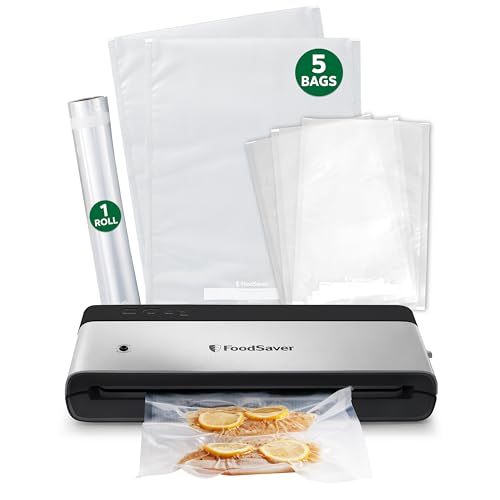
FoodSaver PowerVac — compact entry-to-mid countertop model
The FoodSaver PowerVac takes a different route to value: it shrinks the footprint. Designed to store more easily, including in a more upright position in many kitchens, it speaks to smaller households and tighter counters where a full-size sealer would live in a cupboard and quietly stop being used. Its tier is entry-to-mid, and the honest framing is that you trade some of the automation and heft of larger siblings for a machine you will actually leave within reach, which for real kitchens is often the trade that matters most.
Best for: households whose sealing habits match the compact entry-to-mid countertop model profile described above. Not suited for: buyers whose workload sits at the opposite extreme of that profile. This pick is presented prose-only in this draft, positioned in the compact tier by description rather than by any fixed price.
Geryon Vacuum Sealer — entry-tier compact model
The Geryon Vacuum Sealer represents the friendly on-ramp: an entry-tier, compact machine sold widely online, aimed at first-time sealers who want to try the habit without committing premium money or premium counter space. Its feature language leans on everyday modes for dry and moist foods and a simple one-button routine, which is exactly what a beginner needs — the first month with any sealer is about building the habit, and simple machines get used while complicated ones get studied and shelved.
Best for: households whose sealing habits match the entry-tier compact model profile described above. Not suited for: buyers whose workload sits at the opposite extreme of that profile. This pick is presented prose-only in this draft, positioned in the entry-tier tier by description rather than by any fixed price.

Weston Pro-2300 — heavy-duty premium countertop model
The Weston Pro-2300 is the heavyweight of this group, a wide, commercial-leaning countertop sealer from a brand rooted in game processing and serious home butchery. Everything about its prose profile is scale: it is built for long sessions, wide bags and households — or hunters and anglers — who process volume that would leave lighter machines hot, tired and waiting to cool down. It sits firmly at the premium tier, and it justifies that only if your workload genuinely resembles work: think seasonal harvests, whole-animal breakdowns and freezer-filling weekends.
Best for: households whose sealing habits match the heavy-duty premium countertop model profile described above. Not suited for: buyers whose workload sits at the opposite extreme of that profile. This pick is presented prose-only in this draft, positioned in the heavy-duty tier by description rather than by any fixed price.
How to Get the Most Value If You Buy
Meal Prep and the Sunday Batch
Meal preppers discovered vacuum sealing from the opposite direction: not bulk buying, but cooked food that must survive the week with its dignity intact. Sealed portions of grain bowls, soups, curries and roasted vegetables hold their texture and flavour in the refrigerator noticeably better than the same food in a loose container, and they freeze flat for the weeks when cooking simply will not happen. For households comparing storage systems, our notes on food storage containers for meal prep pair naturally with this guide — containers and vacuum bags solve different halves of the prep problem.
The prep-specific skills are portion honesty and liquid management. Seal the portion you will genuinely eat, not the portion that flatters your intentions, and give saucy dishes a brief pre-freeze or a gentler cycle so liquid stays in the bag instead of migrating to the seam. Label with the dish and the date, not just the date, because three identical amber bags of stew, curry and soup will defeat your memory by Wednesday. Preppers who build these habits find the sealer becomes the hinge of the whole Sunday routine.
Freezer Organisation: Making the System Pay
A freezer full of vacuum bags still needs a system, or it becomes a well-preserved mystery collection. Freeze bags flat on a tray before stacking, and they become files in a cabinet: visible, countable, quick to thaw. Group by protein and by month, keep the oldest at the front, and maintain the simplest possible inventory — a whiteboard, a note on the phone, anything you will actually update. Our wider notes on food storage bags compared cover the non-vacuum half of this world for the items that do not need the machine.
Rotation is where organisation turns into money. The point of extending freezer life is not to keep food forever; it is to use everything while it is still at its best, in a steady first-in, first-out flow. Schedule a monthly freezer meal built from the oldest bags, and the system audits itself. Households that do this describe a particular satisfaction — a freezer that behaves like a small, well-run shop — and it is available to anyone with a sealer, a marker pen and five honest minutes a week.
Cheese, Coffee and the Pantry Dividend
Not every sealing victory happens in the freezer. Hard and semi-hard cheeses are natural candidates: an opened block resealed after each use resists mould and drying far longer than the same block wrapped loosely, and the ritual takes under a minute once the machine lives on your counter. Coffee beans are another quiet win, portioned into week-sized bags that keep the bulk bag’s contents from going stale in the open air — grind fresh from a fresh bag and the difference is obvious in the cup.
The pantry list continues: nuts and seeds whose oils go rancid in open jars, dried fruit, baking supplies bought in quantity, even the emergency drawer of batteries and matches that campers seal against damp. Each of these is a small dividend rather than a headline saving, but dividends compound. Owners who think beyond meat — who see the sealer as a whole-pantry tool — are consistently the owners who report, a year in, that the machine earned its place many times over.
The Decision Checklist
Answer honestly, yes or no. Do you freeze food at least a few times a month? Do you throw away freezer-burned or forgotten food more often than you like? Would bulk packs save you real money if you could store them properly? Do you have a home — counter, drawer, shelf — where the machine would actually live? Would you use it for at least two jobs among freezing, sous vide, pantry and leftovers? Four or five yeses: buy with confidence, at the tier your workload suggests. Two or fewer: borrow, wait, or spend the money on containers instead.
Vacuum Sealer: The Break-Even Test: When the Purchase Pays Off
Start with how often a {p} must actually be used before it earns its counter or cupboard space. Most coverage of a vacuum sealer concentrates on the first week of ownership, yet the decisions that matter most tend to surface later, once the vacuum sealer has to earn its place in an ordinary weekday routine rather than a carefully staged first attempt. Write down the three jobs you expect it to do most often, in the order you actually do them, and judge every claim you read against that short personal list instead of against a generic ideal.
When you check listings such as FoodSaver PowerVac, Geryon Vacuum Sealer and Weston Pro-2300, use them as worked examples: run through the same checks below on each one in turn, so the comparison stays honest and like for like rather than based on whichever listing happens to shout loudest.
Measure before you commit. Note the footprint, the clearance above and behind the spot where the vacuum sealer will live, and the route you will carry it by when it is hot, full or awkward. A vacuum sealer that technically fits but blocks a cupboard door, crowds a neighbouring appliance or has to be dragged across a worktop every time will quietly fall out of use, whatever its merits on paper. In the Kitchen Appliances category especially, a few centimetres of clearance and a sensible storage plan separate a daily tool from a bulky regret.
Maintenance decides how long the good results last. Set a simple rhythm: a quick wipe or rinse after each use, a deeper clean on a fixed day, and a periodic check of the parts that move, seal or bear weight. A vacuum sealer that needs fiddly disassembly for basic care will be cleaned less often, and performance drifts long before anything actually breaks. Prefer designs where the parts that get dirtiest are the parts that are easiest to reach, and be honest with yourself about which cleaning steps you will genuinely keep up.
Troubleshooting is easier when you expect the usual failure points. With any vacuum sealer, the recurring problems tend to cluster in the same places: uneven results from overloading or poor arrangement, wear showing first on the parts handled most often, and small annoyances with lids, seals, handles, controls or fittings that only appear after repeated use. Before buying, look for whether those wear parts can be cleaned properly, replaced or worked around, and whether the instructions address them directly rather than pretending they never happen.
Work through a realistic scenario, not a best case. Picture the busiest version of the job: more people to serve, less time than planned, ingredients or materials that are slightly out of the ordinary, and a clean-up waiting at the end. Ask how the vacuum sealer behaves at that upper edge, because a model that only shines on a small, simple load will disappoint precisely when you need it most. If the honest answer is that you would split the job into batches or fall back on an older method, factor that into the decision now rather than discovering it later.
Finally, plan the first fortnight deliberately. Use the vacuum sealer for one familiar job first, so you have a baseline you trust, then introduce the harder cases one at a time and note what changes. Small adjustments to arrangement, timing, quantity or preparation usually close most of the gap between disappointing first results and the performance the design is capable of. That short learning period is also the fairest test of the break-even calculation: if the routine has not settled by the end of it, the mismatch is real, and it is better to know while returning or exchanging is still straightforward.
Frequently Asked Questions
How long does a vacuum sealer take to pay for itself?
It depends entirely on sealing volume, which is why honest guides avoid a universal figure. A household dividing bulk meat packs every week can recover an entry or mid-tier machine’s cost in rescued and discounted food within a season; a household sealing twice a month may take far longer, and a machine that stays boxed never pays at all. Count your own freezer waste for a month — that number, not any advertisement, is your payback calculator.
Will a vacuum sealer actually save me money on groceries?
It saves money through three channels: unlocking bulk prices, preventing freezer burn and spoilage waste, and making leftovers and batch cooking practical enough to replace bought meals. It loses money through bag costs and through food sealed, forgotten and eventually discarded anyway. Households with portioning and rotation habits come out clearly ahead; households without them buy an expensive way to delay the bin. The machine amplifies your system, good or bad.
Is a vacuum sealer worth it for a small household?
Often, yes — sometimes more than for a large one. Solo cooks and couples face the worst mismatch between pack sizes and appetites, and sealing converts family packs and full recipes into single and double portions that freeze beautifully. Choose a compact machine, keep portions honest, and date everything carefully, because a small household works through a freezer slowly. The exception is the small household that simply never freezes, for whom no sealer makes sense.
Does vacuum sealing really keep food fresh longer?
In the freezer, yes, meaningfully: by removing air and preventing freezer burn, sealed food holds its quality far longer than loosely wrapped food, which is a quality claim, not a safety promise. In the refrigerator the gains are real but smaller, and perishable food must still be refrigerated and used within sensible windows. Sealing preserves the quality food had on the day it was sealed — it cannot improve tired food or rescue a broken cold chain.
What are the hidden costs of owning a vacuum sealer?
Bags and rolls are the standing cost, and they scale with use; rolls and sensible buying keep them modest. Add counter or storage space, a few minutes of cleaning after messy sessions, eventual gasket replacement on some models, and the time of the sessions themselves. None of these is large, but together they explain why the true comparison is never machine price alone — it is the whole ownership pattern against the whole saving pattern.
Should I buy an expensive model or start cheap?
Start where your certainty is. Confirmed heavy users — bulk processors, hunters, committed preppers — should buy the robust tier once rather than an entry model twice. The merely curious should start at the entry or mid tier, learn their true sealing volume over a few months, and upgrade only if the habit proves itself. The expensive mistake is not either purchase; it is buying premium capacity for an unproven habit, or entry capacity for a proven heavy one.
Related Guides and Next Steps
Vacuum sealing sits inside a wider food-storage system, and the guides below continue the same conversation from neighbouring angles — choosing, using, judging and reviewing the machines and the storage methods around them.
- how to choose a vacuum sealer
- how to use vacuum sealer
- vacuum sealer buying guide
- vacuum sealer pros and cons
- oxygen absorbers for food storage
- glass food storage containers
Going Deeper: Reading Your Own Kitchen
Consider the humble chicken thigh as a sealing classroom. Bought in a family pack, thighs vary in size, carry surface moisture and include bone edges that test a bag. Patting them dry, portioning two to a bag and smoothing the bag mouth flat teaches three core skills in one cheap exercise, and the frozen result — flat, labelled, quick to thaw under cold water — shows a new owner exactly why the machine exists. Most sealing confidence is built on exercises exactly this ordinary.
The accessory worth its drawer space, for many households, is a set of reusable containers the machine can evacuate. Crackers stay crisp, coffee stays aromatic, chopped salad components survive an extra day or two, and none of it involves cutting a new bag for a two-day job. Matching the tool to the timescale — bags for the freezer months, containers for the refrigerator days — is the mark of a mature setup, and it noticeably slows how fast you burn through bag stock.
In Practice: A Month With the Machine
Cheese teaches a different lesson: restraint. A hard cheese resealed after each use wants the air out and the pressure stopped before the bag starts squeezing moisture from the surface. Owners who learn to stop early — or to use a gentle cycle — keep a block pleasant for far longer than any wrap achieves, while owners who blast every cycle to maximum learn that more vacuum is not always more preservation. Judgement, again, is the feature no specification sheet can sell you.
A word about odours: vacuum bags are excellent but not perfect barriers over very long storage, and strongly flavoured foods will eventually perfume a freezer if their seals are imperfect. Double-bagging the truly pungent items, keeping the freezer itself clean, and grouping strong flavours together are the practical answers. The deeper answer is rotation — a freezer that turns over steadily never gives odours the months they need to become a personality trait of the appliance.
The Details That Decide Long-Term Satisfaction
Think about the bag as a piece of engineering rather than a consumable afterthought. Its textured channels are air highways during the cycle; its layered construction is the barrier that must survive months of freezer cold, sharp contents and handling. A bag that feels flimsy in the hand usually behaves flimsily in the freezer, and the saving on a bargain roll evaporates the first time a failed seam costs you a quality cut of meat. Buy bags the way you buy tyres: respectfully.
New owners often ask whether they should seal food before or after freezing, and the practical answer is: both, for different jobs. Seal-then-freeze is the default for raw portions and most cooked dishes. Freeze-then-seal suits liquids, soft fruits and anything whose shape or moisture would fight the cycle; a short freeze firms the food into a cooperative solid. Keeping both orders in your repertoire doubles the range of foods you can handle well, at the cost of one extra tray in the freezer.
Beyond the Basics: Habits of Happy Owners
There is a small ritual worth adopting on day one: the seal check. Hold every finished bag up, look along the seam for gaps, wrinkles or trapped moisture, and give the bag a gentle squeeze over the sink. Ten seconds per bag feels fussy in week one and invisible by week four, and it converts the freezer from a place of hopeful storage into a place of verified storage. Almost every ‘my sealer failed’ story told months later is, on inspection, a seal that was never checked.
Portion geometry is an underrated pleasure of the practice. Flat bags thaw in a fraction of the time a lump takes, slide into gaps in a packed freezer, and stack into tidy bricks that make inventory a glance rather than an excavation. Shaping a bag flat before it freezes — spreading mince evenly, arranging portions in a single layer — takes seconds and pays you back at every single thaw. It is the kind of detail that separates a freezer people brag about from a freezer people apologise for.
Putting It All Together in a Real Week
Freezing order matters more than most guides admit. Seal and freeze the most perishable items first, keep finished bags moving into the cold rather than accumulating on the counter, and never let a long session turn into a long queue of raw food warming gently beside the machine. This is the food-safety spine of the whole practice: the sealer works bag by bag, but your planning has to work session by session, with the refrigerator and freezer treated as destinations rather than afterthoughts.
When a household shares the machine, agree the house rules early: what gets sealed, how bags are labelled, where finished bags go, and which bags are never reused. Shared routines prevent the two classic domestic failures — the mystery bag nobody can identify, and the well-meant resealing of something that should have been thrown away. A marker pen living beside the machine does more for household food safety than any feature comparison in this guide.
Going Deeper: Reading Your Own Kitchen
The accessory worth its drawer space, for many households, is a set of reusable containers the machine can evacuate. Crackers stay crisp, coffee stays aromatic, chopped salad components survive an extra day or two, and none of it involves cutting a new bag for a two-day job. Matching the tool to the timescale — bags for the freezer months, containers for the refrigerator days — is the mark of a mature setup, and it noticeably slows how fast you burn through bag stock.
Travel and outdoor cooks find a second career for the sealer. Marinating meat sealed for the cooler travels without leaks, dry ingredients stay dry in damp conditions, and portioned meals for camping or boating pack flat and thaw predictably. Even non-food items join in: matches, first-aid supplies, spare batteries and emergency snacks all benefit from a waterproof, air-free package. A machine bought for the freezer often ends up serving the whole household’s logistics, which quietly strengthens its value case.
In Practice: A Month With the Machine
A word about odours: vacuum bags are excellent but not perfect barriers over very long storage, and strongly flavoured foods will eventually perfume a freezer if their seals are imperfect. Double-bagging the truly pungent items, keeping the freezer itself clean, and grouping strong flavours together are the practical answers. The deeper answer is rotation — a freezer that turns over steadily never gives odours the months they need to become a personality trait of the appliance.
Finally, keep perspective on pace. A vacuum sealer rewards households that adopt it as a rhythm — ten minutes after each big shop, an hour on a processing day — rather than as an occasional event. Like a good knife, it disappears into the routine until the routine would feel broken without it. If you reach that point, the purchase has succeeded in the only way that matters; if the machine is still in its box at month three, no feature list would have saved it, and the honest fix is a smaller machine in a better place.
The Details That Decide Long-Term Satisfaction
New owners often ask whether they should seal food before or after freezing, and the practical answer is: both, for different jobs. Seal-then-freeze is the default for raw portions and most cooked dishes. Freeze-then-seal suits liquids, soft fruits and anything whose shape or moisture would fight the cycle; a short freeze firms the food into a cooperative solid. Keeping both orders in your repertoire doubles the range of foods you can handle well, at the cost of one extra tray in the freezer.
Consider the humble chicken thigh as a sealing classroom. Bought in a family pack, thighs vary in size, carry surface moisture and include bone edges that test a bag. Patting them dry, portioning two to a bag and smoothing the bag mouth flat teaches three core skills in one cheap exercise, and the frozen result — flat, labelled, quick to thaw under cold water — shows a new owner exactly why the machine exists. Most sealing confidence is built on exercises exactly this ordinary.
Beyond the Basics: Habits of Happy Owners
Portion geometry is an underrated pleasure of the practice. Flat bags thaw in a fraction of the time a lump takes, slide into gaps in a packed freezer, and stack into tidy bricks that make inventory a glance rather than an excavation. Shaping a bag flat before it freezes — spreading mince evenly, arranging portions in a single layer — takes seconds and pays you back at every single thaw. It is the kind of detail that separates a freezer people brag about from a freezer people apologise for.
Cheese teaches a different lesson: restraint. A hard cheese resealed after each use wants the air out and the pressure stopped before the bag starts squeezing moisture from the surface. Owners who learn to stop early — or to use a gentle cycle — keep a block pleasant for far longer than any wrap achieves, while owners who blast every cycle to maximum learn that more vacuum is not always more preservation. Judgement, again, is the feature no specification sheet can sell you.
Putting It All Together in a Real Week
When a household shares the machine, agree the house rules early: what gets sealed, how bags are labelled, where finished bags go, and which bags are never reused. Shared routines prevent the two classic domestic failures — the mystery bag nobody can identify, and the well-meant resealing of something that should have been thrown away. A marker pen living beside the machine does more for household food safety than any feature comparison in this guide.
Think about the bag as a piece of engineering rather than a consumable afterthought. Its textured channels are air highways during the cycle; its layered construction is the barrier that must survive months of freezer cold, sharp contents and handling. A bag that feels flimsy in the hand usually behaves flimsily in the freezer, and the saving on a bargain roll evaporates the first time a failed seam costs you a quality cut of meat. Buy bags the way you buy tyres: respectfully.
Going Deeper: Reading Your Own Kitchen
Travel and outdoor cooks find a second career for the sealer. Marinating meat sealed for the cooler travels without leaks, dry ingredients stay dry in damp conditions, and portioned meals for camping or boating pack flat and thaw predictably. Even non-food items join in: matches, first-aid supplies, spare batteries and emergency snacks all benefit from a waterproof, air-free package. A machine bought for the freezer often ends up serving the whole household’s logistics, which quietly strengthens its value case.
There is a small ritual worth adopting on day one: the seal check. Hold every finished bag up, look along the seam for gaps, wrinkles or trapped moisture, and give the bag a gentle squeeze over the sink. Ten seconds per bag feels fussy in week one and invisible by week four, and it converts the freezer from a place of hopeful storage into a place of verified storage. Almost every ‘my sealer failed’ story told months later is, on inspection, a seal that was never checked.
In Practice: A Month With the Machine
Finally, keep perspective on pace. A vacuum sealer rewards households that adopt it as a rhythm — ten minutes after each big shop, an hour on a processing day — rather than as an occasional event. Like a good knife, it disappears into the routine until the routine would feel broken without it. If you reach that point, the purchase has succeeded in the only way that matters; if the machine is still in its box at month three, no feature list would have saved it, and the honest fix is a smaller machine in a better place.
Freezing order matters more than most guides admit. Seal and freeze the most perishable items first, keep finished bags moving into the cold rather than accumulating on the counter, and never let a long session turn into a long queue of raw food warming gently beside the machine. This is the food-safety spine of the whole practice: the sealer works bag by bag, but your planning has to work session by session, with the refrigerator and freezer treated as destinations rather than afterthoughts.
The Details That Decide Long-Term Satisfaction
Consider the humble chicken thigh as a sealing classroom. Bought in a family pack, thighs vary in size, carry surface moisture and include bone edges that test a bag. Patting them dry, portioning two to a bag and smoothing the bag mouth flat teaches three core skills in one cheap exercise, and the frozen result — flat, labelled, quick to thaw under cold water — shows a new owner exactly why the machine exists. Most sealing confidence is built on exercises exactly this ordinary.
The accessory worth its drawer space, for many households, is a set of reusable containers the machine can evacuate. Crackers stay crisp, coffee stays aromatic, chopped salad components survive an extra day or two, and none of it involves cutting a new bag for a two-day job. Matching the tool to the timescale — bags for the freezer months, containers for the refrigerator days — is the mark of a mature setup, and it noticeably slows how fast you burn through bag stock.
Beyond the Basics: Habits of Happy Owners
Cheese teaches a different lesson: restraint. A hard cheese resealed after each use wants the air out and the pressure stopped before the bag starts squeezing moisture from the surface. Owners who learn to stop early — or to use a gentle cycle — keep a block pleasant for far longer than any wrap achieves, while owners who blast every cycle to maximum learn that more vacuum is not always more preservation. Judgement, again, is the feature no specification sheet can sell you.
A word about odours: vacuum bags are excellent but not perfect barriers over very long storage, and strongly flavoured foods will eventually perfume a freezer if their seals are imperfect. Double-bagging the truly pungent items, keeping the freezer itself clean, and grouping strong flavours together are the practical answers. The deeper answer is rotation — a freezer that turns over steadily never gives odours the months they need to become a personality trait of the appliance.
Putting It All Together in a Real Week
Think about the bag as a piece of engineering rather than a consumable afterthought. Its textured channels are air highways during the cycle; its layered construction is the barrier that must survive months of freezer cold, sharp contents and handling. A bag that feels flimsy in the hand usually behaves flimsily in the freezer, and the saving on a bargain roll evaporates the first time a failed seam costs you a quality cut of meat. Buy bags the way you buy tyres: respectfully.
New owners often ask whether they should seal food before or after freezing, and the practical answer is: both, for different jobs. Seal-then-freeze is the default for raw portions and most cooked dishes. Freeze-then-seal suits liquids, soft fruits and anything whose shape or moisture would fight the cycle; a short freeze firms the food into a cooperative solid. Keeping both orders in your repertoire doubles the range of foods you can handle well, at the cost of one extra tray in the freezer.
Going Deeper: Reading Your Own Kitchen
There is a small ritual worth adopting on day one: the seal check. Hold every finished bag up, look along the seam for gaps, wrinkles or trapped moisture, and give the bag a gentle squeeze over the sink. Ten seconds per bag feels fussy in week one and invisible by week four, and it converts the freezer from a place of hopeful storage into a place of verified storage. Almost every ‘my sealer failed’ story told months later is, on inspection, a seal that was never checked.
Portion geometry is an underrated pleasure of the practice. Flat bags thaw in a fraction of the time a lump takes, slide into gaps in a packed freezer, and stack into tidy bricks that make inventory a glance rather than an excavation. Shaping a bag flat before it freezes — spreading mince evenly, arranging portions in a single layer — takes seconds and pays you back at every single thaw. It is the kind of detail that separates a freezer people brag about from a freezer people apologise for.
In Practice: A Month With the Machine
Freezing order matters more than most guides admit. Seal and freeze the most perishable items first, keep finished bags moving into the cold rather than accumulating on the counter, and never let a long session turn into a long queue of raw food warming gently beside the machine. This is the food-safety spine of the whole practice: the sealer works bag by bag, but your planning has to work session by session, with the refrigerator and freezer treated as destinations rather than afterthoughts.
When a household shares the machine, agree the house rules early: what gets sealed, how bags are labelled, where finished bags go, and which bags are never reused. Shared routines prevent the two classic domestic failures — the mystery bag nobody can identify, and the well-meant resealing of something that should have been thrown away. A marker pen living beside the machine does more for household food safety than any feature comparison in this guide.