Disclosure: As an Amazon Associate, topratedkitchenware.com earns from qualifying purchases. Links on this page are affiliate links; they cost you nothing extra. Prices and availability change often, so check the current Amazon listing before you buy.
This vacuum sealer review takes the category as its subject: what a modern countertop vacuum sealer is, how the leading designs behave in real kitchens, and which type of cook each one genuinely suits. Rather than crowning a single winner, we walk through design, performance across the jobs that matter, an honest strengths-and-trade-offs ledger, and the safety rules that frame the whole category — finishing with the machines that best represent each end of the market.
Key Takeaways
- The category’s centre of gravity is the mid-range external countertop sealer.
- Gentle control separates versatile machines from meat-only machines.
- Seal quality, not suction claims, predicts owner satisfaction.
- Heavy-duty and compact models are both excellent — for opposite households.
- Every verdict here is prose-based; no fixed prices, scores or counts are used.
In this guide
Vacuum Sealer Review: What the Category Is and Where It Fits
Why Air Is the Enemy of Stored Food
Almost everything that goes wrong with stored food involves air or moisture moving where it should not. Oxygen feeds the oxidation that turns fats rancid and fades colour and flavour, it lets freezer burn bloom across the surface of meat as moisture escapes into cold dry air, and it gives aerobic microbes the atmosphere they prefer. A vacuum sealer attacks that single variable directly: pull most of the air out of the package, seal the opening with heat, and the food inside lives in a smaller, quieter, more stable world than any zip bag or wrapped tray can offer it.
Notice the word most. A home vacuum sealer does not create a perfect vacuum, and it does not need to. The practical gains — slower oxidation, far less freezer burn, no mingling of odours between the fish and the butter — arrive well before perfection. Understanding that a sealer is an air-management tool, rather than a magic preservation chamber, is what separates owners who get years of value from owners who expected miracles and blamed the machine when biology carried on being biology.
External Sealers, Chamber Machines and Handhelds
Three families share the vacuum sealing name. External sealers — the countertop machines this guide concentrates on — clamp onto the open end of a textured bag, draw the air out through it and heat-seal the edge. They are the household standard: versatile, comparatively compact and happy with dry and moderately moist foods. Chamber sealers work differently, placing the whole bag inside a chamber and equalising pressure, which makes them brilliant with liquids and marinades; they are also larger, heavier and priced for enthusiasts and professionals rather than weeknight cooks.
Handheld sealers are the third family: small rechargeable or corded wands that work with special valve bags. They will never match a countertop machine for freezer duty, but for resealing cheese, deli meat and snacks in the refrigerator they are genuinely handy, and their tiny footprint suits the smallest kitchens. Choosing between families is really choosing your dominant job. Freezer-first households belong with external countertop machines, liquid-lovers with money and space can dream of a chamber, and fridge grazers may find a handheld quietly perfect.
Design, Build and Setup
Across the market, design divides by intent. Automation-led machines try to make the cycle thoughtless: position the bag and let sensors and one-touch routines handle the rest, which is a genuine mercy during a long processing session. Control-led machines expose the cycle — pulse buttons, gentle modes, seal-only functions — trusting the cook’s judgement over the machine’s defaults. Workhorse machines spend their design budget on width, cooling and durability for sessions measured in hours. Compact machines spend theirs on storage geometry. None of these philosophies is wrong; the review question is always which philosophy your kitchen is asking for.
Setup, mercifully, is nearly nothing across the category: unbox, place, plug in, run one sacrificial bag to learn the latch and the sounds. The ownership details that separate good designs emerge over weeks — a drip tray that lifts out instead of trapping yesterday’s marinade, gaskets that can be replaced when they tire, a lid that stores without crushing its own seals, bag storage that keeps a roll where your hands expect it. Judge design on week ten, and the category’s real hierarchy reveals itself.
Counter Space, Storage and Daily Friction
The most common reason vacuum sealers fail their owners has nothing to do with sealing: the machine lives somewhere inconvenient, so it gets used twice and admired never. Countertop models ask for a real footprint plus working room in front for bags, and a household that must excavate the machine from a deep cupboard before every use will slowly stop excavating. Before buying, measure the intended home honestly — counter corner, deep drawer, pantry shelf — and imagine the tenth use, not the first, because friction compounds quietly.
Design details soften or sharpen that friction. A machine that stores upright, a cord that tucks away, a lid that stays open hands-free while you position a bag, a drip tray that lifts out for washing: none of these headline a product page, and all of them decide whether sealing feels like a thirty-second habit or a small production. This is why compact models sell so well despite modest power, and why heavy-duty machines belong to households with a dedicated processing spot. Buy the machine your kitchen can host gladly.
Noise, Speed and the Rhythm of a Session
Vacuum sealers are not quiet appliances, and they are not instant ones. A cycle involves a pump drawing air out — audibly — followed by a pause while the seal forms, and during bulk sessions those cycles stack into a rhythm you will either settle into or resent. Faster, stronger machines shorten each cycle but rarely silence it; gentler machines may take longer over delicate work. If you plan to seal while a baby sleeps in the next room or during late-night processing sessions, set expectations accordingly and schedule the noisy work kindly.
Session rhythm matters in another way: machines manage heat. Long runs of back-to-back seals warm the sealing bar, and many models ask for brief rests between cycles to protect the seam quality and the machine itself. Build those pauses into your workflow — fill the next bag while the last one rests — and a bulk session becomes a calm assembly line instead of a wrestling match. The cooks who love their sealers almost always describe a rhythm, not a specification, and that is worth more than any feature list when you are choosing.
Performance in Real Use
Bulk Freezer Portions
This is the category’s home turf, and every competent machine performs well here — which is precisely why differences hide in the session rather than the single bag. Automation reduces fumbles across dozens of cycles; wider machines swallow family trays; heavy-duty designs keep their pace while lighter ones ask for rests. Our testing lens is therefore endurance and consistency: the thirtieth seal of the afternoon should look exactly like the third, and in the better machines, it does.
Delicate and Moist Foods
Here the category splits honestly. Machines with genuine gentle or pulse control handle bread, berries and baked goods with respect, and moist settings keep juicy cuts from dragging liquid into the seam. Single-force machines remain meat specialists whatever their brochures claim. If your diet is varied, this section of the review is the one to weight heaviest, because it describes the difference between a machine you use for your whole shop and one you use for a third of it.
Sous Vide and Marinating
For water-bath cooking the category performs as a system: reliable seals, the discipline of double-sealing long cooks, and bags that stay submerged because the air is truly out. Marinating in the bag is tidy and effective as logistics, with the caveat — repeated throughout this guide — that vacuum improves contact rather than rewriting marinade chemistry. Cooks building this workflow should read this review alongside our guide to how to choose a sous vide cooker, because the two appliances are bought better together.
Pantry and Refrigerator Duty
Cheese, coffee, nuts and opened dry goods are where a sealer quietly becomes a daily tool rather than a weekly one, especially where accessory canisters join the setup. Performance here is about convenience — a thirty-second reseal you will actually do beats a theoretically superior method you will not — and compact, always-plugged-in machines shine out of proportion to their specifications. It is the least dramatic section of this review and, for many owners, the most used.
Strengths and Trade-Offs of the Category
Strengths: freezer quality transformed; bulk economics unlocked; entire techniques — sous vide, sealed marinating, serious meal prep — made available to ordinary kitchens. Trade-offs: a permanent consumables cost; counter space surrendered; liquids and delicates demanding technique; and a category-wide temptation toward false confidence about food safety, which the next section addresses head-on. A review that lists only the first column is an advertisement; this one declines to be.
Safety in Review: The Non-Negotiables
Start with the rule that governs everything else in this guide: vacuum sealing is a packaging method, not a preservation guarantee. Removing air slows some kinds of spoilage and protects food from freezer burn, but it does not sterilise food, it does not kill bacteria, and it does not make perishable food shelf-stable. A sealed bag of raw chicken is still raw chicken, with the same need for prompt, cold storage as the day you bought it.
That means the cold chain never becomes optional. Perishable foods — raw and cooked meats, seafood, soft cheeses, cooked vegetables, leftovers — must go straight into the refrigerator or freezer after sealing, exactly as they would without the bag. Treat the vacuum bag as armour against air and moisture, never as a substitute for refrigeration, and be especially careful with food left sitting on the counter while you seal the rest of a batch: work in small groups and return each finished bag to the cold promptly.
Raw meat demands its own hygiene discipline. Handle raw meat and poultry on a dedicated board, keep its juices away from ready-to-eat foods, and wash hands, boards, knives and counters after the raw work is done and before you touch cooked or fresh items. Seal raw proteins in their own session or at the end of the session, so their packaging never shares a surface with the salad vegetables you plan to seal next. Cross-contamination is invisible, which is precisely why the routine has to be automatic.
Two smaller rules protect you and the food. First, the sealing bar gets genuinely hot during a cycle — give it a moment to cool and avoid touching it right after a seal, particularly during long sessions when you are reaching across the machine repeatedly. Second, never reuse a bag that held raw meat, poultry or seafood, even if it looks clean after washing; the risk is not worth the saving, and bags that held dry goods or produce are the only candidates for any reuse at all, after thorough washing and drying.
Finally, label honestly and rotate stock. Write the contents and the sealing date on every bag, store new bags behind older ones, and when you thaw a sealed package, treat it like any other thawed food: refrigerate it, cook it within a sensible window, and never refreeze raw food that has sat out. Vacuum sealing buys time and quality inside a cold system that you still have to run properly — respect that partnership and it will serve you well for years.
How the Leading Designs Compare
Set side by side in prose: the automation-led FoodSaver V4400 is the smoothest weekly workhorse; the control-led Nesco VS-12 is the most versatile across a varied diet; the compact FoodSaver PowerVac and Anova Precision are the small-kitchen and sous vide answers respectively; the Weston Pro-2300 is in a different league of session endurance; and the Geryon is the honest entry ramp. The detailed profiles below give each its full hearing.
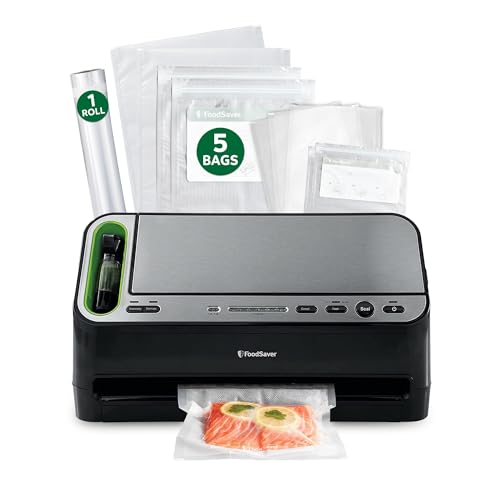
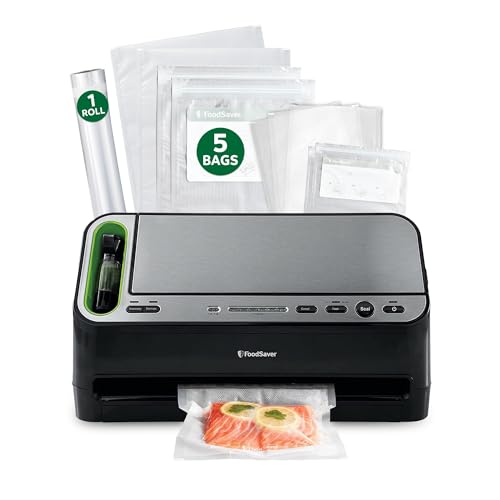
FoodSaver V4400 — premium-leaning countertop model
The FoodSaver V4400 is built around convenience for households that seal often and do not want to fuss with alignment on every bag. Its automatic approach to detecting a bag and starting the cycle suits people who process a full shopping trip in one sitting, moving from chicken portions to cheese to garden vegetables without breaking rhythm. In prose terms it sits toward the premium end of the countertop range, and that positioning buys ease rather than raw power: the appeal is a calmer, more repeatable routine for frequent users who value consistency over tinkering.
Where the V4400 earns its keep is batch work. When you are dividing a warehouse-club run into family portions, small automations compound — fewer mis-sealed bags, less repositioning, and a workflow you can teach to anyone in the house in a minute. It is less compelling if you seal only a few times a year, because an occasional user will never feel the benefit of that automation often enough to justify choosing it over a simpler machine, and it still asks for counter or cupboard room like any full-size countertop unit.
Best for: households whose sealing habits match the premium-leaning countertop model profile described above. Not suited for: buyers whose workload sits at the opposite extreme of that profile. This pick is presented prose-only in this draft, positioned in the premium-leaning tier by description rather than by any fixed price.

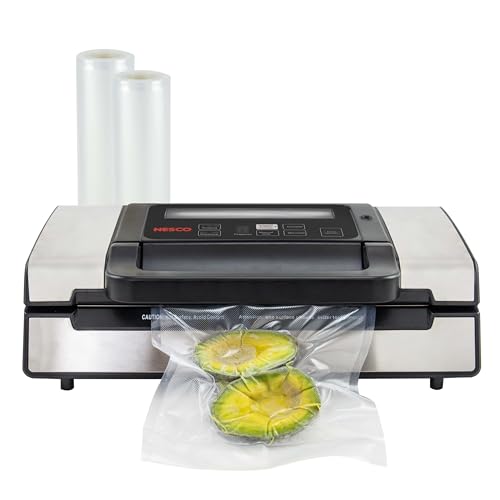
Nesco VS-12 — mid-tier countertop model with gentle handling
The Nesco VS-12 has built its reputation on control, in particular a gentler touch for delicate foods that stronger machines can crush before the seal forms. That matters more than it sounds: soft breads, ripe fruit, baked goods and fragile leftovers are exactly the foods casual sealers ruin first, and a machine that lets you temper the vacuum or pulse it manually turns those failures into routine successes. Its positioning is mid-tier, which fits its pitch — not the cheapest way to seal a bag, but a thoughtful one for varied diets.
For mixed households the VS-12 style of control is the difference between sealing what you actually eat and only sealing what survives aggressive suction. Think of a week that includes berries, sliced bread, marinated tofu and raw portions for the freezer: a one-force-fits-all machine handles the last category beautifully and mangles the first three. A gentler, adjustable approach asks slightly more attention from the cook, and in exchange it widens the range of foods worth sealing at all, which is where the real savings in a vacuum routine quietly live.
Best for: households whose sealing habits match the mid-tier countertop model with gentle handling profile described above. Not suited for: buyers whose workload sits at the opposite extreme of that profile. This pick is presented prose-only in this draft, positioned in the mid-tier tier by description rather than by any fixed price.

Weston Pro-2300 — heavy-duty premium countertop model
The Weston Pro-2300 is the heavyweight of this group, a wide, commercial-leaning countertop sealer from a brand rooted in game processing and serious home butchery. Everything about its prose profile is scale: it is built for long sessions, wide bags and households — or hunters and anglers — who process volume that would leave lighter machines hot, tired and waiting to cool down. It sits firmly at the premium tier, and it justifies that only if your workload genuinely resembles work: think seasonal harvests, whole-animal breakdowns and freezer-filling weekends.
For a small apartment kitchen sealing two chicken breasts a week, the Pro-2300 is honest overkill — in size, in presence and in what you pay for capability you will never call on. But judging it by apartment standards misses its purpose. In a garage-adjacent processing setup or a rural kitchen that puts up food in earnest, a heavy-duty machine is not an indulgence; it is the tool that finishes the day in one session instead of three, and that endurance is precisely what its buyers are purchasing.
Best for: households whose sealing habits match the heavy-duty premium countertop model profile described above. Not suited for: buyers whose workload sits at the opposite extreme of that profile. This pick is presented prose-only in this draft, positioned in the heavy-duty tier by description rather than by any fixed price.
Who Should Buy One — and Who Should Skip
Buy if your household freezes weekly, buys in bulk, preps ahead, processes seasonally or cooks sous vide; the category was built for you and the mid tier is your natural home. Skip — or buy at the entry tier only — if your freezing is rare, your shopping is daily and small, or your kitchen has no honest home for the machine. The most satisfied owners in this category are not the ones who bought the most machine; they are the ones whose purchase matched their demonstrated habits most precisely.
Setup, Care and Maintenance Essentials
Cleaning and Looking After the Machine
A vacuum sealer’s maintenance list is mercifully short, but every item on it protects seal quality. The drip tray, where fitted, catches the liquid that escapes moist foods — empty and wash it after messy sessions rather than letting it become a science project. Wipe the sealing area and gaskets with a damp cloth once cool, because dried sauce on a gasket is tomorrow’s slow leak. Check the gaskets themselves occasionally for flattening or cracks; they are wear parts on many models, and a tired gasket mimics a dying pump with uncanny accuracy.
Storage care is equally plain: keep the lid unlatched or loosely closed if the maker advises it, so the gaskets are not compressed for months between uses, and store the machine dry. Bags and rolls keep best away from heat and sunlight, in the same drawer logic as the machine itself. None of this takes more than minutes a month, and it is the difference between a sealer that works like new in year three and one that mysteriously ‘lost suction’ — a complaint that, on inspection, is usually a dirty gasket wearing a disguise.
Troubleshooting the Classic Failures
When a bag will not vacuum, work the checklist in order of likelihood. Is the bag mouth flat, dry and fully inside the vacuum channel? Is the bag a proper textured vacuum bag rather than a smooth substitute? Is there a wrinkle, a bone edge or a fleck of food crossing the seal line? Is the gasket clean and seated? Most failures surrender to one of those questions. A bag that vacuums but slowly re-inflates over days has a leak — often a pinhole from something sharp inside, which a layer of careful wrapping or a double bag would have prevented.
Weak seals have their own short list: moisture in the seam, a sealing bar asked to work too hot across a long session, or bag material too thin for the job. The fixes are correspondingly plain — dry the seam, pace the session, buy sturdier bags. What troubleshooting teaches, over a few months, is that the machine is the most reliable part of the system; the variables are bags, seams and technique. That is genuinely good news, because variables you control are cheaper than repairs you do not.
Final Verdict
Reviewed as a category, the modern vacuum sealer is a mature, genuinely useful tool whose value is decided less by which model you choose than by whether your household’s habits give it work to do. Choose control if your diet is varied, automation if your sessions are long, compactness if your kitchen is small, and heavy-duty build only if your processing days are real. Do that, respect the safety rules, and the machine will repay you in the least glamorous currency of all: food you bought, kept and actually ate.
Vacuum Sealer: What Long-Term Use Reveals That a First Test Misses
Start with how a {p} holds up once the novelty wears off and routines settle in. Most coverage of a vacuum sealer concentrates on the first week of ownership, yet the decisions that matter most tend to surface later, once the vacuum sealer has to earn its place in an ordinary weekday routine rather than a carefully staged first attempt. Write down the three jobs you expect it to do most often, in the order you actually do them, and judge every claim you read against that short personal list instead of against a generic ideal.
Use a short decision checklist to finish. One, does it fit the space and the storage you really have. Two, does it handle your three most common jobs without a workaround. Three, do the edge cases you listed stay manageable. Four, can every wear part be cleaned or replaced without drama. Five, would you still choose it if a friend described the same drawbacks in their own kitchen. A vacuum sealer that passes all five is a sound buy; one that fails two or more is a compromise you are choosing with open eyes, which is a very different thing from being surprised later.
When you check listings such as FoodSaver V4400, Nesco VS-12 and Weston Pro-2300, use them as worked examples: run through the same checks below on each one in turn, so the comparison stays honest and like for like rather than based on whichever listing happens to shout loudest.
Measure before you commit. Note the footprint, the clearance above and behind the spot where the vacuum sealer will live, and the route you will carry it by when it is hot, full or awkward. A vacuum sealer that technically fits but blocks a cupboard door, crowds a neighbouring appliance or has to be dragged across a worktop every time will quietly fall out of use, whatever its merits on paper. In the Kitchen Appliances category especially, a few centimetres of clearance and a sensible storage plan separate a daily tool from a bulky regret.
Maintenance decides how long the good results last. Set a simple rhythm: a quick wipe or rinse after each use, a deeper clean on a fixed day, and a periodic check of the parts that move, seal or bear weight. A vacuum sealer that needs fiddly disassembly for basic care will be cleaned less often, and performance drifts long before anything actually breaks. Prefer designs where the parts that get dirtiest are the parts that are easiest to reach, and be honest with yourself about which cleaning steps you will genuinely keep up.
Work through a realistic scenario, not a best case. Picture the busiest version of the job: more people to serve, less time than planned, ingredients or materials that are slightly out of the ordinary, and a clean-up waiting at the end. Ask how the vacuum sealer behaves at that upper edge, because a model that only shines on a small, simple load will disappoint precisely when you need it most. If the honest answer is that you would split the job into batches or fall back on an older method, factor that into the decision now rather than discovering it later.
Edge cases deserve a deliberate pass. Think about the odd shapes, the thicker or thinner than usual loads, the leftovers, the second helping and the guest with different preferences. A well-chosen vacuum sealer handles the exceptions gracefully, or at least predictably, while a poor match turns every exception into a workaround. List your two or three most common exceptions in advance and check, from the manual or the listing details, that nothing about them is ruled out by size, shape, material or care requirements.
Frequently Asked Questions
What is the best type of vacuum sealer for a typical home?
A mid-range external countertop model with dry and moist settings and a gentle or pulse option covers the widest range of real household work — bulk freezer portions, weekly shopping, cheese, leftovers and sous vide bags. It is the category’s centre of gravity for a reason. Only households with a demonstrated specialism should leave it: constant liquids toward a chamber machine, processing-day volumes toward a heavy-duty model, fridge-only duty toward a compact or handheld.
How important is seal quality compared with suction power?
Seal quality matters more, and it is not close. Suction differences between competent machines are modest; seam differences decide whether a bag is still tight in three months. A clean, dry, wrinkle-free seal from a mid-range machine outperforms a powerful cycle closed over a damp, creased bag mouth every time. When reviewing any model, weight the consistency of its seals across a long session above any claim about raw vacuum strength.
Can a vacuum sealer handle liquids for sous vide and sauces?
With technique, yes for the home scale: moist settings, manual stops before liquid reaches the seam, pre-freezing liquids into sealable blocks, and double-sealing bags bound for long water-bath cooks. What an external sealer cannot do is treat a bag of thin soup like a bag of rice — physics forbids it, and chamber machines exist for households whose liquid volume justifies them. For most homes the workarounds are entirely sufficient.
How long do vacuum sealers typically last?
With ordinary care — a clean sealing area, gaskets checked and replaced when tired, sensible pacing during long sessions — a decent countertop machine serves for years of regular use. Most ‘dead’ sealers turn out to have dirty gaskets, tired seals or clogged drip trays rather than failed pumps. Longevity correlates less with price tier than with the five minutes of monthly maintenance described in this review, which is good news for owners at every tier.
Is a vacuum sealer a good purchase for sous vide beginners?
It is close to a necessary one. Sous vide cooking is built on the sealed bag, and while water-displacement tricks with ordinary bags can start the journey, a proper sealer makes the method cleaner, more reliable and easier to repeat — particularly for longer cooks and make-ahead meals. A compact, mid-priced machine is the sensible partner for a first immersion cooker; heavy-duty capacity can wait until the habit proves it needs it.
What do reviewers most often get wrong about vacuum sealers?
Two things. First, treating them as preservation devices rather than packaging devices, which leads to unsafe expectations about how long food keeps and whether refrigeration still applies — it does, always. Second, ranking machines by specification drama instead of by session behaviour: seal consistency, control over delicate foods and ownership friction. The machines owners love longest rarely win spec-sheet contests; they win Tuesday evenings, repeatedly, without fuss.
Related Guides and Next Steps
Vacuum sealing sits inside a wider food-storage system, and the guides below continue the same conversation from neighbouring angles — choosing, using, judging and reviewing the machines and the storage methods around them.
- how to choose a vacuum sealer
- how to use vacuum sealer
- is a vacuum sealer worth it
- vacuum sealer buying guide
- oxygen absorbers for food storage
- glass food storage containers
Going Deeper: Reading Your Own Kitchen
Consider the humble chicken thigh as a sealing classroom. Bought in a family pack, thighs vary in size, carry surface moisture and include bone edges that test a bag. Patting them dry, portioning two to a bag and smoothing the bag mouth flat teaches three core skills in one cheap exercise, and the frozen result — flat, labelled, quick to thaw under cold water — shows a new owner exactly why the machine exists. Most sealing confidence is built on exercises exactly this ordinary.
The accessory worth its drawer space, for many households, is a set of reusable containers the machine can evacuate. Crackers stay crisp, coffee stays aromatic, chopped salad components survive an extra day or two, and none of it involves cutting a new bag for a two-day job. Matching the tool to the timescale — bags for the freezer months, containers for the refrigerator days — is the mark of a mature setup, and it noticeably slows how fast you burn through bag stock.
In Practice: A Month With the Machine
Cheese teaches a different lesson: restraint. A hard cheese resealed after each use wants the air out and the pressure stopped before the bag starts squeezing moisture from the surface. Owners who learn to stop early — or to use a gentle cycle — keep a block pleasant for far longer than any wrap achieves, while owners who blast every cycle to maximum learn that more vacuum is not always more preservation. Judgement, again, is the feature no specification sheet can sell you.
A word about odours: vacuum bags are excellent but not perfect barriers over very long storage, and strongly flavoured foods will eventually perfume a freezer if their seals are imperfect. Double-bagging the truly pungent items, keeping the freezer itself clean, and grouping strong flavours together are the practical answers. The deeper answer is rotation — a freezer that turns over steadily never gives odours the months they need to become a personality trait of the appliance.
The Details That Decide Long-Term Satisfaction
Think about the bag as a piece of engineering rather than a consumable afterthought. Its textured channels are air highways during the cycle; its layered construction is the barrier that must survive months of freezer cold, sharp contents and handling. A bag that feels flimsy in the hand usually behaves flimsily in the freezer, and the saving on a bargain roll evaporates the first time a failed seam costs you a quality cut of meat. Buy bags the way you buy tyres: respectfully.
New owners often ask whether they should seal food before or after freezing, and the practical answer is: both, for different jobs. Seal-then-freeze is the default for raw portions and most cooked dishes. Freeze-then-seal suits liquids, soft fruits and anything whose shape or moisture would fight the cycle; a short freeze firms the food into a cooperative solid. Keeping both orders in your repertoire doubles the range of foods you can handle well, at the cost of one extra tray in the freezer.
Beyond the Basics: Habits of Happy Owners
There is a small ritual worth adopting on day one: the seal check. Hold every finished bag up, look along the seam for gaps, wrinkles or trapped moisture, and give the bag a gentle squeeze over the sink. Ten seconds per bag feels fussy in week one and invisible by week four, and it converts the freezer from a place of hopeful storage into a place of verified storage. Almost every ‘my sealer failed’ story told months later is, on inspection, a seal that was never checked.
Portion geometry is an underrated pleasure of the practice. Flat bags thaw in a fraction of the time a lump takes, slide into gaps in a packed freezer, and stack into tidy bricks that make inventory a glance rather than an excavation. Shaping a bag flat before it freezes — spreading mince evenly, arranging portions in a single layer — takes seconds and pays you back at every single thaw. It is the kind of detail that separates a freezer people brag about from a freezer people apologise for.
Putting It All Together in a Real Week
Freezing order matters more than most guides admit. Seal and freeze the most perishable items first, keep finished bags moving into the cold rather than accumulating on the counter, and never let a long session turn into a long queue of raw food warming gently beside the machine. This is the food-safety spine of the whole practice: the sealer works bag by bag, but your planning has to work session by session, with the refrigerator and freezer treated as destinations rather than afterthoughts.
When a household shares the machine, agree the house rules early: what gets sealed, how bags are labelled, where finished bags go, and which bags are never reused. Shared routines prevent the two classic domestic failures — the mystery bag nobody can identify, and the well-meant resealing of something that should have been thrown away. A marker pen living beside the machine does more for household food safety than any feature comparison in this guide.
Going Deeper: Reading Your Own Kitchen
The accessory worth its drawer space, for many households, is a set of reusable containers the machine can evacuate. Crackers stay crisp, coffee stays aromatic, chopped salad components survive an extra day or two, and none of it involves cutting a new bag for a two-day job. Matching the tool to the timescale — bags for the freezer months, containers for the refrigerator days — is the mark of a mature setup, and it noticeably slows how fast you burn through bag stock.
Travel and outdoor cooks find a second career for the sealer. Marinating meat sealed for the cooler travels without leaks, dry ingredients stay dry in damp conditions, and portioned meals for camping or boating pack flat and thaw predictably. Even non-food items join in: matches, first-aid supplies, spare batteries and emergency snacks all benefit from a waterproof, air-free package. A machine bought for the freezer often ends up serving the whole household’s logistics, which quietly strengthens its value case.
In Practice: A Month With the Machine
A word about odours: vacuum bags are excellent but not perfect barriers over very long storage, and strongly flavoured foods will eventually perfume a freezer if their seals are imperfect. Double-bagging the truly pungent items, keeping the freezer itself clean, and grouping strong flavours together are the practical answers. The deeper answer is rotation — a freezer that turns over steadily never gives odours the months they need to become a personality trait of the appliance.
Finally, keep perspective on pace. A vacuum sealer rewards households that adopt it as a rhythm — ten minutes after each big shop, an hour on a processing day — rather than as an occasional event. Like a good knife, it disappears into the routine until the routine would feel broken without it. If you reach that point, the purchase has succeeded in the only way that matters; if the machine is still in its box at month three, no feature list would have saved it, and the honest fix is a smaller machine in a better place.
The Details That Decide Long-Term Satisfaction
New owners often ask whether they should seal food before or after freezing, and the practical answer is: both, for different jobs. Seal-then-freeze is the default for raw portions and most cooked dishes. Freeze-then-seal suits liquids, soft fruits and anything whose shape or moisture would fight the cycle; a short freeze firms the food into a cooperative solid. Keeping both orders in your repertoire doubles the range of foods you can handle well, at the cost of one extra tray in the freezer.
Consider the humble chicken thigh as a sealing classroom. Bought in a family pack, thighs vary in size, carry surface moisture and include bone edges that test a bag. Patting them dry, portioning two to a bag and smoothing the bag mouth flat teaches three core skills in one cheap exercise, and the frozen result — flat, labelled, quick to thaw under cold water — shows a new owner exactly why the machine exists. Most sealing confidence is built on exercises exactly this ordinary.
Beyond the Basics: Habits of Happy Owners
Portion geometry is an underrated pleasure of the practice. Flat bags thaw in a fraction of the time a lump takes, slide into gaps in a packed freezer, and stack into tidy bricks that make inventory a glance rather than an excavation. Shaping a bag flat before it freezes — spreading mince evenly, arranging portions in a single layer — takes seconds and pays you back at every single thaw. It is the kind of detail that separates a freezer people brag about from a freezer people apologise for.
Cheese teaches a different lesson: restraint. A hard cheese resealed after each use wants the air out and the pressure stopped before the bag starts squeezing moisture from the surface. Owners who learn to stop early — or to use a gentle cycle — keep a block pleasant for far longer than any wrap achieves, while owners who blast every cycle to maximum learn that more vacuum is not always more preservation. Judgement, again, is the feature no specification sheet can sell you.
Putting It All Together in a Real Week
When a household shares the machine, agree the house rules early: what gets sealed, how bags are labelled, where finished bags go, and which bags are never reused. Shared routines prevent the two classic domestic failures — the mystery bag nobody can identify, and the well-meant resealing of something that should have been thrown away. A marker pen living beside the machine does more for household food safety than any feature comparison in this guide.
Think about the bag as a piece of engineering rather than a consumable afterthought. Its textured channels are air highways during the cycle; its layered construction is the barrier that must survive months of freezer cold, sharp contents and handling. A bag that feels flimsy in the hand usually behaves flimsily in the freezer, and the saving on a bargain roll evaporates the first time a failed seam costs you a quality cut of meat. Buy bags the way you buy tyres: respectfully.
Going Deeper: Reading Your Own Kitchen
Travel and outdoor cooks find a second career for the sealer. Marinating meat sealed for the cooler travels without leaks, dry ingredients stay dry in damp conditions, and portioned meals for camping or boating pack flat and thaw predictably. Even non-food items join in: matches, first-aid supplies, spare batteries and emergency snacks all benefit from a waterproof, air-free package. A machine bought for the freezer often ends up serving the whole household’s logistics, which quietly strengthens its value case.
There is a small ritual worth adopting on day one: the seal check. Hold every finished bag up, look along the seam for gaps, wrinkles or trapped moisture, and give the bag a gentle squeeze over the sink. Ten seconds per bag feels fussy in week one and invisible by week four, and it converts the freezer from a place of hopeful storage into a place of verified storage. Almost every ‘my sealer failed’ story told months later is, on inspection, a seal that was never checked.
In Practice: A Month With the Machine
Finally, keep perspective on pace. A vacuum sealer rewards households that adopt it as a rhythm — ten minutes after each big shop, an hour on a processing day — rather than as an occasional event. Like a good knife, it disappears into the routine until the routine would feel broken without it. If you reach that point, the purchase has succeeded in the only way that matters; if the machine is still in its box at month three, no feature list would have saved it, and the honest fix is a smaller machine in a better place.
Freezing order matters more than most guides admit. Seal and freeze the most perishable items first, keep finished bags moving into the cold rather than accumulating on the counter, and never let a long session turn into a long queue of raw food warming gently beside the machine. This is the food-safety spine of the whole practice: the sealer works bag by bag, but your planning has to work session by session, with the refrigerator and freezer treated as destinations rather than afterthoughts.
The Details That Decide Long-Term Satisfaction
Consider the humble chicken thigh as a sealing classroom. Bought in a family pack, thighs vary in size, carry surface moisture and include bone edges that test a bag. Patting them dry, portioning two to a bag and smoothing the bag mouth flat teaches three core skills in one cheap exercise, and the frozen result — flat, labelled, quick to thaw under cold water — shows a new owner exactly why the machine exists. Most sealing confidence is built on exercises exactly this ordinary.
The accessory worth its drawer space, for many households, is a set of reusable containers the machine can evacuate. Crackers stay crisp, coffee stays aromatic, chopped salad components survive an extra day or two, and none of it involves cutting a new bag for a two-day job. Matching the tool to the timescale — bags for the freezer months, containers for the refrigerator days — is the mark of a mature setup, and it noticeably slows how fast you burn through bag stock.
Beyond the Basics: Habits of Happy Owners
Cheese teaches a different lesson: restraint. A hard cheese resealed after each use wants the air out and the pressure stopped before the bag starts squeezing moisture from the surface. Owners who learn to stop early — or to use a gentle cycle — keep a block pleasant for far longer than any wrap achieves, while owners who blast every cycle to maximum learn that more vacuum is not always more preservation. Judgement, again, is the feature no specification sheet can sell you.
A word about odours: vacuum bags are excellent but not perfect barriers over very long storage, and strongly flavoured foods will eventually perfume a freezer if their seals are imperfect. Double-bagging the truly pungent items, keeping the freezer itself clean, and grouping strong flavours together are the practical answers. The deeper answer is rotation — a freezer that turns over steadily never gives odours the months they need to become a personality trait of the appliance.