The two loaf pan sizes you will meet most often are about 9 by 5 inches and about 8.5 by 4.5 inches. Both bake a standard loaf of bread or cake, but the smaller pan gives a taller loaf and a slightly longer bake. Always compare your pan with the recipe’s size.
The Usual Sizes
| Pan size (inches) | Common use | Result |
|---|---|---|
| 9 x 5 | Standard sandwich bread, banana bread, pound cake | Wider loaf, quicker bake |
| 8.5 x 4.5 | Quick breads and smaller loaves | Taller, narrower loaf |
| Mini loaf pans | Gifts and single servings | Short bake times |
| Long pullman pan | Square sandwich slices | Even crumb, flat top with lid |
Makers measure differently, some from the inside of the rim and some from the outside. Measure your own pan across the top inside edge to be sure.
How Pan Size Changes the Bake
A batter spread over a wider area makes a shorter loaf that cooks sooner. Packed into a narrower pan, the same batter rises higher and needs more time in the oven for the center to set. If the top browns too fast, cover loosely with foil and keep baking.
Adjusting a Recipe for Your Pan
- Check the recipe’s pan size and compare it with yours.
- Fill the pan only about two-thirds to three-quarters full, since batter rises as it bakes.
- If you have extra batter, bake it in a muffin cup or small pan beside the loaf.
- Test early in the bake time with a skewer in the center.
- Expect the loaf to look a little different, but taste much the same.
Materials in Brief
- Light aluminum gives even golden crusts.
- Dark nonstick pans brown faster and often release easily.
- Glass lets you see the sides browning but holds heat longer.
- Ceramic looks good on the table but can heat slowly.
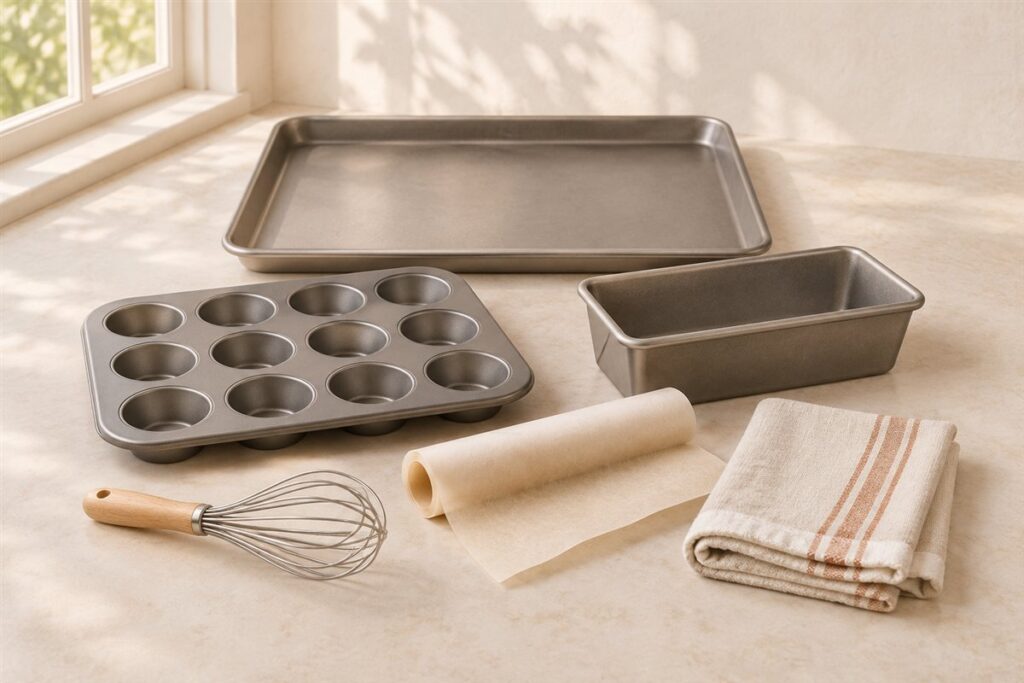
Line the pan with a strip of parchment paper that overhangs the long sides to lift the loaf out cleanly.
Tips for a Clean Release
- Grease the pan well, including the corners, where batter tends to cling.
- Line with parchment so you can lift the loaf out whole.
- Let the loaf rest for several minutes before turning it out.
- Run a thin spatula along the sides if it sticks.
A loaf that cools fully on a rack will slice more neatly.
Judging Capacity, Not Just Length and Width
Length and width tell only part of the story. Depth, wall angle and corner shape all change how much batter a loaf pan holds. Two pans listed with the same top dimensions can hold different amounts if one has steeper sides or a deeper body.
When a listing gives a capacity, compare that number with the recipe’s pan. When it does not, you can measure it yourself. Set the pan on a level counter and fill it with water from a measuring cup, counting each cup as you pour. Write the total on a piece of tape or a note kept with your recipes. That one figure makes it much easier to judge whether a new recipe will fit.
Also note the depth. A shallow pan lets a loaf spread, while a deep one forces it upward. If a recipe warns that the loaf rises high, a deeper pan is a safer choice than a shallow one with the same footprint.
When a Recipe Does Not Name a Pan
Many family recipes and older cookbooks simply say “a loaf pan.” In that case, start with the most common size and watch the batter rather than trusting a number. A pan that is about two-thirds to three-quarters full before baking is usually a sound target for quick breads and pound cakes.
- If the batter fills the pan close to the rim, move some into a small extra pan or muffin cup.
- If the batter fills less than half the pan, expect a flatter loaf and begin testing sooner.
- For yeast bread, judge by how much the dough rises after shaping, since it will grow further in the oven.
Make a note on the recipe card the first time you bake it, recording which pan you used and how it turned out. Next time, you will not have to guess.
Straight Sides, Sloped Sides and Corners
Some loaf pans have vertical walls and sharp inside corners. Others have walls that flare outward toward the rim and softly rounded corners. The shape changes the finished loaf in small but visible ways.
- Straight sides: give a more uniform slice from top to bottom, which suits sandwich bread.
- Sloped sides: make it easier to tip the loaf out and often produce a gently rounded profile.
- Rounded corners: are easier to clean and to grease thoroughly, since batter has fewer places to lodge.
- Rolled or wide rims: give you something to grip with oven mitts, which matters with a heavy, full pan.
If you often slice for sandwiches, favor straight walls. If you mostly bake sweet quick breads to serve in thick slices, either shape works well.
Pans for Yeast Bread Versus Sweet Loaves
Yeast bread and cake-style loaves ask different things of a pan. A bread dough builds structure and a crust, so it benefits from a pan that conducts heat well and browns the sides and bottom evenly. A sweet batter with sugar and butter can darken quickly at the edges, so a lighter-colored pan or a slightly lower oven temperature, if the recipe allows, can help prevent over-browned crusts.
If you bake both kinds, you may find it useful to own two pans: one you reserve for bread and one for sweet loaves. This also keeps strong flavors, such as onion or herbs in savory loaves, from lingering in a pan you use for vanilla cake. Check the maker’s guide on how to season, wash and dry the pan so it stays in good shape.
Signs It Is Time to Replace a Pan
A good loaf pan lasts a long time, but it does not last forever. Look at yours with a critical eye now and then.
- A warped base that rocks on the counter or oven rack can cause uneven baking.
- A coating that is flaking, scratched through or peeling should be retired.
- Rust spots on bare metal that do not wipe away are a reason to replace the pan.
- Stubborn dark residue that returns after washing may mean the surface has worn down.
- Bent corners can let batter leak or make loaves lean to one side.
When shopping for a replacement, measure the pan you like best and check that the new one matches its inside dimensions and depth.
Mini Loaves, Multiple Pans and Batch Planning
Mini loaf pans are handy for gifts, bake sales and portion control, but they change how you plan a recipe. A batter written for one standard loaf will usually fill several mini cavities, and the smaller loaves bake in noticeably less time. Fill each cavity only about two-thirds to three-quarters full, and begin testing early.
If you often bake for events, think about owning two matching standard pans so both loaves go in the oven together and finish at the same time. Pans of different materials in one oven will brown at different rates, which makes matching harder. Leave space between pans on the rack so hot air can circulate, and rotate them halfway through if your oven runs uneven.
- Set mini pans on a sheet pan so they are easy to move and stay steady.
- Check whether the pan’s cavities are joined in a tray or sold separately, as this affects how you handle them.
- Keep a note of fill amounts for each pan so you can scale recipes with confidence.
FAQ
Can I use a larger pan than the recipe asks?
You can, but the loaf will be flatter and bake sooner. Begin checking earlier than the recipe says.
Which size should I buy first?
A 9 by 5 inch pan covers most recipes. Add a second pan if you often bake two loaves at once.
Does a darker loaf pan change the bake?
Darker pans absorb more heat and tend to brown crusts faster than light ones. If your loaf browns too quickly, cover it loosely with foil or check the maker's guidance on oven temperature.
Can I bake a recipe in two smaller pans instead of one large one?
Yes, but divide the batter evenly and expect a shorter bake time. Start testing well before the original time, since smaller loaves set sooner.
How do I know if my pan is the right size for a recipe that says "one loaf"?
Measure the inside top edge and compare it with the recipe. If the recipe gives no size, aim for a pan that ends up about two-thirds to three-quarters full with the batter.
Is it worth buying a pan with a lid?
A lidded pan, such as a pullman style, is useful if you want square, even sandwich slices. For quick breads and cakes, a standard open pan is all you need.
Why does my loaf sink in the middle?
Common causes include opening the oven too early, underbaking, or too much leavening. Check the doneness with a skewer before removing it, and make sure the oven is fully preheated.
Can I use a loaf pan for meatloaf or other savory dishes?
Yes, if the maker says the pan is suitable for that use. Wash it well afterward, and consider keeping a separate pan for savory food if you worry about lingering flavors.
The Short Version
A 9 by 5 inch pan is the standard choice, while 8.5 by 4.5 inches gives a taller loaf. Measure inside the rim, do not overfill, and watch the bake time when your pan differs from the recipe.