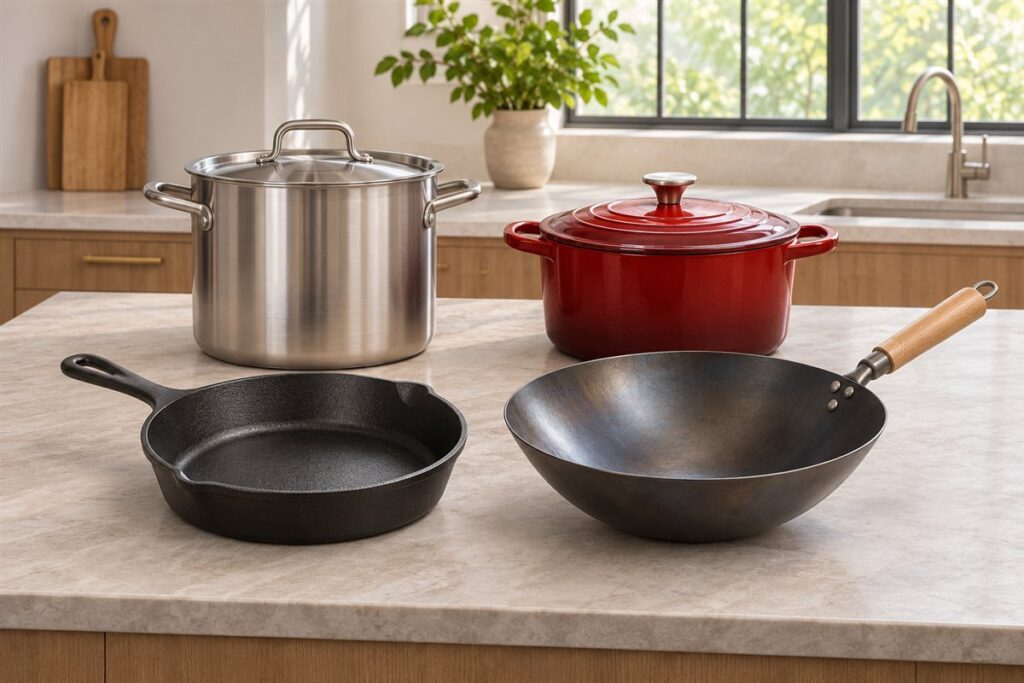
Nonstick pans are the easier choice for eggs, delicate fish and quick cleanup, while stainless steel is the better choice for hard searing, pan sauces and long-term durability. Most home cooks end up wanting one of each, because the two surfaces solve different problems.
What Each Pan Is For
A nonstick pan has a slick coating that lets food release with little or no fat. It shines with foods that tend to cling, such as scrambled eggs, pancakes and thin fish fillets.
Stainless steel has no coating. Food browns directly on the metal and leaves behind browned bits that you can dissolve into a sauce. It handles high heat, metal utensils and the oven well.
Key Differences in Daily Use
- Heat: Nonstick coatings are best used on low to medium heat, and makers usually warn against overheating an empty pan. Stainless steel tolerates much higher heat.
- Utensils: Wood, silicone and nylon tools protect a coating. Stainless steel accepts metal spoons and whisks.
- Browning: Stainless steel usually gives deeper browning on meat and vegetables.
- Cleanup: Nonstick wipes clean easily. Stainless steel may need soaking when food has stuck.
- Lifespan: Coatings wear down over time, while a stainless pan can keep working for many years with ordinary care.
Side by Side Comparison
| Factor | Nonstick | Stainless Steel |
|---|---|---|
| Food release | Excellent with little fat | Needs preheating and some fat |
| High heat searing | Not ideal | Well suited |
| Metal utensils | Avoid | Fine |
| Pan sauces | Limited browned bits | Strong results |
| Learning curve | Very easy | Takes some practice |
Who Should Choose Which
Choose nonstick if you cook a lot of eggs, make quick weeknight meals, or want a pan that forgives mistakes. Choose stainless steel if you like to sear steaks, build sauces in the same pan, or want cookware that tolerates rough handling.
If you only have room for a single skillet, think about what you cook most often. A cook who makes breakfast every day may prefer nonstick, while someone who roasts and sears will likely prefer stainless.
Always follow the maker’s care guide for the specific pan, including heat limits and whether it can go in the dishwasher or oven.
Plan your cabinet space as well. Nonstick pans last longest when they are hung or stacked with a soft liner, while stainless steel can be stacked freely without worry about scratching.
Coating Types and What They Mean
Not all nonstick pans use the same coating, and the differences affect heat tolerance, durability and care. Product listings often describe coatings in marketing terms, so it helps to know what to look for.
- Traditional PTFE-based coatings: The most common type. They offer strong release and are usually used at low to medium heat. Makers state a heat limit, so check the manual.
- Ceramic-style coatings: Often sold as an alternative. They can feel slick when new, but some users find the release changes with use, so read the care guidance closely.
- Reinforced or multilayer coatings: Some makers add extra layers or textures to resist wear. The claim is up to the maker, so treat it as a description rather than a guarantee.
The coating sits on a base, usually aluminum or steel, and that base affects heating and weight. Aluminum heats quickly and lightly, while a thicker base spreads heat more evenly. Ask whether the pan suits your cooktop, especially if you use induction.
Check whether the listing states the oven-safe temperature, whether the handle and lid are rated, and whether metal utensils are allowed. Some coatings are marketed as metal-utensil safe, but the maker’s guidance should be your guide, and even then softer tools are usually kinder to the surface. If a listing makes bold claims without specifics, treat them with some skepticism and read the manual or support pages before buying.
Stainless Construction Explained
Stainless steel is not a single product either. How a stainless pan is built has a large effect on how it cooks. Stainless on its own conducts heat poorly, so most good pans pair it with a more conductive metal.
- Fully clad: Layers, often including aluminum or copper, run from the base up the sides. Heat spreads evenly across the whole pan, which helps with browning and reduces hot spots.
- Disk-bottom: A thick plate is bonded to the base only. It heats the bottom well, though the sides may stay cooler.
- Thin, single-layer stainless: Lightweight and often lower in cost, but more prone to hot spots and food sticking.
Look at the weight and thickness, as listed. A heavier pan generally holds heat better, though it is harder to lift. Check the handle too: riveted handles are sturdy, while welded or screwed ones vary. A handle that stays cooler on the stove is a convenience, but it still needs a mitt if the pan goes in the oven.
The interior finish matters for cleaning. A smooth, polished finish releases residue easily, while a textured or matte finish can hold onto stuck bits. If you plan to use the oven, check the maker’s temperature limit for the pan and lid. Stainless cookware tends to be long-lasting, so thoughtful selection upfront pays off.
Learning to Cook on Stainless
Many people find stainless frustrating at first because food seems to stick. Most of the time, the problem is technique rather than the pan. A few habits make a big difference.
- Preheat the pan: Warm it over medium heat for a short time before adding fat. A properly heated pan helps food release.
- Add oil, then food: Once the oil shimmers, add the food. Cold oil in a cold pan invites sticking.
- Dry your food: Pat meat and vegetables dry so moisture does not steam the surface and cause clinging.
- Do not move food too soon: Let it brown. Food often releases naturally once a crust forms.
- Control the heat: Very high heat can scorch food and discolor the pan. Moderate heat usually works better than you expect.
- Deglaze: After searing, add a little liquid to lift the browned bits into a sauce.
Eggs are the hardest food on stainless. If you want to try, use a little more fat and gentle heat, or keep a nonstick pan for them. Be patient and expect a learning period. Different foods behave differently, and thin fish or sticky sauces may need extra care.
If food does stick, do not scrape with force. Let the pan cool a little, add warm water, and loosen the residue before washing. Following the maker’s care instructions helps preserve the finish.
Care Routines for Each Surface
A sound care routine extends the life of both types of pan, and the two need different habits.
For nonstick:
- Wash by hand with a soft sponge and mild soap unless the maker says dishwashers are fine.
- Let the pan cool before washing, since sudden temperature change can stress the coating and the base.
- Avoid aerosol cooking sprays if the maker advises against them, because residue can build up on the surface.
- Do not heat an empty pan, and keep heat within the stated limits.
- Store with protection between pans to avoid scratching.
For stainless steel:
- Soak stuck food in warm, soapy water before scrubbing, and use a non-scratch pad for stubborn spots.
- For discoloration or mineral spots, some makers recommend a mild acidic cleaner. Check their guidance before trying one.
- Dry promptly to avoid water marks.
- Avoid cold-water shocks on a hot pan, which can contribute to warping.
Both types benefit from consistent habits. Stainless forgives a lot, but a warped base from rapid cooling can cause rocking on the stove. Nonstick coatings wear faster with overheating or abrasive cleaning. Keep the manual or care guide handy, since specifics vary between products.
Replacement timing is different too: nonstick pans are generally treated as consumable, while stainless can last for many years if the base stays flat.
Building a Small, Balanced Set
You do not need a large set to cook well. A compact collection with the right pieces covers most meals, and it is easier to store.
A sensible starting point might include:
- One nonstick skillet for eggs, pancakes and delicate fish.
- One stainless skillet or sauté pan for searing, browning and pan sauces.
- A saucepan with a lid for grains, sauces and reheating.
- A larger pot for pasta and soups.
When deciding where to spend more, consider how heavily you use each piece. A pan you use daily may justify a sturdier build, while a pan used occasionally can be simpler. Budget tiers generally reflect thickness, construction and finish rather than fixed quality, so compare the listed details instead of relying on price alone.
Check size against your burners and your household. A skillet that is too small crowds the food, while one that is too large heats unevenly on a small burner. Make sure each piece suits your cooktop and oven, and check for compatibility with induction if relevant.
If you are on a tight budget, start with the pan type that matches your most common cooking, then add the other when you can. Treat nonstick as a replaceable item, and put extra budget into a stainless pan you may keep for years.
FAQ
Can I use both types on the same stove?
Yes, as long as the pan base suits your cooktop. Induction stoves need a magnetic base, so check the maker’s guide for each pan.
Which one is easier for beginners?
Nonstick is more forgiving at first. Stainless steel becomes easy once you learn to preheat the pan and add fat before the food.
Can I put a nonstick pan in the oven?
Some can, up to a stated temperature, and the handle and lid may have lower limits. Check the maker's guide for that exact pan.
Why does food stick to my stainless pan?
Usually the pan was not hot enough when food went in, the food was wet, or it was moved too early. Preheating, adding oil and letting a crust form generally helps.
Is it okay to use cooking spray on nonstick?
Some makers advise against aerosol sprays because they can leave a residue. Check your pan's care instructions and use a small amount of oil or butter instead if in doubt.
How do I remove discoloration from stainless steel?
Light rainbow-like tints or mineral spots are cosmetic in most cases. Follow the maker's cleaning guidance, and avoid harsh abrasives that scratch the surface.
Are heavy pans better?
Heavier pans often hold heat well, but they are harder to lift and store. Choose a weight you can handle comfortably when the pan is full.
Can I use both types on a glass-top stove?
Generally yes, if the bases are flat and clean. Lift rather than slide the pans to avoid scratching, and follow the cooktop maker's advice.
The Short Version
Nonstick suits delicate foods and fast cleanup at moderate heat. Stainless steel suits searing, sauces and heavy use. Many kitchens do best with one skillet of each type.