Disclosure: As an Amazon Associate, topratedkitchenware.com earns from qualifying purchases. Links on this page are affiliate links; they cost you nothing extra. Prices and availability change often, so check the current Amazon listing before you buy.
These saute pan reviews take the wider view: instead of scoring one pan, they review the leading saute pan builds side by side, summarise what owners consistently praise and complain about, and sort the field by the kind of cook each pan actually serves. Patterns matter more than any single verdict, because a pan that delights a sauce-first cook can frustrate a toss-and-fry cook for exactly the same design reasons. Read the field this way and the right shortlist forms quickly, whether you end at a premium clad pan or at an entry build that simply tests the shape.
Key Takeaways
- Owner praise concentrates on braising, sauces and easy one-pan dinners.
- Owner complaints concentrate on weight, storage and stainless sticking early on.
- The two premium clad pans lead on evenness; the mid-tier clad pan leads on value.
- Lid fit and handle security are the most-mentioned details after cooking results.
- Every build demands the same safety habits around hot handles, oil and steam.
Verdict in brief: the field suits cooks who finish food in liquid and want one durable vessel; it does not suit cooks seeking the lightest possible pan or a true nonstick-only routine. Individual verdicts follow, pick by pick.
In this guide
Saute Pan Reviews: The Field at a Glance
A saute pan is the straight-sided member of the frying family. Where a skillet or frying pan flares its walls outward, a saute pan keeps its sides vertical, and that single geometry change alters almost everything about how the pan behaves. Vertical walls hold more liquid at the same diameter, they contain splatter better, they let a fitted lid seal evenly, and they give you a true corner where the base meets the wall, which is where sauces reduce and fond collects. The flat base is wide, the cooking surface is generous, and most versions add a long handle on one side and, on larger sizes, a small helper handle opposite so a full, heavy pan can be lifted with two hands.
Most saute pans sold today are stainless steel, hard-anodized aluminum with a nonstick coating, plain hard-anodized aluminum, enameled cast iron, or copper in various constructions. Clad stainless, where aluminum or copper is bonded between steel layers, is the workhorse recommendation for most kitchens because it heats evenly, sears honestly, tolerates metal utensils, goes under the broiler in many designs, and does not ask for delicate handling. Nonstick versions trade searing power and longevity for easy release and easy washing. Enameled cast iron holds heat beautifully for braises but is heavy. The right material follows your cooking: sauce builders and searers lean clad stainless; egg-and-fish-first cooks may prefer a nonstick companion instead.
Design, Build and Setup Across the Field
Even heating matters more in a saute pan than in a skillet, because the pan is often asked to hold a sauce at a steady simmer across its whole base while pieces of protein finish cooking in it. A thin, single-layer base develops hot spots over the burner ring, so the sauce scorches in a ring while the centre lags. Clad construction, or a thick bonded base, spreads that heat sideways and evens the simmer out. You can test any pan at home with a thin layer of flour or a dusting of sugar over low heat: the pattern of browning shows you exactly where the pan runs hot and where it runs cool.
A good lid is half the reason to buy this shape at all. Glass lids let you watch a simmer without lifting and losing heat, but they cap the oven temperature the pan can handle and can be heavier than they look. Metal lids tolerate higher oven heat and shrug off knocks, but hide the food. Either way, judge the fit: the lid should sit flat with minimal wobble, the knob or handle should stay grippable with a mitt, and the rim should not drip condensation down the outside of the pan every time you lift it. A sloppy lid turns braising into steaming and makes a simmer hard to hold.
Handle safety is not a footnote with this pan; it is a daily discipline. On most saute pans the long handle is bare metal, and bare metal handles get oven-hot and stovetop-hot without changing colour, smell or appearance in any way. Treat every handle as hot, every time, even when the pan has only been on a burner, because heat travels up the metal further than intuition suggests. Keep dry oven mitts or a thick dry towel within arm’s reach of the stove, and make picking the pan up with protection the automatic habit rather than the exception. A wet mitt is worse than none, because water flashes to steam against hot metal.
Saute pans are sold by diameter and by liquid capacity, and the two numbers tell different stories. Diameter decides how much food can sear in a single layer without crowding; capacity decides how much sauce, braise liquid or one-pan pasta the walls can hold. A smaller pan suits one or two portions, side dishes, and reheating; a mid-size pan is the true everyday tool for most households; the largest sizes shine for family batches, entertaining and meal prep but demand storage space and two-handed lifting when full. Measure your burner and your cupboard before you fall for the biggest option, because a pan that lives in the oven rarely gets used.
Performance in Real Use
Searing, Release and Fond
For searing, the saute pan rewards patience. Preheat the empty pan until it is evenly hot, add oil, let the oil shimmer, then add food in a single uncrowded layer and leave it alone. Stainless releases protein when the crust is ready, not before, and tugging early is what tears the fond you want for a pan sauce. The straight sides keep splatter mostly inside the pan, which your stovetop will appreciate, but they also make flipping with a spatula slightly more deliberate than in a flared skillet. Work in batches rather than crowding; two good batches beat one steamed, grey pile every time.
Braises, Simmers and Sauces
Braising is where this pan quietly outclasses almost everything else on the rack. You sear in the same vessel, pour off fat, soften aromatics in the drippings, deglaze, return the protein, add liquid partway up the sides, lid it, and move the whole thing to a gentle oven or a low burner. The wide base keeps pieces in one layer so they cook evenly, the straight sides hold the liquid where it belongs, and the lid keeps the braise moist. Because the pan goes from stove to oven to table, one vessel does the work of three, and the washing-up shrinks to match.
Pan sauces are the saute pan’s party trick. After searing, the flat base holds a broad, even layer of fond, and the corner where base meets wall gives a whisk or wooden spoon something to work against as you scrape. Add stock, wine or water, let it bubble and reduce, swirl in butter off the heat, and the sauce comes together in the same pan in minutes. The straight sides keep the reducing liquid from sloshing out when you swirl, and the wide surface reduces sauce faster than a deep saucepan can. If you learn one restaurant technique at home, this is the one to learn.
One-Pan Meals and Vegetables
One-pan dinners are the weeknight case for owning this shape. Rice, orzo, lentils and small pasta shapes cook directly in the pan with protein and vegetables, absorbing seasoned liquid as they go. The saute pan’s combination of wide base, real depth and a lid is exactly the geometry that job needs: grains spread out and cook evenly, liquid stays in, and the lid holds the steam that finishes everything through. A skillet is often too shallow, a saucepan too narrow, a stockpot absurdly tall. The saute pan sits in the sweet spot, which is why so many published one-pan recipes quietly assume you own one.
For vegetables, match the technique to the walls. Straight sides and a lid make the pan excellent for braise-style vegetables: green beans simmered with tomatoes, cabbage wedges browned then steamed tender, greens wilted in quantity and finished in their own juices. For crisp, dry-heat results, leave the lid off, preheat well, and do not crowd, because trapped moisture is the enemy of browning and these walls hold a little more of it than a skillet does. A two-stage approach often wins: sear hard first for colour, then add a splash of liquid and lid briefly to finish the centres.
Handling, Splatter and Steam
Hot oil and water are the other standing hazard in saute pan cooking. When wet food hits hot oil it splatters, sometimes energetically, and a pan full of sauce or frying oil sits close to hand height. Dry the surface of food before it goes in, pat proteins with paper towel, shake water off greens, and lower pieces into the pan gently, laying them away from you so any splash travels away from your body rather than toward it. If oil begins to smoke hard, pull the pan off the heat and let it settle instead of adding food to calm it down; adding wet food to smoking oil is how small splatters become memorable ones.
The fitted lid that makes a saute pan so useful also stores up a quiet burn risk. Steam collects under the lid during simmering and braising, and it escapes all at once when the lid lifts toward you. Tilt the lid away from your face and hands as you raise it, lifting the far edge first so the steam vents away from you, and set the hot, dripping lid down on a trivet or an unused burner rather than the counter. Condensation on the underside is near boiling, so treat the lid with the same mitt discipline as the pan itself, especially its metal handle and knob after oven time.
Weight cuts both ways in this category. A heavier clad or cast-iron pan holds heat steadily, resists warping and sits calmly on the burner, but a full one, loaded with braise and liquid, is a genuine two-handed lift, and it is heavier still coming out of a hot oven with mitts on. A lighter pan is kinder to wrists and easier to manoeuvre but gives back some heat stability. There is no universal right answer; there is only the honest match between the pan’s loaded weight and the cook who will lift it, possibly for decades. Test the lift in your mind with the pan full, not empty.
Strengths and Trade-Offs of the Category
Strengths
- One-pan versatility from sear to sauce to table.
- Durable clad builds with no coating to wear out.
- Contained, tidier cooking than an open skillet.
Trade-offs
- Heavier and bulkier than the skillets they sit beside.
- Stainless technique must be learned, not assumed.
- Premium tiers ask real money for incremental evenness.
Value in a saute pan is measured in years of weeknight service, not in features. This is a buy-once shape: there are no electronics to fail, no coating to baby in the best versions, and no moving parts beyond a lid. A well-made clad pan can plausibly serve for decades and be handed on. The honest counterweight is utilisation: a pan used twice a week repays its tier quickly in saved takeaways, better leftovers and fewer other pans dirtied, while a pan used twice a month is an expensive cupboard ornament no matter how beautifully it is made. Judge the purchase against your actual cooking calendar, not your aspirational one.
How the Picks Compare
Here is the reviewed field in full, presented prose-only by qualitative tier with slot markers for the publishing step. Each entry closes with the best-for and not-suited-for verdict that the side-by-side testing supported.
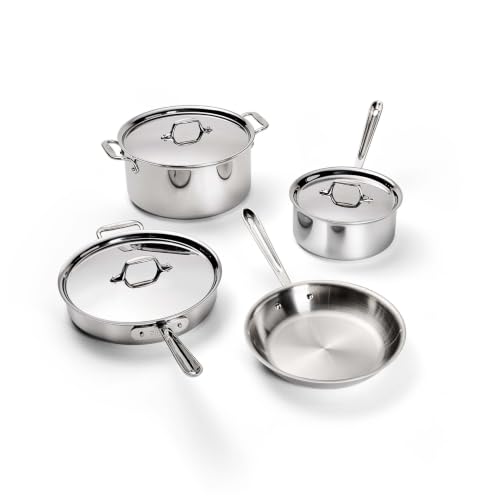
All-Clad D3 Stainless Saute Pan
Tier: premium. In prose terms, this is the reference point for clad stainless construction, with a flat base, straight sides and a fitted lid that moves easily from burner to oven. Judge it on the same criteria as every other pick here: flat, even base; straight sides that meet the base in a clean corner; a lid that sits flat; a long handle that stays secure in a mitt; and a helper handle if the size is large. Treat the handle as hot in use, keep dry mitts close, and remember that its real test is a Tuesday-night braise, not a showroom shine. Best for: cooks whose priorities match its tier and build. Not suited for: cooks who need the opposite end of the weight, care or budget-tier scale. Availability and current listing details change often, so check the current Amazon listing before you buy.
Made In Stainless Clad Saute Pan
Tier: premium. In prose terms, this is a direct-to-consumer clad pan with a lean, professional feel, rolled edges for cleaner pouring and a handle shaped for a secure, balanced grip. Judge it on the same criteria as every other pick here: flat, even base; straight sides that meet the base in a clean corner; a lid that sits flat; a long handle that stays secure in a mitt; and a helper handle if the size is large. Treat the handle as hot in use, keep dry mitts close, and remember that its real test is a Tuesday-night braise, not a showroom shine. Best for: cooks whose priorities match its tier and build. Not suited for: cooks who need the opposite end of the weight, care or budget-tier scale. Availability and current listing details change often, so check the current Amazon listing before you buy.
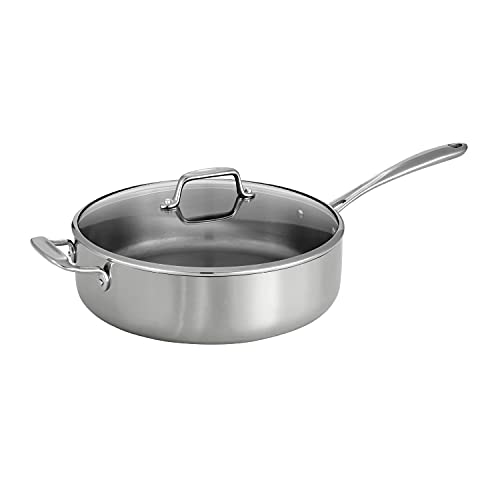
Tramontina Tri-Ply Clad Saute Pan
Tier: mid-range. In prose terms, this is the value clad option most home cooks compare first, offering the same basic construction idea as far pricier pans at an easier tier. Judge it on the same criteria as every other pick here: flat, even base; straight sides that meet the base in a clean corner; a lid that sits flat; a long handle that stays secure in a mitt; and a helper handle if the size is large. Treat the handle as hot in use, keep dry mitts close, and remember that its real test is a Tuesday-night braise, not a showroom shine. Best for: cooks whose priorities match its tier and build. Not suited for: cooks who need the opposite end of the weight, care or budget-tier scale. Availability and current listing details change often, so check the current Amazon listing before you buy.

Calphalon Classic Stainless Steel Saute Pan
Tier: mid-range. In prose terms, this is a widely available stainless pan with a helper handle on larger sizes, clear measuring marks inside on some models and an easygoing, familiar feel. Judge it on the same criteria as every other pick here: flat, even base; straight sides that meet the base in a clean corner; a lid that sits flat; a long handle that stays secure in a mitt; and a helper handle if the size is large. Treat the handle as hot in use, keep dry mitts close, and remember that its real test is a Tuesday-night braise, not a showroom shine. Best for: cooks whose priorities match its tier and build. Not suited for: cooks who need the opposite end of the weight, care or budget-tier scale. Availability and current listing details change often, so check the current Amazon listing before you buy.

Cuisinart Chef’s Classic Stainless Saute Pan
Tier: entry-to-mid. In prose terms, this is a long-running budget-friendly stainless line with a simple, light build that suits cooks who want straight sides and a lid without much weight. Judge it on the same criteria as every other pick here: flat, even base; straight sides that meet the base in a clean corner; a lid that sits flat; a long handle that stays secure in a mitt; and a helper handle if the size is large. Treat the handle as hot in use, keep dry mitts close, and remember that its real test is a Tuesday-night braise, not a showroom shine. Best for: cooks whose priorities match its tier and build. Not suited for: cooks who need the opposite end of the weight, care or budget-tier scale. Availability and current listing details change often, so check the current Amazon listing before you buy.

T-fal Stainless Steel Saute Pan
Tier: entry. In prose terms, this is an accessible starter pan for cooks testing whether the saute pan shape suits them before committing to a heavier clad upgrade later. Judge it on the same criteria as every other pick here: flat, even base; straight sides that meet the base in a clean corner; a lid that sits flat; a long handle that stays secure in a mitt; and a helper handle if the size is large. Treat the handle as hot in use, keep dry mitts close, and remember that its real test is a Tuesday-night braise, not a showroom shine. Best for: cooks whose priorities match its tier and build. Not suited for: cooks who need the opposite end of the weight, care or budget-tier scale. Availability and current listing details change often, so check the current Amazon listing before you buy.
Who Should Buy Which, and Who Should Skip the Category
Committed sauce-and-braise cooks should shortlist the premium clad pair and choose on handle feel and weight. Most households should start at the mid-tier clad option, which delivers the category’s core behaviour without the premium tier. Small households and cautious experimenters should look at the entry pair, accepting lighter builds as the price of a low-risk trial. Skip the category entirely if a deep lidded skillet already covers your cooking, if tossing is your core technique, or if the only storage is far from the stove, because distance quietly kills usage.
A useful exercise before buying is the two-week audit. Keep a scrap of paper near the stove and tally every time you reach for a wide pan, note what you cooked, and note every moment you wished the pan were deeper, had a lid, or splattered less. That tally is your real demand curve. If wide-pan cooking shows up four or five nights a week, the case for a good saute pan writes itself. If it shows up twice a month, borrow the jobs out to a deep skillet and spend the money and the cupboard space somewhere your cooking actually lives.
The secondhand and hand-me-down angle is real for clad stainless in particular. Because there is no coating to wear out, a used clad saute pan with a flat base and a tight lid is often a genuinely good buy, and a new one holds its usefulness for so long that cost-per-year falls quickly. Check a used pan the way you would check any pan: set it on a flat surface and look for wobble or spin, inspect the interior for deep pitting, and confirm the lid sits flat. Cosmetic scratches on the exterior are irrelevant to how it cooks.
Setup, Care and Maintenance Essentials
Stainless saute pans ask for simple, unglamorous care. Let the pan cool before washing so the base stays flat; a hot pan plunged into cold water can warp over time. Soak stuck fond in warm water, then scrub with a non-scratch pad; a paste of baking soda handles rainbow heat tint and light staining, and a stainless cleaner restores shine when the pan looks tired. Most clad pans are labelled dishwasher safe, but hand washing keeps handles tight, edges bright and finishes looking new for longer. Dry the pan before storing so water spots and mineral marks do not set up residence.
If you cook on induction, the base question comes first: the pan bottom must be magnetic and flat. Clad stainless pans vary, because some are built with a magnetic exterior layer specifically for induction and some older designs are not, so check the maker’s stated compatibility rather than assuming. A warped or domed base spins and buzzes on glass cooktops and heats unevenly on every surface. On gas, almost everything works, and the main watch-out is flame licking up the straight sides and overheating the walls. On electric coil, a flat, heavy base bridges the element best and resists the rocking that makes sauces slosh.
Oven use multiplies what this pan can do: frittatas finished under heat, braises moved off the burner, gratins of vegetables, chicken that sears on top and roasts through. Check two things before relying on it. First, the handle material and the lid knob set the real oven limit, not the pan body, and makers state that limit in their own guidance. Second, remember the standing rule that the whole pan, handle included, emerges at oven temperature, so the mitt habit matters most at exactly the moment the pan looks most inviting to grab. Mark the hot handle with a mitt left draped over it as a visual warning to everyone in the kitchen.
The classic saute pan mistakes repeat across kitchens. Crowding the pan so food steams instead of searing. Adding oil to a cold pan and food to cold oil, then wondering why everything sticks. Cranking the heat to maximum when clad pans do their best work at medium and medium-high. Lifting the lid every minute during a braise and losing the steady steam. Grabbing the bare handle bare-handed out of habit formed on a different pan. Using a wet mitt. Washing a screaming-hot pan under cold water. None of these need talent to fix; they need a small set of habits, repeated until they are automatic.
Final Verdict
Reviewed as a field, saute pans earn their reputation honestly. The best of them are not exciting in the way gadgets are exciting; they are calm, even, durable tools that make a whole family of dinners easier, and owner experience over years tends to confirm the first impression rather than reverse it. Pick by tier and by the cooking you actually do, respect the safety habits the shape demands, and you are very likely to join the owners who describe this pan, simply, as the one they reach for most.
Think, finally, about who else cooks in your kitchen. A saute pan is a teaching pan: it makes heat management visible, it rewards patience, and its lid-and-handle discipline builds safe habits that transfer everywhere. It is also a pan that punishes distraction, because a reducing sauce and a hot bare handle both demand attention. Households with new cooks, busy toddlers underfoot or frequent multitasking should weigh that honestly. The best pan is not the most capable pan in the abstract; it is the most capable pan that fits the way your kitchen actually runs on its most chaotic evening.
What Owners Report Over Time
Serving From the Pan
The saute pan is one of the few cooking vessels that can go straight to the table without looking like an apology. A braise, a shakshuka, a pan of chicken in sauce or a grain pilaf all present well in the vessel they cooked in, and serving from the pan keeps second helpings warm far longer than a cold serving dish does. Set the pan on a trivet, because the base stays hot enough to mark wood and scorch cloth, warn everyone that the handle is hot, and leave the mitt draped over that handle for the whole meal. It is a small ritual that prevents the one injury this pan most commonly causes at the table.
Reheating and Leftovers
A saute pan reheats food better than a microwave for anything that was once crisp, sauced or layered. Rice dishes revive with a splash of water and the lid on for a few minutes, then a brief uncovered finish. Sauced pasta loosens over gentle heat with a spoonful of its cooking water style liquid added gradually. Slices of frittata, gratins and braised meats warm through evenly because the wide base spreads heat instead of blasting one spot. The lid matters here as much as in cooking: it traps just enough steam to heat the centre before the edges dry out, which is precisely the failure mode of most reheating.
How Long Should It Last, Honestly
A clad stainless saute pan has no scheduled obsolescence. Its failure modes are physical: a base warped by repeated thermal shock, a handle loosened by years of heavy lifts, a lid knob cracked by a fall. Avoid quenching a hot pan in cold water, avoid using it as a hammer substitute in moments of frustration, and check handle fixings occasionally, and the pan should measure its service in decades rather than years. Nonstick versions live by different rules and should be bought with a shorter horizon in mind from the start. That difference in lifespan belongs in every value calculation, because the cheapest pan per year is rarely the cheapest pan on the shelf.
Utensils That Suit the Pan
A saute pan asks little of your utensil drawer. A flat-edged wooden spoon is the single most useful tool, because it scrapes fond from the base and corners without scratching and without noise. Tongs handle turning and lifting with control, a fish spatula slides under delicate fillets against the straight wall better than a bulky turner, and a whisk earns its place when a pan sauce needs smoothing. Metal utensils are safe on uncoated stainless, which is one of its quiet freedoms, but wood and silicone remain kinder during long simmers. What the pan does not need is a knife anywhere near its interior or an abrasive pad as a first resort.
Buying Second, Gifting and Handing On
Clad stainless saute pans are among the safest kitchen gifts and secondhand purchases, because there is no coating to assess and no electronics to fail. For a used pan, the checks are mechanical: the base must sit flat without rocking or spinning, the interior should be free of deep pitting, handles must be rigid, and the lid should sit level. For a gift, match the size to the household rather than your enthusiasm, and include the unglamorous accessories that make ownership safe and pleasant, namely good dry mitts and a trivet. A pan bought this way often outlasts the kitchen it was bought for, which is the strongest value statement the category can make.
What to Cook First
Choose forgiving first meals while the pan teaches you its heat. A braise of chicken thighs in tomatoes forgives almost everything and demonstrates searing, deglazing and simmering in one session. A pan of sausages with peppers and onions shows off capacity and fond-building with no delicate timing. A lentil and vegetable one-pan dinner proves the lid and the depth. Save the high-wire acts, the crisp-skinned fish and the fast sugar work, for the week when preheating and release have become instinct. Sequencing your first meals this way converts the learning curve from a warning into a short, pleasant apprenticeship.
Eggs, Fish and Other Delicate Work
Delicate foods are the honest stress test. Eggs in stainless demand the full technique: a properly preheated pan, fat heated until it shimmers, food added and left alone until it releases, and even then many cooks reasonably prefer a nonstick companion for a plain fried egg. Fish fillets reward the same patience and repay it with crisp skin that a timid pan cannot produce, provided the fillet goes in dry-side down and is not moved until the crust forms. The straight sides help here more than expected, because a spatula can slide along the base and use the wall for gentle leverage without crumpling the fillet.
Deglazing Is the Skill That Unlocks the Pan
Deglazing is the thirty-second move that separates saute pan owners who merely own the pan from those who exploit it. When seared food leaves the pan, a concentrated layer of browned juices, the fond, coats the base. Pour in a splash of stock, wine or plain water while the pan is still hot, and that layer dissolves into the liquid as you scrape with a wooden spoon, becoming the foundation of a sauce with more depth than anything from a jar. The saute pan’s flat base and clean corner make the scraping easy and complete, and the straight sides keep the bubbling liquid inside while it reduces. Practise on a weeknight chicken dinner and the technique becomes reflexive within a few attempts.
Small Habits That Make the Pan Feel Effortless
Ownership feels effortless when a handful of habits become automatic. Preheat with intention rather than by timer. Dry food before it meets oil. Keep the mitts in one fixed place near the stove so your hand finds them without thought. Rest the pan off the heat for a moment before washing. Wipe the base dry before it goes back on a glass cooktop, so grit does not grind between pan and surface. None of these habits is a technique worth boasting about, and together they are the entire difference between a pan that feels demanding and a pan that feels like an extension of the cook.
A Simple Pilaf Method That Shows the Pan Off
If you want one recipe pattern that demonstrates everything this pan does, make a pilaf. Soften onion in oil over medium heat, stir in rice until the grains glisten and turn translucent at the edges, add seasoned liquid, bring it to the gentlest simmer, then lid the pan and leave it entirely alone on the lowest heat. Rest it off the heat, still lidded, before fluffing with a fork and folding through herbs, nuts or vegetables. The wide base cooks the grains evenly, the lid holds the steam ratio steady, and the same pan goes to the table. Master that pattern and you have a template for grains, lentils and small pasta shapes alike.
Shallow Frying Without the Mess
Shallow frying is an underrated saute pan job. The straight, moderately deep walls hold a shallow layer of oil securely and cut the splatter that makes skillet frying such a stovetop chore, while the wide base lets cutlets, fritters and breaded vegetables cook in a single uncrowded layer. Keep the discipline simple: dry food surfaces so the oil stays calm, lower pieces in away from you, leave space between them so the temperature holds, and lift them out onto a rack or paper to drain rather than back into the pan. The lid should stay off during frying, because trapped steam softens the crust you are working to create.
When a Sauce Misbehaves
Sauces fail in predictable ways, and the saute pan helps you rescue most of them. A sauce that is too thin needs time and surface, both of which the wide base provides as it reduces uncovered over gentle heat. A sauce that breaks or looks greasy usually wants to come off the heat and be whisked with a splash of cold liquid or a knob of cold butter to come back together. A sauce that scorches in one ring is telling you about a hot spot and an unstirred corner, so lower the heat and keep a wooden spoon moving through the corners. A sauce that tastes flat usually needs salt or acid at the end, added in small steps, not more cooking.
Heat Management on Different Stoves
The same pan behaves differently on every heat source, and learning your pairing is part of ownership. On gas, watch the flame width: flames curling up the straight sides waste heat and scorch the walls, so keep the flame mostly under the base. On electric coil and radiant glass, give the heavy base time to preheat evenly, because the element cycles and the pan must smooth those cycles out. On induction, the pan responds almost instantly, which is wonderful for sauces and dangerous for complacency, since a reducing sauce can go from gentle to scorched between glances. In every case, medium and medium-high do most of the real work.
Cleaning the Stubborn Cases
Most days the pan washes easily, but stubborn cases have their own ladder of responses. For ordinary stuck fond, fill the warm pan with water and let time do the work, then wash normally. For browned polymerised oil around the edges, a baking soda paste and patience restore the surface without drama. For a scorched sauce layer, simmer water with a spoonful of baking soda in the pan itself and let the residue lift as it softens. Work up that ladder slowly and skip steel wool entirely; a stainless interior forgives a great deal, but deep scratches from aggressive abrasives are permanent and make future sticking marginally worse.
Cooking Acidic Foods
Tomatoes, wine, vinegar and citrus are where stainless quietly proves its worth. Unlike reactive pans, a stainless interior does not discolour or lend a metallic note to long-simmered acidic sauces, so a tomato braise can cook start to finish in the same vessel that seared the meat. That non-reactive surface is also why pan sauces built on wine deglazing taste clean. The practical notes are simple: acidic liquids lift fond beautifully, so expect easy cleaning afterwards, and avoid storing acidic food in the pan overnight in the refrigerator, not because the pan will suffer greatly, but because flavours and finishes both prefer a storage container.
The Two-Pan Strategy
Many experienced cooks settle on a pairing rather than a single champion: the saute pan for anything involving liquid, and a flared skillet or nonstick pan for tossing, eggs and fast dry work. The pairing sounds indulgent until you notice how completely the two shapes divide the week between them, and how rarely either is forced into a job it dislikes. If budget or space allows only one, choose by your dominant cooking style and accept the compromises documented in these pages. If both are possible over time, buy the saute pan first when sauces and braises lead your cooking, because its jobs are the harder ones to improvise with substitutes.
The First-Week Scorecard: Testing This Saute pan at Home
Apply the identical test to Made In Stainless Clad Saute Pan as well, on the same day and under the same conditions, because a fair comparison needs one ruler rather than two moods. If Tramontina Tri-Ply Clad Saute Pan is also in contention, give it the same worksheet and let the three sets of answers sit side by side before anyone reaches for a checkout button. Score the storage reality: whether the saute pan and its parts return to their spot without a rearrangement ritual, and whether anything migrates to a counter because it has no home. Score the noise, heat, steam, or vibration against the room it lives in, at the hour you most often use it, and note whether anyone in the household comments unprompted.
Score the small parts: lids, seals, trays, attachments, and fasteners, because in long ownership the small parts are where satisfaction quietly leaks away. Score the documentation by looking up one real question mid-task and timing how long the answer takes to find, in the booklet or on the maker’s support pages. Score the fit against the measurements you took before ordering, and note any surprise, generous or otherwise, while the details are still fresh enough to help another buyer. Score the second user experience by watching someone else in the household use the saute pan without coaching, and noting exactly where they hesitate or guess.
- Time the box-to-ready setup
- Repeat the core job on two separate days
- Time the full clean including drying
- Watch a second user try without coaching
- Deliberately make the common mistake once
- File the scorecard with the receipt
Score the worst job, not the best: the largest load, the trickiest ingredient, or the latest tired evening, because that score predicts your feelings in month six. Score the recovery: deliberately make the common mistake, such as overfilling, mis-seating a part, or choosing the wrong setting, and judge how obvious and forgiving the fix is. Add the scores without weighting them, then read the lowest two again, because those are the entries that decide whether this example stays in your house. If a low score surprises you, repeat that single test once before concluding anything, since first attempts often measure the operator rather than the product.
Keep the finished scorecard with the receipt and warranty details, so a future claim, resale, or replacement decision starts from evidence rather than from a fading impression. Revisit the card after a month and change only the scores that genuinely moved, because the difference between week one and month one is the learning curve made visible. Note which score you would check first if you were buying a second saute pan as a gift, since that priority usually reveals what the product is really about. Finish by writing one sentence describing who should not buy this example, because a clear exclusion is the most useful line in any honest assessment.
Whatever the category, photograph your intended spot with the neighbouring items in place, because a picture exposes crowding that measurements alone politely ignore. Keep every measurement, tally, and note from these checks in one place, ideally with the receipt, so the next decision in this category starts from your evidence rather than from scratch. Involve the household early where the product is shared, since a decision everyone helped measure is a decision nobody relitigates at the first inconvenience. Prefer the option that fits your existing routine with the fewest new habits, because each new habit is a small tax collected every single day.
Be wary of solving a storage problem by creating a carrying problem, since distance between storage and use is where good equipment goes to be forgotten. Check the return conditions before the trial period begins, and calendar the last safe decision day, so the deadline works for you instead of surprising you. Judge the packaging and unboxing only once, briefly, and then ignore them, because they are the one part of ownership guaranteed never to repeat. Let the second week arbitrate disputes from the first, since novelty inflates both delight and irritation beyond their durable values.
Frequently Asked Questions
What is the difference between a saute pan and a frying pan?
The walls decide it. A frying pan, also called a skillet, flares its sides outward, which vents steam quickly and makes tossing food easy. A saute pan keeps its sides straight and vertical, holds more liquid at the same diameter, splatters less and seals a fitted lid better. In practice the skillet wins for quick, dry, tossed cooking, while the saute pan wins for searing followed by sauce, braising and one-pan meals with liquid. Many kitchens happily use one shape for both jobs.
Can a saute pan replace a skillet?
For most households, mostly yes. A saute pan sears, fries eggs with a little care, wilts greens, builds sauces and braises, which covers the great majority of skillet work. What you give up is the easy wrist-toss and the fastest steam escape for crisp vegetables, plus slightly trickier spatula angles in the corners. If you already own a deep skillet with a lid, the overlap is heavy and a saute pan adds refinement rather than a whole new capability. If you own no wide pan at all, the saute pan is a strong single choice.
Are metal saute pan handles safe to grab?
Only with protection. Bare metal handles conduct heat from the pan body and from the oven, and they give no visual warning as they get hot. Treat every handle as hot, keep dry mitts or a thick dry towel within reach of the stove, and build the habit of never touching the handle bare-handed. A damp mitt is dangerous because moisture turns to steam against hot metal. When a pan comes out of the oven, leave a mitt draped over its handle so nobody else in the kitchen grabs it by reflex.
How do I stop food splattering when it goes into hot oil?
Water is the cause, so remove the water. Pat proteins dry, shake greens and vegetables free of rinse water, and dry the surface of anything that was marinating. Preheat the pan, let the oil shimmer, then lower food in gently and lay it away from you so any splash travels away from your body. Do not crowd the pan, because crowding drops the temperature and creates steam that spits. If oil is smoking hard, take the pan off the heat and let it calm down instead of adding food.
Why does steam burn when I lift the lid?
A lidded pan holds a pocket of steam at cooking temperature, and lifting the lid releases it in one rush, usually toward the hand and face doing the lifting. Vent it away from you: raise the far edge of the lid first and tilt it so the steam escapes on the far side, keeping your hand above the handle rather than in the steam path. Set the lid down on a trivet, because the condensation underneath is near boiling and will mark counters and scald fingers that brush it.
Is a saute pan hard to clean?
A stainless saute pan is easier than its reputation. Let it cool, soak it in warm water to loosen fond, and wash with a non-scratch pad; a baking soda paste lifts heat tint and light staining. Most stuck-on residue is actually tomorrow’s flavour that did not get deglazed, so a splash of water in the hot pan after cooking loosens nearly everything. Avoid plunging a hot pan into cold water, which can warp the base over time, and dry the pan before storing it to prevent water spots.
Related Guides
saute pan worth it reading saute pan buying guide saute pan pros and cons saute pan review best stainless steel frying pans for comparison fry pans and skillets buying advice tri-ply cookware sets explained stainless steel cookware sets Made In cookware picks Tramontina cookware sets


