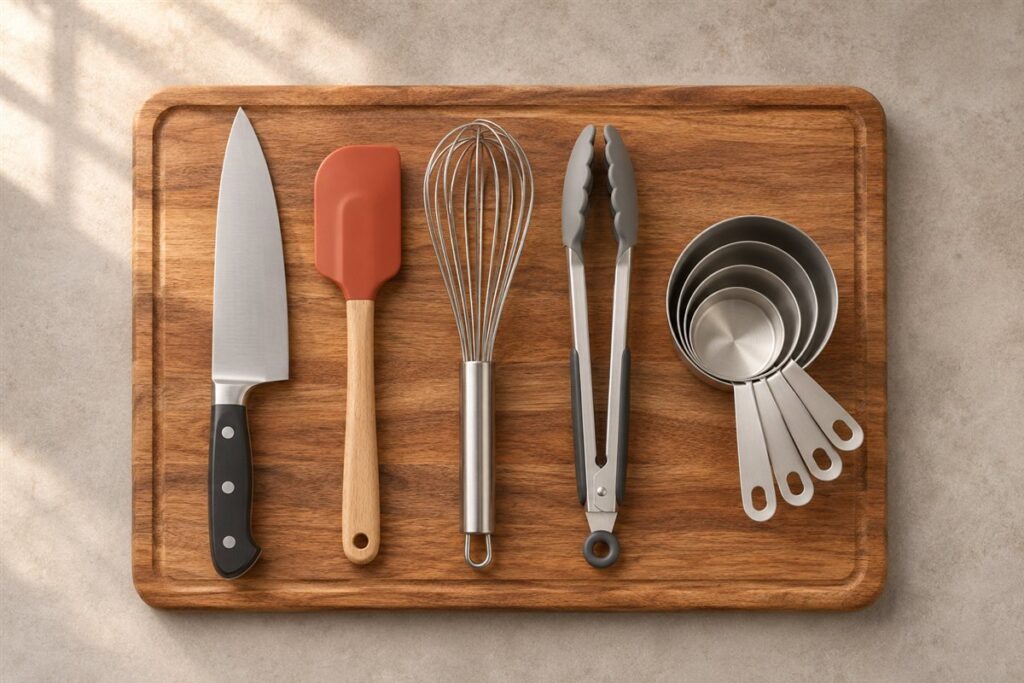
Wood boards are kind to knife edges and look good on the counter, but they need hand washing and occasional oiling. Plastic boards are lighter and often dishwasher friendly, if the maker allows it, but they scar over time. Neither is simply better, so it comes down to how you cook and clean.
What Each Material Offers
A wood board has a slight give under the blade, which many cooks find comfortable and gentle on knife edges. It is also sturdy enough to double as a serving board for bread or cheese.
A plastic board is usually thin, light and easy to move around. It comes in many colors, which some cooks use to keep raw meat, vegetables and bread on separate boards.
Side-by-Side Differences
| Factor | Wood | Plastic |
|---|---|---|
| Feel under the knife | Soft, slight give | Firm, can feel slick |
| Washing | By hand, dry upright | By hand or dishwasher if the maker allows |
| Upkeep | Occasional oiling | None, but replace when deeply grooved |
| Weight | Heavier, stays put | Lighter, may slide |
| Look | Natural grain | Utility style |
Care and Wear
Wood needs a gentle routine: wash soon after use, dry on its edge, and oil when it looks dry. Deep cuts can be sanded back in many cases.
Plastic grows knife grooves with use. Once a board is deeply scored, food and moisture can collect in the cuts and it becomes harder to clean, so it is sensible to replace it. Always wash boards well after cutting raw meat, poultry or fish and follow your local food hygiene guidance.
Which to Choose by Use
- Choose wood for everyday chopping, slicing bread and serving, if you do not mind a little upkeep.
- Choose plastic for raw meat prep, quick cleanup, or when you want a lightweight board to carry to the sink.
- Choose one of each if you cook a lot, using plastic for raw items and wood for ready-to-eat foods.
- Choose a board with a juice groove or non-slip feet if you carve roasts or cut juicy fruit.
Size and Storage
Whichever material you choose, size matters. A board should be large enough to hold a whole onion or a loaf without food falling off the edges, yet small enough to fit in your sink and cabinet. Many cooks keep a large board for big jobs and a small one for quick tasks like slicing a lemon.
- Measure your counter and sink before you buy.
- Check that the board lies flat and does not rock.
- Store wood upright or on a rack so air can circulate.
- Store plastic flat or in a slotted holder, away from the stove.
FAQ
Does a board’s material change how long knives stay sharp?
Softer surfaces tend to be kinder to edges, while very hard surfaces wear them faster. Avoid glass or stone boards for regular chopping.
Can I use one board for everything?
You can, but separate boards for raw and ready-to-eat foods make hygiene easier to manage.
The Short Version
Choose wood if you like a sturdy, attractive board and are happy to care for it. Choose plastic if you want light weight and easy cleaning. Many kitchens do best with one of each.