Disclosure: As an Amazon Associate, topratedkitchenware.com earns from qualifying purchases. Links to Amazon on this page are affiliate links; they cost you nothing extra. Listing details such as price and availability change often, so check the current Amazon listing before you buy.
Lifting a full five gallon jug over your head and flipping it onto a cooler is the part of owning a water dispenser that most people dislike. The best bottom loading water coolers solve that problem by hiding the bottle in a cabinet at the base, so you slide it in at knee height and let a small pump do the lifting. This guide looks at four bottom loading models sold on Amazon and explains what separates them.
It is written for households, small offices and anyone with a sore back or a shoulder that does not enjoy heavy lifting. You will find a quick comparison table, a closer look at each cooler, advice on black finishes and glass bottle setups, and a plain explanation of what Oasis style bottom load units are. We also cover how to choose, set up and care for one safely.
Everything here comes from manufacturer listings and published specifications, so always confirm the current details on the product page before you order.
In this guide
Quick Picks
- Avalon A1 Bottom Loading Water Cooler A1BLWATERCOOLER
- Brio 500 Series Bottom Loading Water Cooler CLBL520UVF
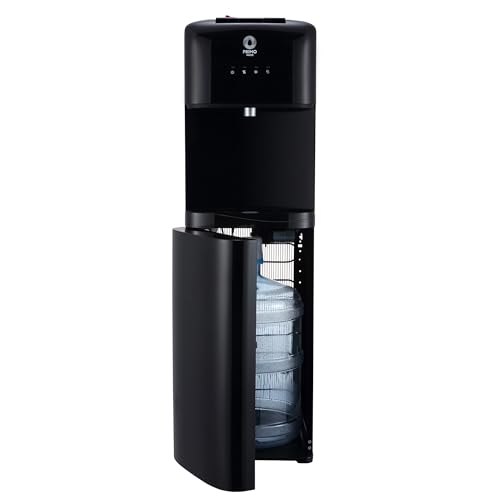
- Primo Water Dispenser Bottom Loading Hot Cold Room Temperature
- hOmeLabs Bottom Loading Water Dispenser
- Best Black Bottom Loading Cooler
Quick Comparison
| Product | Best for | Main point | Link |
|---|---|---|---|
| Avalon A1 Bottom Loading Water Cooler A1BLWATERCOOLER | Families wanting a familiar full size cooler | Hot and cold taps with a cabinet for the bottle | Avalon A1 Bottom Loading Water Cooler Dispenser A1BLWATERCOOLER |
| Brio 500 Series Bottom Loading Water Cooler CLBL520UVF | Buyers who care about cleaning features | Self cleaning function listed by the maker | Brio Self Cleaning Bottom Loading Water Cooler CLBL520UVF |
| Primo Water Dispenser Bottom Loading Hot Cold Room Temperature | People who already swap Primo bottles | Three temperature choices on one unit | Check on Amazon |
| hOmeLabs Bottom Loading Water Dispenser | Apartments and smaller floor plans | Compact build with a front loading cabinet | hOmeLabs Bottom Loading Water Dispenser Hot and Cold |
How These Options Were Chosen
We picked these coolers from manufacturer listings and published specifications. We have not used any of them ourselves, so nothing below is a personal verdict on build quality or noise.
To make the list we looked for a true bottom loading design, a recognised brand that sells through Amazon, and a feature set that suits different homes. Where a listing was unclear about a model code or finish, we say so and ask you to check the page. Please treat the details here as a first reference and verify them before you buy.
4 Best Bottom Loading Water Coolers
Avalon A1 Bottom Loading Water Cooler A1BLWATERCOOLER
Avalon is one of the more familiar names in home water dispensers, and the A1 is its straightforward bottom loading unit. The maker lists hot and cold dispensing from separate taps, a cabinet door at the front, and room for a standard three or five gallon bottle. It is the sort of cooler that looks at home in a kitchen corner or hallway.
The appeal is simplicity. You open the door, set the bottle on the base, connect the pickup tube and close up. The listing mentions a safety lock on the hot tap, which is a feature to read about in the manual before you rely on it. Several finishes are offered, so people hunting for a black bottom loading cooler should look at the colour options on the page.
The trade-offs are the usual ones for this style. A bottom loading unit is deeper and heavier than a countertop model, and the internal pump adds a little sound when it pulls water up from the jug. You also need clear floor space, plus a nearby outlet that is not shared with other heavy appliances.
Skip it if you only have a narrow nook, or if you want filtered water without a bottle. Choose it if you want a mainstream, full height cooler and plan to keep buying standard five gallon jugs.
Avalon A1 Bottom Loading Water Cooler Dispenser A1BLWATERCOOLER
Brio 500 Series Bottom Loading Water Cooler CLBL520UVF
Brio sells a range of home and office coolers, and the 500 series bottom loading models are aimed at buyers who want a little more than the basics. The maker describes a self cleaning function for this line, which is the main reason to look at it. Confirm on the current listing exactly how that feature works and how often it needs attention, because the details matter for upkeep.
Like other bottom loading coolers, it has a lower cabinet for the jug and a pump that sends water to the hot and cold taps above. The look is more modern than traditional, with a slimmer front panel and a cleaner outline. That makes it a reasonable fit for an open plan kitchen where the cooler is visible from the living area.
The compromise is that extra features usually mean more parts to maintain. A self cleaning cycle does not replace wiping the drip tray, checking the reservoir and swapping bottles on schedule. Always follow the maker’s instructions for any cleaning routine and for the hot water tap.
It suits households that want a tidy design and dislike scrubbing. Skip it if you want the simplest possible machine, since more functions can also mean more to read in the manual before first use.
Brio Self Cleaning Bottom Loading Water Cooler CLBL520UVF
Primo Water Dispenser Bottom Loading Hot Cold Room Temperature
Primo is closely tied to bottle exchange programs, and its home dispensers are built around that habit. The bottom loading version offers hot, cold and room temperature choices, which gives it more flexibility than a simple two tap cooler. The model codes in this family change by retailer and year, so check the exact code on the listing before comparing it with anything else.
It makes sense for people who pick up bottles at a grocery store or exchange point. Slide the jug into the lower compartment, connect it and you are done. For households that mostly drink cold water but occasionally want a cup of tea, the room temperature tap is a useful extra that avoids heating the whole tank.
Some points to weigh. Different bottle types fit differently, so make sure the jug you normally buy matches what the cabinet accepts. If you like glass bottles, check the listing for the weight and size limits the maker allows before assuming it will take one.
Anyone who dislikes cabinet-style units should look at countertop models instead. Pick this Primo if you already live in the bottle exchange routine and want a solid, no frills base for it.
hOmeLabs Bottom Loading Water Dispenser
hOmeLabs is known for small appliances, and its bottom loading dispenser is aimed at buyers who have less space than a typical family kitchen. It dispenses hot and cold water and uses a front door to access the bottle. Exact dimensions and capacity vary by listing, so measure your corner against the numbers on the page.
The main attraction is a smaller footprint. If your cooler will live in an apartment, a studio or a small office nook, a slimmer cabinet can mean the difference between fitting and not fitting. A bottom loading layout also keeps the jug out of sight, which helps in a room where looks matter.
Be realistic about the limits. A compact cabinet may restrict the bottle shapes it accepts, and a smaller unit may not recover as quickly after heavy use. If many people draw water through the day, a larger cooler could be a better match.
Choose it for tight spaces and light use. Skip it if you want a premium finish or a large reservoir for a busy break room.
hOmeLabs Bottom Loading Water Dispenser Hot and Cold
Best Black Bottom Loading Cooler
If a dark finish is the priority, the Avalon A1 is the first model to check, since the maker offers more than one colour. Black hides fingerprints better than stainless steel on a busy day, though it can show dust and water spots. Wipe it with a soft cloth and avoid abrasive cleaners that might mark the surface.
Best for Glass Bottles
Glass jugs are heavier and bulkier than plastic ones, so read the weight and size limits before buying. The Primo family is the natural place to look if you want a glass bottle routine, but confirm that the specific bottle you plan to use fits the cabinet and the pickup tube. Never force a bottle into a space that is too small.
Best for Cleaning Convenience
The Brio CLBL520UVF stands out here because the maker lists a self cleaning function. It will not remove the need for regular care, but it can make routine upkeep feel less like a chore. Read the instructions so you know which steps are automatic and which are still manual.
Best for Small Spaces
The hOmeLabs unit is the one to consider when floor area is tight. Measure the width, depth and height, then add a few inches behind the cooler for air flow and the cord. Make sure the door can swing open fully, otherwise changing the bottle becomes awkward.
What Oasis Style Bottom Load Coolers Are
Shoppers often search for Oasis bottom load water coolers because Oasis is a long standing name in office water service. Many of its units are supplied through resellers and rental programs rather than sold as simple retail appliances. If you want one, check the seller, warranty terms and parts support on the listing, and compare it with the retail models above.
How to Choose
Begin with the bottle. Most bottom loading coolers are built for three or five gallon jugs, and the style of the neck and cap can matter. Look at the product page for the sizes the maker supports, and read customer questions for clues about unusual bottles.
Next, measure your space. A bottom loading cooler is taller and deeper than a countertop unit, and it needs clearance at the front to open the door. A few inches around the back and sides helps air move around the compressor and keeps the unit working properly.
Think about temperature. Hot and cold taps are standard, but a hot tap should always be used with care. Check whether the model has a lock, how it operates and how to switch the heating off when you do not need it. Some households save energy by turning heating off while away, following the maker’s instructions.
Consider how much water you actually use. A big family or a small office will draw water often, and a larger reservoir can help. A couple that fills a few glasses a day may be happy with a modest unit.
Finally, look at upkeep. Drip trays, reservoir access and any self cleaning feature all affect how much time the cooler will take over the years. Common mistakes include buying for looks alone, forgetting to leave space for the door, and ignoring the outlet. A cooler on a crowded power strip is not a good plan, so use a suitable wall outlet.
Installation, Safety and Legal Notes
Unpack the cooler, remove all packing material and let it stand upright for the time the maker recommends before plugging it in. Follow the manual for sanitising the reservoir and for the first fill. Keep the unit away from heat sources and direct sun.
Hot water can cause scalds, so follow the maker’s instructions for the hot tap and any lock. Use a grounded wall outlet that suits the unit’s rating, and avoid extension cords. If you have any doubt about your wiring, ask a licensed electrician. Rules for rental units and workplaces vary, so check any local requirements that apply to you.
Care and Troubleshooting
| Symptom | What to check |
|---|---|
| Gurgling or bubbling | Normal when a bottle runs low; swap it for a new one |
| No water from taps | Check the pickup tube, the bottle seal and the pump connection |
| Water not cold | Give it time, confirm the cold switch is on and leave space around the unit |
| Dripping onto the tray | Empty the tray and check the taps are fully closed |
Clean the drip tray regularly, wipe the exterior with a soft cloth and follow the maker’s guidance for sanitising the reservoir. Unplug the unit before any cleaning that involves the inside, and never spray liquid at the back panel.
Setting Up a Bottom-Loading Cooler Step by Step
Bottom-loading water coolers hide the bottle in a cabinet so you do not have to lift a heavy jug overhead. The setup is straightforward, but it pays to follow the sequence in the manual and keep the unit clean from the beginning.
- Pick a spot. Choose a level floor near an outlet, away from direct sun and heat sources, with a little clearance on the sides and back for airflow.
- Clean before use. Wipe the dispensing area and the interior of the cabinet as the maker instructs.
- Connect the bottle. Slide the bottle in, attach the probe or cap adapter, and close the door.
- Let it fill. Allow the internal tanks to fill, then dispense and discard the first few cups if the manual suggests it.
- Plug in and wait. The cooling and heating functions need time to reach their set temperatures.
Keep the manual somewhere easy to find. It lists the sanitizing method and the schedule the maker recommends.
Hot, Cold and Room Temperature Controls
Many bottom-loading coolers offer more than one temperature. Knowing what each tap does helps you use the unit safely and efficiently.
| Tap | Typical use | Safety note |
|---|---|---|
| Cold | Drinking water | Allow time to chill after refilling the tanks |
| Hot | Tea, instant soup, hot drinks | Child safety lock should stay on if kids are nearby |
| Room temperature | Pet bowls, baby preparation, cooking | Not all models include it |
Hot water taps can cause burns. Most models include a safety lock or a two-step button, and you should keep it engaged in homes with children or pets. Follow the maker guidance on the proper use of the hot function.
Keeping the Water Fresh: Cleaning and Maintenance
A water cooler is only as good as its upkeep. Moisture and warm temperatures can encourage buildup inside the reservoir, and a regular cleaning schedule prevents unpleasant tastes and odors.
- Wipe the dispensing area and drip tray regularly.
- Sanitize the reservoir according to the maker instructions, using the cleaning solution they recommend.
- Replace any filters on the schedule given in the manual.
- Change the bottle promptly when it runs out.
- Keep the unit unplugged while cleaning internal parts.
Use only bottles that suit your model and are approved by the bottle supplier. If the water smells or looks unusual, stop using the cooler, clean it thoroughly and contact the maker or the water supplier for advice.
Bottled Water Versus a Filtered Line: Which Suits You
Some bottom-loading coolers use bottles, while others connect to a water line with a filter. Bottle models are simple to set up and portable, though you need to arrange deliveries and storage for spare jugs. Line-fed models save the hassle of bottles but require a plumbing connection, which a licensed plumber should handle if you are not experienced. Think about the space you have, how many people will use the cooler and how much water you drink each day.
Reading a Water Cooler Listing
Look at bottle size compatibility, the number of taps, the cabinet height and the electrical requirements. Check the energy use information from the maker, the noise level and the warranty terms. Consider cabinet color and finish, since the cooler may sit in a visible spot. Confirm that spare parts and filters are available for the model, because upkeep depends on them.
Placement and Space Planning Checklist
- Floor space: measure width and depth, and leave a few inches around the sides and back for airflow.
- Height: check that the tap height fits the tallest bottle or pitcher you use.
- Door swing: make sure the cabinet door opens fully so you can change the bottle without moving the unit.
- Outlet access: plug directly into a wall outlet, and avoid long extension cords.
- Floor surface: a level surface keeps the unit stable and prevents leaks.
- Drips and spills: place a mat beneath if the floor is delicate.
Noise and Energy Habits
A cooler cycles on and off as it keeps water at the chosen temperature, so you may hear a soft hum from time to time. If the sound bothers you, place the unit away from bedrooms and quiet reading spots. To reduce energy use, set the temperature as the maker recommends, switch off the hot function if you rarely use it, and keep vents clear of dust. Check the manual for an energy saving mode, which some models include. Move the unit only when it is empty, unplugged and drained, as the maker instructs.
Frequently Asked Questions
Are bottom loading coolers harder to set up than top loading ones?
Not usually. You connect a short tube to the bottle and close the cabinet. The first time takes a few minutes while you read the manual.
Can I use any five gallon bottle?
Most standard jugs fit, but neck styles and bottle shapes vary. Check the cooler’s listing for supported bottle types before ordering a supply.
Do these coolers need a water line?
The models here use bottles, so no plumbing is needed. That keeps installation simple, but you do need a place to store spare jugs.
Is a black finish harder to keep clean?
It shows dust and water spots more easily than some finishes, but a soft damp cloth usually keeps it neat.
Why does mine make a noise when the bottle gets low?
A gurgle is common as the pump pulls the last of the water. It is a sign the bottle needs replacing.
Can I leave the hot tap on all the time?
Many people do, but follow the maker’s instructions and consider switching heating off during longer absences.
The Pump: How a Bottom Loader Moves Water, and Why It Matters
Everything distinctive about a bottom loading cooler flows from one component: the pump. Instead of gravity dropping water from a bottle on top, a bottom loader keeps the bottle upright in a lower compartment and draws water up through a probe and tube into the tanks above. That single change explains the style’s virtues, its sounds and its few characteristic problems, so it is worth understanding in plain terms before comparing models.
The virtues follow directly. Because the bottle stays upright and low, changing it is a matter of sliding and lifting at floor level rather than hoisting overhead, which is the entire reason the style exists. Because the bottle is hidden, the cabinet looks tidier and the kitchen sees a clean front instead of a large plastic shoulder. And because the water is drawn rather than poured, the neck and cap arrangement matters less than the probe’s fit, which the setup section above covers step by step.
The sounds and problems follow just as directly. The pump runs briefly after water is drawn, so a bottom loader has a short working noise that a top loader never makes, usually a matter of moments and easy to live with once recognised. If the bottle empties completely, the pump may draw air and sound strained until the bottle is changed, which is the machine’s way of asking for attention. And because the pathway includes a tube and probe that live inside the bottle, those parts join the cleaning routine in a way a top loader’s simple collar never does. None of this makes the style complicated; it makes it specific. Owners who know what the pump is doing almost never mistake its normal behaviour for a fault, and they spot its genuine complaints early, when they are cheap and easy to answer.
Living With a Bottle You Cannot See
The hidden bottle is the bottom loader’s elegance and its one small discipline: you cannot glance at the water level as you pass. Households adapt in one of three ways, and it is worth choosing yours deliberately rather than drifting into the third. The first is the scheduled glance: open the door when you wipe the machine or at a set point in the week, and judge the level with your eyes. Bottles are translucent enough for this, and a ten second check on a Friday prevents the Saturday surprise.
The second is learning the machine’s own signals. As a bottle nears empty, the pump’s runs grow longer and more frequent, the flow at the taps may falter, and the sound of air entering the system changes the character of a pour. Owners who drink from the machine daily learn this language within a couple of bottles, the way drivers learn a fuel gauge’s habits, and they change bottles on the last inch rather than the last drop. The third way, drifting, is to wait until the taps cough and the pump strains, every time. It works, in the sense that the machine tells you eventually, but it wears the pump’s patience and always seems to happen mid gathering.
A spare bottle solves the timing completely, as it does for every bottled style, and bottom loading makes the spare easier to store because it waits upright in any corner rather than needing to be lifted into position at the change. Keep the spare near the machine, keep the cap on until the moment of the change, and the invisible bottle becomes a non issue: a weekly glance, a listening ear, and a full bottle in reserve are the whole system.
The Four Picks, Matched More Closely to Households
The Avalon A1 is the straightforward expression of the style in this guide, the one for a household that wants bottom loading’s core benefit, the easy change, without a long list of extras to manage. Its black finish, discussed in the questions above, suits kitchens that run dark and modern, and the cleaning routine it asks for is the standard one this guide describes. If your decision is mainly about the lifting, the A1 is where the shortlist starts.
The Brio 500 Series model adds a self care emphasis to the same basic arrangement, with the ultraviolet feature in its name pointing to the maker’s approach to keeping the water pathway fresh. For households whose worry is not the bottle change but the upkeep, that emphasis is the reason to choose it, and the review above sets out what it involves. The Primo bottom loader is the familiar name in the category, the one many households meet first through workplaces and rentals, and its room temperature option alongside hot and cold suits homes that draw water for many purposes across a day. The hOmeLabs is the compact thinker of the four, the one to weigh when the space is small and every inch of the footprint has to justify itself, accepting that a smaller cabinet asks a little more care in placement and clearance.
Notice what the comparison is really about: not which machine is best, but which concern leads your household. Lifting, upkeep, familiarity or footprint: name your leading concern honestly, and the four reviews above will usually point to one machine within minutes. Households that try to optimise all four concerns at once end up with a compromise they feel daily, while households that name their leader get a machine that feels made for them.
The Bottle Change, Done Calmly and Cleanly
The bottom loading change is easy, but it has a technique, and the technique is mostly about water that is still in the system. Begin before the old bottle is entirely empty if you can, since a change made at the last inch is calmer than one made with the pump drawing air. Have the new bottle ready beside the machine, cap on, before the door opens, so the compartment is never standing open while you fetch and prepare. Wash or wipe your hands, because the probe you are about to handle lives inside the drinking water, and treat it with the respect that fact deserves.
Draw the probe out of the old bottle steadily, keeping it over the bottle or a cloth, since the tube holds a little water that will look for the floor. Move it directly into the new bottle rather than resting it on surfaces, seat it fully as the manual directs, and slide the bottle home so the door closes without force. A door that needs force is telling you the bottle is not seated; stop and look rather than pushing, because a pinched tube or a bottle resting on the probe will announce itself later as poor flow. Once closed, draw a glass or two to bring fresh water through, listen to the pump complete a normal cycle, and check the floor and compartment for any dampness before you walk away.
Deal with the empty bottle straight away, cap it if a cap is available, and put it where empties live in your house. The whole change takes a few minutes, most of them unhurried, and it is worth teaching to everyone in the household who might do it, with the same short demonstration. A change done the same way by every person is a change that never introduces a mystery taste, a kinked tube or a door left ajar, and consistency, in a system this simple, is most of what reliability means.
Doors, Seals and the Compartment: The Care That Is Specific to This Style
A bottom loader has a room inside it that a top loader does not, and that room needs a share of the cleaning attention. The compartment floor collects the drips of a dozen bottle changes, the condensation of cold bottles in warm weather, and the dust that any floor level space gathers. Wipe it whenever a bottle is changed and you have the door open anyway; the habit costs thirty seconds at the exact moment access is free, and it prevents the compartment becoming the one part of the machine nobody wants to look into.
The door seal and the door itself matter more than they appear to. The seal keeps the compartment’s cool, quiet environment closed, and a seal that is nicked, gritty or trapped will let the door sit slightly open, which the machine may answer with more frequent pump and cooling work. Run a cloth along the seal at bottle changes, check that nothing is stored in the compartment except the bottle, tempting as the space looks, and close the door with a press rather than a swing. The probe and tube deserve the same regular respect: handle them by their solid parts, never let the probe rest on the floor or a worktop, and follow the manual’s cleaning guidance for them on the same schedule as the reservoir clean.
None of this is extra work invented for its own sake. It is the bottom loading style’s version of the top loader’s collar wipe: the small, specific act of care that the design asks in exchange for its main convenience. Pay it gladly and the style’s promise holds for years; skip it and the machine will still work, but the compartment will slowly become the reason you hesitate to open the door in front of guests.
Bottom Loading for Older Relatives and Busy Landlords
Two settings show this style at its best, and both are worth a direct word. The first is the home of an older relative who is determined, rightly, to keep managing their own house. The barrier in a bottled cooler was never the water; it was the lift, and bottom loading removes it while keeping everything else familiar. Set the machine up for them, stock the spare bottle where it can be slid rather than carried across a room, and write the bottle change steps in large, plain language on a card kept inside the door. A cooler an older person can run entirely alone is a small independence preserved, and families consistently underestimate how much that matters until they see it working.
The second setting is the rental or managed property, where a landlord or agent wants water facilities without plumbing work and without asking tenants to perform overhead lifts with heavy bottles. A bottom loader installs with a socket, asks for no alteration to the building, and its hidden bottle keeps a furnished property looking tidy between tenancies. The handover routine is simple: a fresh bottle, a cleaned compartment, the manual left in a drawer, and a note of who supplies bottles under the tenancy. What landlords should not do is install the machine and forget it; a line in the inspection routine, checking the compartment and the drip tray, keeps a welcome facility from becoming a damp surprise behind a closed door.
In both settings the pattern is the same: bottom loading succeeds because it respects the person doing the work. That is a design philosophy worth rewarding with your purchase, and it is why this style has moved from a niche to the default recommendation for so many households in guides like this one.
When the Pump Complains: A Short Diagnostic Walk
The pump runs but little water arrives
Work from the bottle outwards. Is there water in the bottle at all, which the invisible bottle makes a fair question? Is the probe seated fully, reaching into the water rather than resting against a shoulder of the bottle? Is the tube kinked where the bottle slides, or pinched by the door? Most flow problems in this style live in those three answers, and all three are visible with the door open and a minute of honest looking.
The pump sounds strained or runs repeatedly
A pump that keeps trying is usually a pump that cannot complete its job: an empty or nearly empty bottle, air entering at a poor connection, or a demand it cannot satisfy because water is leaving somewhere it should not. Change or reseat the bottle first, check every connection you can see, and look for damp in the compartment and on the floor. If a fresh, correctly seated bottle does not settle it, that is the point to stop and use the maker’s support, with your observations ready.
Water in the compartment
Dry everything, then identify the source by patience rather than by guesswork. Water that appears after a bottle change points to the change itself: a spilled tube, a bottle sweating in a warm room, a probe dripping as it was moved. Water that appears steadily with no change points to a connection or seal that deserves professional attention. Keep a cloth in the compartment for a few days after any incident, not as a solution but as a witness: a dry cloth is good news you can trust.
More Questions Owners Ask
Can I use a smaller bottle in a bottom loader?
Many bottom loaders accept the smaller standard bottles as well as the large ones, since the probe simply reaches into whatever stands in the compartment, but the manual for your model is the authority, and the probe’s reach is the deciding detail. A smaller bottle suits a household that finds even a floor level change easier in two lighter stages, at the cost of changing more often. Check the listing and the manual rather than assuming, and never rest a bottle on anything inside the compartment to raise it.
What happens in a power cut?
Without power there is no pump, no chilling and no heating, so a bottom loader in an outage is a cupboard with a bottle in it rather than a dispenser. Households in areas with frequent cuts sometimes keep a simple jug filled as a household habit, or choose a style with a gravity option for that reason. For most homes the honest answer is that cuts are short, the tanks hold their temperature for a while, and normal service resumes when the power does, with the machine needing no attention beyond perhaps a first glass drawn and discarded if the manual suggests it.
Is a bottom loader a good choice for an office?
For a small office, yes, and for the same reason it suits older relatives: nobody in a workplace should be asked to hoist a full bottle overhead as part of their day. The hidden bottle also keeps a client facing space tidy. Busier offices should look at the commercial end of the wider cooler market, as the types guide discusses, but for a team that drinks like a large family, a bottom loader is a civilised and practical answer.
Setting Up the Rest of the Kitchen Around It
A bottom loader changes the geography of a kitchen corner slightly, and planning for that makes daily life smoother. The machine needs floor space in front of it, not for standing but for the bottle change: a slide out, a slide in, and room for a person to crouch or kneel comfortably. Keep that patch of floor out of the kitchen’s storage creep. The spare bottle, meanwhile, wants a home on the same level and ideally on the same side of the room, because the whole point of the style is that bottles move by sliding and short lifts, and a spare kept up a flight of stairs quietly reintroduces the problem the machine was bought to solve.
Glasses and bottles to fill want a home nearby too. A cupboard above or beside the cooler, a small tray for the household’s reusable bottles, and a cloth within reach turn the corner into a complete water station, and complete stations get used properly: drips get wiped, trays get emptied, and the machine stays the pleasant presence it was on the first day. It is a small piece of household design, five minutes of thought at installation, and it pays out every single day.
Finally, think about who else uses the corner. In a family kitchen the cooler is often on the route to somewhere else, the back door, the bins, the garden, and a door that opens fully for a bottle change will occasionally meet a passer by. That is not a flaw in the machine or the family; it is a reason to make changes at calm moments and to keep the change itself unhurried, as the technique section above advises. Bottom loading rewards calm more than any other style, because everything it does happens at floor level, in the middle of the household’s traffic, and a household that gives it a calm two minutes gets a decade of easy water in return.
The Changeover: Moving From a Top Loader to a Bottom Loader
Many buyers of the machines in this guide are not first time cooler owners but converts, and the conversion has its own small surprises worth naming. The first is relief at the bottle change, which is everything the style promises. The second is a brief period of distrust: converts keep checking the compartment, expecting to be caught out by the bottle they cannot see, until the weekly glance and the pump’s language become second nature. The third is a change in the room itself, because the eye level presence of a bottle disappears, and kitchens often look calmer for it in a way owners did not know they wanted.
What does not change is everything else this site has taught you about coolers: the cleaning rhythm, the hot tap discipline with children, the placement and ventilation sense, the spare bottle habit. A convert brings all of that knowledge with them, which is why second coolers are almost always happier purchases than first ones. If you are converting, keep your old routines, add the compartment wipe and the probe’s care, and give the new machine the same fair settling period you would give any appliance. The style will do the rest.
One last reassurance for the undecided: the bottom loading style asks for no faith in anything exotic. Its pump, probe and compartment are simple, visible and understandable, and everything it does can be watched through one open door. For a household appliance, that transparency is a virtue in itself, and it is why owners tend to stay with the style when they replace the machine years later, choosing a newer model of the same idea rather than returning to the lift they escaped.
Choose the pick above that matches your leading concern, set it up with the care this guide describes, and the machine should disappear into the background of the house, which is where the best appliances live.
Easy changes, clean water, a tidy cabinet and no heavy lifting: hold those four tests against any model you consider, and the bottom loading idea will either prove itself for your home or honestly step aside for another style.
For most households reading this guide, it proves itself quickly, and the first easy bottle change tends to end the argument for good.
After that, the cooler is simply part of the house, refilled without thought and used by everyone, which is all any of these machines are really for.
Keep the spare bottle close, the compartment clean and the door gently closed, and it will stay that way for years.
That is the whole promise of the style, kept.
Bottom Line
Bottom loading coolers trade a bit of floor space for much easier bottle changes. The Avalon A1 is a dependable mainstream option, the Brio adds cleaning convenience, the Primo suits bottle exchange users, and the hOmeLabs fits tighter rooms. Match the cooler to your bottle type, space and daily habits, check each listing for current details, and follow the manual for hot water and setup.