Disclosure: As an Amazon Associate, topratedkitchenware.com earns from qualifying purchases. Links to Amazon on this page are affiliate links; they cost you nothing extra. Listing details such as price and availability change often, so check the current Amazon listing before you buy.
Few household sounds are as irritating as a cooler that rattles to life in the middle of a quiet evening. If your dispenser sits near a bedroom door, a reading chair or a desk where you take calls, noise matters more than a long feature list. This page collects the best silent water coolers we could find among current models, with a plain warning up front: no water cooler is truly silent. Compressor models hum and click, pumps gurgle, and bottles glug. What you can do is pick a design that makes less of that and place it wisely.
The guide is written for apartment dwellers, home office workers, light sleepers and anyone sharing a small room with a cooler. We compare six models from Vitapur, Avanti, Primo and Brio, explain why thermoelectric cooling tends to be calmer than compressor cooling, and suggest ways to keep the sound down. We have no decibel measurements of our own, so treat every comment about noise as a description from the maker’s listing and not as a promise.
In this guide
Quick Picks
- Vitapur VWD2036W-1 Countertop Room and Cold Water Dispenser
- Avanti WD31EC Tabletop Thermoelectric Hot and Cold Dispenser
- Avanti WD30EC Table Top Water Dispenser
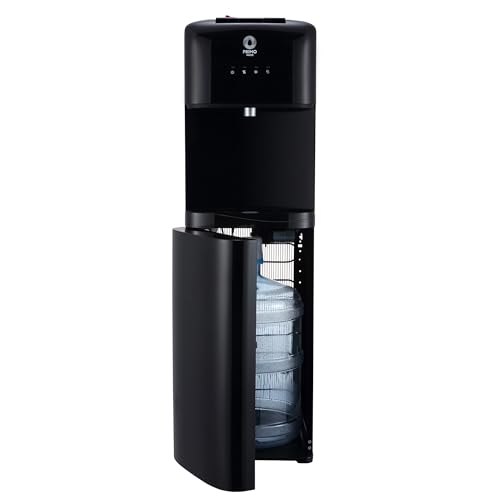
- Primo Water Deluxe 601089 Bottom Loading Hot, Cool and Cold Dispenser
- Brio 500 Series CLTL520 Tri-Temp Top Load Water Cooler
Quick Comparison
| Product | Best for | Main point | Link |
|---|---|---|---|
| Vitapur VWD2036W-1 | Bedside or desk use | Countertop, room and cold water | Vitapur VWD2036W-1 Countertop Room and Cold Water Dispenser White |
| Avanti WD31EC | Small kitchens needing hot water | Tabletop thermoelectric hot and cold | Avanti WD31EC Tabletop Thermoelectric Hot and Cold Water Dispenser White |
| Avanti WD30EC | Dorm rooms and studios | Compact tabletop dispenser | Avanti WD30EC Table Top Water Dispenser |
| Avanti WDT40Q3S-IS | Households that want a steel look | Hot and cold, 3, 4 or 5 gallon bottles | Avanti 3, 4 or 5 Gallon Hot and Cold Water Dispenser WDT40Q3S-IS |
| Primo 601089 | Open plan homes | Bottom load, three temperatures | Check on Amazon |
| Brio CLTL520 | Buyers who want very cold water | Top load tri-temp cabinet | Brio 500 Series Tri-Temp Top Load Water Cooler CLTL520 |
How These Options Were Chosen
We did not measure sound ourselves, and nothing in this article replaces a visit to a showroom. The list comes from manufacturer descriptions and retailer listings, with preference for units that use semiconductor cooling, which has no compressor, and for full size cabinets from established brands that offer a different noise profile.
Owner comments on retail sites are mixed for nearly every cooler, including the quiet leaning ones, and some buyers of even the most praised models mention pump noise. For that reason the entries below name the likely source of noise for each design as well as its strengths.
6 Best Silent Water Coolers for Quiet Spaces
Vitapur VWD2036W-1 Countertop Room and Cold Water Dispenser
The Vitapur is a small countertop unit that dispenses room temperature and cold water. Its listing credits a semiconductor cooling module, a design that works without a compressor and is therefore marketed as a quieter option.
It suits a desk, a bedside table or a studio apartment shelf, where a floor standing cabinet would be too bulky. The trade-off is cooling strength. Thermoelectric modules usually chill water only some degrees below the room, so do not expect fridge level cold on a hot day. There is no hot tap here either.
Skip it if you want tea water on demand or a large cooling capacity. Check what bottle size the cabinet takes before you buy jugs.
Vitapur VWD2036W-1 Countertop Room and Cold Water Dispenser White
Avanti WD31EC Tabletop Thermoelectric Hot and Cold Dispenser
Avanti describes the WD31EC as a tabletop water dispenser using thermoelectric technology for both heating and cooling. That combination is rare in a compact size, and it is the main reason this model belongs among the best silent water coolers for people who want a hot tap without a loud cabinet.
It is a white tabletop unit, so it fits a kitchen counter or an office credenza. Because the design is small, its output of hot and cold water per hour is modest, and a busy household will notice. Think of it as a unit for one to three people.
The hot tap needs the same caution as any other hot water appliance. Keep it out of reach of children and follow the maker’s directions on use and placement.
Avanti WD31EC Tabletop Thermoelectric Hot and Cold Water Dispenser White
Avanti WD30EC Table Top Water Dispenser
The WD30EC is a close relative of the WD31EC in the same Avanti line. Retailers describe it as a thermoelectric tabletop dispenser, and it is a sensible pick for a dorm room, a studio apartment or a corner of a bedroom where a larger cabinet would feel out of place.
Because the two Avanti codes are so similar, read the listing carefully for temperature options, since the WD31EC is the one that lists hot and cold. The WD30EC listing should state its exact options, so use that as your guide.
The compromise, as with any thermoelectric machine, is limited cooling power. Pick it for gentle, close range use, and look at a compressor model if you want ice cold water in large quantities.
Avanti WD30EC Table Top Water Dispenser
Avanti WDT40Q3S-IS Hot and Cold Water Dispenser for 3, 4 or 5 Gallon Bottles
This Avanti steps up from the tabletop units. The listing describes a hot and cold dispenser that accepts three, four or five gallon bottles, with a stainless style finish suggested by the IS suffix. It is closer to a classic office cooler in size.
Flexible bottle sizes help if you want a lighter jug at home. A smaller bottle weighs less and swaps more easily, though you refill more often. Check the listing to see how the cooling is done, because the quiet reputation of the brand’s smaller units may not apply to every model.
The downside is size. It needs floor or counter space, so measure first, and keep it away from the headboard side of a bedroom.
Avanti 3, 4 or 5 Gallon Hot and Cold Water Dispenser WDT40Q3S-IS
Primo Water Deluxe 601089 Bottom Loading Hot, Cool and Cold Dispenser
The Primo 601089 is a freestanding bottom loader with three temperatures. Retail listings call it the Deluxe model, and manuals describe the three temperature outputs. It is one of the more widely stocked bottom load coolers, and spares and manuals are easy to find.
For noise, the key issue is the internal pump, which lifts water from the jug beneath the cabinet. Owners in general mention that bottom loaders have a pump sound as the reservoir refills. If you place it in a hallway or kitchen that is a few steps from the living area, you may never notice it.
Choose this model if you want one cooler to serve a whole household and can accept a mild mechanical noise. Skip it for a bedroom or a recording corner.
Brio 500 Series CLTL520 Tri-Temp Top Load Water Cooler
The Brio CLTL520 is a top load cabinet with three temperature settings. Because it lifts no water with a pump, its mechanical noise comes mainly from cooling, and you also hear the jug gurgle when you pour.
One review source describes Brio’s cold water as properly cold rather than merely cool, and links that performance with noise. That is a useful reminder that the stronger the cooling, the more you should expect to hear. For this model we suggest placing it in a utility room or kitchen and not close to a bed.
It is a good option if you value cold water over quiet and want a conventional top loading cabinet. If silence is the first priority, the thermoelectric models above are the better fit.
Brio 500 Series Tri-Temp Top Load Water Cooler CLTL520
Best for Bedrooms and Studios
The Vitapur VWD2036W-1 is small enough for a shelf and avoids a compressor. Accept the limited cold output in exchange for a calmer room.
Best for Home Offices
The Avanti WD31EC gives you hot water for tea and cold water for the afternoon without the hum of a large cabinet. It also fits on a side table, which keeps the sound away from your desk.
Best for Busy Kitchens
The Primo 601089 is the practical option when many people use it. The sound of the pump is the cost, so put it away from the dining table.
Best for Cold Water Lovers
The Brio CLTL520 is the choice if cold matters more than a whisper. Place it with a little wall clearance, since cabinets that struggle for air work harder and sound louder.
How to Choose a Quiet Water Cooler
Noise has three sources in a typical cooler: the cooling system, the pump if there is one, and the water itself. Compressor cabinets cycle on and off, and each switch-on has a click and a hum. Thermoelectric units use a fan and a heat sink and run more steadily, with the trade-off that they cool less strongly. Bottom loaders add a pump, and top loaders add the glug of the jug.
Think about distance. A cooler that you rarely hear from the next room can be perfectly acceptable, even if it is not the quietest model in the world. Placement does a lot of the work. A cooler on a hard floor next to a wall vibrates more than one on a rubber mat with space around it.
Decide what temperatures you need. If cold water alone is enough, a thermoelectric countertop model is the simplest route to low noise. If you want a hot tap too, look for a small tabletop with both functions, or a full cabinet and accept some sound.
Read owner comments with a sharp eye. Some people are sensitive to high pitched whine, some to low hum, and some only notice the sound at night. Search for words such as pump, fan and click in the questions and answers for a model.
Finally, check whether the model is a bottled or a plumbed unit and whether there is a way to turn off the cooling at night. An on and off switch for the cooling can be handy if the manual permits it.
Installation, Safety and Legal Notes
Place the cooler on a level, hard surface and follow the clearance distances in the manual. Do not block vents or the back panel. Use a properly grounded outlet, and avoid extension cords unless the manual says they are allowed. Any internal repair should be handled by a qualified technician.
Hot water models need careful siting, so keep the tap away from small children and from the edge of the counter. We cannot confirm rules for your building, so check your lease or local guidance if you plan any change to plumbing.
Care and Troubleshooting
A quiet cooler can become a loud one when dust gathers on its vents. Vacuum the back grille now and then according to the manual, and wipe the drip tray.
| Noise or symptom | Possible cause to check |
|---|---|
| Rattling | Uneven floor, loose panel, contact with wall |
| Loud gurgle | Jug seating, air in the line |
| Constant fan sound | Dust on vents, warm room |
| Buzzing from the pump | Empty jug, priming issue |
How to Read a Cooler Listing for Noise Clues
Manufacturers rarely print a decibel figure, so you have to read between the lines. Begin with the cooling method named in the title or bullet points. Words such as thermoelectric, semiconductor or Peltier point to a design with no compressor, while terms like compressor cooling suggest a motor that cycles on and off. Neither is automatically better for every room, but the difference tells you what kind of sound to expect.
Next, look at the size and the bottle position. A compact countertop unit such as the Avanti WD30EC or the Vitapur VWD2036W-1 holds less water and has a smaller cooling system, which often means a lower hum. Bottom loading designs like the Primo Water Deluxe 601089 hide the bottle in a cabinet, and the cabinet can muffle some of the mechanical sound. Finally, scan the questions and answers on the listing for comments about gurgling, clicking or fan whirr, because those are the sounds people notice most in a quiet space. Treat any single comment as one opinion, and look for patterns.
Compressor Versus Thermoelectric Cooling
The two cooling styles behave very differently, so it is worth understanding the trade before you decide. The table below summarizes the general tendencies; always confirm details on the specific listing and in the maker’s manual.
| Feature | Thermoelectric | Compressor |
|---|---|---|
| Typical sound | Soft fan hum, no motor cycling | Occasional low rumble when the motor runs |
| Cooling strength | Cools a modest amount below room temperature | Reaches colder water more easily |
| Warm room performance | Slows down in a hot space | Holds up better |
| Size | Often compact and tabletop | Often larger, floor standing |
For a bedroom, studio or small office where calm matters more than very cold water, a thermoelectric unit is a sensible match. If you want properly chilled water all day in a busy kitchen, a compressor model is the more natural fit, and you may simply accept a little more sound.
Matching Cooler Size to Your Room
An oversized cooler in a tiny room is a daily annoyance; an undersized one forces constant refills. Think about how many people will use it and how often. A solo home worker may drink a few glasses a day, so a countertop unit that takes a smaller bottle is plenty. A shared office needs a floor model with a standard bottle and a faster recovery between uses.
Measure before you buy. Check the width and depth of the spot, the height under any shelf, and the clearance the maker asks for around the vents. Allow room to lift a bottle without scraping the cabinet. Also think about where the bottle will be stored, since spares take space too. If floor space is the limit, a tabletop model such as the Avanti WD31EC keeps the footprint small, though you will need a sturdy surface and a spot near an outlet.
Mistakes to Avoid When Chasing a Quiet Machine
- Placing the cooler tight against a wall, which traps heat and makes fans work harder.
- Setting it on a thin shelf or hollow desk that amplifies vibration.
- Ignoring the tilt of the floor; a unit that rocks will buzz against its surface.
- Expecting silence from any machine that cools water. Aim for quiet, not absent.
- Overlooking the sounds of the water itself, such as bubbling when a bottle empties.
- Skipping the first-use instructions, which often ask you to let the unit stand before switching it on.
Most of these are easy to avoid in the sense that they cost nothing but attention. A level base, a little breathing room and a calm surface do more for the perceived sound than any feature on a spec sheet.
Short Glossary of Cooler Terms
- Tri-temp: a dispenser that offers hot, room and cold water, such as the Brio 500 Series CLTL520.
- Top load: the bottle sits upside down on top, which is simple to understand but needs lifting overhead.
- Bottom load: the bottle sits in a lower compartment, easier on the back.
- Reservoir: the internal tank that holds the chilled or heated water.
- Recovery time: how long the unit takes to cool or heat again after heavy use.
- Drip tray: the removable tray under the taps that catches spills.
Knowing these words helps you compare listings that describe the same feature in different ways.
Weighing Noise Against Capacity in Your Space
If you sleep or work within a few steps of the cooler, put the quietest cooling style and the smallest suitable size at the top of your list, and give the sound of the bottle swap and tap less weight. If the cooler lives down a hall or in a shared break area, capacity and recovery speed matter more than a faint hum. If children or guests will use it, consider the ease of reaching the tap and how the taps are laid out.
Whatever you pick, read the maker’s instructions for bottle fitting, cleaning and the first fill, and keep the manual handy. A clear picture of how you will use the machine each day leads to a better choice than any single feature, and it makes living beside the unit far more pleasant.
Living With the Sound Day to Day
Even a well-chosen machine makes some noise, and your ears adapt faster than you expect. Notice when the sound is most obvious: usually late in the evening or early in the morning, when the room is otherwise still. If you are sensitive to low rumbles, listen for them during the first few days and try small adjustments such as a rubber mat under the base, a few extra centimeters from the wall or a different outlet position. Keep the manual and the seller’s contact details, so if a new unit makes an unusual rattle or buzz you can ask the maker or seller what is normal before assuming a fault.
Frequently Asked Questions
Are thermoelectric coolers really quieter?
They avoid a compressor, which removes the on and off hum, but they still have a fan and cool less strongly.
Is there a completely silent water cooler?
No. Even the quietest models make some sound from fans, pumps and the water.
Where should I put a cooler to reduce noise?
Place it on a firm, level surface, away from the wall and from the bed or desk.
Do bottom loaders make more sound than top loaders?
Often yes, because of the pump, although the difference depends on the design and the room.
Can I switch the cooling off at night?
Some models have a switch for it. Look for that detail on the listing and in the manual.
Will a mat help?
A firm rubber mat can reduce vibration on a hard floor, as long as it does not block any vents.
Where Cooler Noise Actually Comes From
Before choosing a quiet machine, it helps to know that a water cooler does not make one sound but several, from different sources, and different households are troubled by different ones. The cooling system is the first source. On a compressor model it cycles on and off as the cold tank needs attention, producing a low hum while it runs and sometimes a soft click as it starts or stops. On a thermoelectric model there is no compressor cycle in that sense, and the sound is steadier and usually lighter, more a faint presence than an event. Neither is loud in absolute terms; the question is always how the sound behaves in your room, at your quietest hour.
The second source is water movement. A bottled machine gurgles as air rises into the bottle to replace drawn water, and a bottom loading model adds the sound of its pump lifting water from the lower bottle to the tanks, a short, purposeful noise that follows use. The third source is the room itself. A cabinet standing on a hard floor, tight against a wall or tucked into an alcove will sound louder than the same machine on a mat in open space, because hard surfaces return sound and enclosed corners concentrate it. Owners often blame the machine for what is partly the room’s acoustics, which is good news, because the room’s contribution can be changed for free.
The fourth source is the one nobody mentions: contrast. A cooler in a kitchen competes with kettles, conversation and traffic, and disappears. The identical cooler in a studio flat at two in the morning is the only sound in the building, and it will be studied like an instrument. This is why the advice in this guide keeps returning to your quietest use case. Judge every pick by the room and hour where silence matters most to you, not by the average day, because the average day forgives almost any machine.
Reading Your Room Before You Read the Reviews
Spend one evening noticing your space the way a cooler will experience it. How far is the intended spot from the bed, the desk or the sofa where quiet matters? Is there a door between them, and is that door usually closed at the critical hour? What is the floor made of, and what stands around the spot: soft furnishings that absorb sound, or bare walls and hard surfaces that reflect it? A cooler two rooms away behind a closed door can be a compressor model without troubling anyone. A cooler an arm’s length from a pillow needs to be chosen with real care.
Distance is the cheapest sound control there is, and it works before you spend anything. Even within one room, moving a machine from beside the bed to the far wall changes the night completely for most sleepers, and moving it off a shared wall with a neighbour’s bedroom is a kindness in flats. Height matters less, but what the machine stands on matters a great deal: a stable, level surface, the mat discussed in the questions above, and nothing stored against the cabinet to rattle sympathetically when the cooling runs.
Also consider the pattern of your own sensitivity. Some people are woken by any change in sound, the click of a cycle starting, while others sleep through steady noise and are only troubled by volume. Steady, predictable sound is generally easier to live with than intermittent sound at the same level, which is one reason the thermoelectric picks in this guide suit bedrooms so well: their character is continuous and uneventful. If you know you are a change-sensitive sleeper, weight that character heavily. If you are a volume-sensitive worker who needs a quiet office during calls, weight the machine’s behaviour during its hardest working moments instead.
The Six Picks by Sound Character
Grouped by how they sound rather than by price or size, the picks fall into two families. The countertop thermoelectric models, the Vitapur and the two compact Avantis among them, form the quiet family in character: modest capacity, gentle and steady operation, and a presence that suits a desk, a bedside or a small room where the machine is always within a few steps of a person. Their trade is the one this guide has noted throughout: they serve smaller households and lighter demand, and they ask for smaller bottles and more frequent changes in return for their calm.
The larger bottled machines, the Avanti model for standard bottles, the Primo bottom loader and the Brio top loader, form the capacity family. Their cooling is more powerful, their bottles last longer, and their sounds are the sounds of bigger machinery: a compressor’s working hum, a pump’s short effort after a draw on the bottom loader, the bottle’s answering gurgle on the top loader. In a kitchen, a family room or a busy office, those sounds are unremarkable, absorbed into the life of the room. In a studio at night, they are events.
The honest way to use this guide is therefore to pick your family first, by room and hour, and only then compare within it. A shopper who falls for a large machine’s convenience and then tries to forgive its sound every night has the decision backwards. A shopper who accepts the smaller machine’s bottle rhythm in exchange for genuine quiet usually stops thinking about the cooler within a week, which is the highest praise any appliance in a quiet room can earn.
Night Routines for Light Sleepers
If the cooler must share sleeping space, a small evening routine makes a real difference. Draw the water you expect to need before bed, filling a bedside bottle or jug, so the machine is not asked to work, refill and gurgle in the small hours because of your own thirst. Where the model allows, and the manual supports it, turning the cooling side down or off overnight is an option some owners in studios adopt, accepting less cold water first thing in exchange for an undisturbed night; the water in the tank remains cool for a good while after switching off, which softens that trade considerably.
Check the machine’s footing as part of the routine. A cabinet that has crept against a wall or a skirting board during the week’s bottle changes can pick up a vibration it did not have before, and nudging it back to its clearances is a ten second cure. Keep the drip tray emptied and seated properly, since a loose tray is a classic source of a faint rattle that owners chase for weeks. And keep the bottle store quiet too: a spare bottle resting against the cabinet will happily conduct every vibration into a low drumbeat.
Finally, give yourself an adjustment period before judging. Most people habituate to a new, steady household sound within a week or two, in the same way they stop hearing a clock. The sound that seems to fill the room on the first night is often unnoticed by the fifth, provided it is steady and the machine is well placed. Judge the cooler on the second week, not the first night, unless the sound is genuinely mechanical, a grinding, clattering or buzzing that was not there at the start, which belongs to the troubleshooting notes below rather than to patience.
Quiet in Shared and Working Spaces
The home office has its own acoustics of embarrassment: the cooler that gurgles into a silent video call, or cycles audibly behind a recording. The fixes are placement and timing. Keep the machine out of the immediate background of your call position if you can, draw water before long calls rather than during them, and remember that a bottom loader’s pump announces refills shortly after use, so the glass you draw mid call may be answered by the machine a minute later. None of this is serious, but all of it is the sort of small professionalism that remote workers quietly appreciate in their own setups.
In shared houses and small offices, the social side of sound matters as much as the physical side. A machine one person finds soothing can be the machine that drives a housemate to distraction, and the time to discover that is before the purchase, with a frank conversation about where it will stand and what it will sound like at night. Where opinions differ, the countertop thermoelectric picks are the peacemakers of this guide: small, steady and easily relocated if the first spot proves wrong. A cooler that can be moved in five minutes is a cooler that never has to become a household argument.
Reception areas, treatment rooms and other quiet professional spaces follow the same logic at one remove. Clients notice sound in proportion to how little else is happening, so a waiting room machine should be chosen like a bedroom machine, for character rather than capacity, and placed where its working sounds are softened by distance and furnishings. The water itself is a small hospitality; serving it from a machine that hums aggressively undermines the calm the room is trying to offer.
When a Cooler Gets Louder: A Calm Diagnostic Path
A machine that has grown louder over time is usually telling a simple story. Start with position: has it been pushed back against a wall, is something now stored on or against it, has a bottle change left it standing unevenly? Restore its clearances and level, and listen again. Next, the bottle: a bottle seated slightly off, or nearly empty, can change the refill sounds noticeably, and reseating or replacing it settles many complaints. Then the tray and panels: empty, wash and reseat the drip tray, and check that nothing removable is loose enough to vibrate in sympathy.
If the sound is new and mechanical in character, a harsh buzz, a rattle from inside the cabinet, a pump that labours where it used to run briefly, stop experimenting and use the maker’s support route, describing when the sound happens: constantly, only while cooling, or only after water is drawn. That timing detail is the most useful thing you can tell a support line, because each source in the machine has its own schedule, and a sound’s timing identifies its family faster than any description of its volume.
What you should not do is open the cabinet or attempt internal repairs on a machine whose workings you cannot see. Coolers combine water, electricity and, on compressor models, a sealed cooling system, and they are not user serviceable inside. The owner’s domain is placement, seating, cleaning and observation, and it is a larger domain than it sounds: most noise complaints that reach support turn out to live in that domain after all. Keep notes of what you checked and when, and your conversation with the maker, if it comes to that, will be short and productive.
Quiet Now, Quiet Later: Habits That Preserve the Silence
The machine you buy is the quietest version of itself. What keeps it that way is mostly the care this guide already recommends, seen from the sound point of view. A cooler kept clean inside follows its normal cycles without strain. A cooler kept level, clear of walls and free of stored clutter has nothing to vibrate against. Bottles changed carefully, seated fully and not forced, refill with the soft gurgle the design intends rather than with the knocking of a poor seal. None of these habits is about sound directly, and together they are the whole secret of a machine that stays as quiet in year three as it was in week one.
Dust deserves a special mention in quiet rooms, because quiet rooms are often the still, closed rooms where dust settles undisturbed. Vents and the back of the cabinet gather it steadily, and a cooling system that cannot breathe works longer and harder, which means more sound for the same cold water. A gentle vacuum of the vents and rear panel as part of the seasonal clean, done with the machine switched off and following the manual’s cautions, is a small act with an audible reward.
Finally, notice the machine occasionally on purpose. Owners who never listen to their cooler until it annoys them miss the early, easy stage of every problem, when a nudge, a reseat or a clean would have settled it. A moment’s attention while you fill a glass, once in a while, is all it takes: does it sound like itself? If yes, forget it again for another month. That rhythm of brief attention and long indifference is exactly the relationship a quiet appliance is designed for.
More Questions Quiet Hunters Ask
Will a cooler disturb a baby or a light sleeping child?
It depends on distance and character more than on any specification. A thermoelectric countertop model across a room is a gentle, steady presence that most children sleep through, and many parents find the faint steadiness no worse than the household sounds a child already knows. A compressor cabinet beside a cot is a different proposition, because its cycles start and stop. Place for the sleeper, not for the plumbing of your day, and test during a nap before committing the machine to a nursery corner.
Is the pump on a bottom loader a problem at night?
The pump runs briefly after water is drawn, to lift water from the lower bottle to the tanks. During the day it is barely noticeable. At night, in a small flat, a draw at midnight may be followed by a short spell of pump sound, which is why the night routine above suggests filling a bedside bottle in the evening. If your household is up and down all night, that pattern is worth weighing when you choose between the bottom loading Primo in this guide and the quieter character of the countertop picks.
Can I put the cooler inside a cupboard to muffle it?
It is a tempting idea and usually a poor one. Coolers need air around their vents to work, and a closed cupboard traps heat, makes the cooling system run longer, and can end up louder and less efficient than the machine in the open, as well as raising the moisture questions that follow any water appliance in an enclosed space. Distance, a mat and soft surroundings muffle honestly; a cupboard mostly muffles the wrong things. If a cupboard is truly the only option, follow the maker’s clearance guidance strictly and leave ventilation, rather than improvising a sealed box.
Do coolers get quieter as they settle in?
The machine itself changes little, but the household changes a lot: you stop listening for it, you learn its cycle, and its sounds become information rather than intrusion, the gurgle that means the bottle is nearly empty, the hum that means cold water is being made. That settling is real, and it is why this guide advises judging on the second week. What does not settle is a badly placed machine, which is why placement comes before patience in every section above.
Matching the Machine to the Sleeper, the Worker and the Host
It may help to see the decision through three common readers of this guide. The sleeper, in a studio or a small flat, needs the machine’s worst hour to be acceptable, and that points firmly at the thermoelectric countertop family, placed as far from the bed as the room allows, on a mat, with the evening routine doing the rest. Capacity is the sacrifice, and it is worth making consciously: a smaller bottle changed more often is a fair price for three hundred undisturbed nights a year, and most studio dwellers, asked honestly, will pay it without hesitation.
The worker, at home or in a small office, needs the machine to behave during calls and concentrated hours, which is a daytime test rather than a night one. Here the mid ground opens up: a bottled machine in the kitchen or a corner away from the desk can be as large as the household wants, because its sounds belong to the kitchen’s soundscape, not the office’s. The worker’s real enemies are surprise sounds near the microphone, and distance solves them more completely than any particular model choice. If the desk and the cooler must share a small room, the decision collapses back to the sleeper’s answer, and for the same reasons.
The host, running a guest room, a holiday let or a busy family house, needs water that is always ready and a machine that guests can use without instruction or disturbance. A guest room cooler should be the quiet character type, switched on and settled before guests arrive, with a filled bottle and a brief, friendly note if the hot tap has a lock. In the main house, the host can choose capacity freely, because guests forgive kitchen sounds as part of a living home. What guests do not forgive is an empty or warm machine, so the host’s discipline is about levels and readiness rather than silence, a useful reminder that quiet is one virtue among several and this guide’s other sections on routine apply to hosts in full.
Most households are a blend of all three readers across a single week: sleepers at night, workers by day, hosts at the weekend. Blend the advice the same way. Choose the machine for the role that will judge it most harshly, usually the night, place it for the role that uses it most, usually the day, and keep it ready for the role that notices it most, the guest. A cooler chosen and placed with those three in mind rarely disappoints any of them, and that is as close to a definition of the right purchase as this category offers.
A Last Test Before You Commit
If you are torn between two picks, there is a simple rehearsal that settles most arguments. For one evening, place a ticking clock, a small fan or any steady household sound where the cooler would stand, and live with it through your quietest hour, working, reading or lying in bed. You are not measuring volume; you are learning how your room treats a continuous presence, and how your own attention treats it. Rooms with soft furnishings and a door swallow sound kindly, and their owners can choose capacity with a clear conscience. Bare, echoing rooms tell the truth just as clearly, and their owners should believe them and choose the quiet family. Follow that with the distance test: imagine the machine’s working sounds from your pillow and your desk chair, not from the shop floor of your imagination where everything is forgiven. The cooler that passes both tests in your mind will almost certainly pass them in your home, and you can order it in the pleasant confidence that silence, like cold water, is mostly a matter of choosing the right tool and putting it in the right place.
And if the first placement disappoints, move the machine before you judge it. Five minutes with a tape measure and a mat has rescued more quiet purchases than any exchange or return, because so much of what we call a loud cooler is a good cooler standing in the one corner of the room that amplifies everything it does.
Treat that experiment as part of the purchase rather than as a failure of it, and you will end with a machine whose sound suits your home because you arranged for it to, which is the most reliable quiet of all.
That is the goal: water when you want it, and silence the rest of the time.
Bottom Line
For the calmest corner of the house, begin with a thermoelectric countertop unit such as the Vitapur VWD2036W-1 or the Avanti WD31EC. For a full family cooler, the Primo 601089 and Brio CLTL520 offer more capacity with a little more noise. Read recent owner comments, put the cooler where it is least intrusive, and keep the manual close.