Disclosure: As an Amazon Associate, topratedkitchenware.com earns from qualifying purchases. Links to Amazon on this page are affiliate links; they cost you nothing extra. Listing details such as price and availability change often, so check the current Amazon listing before you buy.
A water cooler is one of those appliances that you only notice when it begins to need attention. The reservoir, the spout and the drip tray all collect residue over time, and wiping them by hand is a chore that many households put off. That is the reason the best self cleaning water coolers have become a popular search. Some makers build in an ozone or ultraviolet cleaning routine that runs on a button press or a schedule, which shortens the manual work, although it never replaces regular wiping and filter changes.
This guide is written for people shopping for a self cleaning water cooler for home use, whether that means a kitchen corner, a home office or a basement bar. It also works as a short list of easy maintenance water coolers for anyone who dislikes fiddly upkeep. You will find a comparison table, six dispensers from Avalon and Brio, a plain explanation of how we picked them, buying advice, and answers to the questions readers ask most. Every cooler below is described from the maker’s own listing, so always confirm the details on the product page before you order.
In this guide
Quick Picks
- Avalon A3BLK Self Cleaning Bottom Loading Water Cooler Dispenser
- Avalon A3BLOZONEWTRCLR Stainless Steel Bottom Loading Dispenser
- Brio 500 Series CLBL520SC Bottom Loading Water Cooler
- Avalon A5BLK Self Cleaning Bottleless Water Cooler Dispenser
- Avalon A7BLK Self Cleaning Bottleless Water Cooler Dispenser
- Brio CLPOU520UVRO4B 500 Series Bottleless Water Cooler
Quick Comparison
| Product | Best for | Main point | Link |
|---|---|---|---|
| Avalon A3BLK | Households that dislike lifting jugs | Bottom loading with self cleaning | Check on Amazon |
| Avalon A3BLOZONEWTRCLR | Buyers who want a steel finish | Stainless bottom loader with ozone cycle | Avalon Self Cleaning Water Dispenser Stainless Steel Bottom Loading A3BLOZONEWTRCLR |
| Brio CLBL520SC | Families who want three temperatures | 500 Series bottom load cooler | Brio 500 Series Self Cleaning Bottom Loading Water Cooler CLBL520SC |
| Avalon A5BLK | Homes with a water line nearby | Bottleless, no jugs at all | Check on Amazon |
| Avalon A7BLK | Narrow spaces and filtered supply | Slim bottleless unit with two filters | Avalon A7BLK Self Cleaning Bottleless Water Cooler Dispenser A7BLK |
| Brio CLPOU520UVRO4B | Buyers who want a digital panel | Four stage bottleless with UV cleaning | Brio 500 Series 4 Stage Bottleless POU Tri-Temperature Self Cleaning Water Cooler CLPOU520UVRO4B |
How These Options Were Chosen
We have not used these coolers ourselves. Each one was selected by reading the manufacturer’s listing and published specifications, then checking that the cleaning feature is named as part of the product and not as an add-on accessory. We also looked for a mix of delivery styles, because upkeep differs a lot between a unit that takes a five gallon jug and one that connects to a water line.
Each cooler on this page comes from Avalon or Brio, two brands that sell several self cleaning designs. We avoided anything where we could not name the exact model code. Features that we could not confirm are described as items to check on the listing.
6 Best Self Cleaning Water Coolers for the Home
Avalon A3BLK Self Cleaning Bottom Loading Water Cooler Dispenser
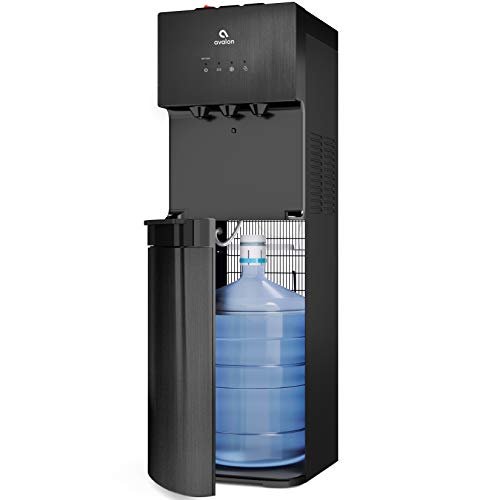
The A3BLK is the plain-spoken choice among easy maintenance water coolers, because it combines a hidden bottom compartment with a self cleaning feature. You slide a standard five gallon jug into the cabinet instead of hoisting it overhead, which matters if you share the job with someone who has a sore back or a low ceiling.
The listing describes three temperature settings, so one tap gives you cold, room temperature or hot water. A safety lock on the hot tap is listed as a feature. Like any hot water appliance, it should be placed where nobody can bump the tap, and the maker’s guidance on hot water use should be followed.
The trade-off is that bottom loading units rely on an internal pump to draw water up from the jug. Some owner comments on retail sites mention pump problems, so check the warranty terms before you buy. Skip this one if you would rather not buy or store large jugs at all.
Avalon A3BLOZONEWTRCLR Stainless Steel Bottom Loading Dispenser
This is the dressier sibling of the A3BLK. The listing calls it a stainless steel, bottom loading dispenser with a self cleaning routine based on ozone. If your kitchen is full of brushed steel appliances, this cooler will blend in better than a black or white cabinet.
The ozone cycle is the main reason it appears in a list of the best self cleaning water coolers. Listings describe the cycle as taking a set amount of time during which the dispenser should not be used for drinking, so it suits a household that can run it overnight or while everyone is out. Read the manual for the exact timing and for any steps you must complete first.
On the downside, stainless finishes show fingerprints and water spots, so a quick wipe becomes part of your routine anyway. It is also a bottled design, which means you still need a source of five gallon jugs. Choose a different model if you want to remove jug handling from your week.
Avalon Self Cleaning Water Dispenser Stainless Steel Bottom Loading A3BLOZONEWTRCLR
Brio 500 Series CLBL520SC Bottom Loading Water Cooler
Brio sells a wide range of coolers, and the CLBL520SC sits in its 500 Series. It is a bottom load cooler with a self cleaning function and, according to the brand’s own page, three temperature settings. The cabinet measures roughly 14 by 15 by 44 inches and runs on standard household power, so it fits a normal corner without a special outlet.
Compared with the Avalon bottom loaders above, the Brio is the one to look at if you already prefer the brand’s accessories and replacement parts. Brio also publishes setup manuals online, which helps when you want to read the cleaning steps before you decide.
The compromise is the same as with other bottled units: you must buy, store and swap jugs. Hot water settings also need care around children and pets, so follow the instructions on placement. This model is not the right fit for a renter who cannot keep jugs on hand.
Brio 500 Series Self Cleaning Bottom Loading Water Cooler CLBL520SC
Avalon A5BLK Self Cleaning Bottleless Water Cooler Dispenser
The A5BLK removes jugs from the picture. It is a bottleless, point of use design, which means it connects to your water supply and filters it inside the cabinet. For many people this is the lowest effort path to easy maintenance water coolers, because there is nothing heavy to carry and no stack of empties to return.
Listings describe cold, cool and hot settings, a self cleaning routine and filters that you replace on a schedule. Those filters are the cost of convenience. You will be buying cartridges, and the connection to the water line should be installed according to the maker’s instructions or by a licensed plumber if you are not comfortable with it.
It is a better match for a permanent home than for a rental, since plumbing access is required. If you cannot run a supply line near the spot you picked, look at one of the bottled models instead.
Avalon A7BLK Self Cleaning Bottleless Water Cooler Dispenser
The A7BLK is another bottleless Avalon, and it is described by retailers as a slimmer unit with a two stage filter set. That slim shape makes it the one to consider for narrow hallways, small offices or alcoves where a wider cabinet would stick out.
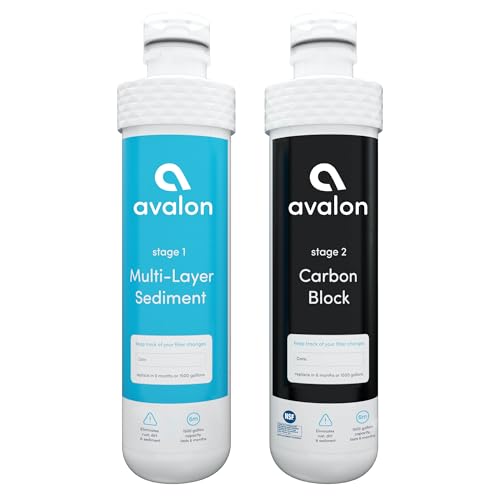
The self cleaning feature is described differently by different sellers, with some listings mentioning ultraviolet and others ozone, so read the product page carefully for the version you are buying. The two cartridges used by this family are the Avalon A5FILTER sediment filter and the A4FILTER carbon block filter, which is useful to know when you plan ongoing costs.
Availability of the black version has varied at some stores, so you may need to look for the A7WHT white version. As with the A5BLK, this model needs a water line, which rules it out for people who cannot plumb in a unit.
Avalon A7BLK Self Cleaning Bottleless Water Cooler Dispenser A7BLK
Brio CLPOU520UVRO4B 500 Series Bottleless Water Cooler
This Brio is the most feature heavy of the six. It is a bottleless point of use cooler with a four stage system described as including reverse osmosis, a digital tri-temperature control panel and a UV based self cleaning function. Retail listings describe it as part of the 500 Series.
It suits a buyer who wants to adjust temperatures on a screen and prefers the long term running cost of cartridges to the repeated purchase of jugs. The four stage design means more cartridges than a two stage cooler, and Brio publishes replacement guidance for its filters, so check that before you commit.
Because reverse osmosis units use a drain connection and a supply line, installation is more involved than for a bottled cooler. Follow the maker’s steps and hire a licensed plumber for any work you are not sure about. If you want something you can plug in and use the same day, choose a bottle loading unit.
Brio 500 Series 4 Stage Bottleless POU Tri-Temperature Self Cleaning Water Cooler CLPOU520UVRO4B
Best for Small Households
For one or two people, the Avalon A3BLK makes the most sense. A single jug lasts a while, the bottom compartment hides it from view, and the cleaning feature reduces the amount of scrubbing that a rarely used reservoir would otherwise need. You avoid paying for a water line connection too.
Best for Large Families
A busy home pours many glasses a day, and swapping jugs gets old fast. The Avalon A5BLK, which connects to a supply line, avoids that loop entirely. The Brio CLBL520SC is the alternative if you cannot plumb in a cooler but still want three temperatures for different drinks.
Best for Hands-Off Upkeep
The Brio CLPOU520UVRO4B asks the least of you day to day, with its digital panel and automatic cleaning function. You trade that comfort for more cartridges to track, so put the replacement dates on your calendar.
Best for Tight Spaces
The Avalon A7BLK is the slimmest choice in this group, which helps in a short hallway or a snug office corner. Measure the width, depth and the clearance behind the cabinet before you buy, because the back panel needs space for ventilation.
How to Choose a Self Cleaning Water Cooler
Begin with the delivery style, because it shapes everything else. Bottled coolers, whether top or bottom loading, need jugs and a place to store them. Bottleless coolers need a nearby water line and a schedule for filter changes. Neither is better in every case, and the right answer is whichever chore you dislike less.
Next, look at how the cleaning feature works. Ozone, ultraviolet and manual flush designs all appear in listings, and each has its own instructions. Check how long a cycle takes, whether the cooler can be used while it runs, and whether you need to trigger it yourself or can set a timer. A cleaning cycle that interrupts the morning coffee rush is a poor fit for an office kitchen.
Think about temperature controls as well. Three settings let you pour cold water for the pitcher, hot water for tea and room temperature water for plants and pet bowls. If you only want cold water, a simpler unit is easier to look after. Hot water brings a burn risk, so keep the cooler away from the edge of a counter and from small children, and use the safety lock only as one layer of care.
Finally, count the ongoing costs. Bottleless units need replacement filters, and some need a drain. Bottled units need regular jug purchases. Add the filter or jug cost to the purchase cost before you compare one model with another.
Installation, Safety and Maintenance Boundaries
Follow the maker’s manual for the first set up. For bottleless models, a licensed plumber should handle any new water line or drain work, and local plumbing rules may apply to such connections. Plug the cooler into a properly grounded outlet and avoid extension cords unless the manual allows them.
Leave the gap that the manual specifies between the back of the cabinet and the wall. Place the unit on a level surface away from heat sources. Never open the cabinet while it is plugged in, and call a qualified technician for any internal repair.
Care and Troubleshooting
A self cleaning cycle reduces upkeep but does not remove it. Wipe the spout, the drip tray and the exterior regularly, and run the cleaning cycle on the schedule that the manual describes. Replace filters at the interval the maker recommends.
| Problem | What to check first |
|---|---|
| Water flows slowly | Jug seating, filter age, kinked supply line |
| Cooler seems noisy | Level surface, clearance at back, pump priming |
| No hot water | Safety lock and hot switch, power outlet |
| Cleaning cycle will not run | Manual steps, lid or jug position |
Self-Clean Features Explained in Plain Terms
Product names in this category use a handful of terms that sound similar but mean different things. Knowing the vocabulary helps you compare listings without guessing.
- UV light: an ultraviolet lamp inside the reservoir or near the spout that is meant to reduce germs on surfaces it reaches. Lamp placement and coverage differ from model to model.
- Ozone cycle: a built-in routine that circulates a sanitizing gas through the tank. Follow the maker’s directions closely, since these cycles are designed to run when no one is drawing water.
- Filtration stage: a cartridge that removes particles or taste and odor compounds before water reaches the tank.
- Bottleless or point-of-use: a cooler connected to a water line instead of a jug.
- Descale cycle: a routine for dissolving mineral buildup in hot-water tanks.
None of these removes the need for occasional hand care. A self-cleaning label describes helpful automation, not a promise that you can ignore the unit forever. Always read the maker’s manual for the exact routine and what it does and does not cover.
Bottle-Fed Versus Plumbed-In: A Quick Comparison
Where the water comes from shapes how much upkeep you take on and how the cooler fits in your home.
| Point | Bottle-fed cooler | Plumbed-in cooler |
|---|---|---|
| Setup | Plug in and load a jug | Needs a water line, often with a filter |
| Lifting | Heavy jugs to swap | None once installed |
| Floor space | Needs room for spare jugs | Only the cooler itself |
| Cleaning focus | Reservoir, spout and bottle neck | Filter changes and line connections |
| Best for | Renters and flexible spaces | Homeowners and long-term offices |
For anything involving plumbing connections, follow the maker’s installation instructions and local plumbing rules, or hire a licensed plumber.
Mistakes People Make With Cooler Upkeep
A well-designed cooler still depends on some routine. These slips come up often.
- Waiting for a bad taste. Set a calendar reminder for cleaning and filter changes instead of reacting after the fact.
- Using harsh cleaners. Strong chemicals can damage plastic parts and leave residue. Use only what the maker allows.
- Skipping the spigot. Spouts and drip trays collect splashes and handle contact. Wipe them down on a regular basis.
- Placing the unit in direct sun. Heat and light encourage growth in the reservoir and strain the cooling system.
- Leaving it unplugged while full. Standing water at room temperature is not ideal. Empty the tank if you will be away for a long time.
Where to Put It and What to Ask Before You Buy
Choose a flat, stable surface close to an outlet, with a few inches of breathing room around the vents. Keep it away from ovens, radiators and windows that catch strong sun. If you share the space with children, look at the hot-water lock and consider where the hot tap sits.
When you read a product listing, check the cartridge replacement schedule, the availability of replacement filters, the size of the drip tray, and whether the front panel gives clear status lights for cleaning cycles. Look for the cooling and heating capacity in the specifications, since a busy office needs more than a quiet kitchen corner. Finally, keep the manual in a drawer near the unit so the cleaning steps are never hard to find.
A Simple Upkeep Calendar
- Weekly: wipe the spout, drip tray and exterior panel.
- Monthly: run any built-in cleaning cycle the maker describes and check the filter indicator.
- Every few months: replace filters on the schedule in the manual.
- Once or twice a year: do a full manual clean of the reservoir, following the maker’s steps.
Adjust the timing to your home. A busy office may need shorter gaps than a quiet household.
Write the dates on a sticky label inside a nearby cupboard door, or set phone reminders, so the routine never relies on memory alone. When you change a filter, note the date on the new cartridge as well, and keep one spare on hand so a missed delivery never leaves the unit running past its schedule.
Frequently Asked Questions
Does a self cleaning cooler need any manual cleaning?
Yes. The built-in cycle works on the internal parts, but the exterior, the drip tray and the spout still need regular wiping.
Are bottom loading coolers easier to keep clean?
They are easier on your back, but the pump and the jug connection still need attention. Follow the cleaning steps in the manual.
How often should the filters in a bottleless cooler change?
Follow the maker’s interval. Brio, for example, publishes replacement guidance for its cartridges, and Avalon lists its own filter numbers.
Can I use the cooler while the cleaning cycle runs?
Often you should not. Listings for ozone models say not to drink the water during the cycle, so run it when nobody needs a glass.
Is a bottleless cooler harder to install?
It needs a water line, and some need a drain. A plumber can do this quickly if you are not confident.
Will the cooler fit in a narrow space?
Check the dimensions on the listing and add room at the back for airflow. The A7BLK is the slimmer option here.
What Self Cleaning Does, and What It Quietly Leaves to You
The phrase self cleaning invites a misunderstanding that this guide wants to correct gently and clearly: the machine takes over one specific, important job, and the rest of ownership remains yours. What a self cleaning cycle does, on the bottled and bottleless models alike in this line-up, is sanitise the internal water pathways and reservoirs on a schedule or at the press of a button, reaching the hidden surfaces where water sits and where a film can gradually develop if nothing intervenes. Those internal surfaces are exactly the ones you cannot reach with a cloth, which is why automating their care is a real advance rather than a marketing flourish.
What the cycle does not touch is everything on the outside of those pathways. The taps and paddles your household handles all day, the drip tray that catches every spill, the bottle neck and collar area on bottled models, the exterior cabinet, and the dust that gathers behind and beneath the machine all remain ordinary housekeeping. So do the filters on bottleless models, which have their own replacement rhythm entirely separate from the cleaning cycle. Owners who understand this division tend to be delighted with the category, because the hardest, least reachable job is handled for them. Owners who read self cleaning as maintenance free tend to be disappointed by month six, when the tray and taps announce that nobody has been looking after the outside of the machine at all.
The practical way to hold it is as a partnership. The machine keeps the inside sound; you keep the outside pleasant and the consumables current. That partnership needs perhaps a few minutes a week and a diary note for filters, which is a small price for water that tastes clean from a machine whose hidden parts are being actively cared for. Every other section of this guide, from the upkeep calendar to the troubleshooting notes, hangs on that simple division of labour.
Sanitising Cycles in Everyday Terms
Without inventing technical detail for any specific model, the two approaches you will meet in this category can be understood in plain language. Some machines use ozone, a form of oxygen generated inside the unit and circulated through the water pathways during the cycle, after which it breaks down and dissipates. The Avalon model in this guide whose name carries the word ozone is the obvious example. Other machines use ultraviolet light inside a chamber the water passes through or rests in, with the Brio bottleless model in this line-up signalling that approach in its name. Both aim at the same target: keeping the internal environment inhospitable to the growth that makes water taste stale and reservoirs slimy over time.
For the owner, the differences between the approaches matter less than the habits around them. A cycle needs time to run and should not be treated as an instant refresh the moment before guests arrive; follow the manual on when to run it, whether water can be drawn during it, and how long to wait afterwards. A cycle interrupted halfway is not a disaster, but it is also not a completed clean, so start it at a calm moment, typically when the household’s water use is low, and let it finish. Think of it like a dishwasher cycle for the inside of the machine: most effective when run fully, regularly and without being rushed.
It is also worth saying what these systems are not. They are not a substitute for starting with good water, for changing filters on bottleless models, or for the external cleaning described above. A sanitising cycle keeps a clean system clean; it is not designed to rescue a neglected one in a single pass, and a machine that has been left for a very long time deserves the full manual clean in the maker’s instructions before the automatic cycle resumes its keeping role.
Bottled Self Cleaners Versus Bottleless Self Cleaners, Lived With
Half of this guide’s picks feed from a bottle in a lower compartment, the Avalon A3 models and the Brio CLBL520SC among them, and half connect to the water supply and filter as they go, including the Avalon A5 and A7 and the Brio bottleless model. Both halves share the self cleaning idea, but the ownership experience diverges in ways worth picturing before you choose. The bottled owner has a supply routine: bottles in, empties out, and the freedom to place the machine anywhere with a socket. The bottleless owner has a filter routine instead: no bottles at all, water always available, but cartridges to track and an installation step at the start that usually involves connecting to an existing line.
The bottled route suits renters, cautious first time buyers and anyone who may move the machine between rooms or homes. It also suits households that prefer a particular bottled water. The bottleless route suits settled households that drink a great deal, dislike the storage and handling of bottles, and are comfortable with a little plumbing at setup in exchange for never running dry. Notice that the self cleaning feature is not the deciding factor between them; it is present in both halves. The deciding factors are supply, installation and how your household feels about filters versus bottles, and those are questions about your home, not about the machines.
Within the bottled half, the two Avalon A3 variants and the Brio invite comparison on the details in their reviews: finish, temperature options and the specifics of each maker’s cleaning arrangement. Within the bottleless half, the Avalon A5 and A7 and the Brio separate on capacity, filtration arrangement and fit for busier or quieter homes. Read those reviews as two shortlists rather than one long one, and the choice usually narrows quickly once you have picked your supply side.
Filters: The Other Half of Upkeep on Bottleless Models
If you choose a bottleless model from this guide, the cleaning cycle is only half of its care story. The other half is the filter set, which does the work of making tap water taste like water you want to drink, and which gradually exhausts itself doing it. A filter does not usually fail dramatically; it fades. Flow may slow, taste may drift back towards the tap’s own character, and the change is gradual enough that households adapt to it without noticing, until a new cartridge goes in and everyone remarks on the difference. That is why replacement should run on a schedule from the maker’s guidance rather than on taste alone.
The workable system is simple. When a filter set is installed, write the date on the cartridge itself or in the same phone note you use for the rest of the machine’s life, and set a reminder for when the next change falls due. Keep the correct spare set in the house once you are settled with the model, because a change that can be done the day it is due actually happens, while one that waits on an order often waits far longer. When you change cartridges, follow the manual’s flushing steps before drinking, and expect the first water through a new set to be discarded as directed.
Bottled model owners are not exempt from consumable thinking; their consumable is simply the bottle itself, plus the condition of the neck and cap that seal it to the machine. The principle across both halves is identical: the machine’s automatic systems work best when the human keeps the simple, dated promises around supply. Self cleaning plus current filters, or self cleaning plus sound bottles, is the combination that delivers the taste this category promises.
The First Year With a Self Cleaning Cooler, Month by Month
The first month is about rhythm. Run the cleaning cycle as the manual directs, learn where it fits in the household’s week, and set up the external routine alongside it: a quick wipe of taps and tray, a glance at the bottle compartment or the filter dates, and a check that the area behind the machine is dry and clear. Nothing in that list is burdensome, and doing it from the start means it never becomes a backlog.
Months two to six are the quiet middle, where the category earns its reputation. The internal care happens without drama, the external minutes become habit, and the main event is simply noticing that the water tastes consistently clean without the periodic deep clean marathons that a conventional cooler eventually demands. This is also the period in which bottleless owners meet their first filter decision, and households that wrote the date down sail through it while households that did not begin the guessing game that the schedule exists to prevent.
In the second half of the year, give the machine one deliberate review. Check the drip tray and the tap area closely, look at the bottle compartment or filter housing for any sign of moisture that should not be there, confirm the vents are clear, and run through the manual’s own maintenance list to catch anything this guide has not mentioned for your specific model. A machine reviewed once or twice a year, on top of its automatic cycles and your weekly minutes, is a machine that will still be pleasing its owners long after the novelty has worn off, which is precisely the point of buying the self cleaning version in the first place.
Households That Gain Most, and Those That Gain Least
The clearest winners are busy households that know themselves. If your family’s honest history with appliances is that deep cleaning slips to the bottom of every list, a machine that handles its own internal care is not a luxury; it is the difference between a cooler that stays pleasant and one that slowly stops being used. Large families gain again in a second way, because high throughput plus automatic sanitising is a reassuring combination when many hands and many glasses are involved every day.
Households with a member who is particularly sensitive to taste gain too, because consistency is the category’s real gift. The water does not slowly drift as the weeks pass; the cycle keeps resetting the internal condition, and small differences that a sensitive palate would catch in a conventional machine are far less likely to develop. Hosts and home workers who offer water to others gain the quieter benefit of confidence: you can fill a guest’s glass without a private doubt about when the machine was last cleaned inside.
Who gains least? The household that would genuinely enjoy and keep up a manual routine gains least, because it is paying for automation it does not need. Very small households that draw little water may also find the feature underused, though even they benefit during holidays and gaps in use, when standing water in a conventional machine is at its least appealing. And anyone expecting the feature to abolish all care, as the first section of this expansion explains, will gain least of all until their expectations catch up with what the technology actually does. Judged fairly, as a partner in upkeep rather than a replacement for it, the self cleaning cooler is one of the most sensible upgrades in the whole water cooler market.
Working Through Common Self Cleaning Questions in Practice
The water tastes odd just after a cycle
A cycle stirs up the internal system, and the manual for many models suggests drawing and discarding a little water once it completes. If taste is noticeably different, run through that guidance first, confirm the cycle actually finished rather than being interrupted, and give the machine a normal day of use before judging. A taste that persists beyond that, especially on a bottleless model, points back to the filters and their dates rather than to the cleaning system itself.
An indicator or reminder you do not recognise
Modern machines communicate through lights and symbols whose meanings live in the manual, not in general knowledge. Keep the manual, or a photo of its indicator page, somewhere you can find it, and check any unfamiliar signal against it before pressing combinations of buttons. Guessing at controls can start, stop or reset things you did not intend, while the manual usually resolves the question in a sentence.
The cycle seems to run at inconvenient times
If your model allows the timing to be influenced, set the habit around the household’s quiet water hours, often overnight or mid morning on a workday. If it runs on its own schedule, the practical answer is simply to know roughly when it happens so nobody is surprised by a pause in service or an unfamiliar sound from the kitchen. A short note to the household, especially in the first weeks, prevents the cycle being mistaken for a fault.
You are going away for several weeks
Follow the maker’s guidance for absences rather than improvising. The questions to answer from the manual are whether to leave the machine on, whether to empty or leave the bottle, and what to do on return before drinking, which typically involves a cycle and some flushing. A self cleaning machine is actually well suited to households that travel, because its internal care can resume properly on return, but the return routine still deserves to be done rather than skipped in the excitement of coming home.
More Questions Owners Ask
Does the cleaning cycle use much water or power?
For home purposes the consumption of a cycle is small in the context of the machine’s overall running, and it buys the internal condition that keeps the whole appliance pleasant. If efficiency is a concern, the larger gains are the ordinary ones from earlier in this guide: sensible placement, clear vents, and switching off a heating or cooling side your household never uses, rather than fretting over the cycle itself.
Can I run the cycle more often than directed, just to be safe?
More is not automatically better with automated systems. The maker’s schedule is set for the machine’s design, and running cycles far beyond it adds wear and interruption without adding cleanliness in proportion. Follow the directed rhythm, and put any extra energy into the external care and filter dates, where extra attention genuinely does pay off.
What if I buy the machine second hand or inherit one?
Start from zero: find the manual for the exact model, give the machine the full clean the maker describes for a fresh start, fit fresh filters on a bottleless unit or begin with a fresh bottle on a bottled one, and only then let the automatic cycle take over its keeping role. That sequence turns an unknown history into a known starting point, which is all the machine needs to serve you as well as it served its first owner.
Placement and Installation Notes Specific to This Category
Self cleaning models reward a little extra thought at installation, because two of their systems, the cleaning cycle and, on bottleless versions, the filtration, interact with where and how the machine is set up. Start with access. A bottleless model needs its filter compartment reached on schedule for years, so a position that makes that compartment awkward, behind other appliances or hard against a wall, turns a ten minute job into a wrestling match and quietly encourages delay. A bottled bottom loader needs its door to open fully and its bottle to slide without scraping, so measure the swing and the floor space in front, not just the cabinet’s footprint.
Think about the cycle when choosing the spot as well. A machine that runs a sanitising routine, sometimes with a pump or fan involved, is better placed where a modest sound at a quiet hour will not trouble anyone, which usually means not directly against a bedroom wall in a small flat. Ventilation matters for the cooling system as in any cooler, and the clearances in the manual deserve respect rather than approximation, because a machine that runs hot works harder, sounds louder and ages faster.
For bottleless installation, the honest advice is to decide in advance who is doing the connecting. A confident home improver with the maker’s instructions and the right existing fittings may find it straightforward; anyone unsure should treat a plumber’s short visit as part of the purchase rather than as an admission of defeat, because a connection made properly at the start is invisible for years, while a doubtful one announces itself at the worst moments. Keep the shut-off arrangement in mind too: knowing exactly how to isolate the machine’s water supply, and making sure everyone in the house knows, is the kind of knowledge that is boring right up until the day it is priceless.
Finally, set the machine’s records up on day one, while the manuals and packaging are still on the table. Photograph the model details, save the filter type and size where you keep household records, note the installation date and the first filter due date, and file the manual itself somewhere it can be found in a year. Self cleaning ownership runs on dates and small routines more than on any single feature, and the household that starts organised stays organised with almost no effort, while the household that starts vaguely spends the machine’s life catching up.
Comparing the Six Picks One More Time, by Priority
If your first priority is avoiding bottle lifting while keeping a bottled supply, the bottom loading Avalon A3 models and the Brio CLBL520SC are your natural shortlist, and the reviews above separate them on finish, temperature choice and each maker’s take on the cleaning arrangement. If your first priority is ending the bottle routine altogether, the comparison moves to the bottleless three, the Avalon A5, the Avalon A7 and the Brio bottleless model, where the questions become filtration arrangement, capacity for your household’s pace, and how each unit fits the space and supply you actually have.
If your first priority is the quietest possible upkeep, notice that the cleaning feature is common to all six, so the decision swings back to the external demands of each style: bottles to store and change on one side, filters to date and replace on the other. There is no version of this category with no human role at all, and the happiest owners are those who chose the human role they mind least. That, more than any single specification, is the comparison this guide hopes you will make.
A Short Note on Expectations and Value
It is fair to ask whether the self cleaning feature is worth choosing deliberately, rather than accepting it as part of a bundle. The honest answer depends on the household’s record with maintenance, as this guide has argued throughout. For the home that cleans a conventional cooler faithfully and without resentment, the feature is a convenience. For the home that knows, from experience, that good intentions fade by the third month, the feature is the difference between a machine that stays in daily use and one that quietly retires to the corner. Value in this category is therefore personal in an unusually direct way: you are not really buying a cycle, you are buying the version of the future your household will actually live. Choose the machine that matches the owners you are, and the water will look after itself more faithfully than any promise made at the point of sale.
Keep that thought in mind as you weigh the six picks above against your own kitchen, your own calendar and your own honest habits, and the right choice should stand out clearly.
Bottom Line
If you want fewer jugs, the Avalon A5BLK and A7BLK are the simplest long term picks, provided you can plumb them in. If you prefer bottles, the Avalon A3BLK and the Brio CLBL520SC keep lifting to a minimum. Choose the delivery style that matches your home first, then compare cleaning features, and keep the manual close for the schedule.