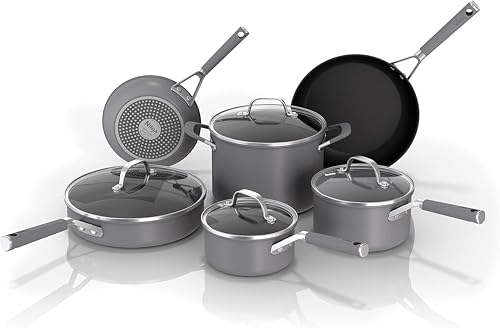
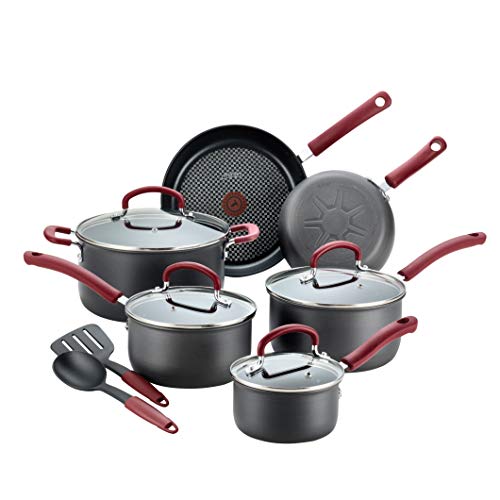
A stock pot is a tall, large pot for soup, stock, pasta, chili and boiling jobs. Capacity, base construction and lid fit matter most. If you searched for the best 8 quart stock pots, the best 12 quart stock pots or the best stainless steel stock pots, the sizes and materials below should help.
Whatever you pick, a stock pot should feel stable when full, so check the handles and the weight as well. The six pots below mix stainless steel and aluminum, and some of them come in several sizes. We have not used these pots ourselves. Sizes and lids change by listing, so confirm the capacity, the lid and whether the pot works on induction before buying. Stock pots with lids are the norm, but a few listings sell the pot alone.
As an Amazon Associate we earn from qualifying purchases. Links below are affiliate links, and they do not change the product information we give.
What to Look For
| Feature | Why it matters |
|---|---|
| Capacity | Pick 8 quarts for everyday soup and 12 quarts or more for batches |
| Material | Stainless steel is durable; aluminum heats fast but is not induction friendly |
| Base | A thick or layered base helps prevent scorching |
| Induction | Check the listing for induction compatibility before ordering |
In this guide
Specs at a Glance
| Pot | Material | Size | Notes |
|---|---|---|---|
| Cuisinart Chef’s Classic | Stainless steel | Several sizes sold | Lid included; measurement marks may vary |
| Calphalon Classic | Stainless steel | Check the listing for size | Lid included |
| Farberware Classic | Stainless steel | Several sizes sold | Lid included |
| Tramontina Prima | Stainless steel | Check the listing for size | Lid included |
| Bayou Classic Aluminum | Aluminum | Large capacity options | Often used for outdoor cooking |
| All-Clad Stockpot | Stainless steel clad | Several sizes sold | Premium build |
The 6 Best Stock Pots

Top pickBest for everyday soup and pasta
1. Cuisinart Chef’s Classic Stainless Stockpot
A long-running stainless steel stockpot from a familiar brand, sold in several sizes with a lid. It is a common first stock pot for home kitchens, and the stock pot sizes make it easy to match to a recipe.
Suits: everyday soup and pasta. Strengths: a familiar brand and a simple design. Weaknesses: check the listing for induction support. Skip it if you want a clad premium pot.

Best for home cooks upgrading a set
2. Calphalon Classic Stainless Steel Stock Pot
A stainless steel pot from Calphalon’s classic line with a fitted lid. It sits in the middle of the market, between budget and premium cookware.
Suits: home cooks upgrading a set. Strengths: a reputable brand. Weaknesses: sizes vary by listing. Skip it if you want an aluminum pot.
View Calphalon Classic Stainless Steel Stock Pot on Amazon
Best for budget buyers
3. Farberware Classic Stainless Series Stockpot
A budget-friendly stainless steel stockpot with a lid in the Classic line. Pots at this level are a practical choice for pasta, boiling corn and large pots of soup.
Suits: budget buyers. Strengths: a low-cost entry. Weaknesses: a basic build. Skip it if you want a heavy clad base.
View Farberware Classic Stainless Series Stockpot on Amazon
Best for value seekers
4. Tramontina Prima Stainless Steel Stock Pot
A stainless steel covered stock pot from Tramontina, a brand known for value cookware. It is a sensible pick when you want a covered pot without paying for a premium name.
Suits: value seekers. Strengths: a covered pot at a fair tier. Weaknesses: details vary by listing. Skip it if you want a lifetime brand name.
View Tramontina Prima Stainless Steel Stock Pot on Amazon

Best for large batches
5. Bayou Classic Aluminum Stockpot
A big aluminum stockpot often used for outdoor boils and large batches. Check the listing for the size and whether a lid is included.
Suits: large batches. Strengths: large sizes and light weight. Weaknesses: not suited to induction. Skip it if you cook on an induction hob.

Best for serious cooks
6. All-Clad Stainless Stockpot
A premium multi-layer stainless steel stockpot from All-Clad, sold in several sizes. It is built for cooks who use a stock pot often and want even heating over a full pot of liquid.
Suits: serious cooks. Strengths: even heating and a premium build. Weaknesses: a high price tier. Skip it if you want the cheapest option.
View All-Clad Stainless Stockpot on Amazon
Care and Setup
- Wash in warm soapy water and dry fully.
- Use medium heat for most jobs, since a thick base holds heat.
- Soak stuck-on food instead of scraping hard.
- Store with the lid on its side to keep air moving.
Mistakes to Avoid
- Overfilling to the brim.
- Heating an empty pot.
- Using aluminum on an induction stove.
- Buying a size that is too big for your burner.
Questions to Ask Before You Buy
- What do you cook most often: stock, pasta, chili, canning or seafood boils?
- Which burner will you use, and is it a gas ring, an electric coil or glass top?
- Do the handles feel comfortable when the pot is full and heavy?
- Can the oven or a dishwasher hold it, according to the maker’s listing?
- How much shelf or cupboard height do you have for a tall pot?
- Do you want a lid that fits tight, or a vent for steam?
Matching It to Your Kitchen
Look at the size of your largest burner and at the space beside it. A wide pot can overhang a small ring and heat unevenly, while a tall, narrow pot can be hard to stir and to reach into. Think about weight as well: once it is filled with liquid, even a modest pot becomes hard to lift, so plan a route from the stove to the sink. A household of two cooks differently from a family that batch cooks every Sunday.
Who Should Skip It
If you mostly cook small portions, a large pot may spend its life in a cupboard and waste space. Cooks who already own a big saucepan or a Dutch oven might find the extra pot does not add much. Anyone with limited wrist strength should think about lighter alternatives or smaller batches. Always follow the maker’s instructions for heat, cleaning and lid use.
Finally, picture cleanup day. A very large pot may not fit in your sink or dishwasher, so check the width of your basin and the space under the tap before you order.
Picking a Capacity That Fits Your Cooking
Capacity is the first decision, and it is easy to get wrong in both directions. A pot that is too small forces you to cook in two batches or risk boilovers. A pot that is too large wastes burner space, heats slowly and takes up cupboard room.
Think about the biggest batch you realistically cook. A household of two or three that makes soup a few times a month may be well served by a mid-size pot, such as the 8 quart size mentioned in this guide. A family that cooks stock in bulk, freezes portions or makes chili for a crowd may prefer 12 quarts or more. Canning, seafood boils and large gatherings call for bigger sizes, like those often paired with aluminum pots.
Remember that you should not fill a pot to the brim. Leave room for bubbling and for adding ingredients. Check how the listing states the capacity, since the usable volume below the rim can be less than the stated one.
- Choose a size for your usual batch, not your rare largest one.
- Check the listed capacity and the outer width against your burner.
- Think about the freezer space for the finished stock.
Stainless Versus Aluminum Pots
The two materials in this guide behave differently. Stainless steel is durable, does not react with acidic foods like tomato, and cleans easily. It can be heavy, and a single-layer pot can heat unevenly unless it has a thick or layered base. Aluminum heats quickly and is lighter, which helps with large pots, but it is not induction friendly and may react with acidic foods or dark with use, so check the listing and manual.
The base construction deserves a close look. Layered or encapsulated bases, as with the All-Clad pot, spread heat across the bottom and help reduce scorching at the center. Thinner bases are lighter and cheaper but may need more stirring and a lower flame. If you simmer stock for hours, even heating matters more than speed.
Think about your use. Outdoor boils over a burner suit aluminum, such as the Bayou Classic style. Everyday indoor soups and sauces fit stainless. If your kitchen has an induction hob, confirm compatibility for any material before buying, because the listing is the only reliable source.
Lids, Handles and Pouring
A stock pot gets heavy, so how you grip it matters. Look for handles that are riveted or firmly attached and large enough to hold with a mitt. Loop handles on both sides let you carry the pot with two hands. A pot with only one long handle can tip when full.
The lid affects heat and steam. A tight lid helps bring liquid to a boil faster and keeps stock from reducing too much. A lid with a vent can release steam and lessen boilover. Check that the lid fits snugly, and that its knob can be gripped with a mitt. If the listing sells the pot alone, as a few do, plan to buy a matching lid.
Pouring is another factor. A wide, flared rim makes pouring easier, while a straight rim can drip. If you drain pasta or strain stock, think about whether you will use a colander in the sink and whether the pot fits there comfortably. Some people use a ladle to transfer liquid instead of lifting the whole pot, which is safer with a very large one.
Safe Handling of Large Pots
Hot liquid in a large pot is one of the easier ways to get burned in a home kitchen. Set up before you start. Clear the counter along your route from stove to sink, and move other pots out of the way. Turn handles so they do not stick out into walkways.
Keep the pot stable on the burner. A pot that is wider than the burner can tilt, and a small burner under a large pot can be unstable. Use a flat, clean burner and do not move the pot while it is simmering unless needed. If you must move it, turn off the heat and use both hands.
When cooling stock, avoid putting a hot pot straight into a tight space. Ladle the stock into shallow containers to cool it faster, following guidance from a food safety source. Check your pot’s instructions before using it in an oven or refrigerator.
- Fill the pot only as far as the maker advises.
- Use mitts on lids and handles.
- Lift the lid away from your face to avoid steam.
Stock Pot Sizing and Fit Checklist
A stock pot is one of the few kitchen items where bigger is not always better. A pot that is too large for your burner or storage space becomes a nuisance, while one that is too small makes batches awkward. Use this checklist while you compare the stainless and aluminum picks above.
- Think about the largest batch you realistically make, whether that is soup for a few, stock for the freezer or a pot of chili for a crowd.
- Check the diameter of the base against the size of your burner, so the pot heats evenly and does not overhang awkwardly.
- Measure the height of the pot with the lid on, and check that it fits under your range hood and in your cabinet.
- Look at the handles. Sturdy loop handles that stay cool enough to hold, or that are easy to grip with a pot holder, make lifting safer.
- Consider the weight when full. A pot of liquid is heavy, so choose one you can lift comfortably.
- Check the lid fit and whether it has a vent or a knob you can grip.
- Confirm that the pot works with your cooktop type, including induction if you have it.
A capacity figure on a listing is the pot’s brim volume, so the working capacity is lower. Leave some room at the top to avoid boil-overs, and allow space for stirring.
Stainless Steel Versus Aluminum: A Comparison
These two materials dominate the stock pot market. The table shows how they typically behave.
| Point | Stainless steel | Aluminum |
|---|---|---|
| Heat spreading | Depends on a bonded core or base | Spreads heat quickly |
| Weight | Heavier in many designs | Lighter and easier to lift |
| Reactivity | Resists reacting with acidic foods | Check whether it is coated or anodized |
| Cleaning | Durable, tolerates scrubbing | Follow the care sheet, avoid harsh cleaners |
| Induction use | Often works if the base is magnetic | Needs a magnetic layer to work |
A stainless pot with an aluminum or copper core combines durability with heat spreading, while a plain aluminum pot is a light, practical workhorse. Check the maker’s description to see which one you are looking at.
Cooking and Handling Tips for Large Pots
Use the right burner and keep the heat appropriate for the job. For stock, a gentle simmer is usual, and a good lid helps hold in heat. Stir with long-handled tools, and keep the handles turned away from other burners. Lift full pots with two hands and clear a path to the sink before you move them. Pour liquids slowly through a strainer over a heatproof container.
When cooling large batches of stock or soup, follow official food safety guidance for cooling times and storage, rather than leaving the pot on the counter. Divide into shallow containers if that guidance suggests it. Keep children and pets clear of the kitchen while moving hot, heavy pots.
Care and Storage
Wash the pot with warm soapy water and a soft sponge. For stuck-on bits, soak in warm water and follow the maker’s guidance on safe cleaning methods. Dry the pot fully to prevent water marks. Check the base for warping, pitting or discoloration that could affect heating. Store the pot with the lid placed upside down or beside it, and use a liner if you stack cookware.
If a handle loosens or a rivet works free, stop using the pot and contact the maker. A pot with a damaged handle can be unsafe to lift when full.
Reading a Stock Pot Listing
Look for capacity in quarts or liters, the diameter and height, the weight and the thickness of the base. See whether it includes a steamer insert or a pasta basket. Read the oven limit if you plan to braise, and check the lid material. Make sure it states compatibility with your cooktop and notes the warranty.
Which Pot Size Suits Which Kitchen
Capacity guidance is easier when tied to real situations. Use these as loose guides and adjust to the size of your household.
- Single person or couple: a mid-size pot covers soups, pasta and small batches of stock, and takes less storage room.
- Family of four or more: a larger pot lets you cook once and eat twice, with extra for the freezer.
- Frequent hosts or batch cooks: consider a very large pot, but make sure you have the storage space and the burner to match.
- Small apartment kitchen: choose a nesting design or a pot that doubles as a pasta pot, so one piece does several jobs.
- Canning or large-batch preserving: follow the guidance of the pot maker and recognized canning authorities, since not every pot is suited to that task.
Whatever size you pick, test the lift before you buy if you can. Pick up the pot, imagine it filled and walk to the sink in your mind. If that feels hard, a smaller pot, used more than once, may be the sensible answer.
Stock Pot FAQ
How big is an 8 quart stock pot?
It holds enough soup for a small family and is a good everyday size. Check the listing for the exact capacity of each model.
Is a 12 quart stock pot too big?
It is great for batches of stock or chili, but it takes up storage room and needs a large burner.
Which stock pots work on induction?
Many stainless steel pots do, but check each listing. Aluminum pots usually do not.
Do stock pots come with lids?
Most do, but a few listings sell the pot alone. Check the listing before buying.
What size stock pot is best for a family of four?
Many families find an 8 to 12 quart pot enough for soup and pasta. If you cook in batches, you may want a bigger one. Check the listing for the exact capacity and size.
Can I make pasta in a stock pot?
Yes, a stock pot gives pasta room to move in water. Use enough water and stir early to stop sticking. Follow the pasta maker's directions for time.
Does a stock pot need a heavy base?
A thick or layered base helps spread heat and reduces scorching, especially for long simmers. A thin base can work with lower heat and more stirring. Look at the listing for base details.
Can I use a stock pot for canning?
Some people use large pots for water bath canning, but you should follow tested canning instructions and use the right rack and jars. Check that the pot is tall enough and works on your burner.
Why does my stock pot discolor?
Heat, minerals and acidic foods can leave marks on stainless and dull aluminum. Wash and dry after use, and follow the maker's care notes. Marks are often cosmetic.
Should I buy a pot with measurement marks?
Marks inside can help when adding water or liquid, but they may be hard to read or vary, as the post notes for one pot. A separate measuring cup works too.
How do I store a big pot with a lid?
Store it with the lid on its side or on a rack so air can move. Nesting smaller pots inside saves space. Check cabinet height before buying.
Is a stock pot useful if I own a Dutch oven?
A Dutch oven suits braises and baking, while a stock pot has more volume for the same width. If you rarely need large batches, one may be enough. Think about your regular recipes.
The Short Version
For a classic stainless pot, the Cuisinart. For a trusted brand, the Calphalon. For a low cost, the Farberware. For value, the Tramontina. For big batches, the Bayou Classic. For a premium build, the All-Clad.
Building a Stock, Soup and Pasta Workflow Around One Big Pot
A stock pot is a batch tool, and it earns its storage space when you plan around batches. A weekend stock made from saved bones and vegetable trimmings becomes the base for soups, risottos, braises, and pan sauces all week. A full pot of pasta water handles a family dinner and tomorrow’s pasta salad at the same time. A big batch of soup or chilli cools, portions, and freezes in a way that a smaller saucepan simply cannot match. When you shop, picture those three jobs first, because they set the capacity you need far more honestly than the largest meal you might cook once a year. A pot that is right for your weekly batch cooking will also handle the occasional feast with a little planning, while a pot bought only for the feast will annoy you every ordinary week.
Headroom is the detail that separates a comfortable pot from a frustrating one. Liquids expand, foam, and rise as they boil, and pasta in particular pushes a starchy foam toward the rim. Filling a pot only about two-thirds full for boiling jobs leaves room for that movement and keeps the stovetop clean. That is why the usable capacity of a pot is always smaller than the number printed on the box, and why a household that regularly cooks pasta for six may be happier stepping up a size rather than running a smaller pot at the brim. Think in terms of working volume, not headline volume, and the sizing advice elsewhere in this guide will make more sense.
Cooling and storing a full pot deserves a plan before you cook. A large volume of hot soup holds its heat for a long time, and leaving it to cool slowly on the counter for hours is poor practice. Divide big batches into shallow containers so they chill faster, or set the pot in a sink of cold water and stir occasionally to bring the temperature down before refrigerating. If you freeze portions flat in labelled bags or boxes, they stack neatly and thaw quickly under cold water or in a pan with a splash of stock. The pot that made the batch is rarely the right vessel to store it in, so factor containers into your routine.
Two-Pot Jobs: Blanching, Steaming and Double Duty
A stock pot pairs well with simple inserts and improvised setups. With a steamer basket or a heat-safe colander set inside and a lid on top, it steams vegetables, dumplings, and shellfish in generous quantities. For blanching, the large water volume is the point: plenty of boiling water returns to the boil quickly when cold vegetables go in, so they cook fast and keep their colour. During preserving season the same deep pot can hold jars for a water bath if it is tall enough to cover them with water and the jars sit on a rack rather than directly on the base. Check the guidance for your jars and your recipe, and never use a pot for pressure canning, which needs a purpose-built pressure canner.
Heat, Bases and Why Some Pots Scorch
Scorching happens where heat concentrates. A thin base over a powerful burner creates a hot ring that burns whatever settles there, which is why thick sauces, milk-based soups, and grains need either a heavier base, a lower flame, or more frequent stirring. An encapsulated or clad base spreads heat across the bottom of the pot and softens those hot spots. You can test a pot you already own by bringing a flour-and-water mixture or a simple tomato sauce to a gentle simmer and watching where it first starts to catch; that tells you more about your burner and base pairing than any specification sheet.
Burner match matters as much as the pot itself. A very wide pot on a small burner heats unevenly, with a hot centre and cool edges, while a narrow pot on a wide burner wastes energy up the sides and overheats the handles. Centre the pot, choose the burner closest to the base diameter, and give a big volume of cold liquid time to come up to temperature rather than blasting it on the highest setting from the start. On glass and induction tops, lift rather than drag a heavy full pot, both to protect the surface and because a full pot is far heavier than it looks.
Stirring technique is the third part of the equation. For thick mixtures, stir in a pattern that reaches the corners and sweeps the base, not just a lazy circle in the middle. A long-handled spoon or a flat-edged spatula that contacts the base will find the spots where food is beginning to stick before it burns. If something does catch, resist scraping the burnt layer into the dish; transfer the unburnt portion to a clean pot and continue, leaving the scorched base behind to soak.
Altitude, Lids and Boil Behaviour
At higher altitudes water boils at a lower temperature, so pasta, beans, and stocks take longer and evaporate differently. A well-fitting lid becomes more valuable, both to keep the boil steady and to limit evaporation during long simmers. Even at sea level, a lid left slightly ajar is a useful control: fully on for bringing water to the boil quickly, ajar for a gentle simmer that does not reduce too fast, and off when you actually want a sauce or stock to concentrate. Learning to use the lid as a dial rather than an afterthought makes the same pot behave well across a wider range of recipes.
Comparing the Picks by Cooking Style
The stainless pots in this guide suit cooks who want one pot for browning, deglazing, and long simmering, and who value a surface that does not react with tomatoes or wine. Within that group, the differences are about base construction, handle comfort, and how the lid fits and pours. The aluminum pick plays a different role: it heats quickly and keeps the weight down, which matters when the pot is full and needs to move between stove and sink, and it is a traditional choice for big seafood boils and outdoor burners. Its trade-offs are care and compatibility, since aluminum is not the natural choice for induction or for long storage of acidic foods.
For a first stock pot, most households are best served by the middle of the range: a size that covers pasta night and soup batches, a base thick enough to simmer a sauce without constant attention, and handles you can grip securely with oven mitts. Premium construction pays off if you cook stocks weekly, use the pot on induction, or simply want a single pot to keep for many years; the differences show up in even heating, sturdier handles, and lids that still fit perfectly after years of use. What rarely pays off is buying the largest pot in the range for a small household, because the storage cost and the weight of a full pot are paid every day while the extra capacity is used a few times a year.
Consider also what the pot must work alongside. If your kitchen already has a Dutch oven, the stock pot’s job narrows to high-volume boiling and steaming, and a simpler, lighter pot may be ideal. If the stock pot will be your only large vessel, versatility matters more, and a pot that browns well and goes from stovetop to table earns its place. Being honest about which of those kitchens is yours prevents the most common buying mistake in this category: paying for features that duplicate a pot you already own.
Safe Lifting, Pouring and Serving From a Full Pot
Most stock pot accidents happen after the cooking is done. A full pot is heavy, awkward, and full of liquid that moves as you move. Clear the path to the sink before you lift, use both hands with dry mitts or towels, since wet cloth conducts heat quickly, and keep the pot close to your body rather than at arm’s length. When draining pasta, many cooks find it safer to lift the pasta out with a spider strainer or tongs, or to place a colander in the sink and pour in stages, rather than carrying and tipping the entire pot in one motion.
Serving at the table is another option worth planning for. A pot that looks presentable can go straight to a trivet on the table for soups and boils, which keeps second helpings hot and saves a serving dish. Keep a ladle long enough to reach the bottom without your knuckles approaching the rim, and set the lid on a plate or rest rather than directly on the table. If children are at the table, position the pot centrally and out of reach of place settings, since a tall pot of hot liquid is less stable than a low serving bowl.
Leftovers should leave the pot promptly. Acidic foods stored overnight in aluminum can pick up off flavours and discolour the metal, and even stainless pots are awkward refrigerator tenants that crowd out everything else. Transfer, label with the date, and cool as described earlier. The pot then gets washed the same day, dried thoroughly around the rim and handles where water collects, and stored with its lid inverted or ajar so the interior stays fresh.
More Stock Pot Questions Answered
Can I fry in a stock pot?
The tall sides make a stock pot surprisingly good for deep frying small batches, because the depth contains splatter and leaves room for oil to bubble up. Use a thermometer, never fill the pot more than about halfway with oil, and keep the lid off. For everyday shallow frying, a wider pan gives you more surface and easier access.
Why does water take so long to boil in my big pot?
Volume is the main reason: a large pot simply holds more water to heat. A lid makes a real difference, as does starting with hot tap water for pasta. Also check the burner size; a wide pot on a small burner loses heat around the edges and boils slowly.
Is a steamer insert worth buying?
If you steam vegetables, dumplings, or shellfish regularly, a fitted insert or basket is convenient and lifts food out in one motion. If you steam occasionally, a heat-safe colander or a simple folding steamer basket inside the pot does the same job without another bulky piece to store.
How do I remove the white film inside my pot?
The chalky film is usually mineral deposit from water, and it is harmless. Simmering a solution of water with a splash of vinegar, then washing as usual, clears it. Rainbow discolouration on stainless steel from overheating fades the same way or with a paste of baking soda and water.
Should the lid be glass or metal?
Glass lids let you check progress without lifting and losing heat, which suits long simmers. Metal lids are lighter, tougher, and tolerate higher oven temperatures. Choose based on how you cook: frequent peeking favours glass, oven use and durability favour metal.
Three Jobs Every Stock Pot Should Handle Well
Strip away the marketing and a stock pot has three core jobs. The first is boiling a large volume of water quickly and holding a steady, rolling boil for pasta, corn, shellfish, or blanching vegetables. That job rewards volume, a lid that fits well, and a base that sits stable and centred on the burner. The second job is the long, gentle simmer: stocks, soups, and braises that sit at a bare bubble for hours. That job rewards an even base that prevents a scorching hot spot, a lid that can sit ajar to control evaporation, and handles that stay manageable when you need to shift a heavy, hot pot. The third job is capacity cooking for a crowd or for the freezer, where the pot is filled close to its working limit and then must be lifted, poured, and emptied safely. That job rewards strong, well-attached handles and a weight you can manage when the pot is full. Judge every pot in this guide against those three jobs in the order your kitchen demands them, and the right choice usually becomes obvious.
Most households weight the jobs unevenly. A family that eats pasta twice a week lives in the first job. A cook who makes stock from every roast chicken lives in the second. A household that batch-cooks Sunday sauce for the freezer lives in the third. There is no shame in buying for your dominant job and accepting a compromise on the others; the mistake is buying for a job you perform once a year and compromising the one you perform weekly. Let your calendar, not your imagination, rank the three jobs.
Stock-Making in Practice: From Carcass to Clear Broth
A good homemade stock is mostly patience and restraint. Start bones and aromatics in cold water so impurities rise gradually and can be skimmed, keep the pot at the gentlest simmer rather than a rolling boil, which emulsifies fat and clouds the liquid, and resist stirring, which has the same clouding effect. Add delicate herbs late so their flavour stays fresh. When the stock is done, strain it without pressing hard on the solids, cool it promptly in shallow containers as described earlier, and refrigerate. A layer of fat will set on top and can be lifted off cleanly, leaving a clear, versatile stock that freezes well in portions matched to your recipes. The pot’s contribution to all of this is unglamorous but real: enough volume to hold the ingredients without crowding, an even simmer without a scorching base, and a shape that pours or ladles without drama at the end.
A Worked Decision: Sizing for Real Households
For a single cook or a couple who make soup and pasta in modest quantities, the smaller end of the range in this guide covers nearly everything, stores easily, and heats its contents quickly. The trap at this size is the dinner party: a pot that is perfect for two can be overwhelmed by pasta for eight. If you entertain often, size for the party and accept a bigger pot in the cupboard, because borrowing capacity on the night is not an option. For a family of four to six, the middle sizes are the natural home, handling pasta nights, soup batches, and a whole chicken for stock without strain. For households that cook for gatherings, preserve garden produce, or run seafood boils, the largest pots earn their storage space, provided someone in the house can lift one safely when full and the stovetop and sink can accommodate it.
Burner and sink measurements settle arguments that opinions cannot. Measure your largest burner’s diameter, the height between stovetop and any microwave or hood above it, and the depth of your sink where the pot must sit to be filled and washed. A pot that cannot sit under the tap or fit in the sink for washing is a pot you will curse weekly. Check those three numbers against any pot you are considering, and let a pot that fails them drop off your list no matter how attractive its other qualities are.
Cooking for a Crowd Without Stress
A big pot simplifies crowd cooking because it converts many small problems into one manageable one. A single pot of soup, chilli, or curry feeds a gathering with one burner, one lid to lift for serving, and one vessel to wash, and it holds temperature well thanks to its volume. Plan the timing backwards: dense ingredients and grains need the longest cooking, delicate vegetables and herbs go in near the end, and the pot can sit, covered and off the heat, for a comfortable while without harm while guests arrive. Set the pot on a trivet at the table or on a side counter with a ladle and let people serve themselves, which frees the cook entirely. For outdoor gatherings, the aluminum pick in this guide on a suitable outdoor burner is the traditional setup for boils and large batches, with the caution that a full pot outdoors must sit on a stable, level surface well away from foot traffic and children.
Troubleshooting Stock Pot Problems
If a soup or sauce keeps catching on the base, the cause is usually a hot spot meeting a thick mixture that is not being stirred to the edges. Lower the heat, stir with a tool that reaches the corners, and consider a heat diffuser under the pot for very gentle work. If pasta sticks together in clumps, the water volume was too small or the pasta went in before a true rolling boil; a stock pot’s generous water is precisely the cure, so use it fully rather than filling the pot halfway out of habit. If a stock tastes flat, it usually simmered too briefly, was under-salted at serving, or spent its life at a boil that drove off aromatics; gentle heat and patience are the fixes, along with seasoning at the table stage rather than in the pot.
If the lid rattles and spits during boiling, the pot is overfilled or the heat is higher than the job needs; a rolling boil and a violent boil cook pasta at the same temperature, so turn the heat down once the boil is established and save the energy and the mess. If handles become uncomfortably hot, check whether flames are licking up the sides of the pot from an oversized burner, and centre the pot on a burner matched to its base. If a stainless pot develops a stubborn rainbow sheen or white spots, those are heat tint and mineral deposits respectively, both cosmetic and both removable with vinegar or a baking soda paste as described earlier in this guide.
Over a pot’s life, the habit that protects it most is drying it properly before storage, especially around the rim, the lid edge, and the handle joints where water lingers. A pot stored dry, with its lid ajar or inverted, stays fresh-smelling and ready, and the next batch of stock starts in a vessel that contributes nothing but heat and space, which is exactly what a stock pot is for.
Final Checks Before You Click Buy
Before ordering, confirm the three measurements that decide whether a stock pot will live happily in your kitchen: the pot’s diameter against your largest burner, its height against the space above your stovetop, and its width and depth against your sink, where it must be filled and washed. Check whether the listing’s capacity is the brim-full figure, as it almost always is, and mentally reserve the top portion for safe boiling room, since that is the volume you will actually cook in. Confirm that a lid is included, what it is made of, and whether the pot is rated for your cooktop type, especially if you cook on induction, where the base must be magnetic to work at all.
Look also at the handle attachments and the maker’s care guidance. Handles that are welded or riveted firmly, with enough clearance for a mitt, are a safety feature on a vessel this heavy when full, not a styling detail. Care should be honest work: a pot you can wash without ceremony will be washed promptly, and a pot stored dry with its lid ajar will be ready for the next batch. Judge the purchase by the years of pasta nights, soup batches, and stocks it will quietly support, and choose the pot whose size, material, and handling make those ordinary jobs easiest, because ordinary jobs are where a stock pot earns its place.