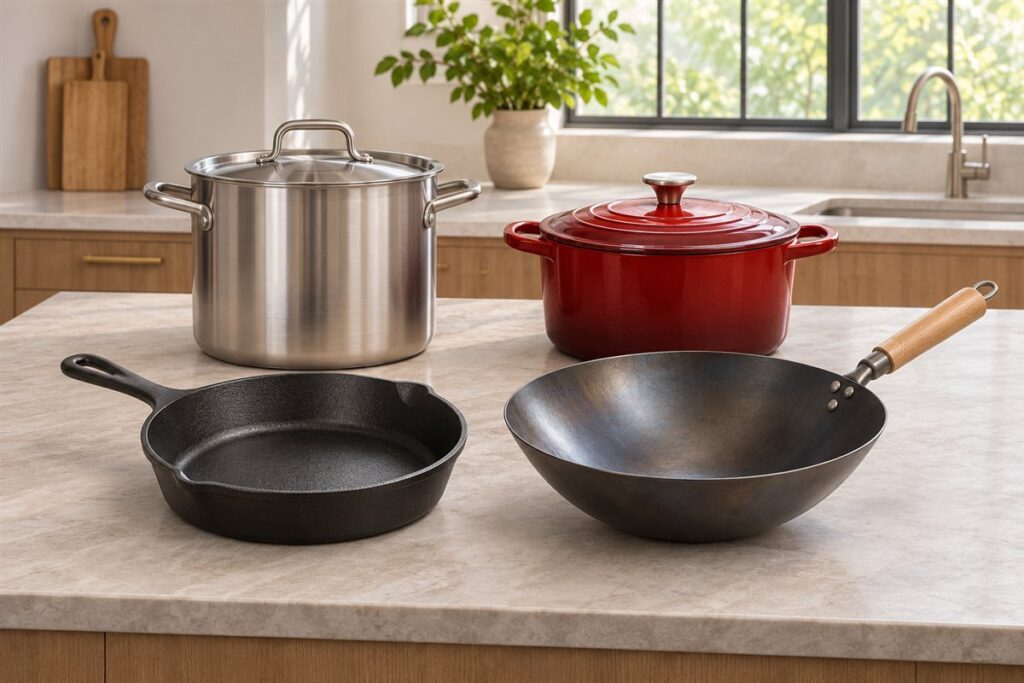
Cast iron is heavier and holds heat longer, while carbon steel is lighter and reacts faster to changes in burner heat. Both build a natural seasoning layer and both reward regular use, so the right choice mostly depends on how much weight you want to lift and how quickly you want the pan to respond.
What Sets Them Apart
Both pans are made mostly from iron, which is why people often confuse them. Cast iron is poured into a mold, which gives thick walls and a slightly rougher surface. Carbon steel is formed from sheet metal, so it is thinner and usually smoother.
That difference in thickness shapes most of what you notice at the stove.
Heat and Handling
- Weight: Cast iron can be tiring to move when full. Carbon steel is easier to toss, tilt and pour from.
- Heat response: Carbon steel heats and cools faster. Cast iron takes longer to warm up but stays hot once it gets there.
- Heat retention: Thick cast iron keeps its temperature when cold food hits the surface, which helps with searing and frying.
- Shape: Carbon steel often has sloped sides that suit stir frying and omelets. Cast iron often has straighter sides suited to baking and braising.
Care and Seasoning
Both need seasoning, which is a thin layer of baked-on oil that protects the metal and helps food release. Both can rust if left wet, so dry them after washing and wipe on a very thin coat of oil.
Carbon steel often arrives with a protective coating that must be removed before first use. Follow the maker’s instructions for that step. Acidic foods such as tomato sauce can dull seasoning on either pan, so use shorter cooking times until the surface is well built up.
Quick Comparison
| Trait | Cast Iron | Carbon Steel |
|---|---|---|
| Weight | Heavy | Lighter |
| Heat response | Slow to change | Quick to change |
| Best uses | Searing, baking, frying | Stir frying, eggs, searing |
| Surface | Slightly rough | Smoother |
Think about your cooking habits too. If you cook on a gas flame or an electric coil and want to adjust heat often, carbon steel follows your changes closely. If you mostly sear one steak at a time or bake in the pan, cast iron gives a steadier base. Some cooks keep a small carbon steel pan for eggs and stir fries and a larger cast iron skillet for roasts and baking.
Handle comfort matters as well. Cast iron handles can get hot in the oven, so keep a dry mitt nearby.
Matching the Pan to Your Stove
Your cooktop can tip the decision more than any other factor. On a gas burner, both pans work well, and carbon steel in particular rewards the quick flame adjustments gas allows. A very thick cast iron pan on a small burner can heat unevenly, with a hot ring in the middle and cooler edges, so give it extra preheating time and keep the pan size sensible for the burner.
Induction cooktops need a magnetic base. Both cast iron and carbon steel are iron-based and typically work, but check the maker’s description to be sure. The heavier cast iron can be hard on glass-ceramic surfaces if dragged, so lift it rather than sliding it. A warped carbon steel pan may spin or rattle on an induction hob because the base no longer sits flat.
On electric coils and glass tops, flat contact is everything. Rock the empty pan on a flat counter before buying if you can. Thin carbon steel can distort when heated hard and fast, and some pans flatten again as they cool, while others stay warped. Thick cast iron generally holds its shape, though a sharp heat shock can crack it. Bring either pan up to temperature gradually, and avoid cold water on a hot pan. If you cook mostly on a modest electric burner, cast iron’s heat storage can help compensate for low power.
Building the First Seasoning
Both pans depend on seasoning, but the starting point differs. Many cast iron pans arrive with some factory seasoning, while carbon steel is often coated to prevent rust in transit, and that coating generally has to be scrubbed off before first use. Always follow the maker’s directions, since the coating type varies.
Seasoning works by heating a very thin film of oil until it bonds to the metal. The key word is thin. A thick coat turns sticky or blotchy. Wipe oil on, then wipe almost all of it off, as if you had made a mistake, and heat the pan as the guide describes. Several thin rounds beat one heavy round.
Cooking is the best seasoning tool afterward. Fry bacon, sear fatty meats, saute vegetables in oil and roast potatoes during the first few weeks. Eggs and fish are less forgiving until the surface has built up. Carbon steel may show uneven brown, blue or black marks early on. These are normal discoloration and not a defect. Cast iron tends to darken more uniformly. If food sticks, do not panic: clean the pan gently, dry it, re-oil lightly and keep cooking. Patience is rewarded because both pans improve with regular use.
Dish-by-Dish Guidance
Choosing a pan is easier when you think in terms of meals. For a thick steak or bone-in chicken thighs, cast iron’s heat storage helps the surface stay hot when cold food lands on it, giving steadier browning. It is also a natural fit for cornbread, skillet cookies and anything that moves from stovetop to oven.
Carbon steel shines when you need speed and mobility. Stir-fries, fried rice, sauteed greens and omelets benefit from its quick response and sloped sides. A light pan makes tossing and flipping less tiring, and the thinner walls let you pull the heat down fast if a pan begins to smoke.
Pancakes and crepes are possible in either, but a thinner carbon steel crepe-style pan is easy to tilt. For shallow frying, cast iron’s thermal steadiness keeps oil temperature from dropping sharply when you add food. For roasting vegetables or finishing a fish fillet in the oven, either pan works if the handle is all metal and within the maker’s limits.
Wet, acidic dishes are the weak point of both. Long simmers of tomato sauce, wine reductions or citrus-heavy braises can dull seasoning and leave a metallic taste. For those, a pot with a different surface is usually the better tool.
Durability and Repair
Iron-based pans are long-lived, and most problems can be fixed. Rust is the most common issue: scrub it off with a stiff brush or a non-scratch pad, dry thoroughly, and apply fresh seasoning. Flaking seasoning can be scrubbed away and rebuilt. Sticky or gummy areas generally come from oil applied too thickly.
The two metals fail in different ways. Cast iron is hard but brittle, so a hard drop or a severe temperature shock can crack it, and a crack generally ends the pan’s useful life. Carbon steel is more flexible and can warp from uneven or extreme heat, but it is less likely to crack outright. Rivets on carbon steel handles can loosen over time, so tighten or have them checked if the handle wobbles.
Pitting from long exposure to moisture or salt can be hard to cure completely, though many pitted pans still cook well after reseasoning. Because both can be restored, buying second-hand is a practical way to save money, provided the body is straight, the handle is secure and there are no cracks. When a pan develops a deep crack, a badly warped base or a loose handle that cannot be fixed, it is time to replace it.
Checks Before You Buy
A short checklist prevents most disappointments. First, confirm diameter and depth against what you cook. Listings differ on whether size refers to the top rim or the flat cooking area, so read the description, and think about whether the pan will fit your burner and your cupboard.
Second, look at the handle. A long handle on cast iron gets hot in the oven and is heavy when the pan is full, so think about your wrist and your mitts. A helper handle on the opposite side makes lifting safer. On carbon steel, check whether the handle is riveted, welded or wooden, and what the maker says about oven temperature limits for that material.
Third, examine the surface. Cast iron may be rough or machined smooth, and a smoother surface can feel better for eggs and release a little more easily. Carbon steel should look uniform, without gouges.
Fourth, read how the pan is shipped and prepared: pre-seasoned or bare, coated for shipping, and what the maker suggests for first use. Finally, set your budget by priorities rather than price alone. A well-made basic pan of either metal is generally enough to start, and the surface you build will matter more than a fancy finish.
FAQ
Which one is better for a beginner?
Either works. Carbon steel is easier to handle, while cast iron is often more forgiving of heat swings because of its mass.
Can I use them in the oven?
Most all-metal versions can, but check the handle material and the maker’s guide for temperature limits.
Can I use soap on cast iron or carbon steel?
A little mild soap is generally fine on a well-seasoned pan if you rinse, dry immediately and oil lightly afterward. Avoid long soaking and dishwashers, which promote rust.
Why does my carbon steel pan have blotchy colors?
Brown, blue and black patches are normal results of heating and oil building up on the metal. They usually even out with use and do not mean the pan is damaged.
Do these pans work on induction cooktops?
Both are iron-based and typically magnetic, but check the maker's information and make sure the base sits flat. Lift the pan rather than sliding it to avoid scratching the glass surface.
Which one is better for searing steak?
Cast iron holds heat well and recovers steadily when cold food lands on it, which many cooks like for steak. Carbon steel can also sear well if you preheat it thoroughly and avoid overcrowding.
Can I cook acidic foods in them?
Short cooking times are generally fine once the seasoning is built up, but long simmers of tomato or wine sauces can dull the surface and add a metallic taste. Use a different pot for those dishes.
How do I stop food from sticking?
Preheat the pan fully, use enough fat, dry the food and wait for it to release naturally before flipping. A well-built seasoning layer also makes a big difference.
How do I know when to replace one?
Cracks, severe warping that keeps the base from sitting flat, or a handle that cannot be secured are good reasons. Rust, flaking and stickiness can usually be fixed by cleaning and reseasoning.
The Short Version
Choose cast iron for steady heat, baking and sturdy daily use. Choose carbon steel if you want a lighter pan that responds quickly, especially for stir frying.