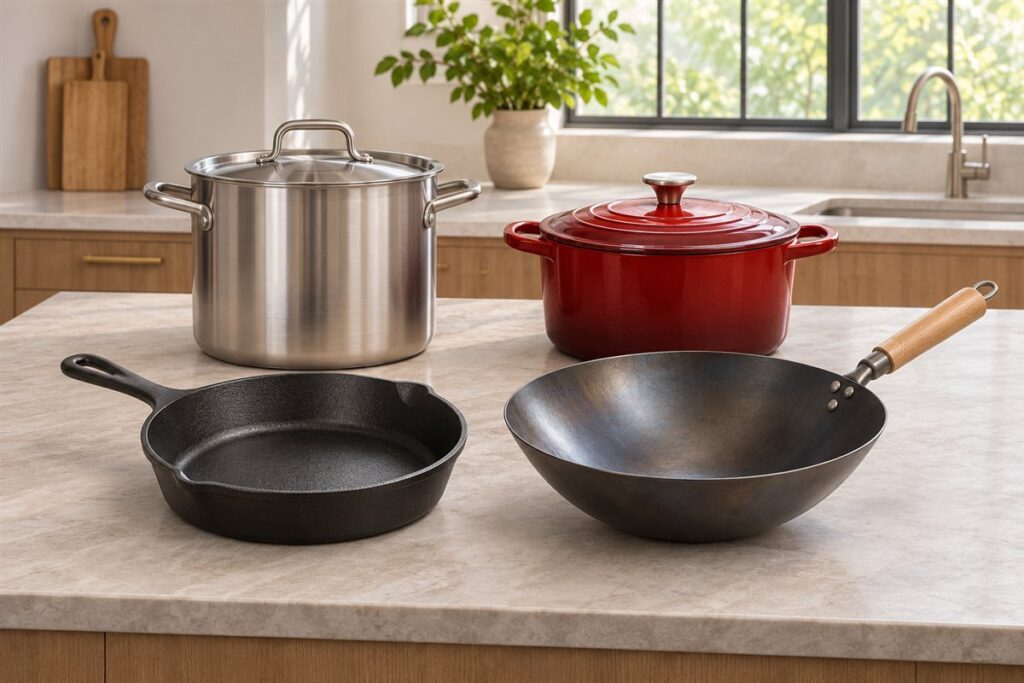
Rust on a cast iron pan looks alarming, but it is a surface problem you can usually fix with scrubbing and reseasoning. The steps are simple: remove the rust, wash and dry the pan, then rebuild the oil finish. Deep pitting or cracks are a different matter, and those pans may need replacing.
Step-by-Step Rust Removal
- Wipe the pan and check how far the rust spreads. Light orange spots are easy; flaking or deep pits take more effort.
- Scrub with steel wool or a stiff brush and a little dish soap. Work in circles until the bare gray metal shows.
- For stubborn rust, soak briefly in a half water, half white vinegar mix. Keep this short, such as 30 minutes, and check often, since vinegar can eat into the metal.
- Rinse well under running water.
- Dry immediately with a towel, then heat on a low burner for a few minutes until fully dry.
Wear gloves for scrubbing, since steel wool can leave small fibers.
Reseasoning the Surface
Bare iron without a coating rusts again quickly, so seasoning comes next.
- Rub a very thin layer of cooking oil over every surface, including the handle and the outside.
- Wipe off as much as you can with a clean cloth, so it looks almost dry.
- Place the pan upside down in the oven, with a tray on a lower rack to catch drips.
- Heat to the temperature your oil or the maker recommends, hold for about an hour, then let it cool in the oven.
- Repeat the process a few times for a stronger finish.
Ovens and hot pans cause burns, so use mitts and keep the area clear. Ventilate, as oil may smoke.
How to Keep Rust Away
- Dry the pan right after washing.
- Wipe with a trace of oil before storing.
- Avoid long soaks or leaving it in the sink.
- Store in a dry spot with air flow, and place a paper towel between stacked pans.
Do not be discouraged if the first coat looks patchy or tacky. Thin layers matter most, because thick oil turns sticky instead of hard. If the surface feels tacky after baking, wipe it down and bake it again for a while. Cooking fatty foods, such as bacon or fried potatoes, in the first few uses helps build the finish naturally. Over time the pan darkens and becomes smoother, and it will resist rust better as long as you dry it and keep it lightly oiled.
Judging the Damage Before You Start
Before scrubbing, look carefully at how bad the problem is. Surface rust appears as orange or brown spots or a thin film and usually wipes away with abrasion. Heavier rust looks flaky or rough, and it may cover large areas. Pitting means the metal has been eaten away, leaving small craters. Light pitting is cosmetic and can often be smoothed with seasoning, while deep pits can trap food and may make the pan harder to clean.
Check for cracks, especially around the handle and along the rim. Cast iron is strong, but it can crack from drops or sudden temperature changes. A crack is a structural problem, and the pan may not be safe to use. Also look at the base for warping. Place the pan on a flat surface and see if it rocks. A badly warped pan may heat unevenly and spin on the stove.
Think about whether the pan is worth restoring. Most rusty cast iron can be saved, and many people find the process rewarding. Vintage and heirloom pans often have value beyond their cost. If the pan has deep structural damage, or if you are uncertain, consult a professional or consider replacement. For pans with a coating such as enamel, rust treatment is different, so check the maker’s guidance, as scrubbing can damage the enamel.
Choosing a Removal Method
Several methods remove rust, and the right one depends on the severity. For light rust, a stiff brush, a nylon scrubber or a coarse salt and oil scrub may be enough. Rub in circles with moderate pressure until the rust lifts. For moderate rust, steel wool or a chain mail scrubber works well, though you should wear gloves and rinse well to remove fibers.
For heavy rust, a short soak in a vinegar and water mixture can help loosen it. Check the pan frequently, because vinegar attacks bare iron and leaves it pitted if left too long. Remove it as soon as the rust softens and scrub off the residue. Some people use other methods, such as electrolysis or commercial rust removers, but follow the safety instructions for any product, and do not mix chemicals.
- Light rust: brush, salt and oil, or a nylon pad.
- Moderate rust: steel wool or a scrubber with soap and water.
- Heavy rust: brief vinegar soak, followed by scrubbing.
- Pitting: smooth by scrubbing and then build up seasoning.
After removal, the surface will look dull gray and feel rough. This is normal. Rinse and dry at once, as bare iron can flash-rust within minutes.
Seasoning Details That Make It Last
Seasoning is a thin layer of oil that has been heated until it bonds to the iron. It protects against rust and creates a naturally slick surface. Choose an oil that suits the process. Many cooks use plain vegetable oils, while some prefer specific types. The key is to use a very small amount. Apply a drop, rub it over the entire pan with a lint-free cloth, then wipe it off as if you were removing it all. A film that looks barely there is the target.
Heat the pan upside down in the oven on a rack, with a tray below to catch drips. Follow the temperature and time suggested by the oil maker or the pan maker, since oils differ in how they polymerize. Allow the pan to cool in the oven. Repeat several times to build layers. The surface should become slightly darker and smoother each time.
If the surface feels sticky or looks blotchy, too much oil was applied. Wipe the pan, then bake it again at the recommended heat for a longer period. If it flakes, there may be loose seasoning left from earlier layers. Scrub it down and begin again. Ventilate the kitchen, as heating oil can produce smoke. Never leave the oven unattended, and keep children away from the hot pan.
Using the Pan to Strengthen the Finish
After reseasoning, regular cooking helps the finish mature. Start with foods that contain fat, such as bacon, sausages or fried potatoes. Cooking with a moderate amount of oil adds to the layer and fills small gaps. Avoid long simmering of acidic foods, such as tomato sauce, in the early weeks, because acid can weaken a fresh seasoning layer. Wait until the finish is well established before cooking these dishes.
Preheat the pan slowly, as cast iron holds heat but takes time to warm. Heating gradually prevents cracking and hot spots. Use enough oil, and avoid moving food too soon. After cooking, clean the pan promptly with hot water and a brush. Mild soap is generally fine for modern seasoning, though some owners prefer to avoid it, so follow what the pan maker suggests.
Dry the pan immediately and place it on a warm burner for a minute to evaporate remaining moisture. Rub a thin layer of oil over the cooking surface before storing. Over time, the pan will darken and become smoother, and the cooking performance will improve. Be patient, as the finish improves with use. Watch for dull patches or signs of rust, and touch them up with a quick scrub and a thin coat of oil.
Storage, Humidity and Long-Term Habits
Where you keep cast iron has a large effect on rust. Humid kitchens, damp cabinets and tightly sealed lids create ideal conditions for oxidation. Store pans in a dry place with good airflow, and avoid placing them directly on damp surfaces. If you stack pans, put a paper towel or a cloth between them to absorb moisture and prevent scratching.
Avoid storing food in cast iron, particularly acidic or wet food, since it can strip the seasoning and cause rust. Do not put the pan away with a lid on if any moisture remains, as trapped moisture encourages rust. If you live in a very humid area, a dehumidifier or a moisture absorber near the storage area may help. Check the pan periodically, especially after long periods without use.
Establish a simple routine: wash, dry, heat briefly, oil lightly and store. This takes only a few minutes and protects the pan for years. If the pan sits unused for a long time, refresh the seasoning before use. If you see rust returning, address it quickly, since early treatment is easier. A well-kept cast iron pan can last for generations, and a little regular care is far easier than a full restoration later.
FAQ
Is a rusty pan fine to use after cleaning?
Once the rust is fully removed and the pan is reseasoned, it can be used again. Discard any pan that is cracked or deeply pitted.
Which oil should I use?
Many cooks use a neutral cooking oil. Follow your pan maker’s advice.
Is it safe to cook on a pan that had rust?
After the rust is fully removed and the pan is reseasoned, it can be used. If rust remains or the pan is deeply damaged, avoid using it.
How long should I soak a rusty pan in vinegar?
Keep it short and check often, since vinegar can damage bare iron. Remove the pan when the rust softens, then scrub and rinse.
Why did my pan rust again so soon?
Moisture, thin or incomplete seasoning and humid storage are common causes. Dry the pan well, oil it lightly and store it somewhere dry.
Can I use soap on cast iron?
Mild soap is generally fine on a well-seasoned pan. Check your pan maker's advice, and avoid long soaks.
Can I restore a pan with deep pitting?
Light pitting can be smoothed and seasoned. Deep pits may trap food and be harder to clean, so decide whether the pan is still practical.
Does the oven method work for enameled cast iron?
Enameled pans have a different finish and do not need seasoning. Rust removal on them needs care, so follow the maker's guidance.
How many seasoning layers do I need?
Several thin layers are common. More layers add protection, but each must be thin to avoid stickiness.
The Short Version
Scrub the rust to bare metal, dry the pan thoroughly and reseason it in thin layers. Store it dry and lightly oiled.