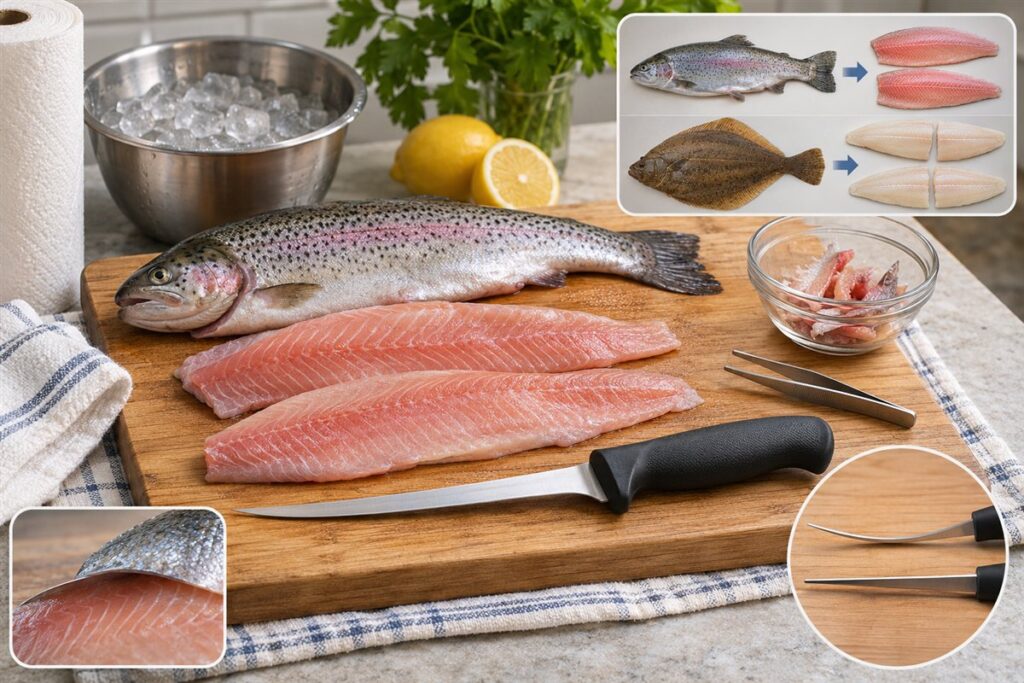
Filleting a fish means removing the meat from the backbone in two long pieces. You cut behind the gills, run the knife along the backbone and lift the fillet free. A thin, flexible knife and a calm, steady pace matter more than speed.
Before You Begin
Work on a large board set on a damp towel so it cannot slide. Keep paper towels nearby, since fish is slippery. Use a thin, sharp fillet knife and read the maker’s safety instructions. Ask your fishmonger to scale and gut the fish if you want an easier first try.
- Keep the fish cold until you cut it, following food-safety guidance for storage.
- Have a bowl ready for bones and trimmings.
- Use a clean towel to dry your hands often.
Filleting a Round Fish
- Lay the fish on its side with the head toward your knife hand if you are right-handed, or the opposite if you are left-handed.
- Make a curved cut behind the gill plate and pectoral fin, down to the backbone.
- Turn the blade toward the tail. Slide it along the backbone, keeping it flat against the bones.
- Use long, gentle strokes and lift the fillet away as you go.
- Release the fillet at the tail and set it aside.
- Flip the fish and repeat on the other side.
- Trim away belly bones and any dark or ragged edges.
- Feel along the fillet with a fingertip for small pin bones and remove them with clean tweezers.
Round Fish and Flat Fish
| Type | Basic approach |
|---|---|
| Round fish such as trout | Two fillets, cut along each side of the backbone |
| Flat fish such as sole | Four fillets, two on each side of the center line |
Practice and Cleanup
Expect your first few fillets to look rough. Smaller, forgiving fish are good for practice, and a little meat left on the bones can go into stock. Wash tools, boards and hands with hot soapy water after handling raw fish, and keep raw fish away from ready-to-eat food. Store the knife with its edge protected.
Keep the blade angled slightly toward the bones, not toward the meat. Let the tip feel the backbone and glide over the rib bones instead of cutting through them. If the knife catches, stop, reposition and try a shorter stroke rather than forcing it.
Choosing a Fillet Knife That Fits Your Fish
A fillet knife is defined by a long, narrow blade that flexes slightly, and that flex is what lets it follow the curve of the backbone and ribs. Blade length matters. A shorter blade gives more control on small fish such as trout, while a longer one covers the length of larger fish in fewer strokes. Many home cooks find a mid-length blade a sensible compromise if they handle a range of sizes. Check the product listing for blade length and stiffness, since makers describe these differently.
Flexibility is a trade-off. A very flexible blade hugs the bones closely and suits delicate fish, but it can feel wobbly when you need to cut through thicker areas. A stiffer blade gives more feedback and power but may leave more meat on the bones. If you plan to fillet a variety of fish, a moderate flex is a flexible starting point.
Look at the handle as well. Fish are slippery, so a handle with texture or a shaped grip helps you keep control with wet hands. Check that the handle material is comfortable and that the knife has a guard or shape that prevents your hand from sliding forward. Consider the sheath or storage option that comes with it, because a protected edge stays sharper. Read the care instructions, since many thin blades are best washed by hand and dried right away.
Buying and Handling Fish Before You Cut
Good filleting starts at the counter. Whole fish should look fresh, with clear, bright eyes, firm flesh that springs back when pressed, a clean smell of the sea or water rather than a strong or sour odor, and moist gills. Ask your fishmonger how the fish has been stored and when it arrived. If you are unsure, ask for help choosing, as they can often point out the best option for a first attempt.
Transport the fish cold, using a cooler or an insulated bag if the trip is long, and put it in the fridge promptly. Plan to cook or prepare it soon after buying, following food-safety guidance for storage times. Keep raw fish away from ready-to-eat foods in your fridge and on your counter, and store it in a covered container on a shelf where it cannot drip onto other items.
- Pat the fish dry before cutting, as a dry surface is easier to grip.
- Chill the fish well, since firm, cold flesh cuts more cleanly than warm flesh.
- Have your fishmonger scale and gut the fish if you prefer, which can save time and mess.
Choose a fish of a manageable size for your first attempts. Medium-sized round fish with a single backbone are usually easier than very large or oddly shaped ones. Whatever you choose, work calmly and give yourself plenty of time.
Skin On or Off, and Dealing With Pin Bones
After you have your fillets, you have a choice to make about the skin and the small bones. Leaving the skin on is common for pan-searing and grilling, because the skin protects the flesh from heat and can turn crisp. Removing the skin suits dishes where texture matters, such as raw preparations, poaching or fillings. Neither is better in general. It depends on the recipe and your preference.
To remove the skin, lay the fillet skin side down with the tail end toward you. Make a small cut between skin and flesh at the tail, then hold the skin firmly, perhaps with a bit of salt or a paper towel for grip, and slide the knife forward at a shallow angle. Keep the blade nearly flat against the skin, and let it glide rather than force it. Go slowly and stop if the blade begins to cut through the skin.
Pin bones are small, thin bones that run along the fillet’s centerline in many fish. Find them by running a clean fingertip lightly along the surface. Pull each one out with clean tweezers or fish bone pliers, grasping the end and drawing it out in the direction it points. Wash tools afterward. Working in good light helps you spot them. Some fish have more pin bones than others, so ask your fishmonger what to expect.
Fixing Common Filleting Problems
Most early filleting problems come from a handful of causes, and each has a simple correction. If the fillet comes off ragged with lots of meat left on the carcass, the blade may have drifted away from the bones. Keep the knife flat against the backbone and feel for the bone with the blade as you go. Use long, light strokes rather than short, forceful ones.
- Torn flesh: the knife is dull, or the fish is too warm. Sharpen the blade and chill the fish.
- Cutting through rib bones: change the angle so the blade rides over the rib cage and follows the bone surface.
- Slipping fish: dry the fish and your hands, and place a damp towel under the board.
- Uneven fillet thickness: adjust the angle gradually and use a steady pace, trimming the thicker end afterward if needed.
- Remaining skin scales: if the fish was not scaled well, scrape the skin from tail to head with the back of a knife and rinse.
If you make a mistake, remember that a ragged fillet can still be cooked and eaten. Use odd pieces in chowders, fish cakes, curries or stews. Expect to improve with each fish, and take a moment between fillets to wipe the blade and check the edge. Do not rush, particularly near your fingers.
Cleaning Up and Using Every Part of the Fish
Cleanup deserves as much care as the cutting. Raw fish can carry bacteria, so wash your board, knife, hands and any surfaces that touched the fish with hot soapy water. Consult official food-safety guidance for cleaning surfaces, and use a separate board for raw fish if you can. Dry the knife thoroughly and store it with the edge protected, as moisture can harm a thin blade over time.
Odor is a common complaint. Rinse boards with cold water first, since hot water can set the smell, then wash with soap. Some cooks use lemon juice or a baking soda paste on boards afterward, though you should check your board maker’s care guide first. Ventilate the kitchen and take the trash out soon after filleting, sealing the bag to contain smell.
Do not waste the trimmings. Bones and heads from lean white fish can make a quick stock if you follow a recipe and keep the simmer gentle. Skin can be crisped, and small scraps can go into patties or soups. Freeze any trimmings you cannot use right away, in a sealed container with a label and date. Follow food-safety advice for storage and for how long the items keep.
FAQ
Does the knife need to be very flexible?
A thin, bendy blade follows the shape of the bones more closely, which leaves less meat on the carcass.
How do I know the fillet is cooked?
Follow local food-safety guidance for internal temperature and use a thermometer where you can.
What size fish is best for a beginner?
A medium round fish with a single backbone is usually easier than a very large or flat one. Ask your fishmonger for a suggestion.
Should I fillet a fish when it is cold or at room temperature?
Cold fish is firmer and cuts more cleanly, so keep it chilled until you start. Follow food-safety guidance rather than leaving it out.
Do I need fish bone tweezers?
They are not required, but clean tweezers or bone pliers make removing pin bones much easier and safer than using your fingers.
Can I fillet a frozen fish?
It is easier to fillet fish that is fully thawed but still very cold. Thaw it as the package or food-safety guidance advises, and pat it dry.
How do I get the fishy smell off my hands?
Rinse with cold water first, then wash with soap. Rubbing with lemon juice or stainless steel under cold water helps some people.
Is it okay to eat fish skin?
Many people enjoy crisp fish skin, but whether it suits you depends on the fish and your preference. Make sure the fish is scaled and cooked according to safe guidance.
How often should I sharpen a fillet knife?
It depends on use. Check the edge before each session and hone or sharpen as the maker advises when it begins to tear instead of glide.
The Short Version
Cut behind the gills, run the thin knife flat along the backbone and lift each fillet free. Work slowly on a stable board, keep tools clean, and follow the knife maker’s instructions.