The usual knife buying mistakes are buying a big block of knives you will not use, ignoring how the handle fits your hand, and forgetting about care. Most cooks need only a few knives, chosen for the jobs they do every week.
Buying More Than You Need
A large block looks complete but often holds knives that rarely leave their slot. Many cooks manage well with a general-purpose chef’s knife, a small paring knife and a long toothed knife for bread. Add other shapes only when a real job calls for them.
- List the tasks you do most before you shop.
- Add one knife at a time and see how it fits your cooking.
- Skip novelty shapes that only do one narrow job.
Ignoring Grip and Balance
A knife that feels wrong in your hand tires you out and makes careful cutting harder. Hand size, grip style and preferred weight differ from person to person. If you can, hold a knife in a shop and mimic a chopping motion. If you shop online, read the maker’s dimensions and weight details.
- Hold the handle and check it does not feel slippery or sharp-edged.
- Check the blade height leaves room for your knuckles above the board.
- Notice whether weight sits toward the blade or the handle.
Forgetting Care and Storage
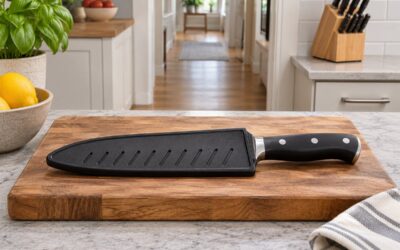
A knife needs regular upkeep to cut well. Plan how you will keep the edge, how you will wash it and where it will live. Follow the maker’s care guide, and generally wash by hand and dry promptly. Store blades so the edge is covered or held apart from other tools, and keep them out of reach of children.
General advice cannot promise that any knife is safe to use. Cut carefully, keep your attention on the task and follow the maker’s instructions.
Another frequent slip is using a good knife for the wrong job, such as prying, opening packages or cutting on hard surfaces like stone or glass. A wooden or plastic board is kinder to an edge, and the right knife for each task keeps the blade in better shape for longer.
Common Mistakes at a Glance
| Mistake | What to do instead |
|---|---|
| Buying a large block | Begin with two or three knives |
| Choosing by looks | Check handle comfort and balance |
| Ignoring care | Read the maker’s guide and plan storage |
| Using one knife for everything | Match the knife to the task |
FAQ
Do I need a bread knife?
If you slice crusty loaves or soft tomatoes, a long toothed blade helps. If you rarely do either, you may not need one yet.
Is a heavier knife always better?
No. Weight is a matter of preference. Choose what you can control comfortably through a whole prep session.
The Short Version
Buy few knives, choose for hand comfort, and plan for care and storage. Always follow the maker’s instructions and handle blades with care.