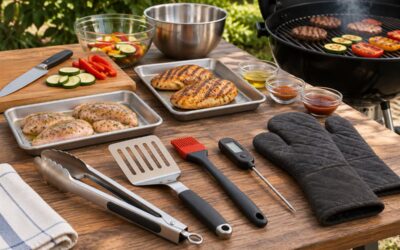
Most kitchen tool buying mistakes come from gadget enthusiasm: buying single-purpose items, overlooking material, and running out of drawer space. Choose tools that do several jobs well and that you will reach for every week.
Gadget Overload
A drawer full of single-purpose gadgets is a familiar sight. Many of them replace a task a good knife, spoon or whisk already handles. Before buying, ask whether you could do the job with something you own.
- Prefer tools with more than one use.
- Avoid items that need long set-up or awkward cleaning.
- Borrow or try a tool first if a friend owns one.
Overlooking Material and Build
The material decides how a tool behaves near heat, how it wears and how it treats your cookware. Some tools suit non-scratch surfaces, while others are meant for hard use. Check the maker’s guide for heat limits and care.
- Look at how the head attaches to the handle. Gaps trap food.
- Check the handle length for the pots you use.
- Test the grip for comfort, especially for tools you use for long stretches.
- Read the cleaning notes, including dishwasher advice.
Storage and Everyday Fit
A tool you cannot find or reach is a tool you will not use. Think about where each item lives. Hooks, upright crocks and shallow drawer trays all suit different kitchens. Measure the drawer if you can before buying a bulky organiser or set.
Also think about who uses the kitchen. Left-handed cooks, small hands and limited grip strength all affect which designs are comfortable.
Trusting Photos Over Details
Pictures flatter almost everything. A spatula head can look thin and flexible yet feel stiff, and a whisk can look sturdy yet bend under thick batter. Read the listed length, weight and materials, and compare them with a tool you already like. Notice what the description does not say, such as heat limits or washing advice, and look for it in the maker’s guide before you buy.
Another quiet mistake is buying a matching set for the sake of tidiness. A set may include one or two tools you love and several you never touch. Buying singly lets you test each against your habits.
Buying Checklist
| Check | What to look for |
|---|---|
| Purpose | Does it do a job you do often? |
| Material | Suits your cookware and heat levels |
| Cleaning | Easy to wash and dry thoroughly |
| Storage | Fits your drawer or hook space |
FAQ
What tools should every kitchen have?
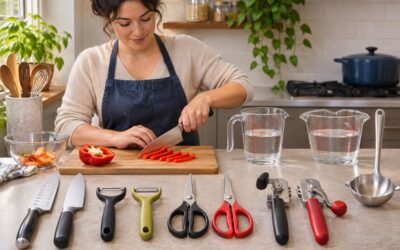
A common core includes a spatula, a spoon, tongs, a whisk, a peeler and a pair of measuring tools. Add more as your cooking grows.
Are bigger sets worth it?
Only if you will use most of the pieces. Compare the contents against your actual habits.
The Short Version
Buy fewer tools that do more, check material and build, and plan storage before you shop. A small, useful kit beats a crowded drawer.