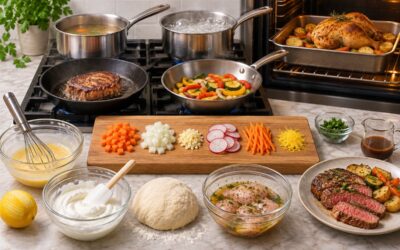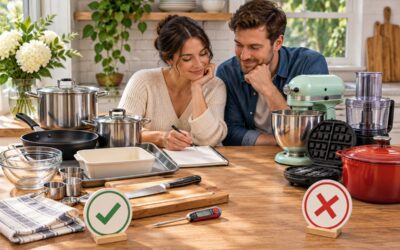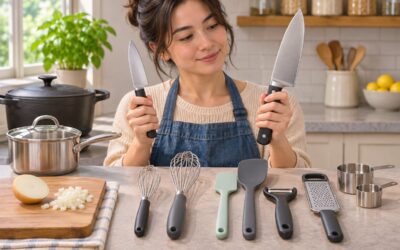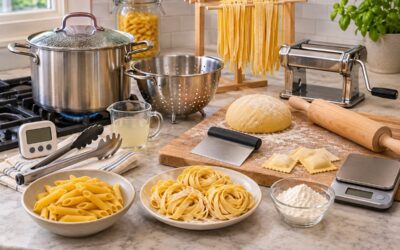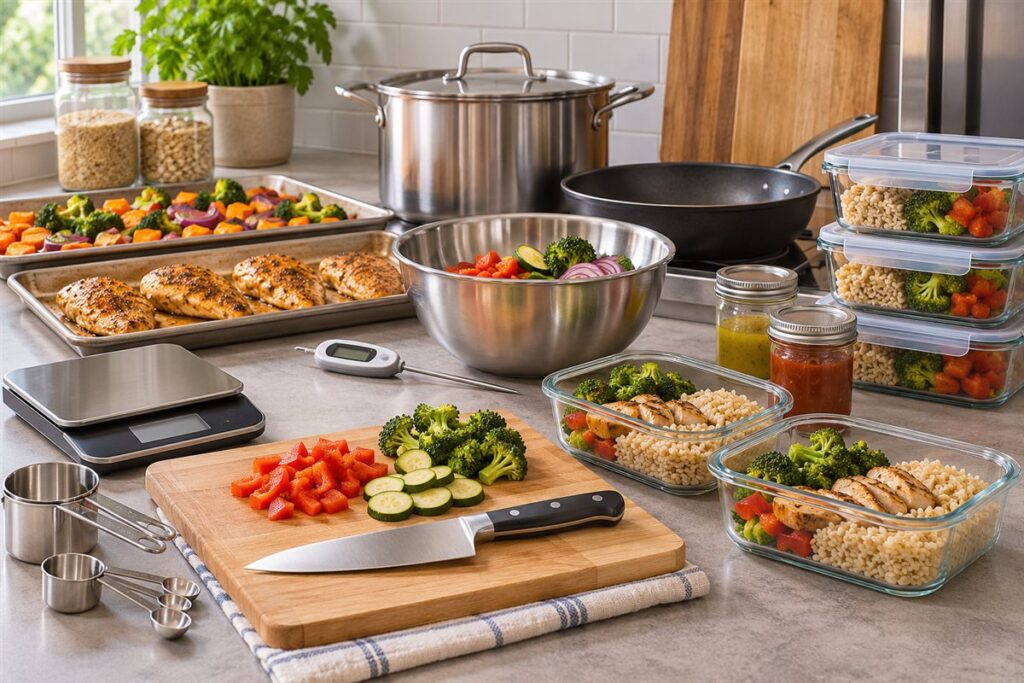
Meal prep works best with a small group of reliable tools: sharp knives, big sheet pans, mixing bowls, and plenty of matching containers. The goal is to cook in batches, cool food quickly, and store it neatly. Here is a practical set and a simple routine to go with it.
Prep and Cooking Tools
- A chef’s knife and a large board. Room to work saves time. Use a damp cloth under the board to keep it steady.
- Sheet pans. Two or more let you roast vegetables and proteins at once.
- A large pot and a big skillet. Good for grains, soups, and stir-fries in bulk.
- Mixing bowls. Used for tossing, marinating, and holding chopped food.
- A thermometer. Confirms doneness according to official food-safety guidance.
- A kitchen scale and measuring tools. Help you portion consistently.
Storage Tools
Containers matter as much as cookware. Choose a few sizes that stack, and check the maker’s guide to see whether they suit the microwave, freezer, and dishwasher.
- Portion containers for single meals.
- Larger containers for shared sides and grains.
- Small jars or cups for sauces and dressings.
- Labels and a marker for dates and contents.
A Simple Weekly Routine
| Step | Action | Tool |
|---|---|---|
| Plan | Choose a few recipes that share ingredients | Notebook or app |
| Prep | Wash and cut vegetables, portion proteins | Knife, board, bowls |
| Cook | Roast, simmer, and boil in batches | Sheet pans, pot, skillet |
| Cool | Spread food in shallow layers | Racks, shallow containers |
| Store | Portion, label, and refrigerate or freeze | Containers, labels |
Food Handling Notes
Cool cooked food promptly and refrigerate it in shallow containers. Keep raw and cooked foods apart, wash hands and boards between tasks, and follow official food-safety guidance for how long prepared meals keep and how to reheat them until steaming hot. When freezing, leave a little headspace and label the date. If you are unsure whether food is still good, throw it out.
Make It Easier
- Prep on a set day so it becomes a habit.
- Run the oven and stove at the same time to use time well.
- Clean as you go, so the end of the session is quick.
- Keep a stack of clean towels nearby.
Choosing What to Prep
Some foods hold up well for several days, such as roasted vegetables, grains, and soups, while others are better made fresh. Use the guidance on food-safety websites to decide how long each item keeps, and plan to eat the most delicate meals first.
Container Materials: Glass, Plastic, and Stainless
Containers are the backbone of meal prep, and material affects how they perform week after week. Glass containers do not absorb odors or stains easily and often suit oven or microwave reheating, but they are heavier and can break if dropped. Plastic containers are light and affordable, which suits carrying lunches, but they may stain or hold odors and have heat limits. Stainless steel is durable and lightweight, but many versions cannot go in the microwave. Always check the product listing and care notes for what each container allows: microwave, freezer, dishwasher, or oven. Lids matter as much as the base. Look for lids that seal firmly and that you can open one-handed, and check whether the lid has the same temperature limits as the base. Vented lids help in the microwave, and silicone seals can trap odors, so make sure they can be removed for washing.
Choose shapes that stack well. Rectangular containers use fridge and bag space more efficiently than round ones, while round ones can be easier to clean in corners. Compartment containers keep sauces and crunchy items apart, but the divider reduces flexibility for large portions.
- Buy a few sizes rather than many of the same size.
- Test a new container with water to check the seal.
- Replace containers with cracks, warped lids, or lingering odors.
Portioning Tools and Planning Meals
Portioning keeps meal prep consistent. A kitchen scale is the most reliable tool for weighing food, particularly for grains and proteins, and many scales switch between units. Measuring cups and spoons help with sauces and dry ingredients. A ladle or scoop speeds up portioning soups and grains. If you have specific nutrition goals, treat any numbers as general guidance and consult a qualified professional for personal advice. Nothing here replaces that. For ordinary prep, choose portions that match the size of your containers and your appetite.
Planning prevents waste. Start by choosing a few recipes that share ingredients, such as a grain, a roasted vegetable, and a protein used in different ways. Write a shopping list, check your fridge and freezer space, and decide which meals will be eaten early in the week and which will be frozen. Foods that keep their texture well, such as stews and cooked grains, tend to suit later days, while delicate items like fresh greens are better added shortly before eating.
Keep sauces separate when possible, so containers do not turn soggy. Small jars or cups with tight lids are useful. Label each container with the contents and date.
- Plan two or three flavor profiles to avoid boredom.
- Reserve one night for leftovers or flexibility.
- Track what you actually eat and adjust next week.
Batch Cooking Equipment and Oven Strategy
Batch cooking depends on being able to cook large amounts efficiently. Rimmed sheet pans are the workhorse, allowing you to roast vegetables, proteins, and potatoes at the same time. Make sure the pans fit your oven, and use enough that food is not crowded; crowded pans steam instead of browning. Parchment or reusable liners reduce sticking and cleanup, so check their heat ratings. Large pots and deep skillets handle grains, soups, stews, and sauces. A heavy base helps prevent scorching. If you often cook large volumes, consider a lidded pot with enough capacity, but remember the weight when full and make sure you can lift it safely. A slow cooker or multi-cooker can free the stove for other tasks. Check the capacity and the maker’s guidance before using it for big batches.
Sequence your cooking. Start the longest-cooking items first, use the oven for several items at once, and use the stove for quick items. Set multiple timers, and keep a running list of what is done. Use a thermometer to confirm doneness according to official food-safety guidance rather than guessing, especially for poultry and ground meats. Let large amounts of food cool in shallow containers, not in a deep pot, so heat leaves quickly.
Keep your workspace tidy as you go, with a bowl for scraps and a sink or tub for dirty tools. A clean start makes the final packing quicker.
Freezing, Thawing, and Reheating Safely
Freezing extends the life of prepped meals, but it needs good technique. Cool food completely before freezing, and package it in freezer-suitable containers or bags with minimal air. Leave a little headspace in containers for liquids that expand. Label each with contents and the date, and place them flat or stacked in a single layer until frozen to save space. Not all foods freeze equally. Soups, stews, cooked grains, and many casseroles freeze well, while raw salad vegetables and some cream-based dishes may change texture. Check recipes and official food-safety guidance for specific foods and storage times. Do not refreeze food that has fully thawed unless the guidance permits it.
Thaw in the refrigerator when you can plan ahead, or follow the safe thawing methods described by official food-safety sources. Do not leave food at room temperature for long periods. Reheat food until steaming hot throughout, stirring partway so heat spreads evenly. Use microwave-safe containers and vent lids as the maker’s guide says. Check food before eating. If it smells off, looks unusual, or you are unsure how long it has been stored, discard it. Keep your fridge and freezer at the temperatures that food-safety guidance recommends, and use a simple thermometer to verify them.
- Use the oldest containers first.
- Keep an inventory list on the freezer door.
- Do not stack hot containers on top of each other.
Building a Routine That Lasts
Many people start meal prep with enthusiasm and drop it after a few weeks. A sustainable routine is realistic about time and tastes. Start small: prepare lunches for a few days rather than every meal for a week, and add more once the habit sticks. Choose a regular day and time, put on music or a podcast, and set out all your tools before you begin. Pick recipes you already enjoy, and avoid trying many new dishes at once. Rotate a few reliable meals and change sauces or sides to keep variety. Build a standing shopping list for staples so planning takes less time.
Review each week. Notice which containers you used, what food went uneaten, and which tasks took the longest. If cleanup is a chore, switch to sheet pan or one-pot meals. If food gets boring, adjust seasonings or freeze a few options. Be flexible. Some weeks you may prep less, and that is fine. Having a few frozen backups prevents a missed prep day from becoming takeout every night.
Finally, store tools where you can reach them easily. A designated shelf or bin for containers and labels keeps the process smooth. Replace worn items gradually, and invest first in the tools you use most, like a good knife, sturdy pans, and containers that seal well.
FAQ
How many containers do I need?
Plan on one for each meal you will store, plus a few extras for sauces and sides. Matching shapes keep the fridge tidy.
Do I need special meal prep gear?
No. Everyday cookware and storage work fine. Focus on sheet pans, sharp knives, and a good set of containers.
Are glass or plastic containers better for meal prep?
Glass resists stains and odors and often handles oven or microwave use, but it is heavier. Plastic is lighter and easier to carry. Check each product's care notes for microwave, freezer, and dishwasher limits.
How long does prepped food keep?
It depends on the food and storage method. Follow official food-safety guidance for refrigerated and frozen storage times, label everything with dates, and discard anything you are unsure about.
How do I stop food from getting soggy?
Store sauces and dressings separately, let cooked food cool before sealing, and keep crisp items apart from wet ones. Add fresh greens close to mealtime.
Can I freeze all meal prep dishes?
No. Soups, stews, and many grains freeze well, but some fresh vegetables and cream-based dishes change texture. Check recipes and official guidance for specific foods.
Do I need a food scale for meal prep?
It is helpful for consistent portions, but not required. Measuring cups and visual guides also work. A scale is especially useful for grains and proteins.
How should I reheat meals?
Reheat until steaming hot throughout, stirring partway through, and use containers labeled for the microwave or oven. Vent lids as the maker directs. Follow official guidance on reheating.
The Short Version
Gather a sharp knife, big board, sheet pans, bowls, and stackable containers, then follow a plan, prep, cook, cool, and store routine. Handle and store food as official guidance directs.