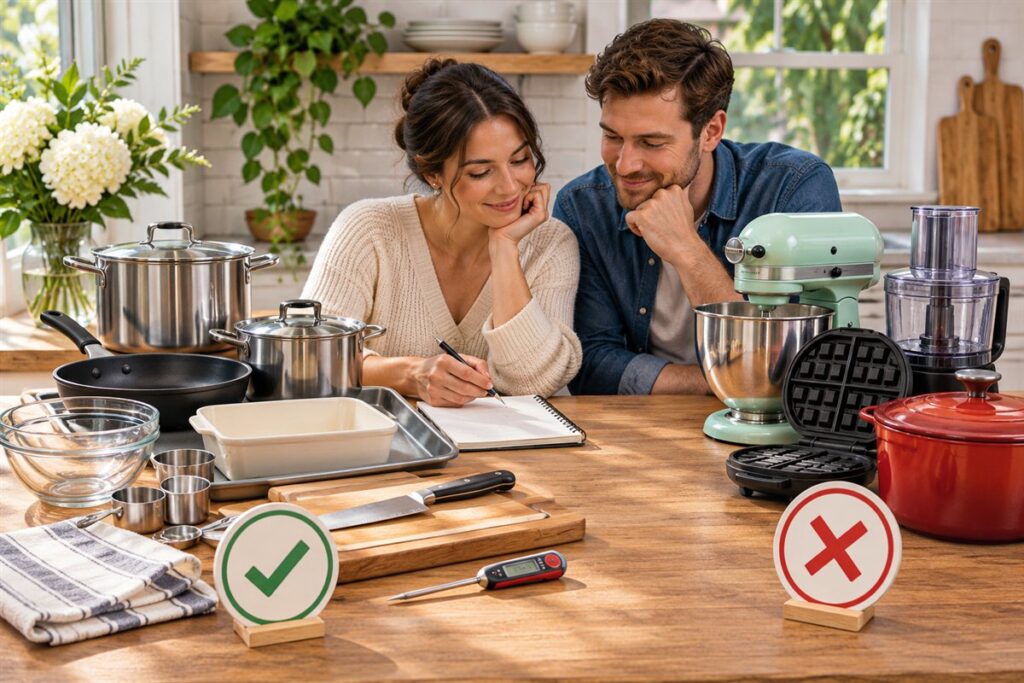
A wedding registry works best when it covers the daily tools of the kitchen first and saves special-occasion items for later. Think about how the two of you actually cook and entertain. A short, honest list is more useful than a long wish list filled with items you may never open.
Plan Around Your Real Habits
Write down the meals you cook in a normal week. A couple who bakes on weekends needs different items than one that mostly makes stir-fries. Check what you already own, because combining two households often leaves duplicates.
- List what you use at least weekly.
- Note what is worn out or missing.
- Consider storage space before adding bulky items.
Core Items to Consider
Cookware
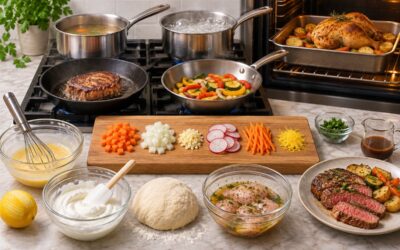
A skillet, a saucepan, a larger pot, and a roasting pan cover most meals. Choose materials that suit your stove and cleaning style, and read the maker’s guide for care instructions.
Prep Tools
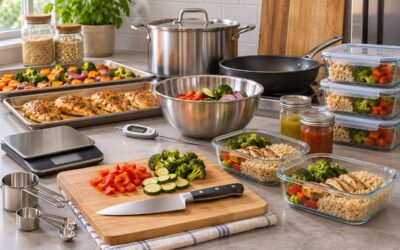
A chef’s knife, a paring knife, cutting boards, mixing bowls, and measuring tools are everyday basics. Add a thermometer for confident cooking.
Bakeware and Serving
Sheet pans, a baking dish, cooling racks, and a few serving bowls cover both weeknight dinners and holiday meals.
How Many to Register For
| Item | Suggested quantity | Thing to check |
|---|---|---|
| Sheet pans | Two | Fit inside your oven |
| Mixing bowls | One nested set | Storage space |
| Cutting boards | Two | Separate uses for raw food |
| Kitchen towels | Several | Washing schedule |
What to Leave Off
- Single-purpose gadgets you cannot picture using weekly.
- Large appliances you have no counter room for.
- Huge matching sets when you only need three or four pieces.
- Fragile specialty items that you would be nervous to use.
Leave a few open slots for items you discover you need after moving in. Many registries let you add items later, which helps.
Tips for Guests and Couples
Include items at a range of sizes so guests can join in whether they want to give something small or something larger. Add notes for items where the choice matters, such as the size of a pan or the color of towels. Check that the registry lists the same items in the quantities you really want, and keep the delivery address up to date.
After the event, keep a simple list of who gave what for thank-you notes, and set aside time to unpack and test each piece by following the maker’s instructions before the first use.
Choosing Cookware Materials for Your Cooking Style
Cookware is often the biggest part of a kitchen registry, and material choice shapes how you cook for years. Stainless steel is durable and handles a wide range of cooking, though food can stick if heat is too high or the pan is not preheated. Nonstick pans release food easily and suit eggs and delicate fish, but coatings wear and have care rules about heat and utensils. Cast iron holds heat well and can last a very long time, but it is heavy and needs seasoning and careful drying. Enameled cast iron adds easier cleaning but can chip. Match materials to your stove. Some cookware does not work on induction cooktops, so check the product listing for compatibility. Consider the weight, since heavy pots are hard to lift when full, and look at handles and lids for comfort and fit.
Think about care. If you prefer to put everything in the dishwasher, check which items allow it. If you do not mind hand washing, you have more options. Read the maker’s guide for oven temperature limits, which may differ for lids and handles.
- Choose a few core pieces over a large matching set.
- Mix materials: for instance, a nonstick skillet and a stainless saucepan.
- Look for lids that fit more than one pot.
Knives, Boards, and Everyday Prep Gear
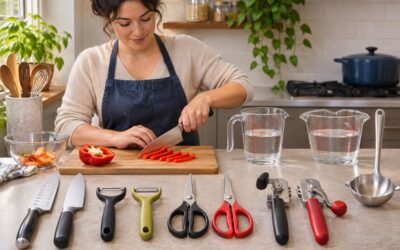
Good prep tools make everyday cooking more pleasant, and they are among the best registry items. A chef’s knife is the centerpiece. Hold a few if you can: weight, balance, and handle shape matter more than appearance. A paring knife and a serrated knife round out the basics. Block sets can be convenient but often include pieces you will not use, so consider buying a few chosen knives instead. Cutting boards come in wood, plastic, and composite materials. Wood is gentle on knife edges but needs hand washing and drying. Plastic boards are often dishwasher friendly, depending on the maker. Having at least two boards lets you separate raw meat from produce and ready foods. Look for boards large enough to work comfortably and with a groove or non-slip feet if you like.
Add measuring cups and spoons, a set of mixing bowls, a colander, a whisk, tongs, spatulas, a peeler, and a can opener. A kitchen scale and an instant-read thermometer help with accuracy. Choose tools with comfortable handles and read care notes for materials like wood and silicone.
- Include a sharpening tool or plan for professional sharpening.
- Keep knives stored with guards or in a block.
- Replace worn boards with deep cuts.
Small Appliances Worth Registering For
Appliances are popular registry items, but they are also the easiest to regret. Before adding any, ask whether you will use it weekly, whether you have a place to store it, and whether it replaces something you already do well with a pot or pan. Items that many couples find useful include a coffee maker suited to their habits, a toaster or toaster oven, a blender, and a hand mixer. Larger items such as stand mixers, food processors, and multi-cookers are great if you cook or bake those types of foods often. Compare capacity and footprint on the listing. A large appliance can take most of a small counter. Check the cord length and where the outlets are. Note the cleaning needs: parts that are dishwasher safe save time.
Consider durability and warranties, and check what the registry store’s return and exchange policy is. Guests may buy the same item, so a list with a range of options helps. If you are unsure, register for one or two and wait on the rest. After living together for a few months you will know what you really reach for. Many registries allow completion discounts or later purchases, so you do not need to decide everything now.
- Check voltage and plug types if relocating.
- Avoid duplicating appliances that either of you already owns.
- Make sure there is storage for accessories.
Dinnerware, Glassware, and Hosting Pieces
Dinnerware is where style and practicality meet. Consider how you eat: casual meals on weeknights, occasional gatherings, and holidays. Stoneware and porcelain are common materials; check whether they are dishwasher and microwave safe according to the maker. Plates that stack neatly save cabinet room, and simple shapes are easier to store. A neutral color goes with more things and makes replacements easier. Decide how many place settings you need. Many couples register for service for four or six, plus some extra bowls, then add more later. Consider whether you host regularly, and how large your table and cabinets are. Mugs, serving bowls, and a platter are useful extras. Glassware varies from everyday tumblers to stemware. Think about what you drink and how fragile you are comfortable with. Sturdy, stackable glasses survive daily use, while delicate stems suit special occasions but need careful storage and washing.
Flatware should feel comfortable in the hand and be easy to clean. Check care instructions and consider the number of pieces per setting. Storing flatware in a drawer tray keeps it organized. If you plan to host, add serving utensils, a pitcher, a large tray, and linens such as tablecloths and napkins. Be realistic: pieces you only use once a year can wait until later.
Registry Logistics and Timing
Good logistics make a registry easier for you and for guests. Start by comparing registry platforms and stores, looking at their return policies, shipping fees, completion perks, and whether you can add items from other places. Think about whether the store has locations near family and friends who prefer to shop in person. Build your list in stages. First add your essentials, then a few mid-range items, and finally a few special pieces. Keep a range of items at different sizes so guests with any plan can find something suitable. Include notes for specific details such as pan sizes or colors.
Review quantities. Items like towels, bakeware, and glasses may need multiple copies. Mark which items you want one of and which you want several. Keep the delivery address and contact details current, and decide whether items should ship to one address or several. Check the list periodically. Remove items you no longer want, and add ones you discover you need. After the event, record gifts promptly, send thank-you notes, and test each item according to its instructions. Keep receipts and packaging for a while in case you need exchanges. Unwanted duplicates can often be exchanged for items you do need, subject to the store’s policy.
FAQ
Should I register for a full cookware set?
A set can be convenient, but individual pieces let you choose sizes and materials that match your cooking. Compare the pieces in a set to what you would really use.
When should I update the registry?
Revisit it after your first few weeks of cooking together and again before the event. Remove items that no longer fit.
How many place settings should we register for?
Many couples start with four to six and add more later. Think about how often you host and how much storage you have. Check dinnerware care notes for dishwasher and microwave use.
Is a knife block set worth registering for?
It can be convenient, but sets often include knives you will not use. Many cooks prefer choosing a chef's knife, a paring knife, and a serrated knife separately. Hold them if you can.
Should we register for appliances we might not use?
It is usually better to register for items you will use weekly and wait on the rest. Check storage space and whether the appliance replaces something you already have.
What if cookware is not compatible with our stove?
Check the listing for compatibility, especially for induction cooktops. Read the maker's guide for temperature limits and care. When in doubt, ask the retailer before adding it.
How do we handle duplicate gifts?
Check the store's return and exchange policy, and keep gift receipts or order numbers. Many stores allow exchanges for other items. Send thank-you notes regardless.
Can we register at more than one store?
Yes, many couples do, or use a platform that lets you add items from several stores. Compare return policies and shipping costs, and keep track of what has been purchased.
The Short Version
Register for everyday tools first, size the list to your habits, and leave off novelty items and bulky appliances. Keep a few open slots and check the list once more before the event.