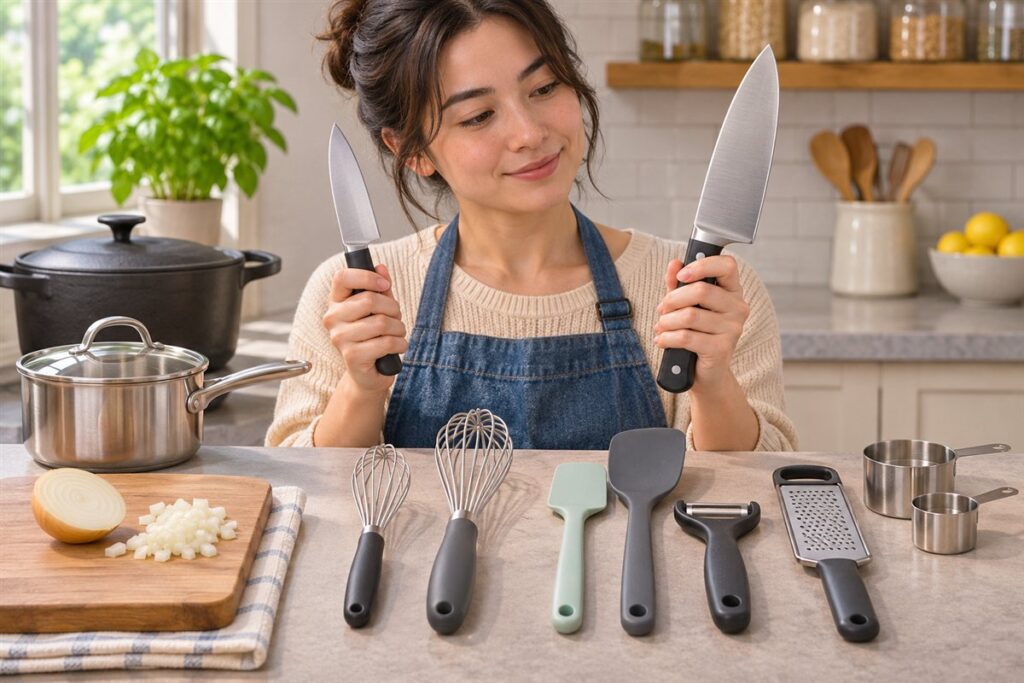
Cooks with small hands do best with tools that have slimmer handles, lighter weights, and shorter blades or heads. Comfort and control matter more than size alone. Hold a tool if you can, and check how your fingers wrap around it before you commit.
Why Size Matters
A handle that is too wide forces your fingers to stretch, which tires the hand and lowers control. A tool that is too heavy strains the wrist. For knives and hot pans, poor control also raises the chance of slips, so a good fit has a safety side as well as a comfort side.
Tools to Look At Closely
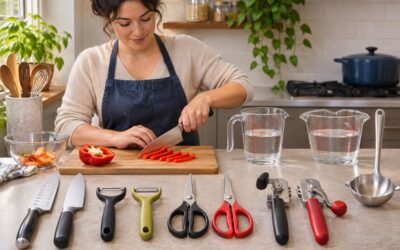
- Knives. A smaller chef’s knife or a utility knife can feel easier to control than a long blade. Check the handle width and the balance point.
- Spatulas and spoons. Narrow handles and lighter heads are easier to maneuver.
- Whisks. A slim handle and a smaller head reduce wrist strain.
- Pots and pans. Lighter pans with helper handles are easier to lift. Heavy cast pieces can be a challenge.
- Peelers and graters. Look for compact designs that fit the palm.
- Measuring tools. Short handles prevent bumping and spills.
Fit Checklist
| Feature | Why it matters | What to check |
|---|---|---|
| Handle diameter | Grip comfort | Fingers wrap without strain |
| Weight | Wrist fatigue | Lift and hold for a few seconds |
| Balance | Control | Rests level in the hand |
| Surface | Grip when wet | Texture or slightly soft material |
| Length | Reach and stability | Not too long for your arm |
Practical Habits
- Use two hands for heavy pots, with dry mitts on, and follow the maker’s guidance on handling hot cookware.
- Choose smaller pans for small jobs so you are not lifting extra weight.
- Use a stable cutting board with a damp cloth underneath to keep it from sliding.
- Keep knives sharp, since dull blades need more force and slip more easily.
- Rest your hands during long prep sessions.
When You Cannot Test in Person
Read product descriptions for handle dimensions and weight, and compare them with a tool you already find comfortable. Check return options. You can also wrap a handle with a thin grip sleeve if the maker allows it, though this is not a fix for tools that are fundamentally too large.
Trying Tools at Home
Give a new tool a fair trial with a real task, such as chopping an onion or stirring a thick batter. Notice whether your hand tires, whether the tool slips, and whether you can reach the whole working area. If it feels wrong, return it if you can and try a different size.
FAQ
Are smaller knives less useful?
Not necessarily. A mid-size blade can handle most tasks well, and control often matters more than blade length.
Do lighter tools wear out sooner?
Not by default. Weight alone does not decide durability. Check the build quality, materials, and maker’s care guidance.
The Short Version
Look for slim handles, light weight, and good balance, and prefer shorter blades and compact heads. Hold a tool before buying if possible, and use stable boards and safe lifting habits.