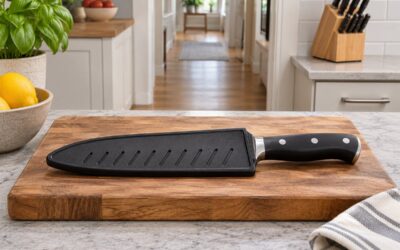
To choose a knife handle material, think about grip comfort, how wet your hands get and how much upkeep you will accept. Wood feels warm but needs care, synthetic handles are low maintenance and metal handles are durable but can be slippery. The best option depends on your hand and cooking habits.
The Main Handle Materials
Natural wood has a classic look and grips well when dry, but it can swell, crack or darken if it soaks in water. Plastic and similar synthetic materials resist moisture and are easy to clean. Composite handles, made from layered fibre or resin, blend the look of wood with better water resistance. Metal handles are sturdy and hygienic to wipe down but may feel slick when hands are wet or greasy.
Decision Criteria
| Factor | Why it matters | What to check |
|---|---|---|
| Grip when wet | Slippery handles raise the chance of slips | Texture, shape and any grooves |
| Hand size and shape | Comfort affects control over long tasks | Handle thickness and length in your hand |
| Water resistance | Affects durability near the sink | Maker’s care notes |
| Weight and balance | Changes how the knife feels | Where the blade meets the handle |
| Cleaning needs | Some handles need hand washing | Whether it can go in a dishwasher |
| Joint and rivets | Gaps can collect food | Smooth, tight seams |
How to Decide Step by Step
- Think about where you cook. Busy, wet kitchens favour textured, water-resistant handles.
- Hold the knife if you can. Note whether your fingers have clearance and your grip feels natural.
- Check the care instructions and be honest about whether you will follow them.
- Compare how the handle balances against the blade.
- Choose the one that feels steady in the hand, then keep it dry and clean.
Care Notes
- Hand wash and dry wooden handles promptly.
- Avoid soaking any knife for long periods.
- Keep handles free of grease for a firmer grip.
No handle material can remove the risk of cuts, so use good handling habits and follow the maker’s instructions.
Fit and Feel
Handles come in many shapes. Rounded handles suit a variety of grips, while squared or flat handles can feel firmer and resist turning. Full-length handles carry weight toward the back, which some cooks prefer for balance. Bolsters, the thickened area between blade and handle, can protect fingers or add weight, but they can also make sharpening the heel of the blade harder. Spend time holding the knife in a pinch grip and a handle grip before you choose, and think about whether your hands are often wet.
FAQ
Is wood a good choice for a handle?
It can be, with proper care. Treated or stabilised wood resists moisture better than untreated wood.
Do handle materials affect sharpness?
No. Sharpness depends on the blade. The handle affects comfort, balance and grip.
The Short Version
Match the handle to your hands, your sink habits and your care routine. Prioritise a steady grip and balance over looks, and read the maker’s care notes.