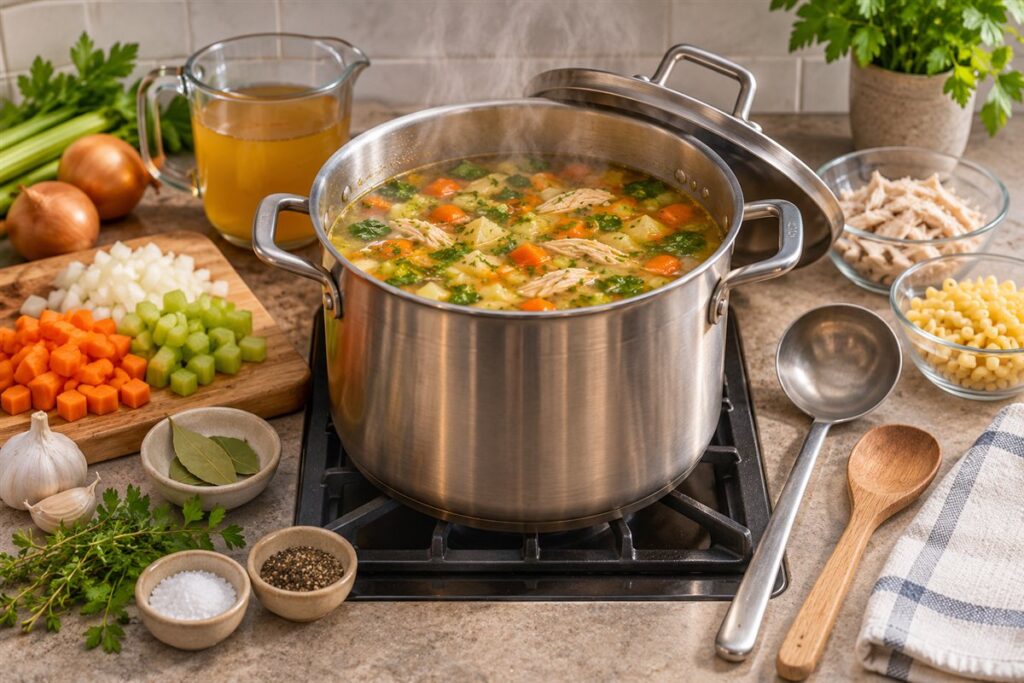
To make soup in a stockpot, soften chopped vegetables in a little oil, add liquid and your main ingredients, then simmer gently until everything is tender. Season near the end and taste as you go. A stockpot gives you room to stir and plenty of leftovers.
Set Up Before You Cook
Choose a pot that is no more than about two thirds full when everything is in. That leaves space for bubbling and stirring. Chop ingredients to similar sizes so they cook together. Have stock or water measured, and keep a ladle and a long spoon within reach.
Step-by-Step Method
- Warm a spoonful or two of oil in the pot over medium heat.
- Add onions, carrots, celery or other aromatics. Stir and cook until they soften and smell sweet, without browning heavily.
- Add garlic or spices for a short time, until fragrant.
- Pour in stock or water, scraping any browned bits from the base.
- Add the main ingredients, such as beans, potatoes, pieces of meat or pasta, in an order based on how long each takes to cook.
- Bring to a gentle boil, then lower the heat to a steady simmer with the lid slightly open.
- Cook until ingredients are tender. For meat and poultry, use a thermometer and follow local food-safety guidance for doneness.
- Season with salt, pepper and herbs, tasting along the way.
Timing Ideas by Ingredient
| Ingredient | When to add |
|---|---|
| Root vegetables | Early, with the liquid |
| Dried beans | Follow a bean recipe; they often need long cooking |
| Pasta or rice | Near the end, per the package |
| Leafy greens | In the last few minutes |
| Fresh herbs | At the end for bright flavor |
Simmering times range from about half an hour for light vegetable soups to a few hours for bone broths, so go by your recipe.
Cooling and Storing Leftovers
Do not leave a large pot sitting on the counter. Divide soup into shallow containers so it cools more quickly, then refrigerate or freeze following food-safety guidance. Reheat until steaming hot throughout.
Ways to Build More Flavor
- Brown the vegetables or meat first for a deeper, roasted taste.
- Add a rind of hard cheese, a bay leaf or a bundle of herbs while simmering, and remove them before serving.
- Stir in a spoonful of tomato paste with the aromatics and cook it briefly.
- Blend part of the soup with an immersion blender for a creamier body, taking care with hot liquid and following the blender maker’s instructions.
Choosing the Right Stockpot Size and Material
A stockpot is a tall, straight-sided pot, and a few features decide how well it works for soup. Capacity is the first. Choose a size that suits the batches you cook. A pot that is much too large spreads a small amount of soup thinly and scorches easily, while one that is too small boils over and limits what you can make. Check the listing for capacity, and consider how much room you have for storage.
Material affects heat behavior. Stainless steel is durable and does not react with acidic ingredients such as tomatoes, but thin steel can have hot spots that scorch the bottom. A pot with an aluminum or copper core or a thick, layered base spreads heat more evenly. Aluminum pots heat quickly, but some types can react with acidic foods unless coated or anodized. Enameled cast iron holds heat well but is heavy. Nonstick interiors are less common for soup and need care with metal utensils.
- Look for a thick base for steady simmering.
- Check that the lid fits snugly and that the handles stay manageable when full and hot.
- Confirm the pot suits your cooktop, especially if you have induction, which needs a magnetic base.
Handles matter more than people expect. A full pot of soup is heavy, so look for sturdy, riveted or well-attached handles you can grip with oven mitts. Read the maker’s care guidance on dishwashers and temperature limits.
Stock, Broth and Water: Choosing Your Liquid
The liquid you add is the backbone of soup, and the choice affects both flavor and effort. Homemade stock, made by simmering bones or vegetables, gives body and depth. Store-bought stock or broth is convenient and ranges widely in saltiness and flavor, so read labels, taste before adding salt, and consider low-sodium versions so you can control seasoning. Plain water works for soups with plenty of vegetables, beans, or meat, as these ingredients make their own flavor as they cook.
There is a small difference between stock and broth, though the terms overlap. Stock is usually made from bones and has more body, while broth is often lighter and made from meat or vegetables. For vegetarian soups, vegetable stock or a mushroom-based liquid can bring savory depth. Dried mushrooms, kombu or a spoonful of miso can add umami, if they suit the recipe.
- Start with less liquid than you think. You can add more but cannot easily remove it.
- Keep it hot if you are adding it mid-cook, so the soup does not stall.
- Taste the liquid before using it, since flavor shapes the whole pot.
Salting in stages gives better results than adding it all at once, especially if the soup will reduce.
Soup Styles: Brothy, Chunky, Creamy and Pureed
Understanding the main soup styles helps you plan technique and timing. Brothy soups, like chicken noodle or miso, rely on clear, well-seasoned liquid and tender ingredients that float in it. They benefit from a gentle simmer and careful skimming. Chunky soups and stews include larger pieces of meat and vegetables in a thicker base, and need longer cooking so the pieces become tender without falling apart.
Creamy soups get their body either from dairy or from blended vegetables. Dairy is best added near the end over low heat, since high heat can cause it to separate. Pureed soups use starchy ingredients such as potatoes, beans or squash to thicken naturally once blended. Cool the soup slightly before blending, work in batches, and do not fill a blender more than the maker recommends, because hot liquid expands and can spray.
- Thicken with starch: add potato or rice early and let it break down.
- Thicken with a slurry or roux: follow a tested recipe for ratios and method.
- Thin with liquid: add small amounts of hot stock or water, then taste again.
If a soup is too thick on the second day, thin it while reheating. If it is too thin, simmer with the lid off for a while.
Seasoning and Balancing Flavor at the End
Seasoning is where a decent soup becomes a good one. Taste throughout, and judge the soup warm, not scalding hot, since extreme heat dulls flavor. If it tastes flat, the culprit is often a lack of salt or acid. Add salt in small amounts, stir and taste again. A splash of lemon juice or vinegar can brighten a soup that is heavy or dull, and a small amount of sweetness can balance sharp tomatoes.
Fat carries flavor. A drizzle of good oil, a spoonful of butter, or a dollop of yogurt or sour cream adds richness at the table. Heat can be added with pepper, chili flakes or hot sauce. Spice blends should be added early enough to cook through, or toasted briefly in the pot before liquid goes in.
- Add fresh herbs at the end for aroma and color.
- Toast whole spices briefly in a dry pan before adding them.
- Remember that flavors concentrate as the soup simmers, so go lightly on salt early.
If you oversalt, adding more unsalted liquid, a peeled potato or extra vegetables can help dilute it, though results vary. Better to season lightly and fix at the end.
Reheating, Freezing and Batch Cooking
Soup is an ideal make-ahead food, but the details matter. Once cooled, portion soup into containers that match how much you will eat at one sitting. For freezing, leave room at the top of the container for expansion, label with the date and contents, and freeze flat in bags if you want to save space. Follow food-safety guidance for storage times.
Some soups freeze better than others. Brothy and pureed soups tend to freeze well. Soups with cooked pasta or rice can turn soft, so many cooks freeze the base and add fresh pasta or rice when reheating. Dairy-based soups may separate after freezing, so add cream after thawing if you can. Potatoes can become grainy in some soups, which a quick blend may fix.
- Thaw in the fridge overnight, or reheat from frozen over low heat with a splash of water.
- Bring soup to a steaming hot temperature throughout before serving.
- Taste again after reheating, since seasoning often needs adjusting.
Cooking a double batch costs little extra effort and gives you quick meals later. Keep a few labeled portions in the freezer for busy days.
FAQ
Why is my soup bland?
It often needs more salt, acid such as a squeeze of lemon, or fresh herbs at the end. Add a little at a time and taste.
Should the soup boil hard?
A gentle simmer is usually better. A hard boil can break up vegetables and make broth cloudy.
What size stockpot do I need for soup?
Pick one that suits your usual batch and leaves about a third of the space free. A mid-sized pot works for most households, while larger families may want more capacity.
Can I use a stockpot on an induction cooktop?
Only if the base is magnetic. Check the product listing or manual, or test with a magnet on the bottom.
How do I stop soup from sticking and scorching?
Use a pot with a thick base, keep the heat low once simmering, and stir from the bottom now and then. Avoid adding thick purees or dairy over high heat.
Should I skim the foam from stock?
Skimming removes impurities and gives a clearer broth. It is optional for hearty soups where clarity does not matter.
Can I leave soup simmering while I am out?
It is safest to stay home and keep an eye on it. Follow the manuals for your stove and pot, and never leave a pot unattended on a burner.
How can I fix soup that is too salty?
Add unsalted liquid or extra unsalted ingredients to dilute it, and balance with a little acid. Prevent the problem by seasoning gradually.
Can I add noodles directly to the pot?
Yes, near the end, per the package. For leftovers, cooking noodles separately keeps them from turning mushy.
The Short Version
Soften aromatics, add liquid, simmer gently and season at the end. Use a roomy pot, add ingredients in order of cooking time and cool leftovers promptly.