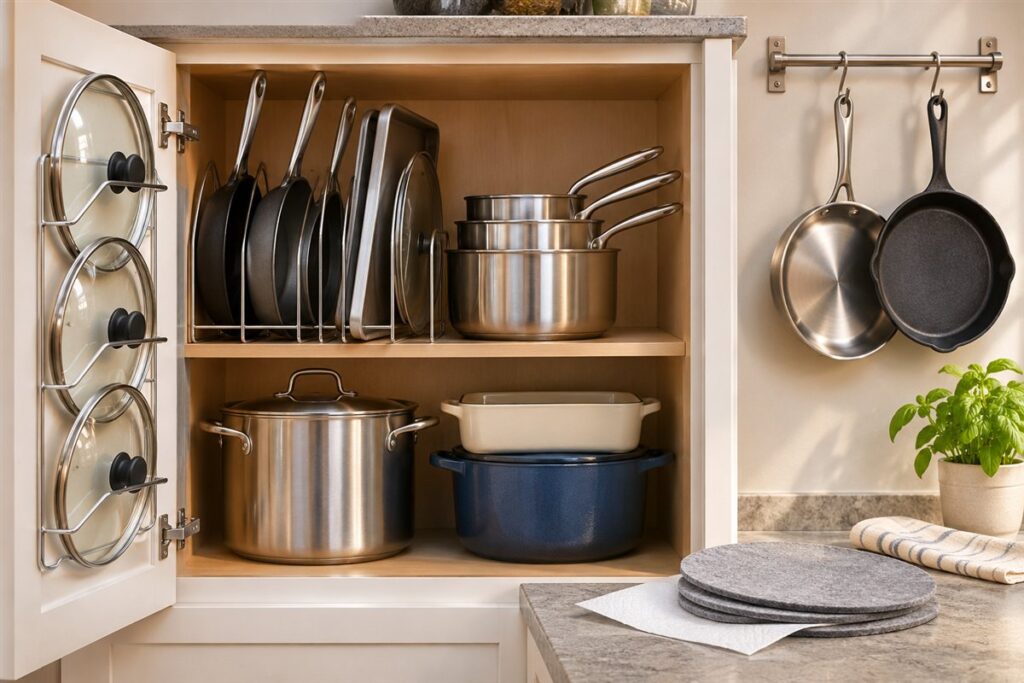
To organize pots and pans, take everything out, keep what you use, and store each piece where you can lift it without moving others. Nesting, dividers, and wall hooks all help. A clear system saves time and protects cookware surfaces from scratches.
Step by Step
- Empty the cabinet. Lay everything on the counter and wipe the shelves.
- Sort by use. Group daily pieces such as a skillet and saucepan apart from items you use a few times a year, like a large stockpot or roasting pan.
- Remove extras. If you own three similar pans, keep the one you reach for first and donate the rest if they are in good shape.
- Check condition. Look for warped bases, loose handles, and peeling coatings. Follow the maker’s guide on when to replace damaged items.
- Choose a storage method. Choose from the options below based on your space.
- Place daily pieces at the front. Put heavy pots low and lighter pans higher so you never lift a heavy item overhead.
Storage Methods Compared
| Method | Works well for | Watch out for |
|---|---|---|
| Nesting by size | Pots with matching shapes | Scratches without liners |
| Vertical dividers | Pans, sheet pans, lids | Needs cabinet height |
| Wall rail and hooks | Frequently used pans | Weight limits of the wall |
| Pull-out drawer | Heavy pots | Needs sturdy slides |
Handling Lids
Lids cause much of the clutter. A simple lid rack on a cabinet door or inside a drawer keeps them upright and visible. Another option is storing each lid inside its pot, though this can make stacking harder. Keep only lids that still fit well and have intact handles.
Protecting Your Cookware
- Place a paper towel, felt pad, or cloth between stacked pans, especially those with coated surfaces.
- Let pans cool and dry fully before storing them to prevent moisture buildup.
- Hang cast iron only if the rail can carry the weight, and store it dry.
- Keep sharp tools and metal utensils away from coated surfaces.
Seasonal and Special Pieces
Large stockpots, roasting pans, and canning gear often take up prime space but see use only a few times a year. Store them on a high shelf, in a lower cabinet, or in a closet nearby, and keep a note of where they live. Nest smaller pieces inside the bigger ones to save room. Doing this clears the front of your main cabinet for the pieces you use every day.
FAQ
Should I hang pots or keep them in a cabinet?
Hanging keeps pieces in easy reach and frees cabinet room, but it needs a sturdy wall and some tolerance for visible gear. Cabinets hide clutter. Choose based on your space and taste.
How often should I reorganize?
Look at the cabinet once or twice a year. If you find yourself moving items around to reach a favorite pan, adjust the layout.
The Short Version
Empty the space, keep what you use, and store pans with dividers or racks so you can lift one piece at a time. Protect surfaces with liners, and put heavy items low. A quick yearly check keeps the system working.