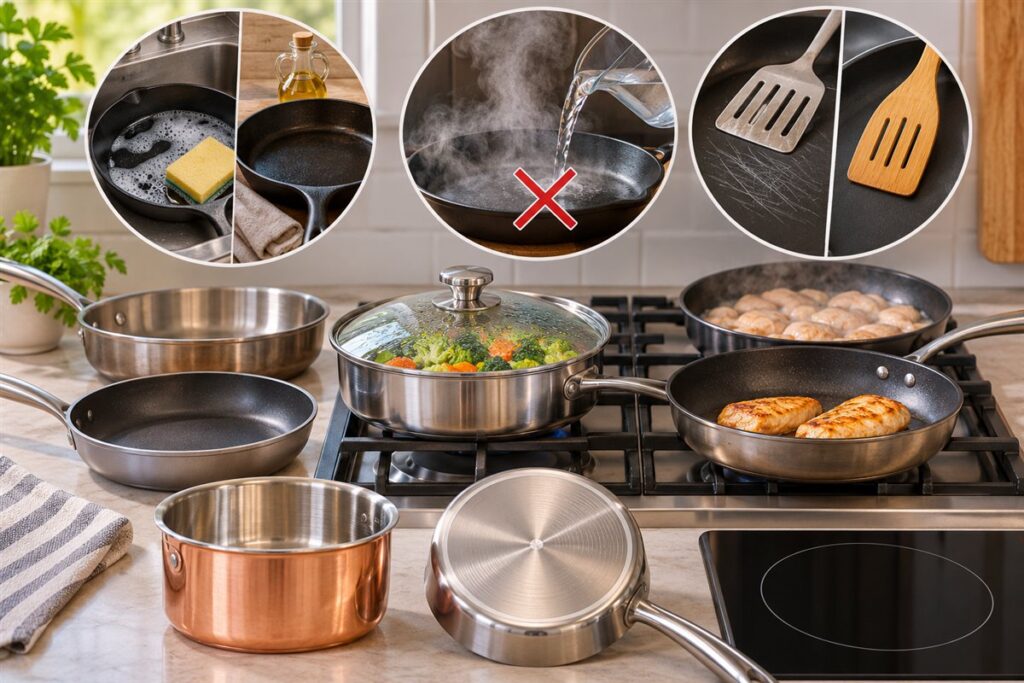
Many cookware beliefs are passed down without anyone checking them. Some are true, some are only partly true and some are plain wrong. This guide sorts a handful of common ones using stable basics.
Myths About Heat
Myth: A heavier pan always cooks better. Weight often goes with thicker metal, which helps spread heat, but it also makes a pan harder to handle. What matters is how well the pan suits the task.
Myth: Higher heat is always faster and better. Many foods cook best at moderate heat. Very high heat can scorch food and wear a surface sooner, so follow the maker’s guide for limits.
Fact: A pan needs a minute or two to come up to even heat. Putting food in too soon is a common cause of sticking.
Myths About Care
Myth: Soap ruins cast iron. Modern dish soap is mild, and a quick wash followed by thorough drying and a light coat of oil is fine for most seasoned pans. Check the maker’s care notes.
Myth: Cold water on a hot pan is harmless. Sudden temperature change can stress some pans and may warp them. Let a hot pan cool before washing.
Fact: Different surfaces have different needs. Use the utensils and cleaning methods the maker recommends.
Myths About Materials
- Myth: Copper is the only material that heats evenly. Fact: Many designs, including layered metal bases, aim for even heating.
- Myth: Glass lids are for show. Fact: They let you see food without lifting the lid and letting heat escape.
- Myth: Any pan works on any stove. Fact: Induction, for example, needs a pan with a magnetic base.
Myths About Use
Myth: Metal utensils are fine on every pan. Some surfaces tolerate them and others scratch easily. The maker’s guide will say which utensils suit your pan.
Myth: A lid is optional. A lid changes cooking noticeably. It holds in heat and moisture, so food cooks faster and stays moist, while cooking uncovered lets liquid evaporate and sauces thicken.
Fact: A pan that is too small for the food crowds it, and crowded food steams rather than browns. Cook in batches if needed.
Quick Reference
| Belief | Closer to the truth |
|---|---|
| Heavy is always better | Heavy helps heat spread but can be hard to lift |
| Hotter is better | Most food needs moderate heat |
| Soap ruins cast iron | A quick wash and thorough dry is usually fine |
| Any pan fits any stove | Check compatibility with your heat source |
FAQ
Do I need to heat a pan before adding oil?
For many tasks a short warm-up helps. Follow the recipe and the maker’s guide, and never leave hot oil unattended.
Is a scratch always a problem?
Not always, but a coating that is flaking or peeling is worth replacing. Follow the maker’s advice for your pan.
The Short Version
Question the shortcuts you hear about cookware. Match heat, material and care to the maker’s guide, and keep what works for your kitchen.